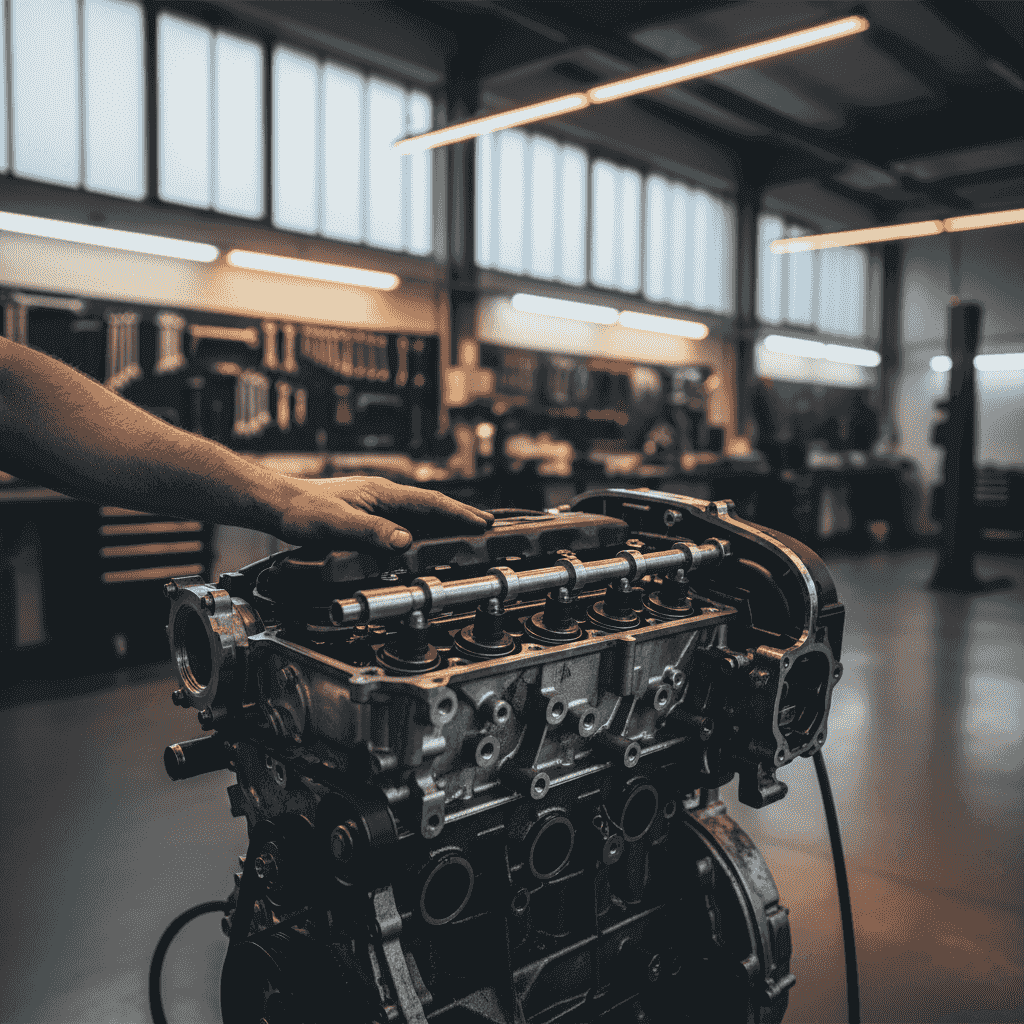
If you are buying a used car in BiH in 2026, the most reliable diesel engines are not chosen by model but by the code of the unit under the bonnet. The same Passat can have an engine that passes 500,000 kilometres without major spending, or an engine that will eat through two months of salary in repairs over two years. The difference is in the code, the generation and the service history. In this guide we highlight five diesel engines we recommend, six codes to avoid and what to look for at inspection before you put down a deposit.
This guide was prepared by the Auto Gas Gaga workshop in Banja Luka, based on years of experience servicing and pre-purchase inspecting European diesels in BiH.
Table of Contents
Why Engine Code Comes Before Model for Used Car Buyers
A classic scenario. A man comes into the workshop and tells us he has bought a Passat B6 with a 2.0 TDI engine. We ask which engine code, he shrugs. We open the bonnet, look at the number on the block and everything becomes clear. If it is a BKP or BMP (the classic pump-injector unit from the 2005-2008 period), we know that the next 50,000 km will bring conversations about the cylinder head and worn-out cam followers. If it is a CBAB or CFFB (later common-rail), the story is significantly different. Same car, same year, drastically different future.
The domestic market in 2026 holds a huge majority of cars aged ten to twenty years, imported from Germany, Austria or Italy. Those units are entering the zone where the weak spots of the engine start to show. The difference between a good and a bad engine code in the same model can mean thousands of KM over a few years of ownership.
Five Diesel Engines That Last Half a Million Kilometres
The following five units have been called practically indestructible by workshops across Europe for years. Every engine has weak spots, but with regular maintenance they realistically see 400,000 to 700,000 kilometres before economic reasons turn them into pension candidates.
1. VW 1.9 TDI with rotary VE pump (ALH, AHU, AGR, 90 hp). The 1996-2003 generation fitted to the Golf 4, Octavia 1, Bora, A3 and Passat B5. No DPF, no piezo injectors, with a mechanical VE pump that can be repaired almost anywhere. Considered practically indestructible and passes 500,000 km with basic maintenance. A typical workshop case is a Golf 4 with 1.9 TDI at 380,000 km that needs only a new water pump and timing belt.
2. Mercedes OM646 (2.1 CDI). C and E class, 2002-2009. The classic taxi engine that in service passes 500,000 km without major issues. No piezo injectors, with a robust chain-driven timing system. Have a look at the W203 and W204.
3. BMW M57 (3.0 R6 diesel). The inline-six R6 from the 1998-2008 period, fitted to the E39 530d, E46 330d, E53 X5 and E60. Specialist sources describe it as a super-reliable engine and consider it the benchmark BMW diesel before the problematic N47. It demands quality oil and the absence of any rent-a-car history.
4. PSA DW10 (2.0 HDi 8V, 90/110/136 hp). A French common-rail unit fitted for years to the Peugeot 406/407, Citroen C5, Ford Mondeo and Volvo S40, the result of a joint PSA and Ford project. It reaches around 480,000 km with regular maintenance. It is popular in BiH because spare parts are widely available and cheaper than the VAG equivalent.
5. VW 2.0 TDI EA288 (CRBC, CRMB, DCYA and related). The youngest engine on the list, a common-rail generation from 2015 onwards, fitted to the Golf 7, Passat B8, Octavia 3 and later Tiguan. The EA288 is rated today as the smartest modern diesel choice: it combines economy (5-6 l/100 km) with mature engineering. ADAC in 2026 picked the Golf 2.0 TDI EA288 as the best in the mid-segment used car market up to 25,000 EUR. The caveat is the AdBlue system, which we covered separately in the guide on the AdBlue and SCR system.
VAG TDI by Generation, What to Look For
VAG diesel engines are the most common on the BiH used car market and the biggest source of confusion. The same 2.0 TDI badge covers four generations with drastically different characters.
Which 1.9 TDI Engine Is the Most Reliable
The classic 1.9 TDI with the rotary VE pump (ALH, AHU, AGR, ASV, 90 hp) from the 1996-2003 period is a legend. It is followed by the 1.9 TDI PD (pump-injector unit, ATD, AXR, BXE, BKC from the 2003-2010 period), technologically more advanced but more prone to injector and camshaft faults. The BKC and BXE in the Octavia 2 and Golf 5 have a solid reputation, but they do not enter the practically-indestructible category. If you are choosing between VE and PD in the same class, VE is the safer bet for a car with over 200,000 km. Have a look at the Golf 5 with 1.9 TDI and the Octavia 2.
EA189 or EA288, Which 2.0 TDI Generation
EA188 PD generation (2003-2008, BKD, BMP, BMR, BMN) is notoriously problematic. Cracking cylinder heads, oil pump failure, prematurely worn camshafts. The worst examples are in the Passat B6, Audi A4 B7 and A6 C6. They still sell at attractive prices in BiH in 2026 precisely because buyers are trying to avoid them.
EA189 common-rail (2008-2015, CBAB, CFFB, CFHC, CAGA and related) is the way out of the crisis, the so-called dieselgate generation that VW brought into emissions compliance with a software update after the scandal. Mechanically it is solid, but it has its inheritance: timing chain issues on a portion of units and a tendency for EGR fouling and intake flap problems.
EA288 (2015 onwards) is the mature generation. Fewer thermal problems, smarter software, more economical. This is the generation we choose from the EA family if the budget allows.
PSA HDi or VW TDI
A question we hear every week. The answer depends on what matters more to you: parts availability and lower maintenance costs, or engineering density and resistance to abuse.
The PSA HDi family (1.6 HDi DV6, 2.0 HDi DW10, 2.2 HDi DW12) is the French school, simpler construction, cheaper parts. The DW10 2.0 HDi has been shared for years between Peugeot, Citroen, Ford (Mondeo, S-Max) and Volvo. Its weak spots are the turbocharger on the 136 hp versions, the EGR and the FAP filter if the car is driven mostly in town. Have a look at the Peugeot 308 with 1.6 HDi and the Citroen C4 Picasso.
VW TDI is denser engineering, with deeper reserves, but it requires more specific parts and more precise service settings. When everything works, it lasts longer. When it breaks, the repair is more expensive.
In practice a BiH driver who covers 25,000 to 40,000 km a year, a mix of city and open road, more often ends up happier with a PSA HDi. The reason is not engineering but logistics: HDi parts are easier to find, aftermarket parts are cheaper. VW TDI is a better choice for a driver who has a known VAG specialist and drives the car daily on the open road. The principle is similar, but the execution, software, oil and typical faults differ from manufacturer to manufacturer.
Diesel Engines to Avoid in 2026
The list of what not to buy is just as important as the list of what to buy. If you see one of the following engines in an advert, think twice.
VW and Audi 2.0 TDI PD (BKD, BMP, BMR, 2003-2008). The classic problem of cracking cylinder heads and oil pump failure. The worst examples are in the Passat B6, Audi A4 B7 and Audi A6 C6. The cost of an engine part can match the full value of the car.
BMW N47 Timing Chain Problem
BMW N47 (2007-2015, fitted to the E90 320d or 318d and the first F30 320d) has a well-known design flaw. The timing chain on the rear of the engine stretches and can snap. The repair requires removing the engine and is seriously expensive. The predecessor M47 (1998-2005) has frequent turbocharger and injector faults but the repair is cheaper. Have a look at the BMW E90 320d common faults.
Renault and Nissan 1.5 dCi K9K (2002-2010). The first generation K9K engine has an infamous problem with the oil pump and timing chain. The second generation from 2010 was fixed. The difference is the production year, not the model. See the Renault Clio 3 with 1.5 dCi and the Nissan Qashqai J10.
PSA 1.6 HDi Common Faults
The PSA 1.6 HDi DV6 (2004-2010) is a different story to its 2.0 brother. Poor turbocharger lubrication, a tendency for intake manifold fouling and sensitivity to off-spec oil make this unit expensive to maintain if it is driven in the city. The second generation from 2011 (the BlueHDi family) is much better. See what to expect from a first-generation 1.6 HDi.
Fiat 1.9 JTD and Multijet 8V (2003-2007). The early generation suffers from city driving, which leads to early turbocharger and EGR failure. The later 1.9 Multijet 16V is significantly better.
Opel 1.7 CDTI (Astra H and J, Corsa D). A GM and Isuzu construction with known weaknesses around the EGR and the timing chain. Have a look at the Astra J with 1.7 CDTI and the Corsa D.
What to Check at Pre-Purchase Inspection
An experienced seller can hide a lot: rolled-back odometer, total damage repainted and sold as a German import, welds hidden under paint, even theft with a tampered VIN. Some of that you catch at pre-purchase inspection, but the history of the car itself is most easily checked through carVertical. Using the VIN, it pulls the full documented history of the car from international registers: real odometer numbers by date, recorded accidents, the number of previous owners and theft or total-loss indicators. We consider it mandatory before buying absolutely any used car. When paying for the report you can use the code GAGA for a 20% discount.
Beyond the history, during the physical inspection of a diesel engine in the workshop we always check for the following.
- Real mileage through the service history. Original service book, invoices from Germany or Austria, service dates. A car with 300,000 km and three service invoices in its life is a red flag.
- Oil and filter condition before the seller changes the oil. Suspiciously fresh oil on a car about to be sold needs an explanation.
- A twenty-minute test drive including the open road. Listen for turbocharger whistle under acceleration, vibration at constant speed and the behaviour under engine braking.
- DPF and AdBlue system check. Dashboard lights, kilometre count to service, AdBlue level indicator. More in the guide on the DPF filter.
- Compression and emissions. Measurement on the instrument gives a concrete number. A faked odometer can be hidden, compression cannot.
- Colour and quality of the smoke. Our guide on what exhaust smoke tells you about the state of the engine goes into depth.
- Oil leaks. Under the engine, around the turbocharger and around the valve cover.
Found a car you are considering? Book a pre-purchase inspection or send us a WhatsApp with the advert link before you put down a deposit.
Frequently Asked Questions
Which Is the Most Reliable Diesel Engine for a Used Car in BiH?
The top of the list is held by the VW 1.9 TDI with the rotary VE pump (90 hp, ALH, AHU, AGR), the Mercedes OM646, the BMW M57 (3.0 R6) and the PSA DW10 (2.0 HDi). In the modern class, the VW 2.0 TDI EA288 generation from 2015 onwards. All have recorded examples passing 500,000 km with regular maintenance.
Is It Worth Buying a 1.9 TDI Engine in 2026?
It is, if you choose carefully. The 1.9 TDI with the VE pump (Golf 4, Octavia 1, Passat B5) is one of the most reliable diesels ever built. The PD generation (2003-2010, Octavia 2, Golf 5) is solid but demands more attention. In both cases the 1.9 TDI has no DPF and no AdBlue, which simplifies maintenance for an owner who drives in the city.
How Many Kilometres Does a Modern Diesel Last with Regular Maintenance?
A modern common-rail diesel with regular maintenance realistically passes 300,000 to 500,000 km on the engine mechanics. The most reliable units have examples over 600,000 km. The lifespan is shorter if the car is driven mostly in the city on short trips, more in the guide on short trips on a diesel.
Should the BMW N47 Engine Be Avoided?
The N47 (2007-2015, 2.0 diesel in the E90, F30, F20) has a design problem with the timing chain on the rear of the engine that often stretches before 200,000 km. The safer choice is the M57 (3.0 R6) from the previous generation or the B47 successor (from 2014) where the problem was resolved.
How Much Does a Timing Chain Replacement on the BMW N47 Cost?
The price depends on the specific condition of the engine and whether the repair includes only the chain or other parts as well. Because the repair requires removing the engine, labour is also charged. Get in touch for a quote with concrete details about the engine and the mileage.