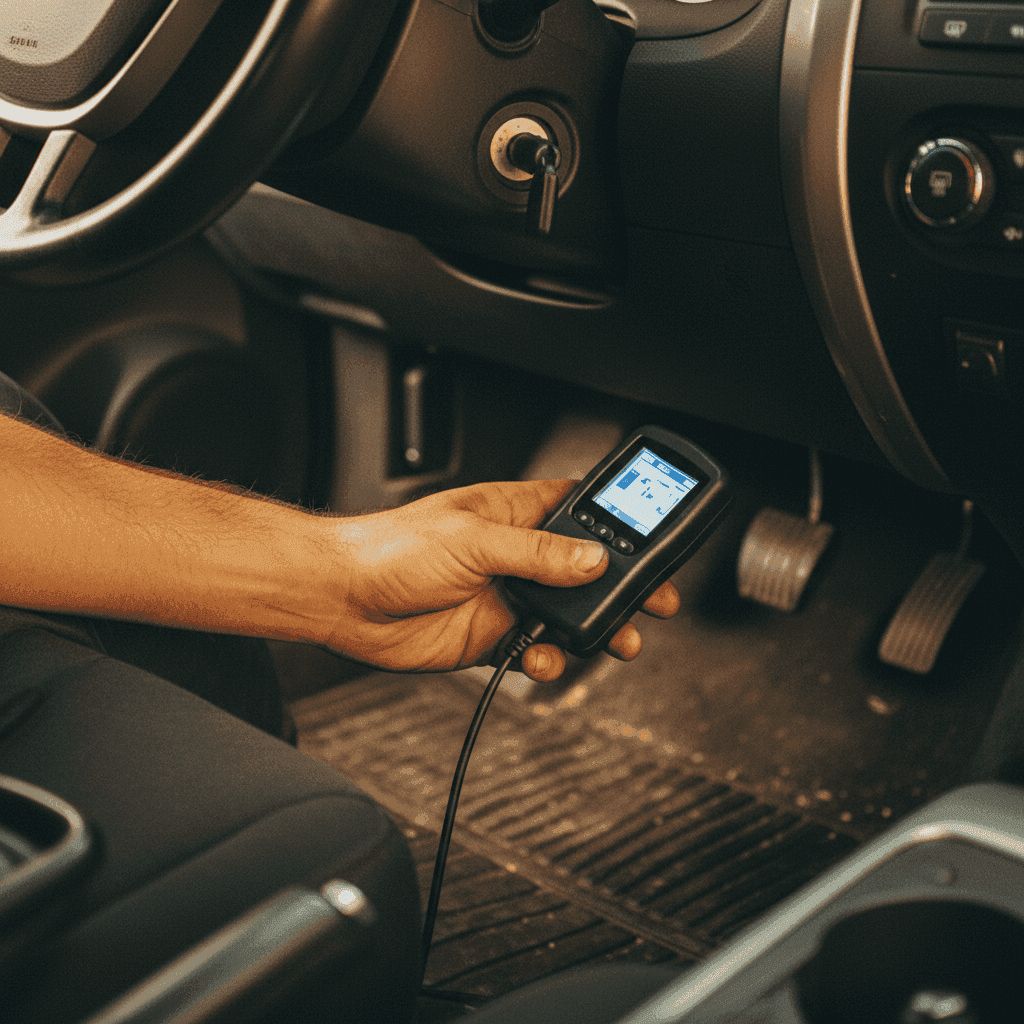
When Your Car Is Telling You Something Is Wrong
Modern vehicles have dozens of sensors monitoring every system. When something falls outside the normal range, the car signals it, most often through warning lights on the instrument cluster. Diagnostics allow us to read those signals, understand what is happening, and accurately determine the cause of the problem.
When Diagnostics Are Needed
- Check engine light - the most common reason. It can mean anything from a loose fuel cap to a serious engine fault. Read more in our guide check engine light - can you keep driving.
- ABS light - a problem with the braking system
- Airbag light - a fault in the airbag system
- EPC light - an issue with the electronic throttle control
- Battery light - a charging system problem
- Engine running rough - juddering, power loss, uneven idle, even without a warning light
- Increased fuel consumption - with no obvious cause
- Car stalls intermittently - especially at idle or while driving
What Diagnostics Involve
Reading Fault Codes (DTCs)
Using diagnostic equipment, we read the fault memory in all of the vehicle's control units: engine, gearbox, ABS, airbag, climate control, and other systems. Each fault has a code that tells us what the system detected.
Live Data Monitoring
We watch how the engine behaves while it is running: temperatures, pressures, injection timing, and sensor readings. This is where we often spot things that the fault code alone does not reveal.
Interpreting the Results
A fault code is the starting point, not the end of the diagnostics. For example, a code for "oxygen sensor out of range" could mean a faulty sensor, but it could also point to an exhaust leak or a fuel injection problem. Experience is what separates reading a code from actually diagnosing the fault.
Visual and Mechanical Inspection
The diagnostic tool does not see everything. We also check the physical condition of components: vacuum hoses, electrical connectors, belts, and leaks.
Equipment We Use
We have professional diagnostic equipment that covers all the common makes: the Volkswagen group, Opel, Fiat, Ford, Renault, BMW, and others. For LPG systems, we use separate diagnostic software specific to each type of installation.
When You Should Not Wait
Come in as soon as possible if:
- The check engine light is flashing (not just on, but flashing). That means an active misfire that can damage the catalytic converter. For details on such situations, see when check engine means stop immediately.
- A red oil or temperature warning light has come on
- The car is suddenly losing power while driving
- Multiple warning lights have appeared at the same time
Frequently Asked Questions
Does a diagnostic scan always show the problem?
Often yes, but not always. Diagnostics narrow down the possibilities. Sometimes additional testing of individual components is needed to reach the exact cause.
How long does a diagnostic check take?
A basic fault code read takes 15-20 minutes. A more detailed session with live data monitoring and component testing can take an hour or more.
Can the fault just be cleared?
It can, but that does not fix the problem. If the cause is still there, the fault will come back. We find the cause first, then clear the codes after the repair.
Price of Diagnostics
A basic diagnostic check is affordable. If you decide to have the repair done with us after the diagnostics, we do not charge separately for the diagnostic work.
Warning Light on Your Dashboard?
Do not ignore it and hope it goes away on its own. Check our guide on dashboard warning lights to know what to look for, then call us or come in. Within 15 minutes we will know what the problem is and can discuss what to do next.