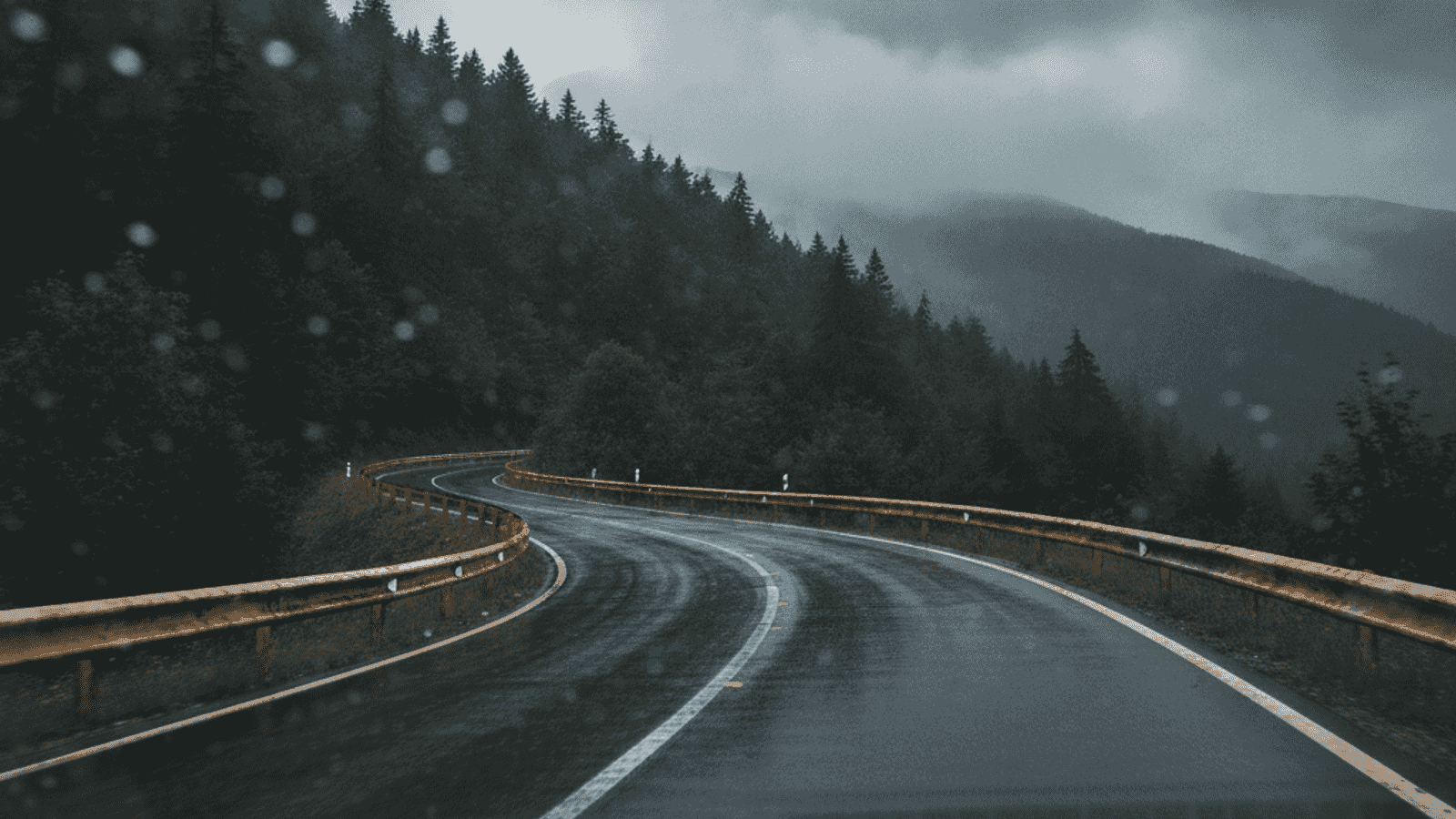
In 2025, 288 people were killed on the roads of Bosnia and Herzegovina, a 30% increase compared to the previous year. An average of 117 traffic accidents are recorded daily, and the fatality rate stands at roughly 70-80 deaths per million inhabitants. That is nearly double the European Union average of 43 per million. Safe driving in BiH in 2026 is not a slogan for posters but a concrete skill that can be learned, practised, and applied every time you get behind the wheel.
This guide was compiled by the Auto Gas Gaga workshop in Banja Luka, drawing on years of experience servicing and preparing vehicles for all driving conditions on BiH roads.
TL;DR
| Topic | Summary |
|---|---|
| Road conditions | BiH recorded 288 fatalities in 2025, a 30% increase. The fatality rate is nearly double the EU average. |
| Rain and aquaplaning | Tyres with tread below 3 mm lose the ability to channel water. Stopping distance on wet surfaces is 50-80% longer than on dry. |
| Night driving | Visibility drops to 30-60 metres on dipped headlights. A microsleep of 4-6 seconds at 80 km/h means 90-130 metres without control. |
| Mountain roads | Engine braking in a lower gear prevents brake overheating. Long downhill stretches are the most dangerous segments of BiH main roads. |
| Vehicle preparation | Five checks before departure: tyres, brakes, lights, wipers, fluids. The average age of the vehicle fleet in BiH is 17 years. |
| Emergencies | Warning triangle at 50-100 m, reflective vest on immediately, never stand behind your vehicle. Motorways have specific distance rules. |
Table of Contents
- Road Conditions in BiH in 2026: Numbers That Demand Caution
- Why BiH Is Twice as Dangerous as the EU Average
- Rain, Aquaplaning, and Wet Roads
- Night Driving: Visibility, Fatigue, and Wildlife
- Mountain Roads: Brakes, Gearbox, and Technique
- Safe Driving in BiH by Scenario: Complete Guides
- Equipment for Safe Driving in Difficult Conditions
- Five Things to Check Before You Set Off
- What to Do in Roadside Emergencies
- Most Common Driver Mistakes in Difficult Conditions
- Frequently Asked Questions
- Related Articles
Road Conditions in BiH in 2026: Numbers That Demand Caution
The 2025 statistics are alarming by any measure. Across Bosnia and Herzegovina, 42,762 traffic accidents were recorded with 288 fatalities. That represents a 29.73% increase over 2024, meaning 66 more lives lost on the roads. In the Federation of BiH, 147 people died (30 more than the previous year), in Republika Srpska 129 (an increase of 35), and in Brčko District 12.
How Many Fatalities on BiH Roads in 2025
The average is stark: for every 1,000 accidents, 7 people die. With 117 accidents per day on BiH roads, more than 800 collisions, run-offs, rollovers, or pedestrian strikes occur every week. In the first three months of 2026 alone, 81 people had already been killed, accounting for 28% of the entire 2025 annual toll in just one quarter (data published 20 April 2026 on the Faktor.ba portal).
Analysis by the Republika Srpska Ministry of Interior for 2024 shows that excessive speed is the cause of 41.1% of fatal outcomes. June and August are the months with the highest number of fatalities, and Friday between 14:00 and 16:00 is the period with the greatest concentration of serious accidents. These figures are not remote statistics. They describe specific roads, specific bends, and specific mistakes that drivers repeat season after season.
The trend is especially concerning: while the EU records a 3% annual decline in fatalities, BiH is heading in the opposite direction with an increase of nearly 30%. The gap is not narrowing but widening. This means that what could be preventive at a systemic level (better infrastructure, stricter enforcement, a more modern vehicle fleet) is absent, and the burden of safety is placed squarely on the driver.
Why BiH Is Twice as Dangerous as the EU Average
The European Union recorded around 19,400 road fatalities in 2025, with an average of 43 per million inhabitants. A 3% decrease over the previous year. The safest countries are Sweden (20 per million) and Denmark (23), while the most dangerous are Bulgaria (71), Romania (68), and Croatia (67). With an estimated 70-80 fatalities per million inhabitants, BiH ranks above every EU member state, including the most dangerous ones.
The Western Balkans as a whole recorded 1,287 fatalities and a rate of 78 per million, which is 81% higher than the EU average. BiH saw the largest absolute increase among all regional partners. The reasons are structural and have been repeating for years.
The average age of the vehicle fleet in BiH is 17 years. Of 1,295,224 registered vehicles, 38% are older than 23 years. This means a significant proportion of vehicles on the road have worn shock absorbers, deteriorated braking systems, clouded headlight lenses, and tyres at the legal minimum. When you add a wet road surface, night-time visibility, or a mountain descent to such a vehicle, the margin for error becomes extremely thin.
The second factor is infrastructure. A significant portion of the BiH road network consists of main roads without a physical central reservation, with narrow shoulders and sharp bends through mountain passes. There is no room for correction if a driver exceeds the speed limit or reacts too late. Modern road markings are also lacking: on many stretches, the lines on the road have faded or disappeared entirely, making night driving and driving in rain particularly difficult when the only visual reference is the line on the tarmac.
The third factor is driver behaviour, particularly excessive speed, driving under the influence of alcohol, and aggressive overtaking on stretches with poor visibility. The combination of an old vehicle, a poor road, and risky behaviour explains why BiH stands where it does in European statistics. But precisely because systemic solutions are slow to come, individual preparation of both driver and vehicle becomes all the more important.
Rain, Aquaplaning, and Wet Roads
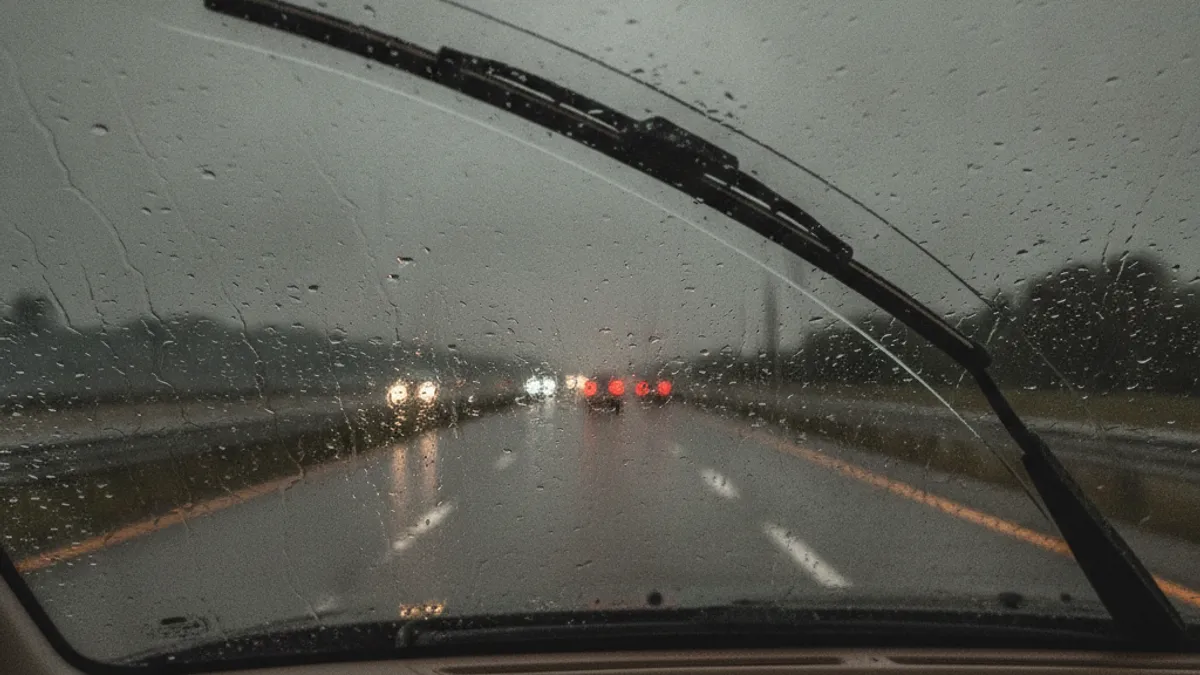
Rain is the most common adverse condition on BiH roads. It falls throughout the year, and the first minutes of a downpour are especially dangerous when oil and dust from the asphalt mix with water and create an extremely slippery surface. Stopping distance on a wet road is 50-80% longer than on dry tarmac at the same speed. On main roads without adequate drainage, water collects in wheel ruts and at low points, creating particularly hazardous zones in places where the driver does not expect them.
Aquaplaning occurs when a tyre loses contact with the surface because it cannot channel enough water out of the contact patch. The vehicle then slides on a thin film of water with no control whatsoever. The critical factors are tread depth, vehicle speed, water layer thickness, and tyre width. Tyres with tread below 3 mm drastically lose their ability to channel water, even if they are still legally within the permitted range. We covered the physics of aquaplaning, response techniques, and tyre selection for wet roads in detail in our guide Aquaplaning and Driving in Rain in BiH: How to Protect Yourself.
How to React When Your Car Hydroplanes on a Wet Road
When you feel the steering wheel becoming light and the car not responding to input, the instinct is to brake hard or turn the wheel. Both are wrong. The correct response is to lift your foot off the accelerator, hold the steering wheel straight in the direction you were travelling, and wait for the tyres to regain contact with the surface. Only when you feel resistance returning to the wheel should you gently correct your course. The entire process usually takes 1-3 seconds, but those seconds determine whether you stay on the road or end up in a ditch.
Practical rules for driving in rain: reduce speed by at least 20-30% compared to dry conditions, increase the following distance to a full three seconds instead of the usual one to two, switch on dipped headlights, and avoid harsh braking or sudden changes of direction. Tyre pressure should be checked before departure, as low pressure widens the contact patch and increases the risk of aquaplaning.
Night Driving: Visibility, Fatigue, and Wildlife
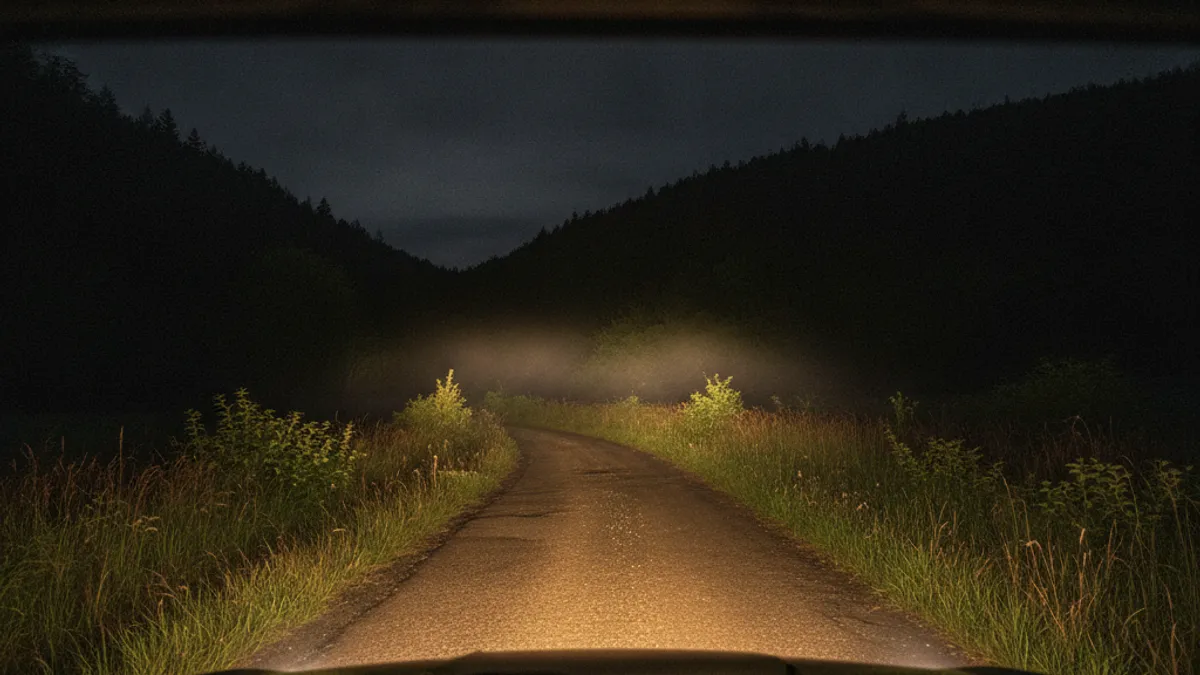
Night changes every parameter of driving. Visibility on dipped headlights drops to 30-60 metres, and on full beam to 100-150 metres. On unlit roads, which describes most BiH main roads outside towns, the driver can see only as far as the headlights reach. The problem is more serious in older vehicles with clouded headlight lenses, where actual visibility can be half the designed output.
Fatigue is a second enemy that night driving amplifies. The human body is biologically programmed to sleep between midnight and 5 a.m., and again in a smaller wave between 14:00 and 16:00. Driving during these periods carries a significantly higher risk of microsleep. MoI RS statistics confirm this: Friday between 14:00 and 16:00 records the highest concentration of serious accidents, partly because of the afternoon dip in alertness combined with the weekend rush.
How Long Does a Microsleep Last at the Wheel
A microsleep is a brief loss of consciousness lasting 4 to 6 seconds, sometimes longer. The driver does not realise they have fallen asleep and wakes up convinced they did not even blink. At 80 km/h, 4 seconds of microsleep means 90 metres without any control of the vehicle. At 120 km/h, that is over 130 metres. Enough for the car to leave the road, drift into the oncoming lane, or strike an obstacle.
The warning signs are clear: frequent yawning, difficulty keeping the eyes open, wandering thoughts, drifting out of lane without intending to, and inability to recall the last few kilometres. The only reliable response is to stop at the first safe spot and rest for a minimum of 15-20 minutes. Coffee, cold air, and loud music give the illusion of alertness but do not address the cause. We covered the full analysis of night driving with techniques for visibility, fatigue management, and reacting to wildlife in our guide to night driving in BiH.
Wildlife on the road is a specific risk on BiH main roads that pass through forested stretches. Deer, wild boar, and foxes are most active at dusk and dawn. Wildlife warning signs exist on critical stretches but are often ignored. When you notice a wildlife sign, reduce speed to 60-70 km/h and be ready for emergency braking. If an animal suddenly appears, brake at full force in a straight line. Do not swerve sharply, because leaving the road or entering the oncoming lane is almost always a worse outcome than a direct impact.
Mountain Roads: Brakes, Gearbox, and Technique
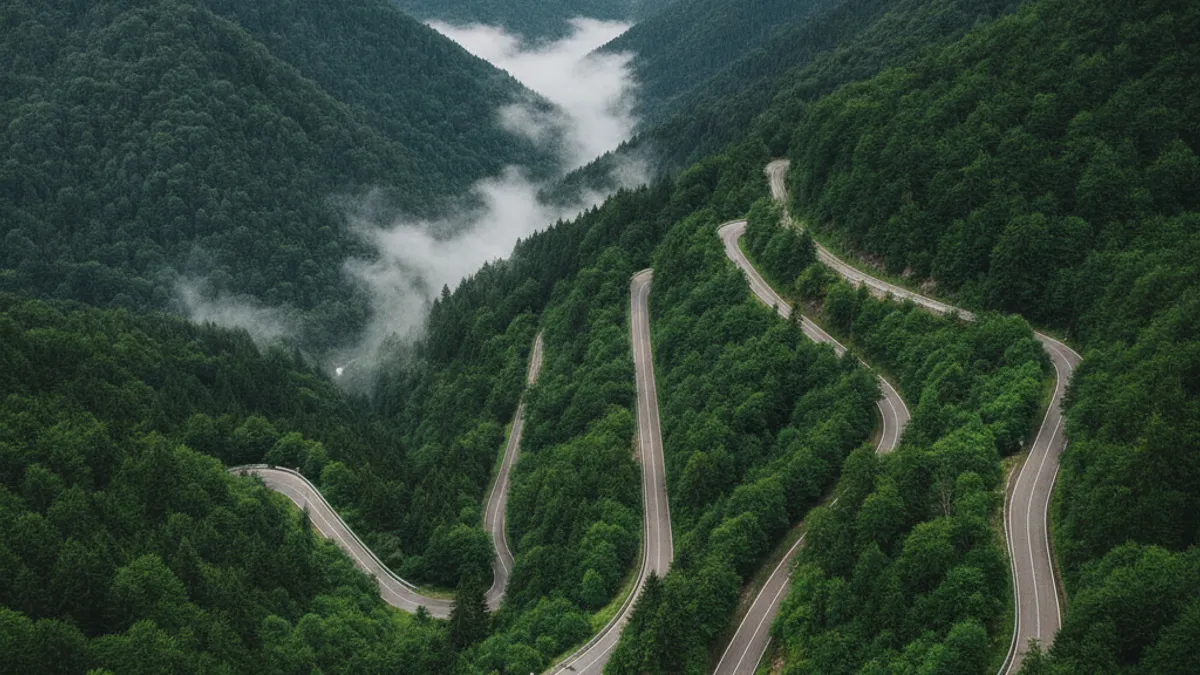
Bosnia and Herzegovina is a predominantly hilly and mountainous country, and a significant portion of the road network passes through sections with gradients of 6-12%, sharp switchbacks, and long descents without crash barriers. Driving on mountain roads requires a different technique from flatland driving, and the greatest danger lies in something most drivers take for granted: the brakes.
How to Use Engine Braking on a Downhill
Prolonged pedal braking on long descents leads to overheating of the brake discs and pads. When the braking system overheats, the fluid in the cylinders begins to boil, vapour bubbles form, and the pedal becomes soft, going to the floor with no effect. This is called brake fade, and it is the cause of some of the most severe accidents on mountain roads in BiH.
The solution is engine braking. Shift into a lower gear before the descent, not on it. With a manual gearbox, this means third or second gear, depending on the gradient. With an automatic gearbox, use manual mode or positions L, 2, 3 if your transmission has them. An engine forced to spin at higher revs without throttle input creates resistance that slows the vehicle without any wear on the brakes.
The rule is simple: whichever gear you would use to climb that gradient is the gear you should use to descend it. If the climb requires second gear, the descent should be done in second. Use the brake only for additional slowing or a complete stop, never as the primary means of speed control on a long downhill. A complete guide to mountain roads, including techniques for switchbacks, behaviour on single-lane bridges, and what to do in the event of brake failure, can be found in our guide to driving on BiH mountain roads.
The condition of the braking system deserves special attention before setting off on a mountain road. Worn pads, thin discs, or old brake fluid dramatically increase the risk of overheating on a descent. In vehicles with 200,000+ kilometres, which is the reality for most used cars on BiH roads, the braking system is often at the edge of effectiveness even without the stress of a mountain descent.
Safe Driving in BiH by Scenario: Complete Guides
This guide provides an overview and synthesis of the three most common adverse driving scenarios on BiH roads. A detailed article with techniques, physics, and specific advice exists for each one.
Rain and aquaplaning. A wet road is statistically the most common adverse condition. The guide covers the physics of aquaplaning, the effect of tyre tread depth, wet-weather braking techniques, and speed adjustment. It is especially useful for drivers who regularly travel main roads where water pools in channels and at intersections. Full article: Aquaplaning and Driving in Rain in BiH: How to Protect Yourself.
Night driving. Visibility, fatigue, and wildlife make night the most dangerous period on the road. The guide covers the physiology of fatigue, alertness techniques that actually work, headlight adjustment and inspection, and reacting to wildlife. Especially useful for drivers travelling the Banja Luka-Sarajevo-Mostar route at night. Full article: Night Driving in BiH 2026: Tips for Visibility and Safety.
Mountain roads. Brakes, engine braking, switchbacks, and behaviour on single-lane bridges. The guide covers the technical aspects of driving on gradients specific to BiH infrastructure, from the main road over Komar to the descent towards Jablanica. Full article: Driving on BiH Mountain Roads 2026: Brakes and Technique.
Equipment for Safe Driving in Difficult Conditions
A vehicle that is technically sound forgives mistakes. A vehicle at the edge of functionality forgives nothing. With an average fleet age of 17 years and 38% of vehicles older than 23, vehicle preparation in BiH is not an optional luxury but a basic prerequisite for safe driving.
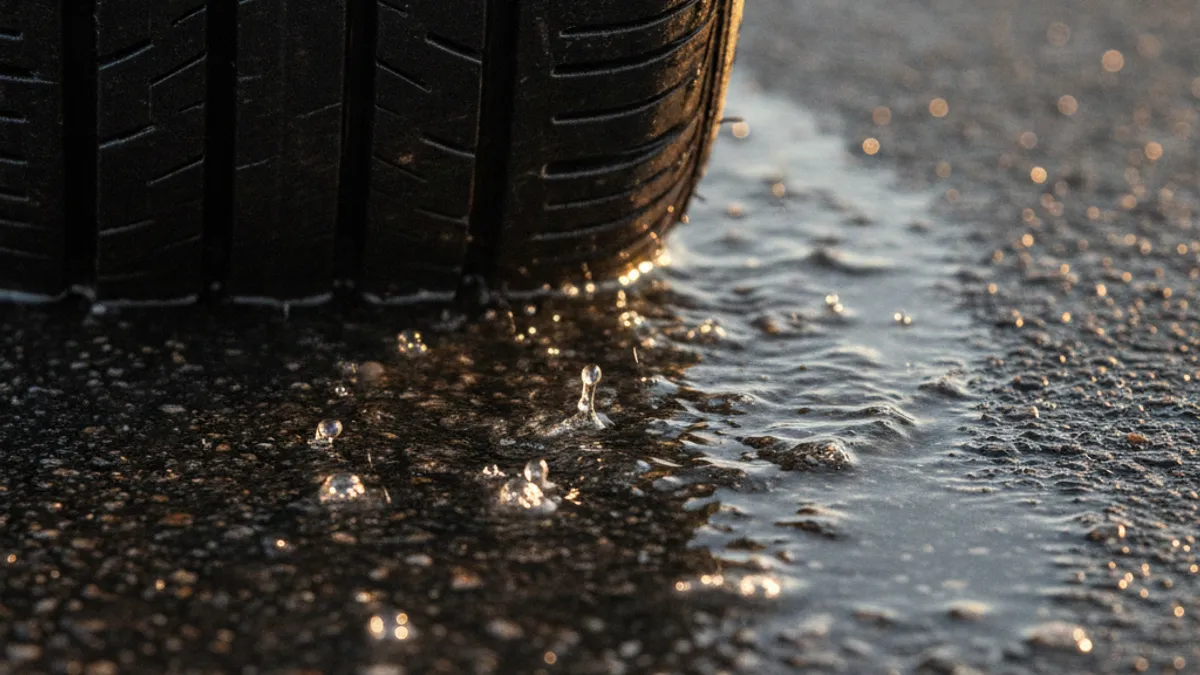
Tyres are the first and most important item. Tread below 3 mm means dramatically reduced water-channelling ability, longer stopping distance on wet surfaces, and greater risk of aquaplaning. The legal minimum of 1.6 mm is the threshold for a fine, not for safety. The proper tread depth for safe driving in rain is 4+ mm. Tyre age matters equally: a tyre older than 5-6 years loses elasticity and grip even if it has sufficient tread. The DOT code on the sidewall shows when it was manufactured.
The braking system should be checked in full: pad and disc thickness, brake fluid condition (crucial for mountain descents), brake hose condition, and handbrake functionality. During summer vehicle preparation or winter preparation, brakes are usually inspected as part of the seasonal check, but if you are planning a longer trip through mountain sections, a dedicated brake inspection should be a separate item.
Lights are critical for night driving. Clouded headlight lenses on older vehicles can reduce light output by up to 50%. Headlight polishing is a relatively straightforward job that can significantly improve visibility. Bulbs that have blown or dimmed should be replaced. The check should cover all lights: dipped beam, full beam, sidelights, brake lights, indicators, reversing lights, and fog lights if fitted. An important detail often overlooked: headlights must be correctly adjusted for height. A dipped beam set too high dazzles oncoming drivers, while one set too low reduces your own visibility.
Wipers are a detail easily forgotten yet one that, in a critical moment, determines whether you can see the road ahead. Worn wiper blades leave streaks and smears on the glass, reducing visibility precisely when it is most needed. Replacement is quick and cheap, but drivers most commonly put it off until they are caught in a storm.
What to Check on Your Car Before Driving in Rain or at Night
Before a longer journey, especially if rain, darkness, or mountain roads await, the checklist is short but mandatory. Tyres (tread and pressure), brakes (pedal feel, noise, effectiveness), lights (all of them, not just the front), wipers (wipe quality and washer fluid level), cooling system (coolant level, hose condition). For higher-mileage vehicles, it is also useful to check the condition of the shock absorbers, as worn shocks dramatically extend stopping distance on wet surfaces.
Five Things to Check Before You Set Off
This list covers the five most important items any driver can check by themselves, in five minutes, before hitting the road.
1. Tyre pressure and tread. Check pressure on cold tyres according to the manufacturer's specification (the sticker on the driver's door frame). Visually inspect tread depth, especially on the inner edge of the tyre, which wears faster with incorrect alignment. If you do not have a tread gauge, insert a 2 KM coin into the groove: if you can see the entire rim, the tread is critically low.
2. Brakes. Press the brake pedal with the vehicle stationary. It should feel firm and must not go to the floor. If it feels soft or pulsates, the braking system needs an inspection. Start the engine and press again, because the brake servo only works with the engine running.
3. Lights. Switch on all lights and walk around the vehicle. Dipped beam, full beam, sidelights, indicators, brake lights, reverse light. A single blown brake-light bulb means the driver behind you cannot see you braking in the dark.
4. Wipers and washer fluid. Run the wipers on a wet windscreen. If they leave streaks or skip, replace the blades. Check that the washer fluid reservoir is not empty.
5. Fluids under the bonnet. Engine oil level on the dipstick, coolant level in the expansion tank (never open the radiator cap on a hot engine), brake fluid level. If anything is low, top up before setting off. In vehicles with 150,000+ kilometres, also look for signs of leaks underneath the car, as old seals and hoses can fail en route.
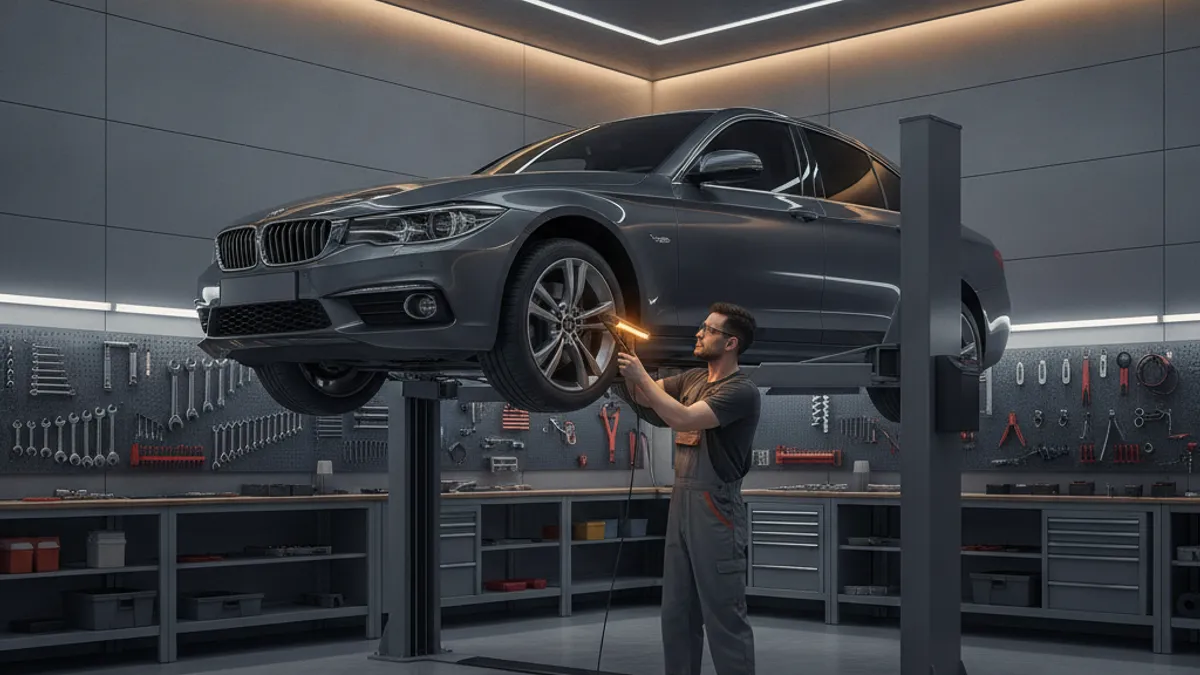
If you are unsure about your vehicle's condition or are planning a longer trip in difficult conditions, book an inspection at the workshop before you leave. Fifteen minutes on a lift can reveal a problem that becomes dangerous on the road.
What to Do in Roadside Emergencies
Regardless of preparation, situations occur on the road. Breakdowns, punctures, accidents. How you react in the first 30 seconds determines the course of events.
In the event of a breakdown on an open road, the first step is a safe position. Switch on all four hazard lights, pull onto the shoulder or off the carriageway if possible, turn off the engine, and remove the key. Put on a reflective vest before exiting the vehicle. Place the warning triangle 50 metres behind the vehicle on a standard road, or 100 metres on a motorway. Always stand in front of the vehicle, never behind it. At night, the danger is multiplied because other drivers cannot see you in time. More on the procedure and on who to call when your car breaks down on the road can be found in our dedicated guide.
In the event of a traffic accident, the procedure is regulated by law. Secure the scene, call 122 (police) or 124 (ambulance), and do not move the injured unless they face immediate danger (fire, rollover). A detailed step-by-step procedure after an accident, including documentation and contacting your insurer, is covered in our guide Traffic Accident in BiH: Step-by-Step Procedure.
In the event of engine overheating on the road, pull over to a safe spot, turn off the air conditioning, turn the heater up to maximum (this draws heat away from the engine), and if the temperature does not drop, switch the engine off. Do not open the radiator cap while the engine is hot. More on the causes and procedure for engine overheating in summer.
In the event of a tyre blowout while driving, hold the steering wheel firmly and lift your foot off the accelerator. Do not brake suddenly, because the vehicle has unbalanced grip at that moment and harsh braking can cause loss of control. Let the car slow on its own, gently correct your course, and pull onto the first safe surface off the carriageway. The most common reasons for roadside stops, from a failed alternator to a burst hose, and how to prevent them with regular inspections, are covered in our guide on the most common roadside breakdowns.
Most Common Driver Mistakes in Difficult Conditions
Excessive speed is the cause of 41.1% of fatal outcomes in traffic accidents in RS, according to 2024 MoI data. It is not always about exceeding the limit. The limit is set for ideal conditions: a dry, clean road in daylight. Rain, darkness, or a mountain descent require a speed below the limit, sometimes significantly below. A limit of 80 km/h on a main road does not mean 80 is a safe speed on that stretch in rain at night.
Insufficient following distance is the second most common mistake. On a dry road at 100 km/h, stopping distance is roughly 50-60 metres. On a wet road, it is 80-100 metres. If your distance from the vehicle ahead is less than the stopping distance, you are in a situation where no reaction can help. The three-second rule on wet roads (four on snow, five on ice) provides sufficient space to react.
Incorrect response to a loss of control. Harsh braking on a wet surface, sharp steering input during aquaplaning, a sudden gear change on a downhill. Each of these reactions worsens the situation instead of resolving it. The correct techniques for every scenario are covered in detail in the respective guides in this series.
Driving while fatigued. Drivers overestimate their ability to stay alert and underestimate the effects of fatigue. Four hours of continuous driving without a break lead to a decline in reaction time comparable to mild intoxication. On longer journeys, a 15-20 minute break every two hours is not a recommendation but a necessity.
Neglecting vehicle condition. With an average fleet age of 17 years, many drivers operate with brakes at their limit, tyres with no tread, and headlights that barely illuminate 20 metres ahead. Regular seasonal inspections and targeted preparation before a demanding journey are habits that directly save lives. Even the best driving technique is useless if the vehicle does not respond as the driver expects. Alongside technical condition, there are also driving habits that accelerate wear on key components, from resting your foot on the clutch to braking at the last moment.
Overtaking on stretches with poor visibility. On two-lane main roads, misjudging the distance of an oncoming vehicle while overtaking is the cause of some of the most severe head-on collisions. If you cannot clearly see at least 300-400 metres of open road ahead, do not overtake. On mountain stretches with bends, overtaking is almost always the wrong decision unless the section is explicitly marked for it.
Safe driving in BiH in 2026 requires a combination of three things: a roadworthy vehicle, knowledge of techniques for difficult conditions, and the discipline to apply them every time. This guide and the three detailed articles in the series cover everything you need. The rest is up to you the next time you get behind the wheel.
Planning a trip in difficult conditions and unsure about your vehicle's condition? Book an inspection at the Auto Gas Gaga workshop before you set off.
Frequently Asked Questions
How safe is driving in BiH compared to the EU?
BiH records around 70-80 fatalities per million inhabitants, which is nearly double the EU average of 43 per million. In 2025, 288 people were killed on BiH roads, a 30% increase over 2024. The structural reasons are an older vehicle fleet, infrastructure without a physical central reservation, and excessive speed as the dominant cause of accidents.
How do I recognise the onset of aquaplaning while driving?
The steering wheel suddenly becomes light, resistance when turning is lost, and engine revs may rise because the wheels lose contact with the surface. A change in tyre noise is also common. The correct response is to lift your foot off the accelerator, hold the steering wheel straight, and wait for the tyres to regain contact. Do not brake suddenly and do not turn the wheel.
How long can I drive without a break?
The recommendation is a break of 15-20 minutes every two hours of driving. After four hours of continuous driving, attention and reaction speed become comparable to mild intoxication. The effect is even more pronounced at night. If you notice signs of fatigue, the only reliable response is to stop and rest.
Which are the most dangerous stretches for driving in BiH?
Mountain passes on main roads without motorway-grade infrastructure carry the highest risk. They are characterised by long downhill stretches, sharp switchbacks, narrow shoulders, and a lack of lighting. Sections with large differences in elevation, where weather conditions change rapidly, are particularly demanding.
Does engine braking damage the engine or gearbox?
No. The engine and gearbox are designed to operate across all speeds within their working range. Engine braking uses cylinder compression to slow the vehicle and does not wear the braking system. The only condition is not to downshift into too low a gear at high speeds, as this can overload the drivetrain. The rule: whichever gear you would use to climb, use the same gear to descend.
What should I do if the brakes fail on a downhill?
Immediately shift into the lowest possible gear for engine braking. Apply the handbrake gradually, not suddenly. Look for an uphill section or an escape route, sand banks, or crash barriers that can absorb an impact more safely than a direct collision. Do not switch the engine off, because you will lose power steering. Signal to others with lights and the horn.