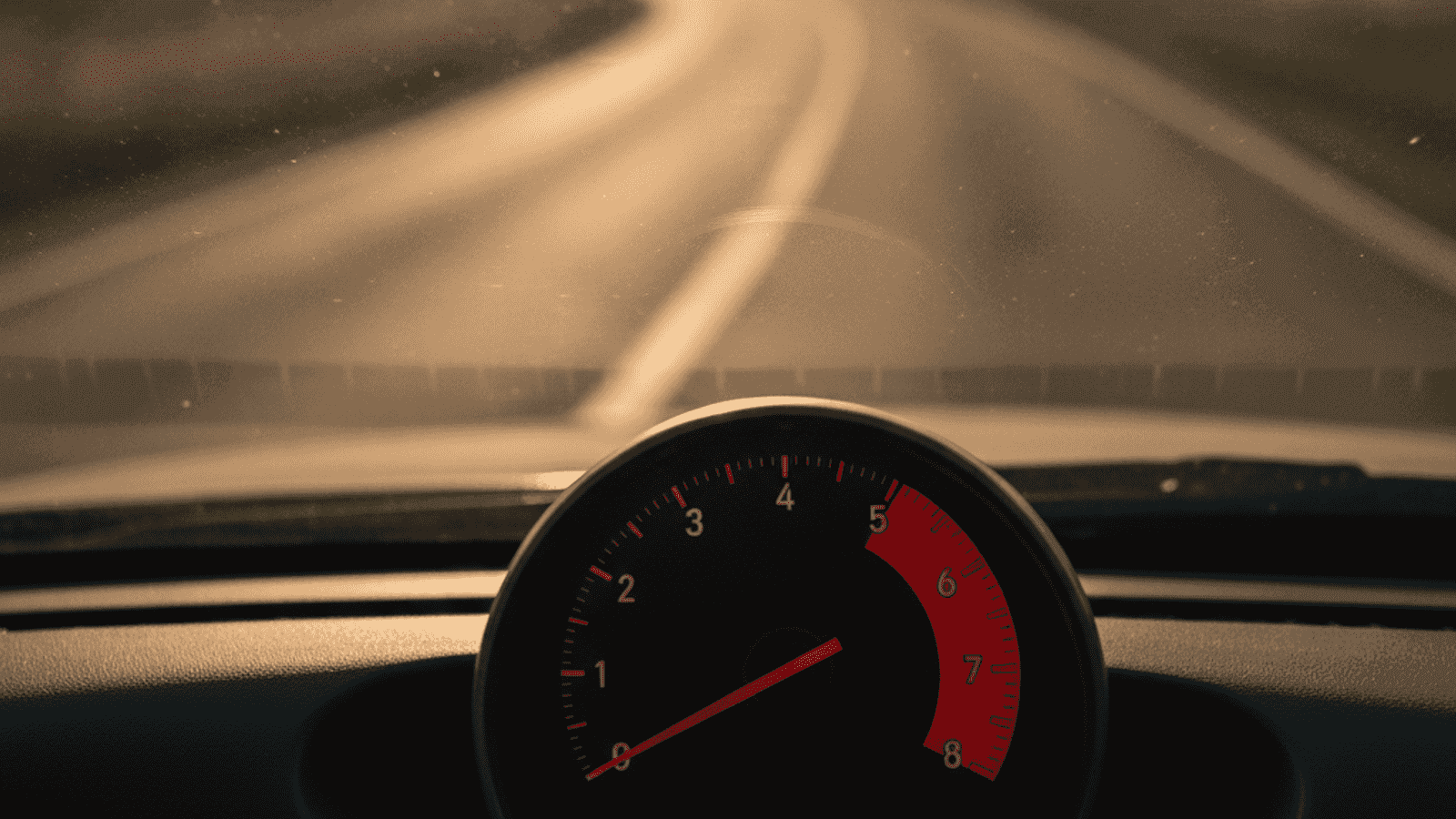
Engine overheating is not a seasonal curiosity. According to HAK's summer roadside-assistance expert, it is the fourth most common breakdown that stops cars in summer, right behind batteries, electronics and tyres. ADAC's 2025 statistics recorded 3.7 million roadside interventions, with the engine-and-electronics category accounting for 21.8 per cent of all breakdowns. In summer that percentage concentrates squarely on the cooling system, because high ambient temperatures shrink the margin between normal operating temperature and the point at which damage begins. This guide covers the specific causes of engine overheating in summer, the components that fail, approximate repair costs in KM, the exact protocol when the needle enters the red zone, and a quick check you can carry out yourself before the season starts.
This guide was prepared by the Auto Gas Gaga workshop in Banja Luka, drawing on years of experience with summer cooling-system failures.
Table of Contents
- Why Cars Overheat Specifically in Summer
- Six Components That Fail Most Often
- How Much Does Cooling System Repair Cost in BiH
- What to Do When the Temperature Needle Hits the Red Zone
- What You Should NEVER Do When the Engine Overheats
- Five-Minute Cooling System Check Before Summer
- When Overheating Is a Sign the Car Is Done
- Frequently Asked Questions
- Related Articles
Why Cars Overheat Specifically in Summer
The cooling system works on a simple principle, but every part of that system has a limited lifespan, and summer is the season when those limits are tested. The water pump drives coolant through passages in the engine block and cylinder head. The coolant absorbs heat, the thermostat opens once the engine reaches operating temperature, and hot coolant flows to the radiator. The radiator transfers that heat to the surrounding air, assisted by a fan when the car is stationary or moving slowly. The expansion tank compensates for coolant expansion as it heats up and keeps the system pressurised, which raises the boiling point. Antifreeze is not just freeze protection. A mixture of ethylene glycol and water, typically in a 60:40 ratio, gives a freezing point of around minus 45 degrees while also raising the boiling point and containing additives that prevent corrosion inside the system.
In summer the system takes a double hit. An ambient temperature of 35 degrees or more means the radiator operates with a significantly smaller difference between coolant temperature and air temperature, so it cools more slowly. At the same time, the air conditioning loads the engine with additional power demand for the compressor, and the A/C condenser mounted in front of the radiator further heats the air passing through the cooling fins. Add standing in traffic or driving uphill with a full car, and the cooling system is working at the edge of its capacity. If any component has a weak point, summer is the season when that weakness surfaces.
Six Components That Fail Most Often
The radiator fan is the component that most often causes engine overheating in summer during city driving. While the car is travelling at 60 km/h or more, air passes through the radiator naturally and the fan is not needed. The problem arises in traffic, at traffic lights or in slow city driving when airflow drops to zero. At that point the fan must take over the cooling job. If the fan motor is worn, the temperature sensor is faulty or the fuse has blown, the fan simply does not switch on. The engine keeps running and the coolant has no way to shed heat. Within five to ten minutes of standing in the sun without a fan, the temperature needle starts to climb. HAK expert Marin Morava specifically highlights a fan that fails to activate in traffic as one of the most common causes of summer roadside calls.
The thermostat is a mechanical valve that opens at a set temperature, usually between 85 and 95 degrees. When a thermostat sticks closed, coolant cannot reach the radiator and the engine overheats quickly and aggressively. When it sticks open, the engine never reaches optimal operating temperature, which increases fuel consumption, accelerates carbon deposit build-up, shortens injector and turbo life on diesels, and speeds up DPF clogging. Replacing a thermostat is relatively straightforward and inexpensive, but ignoring the symptoms leads to far more costly damage to other engine and emissions-system components.
The water pump drives the entire coolant flow. When the pump bearing wears out or an impeller blade is damaged, flow weakens or stops entirely. Leaking from the water-pump seal is a common symptom that drivers notice from antifreeze stains under the car or a sweet smell from the engine bay. It is recommended to replace the water pump every time the timing belt is changed, because saving a few dozen KM on the old part can cause overheating if the pump starts leaking after a few thousand kilometres. A timing-belt and water-pump kit replaced during a major service costs roughly 280-650 KM depending on the vehicle class, and the goal is to replace everything at once since access is the same.
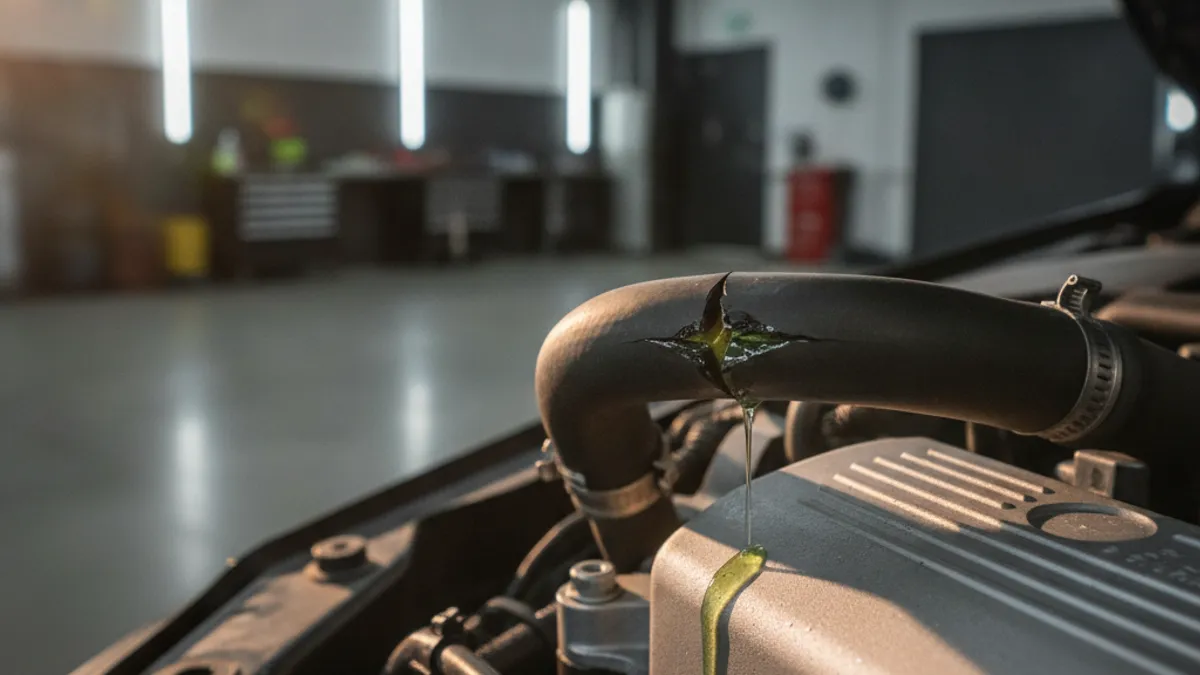
Rubber cooling-system hoses connect all the components into a single circuit. Over time, rubber hardens from heat, especially in summer when under-bonnet temperatures are at their highest. Cracks in hoses start as fine surface lines and end as a sudden burst and coolant loss on the road. Hoses are particularly vulnerable at joints where clamps grip the rubber onto metal fittings. Checking hoses by hand, by squeezing and visually, takes a minute and can prevent a breakdown in the worst possible place.
The radiator is made up of a mesh of thin aluminium fins. Leaves, insects, dust and road grime gradually block the spaces between the fins and reduce airflow. Even five per cent blockage means a measurable drop in cooling efficiency. Internal clogging of the radiator channels occurs from old antifreeze deposits or from mixing incompatible coolant types. External cleaning with compressed air or a gentle water jet deals with outside dirt, but internal blockage requires a system flush or radiator replacement.
The expansion tank and cap play a role that is often underestimated. The cap maintains system pressure at a level that raises the coolant boiling point above 100 degrees. If the spring in the cap has weakened, pressure drops, the coolant begins to boil at a lower temperature and vapour pockets form that transfer heat poorly. A cracked expansion tank loses coolant slowly and insidiously, because the leak intensifies only when the engine is at operating temperature and under pressure, and subsides once the engine cools down.
How Much Does Cooling System Repair Cost in BiH
According to BiH market data from May 2026, water-pump replacement including the part and labour ranges from 200-600 KM depending on the vehicle make and model. Radiator replacement costs roughly 150-500 KM or more, depending on whether it is a small city car or a larger SUV with more complex access. Rubber cooling-system hoses run in the 50-200 KM range for replacement. The thermostat is the cheapest item, usually a few dozen KM for the part itself plus labour. These prices are approximate market ranges and vary from brand to brand, city to city and workshop to workshop.
Head gasket repair cost
A special category is the head gasket. When overheating persists long enough, the cylinder head warps from the heat and the gasket between the head and block fails. The repair involves removing the head, machining the mating surface flat and replacing the gasket, which takes 5-8 hours of labour and exceeds 1,000 KM. That repair is more expensive than replacing the entire cooling system and happens precisely because the driver kept going with an overheated engine instead of stopping in time. In the workshop we most often see exactly this scenario: the customer knew the temperature was rising but thought they could manage a few more kilometres to get home. Those few kilometres turn a repair costing a few hundred KM into a bill that exceeds a thousand.
What to Do When the Temperature Needle Hits the Red Zone
When the temperature needle enters the red zone or the temperature warning light comes on, there is an exact sequence of steps that can save the engine from permanent damage. The first thing is to switch off the air conditioning. The A/C compressor loads the engine and heats it further. The second step sounds unusual but is proven in practice: turn the cabin heater to maximum. The cabin heater is essentially a small radiator that draws heat from the coolant into the cabin air. By turning the heating to full blast, the engine gains additional cooling surface area. Yes, you will be hot inside the cabin. But the engine will survive.

If the temperature does not start to drop, pull over as soon as it is safe. Never brake sharply in the middle of the road; switch on your hazard lights and move to the first safe position. Once you have stopped, do not switch off the engine immediately. Let it idle for 5-6 minutes with the heater running. This allows the water pump to keep circulating coolant and distribute the temperature evenly rather than letting heat concentrate in one spot. Only after those few minutes should you switch off the engine and open the bonnet to let the heat dissipate.
Do not open the expansion-tank cap while the engine is hot. The cooling system is under pressure and the coolant temperature can be well above 100 degrees. Opening the cap in that state means an explosion of boiling liquid that can cause severe burns to the face and hands. Wait at least 30 minutes for the engine to cool before opening anything on the cooling system.
Once the engine has cooled, do not restart it or try to drive to the workshop. If the cause of overheating is coolant loss, the engine will overheat again within a few minutes of driving. If the cause is the fan or thermostat, the problem will not resolve itself. Call for assistance or arrange a tow to the nearest workshop. The number for assistance and booking is always available.
What You Should NEVER Do When the Engine Overheats
Never continue driving with the temperature in the red. Never pour cold water onto a hot block. The sudden temperature drop causes thermal shock, and the aluminium cylinder head can crack from the temperature difference. If you must top up coolant after the engine has cooled, use antifreeze or at least lukewarm water, never cold tap water. Never open the cooling-system cap while the engine is under pressure. Never switch off the engine immediately without an idle cool-down phase. Every one of these mistakes turns a repair costing a few hundred KM into a bill that exceeds a thousand.
White smoke from the exhaust during overheating
Dense white smoke from the exhaust that appears alongside a rising temperature indicates that coolant is entering the cylinder and combusting with the fuel. This is a sure sign of a damaged head gasket or, in the worst case, a cracked cylinder head. If you notice sweet-smelling white smoke that does not stop even after the engine is fully warmed up, do not drive any further. Every kilometre in that condition increases the damage. Details on diagnosing by smoke colour can be found in the guide on exhaust smoke.
Thermostat stuck open vs. stuck closed: the difference
There is a clear difference between a thermostat stuck open and stuck closed, and that difference determines how urgent the situation is. A closed thermostat is an emergency because the engine has no access to the radiator whatsoever. Temperature rises fast and the consequences are severe if you do not react within minutes. An open thermostat is not urgent in the same sense, because the engine does have access to the radiator and will not overheat. However, an engine that constantly runs below optimal temperature operates inefficiently. Fuel consumption rises, cabin heating is poor (because the engine does not produce enough heat), and on diesels soot builds up faster in the DPF and EGR valve. Both situations call for thermostat replacement, but a stuck-closed one leaves you stranded, while a stuck-open one slowly costs you through higher fuel bills and premature emissions-system repairs. More on thermostat and radiator operation can be found in the engine temperature guide.
Five-Minute Cooling System Check Before Summer
A five-minute cooling system check before summer can prevent a breakdown on the road. Do it in the morning on a cold engine, because the coolant level and component condition can only be assessed properly when the system is cold and depressurised.
How to check the antifreeze level on a cold engine
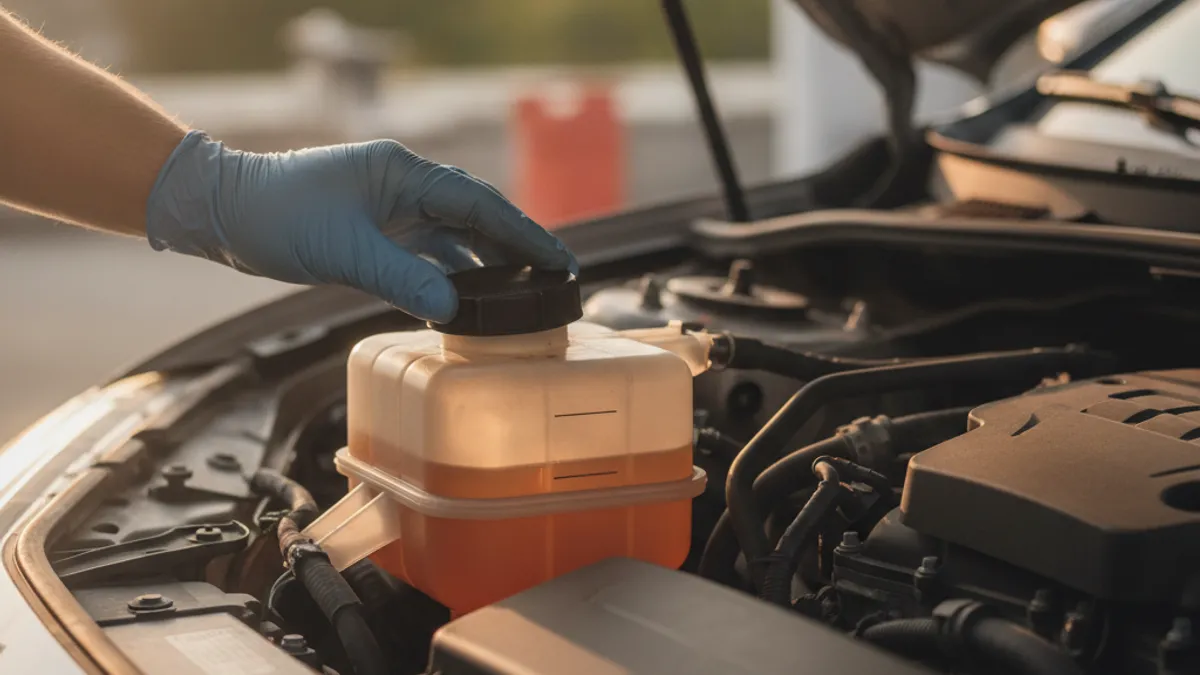
Look at the level in the expansion tank. The coolant should be between the MIN and MAX marks on a cold engine. If it is below MIN, there is a leak somewhere or the coolant was changed a long time ago and the additives are spent. Pay attention to the colour: if the fluid is cloudy, brown or contains visible particles, it needs replacing. Normal annual antifreeze loss is up to 0.5 litres; anything beyond that points to a leak that needs to be located. More on why antifreeze disappears can be found in the guide on antifreeze loss.
Inspect the rubber hoses. Squeeze them by hand; they should be elastic, not hard and brittle. Check the joints, clamps and areas where hoses run close to hot engine parts. Traces of greenish, pink or orange fluid around the joints mean the beginning of a leak that will only get worse.
Look at the radiator through the front grille. If you can see leaves, insects or a layer of dust between the fins, clean them with a gentle water jet or compressed air. Clean from the engine side outward so that the dirt exits the same way it entered.
Check the fan. On a cold engine, start the car and wait for the temperature to reach operating level. The fan should switch on automatically when the temperature exceeds a certain threshold. If it does not activate even when the needle reaches the halfway mark, that is a sign that the sensor or fan motor is not working and the car must not go on the road until it is fixed.
Manufacturers recommend replacing coolant every 2-5 years depending on the antifreeze type and manufacturer specifications. If you do not know when it was last changed, book an inspection before your summer trip. What a complete summer car preparation involves can be found in the guide on preparing your car for summer.
When Overheating Is a Sign the Car Is Done
When overheating causes damage that exceeds the value of the car, the question arises whether it is worth repairing at all. A head gasket costing over 1,000 KM on a car worth 3,000-4,000 KM is a borderline case that requires a cold-headed calculation. A cracked cylinder head or a warped engine block are repairs that defy economic sense on vehicles older than 15 years with high mileage. White smoke that does not stop, oil mixing with antifreeze (white foam on the oil cap) and visible head deformation after machining are signs that the engine has suffered permanent damage.
In such situations, replacing the entire engine with a second-hand unit is sometimes cheaper than repairing the original, but caution is warranted because the quality of used engines varies. The cost depends on the specific model and market availability. Get in touch for an assessment before making a final decision, because the difference between repair and engine replacement can be significant.
Engine overheating in summer in BiH is not a matter of luck but a matter of preparation. Six cooling-system components, each of which is relatively inexpensive to replace individually, protect the engine from damage that can cost more than the entire car. A five-minute check on a cold engine once a month during summer and regular antifreeze replacement per the manufacturer's recommendation are the cheapest insurance policy you can have. And if the temperature needle does catch you off guard on the road, you now know the exact protocol: A/C off, heater to maximum, stop, do not touch the cap, do not add cold water, wait and call a tow truck.
Found a problem with the cooling system or getting ready for a summer trip? Book an inspection or contact us to check the condition of the cooling system before temperatures exceed thirty degrees.
Frequently Asked Questions
How quickly can overheating damage an engine?
Driving with the temperature in the red zone can permanently damage an engine in less than five minutes. The aluminium cylinder head warps from the heat, the gasket fails and coolant enters the cylinders. The longer you drive with an overheated engine, the greater the damage and the higher the bill.
Can you top up the cooling system with water if you have no antifreeze?
In an emergency you can add clean lukewarm water, but never cold water to a hot engine. Cold water on a hot block causes thermal shock that can crack the cylinder head. After topping up with water, replace the fluid with antifreeze as soon as you reach a workshop, because water does not protect against corrosion and has a lower boiling point.
Why does a car overheat only when stuck in traffic?
When a car is stationary or moving slowly, air does not flow naturally through the radiator. Cooling is taken over by the electric fan. If the fan is faulty, the sensor is broken or the fuse has blown, the engine is left with no cooling at all. At open-road speeds the problem disappears because air once again flows through the radiator.
How often should antifreeze be replaced?
Manufacturers recommend replacing coolant every 2-5 years depending on the antifreeze type. G12 and G13 coolants generally last longer than older G11 formulations. If you do not know the type or age of the coolant in your car, a pH check and visual inspection at a workshop will reveal whether it is time for a replacement.
Can overheating cause white smoke from the exhaust?
Yes. Dense white smoke with a sweet smell that does not stop even after the engine has warmed up is a sure sign that coolant is entering the cylinder. The most common cause is a damaged head gasket. Continuing to drive in that condition dramatically worsens the damage.
Is a head gasket repair worthwhile on an older car?
The repair exceeds 1,000 KM, which includes removing the head, machining and replacing the gasket. On a car worth 3,000-4,000 KM it is a borderline case. On vehicles below that value, replacing with a second-hand engine or selling the car as-is are more economically sensible options.