Every time you needlessly ride the clutch, hit a pothole at full speed or ignore a warning light on the dashboard, you shorten the life of one or more components. Bad driving habits that destroy your car rarely cause dramatic damage in a single moment, but over thousands of repetitions they turn into real invoices for clutch replacements, disc changes, shock absorbers or even the engine itself. The ten habits below are responsible for the vast majority of preventable failures we see in the workshop every day.
This list was compiled by Auto Gas Gaga in Banja Luka, based on the repairs we carry out most often for customers who drove for years without realising they were doing something wrong.
Table of Contents
- How much bad habits really cost you
- Riding the clutch in traffic and at traffic lights
- Resting your hand on the gear lever while driving
- Harsh acceleration and late braking
- Driving over speed bumps and potholes at full speed
- Short trips on a cold engine
- Braking with the foot brake downhill
- Driving on a near-empty fuel tank
- Overloaded car and incorrect tyre pressure
- Ignoring warning lights on the dashboard
- How bad habits affect your annual costs
- Frequently asked questions
- Related articles
How much bad habits really cost you
The average used car in BiH is between 15 and 20 years old. On a vehicle like that, every bad habit leaves twice the mark it would on a new car, because component tolerances have already been reduced by age and mileage. When you add up all the minor damage caused by habitual misuse, the annual maintenance bill easily grows by 30-50% compared with a driver who covers the same distance carefully.
According to data from a report published in March 2026, aggressive driving involving harsh acceleration and late braking can increase fuel consumption by up to 40% in the city and up to 30% on the open road. The fuel difference alone can exceed the cost of a routine service over a year. And fuel is only the beginning, because the same aggression wears out the clutch, brakes, tyres and suspension faster than it should.
These habits do not cause damage in isolation. A driver who drives aggressively usually also misuses the clutch and never checks tyre pressure. The effects multiply rather than simply add up.
Riding the clutch in traffic and at traffic lights
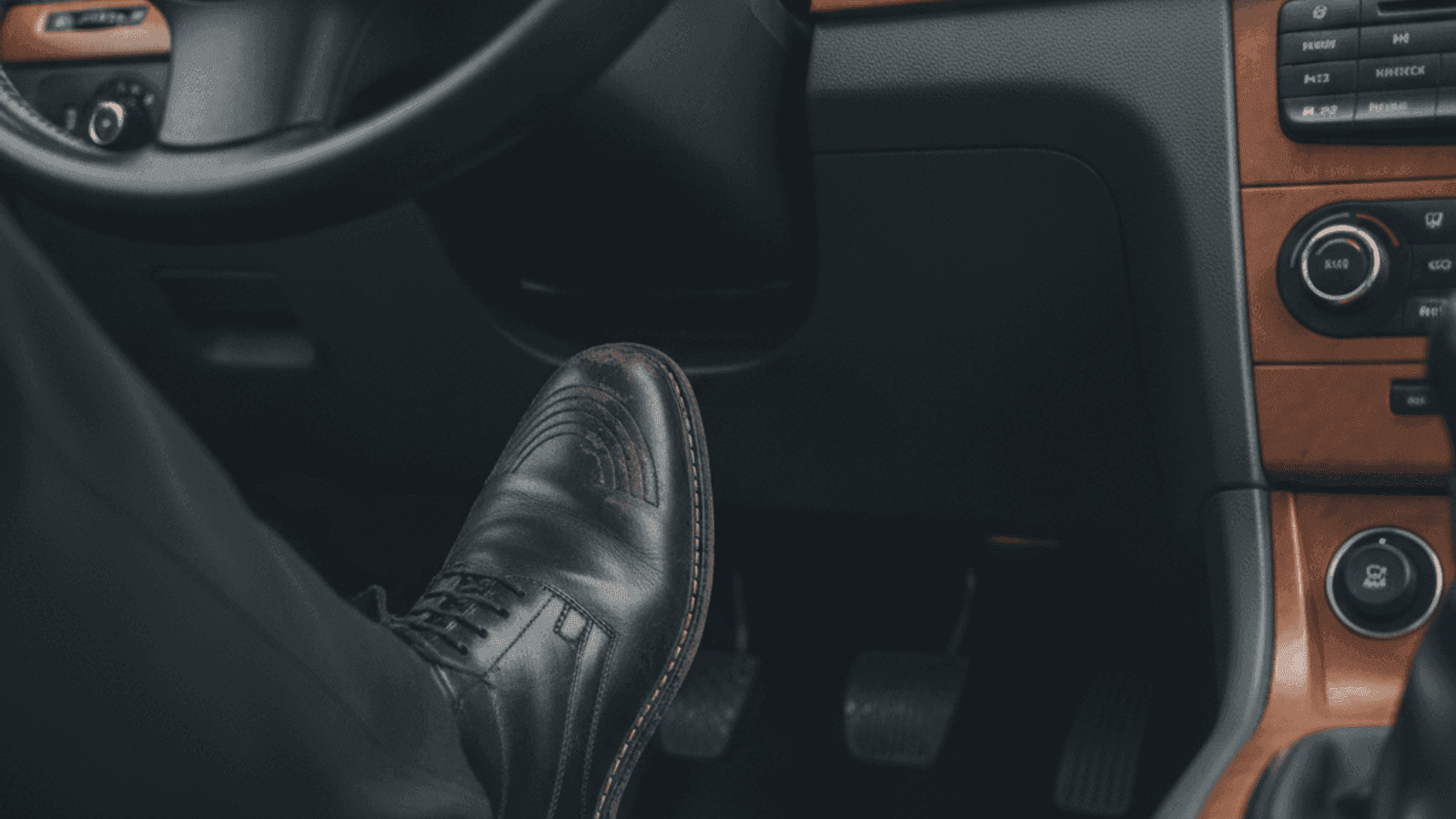
This is the number-one habit in terms of severity. When you keep the car in gear with the clutch half-engaged in a queue or at a traffic light instead of shifting to neutral, the friction lining of the clutch disc rubs continuously against the flywheel. You cannot see it or hear it, but the disc is actively wearing at that moment for no reason at all.
A properly used clutch lasts 150,000 kilometres or more, and with careful driving it can last twice as long. Riding the clutch in daily city traffic cuts that lifespan to 80,000-100,000 kilometres. The difference is enormous when converted into money.
A particularly dangerous form of this habit is holding the car on a hill with the clutch instead of the handbrake. On an uphill slope at a traffic light, rather than pulling the handbrake and waiting for green, you hold the car at the clutch's biting point. The disc burns, literally. Every traffic light like this takes hundreds of kilometres off the total clutch life. If you have trouble recognising the symptoms of a worn clutch, we described them in detail in our guide to clutch slipping.
How much does a clutch replacement cost in BiH
According to Klix.ba data from May 2026, approximate parts-only prices for a clutch are as follows: 200-300 KM for a small petrol car (Clio 1.2, Fabia 1.2), 600-650 KM for a compact diesel (Golf 6 1.6 TDI), over 1,000 KM for an SUV (Peugeot 3008 1.6 e-HDi), and a minimum of 2,000 KM for a premium model with a dual-mass flywheel (Volvo XC60 D5). Labour adds another 100-300 KM or more.
The correct technique is simple. Shift gear, then lift your foot completely off the clutch. At a traffic light, go into neutral and release the clutch. In a queue, do the same. Your foot belongs on the clutch only while you are actively changing gear.
Resting your hand on the gear lever while driving
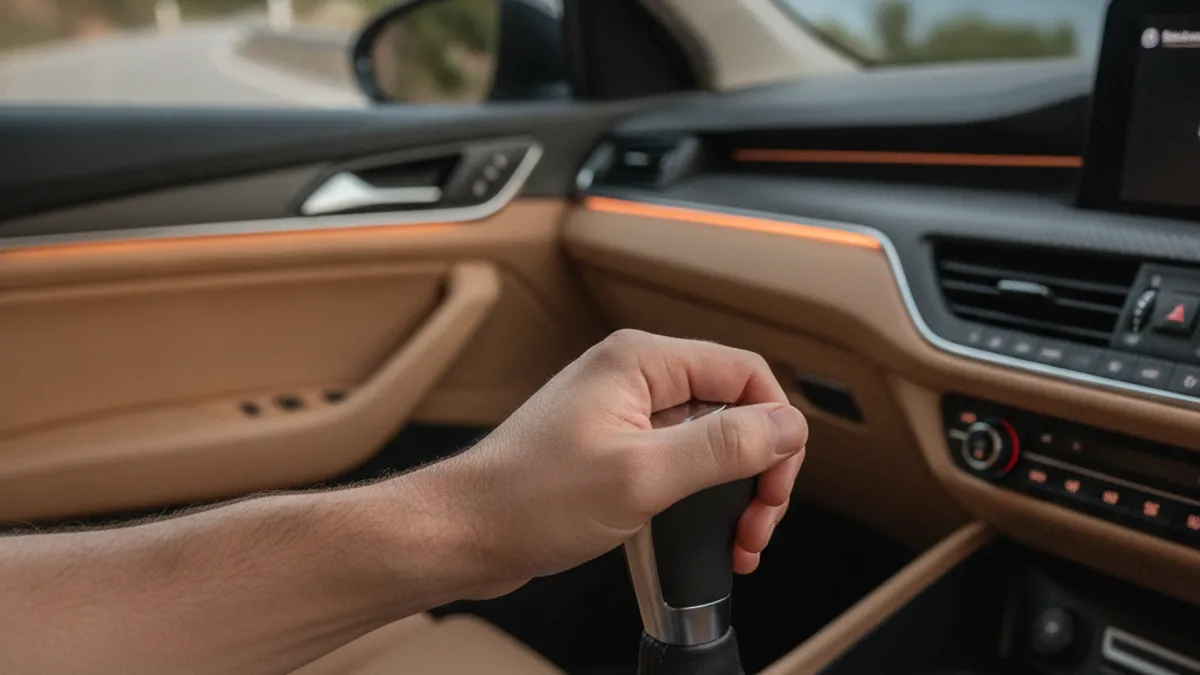
Many drivers rest their right hand on the gear lever as though it were an armrest. The problem is that even slight pressure from the hand transmits force to the selector fork inside the gearbox. The selector fork is a thin metal component that positions the gears in correct mesh, and unnecessary pressure on it accelerates wear on the synchronisers and bearings.
Synchronisers are the gearbox components that match the speeds of two gears before engagement. When they wear out, the gearbox starts grinding during shifts, gears become difficult to engage or pop out. Replacing synchronisers means removing the entire gearbox, a job that takes a full working day.
Both hands belong on the steering wheel. Put your hand on the gear lever only when you are actively changing gear.
Harsh acceleration and late braking
Harsh acceleration from a standstill loads the clutch, driveshafts, engine and gearbox simultaneously. Late braking wears pads and discs incomparably faster than gradual deceleration. The combination of both driving styles creates accelerated wear on virtually every mechanical system in the car.
The difference in fuel consumption is just the tip of the iceberg. Brake pads that would last 40,000-60,000 kilometres with moderate driving wear out in 20,000-30,000 km with an aggressive driver. Discs that would survive two sets of pads have to be replaced along with the first. Tyres wear unevenly and faster. The clutch endures loads it was never designed for on every hard launch.
Anticipation is key. When you see a red light 200 metres ahead, lift off the throttle and use engine braking instead of accelerating until the last moment and then stamping on the brakes. Every brake application wastes energy you have already paid for in fuel. We outlined concrete steps for reducing fuel consumption in our guide to lowering fuel consumption.
Driving over speed bumps and potholes at full speed
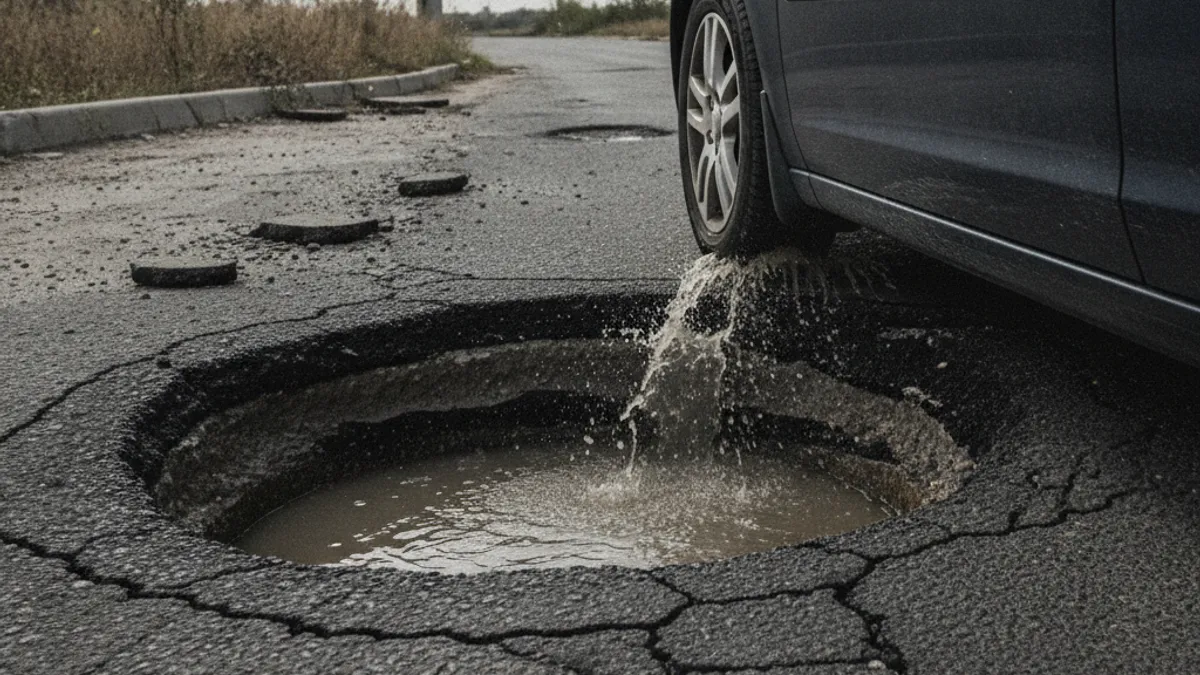
A third of all mechanical damage to vehicles occurs as a result of driving over potholes and road irregularities. Hitting a speed bump or a deep pothole at full speed sends a shock wave through the entire suspension, from the shock absorbers and springs, through the tie rods and ball joints, all the way to the rims and tyres.
Bent rims, cracked tyres, worn shock absorbers, loose tie rods and damaged exhaust systems are all consequences we see regularly in the workshop. A single pothole can bend a rim enough for the tyre to start losing air, and the driver only notices when the tyre goes completely flat. On low-profile tyres, which are increasingly common today, the risk is even greater because the thinner sidewall offers less protection for the rim.
Roads in BiH are not in the best condition. But slowing down to 20-30 km/h before a speed bump or a visible pothole costs nothing and saves hundreds or thousands of KM over the course of a year. If you cannot avoid a pothole, at least brake before it, never on it. Braking on the pothole itself places extra load on the front suspension because the weight shifts forward at the exact moment of impact.
Short trips on a cold engine
Short journeys of 2-3 kilometres do not allow the engine to reach operating temperature. This means that moisture from the combustion process does not evaporate out of the engine oil but accumulates instead. The result is a sludge in the oil known in this region as "shkrama", which looks like a brown paste on the inside of the oil filler cap.
Short trips and oil sludge
This sludge is not merely a cosmetic issue. It clogs oil passages, reduces oil flow and accelerates wear on all moving parts inside the engine. On diesel engines, short trips also destroy the EGR valve and DPF filter because exhaust gas temperatures never rise high enough to trigger regeneration. A DPF that fails to regenerate accumulates particulates until it becomes completely blocked, at which point the car enters limp mode and loses power.
If your daily route is shorter than 5 kilometres, the engine never reaches its operating temperature of 80-90 degrees. The oil never reaches the ideal viscosity for lubrication. Condensation forms every day. The minimum recommendation is to drive the car at least once a week for 15-20 kilometres of uninterrupted driving on the open road so that the engine, oil and exhaust system all reach full operating temperature. We wrote about how long you really need to warm up the engine before driving in our guide to engine warm-up.
Braking with the foot brake downhill
When you drive downhill and keep your foot on the brake constantly, the discs and pads overheat. An overheated disc warps, the pads lose their friction capacity and braking becomes progressively weaker precisely when you need it most. This phenomenon is known as brake fade and can be dangerous on longer mountain descents.
Why you should never brake downhill on the brakes alone
Engine braking exists for exactly this situation. Shift into a lower gear, second or third depending on the gradient, and the engine will naturally slow the car without any use of the brakes. The foot brake is there only for speed correction, not for constant restraint.
When engine braking pays off over the foot brake
On every descent longer than 500 metres. On mountain roads. On every approach to a steep junction. Anywhere you would otherwise keep your foot on the brake continuously for more than 10-15 seconds. A car with a manual gearbox has completely free engine braking; you just need to shift into a lower gear. On an automatic, use manual mode or sequential mode for the same effect.
Driving on a near-empty fuel tank
The electric fuel pump in modern cars is cooled and lubricated by the fuel in which it is submerged. When you drive with the reserve light on or right at the bottom, the pump operates in air instead of fuel, overheats and its lifespan is shortened. On top of that, impurities, sediment and water accumulate at the bottom of the tank over the years. When the fuel level is low, the pump ingests precisely that residue and sends it towards the fuel filter and injectors.
On diesel engines this is even more serious because air in the fuel system may require bleeding, which is not a trivial job. Once air enters the high-pressure system of a modern diesel, the car often will not start without workshop intervention.
The rule is simple: refuel when the gauge drops to a quarter, never wait for the reserve light. This costs nothing extra because you would burn the same petrol or diesel anyway.
Overloaded car and incorrect tyre pressure
Every atmosphere of pressure below the recommended value increases rolling resistance and fuel consumption by 3-5%. Over a year that is a significant figure. But fuel consumption is not the worst part. Low pressure accelerates tyre wear on the edges of the tread, worsens handling and extends stopping distances.
The link between tyre pressure and fuel consumption
The combination of an overloaded car and low tyre pressure is particularly destructive. A full car with five passengers, a boot packed with luggage and tyre pressures that nobody has checked since the last seasonal tyre swap. Each of these factors individually adds a few percentage points to fuel consumption, and together they easily reach a double-digit increase.
Check your tyre pressure once a month, on cold tyres, according to the values on the sticker inside the driver's door. Use a quality gauge and do not rely on a visual estimate. We wrote about tyre pressure and maintenance in more detail in our dedicated guide to tyres, pressure, maintenance and replacement.
Ignoring warning lights on the dashboard
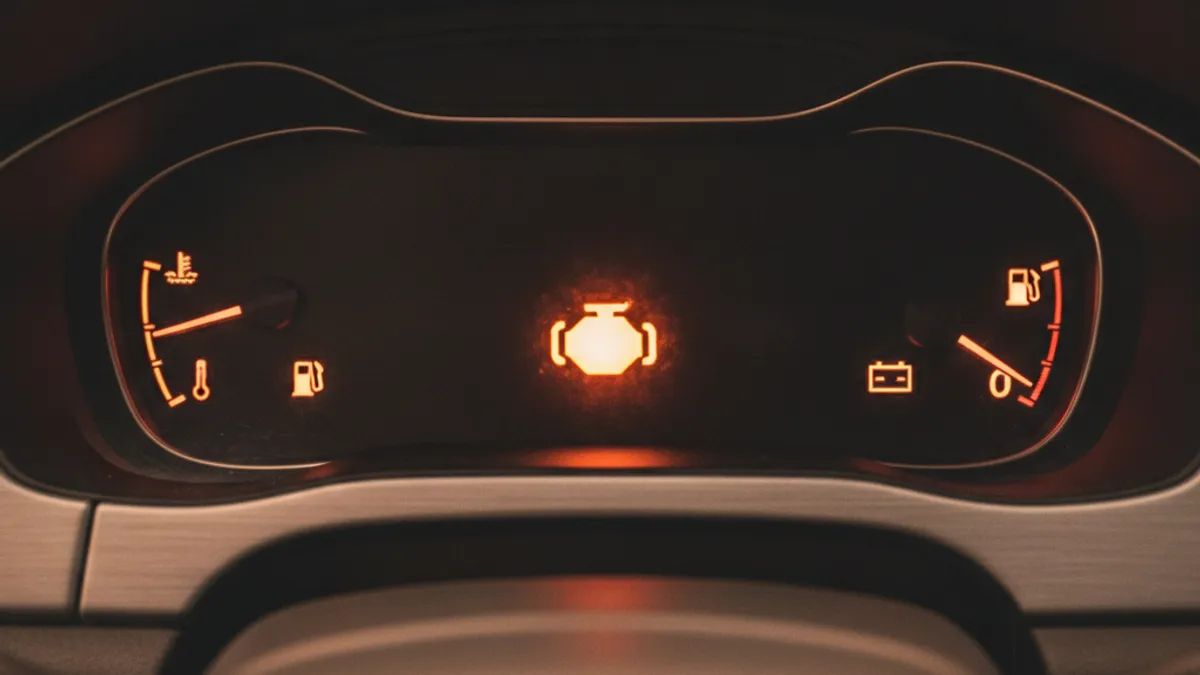
The oil light, temperature light, check engine light or ABS light does not come on without a reason. Each one represents a specific problem that becomes more expensive the longer you ignore it. A check engine light signalling a faulty lambda sensor can cost you one sensor if dealt with promptly. If the driver ignores it for months, it can destroy the catalytic converter, which costs many times more to replace.
The same applies to the oil light. Low oil pressure means the engine is not being lubricated properly. Continuing to drive with the oil light on can destroy the engine in less than a minute. A rising temperature gauge and a red temperature light require an immediate stop.
If you want to know exactly what each warning light means and how urgently you need to react, we explained it in detail in our guide to the check engine light and in our overview of signals you must not ignore.
How bad habits affect your annual costs
Every habit in this article has a cumulative effect. A driver who rides the clutch, drives aggressively and does not check tyre pressure is not paying one penalty but all three simultaneously, every day, every kilometre.
| Habit | What suffers | How much it shortens component life |
|---|---|---|
| Riding the clutch | Disc, flywheel | Up to 50% shorter clutch life |
| Hand on the gear lever | Synchronisers, fork | Gradual but cumulative |
| Aggressive driving | Brakes, tyres, fuel | Brakes 30-50% shorter life |
| Potholes at full speed | Shock absorbers, rims, tie rods | Depends on road conditions |
| Short trips | Engine, oil, EGR, DPF | Significant on diesels |
| Braking downhill | Discs, pads | Warping after overheating |
| Empty fuel tank | Fuel pump | Shortens pump life 20-40% |
| Low tyre pressure | Tyres, fuel consumption | 3-5% more fuel per bar |
| Ignoring warning lights | Depends on the light | From hundreds to thousands of KM |
Most of these habits cost nothing to change. All you need is awareness of what you are doing behind the wheel and a brief adjustment in behaviour. The result is a lower annual maintenance bill, longer component life and safer driving.
Have you noticed that your car is already using more fuel than before, that the brakes feel weaker or that the gearbox grinds during shifts? Those are precisely the symptoms of the habits described in this article. The sooner you recognise them, the cheaper the fix. Get in touch for an inspection while the problem is still in its early stages.
Frequently asked questions
What is the most damaging driving habit for a car?
Riding the clutch in traffic and at traffic lights causes the most damage because it is repeated dozens of times a day and directly wears out expensive components. Replacing a clutch with a dual-mass flywheel can cost over 2,000 KM in parts alone. The correct technique is to shift into neutral and release the clutch pedal fully every time you are not actively changing gear.
How much does aggressive driving increase fuel consumption?
According to data from March 2026, aggressive driving with harsh acceleration and late braking can increase fuel consumption by up to 40% in the city and up to 30% on the open road. Over a year, that difference exceeds the cost of a routine service, and on top of that the brakes, tyres and clutch wear out considerably faster.
Do short trips really damage the engine?
Yes. Journeys shorter than 5 kilometres do not allow the engine to reach its operating temperature of 80-90 degrees. Moisture from the combustion process remains in the oil and creates sludge. On diesels, short trips also clog the EGR valve and DPF filter because regeneration never completes.
Why is it bad to rest your hand on the gear lever while driving?
Even slight pressure from the hand on the gear lever is transmitted to the selector fork inside the housing. That force accelerates wear on the synchronisers and bearings, and replacing them requires a complete gearbox removal. Put your hand on the gear lever only while you are actively changing gear.
How much does low tyre pressure affect fuel consumption?
Every atmosphere of pressure below the recommended value increases rolling resistance and fuel consumption by 3-5%. Besides fuel, low pressure accelerates tyre wear on the edges and extends stopping distances. A monthly check on cold tyres is recommended.
Why should you not brake downhill on the foot brake alone?
Constant braking downhill overheats the discs and pads. An overheated disc warps and the pads lose their friction capacity. Use engine braking by shifting into a lower gear and use the foot brake only for speed correction. This way the discs and pads stay cool and functional when you truly need them.