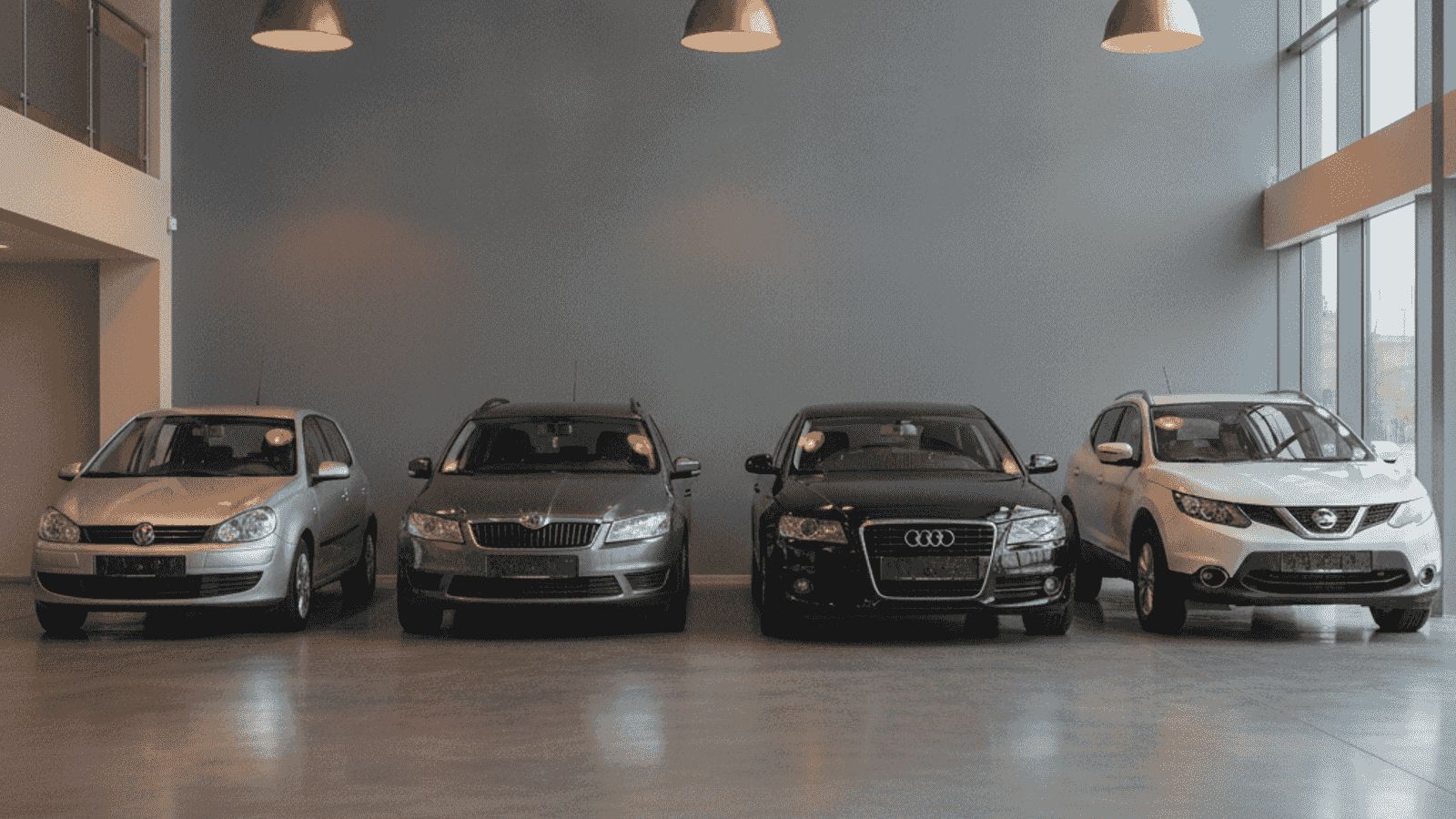
Four European segments, three independent data sources and one reality that applies only to BiH. This is a reliability overview that will not go stale in a week, because it draws on ADAC breakdown statistics from April 2026, the TUV Report covering 9.5 million inspected vehicles from November 2025, and the What Car? owner survey from the same period. Three different methodologies, three different angles, one goal: which most reliable used car in BiH 2026 is genuinely worth buying, and which is not even worth viewing.
This guide was compiled by the Auto Gas Gaga workshop in Banja Luka, drawing on years of experience with pre-purchase inspections and servicing across every segment from city cars to SUVs.
TL;DR
| Topic | Summary |
|---|---|
| Strongest reliability signal for BiH | A stamped service book and a naturally aspirated petrol engine, not the brand itself. |
| Top 3 across all segments | Toyota Yaris (naturally aspirated petrol), Skoda Octavia 1.6 TDI, Mazda CX-5 SkyActiv-G 2.0. |
| Toyota on the ADAC blacklist | The issue is the 12V battery under hybrid load, not mechanical unreliability. Conventional petrol models remain among the best. |
| Most reliable price range | 5,000 to 12,000 KM, compact class, the greatest potential for a BiH buyer seeking the best reliability-to-price ratio. |
| Avoid without documentation | Opel Insignia (PKZ 30+), DSG DQ200 without gearbox service, Duster older than 4 years on TUV. |
| Golden rule | Do not buy the most reliable car you can find, buy the most reliable car you can afford to service. |
Table of Contents
- What reliability means for a BiH driver with a 17-year-old used car
- ADAC, TUV and What Car? in brief, three angles on the same thing
- Overview of all segments from small city car to SUV
- Top 5 most reliable used cars for BiH regardless of segment
- Top 5 used cars to avoid in BiH 2026
- The Toyota paradox, why ADAC and What Car? give opposite ratings
- Reliability versus price, where the sweet spot lies
- Differences by engine and drivetrain, what BiH buyers choose
- What to check on any used car regardless of segment
- Frequently Asked Questions
- Related Articles
What reliability means for a BiH driver with a 17-year-old used car
The BiH market has one peculiarity that changes every reliability calculation. Only about one in nine registered cars is new; the other eight are used. The average age of vehicles on BiH roads exceeds 17 years, and the average price of an imported used car is around 20,000 KM. The best-selling brands are VW, Opel, Fiat, Audi and Renault.
This means the BiH driver is not buying a car that is 3 or 5 years old, where all repairs are still under warranty. They are buying a car that has already passed through two or three owners in Germany, Austria or Switzerland, has potentially covered 180,000 to 280,000 kilometres, and has already needed at least one major service that may never have been carried out. In that context, reliability does not mean the same thing as in a German ADAC report.
ADAC measures the probability of being stranded on the road waiting for a tow truck. TUV measures whether a car passes its periodic inspection without significant defects. What Car? asks owners how many times they visited a workshop outside scheduled intervals. All three metrics are useful, but none of them measures what the BiH driver actually wants to know: how much will this car cost over the next five years, and will it leave them stranded between Banja Luka and Sarajevo in winter.
For the BiH context, reliability is a combination of three things: mechanical durability of the engine and gearbox beyond 200,000 km, availability and price of parts in local shops, and simplicity of repairs without specialist tools that only exist at an authorised dealer.
ADAC, TUV and What Car? in brief, three angles on the same thing
ADAC Pannenstatistik 2026 is based on nearly 3.7 million roadside assistance interventions in Germany during 2025, which is 1.6 per cent more than the previous year. Their key finding: the 12V battery causes 45.4 per cent of all assistance calls. This is important context for understanding the ADAC blacklist, because models that appear on it due to the battery are not necessarily mechanically unreliable.
The probability of a breakdown on a 5-year-old car fell from 3.6 per cent in 2015 to 2.1 per cent in 2025, and on a 10-year-old car from 6.5 to 3.1 per cent. The average age of a car requiring ADAC assistance reached around 14 years, which is closer to the BiH average than it might seem. Each new generation of cars arrives with fewer mechanical problems but more electronics that introduce new categories of faults.
TUV Report 2026 analysed approximately 9.5 million vehicles. Of those, 21.5 per cent failed their technical inspection due to significant defects. The overall winner is the Mazda 2, and in the SUV class the VW T-Roc with just 3.0 per cent defect rate at 2 to 3 years of age. At the other end of the scale, the TUV list of most reliable cars with 100,000+ kilometres looks completely different from the ADAC ranking: Mercedes E-Class leads with a 7.0 per cent defect rate, followed by Skoda Kodiaq at 8.7, Mercedes C-Class at 10.0, Volvo XC60 at 10.3 and Seat Ateca at 11.1 per cent.
What Car? reliability data from 2025 is based on an owner survey in the United Kingdom. Honda won the award for most reliable brand. Individually, VW T-Roc scored 99.0 per cent, Skoda Octavia 99.3, Mazda CX-5 petrol 98.4, BMW 3 Series petrol 98.0 and Skoda Superb diesel 98.0 per cent.
The difference in results between the three sources is crucial: ADAC measures roadside breakdowns (battery dominates), TUV measures technical condition at inspection (brakes, suspension, corrosion), What Car? measures owner experience (how often you had to visit the workshop). A car that scores poorly on one list can be excellent on another. For the BiH driver, the most relevant combination is TUV and What Car? data, because the ADAC battery issue is something resolved by replacing a battery, not by buying a different car.
A detailed explanation of the ADAC and TUV methodology, with specific examples of what each figure means for a buyer in BiH, is covered in our dedicated article on ADAC and TUV car reliability for 2026.
Overview of all segments from small city car to SUV
A series of four detailed analyses covers each segment individually, with specific models, engines, known weak points and recommendations for BiH conditions. Here we summarise them into a single picture, while each segment has its own complete guide for deeper reading.
Small city car is the segment where reliability matters most because repair costs come closest to the value of the car itself. Toyota Yaris and Mazda 2 dominate every list, but Honda Jazz with its timing chain and simple naturally aspirated engine remains a favourite among mechanics who appreciate straightforward designs. The full review with all models, engines and weak points is in our guide to the most reliable small city cars for BiH in 2026.
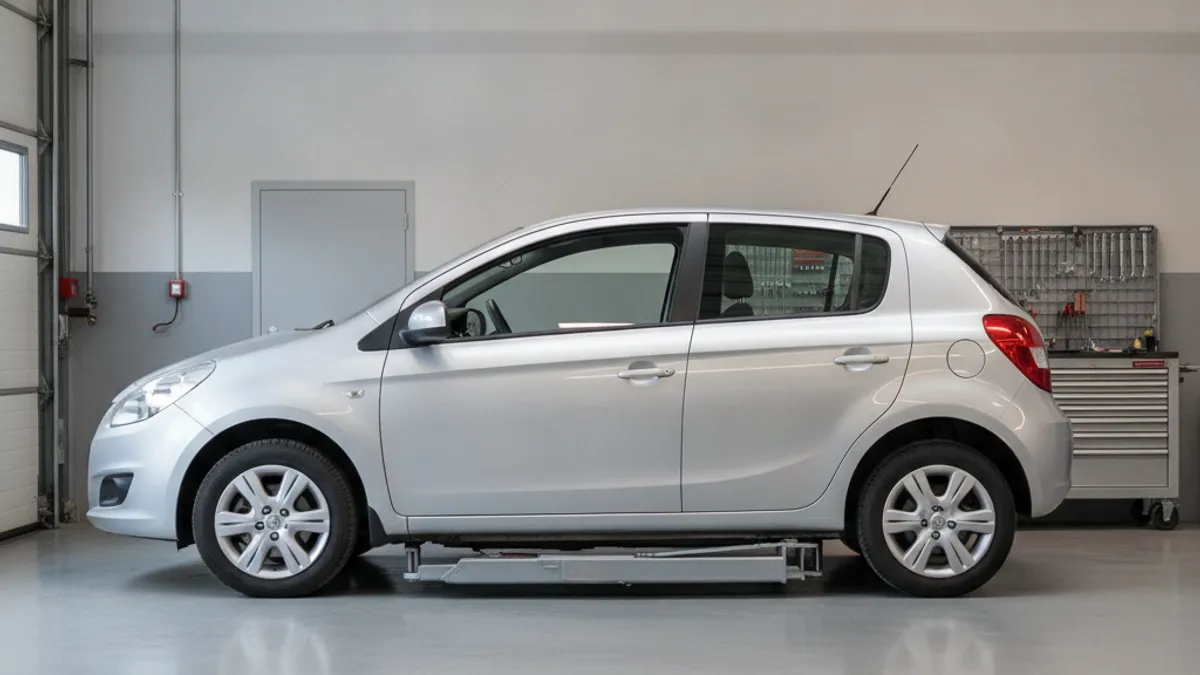
Compact class offers the widest selection, as this is the segment with the highest volume of used car imports into BiH. Skoda Octavia Mk2 and Mk3 with the 1.6 TDI engine, Toyota Auris, Mazda 3 and Honda Civic all appear high on combined reliability lists. Diesel still dominates the BiH market here, but DPF and EGR costs on examples above 200,000 km can change the calculation. A detailed analysis with all weak points and specific engines for this segment is in our guide to the most reliable compact used cars for BiH in 2026.
Family class and estate is the segment where TUV data becomes most useful, as these are cars that accumulate serious mileage. Mercedes C-Class and E-Class hold the leading position on the TUV list of vehicles with 100,000+ km, but they cost more to buy and significantly more to repair. Skoda Superb and Octavia Combi offer an excellent balance of reliability and affordability for families who need space. The full guide with comparison tables and all engines for the family segment is in our guide to the most reliable family cars for BiH in 2026.
SUV and crossover class is the segment where the difference between initial quality and long-term reliability is most apparent. VW T-Roc dominates every list for younger examples, but in BiH buyers mainly purchase older SUVs with 150,000+ km where the rules change. Mazda CX-5 and Seat Ateca hold strong positions even at higher mileages. Dacia Duster is a special case: on the TUV list it ranks among the worst SUVs above 4 years of age, yet on the BiH market it remains extremely popular because it is cheap and simple. A detailed review with all models and engines for the SUV segment is in our guide to the most reliable SUVs and crossovers for BiH in 2026.
Top 5 most reliable used cars for BiH regardless of segment
These five models consistently appear high on ADAC, TUV and What Car? lists while simultaneously meeting BiH criteria: they are available on the market, parts are affordable, and they do not require specialist tools for every minor job.
1. Toyota Yaris (generations XP90 and XP130) with the 1.0 or 1.33 naturally aspirated petrol engine. Timing chain, simple intake engine, minimal number of electronic systems that can fail. ADAC and TUV consistently rank it among the top three in its class. The only realistic risk on older examples is underbody corrosion, particularly on imports from northern countries. The engine requires only regular oil and filter changes; the rest is practically invisible to the owner.
2. Skoda Octavia Mk2 and Mk3 with the 1.6 TDI engine. This engine (codes CAYC, CLHA) is the simplest TDI in the VAG group, without a dual-mass flywheel in the lower power range, with cheap and widely available parts. TUV ranks it above average, What Car? gives it 99.3 per cent. In BiH it is ubiquitous, meaning every workshop knows how to work on it. What sets it apart from competing diesels in the same class is a lower tendency for DPF problems, because the lower engine output is less aggressive on the filter.
3. Mazda CX-5 with the SkyActiv-G 2.0 petrol engine. A naturally aspirated engine with a relatively simple design, no turbo and no DPF. TUV records it among the best in the SUV class, What Car? confirms with 98.4 per cent. On the BiH market it is rarer than VW and Skoda models, but anyone who finds one with a documented service history gets one of the most reliable SUVs in this price range. SkyActiv technology uses a high compression ratio for better combustion without the complications that a turbo brings.
4. Honda Jazz (generations GE and GK). Timing chain, a CVT gearbox that in this case genuinely seldom causes problems, and an engine that comfortably covers 250,000 to 300,000 km with regular maintenance. Cabin space is surprisingly generous for a car of this size, which is a bonus for families. The Magic Seats fold and flip in ways no competitor can match. The only real downside: there are not many on the BiH market, so you need to search deliberately.
5. Volkswagen T-Roc with the 1.0 or 1.5 TSI engine. TUV gives it just 3.0 per cent defect rate at 2 to 3 years of age, and What Car? confirms with 99.0 per cent. For the BiH context, this is still a relatively new model on the used market, but early examples from 2018 and 2019 are already appearing at acceptable prices. The turbo petrol engine demands discipline with oil and servicing, but in return offers a good balance of power and fuel consumption. It is worth noting that the 1.5 TSI (EA211 evo) has variable cylinder deactivation that sometimes creates vibrations, but this is not a fault, it is a characteristic of the engine.
Top 5 used cars to avoid in BiH 2026
These are not bad cars in absolute terms. Each has its own logic for some buyer, somewhere. But for the average BiH buyer seeking a used car with 150,000+ km, without access to cheap authorised servicing, who wants a car for the next five years without major surprises, these five models statistically bring the most problems.
1. Opel Insignia (2016 to 2022) carries an ADAC PKZ rating of 30.5 to 33.5, which is ten times worse than the Audi A4 (0.9 to 3.1) in the same segment. The only D-segment model on the ADAC blacklist for 2026. The most common issues are electronics, battery and turbo at higher mileages. The price is attractive precisely because the market knows this well. If you buy one anyway, budget more per year for unexpected repairs.
2. Renault Megane III and IV with the 1.5 dCi engine. The K9K engine is widespread and well known, but in combination with Renault electronics, crankshaft bearings that can fail and a DPF that clogs faster than average, the overall package above 200,000 km becomes expensive to maintain. Parts are available, but workshop visits are more frequent than average.
3. Dacia Duster older than 4 years. TUV records it among the worst in the SUV class beyond that age. Corrosion, suspension and brakes are the three most common reasons for failing the technical inspection. Nevertheless, the Duster remains popular in BiH because it is cheap to buy and simple to maintain in terms of basic mechanics. If you buy one with that awareness and are prepared to invest in suspension and corrosion protection, it can work. But if you are after reliability by every metric, there are better options for similar money.
4. Peugeot and Citroen with the 1.6 HDi engine (DV6 family) pre-2014. Turbo, injectors and DPF are three costs that appear statistically more often on these engines than on the competition. Individual parts are not expensive, but they are frequent, and on examples above 200,000 km without a documented service history, the cumulative cost turns a seemingly cheap car into a financial liability.
5. Volkswagen Touran I with the DSG7 gearbox (DQ200). A family car with excellent space, but the DQ200 gearbox on older examples is notorious for mechatronic unit and clutch pack problems. If you find an example with a documented gearbox service and confirmation that the mechatronic unit has been refurbished, it can be an excellent choice. Without that documentation, the risk is too great for a family budget. The principle is similar for all automatic gearboxes: they are complex assemblies. However, the design, software, oil and typical faults differ from manufacturer to manufacturer, and the DQ200 sits at the worse end of that scale.
The Toyota paradox, why ADAC and What Car? give opposite ratings
This is the most important lesson for anyone using international reliability sources to guide a purchase in BiH. The ADAC blacklist for 2026 includes the Toyota C-HR, RAV4, Yaris and Yaris Cross, plus the Hyundai Ioniq 5. At first glance, Toyota on a reliability blacklist sounds like a data error.
But the reason is not mechanical unreliability. The cause is the 12V battery that fails under hybrid load. Toyota's hybrid system places additional stress on the auxiliary battery, and that battery fails more often than in conventional cars. ADAC records this as a breakdown requiring roadside assistance, because the car cannot start without a functional 12V battery, even when the main hybrid unit is perfectly fine.
The What Car? survey of the same models paints a completely different picture: owners are satisfied, rarely visit the workshop, and the mechanicals are impeccable. The difference is that What Car? measures overall ownership experience, while ADAC measures only one specific situation: a breakdown that stops you on the road and requires an assistance call.
For the BiH buyer, this paradox has a practical consequence. If you are buying a Toyota Yaris or Auris with a conventional petrol engine (not a hybrid), the ADAC blacklist does not apply to you. Those Toyotas are among the most reliable cars you can buy, full stop. If you are buying a hybrid Toyota, be aware that you may need to replace the 12V battery every 3 to 4 years, but that is no reason not to buy the car. Replacing one battery is a negligible cost compared to an engine that covers 400,000 km without a major intervention.
The broader takeaway from the Toyota paradox: never read a single reliability list in isolation. ADAC, TUV and What Car? measure different things. A car on one source's blacklist can top another's rankings, and vice versa. Cross-referencing all three sources with BiH specifics (vehicle age, mileage, service availability) produces a picture that no single source can offer on its own.
Reliability versus price, where the sweet spot lies
The cheapest car on the market is rarely the most reliable, and the most reliable is rarely the cheapest. The reliability-to-price ratio for the BiH buyer falls into recognisable zones.
In the range up to 5,000 KM, older city cars dominate: Yaris, Jazz, Mazda 2, Fiat Grande Punto. Reliability varies enormously because everything is 15+ years old, so it depends more on the individual example than on the model. In this range, a stamped service book is the strongest reliability signal. A car with complete service records is worth more than a car that is a supposedly more reliable model but has no documentation whatsoever.
In the 5,000 to 12,000 KM range, the compact class opens up: Octavia Mk2, Auris, Mazda 3, Civic. This is the range where the reliability-to-price ratio for the BiH buyer has the greatest potential. The car is old enough that depreciation has already consumed most of its value, yet young enough that the mechanicals still hold up if it has been serviced. This range also offers the widest selection on the market, meaning you can choose between multiple examples of the same model and pick the one with better documentation.
In the 12,000 to 20,000 KM range, you enter the family and SUV class: Octavia Mk3, Superb, CX-5, early T-Roc examples. Here reliability becomes more predictable because the cars are younger and more often have a documented service history. But potential repair costs are also higher, as parts are more expensive and the engineering more complex.
Above 20,000 KM sit the Mercedes C and E Class, newer SUVs, and the premium segment. TUV data shows that Mercedes models are exceptionally reliable at high mileages, but the cost of every repair is proportionally greater. For the BiH buyer without access to affordable authorised servicing, premium reliability does not necessarily mean lower total cost of ownership. A Mercedes that never breaks down is cheaper than an Opel that constantly does, but a Mercedes that fails once costs as much as three Opel repairs.
The key insight for the BiH market: do not buy the most reliable car you can find. Buy the most reliable car you can afford to service. An Octavia with the 1.6 TDI is more reliable than a Mercedes C-Class on paper, but if both need attention at 200,000 km, the Octavia costs half as much to fix. For a more detailed analysis of whether age or mileage matters more when buying, see our dedicated article on that question.
Differences by engine and drivetrain, what BiH buyers choose
Diesel still dominates the BiH used car market, especially in the compact and family classes. But reliability by engine type is not uniform, and the differences are large enough to influence a purchase decision.
Naturally aspirated petrol engines (1.0 to 1.6, no turbo) are statistically the most reliable engine type for used cars. Fewer parts that can fail, no turbo, no DPF, no exhaust gas recirculation system that clogs. Toyota 1.33 VVT-i, Honda 1.3 and 1.5 i-VTEC, Mazda SkyActiv-G 2.0 are examples of engines that comfortably cover 250,000 to 300,000 km with regular maintenance. The most common expense on these engines is consumable parts: spark plugs, coils, injectors at higher mileages. Nothing that requires pulling the engine.
Turbo petrol engines (TSI, TFSI, EcoBoost, THP) offer a good balance of power and fuel consumption, but at higher mileages they start to demand attention. The timing chain on early 1.2 and 1.4 TSI engines, a turbo that burns oil, direct injection that deposits carbon on intake valves. They are not inherently unreliable, but they require disciplined servicing and an owner who does not skip oil change intervals. For the BiH buyer purchasing a turbo petrol car with 180,000+ km, the crucial question is whether the previous owner respected the service intervals.
Diesel with DPF (virtually all diesels from 2009 onwards) has one additional variable: the DPF filter that clogs if the car predominantly drives short urban journeys. For the BiH driver who mainly drives short trips within the city, a diesel with DPF is a worse choice than a petrol engine, even if the diesel is more reliable on paper. For a driver who regularly covers longer stretches on the open road, diesel still makes sense both economically and in terms of reliability. The costs of regeneration and eventual DPF replacement are real and must not be ignored when calculating total cost of ownership.
Automatic gearboxes are a topic that deserves special attention. The principle is similar for all of them: they are mechanical assemblies that transmit power to the wheels. However, the design, software, oil and typical faults differ from manufacturer to manufacturer. A classic torque-converter automatic (ZF 6HP, Aisin) is generally more reliable at high mileages than a dry-type DSG (DQ200). The wet DSG (DQ250, DQ381) sits somewhere in between, better than the dry type but requiring regular oil changes at intervals of 60,000 to 90,000 km depending on driving conditions. The CVT gearbox in the Honda Jazz and Civic is an exception that proves the rule, as it is unusually reliable for its type. For a more detailed overview of automatic gearboxes and their maintenance, see our guide to DSG service and oil changes.
All-wheel drive (4x4, AWD) adds another layer of complexity. The Haldex coupling on VW/Skoda/Seat models, xDrive on BMW, 4Matic on Mercedes, all require regular oil changes in the differential and coupling. On used cars with 200,000+ km, irregular drivetrain servicing means a potentially expensive repair. For the BiH driver who does not live in the mountains and does not regularly drive in snow, front-wheel drive with good winter tyres is a more reliable and cheaper option than a 4x4 system that has not been serviced for three years.
What to check on any used car regardless of segment
Whether you are buying a Yaris for 4,000 KM or a CX-5 for 18,000 KM, there is a checklist of things you must verify before putting down a deposit. This list is not a substitute for a professional pre-purchase inspection at a workshop, but it helps you eliminate obvious problems while still at the seller's location.
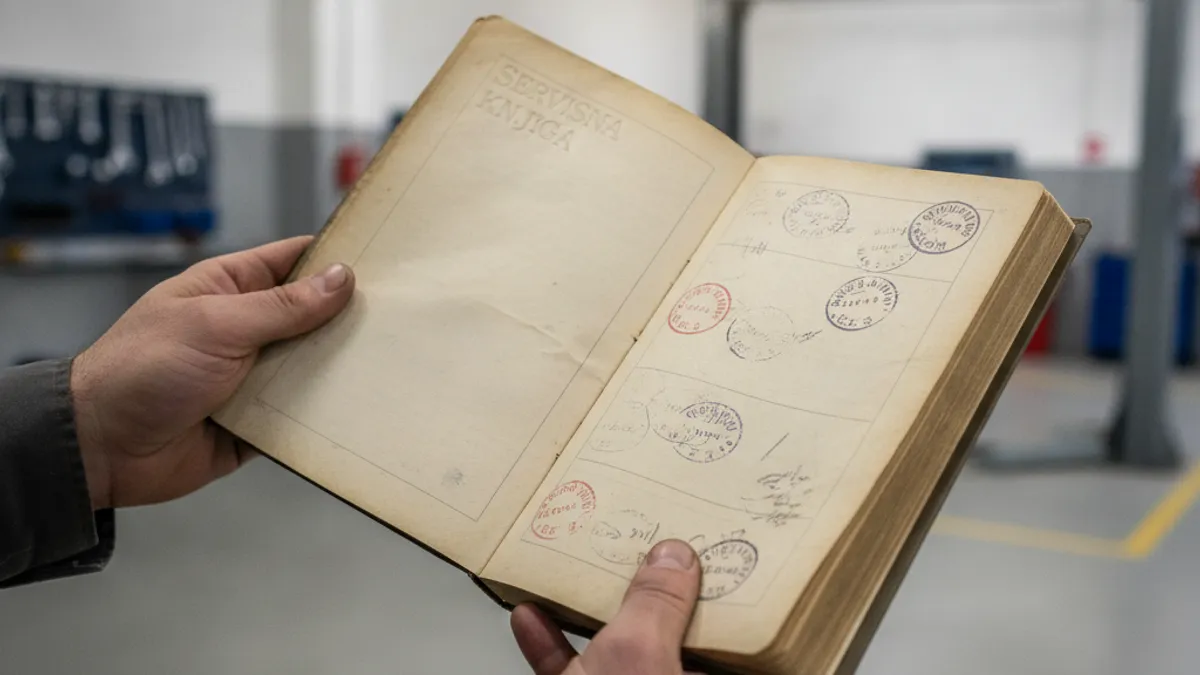
A stamped service book is the primary reliability signal in BiH. Invoices for major work are a welcome bonus, but stamps in the book are what most buyers can verify on the spot. A car without a service book is not necessarily bad, but you are paying for an unknown quantity, and an unknown quantity on a car with 200,000 km can be expensive.
Cold-start the engine. Arrive before the seller warms the car up. A cold start reveals problems that disappear once the engine is warm: ticking hydraulic lifters, exhaust smoke (blue means oil, white means coolant, black means fuel), uneven idle, and noises from the timing mechanism that warn of wear.
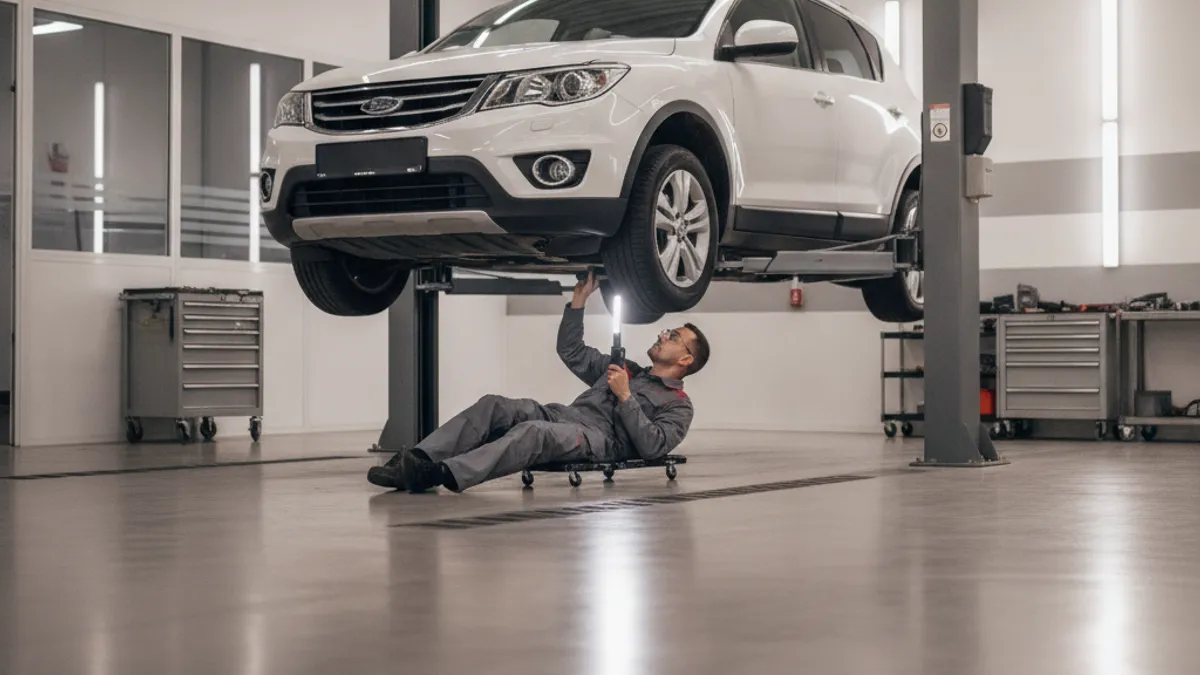
Underneath the car. Look for signs of oil and coolant leaks, the condition of the exhaust and catalytic converter, corrosion on structural elements, and the condition of brake hoses. Check the suspension by pressing each corner of the car firmly downward and releasing: if it bounces more than once, the shock absorbers are worn.
Test drive of at least 20 minutes, including urban driving with frequent stops, acceleration on the open road to at least 100 km/h, and hard braking. Pay attention to vibrations under braking (warped discs), pulling to one side (uneven brake wear or a suspension issue), and noises from the gearbox during gear changes.
Checking the car's documented history is a step many people skip, yet it can prevent the purchase of a stolen or write-off vehicle. International registers can reveal true mileage by date, recorded accidents, number of previous owners and indicators of theft or total loss. We consider it an essential step before buying absolutely any used car. You can run the check via carVertical, and when paying for the report you can use the code GAGA for a 20% discount.
And finally, a professional pre-purchase inspection at a workshop. What you cannot see in a car park, a mechanic sees on a lift: underbody condition, play in ball joints and tie rods, leaks visible only from below, brake condition from the inside, engine compression, and electronic diagnostics that read the fault memory. For a detailed guide on what a mechanic checks during a pre-purchase inspection, see our article on checking a used car before buying.
Found a car you are considering? Book a pre-purchase inspection or message us on WhatsApp with the listing link before you put down a deposit.
Frequently Asked Questions
What is the most reliable used car for BiH in 2026?
According to cross-referenced data from ADAC, TUV and the What Car? survey, the Toyota Yaris with a naturally aspirated petrol engine (1.0 or 1.33) is the most consistently top-ranked model across all sources and all metrics. In the compact class, the Skoda Octavia with the 1.6 TDI engine offers the best balance of reliability, price and parts availability on the BiH market.
Is Toyota really unreliable according to ADAC for 2026?
No, Toyota is not mechanically unreliable. The ADAC blacklist for 2026 includes Toyota models (C-HR, RAV4, Yaris, Yaris Cross) solely because of the 12V battery that fails under hybrid load. Conventional petrol Toyota models without a hybrid drivetrain remain among the most reliable on the market.
How many kilometres is too many for a used car in BiH?
There is no universal limit. A naturally aspirated petrol engine with a documented service history can comfortably exceed 300,000 km. A diesel with DPF and turbo starts demanding larger investments after 200,000 km. Service documentation matters more than the figure on the odometer.
Is diesel or petrol more reliable for a used car?
Naturally aspirated petrol engines are statistically more reliable at high mileages because they have fewer components that can fail (no turbo, no DPF, no EGR valve). A diesel with DPF is more reliable only if the car regularly covers longer stretches on the open road. For predominantly urban driving, a petrol engine is the more reliable choice.
What does the ADAC PKZ rating mean and how should you read it?
PKZ (Pannenkennzahl) is the ADAC breakdown index that relates the number of roadside interventions to the number of registered vehicles of that model and age. A lower PKZ is better. The average is around 5 to 10 for most models, while an Opel Insignia with a PKZ of 30+ means the probability of a roadside breakdown is several times the average.
Is a pre-purchase workshop inspection really necessary?
Yes. A professional inspection on a lift reveals problems you cannot see in a car park: structural corrosion, leaks visible only from underneath, worn suspension joints, brake condition from the inside, and electronic faults stored in the ECU memory. The cost of an inspection is negligible compared to the cost of buying a car with a hidden problem.