Buying a used SUV in BiH in 2026 comes down to one question: which model will not throw up an expensive problem at 150, 200 or 250 thousand kilometres? The answer depends on who you ask. ADAC measures how many times a car stops on the road. TUV counts how many examples fail the technical inspection. What Car? asks owners how satisfied they are. Only when you cross-reference all three sources do you get a realistic picture. This guide does that for the 10 most popular used SUV models on offer today on the Bosnian market, with a concrete classification into three groups: most reliable, solid with a caveat, and those that need a serious check.
This guide was prepared by the Auto Gas Gaga workshop in Banja Luka, based on ADAC, TUV and What Car? data for 2026 and years of experience with pre-purchase inspections in the SUV segment.
Table of Contents
- Why the SUV Segment Is the Hardest Reliability Test
- What ADAC, TUV and What Car? Say for the SUV Segment 2026
- Three Most Reliable SUV Models for a Used Purchase
- Three Solid SUVs With a Caveat
- Three SUVs With a Warning Asterisk
- The Toyota Paradox That Confuses Buyers in BiH
- Which Engine and Gearbox for the Most Reliable Used SUV in BiH
- Checklist for Buying a Used SUV With 150,000+ km
- Frequently Asked Questions
- Related Articles
Why the SUV Segment Is the Hardest Reliability Test
SUV and crossover models carry more mass than saloons of the same class. That difference is not cosmetic. More mass means greater pressure on the brakes, faster wear of joints and bearings, and more stress on the gearbox and differential, especially on models with all-wheel drive. A compact SUV like the Tiguan or Tucson carries 100 to 200 kilograms more than a comparable saloon, and it is driven on the same roads in BiH, through the same potholes, over the same speed bumps.
The second factor is all-wheel drive. The Haldex coupling on VAG models (Tiguan, T-Roc, Karoq), xDrive on the BMW X1, AllGrip on the Vitara, HTRAC on the Tucson, each of these systems requires regular maintenance that many owners skip. The oil in the Haldex coupling needs to be changed every 60,000 kilometres, and a replacement pump and clutch packs at 200,000+ kilometres can already cost as much as a whole minor service. When you buy a used SUV with four-wheel drive and 180 thousand on the clock, the question is not just "does the engine run" but "has anyone ever touched the differential".
The third reason the SUV segment is harder to assess for reliability is the way it is used. In BiH, an SUV is often bought because it makes it easier to cross bad gravel approaches and rough winter roads. That means the average SUV in BiH endures harsher conditions than the same model in Germany. And that is exactly why it is important to have data from several sources, not just one.
What ADAC, TUV and What Car? Say for the SUV Segment 2026
Each of the three sources measures reliability differently, and that is why their ratings sometimes diverge. Understanding what each source actually measures is a precondition for reading any reliability list correctly.
ADAC Pannenstatistik 2026 relies on 3.7 million roadside-assistance interventions across Germany and covers 158 vehicle series from 27 manufacturers. It measures how many times per 1,000 registered vehicles of that generation someone calls for roadside assistance, expressed as the PKZ (Pannen-Kennzahl). A lower PKZ means fewer breakdowns on the road. The key detail: the battery is responsible for 45.4% of all breakdowns on the road. That means a model can have a high PKZ simply because its original battery does not last as long as it should, while being mechanically completely sound.
TUV Report 2026 is based on 9.5 million technical inspections in Germany. It measures the percentage of vehicles that fail the inspection due to significant or dangerous defects. Here the physical condition of the car is examined: corrosion, brake wear, suspension wear, leaks, the functioning of the lights. For 2026, a total of 21.5% of vehicles failed the technical inspection, and for 12-13-year-old examples that rate rises to 40.4%. That is the fourth consecutive annual increase.
The What Car? Reliability Survey is a British survey that asks owners whether they had a fault in the past 12 months, how long the repair took and how much it cost them. The result is a reliability percentage: 100% means that not a single surveyed owner reported a problem. This metric better captures everyday nuisances such as electronic errors and squeaks that do not leave a person stranded on the road (so ADAC does not see them), but also leave no trace at the technical inspection (so TUV does not catch them).
When you cross-reference all three sources, the picture becomes clearer than any single source can give. A model that is good by ADAC and TUV but poor by What Car? probably has minor electronic glitches that do not put the car out of action but frustrate the owner. A model that is poor by ADAC but good by TUV and What Car? probably has a battery problem, not a mechanical one. That second case describes Toyota exactly, which we cover in detail in a separate section.
Three Most Reliable SUV Models for a Used Purchase
These are the models that consistently do well across all three sources. None of them is perfect, but none has a serious systemic problem that should scare a buyer.
T-Roc or Ateca, Which Is More Reliable
The VW T-Roc (2017+) is the SUV-class winner by TUV for 2026. With 3.0% defects in the 2-3-year age group, 4.0% for 4-5 years and 6.7% for 6-7 years, these are figures that few SUVs achieve. The ADAC PKZ ranges from 1.6 to 5.9 per 1,000 vehicles, which puts it at the very top of the class. What Car? confirms it with 99.0% reliability for the 2018-2025 period. Specifically: the T-Roc with the 1.5 TSI engine and a manual gearbox is the combination that creates the fewest problems.
The SEAT Ateca (2016+) shares its platform with the T-Roc (the MQB platform, the same engines, the same gearboxes), so it is no surprise that the reliability is similar too. ADAC PKZ: 1.5 to 14.1. The TUV results are solid, though slightly weaker than the T-Roc in older generations. What Car? does not have enough data for a separate rating, but owner forums confirm the same mechanical base. The Ateca is usually somewhat cheaper than the T-Roc on the Bosnian market for the same year and mileage, so it represents an excellent ratio of price and reliability.
The Mazda CX-5 (2017+, second generation) is the only Japanese SUV that broke into the top in this review. The ADAC PKZ for seven-year-old examples is 5.3. What Car? rates the petrol CX-5 at 98.4%. The TUV results are above average for the class. What sets the CX-5 apart is the simplicity of its construction: Mazda's SkyActiv engine has no turbocharger (in the petrol version), has no DPF problem (on petrol), and the 6-speed automatic is a classic torque converter, not a dry DSG. For a buyer who wants Japanese reliability in an SUV package, the CX-5 is the only one that truly fulfils that promise in the ADAC and TUV data.
Three Solid SUVs With a Caveat
These models do well by most criteria, but have one or two areas where the buyer should be cautious and check the condition specifically before buying.
The Hyundai Tucson (TL, 2015-2020) has a PKZ of 6.0 to 17.9 by ADAC, which is a wide range. The ADAC list of seven-year-old SUVs places it in fifth with a PKZ of 4.2, which is an excellent result for that age. TUV is solid for model years up to 7 years. The caveat comes from the engine: the 1.6 CRDi (136 hp) is known for earlier turbo wear and a problem with the DPF filter on short trips, while the 2.0 CRDi (185 hp) is mechanically more stable but uses more fuel and is harder to resell.
Tucson 1.6 CRDi or 2.0 CRDi for a Used Buy
If you are choosing a Tucson with a diesel, the 2.0 CRDi is the better long-term investment for buyers who drive longer trips. The engine is more robust, the turbo lasts longer, and the DPF regeneration is carried out more regularly on the motorway. For city driving and short trips, both diesel variants are risky, so in that case the petrol 1.6 T-GDI is the smarter solution.
The Škoda Karoq (2017+) shares its platform with the T-Roc and Ateca (MQB), so the ADAC data is comparable too: PKZ 3.5 to 9.7. The TUV results are good. The reason the Karoq is not in the first group is availability on the domestic market. In BiH it is rarer than the Tiguan and Tucson, so it is harder to find an example with a known service history. It is mechanically just as reliable as the T-Roc, but on the specific market you have to be more prepared to wait for the right example.
The BMW X1 (F48, 2015-2022) surprises with its position. ADAC places the seven-year-old X1 in third among SUVs with a PKZ of 3.4. What Car? gives it 96.2%. The TUV results are above average. The caveat is in the cost of maintenance: parts are more expensive, services are more expensive, and every problem on the X1 costs more than on the Karoq or Tucson. The buyer has to count on the annual maintenance budget being higher, even when the car is not causing mechanical problems.
Three SUVs With a Warning Asterisk
These are models that are popular and affordable on the Bosnian market, but have documented weak points that the buyer must know in advance.
The Nissan Qashqai (J10 and J11) is the best-known SUV in Europe, but reliability varies drastically by generation. ADAC PKZ: 11.3 to 33.3 per 1,000 vehicles, one of the widest ranges in the segment. TUV for 12-13-year-old examples (which is the typical model year for the J10 in BiH) gives a 37.6% failure rate, one of the worst results in the class.
Qashqai J10 or J11 Reliability
The J10 (2006-2013) has a chronic problem with the CVT gearbox losing oil, suspension wear on domestic roads, and underbody corrosion. The J11 (2014-2021) is significantly better: What Car? gives it 98.3%, the 1.5 dCi engine is well known and serviceable, and the CVT was replaced by a classic automatic or a manual gearbox. If you are considering a Qashqai, the J11 generation is the minimum condition for reasonable reliability.
The Dacia Duster is the cheapest SUV on the market, but TUV places it last in the SUV class in every age category above 4 years. With 23.5% defects for 6-7-year-old examples and 34.2% for 10-11-year-old ones, those are figures that speak for themselves.
Why the Duster Is the Worst SUV by TUV
The problem is not one specific fault. The Duster has thin sheet metal that corrodes faster than the competition, suspension that wears faster on bad roads, brake components that do not last as long as on more expensive models, and a general build quality that gives way earlier. For a buyer on a limited budget, the Duster can be a reasonable buy only if it is an example younger than 5 years, with low mileage and a known history.
The Ford Kuga (second generation, 2012-2019) has a PKZ of 5.6 up to as much as 42.6 by ADAC, which is one of the most dramatic ranges in the entire SUV segment. Younger model years are solid (PKZ around 5-8), but older model years with the PowerShift automatic gearbox can be extremely problematic. The PowerShift on the Kuga is a dry dual clutch, the principle is similar to the DSG, but Ford's execution, software, hydraulics and characteristic faults differ significantly from the VAG version. If you are considering a Kuga, a manual gearbox is the only reasonable choice on the used market.
The Toyota Paradox That Confuses Buyers in BiH
The Toyota RAV4 and C-HR occupy an interesting position: ADAC places them at the bottom of SUV-class reliability with a PKZ of 31.0 to 53.7 for the RAV4 and 11.8 to 61.0 for the C-HR. Those are figures worse than the Duster and the Qashqai. At the same time, What Car? gives the RAV4 Hybrid a rating of 98.9%, and Toyota's reputation for reliability is at the level of a religious conviction among some buyers.
Toyota RAV4 Faults, Battery, ADAC
The reason for this apparent contradiction is precise: the battery. ADAC measures breakdowns on the road, and the battery accounts for 45.4% of all such calls. Toyota hybrid models use a standard 12V battery for starting and electronics, which endures additional load from the hybrid system. When that battery weakens (and it happens earlier than with a conventional drivetrain), the car cannot even "wake up", so the owner calls for roadside assistance. Mechanically, the engine and hybrid drivetrain are reliable. Which is also confirmed by the What Car? owner survey.
For a buyer in BiH this means a concrete thing: if you are buying a used Toyota RAV4 or C-HR, replacing the battery with a quality AGM battery is the first step. That is not an expensive intervention. But if you look only at the ADAC PKZ without context, the RAV4 looks like a disaster, which is not the whole story. The Toyota hybrid is indeed mechanically reliable, but it requires the owner to understand the specifics of the hybrid system and not neglect the 12V battery.
Which Engine and Gearbox for the Most Reliable Used SUV in BiH
In the SUV segment, the choice of engine and gearbox has a greater impact on long-term reliability than in the compact class. The reason is mass: an SUV is heavier, so a weaker engine works under greater load, and the gearbox endures more.
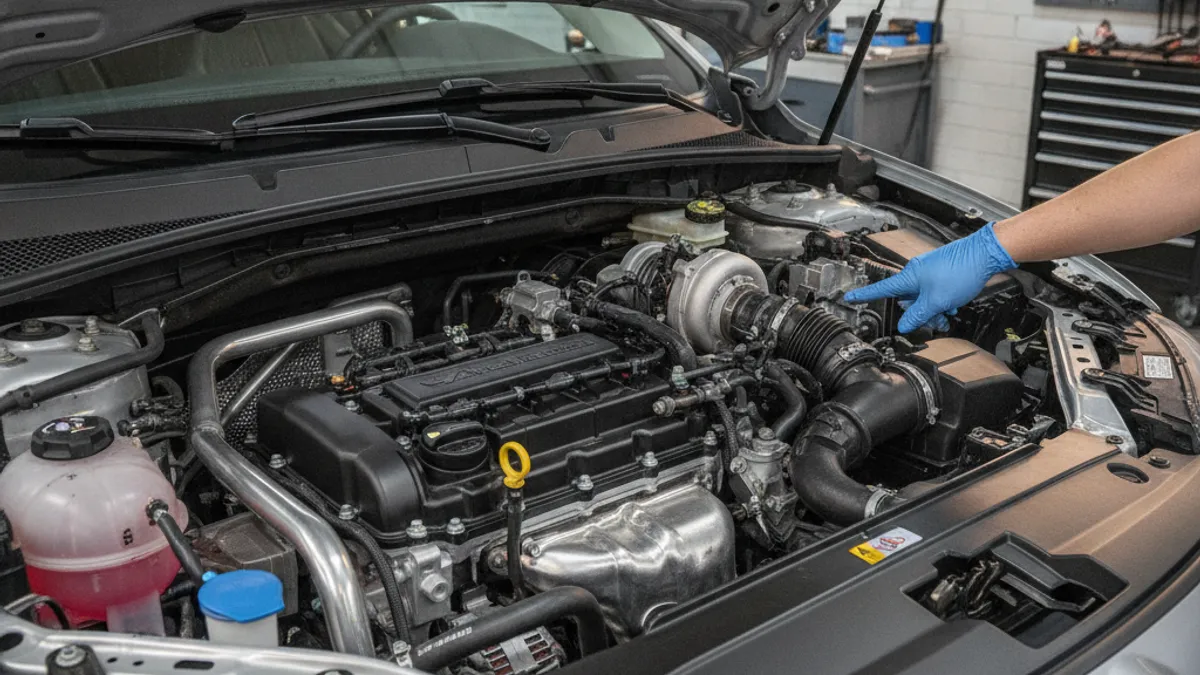
Petrol turbo engines (1.5 TSI, 1.6 T-GDI, SkyActiv-G) are today the most common choice for compact SUVs. The 1.5 TSI on the T-Roc and Karoq is a good engine when serviced regularly, but it is sensitive to oil quality and change intervals. The SkyActiv-G on the Mazda CX-5 has no turbocharger in the basic version, so it has fewer potential points of failure.
A diesel in an SUV still makes sense for buyers who drive longer trips. The 2.0 TDI on the Tiguan and Karoq, the 2.0 CRDi on the Tucson, the SkyActiv-D on the CX-5 are all proven units. The key rule remains the same as in all the segments we have covered in this series: a diesel on short city trips in BiH is a recipe for a clogged DPF and an expensive service. You can read more about the DPF issue in our guide on the DPF filter.
Gearbox: the manual is still the most reliable choice on the used market. The DSG (DQ381 wet on the Tiguan, DQ250 on older ones) and Hyundai's 7DCT are good constructions when serviced, but on a used example with an unknown service history, a manual gearbox eliminates one of the most expensive unknowns. Mazda's 6-speed automatic (a classic torque converter) is the exception, because that construction is inherently simpler than dual clutches.
For a complete analysis by each segment, from small city cars to family models, see our previous guides too: the most reliable small city car for BiH 2026, the most reliable compact used car for BiH 2026 and the most reliable family car for BiH 2026.
Checklist for Buying a Used SUV With 150,000+ km
Everything that applies to buying any used car applies here too, but the SUV segment adds three specific items that must not be skipped.
All-wheel drive. If the car has 4WD/AWD, ask the seller when the oil in the all-wheel-drive system (Haldex, xDrive, HTRAC) was last changed. If they do not know the answer, that is a warning sign. The Haldex pump and clutch packs on VAG models, the HTRAC coupling on the Hyundai, the xDrive transfer case on the BMW, all of these systems require a service at 60,000-80,000 kilometres. At 150,000+ km without a service, replacing the complete assembly can be one of the most expensive repairs on the car.
Brakes and suspension. An SUV is heavier than a saloon, so the brake pads and discs wear faster. At the pre-purchase inspection, the thickness of the discs and the condition of the pads must be measured, not just looked at. The shock absorbers on an SUV endure greater forces than on a lower car, so a bounce test and a visual check for oil leaking from the shock absorbers must be part of the inspection. You can find more on how to check these items in the pre-purchase guide for a used car.
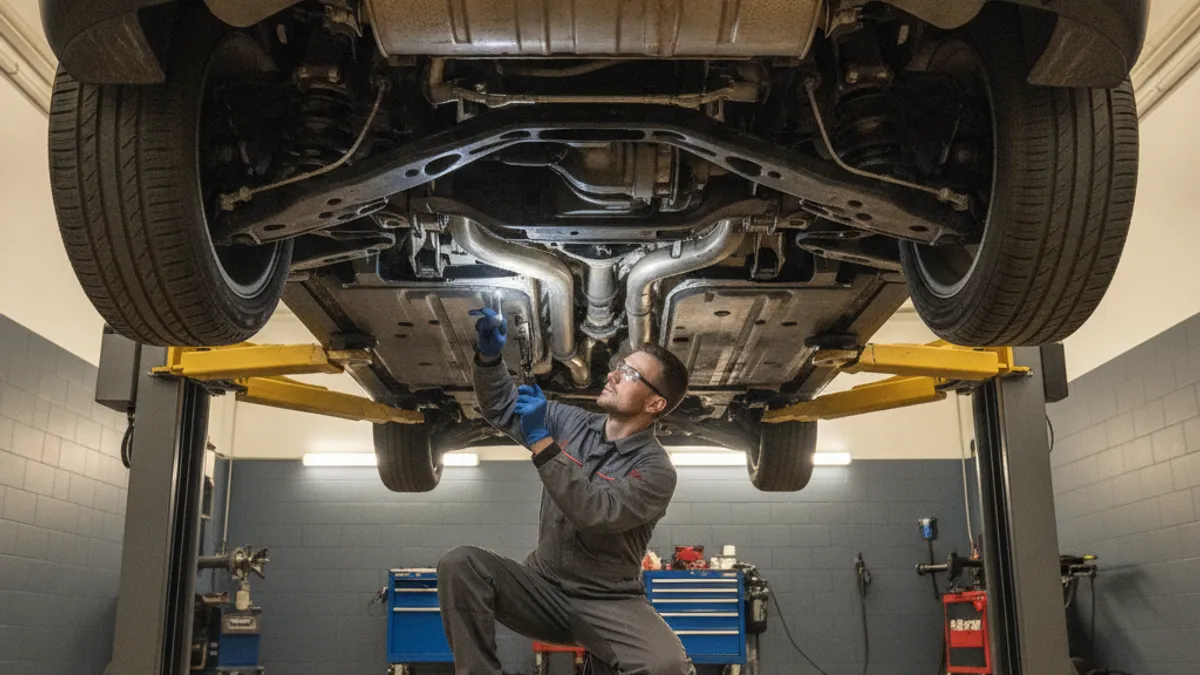
Underbody corrosion. SUVs are often used on gravel, salt and muddy roads. The underbody, sills and fender edges are the places where corrosion starts. The Dacia Duster is the worst example in the segment by TUV data, but other models are not immune either. A lift and a lamp are mandatory at the inspection.
Electronics and sensors. Modern SUVs have cameras, parking sensors, adaptive cruise control, a lane-keeping system. Each of these systems has sensors that fail. At the pre-purchase inspection, the diagnostics must go through all the modules, not just the engine and gearbox.
An experienced seller can hide a lot. A wound-back mileage, a total loss repainted and sold as an "import from Germany", welds hidden under lacquer. You uncover part of that at the pre-purchase inspection, but the car's documented past itself is most easily checked through carVertical. Based on the chassis number from international registries, it pulls the real odometer figures by date, recorded accidents, the number of past owners and indicators of theft or total loss. We consider it an unavoidable step before buying any used SUV. When paying for the report you can use the code GAGA and get a 20% discount.
Found an SUV you are considering? Book a pre-purchase inspection or message us on WhatsApp with the ad link before you put down a deposit.
Frequently Asked Questions
What is the most reliable used SUV in BiH for 2026?
By the combination of ADAC, TUV and What Car? data, the VW T-Roc with the 1.5 TSI engine and a manual gearbox is the most reliable compact SUV currently on offer on the Bosnian market. It is followed by the SEAT Ateca (the same platform, similar reliability, a lower price) and the Mazda CX-5 with the petrol SkyActiv-G engine.
Why is the Toyota RAV4 rated poorly by ADAC if Toyota is known for reliability?
ADAC measures breakdowns on the road, and 45.4% of all such calls relate to the battery. Toyota hybrid models have an increased load on the standard 12V battery, so it fails earlier. The mechanical reliability of the engine and the hybrid drivetrain is actually excellent, which is confirmed by the What Car? rating of 98.9% for the RAV4 Hybrid.
Is the Dacia Duster a good SUV to buy?
The Duster is the cheapest SUV on the market, but TUV places it last in the segment for every age category above 4 years. Corrosion, suspension wear and brake components are the main reasons. If the budget allows, the Ateca or an older T-Roc are a more reliable investment for similar money.
Tucson or Tiguan for a used purchase in BiH?
Both are solid SUVs. The Tiguan has a narrower ADAC PKZ range (3.1-14.0 vs the Tucson's 6.0-17.9), which means less variation in reliability. The Tucson is usually cheaper for the same year and mileage. What is decisive is the service history of the specific example, not the brand on its own.
Which engine is better for an SUV in BiH, petrol or diesel?
For city driving and short trips, a petrol turbo (1.5 TSI, SkyActiv-G) is the better solution because there is no DPF to clog. For longer trips and motorway driving, a diesel (2.0 TDI, 2.0 CRDi, SkyActiv-D) still gives better economy. In both cases, a manual gearbox is the more reliable choice on the used market.
What to check first when buying a used SUV with all-wheel drive?
First ask when the oil in the all-wheel-drive system (Haldex, xDrive, HTRAC) was last changed. If the owner does not know the answer or has no proof of service, that is a serious warning sign. Replacing the complete assembly at 200,000+ km without a service can be one of the most expensive jobs on the whole car.