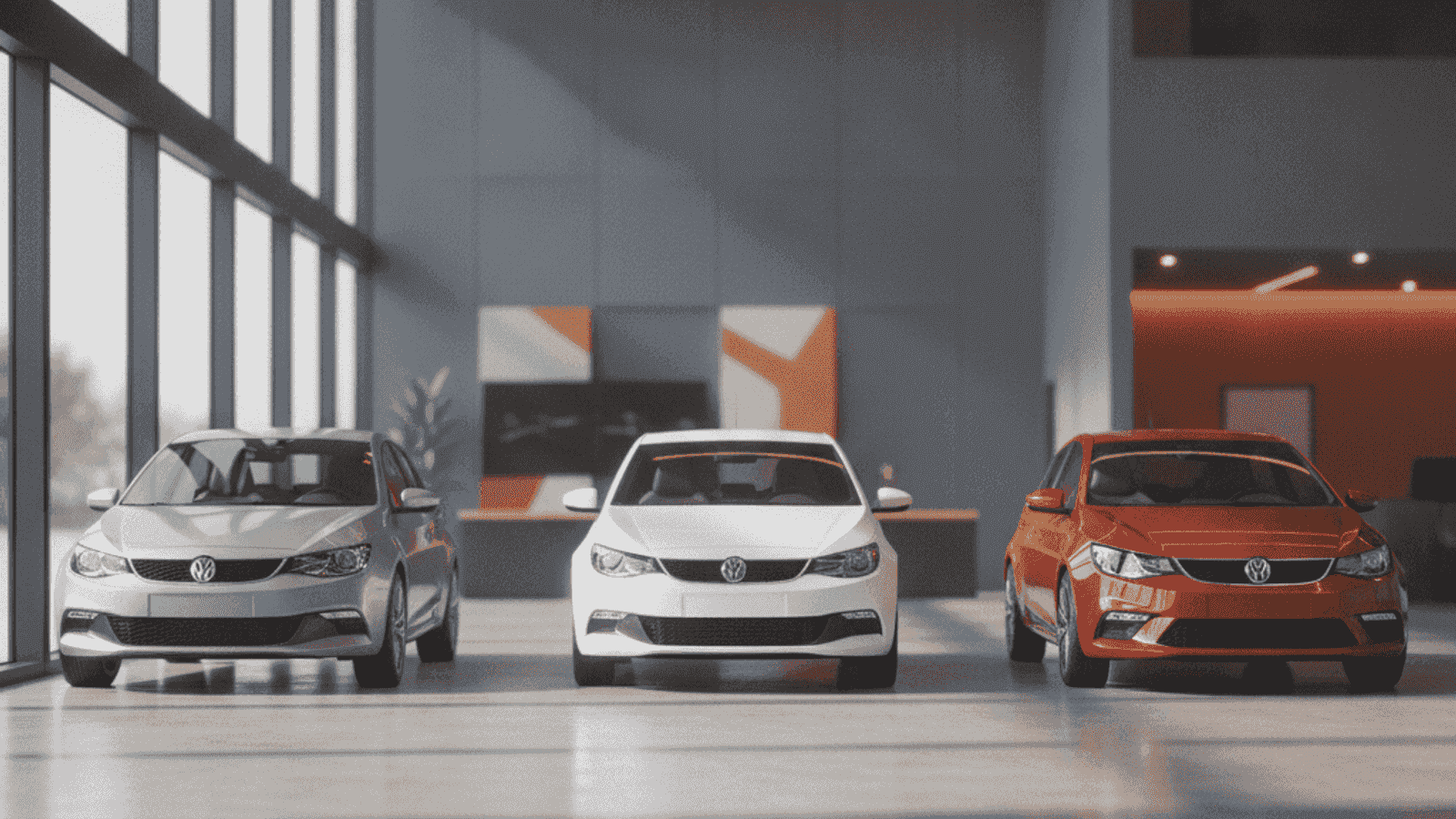
Every year ADAC publishes a list of cars that are least likely to leave their owners stranded, while TUV counts defects found during technical inspections of millions of vehicles. For 2026, these two lists together reveal which is the most reliable small city car for BiH buyers, because small cars endure the harshest conditions of all: short urban trips, cold starts and infrequent service intervals. Eight models that dominate the BiH market undergo rigorous scrutiny across three independent reliability sources, and the differences between them are greater than most buyers assume.
This guide was compiled by the Auto Gas Gaga workshop in Banja Luka, based on ADAC and TUV data for 2026 and years of hands-on experience servicing these models.
Table of Contents
- Why Reliability Is Crucial for a Small City Car
- What ADAC and TUV Say for 2026
- Eight Candidates on the BiH Market
- Three Most Reliable Small City Cars in 2026: Fabia, Polo and Swift
- Three Solid Choices: Clio, i20 and Sandero
- Two With an Asterisk: Corsa D and Punto
- Which Small Car for a New Driver in BiH
- What to Check Before Buying a Small Car
- Frequently Asked Questions
- Related Articles
Why Reliability Is Crucial for a Small City Car
A small city car in BiH lives a hard life. Short trips of two to five kilometres mean the engine never reaches optimal operating temperature. The oil never gets hot enough to evaporate moisture, condensation accumulates in the exhaust system, the EGR valve on diesels clogs faster, and the battery never charges properly. All of this accelerates wear in ways the odometer does not show. A car with 80,000 kilometres of urban driving can be in worse mechanical condition than one with 150,000 mixed kilometres.
When a small car breaks down, the repair cost represents a larger percentage of the vehicle's value than it would on a bigger car. Replacing the timing chain on a Corsa D can cost more than half the market price of an older example. Replacing the EGR valve on a small diesel can consume an entire year's maintenance budget. On a larger car the same job represents a smaller share of overall value.
That is why reliability on a small car is not a bonus you can afford to ignore. It is basic maths: a reliable small car saves you more money relative to its purchase price than a reliable mid-size car does relative to its own. The ADAC Pannenstatistik 2026 shows that the breakdown probability for five-year-old cars dropped from 3.6% in 2015 to 2.1% in 2025. For ten-year-old cars it fell from 6.5% to 3.1%. That is a 50% drop in a single decade. Modern small cars are more reliable than ever, but the differences between models still exist and can cost you serious money if you choose wrong.
What ADAC and TUV Say for 2026
The ADAC Pannenstatistik for 2026 analyses 3.7 million roadside assistance interventions covering 158 model series from 27 manufacturers. It is the largest single breakdown database in Europe. The TUV Report uses a different methodology: it counts specific defects found during technical inspections of millions of vehicles in Germany. Together, these two sources provide the most complete reliability picture for the European market. You can read the details of how both systems work and what they mean for BiH buyers in our ADAC and TUV reliability guide for 2026.
For this article, three things matter. First, the 12V battery is responsible for 45.4% of all breakdowns in the ADAC statistics. Engine and electronics account for 21.8%, and tyres for 8.9%. On small cars that do short trips, the battery suffers the most because it never fully charges, so regular battery health checks are essential regardless of the model.

Second, the TUV list for cars with over 100,000 kilometres does not include the B-segment because small cars in the analysed model years rarely exceed that mileage in Germany. This is an important methodological limitation: for older examples with high mileage, which make up most of the BiH supply, we rely on ADAC data and workshop experience.
Third, the ADAC 2026 gives particularly good ratings in the small car category to the Skoda Fabia, VW Polo, Suzuki Swift, Seat Ibiza, VW T-Cross and Mazda 2. The worst ratings went to the Opel Meriva 2016-2017 and Toyota Yaris 2021-2023, a finding that surprises many. In the category of three-year-old small cars under 15,000 EUR, ADAC gives a score of 3.1 for the Toyota Aygo X, 3.0 for the Suzuki Swift 1.2 Hybrid and 2.6 for the Opel Corsa 1.2 Turbo.
Eight Candidates on the BiH Market
The BiH used small car market has its own dynamics. German imports dominate the supply, so the Polo and Corsa are the most common models in this segment. The Fabia follows close behind because it shares a platform and parts with the Polo but comes at a lower price. The Clio and Sandero arrive mostly from France and from domestic sales. The Hyundai i20 is increasingly common thanks to competitive pricing of new examples in previous years and an aggressive warranty policy. The Fiat Punto and Ford Fiesta fill out the supply, each with its own quirks and typical issues.
The Suzuki Swift deserves special mention in this overview: ADAC places it at the very top for reliability, but on the BiH market it is hard to find in sufficient numbers. When one appears, it usually carries a higher price than competitors with similar mileage because buyers who know it understand what they are getting. The Ford Fiesta Mk7 (2008-2017) is also popular, but we would place it somewhere between solid and problematic depending on the engine. All of these models (including Swift as a bonus recommendation) go through the same scrutiny: ADAC rating, TUV findings, and what we see when they come into the workshop.
Three Most Reliable Small City Cars in 2026: Fabia, Polo and Swift
The Skoda Fabia Mk2 (2007-2014) and Mk3 (2014-2021) consistently occupy top positions in the ADAC statistics. The Fabia Mk2 has been rated as highly reliable in its class based on multi-year data. The key lies in engine choice: the 1.4 TDI and 1.2 TDI are recommended diesels with a minimal number of reported issues. The petrol 1.2 HTP (naturally aspirated, 60-70 PS) is a simple and reliable engine with no turbo and no timing chain, which means it avoids the two most expensive potential failures in this class. The only engine to avoid is the 1.2 TSI, which has well-known timing chain tensioner issues that can be costly to repair. If you are looking for the most reliable small city car for BiH in 2026, a Fabia with the right engine is one of the safest investments you can make.
The VW Polo (2009-2017, designations 6R and 6C) shares most of its mechanicals with the Fabia and matches its quality step for step. According to the What Car? survey, only 5% of Polo owners reported any issue at all, with the only notable areas being air conditioning and bodywork. In practice, the Polo costs slightly more than a Fabia with the same equipment and mileage, but you get better sound insulation, a somewhat higher-quality interior and a generally more refined driving feel. The same engine advice applies: a naturally aspirated petrol or 1.4 TDI is the safe choice, while the 1.2 TSI carries the same stretched chain risk as on the Fabia.

The Suzuki Swift (2010-2017) is a genuine surprise for many BiH buyers who have not considered it. ADAC gives it a score of 3.0 for 2026 in the three-year-old small car category, placing it at the very top. The Swift 1.2 petrol (with or without the Hybrid badge on newer examples) is an engine we almost never see in the workshop with a serious fault. Simple construction, a small number of electronic systems and quality build contribute to a long life without surprises. The problem is availability: on the BiH market the Swift is rare because few were imported, and when one appears it sells quickly. If you come across an example with proper documentation and a service book, give it serious consideration.
Fabia 1.2 TSI or 1.4 TDI
This is a dilemma we hear about regularly in the workshop: Fabia with the 1.2 TSI petrol or the 1.4 TDI diesel. The answer is clear for BiH conditions. The 1.2 TSI uses a timing chain that stretches, especially on examples that have mainly done short urban trips. Replacing the timing chain on this engine is not a cheap job and can cost a significant portion of the car's value. On the other hand, the 1.4 TDI (codes BNM or BMS) is an engine we practically never see in the workshop with problems beyond routine servicing. If you are buying a Fabia for city use, the 1.4 TDI or the naturally aspirated 1.2 HTP are the right choices. You should only consider the 1.2 TSI if you have complete documentation on the chain's condition or if the chain has already been replaced with proof.
Three Solid Choices: Clio, i20 and Sandero
The Renault Clio IV (2012-2019) is a car that rarely delivers a negative surprise. The petrol 0.9 TCe and 1.2 engines are simple and durable, with no turbo complications on the naturally aspirated variants. The diesel 1.5 dCi (K9K) is one of the most reliable diesel units ever produced and in a small car runs without issues for hundreds of thousands of kilometres with regular maintenance. The Clio loses points on small things: cabin electronics occasionally play up, the boot lock can fail, the interior plastics are softer than the German competition and show signs of wear more quickly. But mechanically, the Clio IV is a solid car that justifies your confidence.
The Hyundai i20 (2014-2020) offers something few others in this class can match: five years of factory warranty on new examples, with a transferable warranty to the second owner. This means many used i20s are still sold with remaining warranty, which is a serious advantage for a used-car buyer. The petrol 1.2 and 1.4 naturally aspirated engines are simple and cheap to maintain. Parts are affordable and servicing does not require specialist equipment. The i20 falls short on driving feel and sound insulation compared with the Polo or Fabia, but at the workshop it is among the cheapest cars in the class and rarely needs anything beyond routine maintenance.
The Dacia Sandero (2013-2020) achieved a perfect 100% in the What Car? reliability survey and took first place in the small and value car class. This is neither an error nor an anomaly: the Sandero uses proven Renault mechanicals (the same engines as the Clio) in a simpler package with less electronics that could fail. Less electronics means fewer potential faults, fewer wires, fewer sensors and fewer reasons to plug in a diagnostic tool. The Sandero is the car you buy if reliability comes before everything else and you do not mind harder plastics and basic equipment.
Sandero: Reliability or a Cheap Shell
The most common reservation about the Sandero is interior material quality. The plastics are hard, the controls are basic, road noise at higher speeds is louder, and there is none of the premium feel offered by the Polo or Fabia. But looked at strictly through the lens of reliability data and maintenance costs, the Sandero is at the very top of the class. Renault's 0.9 TCe engine is the same unit found in the Clio, and the 1.5 dCi is legendarily durable. Workshop experience confirms the statistics: the Sandero comes in for routine servicing and wear-item replacements, rarely for unplanned repairs. If you want a car that will not let you down and will not cost you at the workshop, the Sandero is a rational choice that may lack prestige but delivers results you can measure in money saved.
Two With an Asterisk: Corsa D and Punto
The Opel Corsa D (2006-2014) is one of the best-selling small cars in BiH, but it comes with a known issue that every buyer must be aware of in advance. The petrol engines 1.0, 1.2 and 1.4 have a timing chain that stretches, especially on examples that have mainly done short urban trips. A stretched chain can cause serious engine damage, including bent valves. In addition, the electric power steering (EPS) is the most common fault across all Corsa D variants, an issue we cover in detail in our EPS fault guide.

It is important to separate petrol from diesel on the Corsa D. The diesel 1.3 CDTI (an engine Opel sources from Fiat) is a completely different story and significantly more reliable than the petrol variants. It does not have the timing chain problem, uses a timing belt with a clear replacement interval, and the engine itself is known for a long service life when maintained according to schedule. If you are buying a Corsa D and plan to drive it in the city, the 1.3 CDTI is the only engine we can recommend without reservations.
Corsa D Timing Chain on Short Trips
The timing chain problem on the Corsa D is neither a coincidence nor an isolated case. Short urban trips mean the oil does not reach optimal temperature, the hydraulic chain tensioner does not operate at full capacity, and the chain itself stretches faster under these conditions. On examples with 80,000 to 120,000 kilometres that have predominantly been driven in the city, the chain may be at its limit. Symptoms include a rattling noise on cold start that lasts more than a few seconds after ignition and a check engine light. On examples with over 120,000 urban kilometres, the question is not whether the chain is stretched, but by how much. If you are considering a Corsa D with a petrol engine, a chain inspection by a mechanic who knows this model and can measure stretch with a specialist tool is mandatory.
The Fiat Punto (Grande Punto 2005-2012 and Punto Evo 2009-2015) is a car that carries a low price tag on the BiH market, and there is a concrete reason for that. ADAC statistics do not give the Punto good ratings, particularly older examples with high mileage. The most common issues are corrosion on the underbody and bodywork (the Punto is especially prone to corrosion on the sills and wheel arches), faults with the MultiJet diesel engines (particularly injectors and DPF filter), and a persistent stream of minor electrical problems that are cheap individually but expensive cumulatively. The petrol 1.4 engine is tolerable, but overall build quality lags behind the German and French competition. You buy a Punto only if the budget is strictly limited and you are prepared for more frequent workshop visits.
Which Small Car for a New Driver in BiH
For a first car, reliability is arguably the most important attribute. A new driver typically lacks the experience to recognise early signs of a fault, does not have a trusted mechanic on speed dial, and often postpones servicing thinking a small car can handle it without consequences. For these reasons we recommend models with the fewest potential surprises and a service network that covers all of BiH.
For a new driver in BiH, three models have a clear advantage. The Fabia with the naturally aspirated 1.2 HTP engine is the simplest choice: no turbo, no chain problem, servicing is cheap and available in every town, and parts are among the most affordable in the class. The Hyundai i20 is a second good choice because it is cheap to maintain and newer examples come with an extended warranty that transfers to the second owner. The Sandero is third, following the same logic: minimal electronics, maximum reliability and the lowest cost of ownership in the class.
Small cars a new driver should avoid include the Corsa D with a petrol engine (chain risk that a beginner will not spot in time), the Punto with high mileage (too many potential minor faults that accumulate), and any small car with the PureTech 1.2 engine (Peugeot 208, Citroen C3) which has a known wet timing belt issue we cover in detail in a dedicated article on PureTech 1.2 problems. A new driver does not need a car that requires knowledge of model-specific weaknesses to keep it on the road.
What to Check Before Buying a Small Car
Regardless of which model you choose, a pre-purchase inspection is mandatory. On a small car it is especially important to pay attention to several specific things that distinguish a good example from an expensive problem.
The battery is the first item on the list. ADAC says the battery is responsible for nearly half of all breakdowns across all vehicle types. On a small car that has done short trips, the battery can be significantly weaker than the mileage suggests because it has never fully charged. A simple load test shows the true condition and takes just a few minutes.
Timing chain or belt, depending on the engine. On the Corsa D with a petrol engine and on the Fabia with the 1.2 TSI, checking the chain condition is mandatory and must not be skipped. On the Clio and Sandero with the 1.5 dCi, the timing belt has a set replacement interval and you need to check when it was last changed, because a missed interval can end in serious engine damage.
Underbody corrosion, especially on the Punto and older Corsas. Cars from coastal regions or from cities where roads are salted in winter arrive with corrosion that a layperson cannot see, and which can mean an expensive chassis repair or even a write-off if corrosion has reached structural elements.
Power steering condition. EPS faults on the Corsa D are common and expensive to repair. Turn the steering wheel from full left to full right lock at low speed and listen for resistance, squealing or uneven operation. Any of those symptoms points to a problem that will not resolve itself.
Before putting down a deposit, in addition to a physical inspection at a workshop, check the documented vehicle history as well. Using the chassis number you can pull data from international registers showing actual mileage by date, recorded accidents, the number of previous owners and indicators of theft or total loss. We consider this an indispensable step when buying any used car, and you can order a report through carVertical. When paying for the report you can use the code GAGA to get a 20% discount.
Found a car you are considering? Book a pre-purchase inspection or message us on WhatsApp with the listing link before you put down a deposit.
Frequently Asked Questions
Which small city car is the most reliable in BiH in 2026?
According to ADAC and TUV data for 2026, the Skoda Fabia and VW Polo with naturally aspirated petrol or 1.4 TDI engines are the most reliable small cars available on the BiH market. The Suzuki Swift is in the same reliability category but is harder to find in stock.
Is the Dacia Sandero more reliable than the Polo?
The Sandero achieved a perfect score in the What Car? reliability survey, which is an impressive result. In practice, both the Sandero and the Polo are very reliable, but the Polo offers better material quality and sound insulation. The Sandero has the advantage of simplicity because it has less electronics that could fail.
Why does the Opel Corsa D have a poor reliability rating?
The petrol engines of the Corsa D (1.0, 1.2 and 1.4) have a timing chain that stretches, especially on examples that have done short urban trips. In addition, the electric power steering (EPS) is a common and expensive fault. The diesel 1.3 CDTI is significantly more reliable than the petrol variants.
Which engine should you avoid on the Skoda Fabia?
The 1.2 TSI with a turbocharger and timing chain. The chain stretches, especially in city driving, and replacement is expensive. Better choices are the naturally aspirated 1.2 HTP petrol or the 1.4 TDI diesel, which do not have this problem and are cheaper to maintain.
Is the Fiat Punto a good first car?
The Punto is attractive because of its low price, but ADAC does not give it good reliability ratings. Frequent problems with corrosion, diesel injectors and the electrical system make it more expensive to maintain than the initial price suggests. For a first car we recommend the Fabia, i20 or Sandero.
How important is a pre-purchase inspection for a small car?
It is essential without exception. On a small car, the cost of a single unforeseen repair can exceed half the vehicle's market value. A workshop inspection and a documented history check using the chassis number reveal problems a layperson cannot see, from a stretched timing chain to rolled-back mileage.