Every year, two reports from Germany cut through the reliability debate with hard numbers. In April 2026, ADAC published its breakdown statistics based on 3.7 million roadside interventions, and the TUV Report from November 2025 covers 9.5 million technical inspections. For used car buyers in BiH, where nine out of ten registered vehicles arrive as second-hand imports, these figures are not academic curiosities. They reveal which makes and models hold up, which fall apart, and which specific faults to look out for before you put down a deposit.
This overview was prepared by the Auto Gas Gaga workshop in Banja Luka, based on hands-on experience with pre-purchase inspections and analysis of data from ADAC Pannenstatistik (April 2026) and the TUV Report (November 2025).
Table of Contents
- What Are ADAC and TUV and Why They Matter for BiH Buyers
- How Much More Reliable Are Cars Than a Decade Ago
- Five Most Common Breakdown Causes According to ADAC
- Most Reliable Models by Segment
- The Toyota Surprise and Why Context Changes the Picture
- TUV Report 2026 and Millions of Technical Inspections
- What This Means for Used Car Buyers in BiH
- How to Use ADAC and TUV Data When Buying a Car
- Frequently Asked Questions
- Related Articles
What Are ADAC and TUV and Why They Matter for BiH Buyers
ADAC (Allgemeiner Deutscher Automobil-Club) is the largest automobile club in Europe. Their annual breakdown statistics, known as the Pannenstatistik, record every roadside intervention carried out by their yellow angels on German roads. In 2025, that amounted to 3.7 million callouts, a 1.6% increase over the previous year. The analysis covers 158 vehicle series from 27 manufacturers — a sample large enough to draw reliable conclusions about every significant model on the market.
TUV (Technischer Uberwachungsverein) is an independent organisation that carries out mandatory vehicle inspections in Germany, similar to the MOT test but considerably stricter and more detailed. Their annual TUV Report analyses the results of these inspections. The November 2025 edition covers 9.5 million inspections, broken down by vehicle age and type of defect.
Why are these two reports relevant to a buyer in Banja Luka or Sarajevo? Because most used cars in BiH come from Germany and western Europe. In February 2026, BiH registered 752 new and 6,106 used vehicles, meaning only one in nine cars was new. The average age of an imported used car exceeds 10 years, and the average price hovers around 20,000 KM. Škoda leads the market with a 20.5% share of registrations, illustrating just how dominant VAG models are on domestic roads.
What matters here is understanding what each report measures: ADAC tracks roadside breakdowns (electrical faults, engines that won't start, tyres, locks), while TUV measures the condition at technical inspection (brakes, suspension, corrosion, lights, exhaust system). Together they paint a complete picture, but under German driving and maintenance conditions. For a BiH buyer, the data serves as a guideline and a trend indicator, not a guarantee of identical behaviour on local roads. Fuel quality, road infrastructure, and servicing habits can shift the rankings. But when 3.7 million breakdowns and 9.5 million inspections point in the same direction, that is a signal you cannot ignore.
How Much More Reliable Are Cars Than a Decade Ago
One of the most important findings from the ADAC car reliability statistics 2026 concerns the overall trend. The probability of breakdown for five-year-old cars fell from 3.6% in 2015 to 2.1% in 2025. For ten-year-old cars — the most relevant category for the BiH market — the drop is even more pronounced: from 6.5% to 3.1%, a reduction of nearly 50% in a single decade.
This means that an average car that is 10 years old today is more reliable than an average five-year-old was in 2015. The reasons are multiple: better manufacturing quality, more advanced electronic diagnostics that catch problems earlier, longer service life for key components, and improved materials in critical assemblies such as suspension, braking systems, and electronics.
For a used car buyer in BiH, this is good news. A 2016 model being considered for purchase is statistically more reliable than a 2010 model was at the same age. Of course, that is an average covering millions of vehicles. The actual condition depends on how the car was maintained, how many kilometres it has covered, and the conditions it was driven in. But the trend is unambiguous, measured across millions of data points rather than anecdotes from the neighbourhood.
This finding is particularly valuable for buyers torn between a newer car with higher mileage and an older one with fewer kilometres. Generally, a newer model year brings a reliability advantage even when the mileage is not ideal, because design and materials play a bigger role than age in years alone.
Five Most Common Breakdown Causes According to ADAC
The ADAC car reliability statistics 2026 provide a precise breakdown of what fails most often in a car on the road. The distribution is surprisingly concentrated among a small number of causes.
| Breakdown cause | Share of total breakdowns |
|---|---|
| Battery (12V starter battery) | 45.4% |
| Engine and engine electronics | 21.8% |
| Starter, alternator, and electrical system | 10.4% |
| Tyres | 8.9% |
| Locking systems | 6.8% |
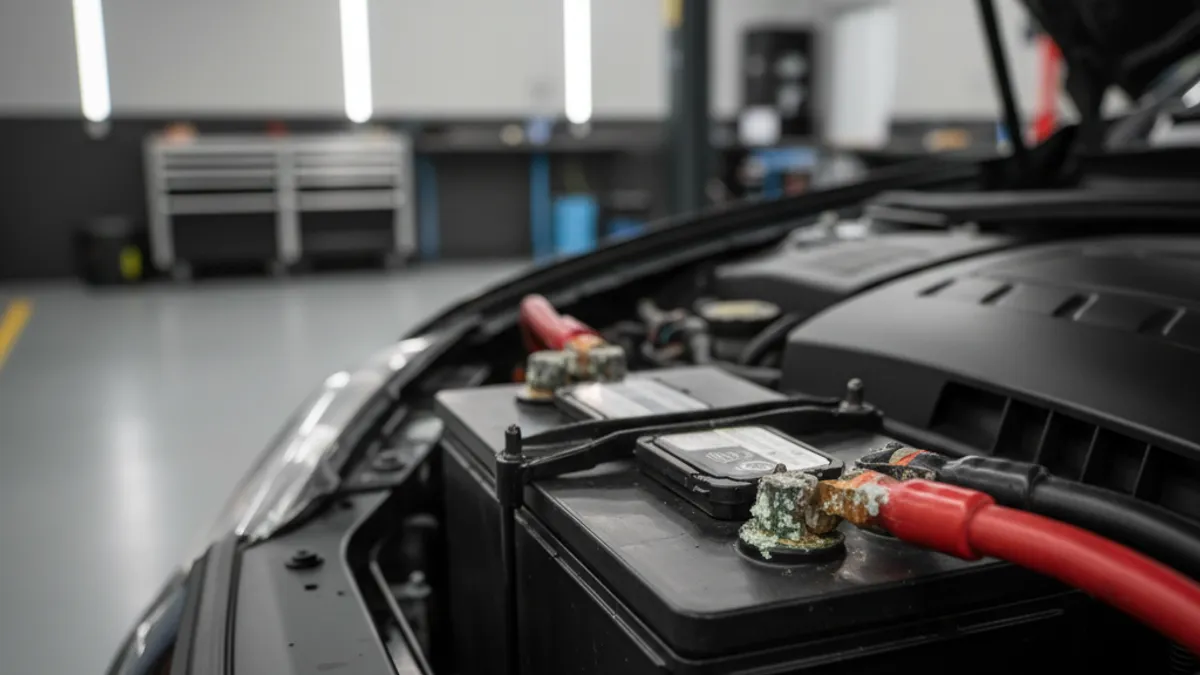
Nearly half of all roadside breakdowns come down to one thing: the battery. This is the 12V starter battery found in every car regardless of powertrain type. When the battery weakens, the car won't start, the electronics behave erratically, and the start-stop system stops working. The problem is especially pronounced in newer cars, which draw significantly more current in standby mode due to numerous electronic modules that never fully go to sleep.
In practice, on cars older than five years the battery is a consumable part that is most often neglected. The driver does not notice the gradual weakening until one morning the starter no longer turns over fast enough. With imported used cars, the situation is even more acute because a battery that functioned fine in Germany on regular long motorway runs can fail after just a few months of city driving with short trips and frequent cold starts.
The second category — engine and engine electronics — covers everything from sensors and control units to injectors and spark plugs. The list of faults here is more varied. Dashboard warning lights can signal problems in this category, from the check engine light to exhaust system warnings. The third category, the electrical system including starter and alternator, rounds out a picture in which electrical issues account for over 77% of all roadside breakdowns.
For a used car buyer in BiH, the message is clear: before purchasing any used vehicle, test the battery condition, check the alternator charging output, and run a full diagnostic scan of the electronic systems. If the seller cannot show a documented battery replacement in the last three to four years, budget for that investment immediately after purchase. On cars with a start-stop system, fitting a standard battery instead of the correct AGM or EFB type is a common mistake that shortens battery life to just a few months.
Most Reliable Models by Segment
The ADAC car reliability statistics 2026 rank models within their respective classes. For buyers in BiH, the compact class is the most relevant, since Golf, Octavia, A3, and similar models are the most common on the domestic market. Škoda leads with a 20.5% market share, underlining the dominance of the VAG group in BiH.
Compact class
In the compact class, which covers vehicles such as the Golf, Octavia, and A3, the most reliable models according to ADAC include the Audi A3, BMW 1 Series and 2 Series, Mercedes A-Class and B-Class, VW Golf, and Škoda Karoq. This is encouraging for the BiH market because these are precisely the models most widely available in the used car supply. The Golf and Octavia, which are essentially the same car underneath, together account for a significant share of the compact segment at every used car lot.
Mid-size class
In the mid-size class, covering models such as the Passat, A4, and 3 Series, ADAC highlights the Audi A4, A5, and Q5, the BMW 3 Series and 4 Series, and the VW Passat as above-average in reliability. These are cars that carry the executive vehicle label on the BiH market, but in the 7- to 12-year age bracket they fall into a price range accessible to a wider pool of buyers. A Passat or A4 at that age can be found at prices competitive with a new car from a lower segment, while offering considerably more comfort and safety equipment.
It is important to note that ADAC reliability is measured under German conditions: regular servicing at authorised dealerships, quality fuel, and good roads. Under BiH conditions, where servicing schedules are sometimes less regular and fuel quality can be questionable, the rankings may shift. But the core message remains: well-engineered models with proven engines hold up better than the average, regardless of the market. What cannot be overcome is neglected maintenance — the best model on the ADAC list with a poor service history can perform worse than an average model that has been properly looked after.
The Toyota Surprise and Why Context Changes the Picture
One of the most widely cited stories from this year's ADAC statistics is the poor ranking of certain Toyota models. The Yaris, Yaris Cross, C-HR, and RAV4 all show above-average breakdown rates. The RAV4 in some model years exceeds 50 breakdowns per 1,000 vehicles — genuinely unexpected for a brand synonymous with reliability.
But context is everything. The problem with these Toyota models is specific and comes down to a single component: the 12V starter battery. The factory-fitted batteries in these models were undersized for the load imposed by the hybrid systems and modern electronics. Toyota acknowledged the issue and from November 2024 began fitting larger batteries in the Yaris and Yaris Cross, and from February 2026 in the Corolla and C-HR.
This does not mean these cars are generally unreliable. The engine, gearbox, suspension, and other vital systems on Toyotas continue to perform dependably. The problem is localised and has a clear solution. For a buyer in BiH considering a used Toyota from the 2020–2024 period, the advice is straightforward: if the car still has the original battery, replace it with a suitable unit of higher capacity. That is an investment which eliminates the statistically most likely fault on that model.
This situation is an excellent example of why you should not rely solely on overall rankings. A model can sit at the bottom of the list due to one specific issue that is easy and cheap to fix, while a model at the top might have expensive and hard-to-predict gearbox or electronics faults. Details always tell you more than averages, and a buyer who only reads the headline "Toyota worst on the list" misses the real story.
TUV Report 2026 and Millions of Technical Inspections
While ADAC measures roadside breakdowns, the TUV Report from November 2025 measures something different: vehicle condition at the mandatory technical inspection. The focus is on safety components — brakes, lights, suspension, corrosion, and the exhaust system. For a used car buyer, this is an equally valuable source of information because it reveals how a car ages structurally, not just whether it starts in the morning.
In the 2- to 3-year-old category, the overall winner is the Mazda 2 with just 2.9% significant defects. The VW T-Roc and Mercedes B-Class share second place with 3.0%. At the other end of the spectrum, the Tesla Model Y shows 17.3% significant defects among vehicles of the same age — by far the worst result in that category.
For buyers in BiH, the most relevant category is 6- to 7-year-old vehicles, as this matches the average age of imported used cars. The results here are extremely useful for making a concrete purchase decision.
| Model | Significant defects (6–7 years) |
|---|---|
| VW T-Roc | 6.7% |
| Mercedes E-Class | 7.0% |
| Audi Q2 | 7.5% |
| Škoda Karoq | 7.8% |
| Škoda Kodiaq | 8.7% |
| Dacia Duster | 23.5% |
The VW T-Roc leads with just 6.7% significant defects, which for a seven-year-old car speaks to solid construction and quality materials. The Mercedes E-Class at 7.0% confirms its reputation for a well-engineered chassis and properly designed brakes. The Škoda Karoq and Kodiaq stay below 9%, a solid result for cars that are extremely popular and readily available on the BiH market.
At the bottom sits the Dacia Duster with 23.5% significant defects, meaning nearly one in four Dusters fails or barely passes the technical inspection after six to seven years. For a buyer in BiH considering a Duster of that age, this figure is a warning sign. The braking system, suspension, and underbody corrosion are areas that deserve a thorough inspection before purchase. The Duster's lower initial price can be deceptive if the next two to three years bring mounting repair costs for structural components.
What This Means for Used Car Buyers in BiH
The combination of ADAC and TUV data gives BiH buyers something they have not had before: objective, large-scale statistics on the models they are actively purchasing. Here are the key takeaways translated into concrete buying decisions.
First, the battery is by far the most common cause of problems, responsible for nearly half of all roadside breakdowns. Before buying any used car, testing the battery and charging system should be mandatory. On cars coming from Germany, the original battery is often five to seven years old and may fail within the first few months after purchase. This is not a fault with the car — it is a worn consumable that nobody replaced because the car still started without issues in Germany. Spotting a weak battery before it leaves you stranded saves both money and frustration.
Second, the VAG group (VW, Škoda, Audi) and BMW consistently perform well in both reports, in terms of both roadside breakdowns and technical inspection results. For a buyer in BiH, this is important information because these are precisely the most common brands on the domestic market. By choosing a well-ranked model from this group, you are not picking something exotic — you are choosing what the entire market already drives, with a well-established parts and service network to support it.
Third, TUV data on six- and seven-year-old vehicles directly corresponds to the age profile of BiH imports. A model that passes the German technical inspection with less than 8% significant defects after seven years is generally a well-constructed car that will serve you for several more years with regular maintenance.
Fourth, a cheap purchase price does not mean cheap ownership. The Dacia Duster with its 23.5% TUV defect rate shows that a car bought at a lower price can generate higher maintenance and repair costs as it ages. Similarly, cars with known issues such as a clogged EGR valve on diesels or worn-out batteries on Toyota hybrids require an informed buyer who knows what to check and how much it will cost over the next two to three years.
How to Use ADAC and TUV Data When Buying a Car
Here are concrete steps for a buyer who wants to put this data into practice, step by step.
Narrow your shortlist to models that perform well in both reports. If a model ranks among the better options in its class in both the ADAC and TUV lists, that is a double confirmation of quality. The Golf, Octavia, A3, A4, Passat, and BMW 1 Series and 3 Series consistently appear in the upper half of both rankings. This does not mean they are the only good choice, but it does mean the statistics back them up.
Check the specific weak points for the model you are considering. ADAC publishes detailed data by series and model year. If your candidate is a 2022 Toyota RAV4, you know the battery is the critical point and can address it straight away. If it is a 2018 Dacia Duster, you know the brakes and suspension deserve special attention during the pre-purchase inspection. An informed buyer does not avoid these models but knows what to check and how much to set aside for potential repairs.
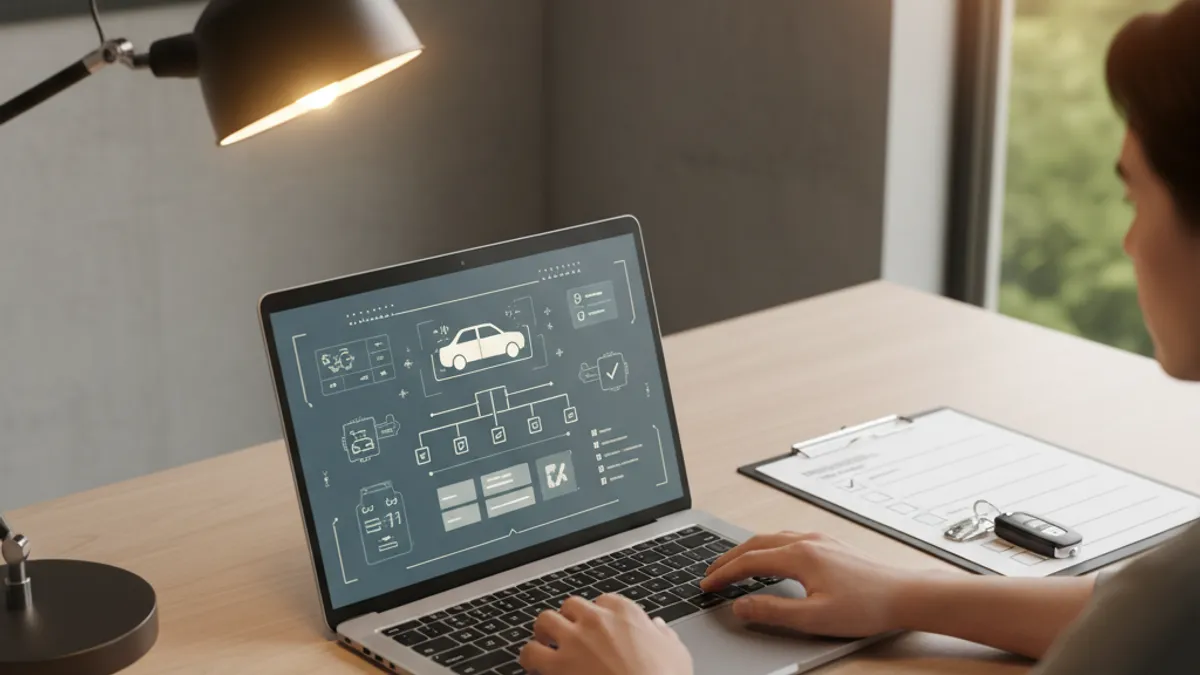
Never buy on statistics alone. Statistics describe averages across thousands of cars. Your specific example could be an outlier in either direction — better or worse than average. The data helps you narrow the field and know what to look for, but a physical inspection of the car, a diagnostic scan, and a check of the documented service history remain irreplaceable steps that no amount of statistics can substitute.
An experienced seller can hide a lot. Rolled-back odometer readings by tens of thousands of kilometres, a write-off repaired and sold as a clean import, welds concealed under fresh paint. A pre-purchase workshop inspection catches some of this, but the easiest way to verify a car's documented history from international registries is by running the chassis number through carVertical. The report typically shows actual odometer readings by date, recorded accidents, number of previous owners, and indicators of write-off or theft. We consider it an essential step before buying any used car. When purchasing a report, you can use the code GAGA for a 20% discount.
Remember that ADAC and TUV data come from Germany. A car that was driven on motorways, serviced at authorised dealers, and garage-kept in Germany may behave differently after five years on BiH roads with less frequent servicing. Use this data as a starting point for narrowing your choices, but a pre-purchase inspection at a workshop remains the last line of defence before you buy.
Found a car you are considering? Book a pre-purchase inspection or message us on WhatsApp with the listing link before you put down a deposit.
Frequently Asked Questions
What is the ADAC Pannenstatistik and how relevant is it for BiH?
ADAC Pannenstatistik is an annual analysis of roadside breakdowns in Germany, based on 3.7 million interventions in 2025. It is relevant for BiH because most imported used cars come from Germany and western Europe, so models that break down there are likely to have similar issues here. Bear in mind that these are German maintenance and driving conditions, so some variation should be expected in BiH.
What is the most common car breakdown according to ADAC 2026 statistics?
The battery (12V starter battery) causes 45.4% of all roadside breakdowns. Engine and engine electronics account for 21.8%, and the electrical system including starter and alternator for 10.4%. Electrical problems in total make up over three quarters of all breakdowns.
Why is Toyota ranked poorly in the ADAC 2026 statistics?
Toyota models Yaris, Yaris Cross, C-HR, and RAV4 have elevated breakdown rates solely due to an undersized 12V starter battery. All other systems perform reliably. Toyota acknowledged the problem and from late 2024 has been fitting larger batteries in new production runs.
Which are the most reliable used cars according to the TUV Report 2026?
In the 6- to 7-year-old category, which is the most relevant for BiH buyers, the leaders are the VW T-Roc with 6.7% significant defects, Mercedes E-Class with 7.0%, Audi Q2 with 7.5%, and Škoda Karoq with 7.8%. The worst result belongs to the Dacia Duster with 23.5%.
Do ADAC and TUV data apply to electric vehicles as well?
ADAC and TUV statistics do include electric vehicles, but their share of the total sample is still relatively small. The Tesla Model Y, for example, shows 17.3% significant defects at the TUV inspection in the 2- to 3-year-old category, by far the worst result in that age group.
How can I use this data when buying a used car in BiH?
Use the ADAC and TUV data to narrow your shortlist. Choose models that rank well in both reports. Check the known weak points for the specific model and year. Always carry out a pre-purchase inspection at a workshop and verify the vehicle's documented history using the chassis number. Statistics are a starting point, not a substitute for a physical inspection.