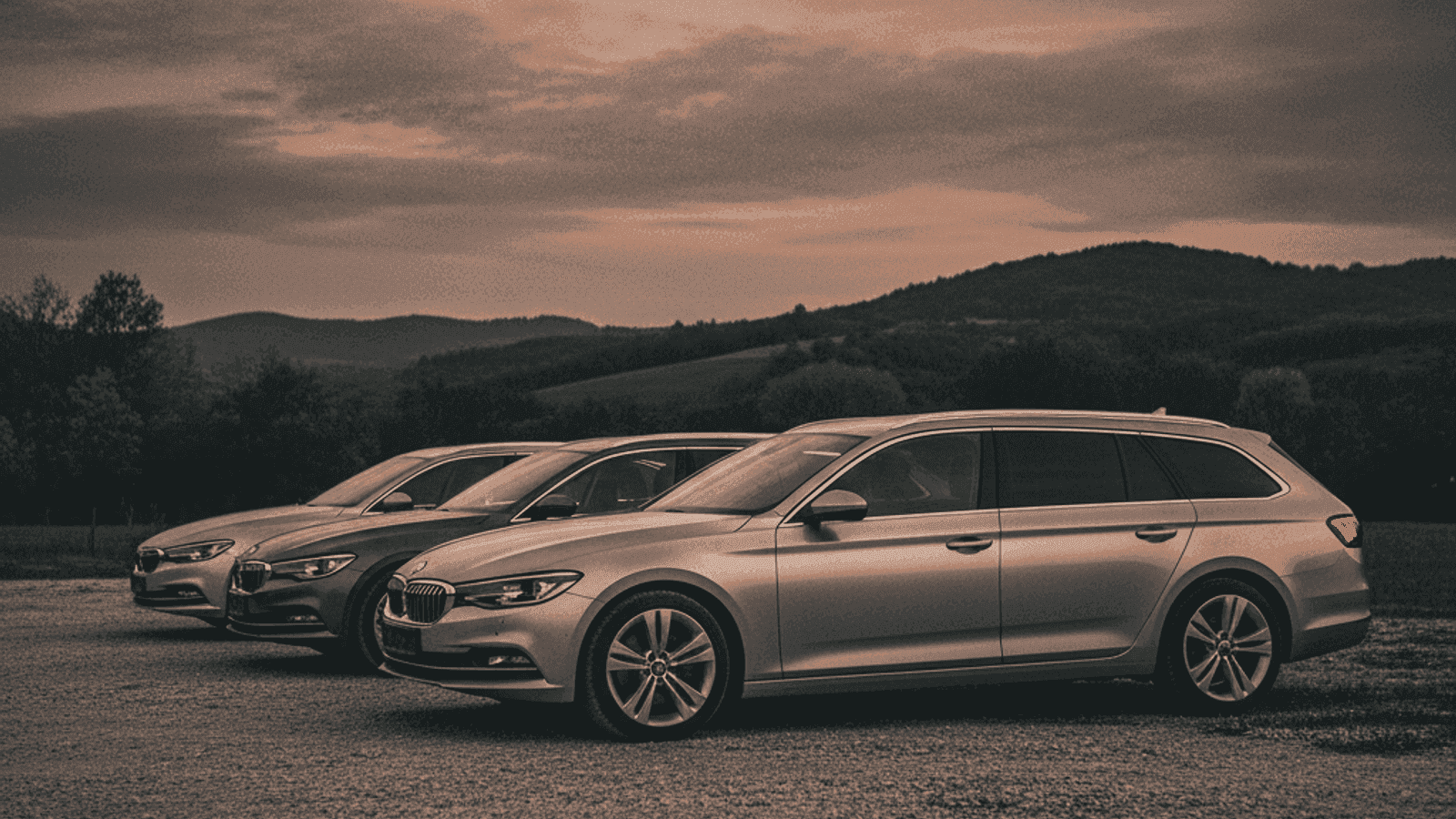
The mid-size family car is the toughest reliability test there is. At 200,000 kilometres, everything designed on the edge of durability starts to fail — and in BiH, with local road conditions and unpredictable service histories, that happens sooner than in Germany. ADAC Pannenstatistik 2026, TUV Report 2026 and What Car? Reliability Survey together cover over 13 million technical inspections and roadside interventions. When you cross-reference that data with workshop experience, the answer to which family car is the most reliable for BiH in 2026 is clearer than most people expect. This guide combines European data with what we see every day on cars that come in for servicing and pre-purchase inspections.
This guide was compiled by Auto Gas Gaga workshop in Banja Luka, based on ADAC, TUV and What Car? data for 2026 and years of hands-on experience with mid-size models.
Table of Contents
- Why the D-Segment Is the Toughest Reliability Test
- Which Family Car Is Most Reliable According to ADAC, TUV and What Car? for 2026
- Three Most Reliable Family Cars for BiH
- Three Solid Choices with Reservations
- Three Models to Avoid or Buy Very Carefully
- Estate or Saloon and the Difference in Reliability
- Which Engine and Gearbox for a Family Car in BiH
- What to Always Check on a Family Car with 200,000+ km
- Frequently Asked Questions
- Related Articles
Why the D-Segment Is the Toughest Reliability Test
A small city car forgives a lot. Simple engine, manual gearbox, minimal electronics. A compact is a step more complex, but still a relatively straightforward design. The D-segment is the category where serious technical complexity first appears: dual-mass flywheel, DSG or conventional automatic, adaptive suspension, sophisticated infotainment with a large screen, panoramic roof, electric seat adjustment, matrix LED headlights, multi-zone climate control. Any one of these systems can ruin an otherwise good car, and at 200,000+ km, the probability rises exponentially.
On the BiH market, this is even more pronounced. A mid-size family car sold here as used typically has 180,000 to 280,000 km, is 8 to 14 years old, and comes with a service history that ranges from meticulous to non-existent. Many of these cars were imported from Germany or Austria with an odometer reading that may not reflect reality. At those mileages, reliability is not a matter of comfort. It is the difference between arriving safely with your family and being stranded on the road.
ADAC Pannenstatistik 2026 covers 3.7 million roadside interventions. One key statistic: the probability of breakdown on a 10-year-old car dropped from 6.5% (2015) to 3.1% (2025), but that positive trend applies to the average. The D-segment contains models with double or triple the average breakdown rate. That is precisely why ADAC, TUV and What Car? data is so valuable for this segment. They measure actual failure rates across a massive sample — not anecdotes from forums.
Which Family Car Is Most Reliable According to ADAC, TUV and What Car? for 2026
ADAC Pannenstatistik 2026 covers 158 models from 27 manufacturers. For the mid-size class, the data clearly separates three groups. The most common cause of breakdown across the entire dataset is the battery (45.4% of all interventions), followed by engine and electronics (21.8%), then tyres (8.9%). In the D-segment, however, engine and electronics account for a larger share because the systems are more complex.
Most reliable according to ADAC (low PKZ): Audi A4 with a PKZ of 0.9–3.1 (model years 2020–2022) and BMW 3 Series with a PKZ of 1.1–3.8 lead the segment. VW Passat sits in the middle with a PKZ of 1.6–11.6, where newer model years (B8 from 2019+) score excellently while older ones are noticeably worse.
Mid-table: Škoda Superb with a PKZ of 8.5–14.2 and Mercedes C-Class with a PKZ of 3.6–6.7 fall in the solid middle, though Mercedes is a surprise because the newer W206 has a worse What Car? score (76.3%) than the older W205.
Blacklisted: Opel Insignia is the only D-segment model on ADAC's blacklist, with a PKZ of 30.5–33.5 for model years 2020–2022. Ford Mondeo also lags significantly, with a PKZ of 15.5–26.5.

What Car? Reliability Survey 2025 supplements the ADAC data from an owner perspective. BMW 3 Series (2019+) petrol achieves 98.0% reliability, with only 6% of owners reporting a problem. Škoda Superb diesel (2015–2024) also records 98.0%. At the other end, Mercedes C-Class W206 (2021+) is the worst in class at 76.3%, with 43% of owners reporting a fault.
TUV Report 2026, based on 9.5 million MOT inspections in Germany, confirms that Mercedes C-Class W205 at 100,000 km has a defect rate of just 10.0%, though with systematic weaknesses in springs, dampers and steering joints. Overall, 21.5% of vehicles fail the TUV inspection — the fourth consecutive rise from the COVID low of 17.9% in 2022.
When all three sources overlap, the picture is clear. Here are the three most reliable, three solid but limited, and three to avoid.
Three Most Reliable Family Cars for BiH
Audi A4 B9 (2016–2023)
ADAC gives the A4 an exceptionally low PKZ of 0.9 to 3.1 for model years 2020–2022, and older B9 years (2016–2019) still rank in the top third of the segment. The What Car? score of 90.1% is solid, with 23% of owners reporting a problem, mostly minor (infotainment, electrical systems).
For a BiH buyer, the A4 with a 2.0 TDI (EA288 family) and a manual gearbox is one of the most durable choices in this tier. The engine is robust, parts are readily available because it shares a platform with the Passat, and resale value holds well. The caveat with the A4 is price: it is on average more expensive than a comparable Passat, so you pay a badge premium — but you also get better reliability statistics. Quattro all-wheel drive on the A4 is rare on the BiH market, but if you find one, it is an additional checkpoint because the differential and prop shaft add complexity.
BMW 3 Series (F30/G20, 2012–2023)
The BMW 3 Series has an ADAC PKZ of 1.1 to 3.8, almost identical to the A4. What Car? rates the petrol G20 variants (2019+) at a remarkable 98.0% reliability, with just 6% of owners reporting problems. That is the best result in the entire D-segment.
Key note for BiH: the majority of used 3 Series on the market are diesels (318d, 320d) with the N47 or B47 engine. The N47 (up to 2014) has a well-documented timing chain issue at the rear of the engine, making replacement extremely expensive because it requires the engine to be removed or raised. The B47 (from 2015) is significantly more reliable, with the chain located at the front of the engine. If you are choosing a BMW 3 Series, aim for the B47 engine from 2015+ or the petrol B48. Another detail: BMW uses specific parts that are more expensive than VAG equivalents, so routine servicing costs more. Factor that into the annual ownership budget.
VW Passat B8 (2014–2023)
The Passat B8 produced mixed results in ADAC statistics: model years 2019+ have a PKZ of 1.6, placing it in the same tier as the A4 and 3 Series. Older B8 years (2015–2017) record a PKZ of up to 11.6, which is noticeably worse — partly a consequence of early DSG software and infotainment issues that were resolved in later updates.
What Car? gives the Passat 94.3%, with 33% of owners reporting a problem, but most issues relate to infotainment (13%), not mechanical components. The engine and drivetrain are stable. For BiH, the Passat B8 with a 2.0 TDI and a manual gearbox (or a DSG with a documented oil service history) is probably the most rational choice in the entire segment, combining ADAC reliability with an accessible price and excellent parts availability. The Passat Variant (estate) is by far the most popular version on the BiH market, and parts for it are nearly always in stock at local suppliers.
Three Solid Choices with Reservations
Škoda Superb Mk3 Diesel (2015–2024)
The What Car? figure is surprising: Superb diesel achieves 98.0% reliability, identical to the BMW 3 Series. Only 18% of owners reported a problem, mainly exhaust and battery. ADAC records a PKZ of 8.5–14.2, which is middling, but that number includes petrol variants that significantly drag down the statistics.
The Superb is actually the largest car in this review by interior space. The rear row is more spacious than the Passat's, and the estate boot is enormous. For a family where space is the priority, the Superb diesel with a manual gearbox is an excellent choice. The downside is lower resale value compared to the Passat and A4, but that works in the buyer's favour because the purchase price is lower for a comparable example.
Superb Diesel vs Petrol — the Reliability Difference
This is a counter-intuitive finding that surprises many buyers in BiH, where petrol is generally assumed to be more reliable than diesel. The Superb petrol (1.4 TSI / 2.0 TSI with DSG) has a What Car? reliability of just 81.4%, with 40% of owners reporting a problem: infotainment 20%, electrical systems 11%. The Superb diesel on the same platform achieves 98.0%. The gap of nearly 17 percentage points is the largest in the entire D-segment and unequivocally shows that with the Superb, engine choice is the decisive reliability factor. In BiH, where the diesel Superb is more sought-after anyway, this is actually good news for buyers.
Mazda 6 GJ/GL (2013–2023)
The Mazda 6 is an outsider in the BiH market because there are far fewer available than VAG or BMW models, but it deserves attention. Autocar rates its reliability at 8/10, and 31% of owners reported a fault. The petrol SkyActiv-G 2.0 is a simple, naturally aspirated engine that rarely causes problems up to high mileages. No turbo, no direct injection on earlier variants, no complex emissions equipment — and it is precisely this simplicity that makes it reliable.
Mazda 6 SkyActiv Diesel — the DPF Problem
The problem lies with the SkyActiv-D 2.2 diesel on short journeys, where DPF clogging causes fuel dilution of the oil and accelerated timing chain wear. Mazda uses a chain rather than a belt, which is a benefit in principle, but diluted oil accelerates wear on the chain and tensioner. EGR carbon build-up is an additional problem on urban routes. For a BiH buyer who drives mostly in the city, the Mazda 6 petrol with a manual gearbox is an excellent choice. For those who drive mostly on the motorway, the diesel is also solid. A mixed profile with short urban journeys and a diesel engine is a combination to avoid.
Mercedes C-Class W205 (2014–2021)
TUV gives the W205 a defect rate of 10.0% at 100,000 km, a solid result for the D-segment. The systematic weaknesses are springs, dampers and steering joints — items that are replaced and the car drives on.
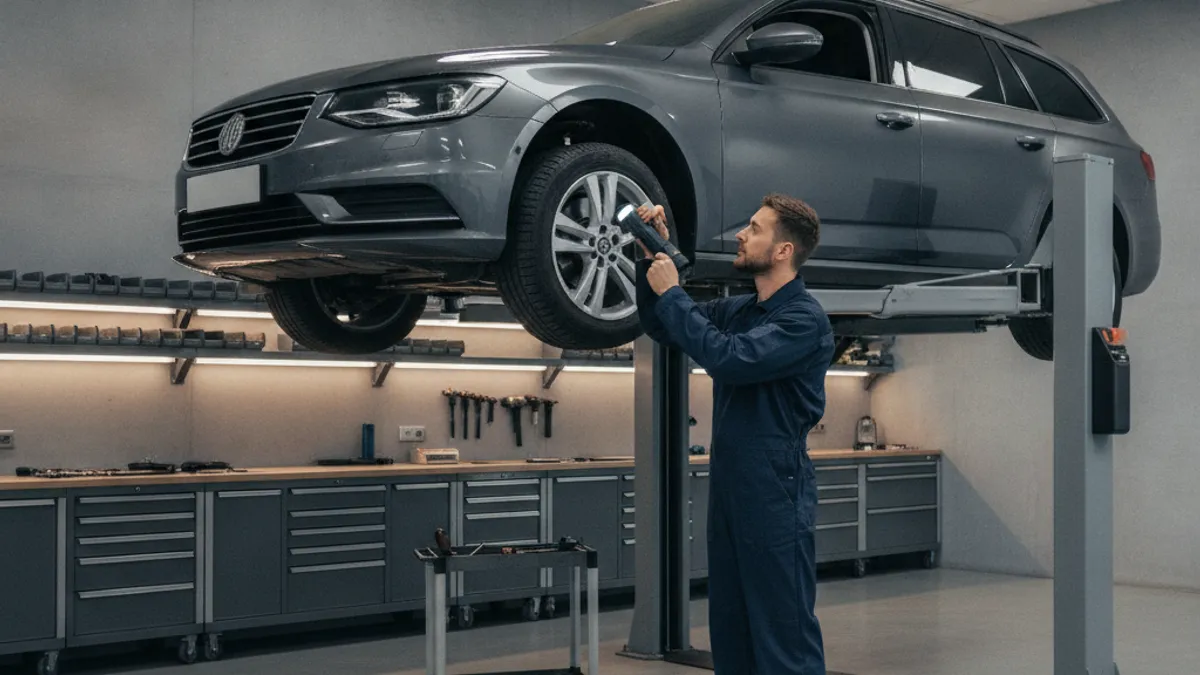
Mercedes C-Class W205 — Springs and Dampers
Springs on the W205 crack earlier than on rivals, especially at the front. On BiH roads, with potholes and damaged surfaces, this can happen before 100,000 km. Dampers on variants with adaptive suspension (AIRMATIC) are considerably more expensive to replace than conventional ones. Rear dampers with self-levelling are another component that needs replacement at 150,000+ km. Anyone buying a W205 for BiH should budget for spring and damper replacement within the first year of ownership if the previous owner did not attend to it. Mercedes parts are more expensive than VAG equivalents, but they are available.
An important distinction: the W205 (up to 2021) is more solid than the newer W206 (2021+), which has a What Car? score of just 76.3% with 43% of owners reporting a problem. On the BiH used market, you mainly find the W204 and W205, so this is positive news for buyers considering this model.
Three Models to Avoid or Buy Very Carefully
Insignia 2.0 CDTi — Reliability and Common Faults
The Opel Insignia is the only D-segment model on ADAC's blacklist. A PKZ of 30.5–33.5 for model years 2020–2022 is a catastrophic result — ten times worse than the A4 or 3 Series of the same age. At first glance, the Insignia is appealing because of its price: it is the cheapest car in the segment and offers good space and equipment for the money. But the low price exists for a reason.
Typical problems on the 2.0 CDTi: the turbo fails at 100,000–150,000 km due to bearing and seal wear, the AdBlue system requires expensive repairs at 60,000–100,000 km, the automatic gearbox develops jerking and power loss at 80,000–120,000 km, and the dual-mass flywheel on diesel variants is a frequent and costly failure. The combination of 2.0 CDTi with an automatic gearbox is particularly problematic, as faults multiply.
If you are determined to buy an Insignia, the only combination that makes sense is the manual version with the 1.5 turbo petrol engine — and expect to spend less upfront but considerably more during ownership on repairs. For the same amount you would spend on Insignia repairs in the first two years, you could have bought an older Passat B7 in good condition.
Ford Mondeo Mk5 (2014–2022)
ADAC records a PKZ of 15.5 (2019) to 26.5 (2020), significantly above the class average. The Mondeo was discontinued in 2022 and Ford has no D-segment successor, making it a car that is gradually disappearing from the market. This means two concrete things for a BiH buyer: resale value will fall faster than the competition because there is no "next generation" to maintain interest, and availability of specific parts (especially body panels and electronics) will worsen over time as stocks diminish.
The EcoBoost petrol engines (1.5 and 2.0 turbo) have a well-documented coolant and overheating issue at higher mileages, resulting from the cooling system design. The 2.0 TDCi diesel is more reliable, but it too falls behind VAG and BMW diesels in this segment according to ADAC data.
Škoda Octavia as a D-Segment Car — a Note
The Octavia appears in some ADAC D-segment lists because its dimensions push it into that territory, especially the Combi variant of the third and fourth generation. ADAC records a PKZ of 7.6–19.5, but that figure includes C-segment registrations. For a more detailed analysis of the Octavia, see our compact segment guide where it is covered in full context. Here it is enough to say: the Octavia Combi with a 1.6 TDI or 2.0 TDI and a manual gearbox is a reliable family car, but it is technically a compact with a bigger boot — not a true D-segment car with all the associated systems.
Estate or Saloon and the Difference in Reliability
The estate (Combi, Avant, Touring) and saloon of the same model share the engine, gearbox and virtually all mechanical components. The difference in reliability is minimal and comes down to estate-specific points: the rear dampers work under greater load (especially if the car is regularly driven fully loaded), boot seals and the third brake light are additional wear points, and on some variants with air suspension on the rear axle (A4 Allroad, certain Passat variants), the air spring bags can be an expensive failure at 150,000+ km.
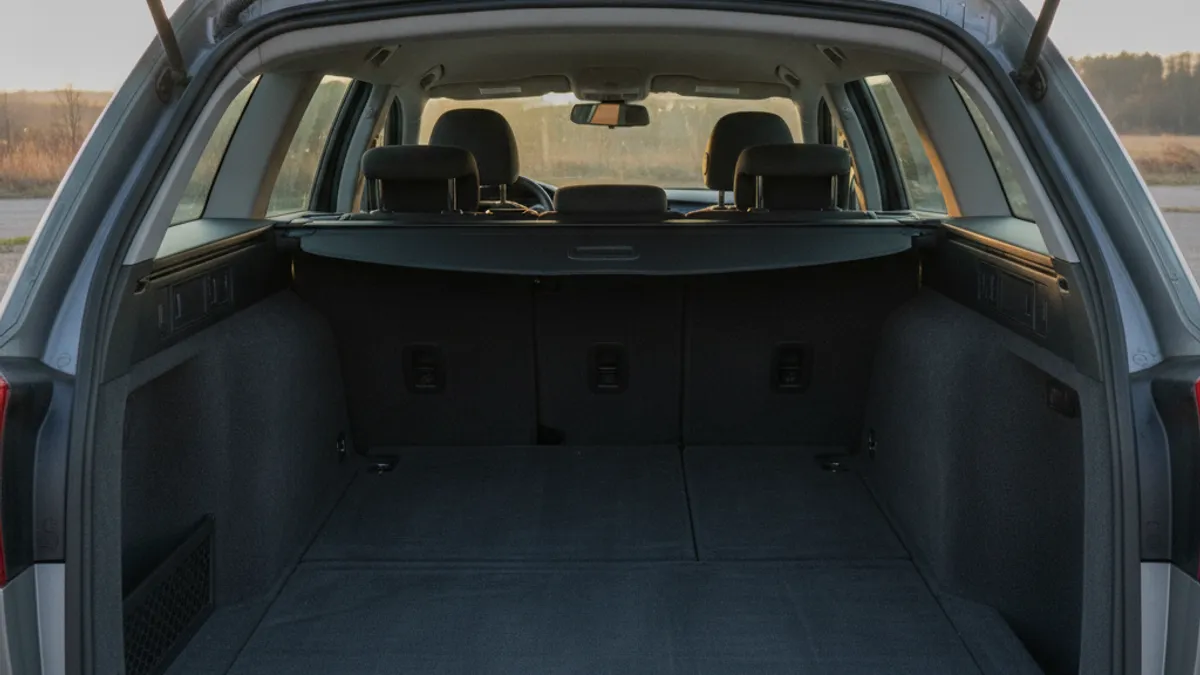
For a BiH buyer, the estate is almost always the better choice over the saloon. The reason is purely practical: a family of four with luggage for a week at the coast, a set of winter tyres in the boot, or the occasional furniture run. A D-segment estate boot offers 580–660 litres without folding the rear seats, while a saloon offers 480–530. That difference of roughly a hundred litres sounds small on paper, but in practice it is the difference between "it fits" and "it doesn't" when packing for a family holiday.
The only situation where the saloon has an advantage is torsional rigidity: the saloon has a stiffer body shell, and for drivers who prioritise handling dynamics, the sedan is subjectively better in corners. But that is not the typical profile of a family car buyer with children and a pushchair in the boot.
Which Engine and Gearbox for a Family Car in BiH
In the D-segment for BiH, diesel still dominates — and that is justified for this buyer profile. A family car covers a mixed driving pattern with plenty of motorway use (trips to the coast, visiting relatives, weekend getaways), and on those journeys a 2.0 TDI, 2.0d or 2.2 SkyActiv-D uses 5–6 litres per 100 km, while comparable petrol engines use 8–10. Over 20,000 km per year, that difference is felt significantly in the budget.
Recommendations by engine and manufacturer:
- VAG (Passat B8, A4 B9, Superb Mk3): The 2.0 TDI EA288 family is the right choice. Avoid early EA189 units (Dieselgate affair, weaker DPF, software issues). The principle is similar across all three models since they share the MQB or MLB platform, but execution, software, oil and typical faults differ from manufacturer to manufacturer. The Passat usually has simpler equipment and less electronics than the A4, meaning fewer potential failure points.
- BMW 3 Series: The B47 2.0d (from 2015) is the engine to look for. Avoid the N47 (up to 2014) due to the expensive rear-mounted timing chain replacement. For those who prefer petrol, the B48 2.0 turbo from the G20 generation is very reliable.
- Mazda 6: SkyActiv-G 2.0 petrol for predominantly urban driving. SkyActiv-D 2.2 diesel only for profiles with regular motorway journeys where the DPF has the opportunity to regenerate.
- Mercedes W205: The OM654 2.0d (from 2016) is more reliable than the older OM651, which had issues with the timing chain and fuel pump seal.
Gearbox: a manual is always the safer choice on a used car because it is cheaper to repair and does not depend on oil service history. If you are buying a DSG or automatic, the gearbox service history is a mandatory check. A car with an automatic gearbox that has never had an oil service at 200,000 km is a risk not worth taking, regardless of how well the engine runs. A DSG with documented oil services every 60,000–90,000 km is acceptable. A conventional automatic (ZF, Aisin) with no oil service at 200k+ km is a lottery.
What to Always Check on a Family Car with 200,000+ km
A mid-size family car with 200,000+ km on BiH roads has a specific wear profile. These are the points we check every time during a pre-purchase inspection for this segment.
Suspension and undercarriage. Springs, dampers, anti-roll bar links, ball joints and CV joints. On a D-segment car with 200k+ km, at least one of these components is nearing the end of its life or has already exceeded it. A bounce test at each corner of the car and a visual check for damper leaks are the minimum you can do yourself before bringing it to a workshop.
Dual-mass flywheel (on diesels with a manual gearbox). Knocking or resonance during engine start-up and shutdown, vibrations at idle, difficulty engaging first and reverse gear. On a diesel D-segment car with a manual gearbox and 200k+ km, the flywheel is a matter of "when", not "if". If the previous owner has already replaced the flywheel, that is a positive sign — it means a major job has been done.
DPF condition. Checking pressure before and after the DPF via diagnostics shows how saturated the filter is. If the DPF is full or regeneration is not completing successfully, an intervention is due — its cost depends on the filter's condition. This is particularly important on cars that have predominantly driven short urban routes.
Service history. Stamps in the service booklet are the primary sign of proper maintenance. You do not need a receipt for every small item, but basic services (oil and filters, timing belt or chain per the scheduled interval, automatic gearbox oil if applicable) must be documented. A service booklet with stamps from an authorised or independent workshop is worth more than a seller's verbal assurance.
Electronics and infotainment. On a D-segment car, this is a common source of problems that do not affect driving but create frustration and potentially expensive diagnostics. Check everything: climate control in all zones, heated seats, navigation, parking sensors, reversing camera, electric seat adjustment, panoramic roof (does it open and close fully), electric tailgate on the estate.
For a complete list of what to check on the engine and mechanicals, see our detailed guide to pre-purchase inspection of a used car.
An experienced seller can hide a lot. Rolled-back odometers by tens of thousands of kilometres, write-offs after accidents repainted and sold as "fresh imports from Germany", welds hidden under paint. You can catch some of this during a physical pre-purchase inspection, but the documented past of a car is most easily verified through carVertical. By entering the chassis number, you get annual mileage readings from international registries, recorded accidents and write-offs, the number of previous owners, and theft indicators. We consider it an essential step before buying a family car. When paying for the report, you can use the code GAGA for a 20% discount.
Found a car you are considering? Book a pre-purchase inspection or message us on WhatsApp with the advert link before you put down a deposit.
Frequently Asked Questions
Which is the most reliable family car for BiH in 2026?
According to ADAC Pannenstatistik 2026, Audi A4 (PKZ 0.9–3.1) and BMW 3 Series (PKZ 1.1–3.8) lead the D-segment. VW Passat B8 of newer model years (2019+) is practically level with a PKZ of 1.6. For a BiH buyer, the Passat B8 with a 2.0 TDI and a manual gearbox offers the best balance of reliability, price and parts availability.
Is the Opel Insignia a good choice for a family car?
The Insignia is the only D-segment model on ADAC's blacklist, with a PKZ of 30.5–33.5. The turbo, AdBlue system and automatic gearbox are frequent and expensive faults. The low purchase price does not compensate for high maintenance costs. If the budget is limited, it is better to buy an older Passat B7 in good condition than a newer Insignia.
Is the Škoda Superb more reliable as a diesel or petrol?
The Superb diesel has a What Car? reliability of 98.0%, while the petrol scores just 81.4%. The gap is the largest in the entire D-segment. The petrol Superb has significantly more problems with infotainment and electrical systems. For BiH, the diesel Superb with a manual gearbox is a much safer choice.
Why does the Mercedes C-Class W206 score worse than the W205?
The W206 (2021+) has a What Car? score of 76.3%, with 43% of owners reporting a problem — the worst result in the class. The W205 is more solid on TUV, with a defect rate of 10.0% at 100,000 km. For a BiH buyer looking at a used Mercedes, the older W205 is paradoxically the more reliable choice over the newer W206.
Passat B7 or B8 — which is more reliable?
The Passat B8 (2014–2023) of newer model years (2019+) has an ADAC PKZ of 1.6, an exceptionally low result. Older B8 years (2015–2017) record a PKZ of up to 11.6 due to early software and infotainment issues that were later resolved. The B7 (2010–2014) is mechanically simpler and cheaper to maintain, but lacks ADAC data in recent statistics as it is too old. For BiH, the B8 from 2018 onwards with a 2.0 TDI is the better choice if the budget allows. If not, the B7 with a 1.6 TDI or 2.0 TDI and a documented service history remains a solid family car.
Is the Mazda 6 diesel problematic for city driving?
The SkyActiv-D 2.2 diesel on short urban journeys has a problem with DPF clogging, which causes fuel dilution of the oil and accelerated timing chain wear. If you mostly drive in the city (journeys of up to 15–20 km), choose the petrol SkyActiv-G 2.0, which is robust and does not have this issue. The diesel Mazda 6 is an excellent choice only for drivers who regularly cover longer distances.