Every used car ad shows two numbers buyers look at first: the model year and the mileage. A 2014 Golf 7 with 240,000 km and a 2009 Golf 6 with 120,000 km cost almost the same. Which one is the better choice? This guide walks through the concrete technical reasons why model year or mileage makes a used car a better or worse buy, with thresholds by component and the context of the BiH market, where the average vehicle age is 17 years.
This guide was prepared by the Auto Gas Gaga workshop in Banja Luka, based on years of experience with pre-purchase inspections and servicing used vehicles of every age category.
Short Answer
| If you are buying... | Better choice |
|---|---|
| A car under 10,000 KM with an unclear service history | A newer one with more km |
| A diesel with DPF, turbo and injectors, 200,000+ km | A newer one, but a pre-purchase inspection is mandatory |
| A petrol car for city driving, up to 15,000 km a year | A newer one with more km |
| A car with a proven service history for both examples | The one with better documentation |
| An older car that spent its whole life in one pair of hands, garaged | An older one with less km can be excellent |
| Any car without ESP (not mandatory in the EU before 2014) | A newer one, safety equipment has no substitute |
Table of Contents
- Why This Question Has No Simple Answer
- What Wears Out From Mileage
- What Degrades From Age
- The Average Vehicle Age in BiH and What It Means for Buyers
- A Newer Car With 200,000+ km or an Older One With 80,000 km
- How Many Kilometres Per Year Is Normal for a Used Car
- Timing Belt, Seals and Tyres: When Age Beats Mileage
- Safety Equipment by Model Year
- Five Rules for the Final Decision
- Frequently Asked Questions
- Related Articles
Why This Question Has No Simple Answer
When someone asks "model year or mileage, which matters more", they expect a short answer. The reality is more complex. A car is a set of systems that wear in two completely different ways: some degrade from use, others from time. The engine, gearbox, clutch and brakes wear in proportion to the kilometres the car covers. Rubber seals, gaskets, belts, fluids and the body degrade from age, regardless of how much the car has been driven.
A regional survey of 8,000 users and around a hundred dealers, published in March 2026, shows that nearly 50% of used-car buyers cite technical condition and maintenance history as the decisive criterion when buying, ahead of both model year and mileage. That means a growing number of buyers already intuitively grasp what mechanics have known for a long time: two cars with identical model year and mileage can be in drastically different condition depending on how they were maintained.
Still, when you do not have access to a complete service history, the model year and mileage remain the two strongest signals you can read from an ad. The key is to understand what each of those two numbers actually tells you about the condition of individual systems on the car.
What Wears Out From Mileage
Mileage speaks directly to the mechanical wear of moving parts. Every kilometre means a certain number of crankshaft revolutions, clutch presses, fuel-injection cycles and contacts between brake pad and disc. Here is what specifically wears:
The engine and internal parts. Piston rings, crankshaft bearings, valve guides and the chain or belt all go through cycles of mechanical load. On a well-maintained engine with regular oil changes, these parts realistically last 250,000 to 350,000 km on petrol, and often more on diesel, provided the oil was changed every 10,000 to 15,000 km.
The gearbox and clutch. A manual gearbox lasts a long time with a normal driving style. The clutch is usually replaced somewhere between 120,000 and 200,000 km, depending on the driver. Automatic gearboxes, especially the DSG with a dry clutch (DQ200), are more sensitive to mileage, particularly if the oil was not changed on time. On a car with DSG and 200,000 km and no documented gearbox oil change, the cost of replacing the mechatronics or clutch packs can be significant.
Brakes, suspension and steering. Shock absorbers last 80,000 to 120,000 km on Bosnian roads (on a German motorway they would last twice as long). Tie rods, ball joints, bushings and stabiliser links fall in a similar range. Brake pads and discs depend on driving style, but on an average car the pads go at 40,000 to 60,000 km, and the discs at two to three sets of pads.
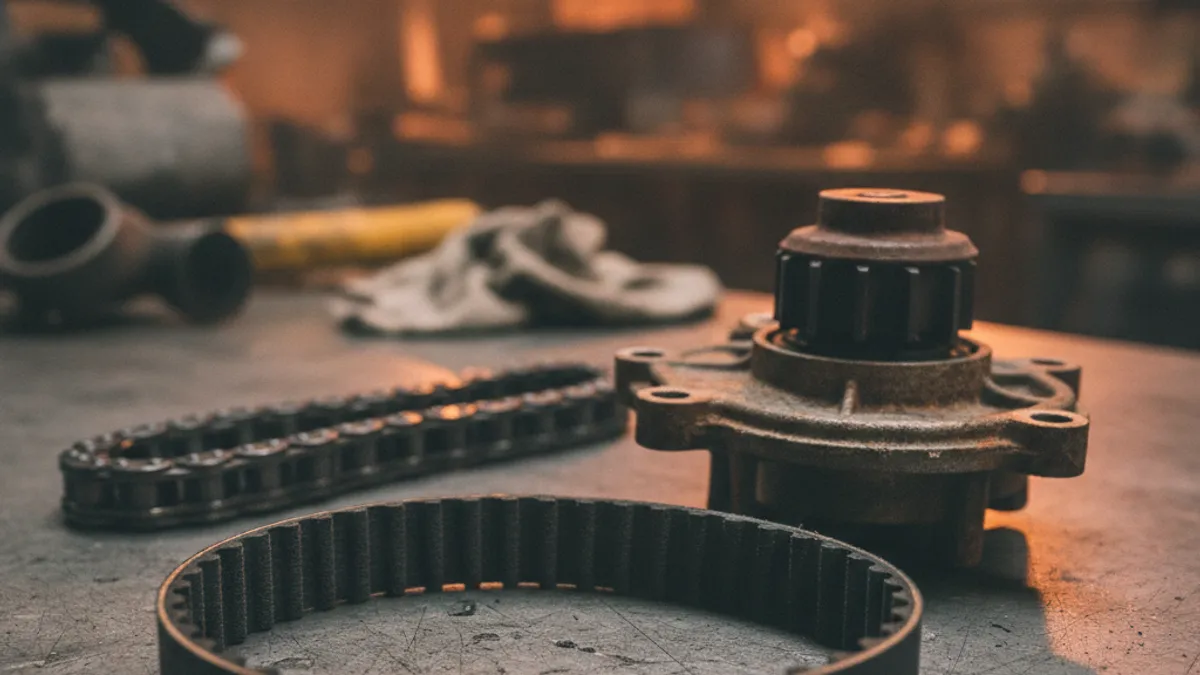
Turbo and DPF on diesels. A turbocharger realistically lasts 150,000 to 250,000 km, depending on shut-off habits (abruptly shutting off a hot turbo shortens its life) and oil quality. The DPF particulate filter fills with soot and ash in proportion to mileage and driving style. A car that has covered 200,000 km mostly in the city has a DPF in significantly worse condition than a car that covered the same mileage on the open road.
The takeaway for this section: high mileage on its own is not a verdict. A car with 250,000 km that was serviced regularly and driven mostly on the open road can have mechanically healthier components than a car with 100,000 km that spent its life in city traffic with short trips and irregular servicing.
What Degrades From Age
While mechanical parts wear from use, a whole category of materials on a car degrades even when it sits in a garage. Time, temperature, humidity and UV radiation destroy organic materials regardless of mileage.
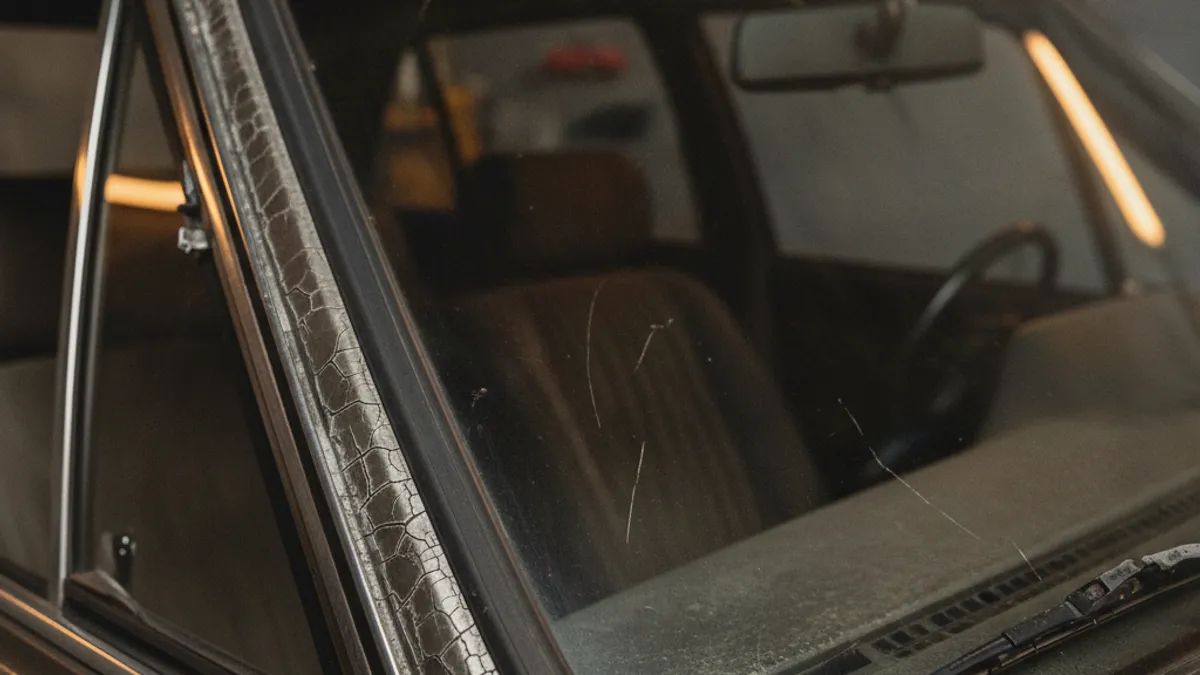
Rubber parts. Every gasket, seal, boot and hose on the car is made of rubber or silicone. Over time rubber dries out, loses elasticity and cracks. A valve-cover gasket that seals perfectly on a 5-year-old car starts leaking on a 12-year-old car, regardless of whether the car has covered 50,000 or 200,000 km. The same principle applies to CV-joint boots, differential seals, intake-manifold gaskets and the rubber hoses of the cooling system.
Fluids. Brake fluid is hygroscopic and absorbs moisture from the air with the passage of time, not mileage. Antifreeze loses its protective properties and becomes corrosive after 4 to 5 years. Gearbox oil oxidises over time too. A car that sat for two years with old oil and old brake fluid is potentially more dangerous than a car that was actively driven with regular changes.
Corrosion. Banja Luka, Sarajevo, Tuzla, every city in BiH has wet winters with salt on the roads. Corrosion eats away at the underbody, sills, fender edges and the suspension's mounting elements. An 18-year-old car with 80,000 km that spent its whole life in BiH can have sills that are falling apart, while a 10-year-old car with 200,000 km imported from a dry climate can be structurally sound.
Electronics and plastics. Connectors oxidise, cable insulation becomes brittle, plastic cabin elements crack from UV radiation and temperature cycles. Screens, climate panels and switches on a 15+ year-old car often have problems that have nothing to do with mileage.
What Degrades on a Car That Sits for a Long Time
A special case is cars with exceptionally low mileage for their age. A 15-year-old car with 40,000 km sounds like a find, but in practice that is a car that mostly sat. Sitting is worse for a car than moderate driving. Brake discs rust and go oval. Tyres develop flat spots. Seals dry out because the oil does not soak them. The battery deep-discharges. Fluids do not circulate, so they settle. The gearbox and clutch can be in worse condition than on a car with 150,000 km that was driven regularly, because lubrication only happens during operation.
The Average Vehicle Age in BiH and What It Means for Buyers
The average vehicle age in BiH is 17 years, with a total of 1,233,783 registered vehicles in 2023, which represents a 4.14% increase over the previous year. The figure is even sharper when you look at the distribution: 38% of passenger cars are older than 23 years, and around 45% of the fleet is older than 21 years.
What does this mean in practice for a buyer? When you say "a newer car" in BiH, you do not mean a three-year-old car as in Germany. You mean a car 10 to 12 years old, with mileage between 150,000 and 250,000 km. That is the reality of the market. A car 7 to 8 years old with under 150,000 km is a relatively fresh example in BiH, while in Germany that is the "middle category".
This reality changes the calculation. When you choose between a 14-year-old car with 100,000 km and a 10-year-old car with 200,000 km, in the BiH context the 10-year-old one actually falls into the "newer" category. On it, the rubber parts, fluids and electronics are in better condition, even if the mechanical side has been used more. On the 14-year-old car, regardless of low mileage, you are facing the replacement of everything made of rubber, a check of all fluids and potentially more serious electronics costs.
ADAC breakdown statistics for 2026 show concrete progress: the probability of a breakdown on a 5-year-old vehicle fell from 3.6% in 2015 to 2.1% in 2025, and on a 10-year-old one from 6.5% to 3.1%. Newer models are objectively more reliable than older ones, even at the same mileage, because they were built with better materials, tighter tolerances and smarter software. The TUV Report 2026 confirms this on concrete models: vehicles 6 to 7 years old with an average of 76,000 km have a defect rate of 6.7%, while vehicles 8 to 9 years old with 112,000 km show 11.1%. An older car with more kilometres has a statistically significantly higher defect rate.
A Newer Car With 200,000+ km or an Older One With 80,000 km
This is the most common dilemma on the BiH market. Let us consider it on a concrete example: a diesel saloon from 2015 with 220,000 km or the same model from 2008 with 90,000 km, both for a similar price.
Should You Buy a Used Car With 200,000 km
A car with 200,000 km that was driven mostly on the open road, with a documented service history and one or two owners, is a far better choice than a car with a suspiciously low mileage. With such a car you know what you got: the parts that wear from mileage (clutch, shock absorbers, brakes) have probably already been replaced once, and if there is documentation of it, that is actually an advantage. You know the clutch is new, you know the shock absorbers were changed at 130,000 km, you know the timing belt was done at 160,000 km.
The problem arises when a car with 200,000+ km has no documentation at all. Then you do not know whether the timing belt was changed, whether the gearbox oil was ever replaced, whether the DPF was regenerated or physically removed. In that case you expose yourself to the risk of paying, in the first six months, for a belt change, a gearbox service, a DPF cleaning and a clutch replacement, which together can amount to a significant share of the purchase price.
On the 2008 car with 90,000 km, the situation is different but not necessarily better. The mechanical parts are less worn, but all the rubber and time-sensitive elements are 18 years old. The timing belt is 18 years old regardless of the car having covered only 90,000 km, and manufacturers prescribe replacement at 5 to 7 years by time, regardless of km. All the oil seals and boots are dry. The electronics are a generation older. And most importantly: the safety equipment is at the level of 2008, which means it may not even have ESP.
How Many Kilometres Per Year Is Normal for a Used Car
The average for a passenger car in Europe is around 12,000 to 15,000 km a year. A car with 15,000 km or less a year is considered a car with moderate mileage. When you see a car with 200,000 km in just 4 years, that is triple the average and indicates intensive use, most often motorway driving or business use.
But high annual mileage is not automatically a bad sign. Motorway kilometres are the easiest on an engine: constant revs, optimal temperature, no constant stopping and starting. A car with 40,000 km a year of mostly motorway driving can be mechanically healthier than a car with 8,000 km of city driving a year.
You can make a formula for a quick estimate yourself: divide the total mileage by the car's age in years. A result below 10,000 km a year on a car that was not garaged and preserved indicates that the mileage was probably wound back or that the car sat for a long time, and both are warning signs. A result between 12,000 and 20,000 km a year is a normal range. Over 25,000 km a year is intensive use that requires a more detailed check of wearing parts.
With imported examples it is especially important to check the documented history of the car. Mileage wound back by tens of thousands of km, total loss after an accident repainted and sold as an "import from Germany", and even theft with an altered chassis number are realities of this market. You catch part of that at the pre-purchase inspection, but the car's history itself is most easily checked through carVertical. Using the chassis number from international registries, it pulls a car's documented history: mileage by year, recorded accidents, the number of past owners and indicators of theft or total loss. We consider it a mandatory step before buying any used car. When paying for the report you can use the code GAGA and get a 20% discount.
Timing Belt, Seals and Tyres: When Age Beats Mileage
There is a whole category of components on a car where time beats mileage. This is a list of the most important ones, with the thresholds we use when assessing a car in the workshop:
How Long Does a Timing Belt Last by Years
A rubber timing belt degrades with time too. Humidity, heat and ozone destroy the polymer even on a car that sits quietly in a garage. Manufacturers prescribe replacement at 5 to 7 years regardless of mileage, and in practice we have seen belts that looked fine visually after 8 years but showed microscopic cracks in cross-section. Once the belt snaps, on most engines with an interference layout the pistons strike the valves and the engine requires a major overhaul. On engines with an oil-bathed belt, such as certain PSA PureTech engines, the belt can fail even at 10,000 to 20,000 km regardless of age, which is an additional warning for buyers of those models.
If you are buying a car 8+ years old and there is no proof the belt was changed, count the replacement of the belt, water pump and tensioner into the price of the car. On some engines that is a relatively simple job, on others it requires removing the engine mount.
Seals and gaskets. Every seal has a shelf life. The valve cover, oil pan, intake manifold, water pump, differential, power steering. On a car 12+ years old, expect at least some of them to leak. That is not a fault in the classic sense, but it is a cost you have to factor in.
Tyres. A tyre older than 6 years should not be on a car, regardless of tread depth. Tyre ageing causes cracking of the sidewalls and a loss of grip in the wet. The DOT marking on the tyre's sidewall gives the week and year of manufacture. If you are buying a car with tyres 8 years old and 4 mm of tread, those tyres are for the bin and that is a cost you add to the price.
Brake fluid. Replacement every 2 years is the standard, regardless of mileage. On a car that sat for 4 years, the brake fluid has absorbed enough moisture to pose a safety risk.
Safety Equipment by Model Year
This is an argument few people mention, and it can save a life. Safety equipment on cars has advanced enormously over the past 15 years, and here an older car simply cannot compete with a newer one, regardless of mileage.
From Which Year Are ESP and ABS Mandatory in the EU
ESP (electronic stability control) became mandatory for all new vehicles in the EU from 1 November 2014. That means every car produced after that date must have ESP. Cars produced before 2014 may, but need not, have ESP. On the BiH market, where a significant part of the fleet consists of vehicles older than 15 years, many cars on the road do not even have basic electronic stability control.
Besides ESP, newer cars bring: AEB (automatic emergency braking, increasingly common from 2018 onward), a reversing camera (mandatory in the US from 2018, increasingly present in the EU from 2015+), lane departure warning, traffic-sign recognition and more advanced body structures with more crumple zones. Consumer Reports recommends newer vehicles even with more kilometres, because they bring precisely these safety systems that older models simply do not have, regardless of engine condition.
When you choose between a 2008 car without ESP and a 2016 car with ESP, ABS and six airbags, that difference in safety has no price. No sound engine is worth more than the safety of your family in the car.
Five Rules for the Final Decision
Based on everything above and on what we see every day in the workshop, here are five concrete rules for the decision:
1. Service history beats both model year and mileage. A car with complete maintenance documentation, regardless of model year or mileage, is almost always a better choice than a car without papers. If both cars have papers, only then do you look at model year and km.
2. For the same price, choose the newer model year. If both cars are without a service history and cost the same, the newer car with more kilometres is the statistically safer option. The rubber parts are younger, the electronics are a generation more advanced, the safety equipment is better.
3. Turn the difference in model year into concrete costs. An older car by 5+ years means: replacing all rubber parts, checking and probably replacing the timing belt, changing all fluids, checking the underbody for corrosion. Add up those costs and add them to the purchase price. Then compare.
4. Mileage without context says nothing. 200,000 km of motorway driving with regular servicing is better than 80,000 km of city driving without servicing. Look at the ratio of annual mileage and the type of use, not the absolute number.
5. Below 2014 model year, demand ESP. If you are buying a car older than 2014 and it has no ESP, that is a serious minus. On a wet or icy road, ESP is the difference between a controlled stop and sliding off the road. Many cars from 2010 to 2013 have ESP as an option, but check whether your specific example really has it.
Found a car you are considering? Book a pre-purchase inspection or message us on WhatsApp with the ad link before you put down a deposit.
Frequently Asked Questions
Is it better to buy a newer car with more kilometres or an older one with less?
In most cases, a newer car with more kilometres is the better choice, provided it was serviced regularly. A newer car has younger rubber parts, fresher fluids, more advanced safety equipment and generationally more reliable electronics. Kilometres are made up for by replacing wearing parts, but the age of the materials cannot be restored by servicing.
How many kilometres are too many for a used car?
There is no universal limit. A petrol engine with regular servicing can exceed 250,000 to 350,000 km, a diesel even more. The key is how those kilometres were accumulated: motorway driving wears the engine less than city driving. A car with 200,000 km and complete documentation can be in better condition than a car with 80,000 km and no papers.
Why is a car with low mileage and a high model year risky?
Because the rubber parts, seals, fluids and tyres degrade from time, not from kilometres. A 15-year-old car with 50,000 km probably has dry seals, old brake fluid, cracked tyres and potentially a corroded underbody. In addition, a car that mostly sat can have problems with the brake discs, the battery and deposits in the fuel system.
Is motorway mileage easier on the engine than city mileage?
Yes. On the motorway the engine runs at constant revs and optimal temperature, the oil circulates evenly, the DPF on a diesel regenerates regularly. In the city the engine endures constant heating and cooling cycles, short trips do not allow the oil to warm up fully, and frequent starts and stops wear the clutch and gearbox faster.
What to watch out for with an imported car with high mileage?
Check whether the mileage matches the condition of the interior, the pedals and the steering wheel. Ask for service documentation or a digital record of the history by chassis number. Pay attention to traces of repainting that may indicate an accident. Be sure to carry out a pre-purchase inspection at a workshop that has diagnostics for that make.
Can a car that sat for a long time be a good choice?
It can, but only with a thorough pre-purchase inspection and investment in replacing all the fluids, belts, tyres and seals that have aged. A car that sat in a dry garage and was occasionally started is in better condition than a car that sat outside for years. In any case, count on an initial investment to bring it into proper condition.