
The thermometer in the car reads 37 degrees, the asphalt ahead shimmers, and your hands are sticking to the steering wheel. In BiH, where 2025 saw 42,762 road accidents and 288 fatalities, driving in heat above 35 degrees is not merely uncomfortable. It measurably impairs your ability behind the wheel while simultaneously accelerating wear on critical components of your vehicle. This guide explains what heat does to both driver and car, and provides a concrete protocol for safe driving across BiH during the 2026 summer heatwave.
This guide was compiled by the Auto Gas Gaga workshop in Banja Luka, drawing on years of experience with summer breakdowns and pre-season inspections.
Table of Contents
- What Heat Does to a Driver at 35+ Degrees
- Dehydration Behind the Wheel Is as Dangerous as Alcohol
- What Happens to Your Car in Extreme Heat
- Asphalt at 60 Degrees and the Risk of Tyre Blowouts
- A Parked Car as a Death Trap for Children and Pets
- Protocol for Safe Driving in the Heat
- When Not to Drive and Red Lines for BiH Drivers
- Frequently Asked Questions
- Related Articles
What Heat Does to a Driver at 35+ Degrees
FHMZ (the Federal Hydrometeorological Institute) forecasts that summer 2026 will be warmer than the 1991-2020 reference period with a probability exceeding 60%. Bosnia is expected to see more than 60 hot days, while southern Herzegovina could experience up to 82. As early as 21 June 2026, temperatures above 30 degrees were recorded across BiH, with weekend highs ranging from 31 to 36 degrees. The dangerous-heat season for drivers has already begun.
At temperatures above 35 degrees, a driver can miss up to 20% of road signs. The likelihood of making a traffic error increases by 30% compared to normal temperature conditions. These are not abstract numbers. On a typical drive from Banja Luka to Doboj, where there are dozens of speed limit, turning and warning signs, every fifth sign simply fails to register. Your brain works more slowly, reflexes lag, and decisions come with a delay that at 80 km/h translates to tens of metres of difference in stopping distance.
The symptoms appear gradually, which is precisely what makes them insidious, because drivers rarely recognise them in time. First comes a mild headache. Then a sense of fatigue you attribute to the monotony of driving. Next, your attention narrows and you stop checking your mirrors, focusing only on the vehicle directly ahead. By the time you feel dizzy or nauseous, your reactions are already significantly impaired.
Drivers who wear dark clothing, who have eaten a heavy meal before setting off, or who slept poorly the night before are particularly at risk. The combination of heat and sleep deprivation multiplies the effects, because both target the same part of the nervous system responsible for attention and reaction time.
Dehydration Behind the Wheel Is as Dangerous as Alcohol
A study by Loughborough University, published in the journal Physiology & Behavior, produced a finding that should change the way we think about water in the car. Dehydrated drivers on a simulator caused 101 incidents, compared with 47 incidents among properly hydrated drivers. That is more than double. The number of errors made by a dehydrated driver matches the error rate of a driver with 0.08% blood alcohol content, equivalent to 0.8 per mille.
Think of it this way. In BiH, the legal limit is 0.3 per mille for experienced drivers and zero for novices. A driver who has simply not drunk enough water during a three-hour drive in the heat makes mistakes comparable to a driver who has had two beers. The difference is that police cannot measure dehydration with a breathalyser, but the consequences on the road are equally real.
The problem is especially pronounced on longer journeys. Many BiH drivers travel to the coast in summer, meaning four to six hours of driving, and often more. The drive from Banja Luka to Neum takes around four hours under normal conditions, and longer in summer traffic. If you get into the car in the morning with just a cup of coffee and no water, by the halfway point you are already in the zone of serious concentration loss.
Dehydration is made worse by the car's air conditioning. The AC unit dries the cabin air, which accelerates moisture loss from the body. Paradoxically, you feel more comfortable because you are not hot, but your body is losing water faster than you think. The rule is simple: half a litre of water for every hour of driving. Not juice, not coffee, not energy drinks, just plain water. You can read more about how air conditioning affects fuel consumption and vehicle performance in summer in our guide to AC fuel consumption in summer.
What Happens to Your Car in Extreme Heat
While the heat is working on the driver, it is simultaneously working on the car. The cooling system, which under normal conditions keeps the engine at 90 degrees, operates under significantly greater load when the ambient temperature is 38 degrees. The difference between the engine's operating temperature and the outside temperature is reduced, meaning the radiator, fan, thermostat and water pump must all work harder to maintain the same temperature.
Coolant that has not been changed for two or more years loses its ability to transfer heat efficiently. Hoses that look healthy on the outside may have hardened internally and are prone to bursting precisely when under the greatest load. A thermostat that sticks slightly at 25 degrees can fail completely at 38. All these hidden problems wait for exactly this kind of summer to surface.
The battery is the other major casualty in extreme heat. Most drivers think winter is the battery's enemy, but extreme heat accelerates the chemical degradation inside the battery just as aggressively. Electrolyte evaporates faster, the plates inside the cells corrode at an accelerated rate, and a battery that had sufficient capacity at 20 degrees can suddenly fail at 40. If you want a more detailed look at checking your battery before summer, we have covered that topic separately.
Engine oil loses viscosity faster at high temperatures. Oil that is nearing the end of its change interval and was still providing adequate lubrication at 25 degrees may be too thin to protect bearings and pistons at 40 degrees. That is why summer is the worst time to postpone a minor service. A detailed guide on preparing your car for summer covers every item you should check before peak heat arrives.
One more element drivers forget about is the wipers and windscreen washer fluid. At temperatures above 35 degrees, the rubber wiper blades harden and crack at an accelerated rate. Water-based washer fluid can evaporate from the reservoir. When dust or insects hit a hot windscreen and the wipers are not functioning properly, visibility drops dramatically. Check the fluid level and blade condition before any long trip.
Asphalt at 60 Degrees and the Risk of Tyre Blowouts
When the ambient temperature reaches 35 degrees, the surface of asphalt in direct sunlight hits 60 to 75 degrees. That is a temperature at which you could burn the palm of your hand if you held it on the surface for more than a few seconds. Your tyres are rolling across that surface at 80, 100 or 130 km/h.

For every 10-degree rise in temperature, tyre pressure increases by 1 to 2 PSI. A tyre that was at a correct 2.2 bar in the morning can reach 2.5 or more by midday on the motorway. If the tyre was already slightly under-inflated, which is extremely common, the combination of lower starting pressure, high temperatures and speed creates the conditions for a blowout.
According to NHTSA data, tyre failures cause approximately 11,000 crashes and roughly 600 deaths per year in the US alone. The period from May to October is blowout season precisely because of the temperature factor. In BiH we lack precise crash statistics broken down by cause, but every mechanic who works through summer knows that roadside tyre calls are many times more frequent from June to September.
Tyres older than five years are particularly at risk, regardless of tread depth. The rubber compound loses elasticity with age, and at 60 degrees on the asphalt surface it becomes rigid to the point where the sidewall cannot absorb impacts and deformation. You can check tyre age by the DOT marking on the sidewall, four digits indicating the week and year of manufacture.
Three things you can do right now. Check tyre pressure in the morning while they are cold, because that is the only relevant measurement. Inspect the tread depth, because a tyre with less than 3 millimetres of tread on hot asphalt has drastically reduced grip, especially if rain falls after a long dry spell. And examine the sidewalls, because cracks, bulges or uneven wear become critical defects at high temperatures. For complete information on tyre maintenance and correct pressures, see our guide to tyre pressures and replacement.
A Parked Car as a Death Trap for Children and Pets
The physics of a closed car in the sun is unforgiving and leaves no room for estimates like "it will only be a minute". Inside a car parked in direct sunlight, the temperature rises to approximately 38 degrees within 10 minutes. Within 20 minutes it reaches around 45 degrees. In less than an hour it exceeds 60 degrees, even when it is "only" 35 degrees outside.
Cracking the windows barely helps. The difference between a fully closed car and one with windows cracked open is just two to three degrees, which is negligible when we are talking about temperatures at which the body starts shutting down. The car functions as a greenhouse: sunlight passes through the glass, heats the interior, and the heated air cannot escape.
The rule is absolute and admits no exceptions. Never leave children, elderly persons or pets in a parked car, not for a minute, not with windows cracked, not in shade that shifts. This is not advice to be applied "sometimes" or "when it is really hot". This is a rule that applies at all times from May to September. Even at 28 degrees outside, the interior of a car in the sun reaches life-threatening temperatures within half an hour.
If you see a child or animal locked in a parked car in the heat, it is an emergency. In BiH, call the emergency services. Every minute of delay can make the difference.
Protocol for Safe Driving in the Heat
Safe driving in the heat is not about a single action but a protocol that starts before you get into the car.
Before departure, check the coolant level in the expansion tank. Check the engine oil level. Check the pressure in all tyres, including the spare. Put at least one litre of water per person into the car for every hour of planned driving. If your air conditioning is faulty or cooling poorly, postpone the trip or schedule it for the early morning hours.
While driving, drink water every 30 to 45 minutes without waiting to feel thirsty. Thirst is a signal that dehydration has already begun. Take breaks every hour and a half to two hours, and not breaks sitting in the car with the AC running, but actually getting out of the vehicle into fresh air, doing a short stretch, and refreshing your face with cold water. On the motorway, use rest areas; do not stop on the hard shoulder unless it is an emergency.
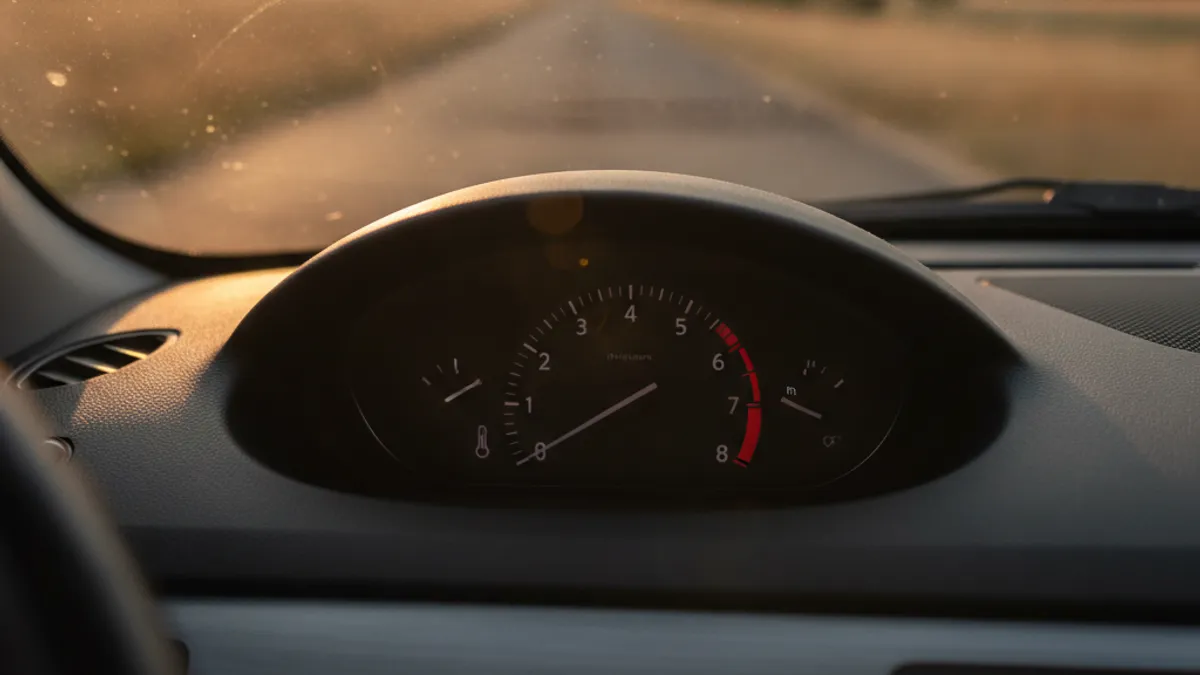
Keep an eye on the instrument cluster. A temperature gauge needle moving towards the red zone or a warning light on the display demands an immediate response. Turn the cabin heater to maximum, because this helps draw heat away from the engine. Find the first safe place to pull over. Switch off the engine and raise the bonnet. Never open the radiator cap while the engine is hot. A detailed explanation of the steps to take when the engine overheats in summer can save your engine, and possibly the entire car.
Set the AC to a temperature that is not drastically lower than the outside air. A difference of 5 to 7 degrees is ideal. Setting the AC to 18 degrees when it is 38 outside puts enormous strain on the compressor, uses more fuel, and creates a thermal shock when you exit the vehicle that places additional stress on your circulation.
Wear light, pale clothing and keep sunglasses within reach. Direct sunlight through the windscreen tires your eyes faster than you think, and eye fatigue directly slows reaction times. Use windscreen sunshades when you park, because a cabin that does not heat up to 60 degrees while you are in the shops means you will not spend the first five minutes of your drive in an unbearably hot car waiting for the AC to bring the temperature down.
When Not to Drive and Red Lines for BiH Drivers
There are situations where the only sound advice is not to get behind the wheel at all. If the temperature exceeds 40 degrees and you do not have a working AC, the risk of heatstroke behind the wheel is real and immediate. If you are already dehydrated or feeling unwell, driving in the heat will make things worse. If you have a chronic condition, heart problems, or take medication that affects thermoregulation, consult your doctor before long trips in the heat.
For BiH specifically, the riskiest section in summer is the motorway through the Vrbas and Bosna river valleys, where heat becomes trapped between the hills and congestion is common. City driving in Mostar, Trebinje and Banja Luka at 35-plus degrees with frequent stops places significantly more stress on both driver and car than the open road. If you are planning a longer journey, choose the early morning hours or late afternoon. The period from 12:00 to 16:00 is the worst possible time for long-distance driving.
A special note for drivers of older vehicles. If your cooling system has not been serviced, if your tyres are more than five years old regardless of tread depth, or if your battery is three or more years old, get an inspection before peak heat arrives. A breakdown in the heat is not just an inconvenience. In BiH, where roadside assistance is sometimes far away, a breakdown in the heat can also be dangerous.
Finally, do not forget your passengers. Children, elderly people and pets tolerate heat worse than an adult driver. If you are driving with family, breaks must be more frequent, water more readily available, and the AC more reliable. It is better to arrive an hour late than to endanger the health of someone in the car.
Need your car checked before summer trips, or feel that the AC is not cooling as well as it should? Book an appointment at the workshop or message us on WhatsApp to arrange an inspection.
Frequently Asked Questions
How much water should you drink while driving in the heat?
At least half a litre for every hour of driving. Do not wait until you feel thirsty, because thirst means dehydration has already started. Water is the best choice. Avoid coffee and energy drinks as they cause additional dehydration.
At what temperature does a parked car become dangerous?
Even at an ambient temperature of 25 degrees, the interior of a closed car in the sun reaches dangerous levels within 30 to 40 minutes. At 35 degrees outside, the interior exceeds 45 degrees within 20 minutes and continues rising towards 60. Cracking the windows makes no significant difference.
Does the car's air conditioning protect against dehydration?
No. The AC cools you and makes you more comfortable, but the air from the AC is drier than outdoor air and actually accelerates moisture loss from the body. You feel better, but you dehydrate faster. Regular water intake is therefore essential even with the AC running.
How often should you take breaks on a long drive in summer?
Every hour and a half to two hours, with an actual exit from the vehicle. A break inside the car with the AC on does not replace a proper break. Get out, stretch, drink water, refresh your face. Five to ten minutes of rest every hour and a half drastically reduces accumulated fatigue.
How can you tell if the engine is starting to overheat?
The temperature gauge on the instrument cluster moves towards the red zone, or a warning light comes on. If you notice either of these two signs, turn the cabin heater to maximum and find the first safe place to pull over. Never open the radiator cap while the engine is hot.
Are summer tyres safer than all-season tyres in the heat?
Summer tyres have a compound optimised for temperatures above 7 degrees and generally offer better grip on hot asphalt than all-season tyres. However, tyre condition matters more than tyre type. A worn summer tyre is more dangerous than a new all-season one. Check tread depth and pressure regardless of tyre type. For a more detailed comparison, see our guide to all-season vs summer tyres.