May 2026. Winter tyres are off, summer tyres are waiting in storage, and for the first time you are wondering whether it even makes sense to keep two sets. All-season tyres have come a long way over the past two seasons, ADAC seriously recommends them in its 2026 test for the right driver profile, and once you add up service and swap-over costs, two sets can end up more expensive than one good all-season set. The only question is whether you fit that profile, or whether you will regret it two years from now.
This analysis was prepared by the Auto Gas Gaga workshop in Banja Luka, based on the 2026 ADAC summer and all-season tyre tests, BiH regulations, and our own workshop observations after two seasons on all-season tyres.
Short Answer
| If you are... | Better choice |
|---|---|
| A driver covering over 20,000 km a year with longer trips | Two sets (summer + winter) |
| A city driver in Banja Luka or Sarajevo, up to 12,000 km a year | All-season (premium class) |
| A driver who often heads to mountain areas and skiing | Two sets, 3PMSF winter tyres a must |
| A driver who does not want to bother with swaps and storage | All-season (M+S, 4 mm minimum) |
| A driver of an older car worth up to 6,000 KM | All-season (Hankook, Goodyear mid range) |
| A driver who often crosses into Austria or Germany in winter | Two sets with 3PMSF winter tyres |
Table of Contents
- May 2026: Why Now Is the Right Time to Decide on Tyres
- What BiH Rules Actually Say: Period, Tread Depth and Fines
- M+S vs 3PMSF: The Difference Manufacturers Use to Confuse Buyers
- All-Season Tyres in 2026: How Far Have They Really Come
- Summer Tyres: What ADAC Confirmed in the 2026 Test
- When All-Season Tyres Make Sense and When They Do Not
- Prices: What a Set of Summer and All-Season Tyres Costs in BiH
- What We See in the Workshop After Two Seasons on All-Season Tyres
- Frequently Asked Questions
- Related Articles
May 2026: Why Now Is the Right Time to Decide on Tyres
Mid-May is the window where the decision gets made. Winter tyres are off, summer tyres are either in storage or still on the shop shelf, and the calculation "set of winter + set of summer + two swaps a year + storage" starts to look bulky once you project it over the next five years. At the same time, the regional and Bosnian motoring scene only published fresh 2026 ADAC test results back in January and February, so you have real data on what each tyre delivers, not marketing brochures.
The second factor pushing toward this decision now is climate change, which meteorologists and drivers alike acknowledge. Milder, later winter onsets, short stretches of real snow in lower-lying parts of Bosnia, then earlier springs. More and more days a year are spent at temperatures above 7 degrees, which is the threshold below which winter tyres give maximum grip and above which they lose their edge. Klix.ba opened the discussion back in 2023 about whether all-season tyres are becoming an acceptable compromise for urban drivers, and since then manufacturers have rolled out new generations that handle summer conditions far better than the older models.
The third factor is cost. A mid-range set of summer tyres with fitting for 15-16 inch wheels lands in the 350 to 600 KM range, a set of all-season in the same class is usually between 500 and 800 KM. The upfront difference is 150-200 KM, but it disappears once you factor in two swaps a year and storage. The question to ask is not "which option is cheaper", but "which option suits the way I drive over the next three seasons".
What BiH Rules Actually Say: Period, Tread Depth and Fines
The Bosnian Law on the Fundamentals of Road Traffic Safety mandates winter equipment from 15 November to 15 April. That is a fixed calendar window, regardless of whether snow has fallen or not. During that period you must run either winter tyres, or all-season (universal) tyres with the M+S marking and a minimum tread depth of 4 millimetres.
In other words, M+S all-season tyres are formally recognised in BiH as winter equipment, provided the tread depth has not dropped below 4 mm. This is a critical piece of information that is often overlooked: the legal minimum tread depth for driving in general is 1.6 mm, but for winter use 1.6 mm is not enough; 4 mm is required. If the police stop you in January with an all-season tyre worn to 3 mm, you do not legally have proper winter equipment, regardless of the M+S marking on the sidewall.
The fine for driving without proper winter equipment during the mandatory period is between 100 and 200 KM, according to figures aggregated by kazne.ba (verified in January 2026). On top of the fine, in practice the police can stop you from driving until you fix the issue, which on longer trips adds insult to injury.
Are All-Season Tyres Legal in BiH in Winter
Yes, but only if they carry the M+S marking and have at least 4 mm of tread depth throughout the entire 15 November to 15 April period. Without the M+S marking the tyre is treated as a summer tyre and represents a violation during that period, regardless of what you tell the officer about it being "universal". If you are buying a new all-season set, make sure the sidewall explicitly says M+S, and ideally also carries the mountain snowflake symbol (3PMSF, more on that below), because if you plan to drive through neighbouring countries, 3PMSF is increasingly being required there rather than just M+S.
M+S vs 3PMSF: The Difference Manufacturers Use to Confuse Buyers
On the sidewall of a tyre you can see one of two markings, or both. M+S stands for "Mud and Snow" and it is purely a self-declared manufacturer marking. In other words, the manufacturer simply states that the tyre is suitable for mud and snow, without any laboratory test. Anyone can stamp those three letters on any tyre, and in Europe it is not regulated by a standard. That is why you find cheap Chinese summer tyres with M+S markings at suspiciously low prices in shops; they are technically legal as winter equipment in BiH, but they behave like summer tyres the moment temperatures drop.
3PMSF (Three Peak Mountain Snow Flake, the symbol of a three-peaked mountain with a snowflake inside it) is something entirely different. It is an EU certification, mandatory since 2012, and to earn it a tyre has to pass a specific laboratory test: it is driven on a prepared 5 cm strip of compacted snow and must show at least 25 percent better grip compared to a reference summer tyre. Without that result, the manufacturer is not allowed to stamp 3PMSF on the sidewall.
The difference in practice is huge. A summer tyre with an M+S marking in January, at minus three degrees on slush, behaves like a summer tyre, because that is exactly what it is, just with marketing text added. A proper winter tyre or an all-season with 3PMSF in the same conditions has over 25 percent shorter braking distance on snow. That is the difference between stopping before a zebra crossing or on top of it.
That is why when picking an all-season tyre, look for both markings: M+S (for the BiH law) and 3PMSF (for real winter performance and for trips to Austria, Germany, Slovenia or Italy, where 3PMSF is increasingly required as standard in practice).
All-Season Tyres in 2026: How Far Have They Really Come
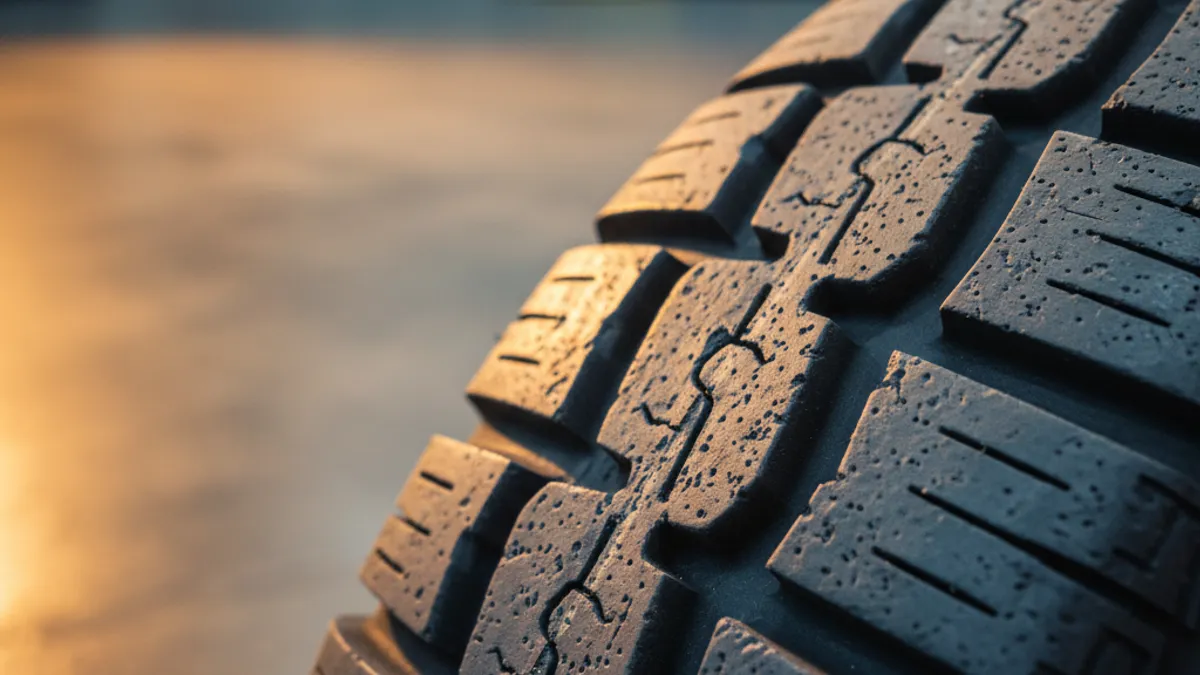
The old reputation of all-season tyres was that they "are no good for either season". That story had some basis up to around 2018-2019, but the generations released from 2022 onwards, particularly the Continental AllSeasonContact 2, Michelin CrossClimate 2 and Goodyear Vector 4Seasons Gen-3, have fundamentally changed the picture.
In its all-season tyre test, ADAC confirmed using a reference model that the Continental AllSeasonContact 2 currently delivers the best overall performance, with high marks both in driving safety and in environmental impact. In numbers that matter to drivers, a modern premium all-season tyre delivers around 90 to 95 percent of a true summer tyre's performance in warm conditions, and around 85 to 90 percent of a true winter tyre's performance in cold conditions. That is a significant change compared to the generations of five years ago, when those figures used to sit at 75 to 80 percent.
In practical terms, the top 5 all-season tyres on the regional scene for 2026 look roughly like this:
- Michelin CrossClimate 2 - strongest on dry, warm tarmac, a good compromise on snow
- Continental AllSeasonContact 2 - best in wet safety and aquaplaning resistance
- Goodyear Vector 4Seasons Gen-3 - closest to a true winter tyre when real snow falls
- Bridgestone Turanza All Season 6 - good cornering dynamics and consistency
- Hankook Kinergy 4S2 - best price-to-performance ratio in the mid range
This ranking is not our "workshop recommendation" in the sense of which specific model we would mount on your car, but a summary of independent tests from autoklub.net and ADAC data. When looking at these models, check that they carry both markings, M+S and 3PMSF, and that they come from the last two production years (the DOT number on the sidewall tells you that).
Summer Tyres: What ADAC Confirmed in the 2026 Test
The test published on 26 February 2026, run in 225/50 R17 on an Audi A4, gives you a realistic picture of the summer tyre market. Out of 16 tyres tested, only three received a "Good" rating, and not a single one earned the top "Very Good". The three winners are:
- Continental PremiumContact 7 with a score of 1.9 (the best overall result)
- Pirelli Cinturato C3 with a score of 2.2
- Goodyear EfficientGrip Performance 2 with a score of 2.3 and the longest estimated life of around 58,000 km
The gap between the best and worst tyre in wet braking was 7.8 metres. That is the length of a parking space. At the end of a street where a child runs across, that is the difference between stopping and impact.
Three cheap Chinese tyres in the test, Linglong Sport Master, Leao Nova-Force Acro and Lassa Revola, only received an "Adequate" rating along with a warning about unbalanced performance. Concretely, tyres that brake decently on dry can be noticeably weaker on wet, or have a short life so you end up on a new set within two seasons. That is the truth about "cheap" tyres; you are not paying less, you are just paying in a different currency, through higher fuel consumption, faster wear and worse behaviour in emergency situations.
Continental PremiumContact 7 Experiences
In the 2026 ADAC test, the PC7 got the lowest (best) overall score of 1.9, with the emphasis that the tyre is very well balanced, good in wet braking, good in fuel efficiency and decent in durability. In practice this means a tyre that will not give you trouble in any situation, which is the ideal profile for a driver who is not chasing extremes (neither a sporty tyre nor the cheapest option). Pricing in BiH for the 205/55 R16 size and similar sits at the upper end of the premium tyre range, so the calculation makes sense if you cover more than 15,000 km a year, where the roughly 50,000 km life pays off over two to three seasons.
When All-Season Tyres Make Sense and When They Do Not
This is a decision where your driving profile decides everything, not the brand of the tyre. In 2026, all-season tyres make clear sense for one type of driver and clearly do not make sense for another, and there is no middle ground of "either will do".
They make sense if:
- You cover under 15,000 km a year (urban driving, local routes)
- You drive mostly in urban environments (Banja Luka, Sarajevo, Tuzla, Mostar) where snow is cleared quickly and does not stay for days
- You do not regularly head to mountain areas (Vlašić, Jahorina, Kupres, Igman) during winter
- Your car is worth up to about 8,000 to 10,000 KM and you do not want to invest in two premium tyre sets
- You have nowhere to store a second set of tyres (flat without a basement, no garage)
- You value simplicity: one set, no swapping in spring and autumn
They do not make sense if:
- You cover over 20,000 km a year (all-season tyres wear faster than the summer plus winter combination)
- You often take long summer trips at temperatures above 30 degrees (an all-season tyre on tarmac at 50 degrees loses its compromise and turns soft)
- You regularly climb to mountain areas in winter, on real snow and ice
- You have a sporty or powerful car over 200 hp, where you need summer grip and high-speed control
- You travel often to Austria or Germany in winter, where 3PMSF is increasingly required in practice, and some cheaper M+S all-season tyres do not carry that certification
Do All-Season Tyres Consume More Fuel in Summer
In principle yes, a small difference but it exists. An all-season tyre has a somewhat more aggressive tread with more sipes (small slits) for better adhesion on wet and snow, which means slightly higher rolling resistance on dry warm tarmac than a summer tyre. ADAC measurements show a difference of about 2 to 4 percent in consumption, which on annual mileage of 12,000 km with a diesel engine doing 6 l/100 km works out to about 15 to 30 litres of fuel a year, or practically 35 to 70 KM of difference, which in the swap-over calculation is neutral to negligible.
All-Season Tyres for a Used Golf or Octavia
For an average used VW Golf 5/6 or Škoda Octavia Mk2 in the 5,000 to 8,000 KM bracket, a premium mid-range all-season set (Hankook Kinergy 4S2, Goodyear Vector 4Seasons Gen-3) in the 195/65 R15 or 205/55 R16 size is a reasonable choice if you drive in the city and cover up to 15,000 km a year. For more powerful variants such as 2.0 TDI 140 hp in the same body, consider two sets all the same, because an all-season tyre on such a car wears its tread faster under harder summer driving.
Prices: What a Set of Summer and All-Season Tyres Costs in BiH
Prices change monthly and vary by region, so these ranges apply to May 2026 based on publicly available BiH retailer pricing (Kemoimpex, Cijenaguma.ba) and should be read as a guide, not as a hard workshop quote.
How Much Does a Set of 195/65 R15 Summer Tyres Cost in BiH
For the most common economy size of 195/65 R15 91V that fits most used Golfs, Octavias and Polos, the May 2026 price spread looks like this (per-tyre prices, fitting not included):
- Economy class (Chinese): from around 67 KM per tyre (Linglong Comfort Master, similar)
- Mid range: from around 90 to 110 KM (Lassa Revola, Sava, Kleber)
- Premium class: from around 130 to 180 KM (Michelin Energy Saver, Continental UltraContact, Goodyear)
For a set of 4 mid-range summer tyres plus fitting (removing the old ones, mounting, balancing, valves) the realistic total cost is between 350 and 600 KM. A premium set in the same format runs from 600 to 850 KM. A set of all-season tyres in a similar bracket is usually 100 to 200 KM more expensive than summer tyres in the same class.
For larger sizes, for example 205/55 R16 91V which is standard for the Octavia Mk2/Mk3, Passat B6/B7 or Golf 6/7, per-tyre prices come out to roughly: economy around 80 KM (Linglong and similar), mid range 100 to 140 KM (Lassa, Sava), premium 160 to 220 KM (Michelin Primacy, Continental PremiumContact, Goodyear EfficientGrip). A set with fitting realistically runs from 450 to 900 KM depending on class.
The price of fitting and balancing in BiH varies; at our workshop and at most BiH tyre fitters expect around 50 to 80 KM for the full set of services (removal, mounting, balancing, new valves). Pricing depends on the specific situation, get in touch for a quote.
What We See in the Workshop After Two Seasons on All-Season Tyres
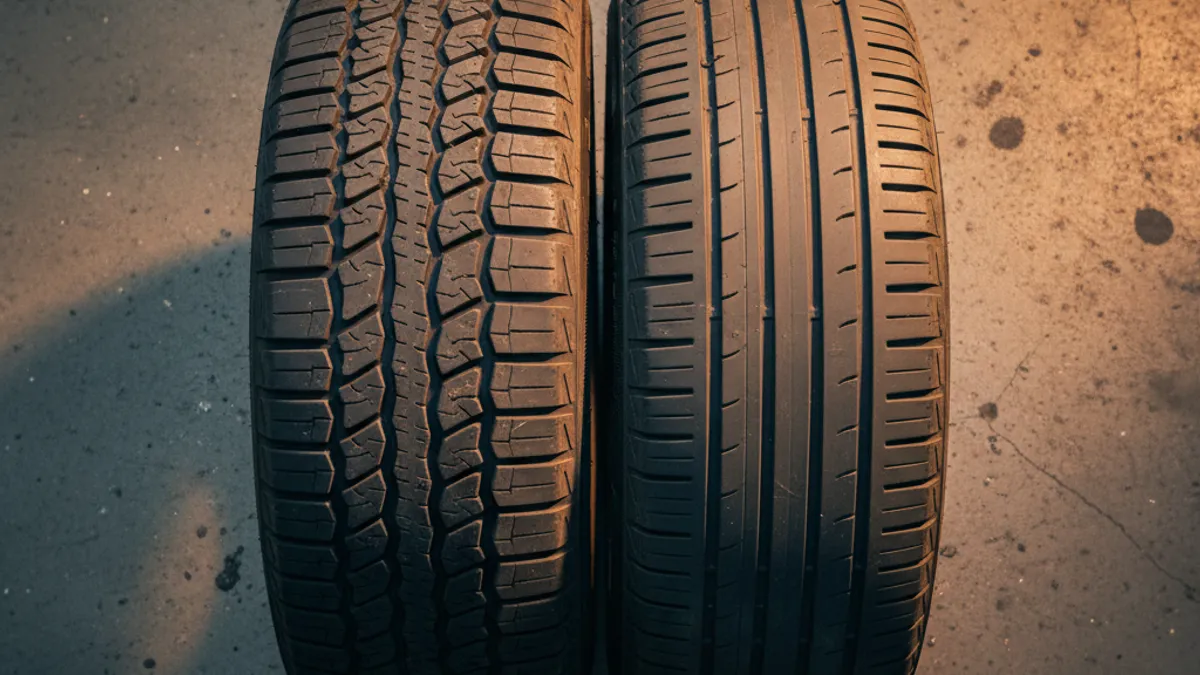
At Auto Gas Gaga, over the last and the season before, we had around 40 vehicles that switched to all-season tyres and came back for service during that same season, which gives us enough data points to spot trends. Here is what we noticed:
First, wear uniformity is genuinely better on premium all-season tyres (Continental, Michelin, Goodyear) than the old reputation suggested. If the tyre is correctly inflated and the suspension geometry is set right, the tread wears evenly across its full width. Uneven wear issues almost always trace back to a neglected suspension, not to the tyre itself. More detail on what proper pressure means and how to recognise when a tyre is past its useful life is in our guide on tyre pressure, maintenance, and signs they need replacing.
Second, realistic life is around 40,000 to 50,000 km for premium all-season tyres, which is less than a premium summer tyre (about 55,000 to 60,000 km), but more than a true summer plus winter combination if you account for each set lasting roughly one season longer than they would if combined. In the total cost per kilometre, the calculation usually lands in favour of all-season for a driver covering 10,000 to 15,000 km a year.
Third, cheap Chinese M+S all-season tyres are a problem we see almost every season. The driver saves 200 KM on the purchase, but in January calls us because the car slides in a slow downhill turn, or covered two metres past the stop line braking on wet. An all-season tyre that is not premium is not a compromise, it is a bad summer tyre with a fake winter marking. We do not recommend cheap all-season tyres; a cheap proper winter tyre will perform better in winter than a cheap all-season.
Fourth, drivers who often head into northern Bosnia, towards Tuzla, Bijeljina and across the border, should think twice. Although urban parts of BiH are mild in winter, on open roads and toward mountain passes 20-30 cm of snow can fall, where an all-season tyre runs into its limits. For that driver profile we still recommend two sets with 3PMSF winter tyres.
Before a trip to the coast in May and June, when an all-season tyre on tarmac at 45 to 55 degrees can hit its limit, it is worth checking what else needs verifying on the car before the summer season, from the air conditioning and cooling system to brakes and battery.
If you are thinking about switching to all-season or just want a second pair of eyes on the current state of your tyres and suspension geometry, book an appointment or write to us via the contact form and we will arrange an inspection.
Frequently Asked Questions
Can All-Season Tyres Really Replace Both Summer and Winter Tyres in BiH
They can, but only if you fit the right driver profile. For a city driver covering up to 15,000 km a year who does not regularly head to mountain areas and runs a quality premium all-season tyre (Continental AllSeasonContact 2, Michelin CrossClimate 2, Goodyear Vector 4Seasons Gen-3) with both M+S and 3PMSF markings, the answer is yes. For a driver covering 25,000 km a year, driving a sporty car or often heading to the mountains in winter, the answer is no.
What Exactly Do the M+S and 3PMSF Markings on the Sidewall Mean
M+S stands for "Mud and Snow" and is purely a self-declared manufacturer marking with no test behind it; it can be stamped even on a summer tyre. 3PMSF (the mountain snowflake) is an EU certification mandatory since 2012, awarded only to a tyre that passes a specific test with at least 25 percent better snow grip than a reference summer tyre. For the BiH winter requirement M+S with 4 mm of tread is enough, but for trips to Austria or Germany in winter 3PMSF is increasingly being required.
What Is the Minimum Tread Depth for Winter Use in BiH
Under BiH regulation, during the mandatory winter equipment period (15 November to 15 April) the minimum tread depth on all-season or universal tyres must be 4 mm. The general legal minimum for driving overall is 1.6 mm, but that does not apply during the winter period. Dropping below 4 mm during winter is treated as driving without proper winter equipment.
How Much Does a Set of All-Season Tyres for a Used Golf Cost in 2026
For the standard 195/65 R15 size that fits most used Golfs, a premium all-season set of 4 tyres with fitting realistically costs between 600 and 850 KM in May 2026. The mid range (Hankook, Kleber) sits between 450 and 650 KM. Economy class (Chinese) starts at 350 KM but we do not recommend it; the calculation usually ends up worse through faster wear and weaker winter behaviour.
Do I Need Suspension Work If I Switch to All-Season Tyres
Not necessarily, but it is a good time to check. An all-season tyre will wear unevenly if track rods, ball joints or shock absorbers are tired, and at that point you lose twice: tyre and safety. Before buying a new set it is worth doing a wheel alignment and checking the suspension, so the new set lasts four seasons instead of two.
When Is the Best Time to Buy Summer or All-Season Tyres
The window between mid-April and the end of May is optimal for summer tyres, because prices are then lower than in July when everyone is in a panic looking for a new set and shop stocks are full. For all-season tyres the purchase can also be planned for early September, ahead of the season when you will use them most, although many drivers decide in May because they take winter tyres off and switch straight to a "set for the whole year".