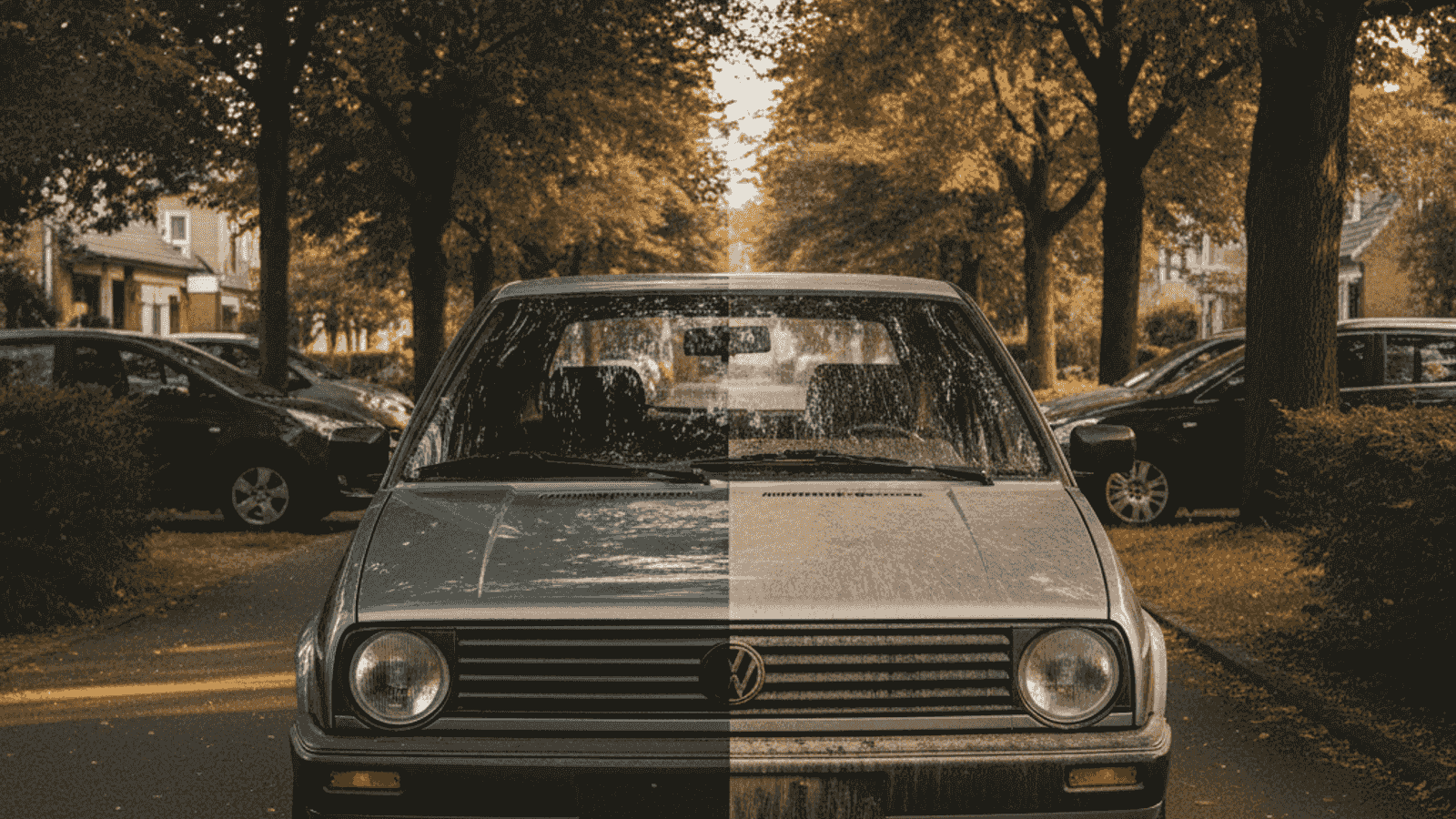
The paint on an average car in BiH endures more than 250 sunny days per year, road salt from November to March, and dust from gravel roads that a third of all drivers use daily. The result: a car that nobody maintains loses its shine within three summers, and the interior starts smelling after the first winter with the windows kept shut. Car care in BiH in 2026 is not cosmetics. It is a tangible investment that preserves your vehicle's value, protects passenger health, and prevents costly repairs that arise when you neglect what could have been sorted with a cloth and an hour of your time.
This guide was compiled by the Auto Gas Gaga workshop in Banja Luka, drawing on years of experience maintaining and servicing vehicles from all European manufacturers.
TL;DR
| Topic | In brief |
|---|---|
| Sun protection | A sunshade on the windscreen lowers cabin temperature by 10 degrees; tinted film protects the interior from UV degradation; parking in shade beats any spray. |
| Proper washing | The two-bucket method protects paint; automatic car washes with bristle strips damage it; self-service bays are a good compromise at 3-5 KM. |
| Interior and A/C | Leather seats last 10+ years with conditioning every 2-3 months; replace the pollen filter every year; the A/C evaporator breeds bacteria if not dried before shutdown. |
| Seasonal calendar | Spring is for post-salt inspection, summer for UV protection, autumn for wipers and glass prep, winter for underbody and tyres. |
| Care vs service | Anything involving a cloth, vacuum, shampoo, and the owner's hands is care. The moment you need a lift, diagnostics, or specialist tools, that is a job for a workshop. |
Table of Contents
- Why Car Care Is More Than Aesthetics
- Protection from Sun and Heat in BiH
- Proper Car Washing Without Paint Damage
- Interior, Seats, Dashboard and A/C System
- Seasonal Car Care Calendar for the BiH Climate
- Care vs Service: Where Is the Line
- Car Care Equipment Worth Having
- In-Depth Guides by Topic
- What Every Owner Can Do Today
- Frequently Asked Questions
- Related Articles
Why Car Care Is More Than Aesthetics
Most drivers in BiH think about car care only once the car is so dirty they feel embarrassed getting inside. That is understandable, but expensive. Dirt on paint is not merely a visual problem. Bird droppings, tree sap, industrial fallout, and road salt are chemically aggressive. If you fail to remove them within a few days, they etch the clear coat and leave marks that ordinary washing cannot fix.
The interior suffers differently but just as seriously. Dust in the ventilation system feeds bacteria and mould, especially on the A/C evaporator. Moisture that accumulates under the carpet during winter triggers corrosion on the sheet metal beneath. Leather seats without conditioning crack and lose colour within two to three seasons. Fabric seats absorb sweat stains and odours that, over time, work so deep into the material that even professional deep cleaning cannot fully extract them.
A clean car sells more easily. A buyer who opens the door and senses a fresh interior free of cigarette or damp odours automatically has greater confidence in the entire vehicle. Cleanliness is the cheapest signal of a responsible owner, and on the BiH used-car market that signal is worth hundreds of marks in the final price. An experienced buyer checks under the carpets, inspects the sills, and opens the bonnet. If stale damp air or a layer of greasy dusty residue greets them there, they immediately negotiate the price down, regardless of the mechanical condition.
Car care in BiH in 2026 means adapting your routine to local conditions. A Banja Luka summer with temperatures above 35 degrees is not the same as a Viennese climate. Herzegovina dust is not the same as road salt on Vlasic mountain. This guide covers everything from paint to the A/C system, from spring to winter, with concrete steps any owner can follow without professional equipment.
Protection from Sun and Heat in BiH
Summer in BiH lasts long and hits hard. From June to September, a car parked in the open can reach an interior temperature of 53 degrees or higher. ADAC tested seven identical Dacia Dusters under the same conditions and measured that a reflective sunshade on the windscreen lowered the cabin temperature by a full 10 degrees, from 53 down to 43 degrees Celsius. A slightly opened window, which many people believe helps, had no measurable effect.
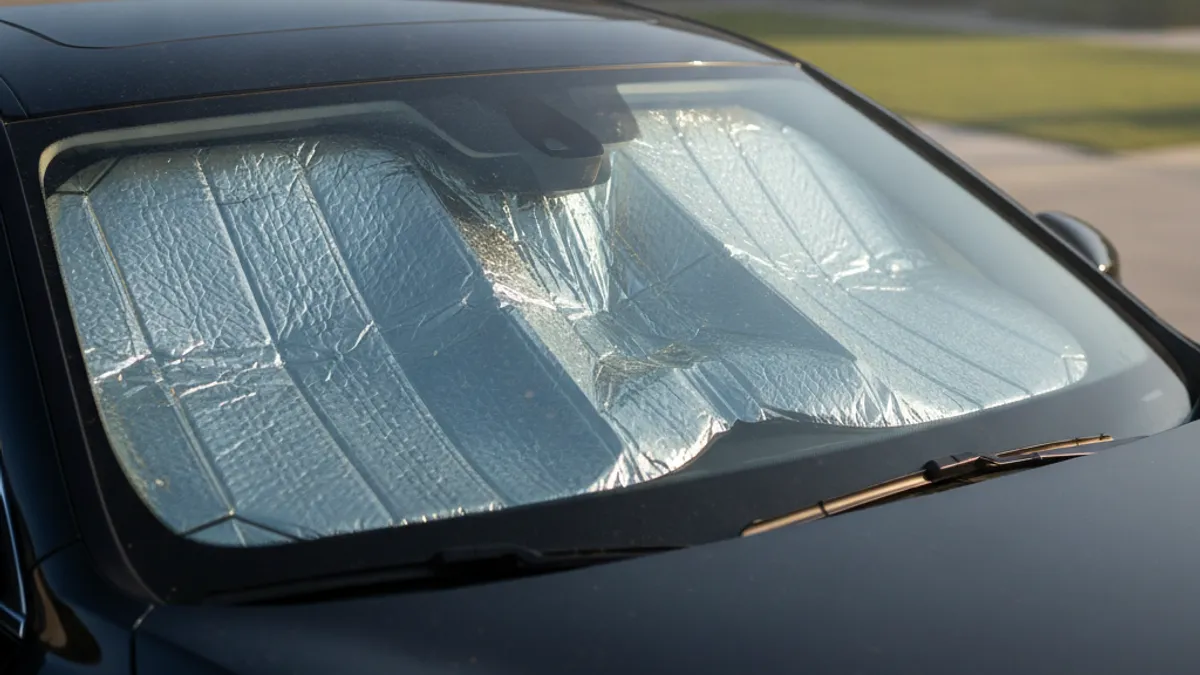
The practical takeaway is clear: a windscreen sunshade is the cheapest and most effective heat protection. They are available at any car accessories shop for very little money and last for years. Tinted film on the side windows reduces UV penetration that destroys the dashboard and upholstery, but it requires professional fitting and compliance with legal tint-percentage regulations.
Bodywork paint also suffers from the sun. UV radiation gradually oxidises the clear coat, manifesting as loss of gloss and a dull, chalky appearance. Darker colours (black, dark blue, dark green) are more susceptible because they absorb more heat. Regular application of wax or a quick detailer creates a thin film that deflects some UV rays and slows oxidation. On a car parked outdoors, waxing every two months during summer is the ideal rhythm.
How to Protect Leather Seats from the Sun
Leather on seats reacts to UV radiation faster than the paint on the body. Drying, cracking, and colour fading begin after just the first summer without protection. The solution is inexpensive: a leather conditioner with UV filter, applied every two to three months, maintains elasticity and colour. If the car is parked outdoors, cover the seats with an old sheet or buy heat-reflective covers. A small investment, and the seats still look new after five years.
The dashboard is another critical surface. Dashboard plastic under constant UV exposure first loses colour, then becomes sticky to the touch, and eventually starts cracking. A plastic care product with UV protection, applied once a month during summer, significantly slows this process. Avoid products that leave a greasy shine because they attract dust and create reflections that impair driving visibility.
Detailed recommendations by protection type, including comparisons of sunshades, tinted film, and parking in shade, can be found in the dedicated guide on protecting your car from sun and heat.
Proper Car Washing Without Paint Damage
Car washing sounds simple, but how you do it determines how long the paint keeps looking good. ADAC and DEKRA tested three black test cars with 23 washes each in different types of automatic car washes. The result: bristle strips (hard nylon brushes) cause the most paint damage, leaving visible dulling after just a dozen passes. Foam and sponge strips are considerably gentler, but they too leave micro-scratches that accumulate over time.
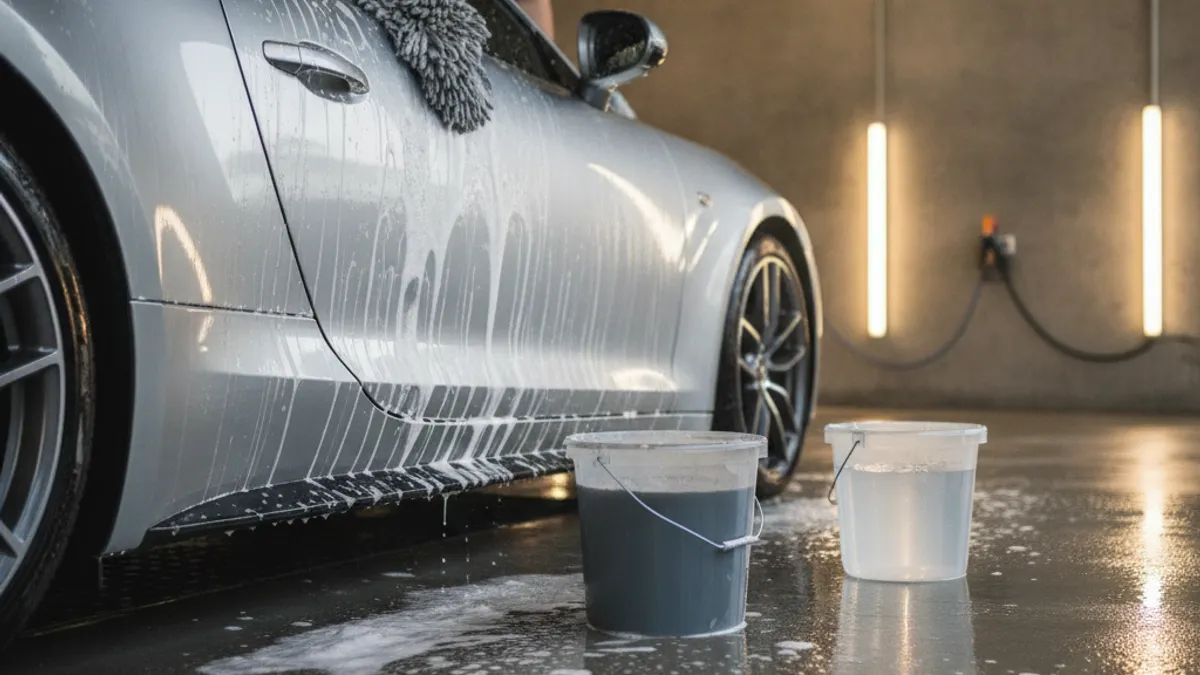
Hand washing with the two-bucket method remains the gold standard for paint preservation. One bucket with shampoo, the other with clean water for rinsing the mitt after every pass. Never a sponge, always a soft microfibre wash mitt. Never circular motions, always straight strokes from top to bottom. Those two habits eliminate 90% of the scratches that occur during washing.
Washing order matters. Start from the roof and work downwards. The lower parts of the body are always the dirtiest (wheel arches, sills, bumpers), and if you wash them first then run the same mitt over the bonnet, you transfer abrasive particles to clean surfaces. The same principle applies to wheels: wash them with a dedicated brush or an old mitt, never the same one you use on the paintwork.
How Often to Wash the Car in Summer
In summer, insects, sap, and dust settle on the paint far faster than in winter. The optimal rhythm is washing every 10-14 days, with an emergency wash within 48 hours if you spot bird droppings or sap. Bird droppings are acidic and can irreversibly damage paint in as little as two to three days in the sun. Sap from pines and lime trees is equally aggressive but does not dissolve in water, so it requires a dedicated sap remover or isopropyl alcohol on a cloth.
Self-service car wash bays are a good compromise: the high-pressure jet itself does not damage paint provided you keep the nozzle at least 30 centimetres away and avoid aiming directly at chips or film edges. At 3-5 KM per wash, they are more affordable than automatic washes for most BiH drivers.
BiH has hard water, with hardness ranging from 10 to 19 dH depending on the region. This means that air-drying without wiping leaves mineral deposits, white spots that bake into the paint under the sun over time and become chemical stains that ordinary washing cannot remove. The rule: after washing, always dry the car with a clean microfibre towel while it is still wet. If you have access to demineralised water for a final rinse, that is ideal, but not mandatory if you towel-dry immediately.
A complete guide to washing techniques, common mistakes that damage paint, and a comparison of car wash types can be found in the proper car washing guide.
Interior, Seats, Dashboard and A/C System
The exterior attracts attention, but the interior is where you spend hours. A neglected interior is not only unpleasant, it is a health risk. The A/C evaporator is an ideal breeding ground for bacteria and mould because moisture from the air constantly condenses on it. The pollen filter, which should catch those particles, needs replacing every year or at 15,000 kilometres, whichever comes first. A simple trick that reduces the problem: switch off the A/C two to three minutes before you turn off the engine, but leave the fan running at full blast. The flow of dry air dries out the evaporator and inhibits mould growth.
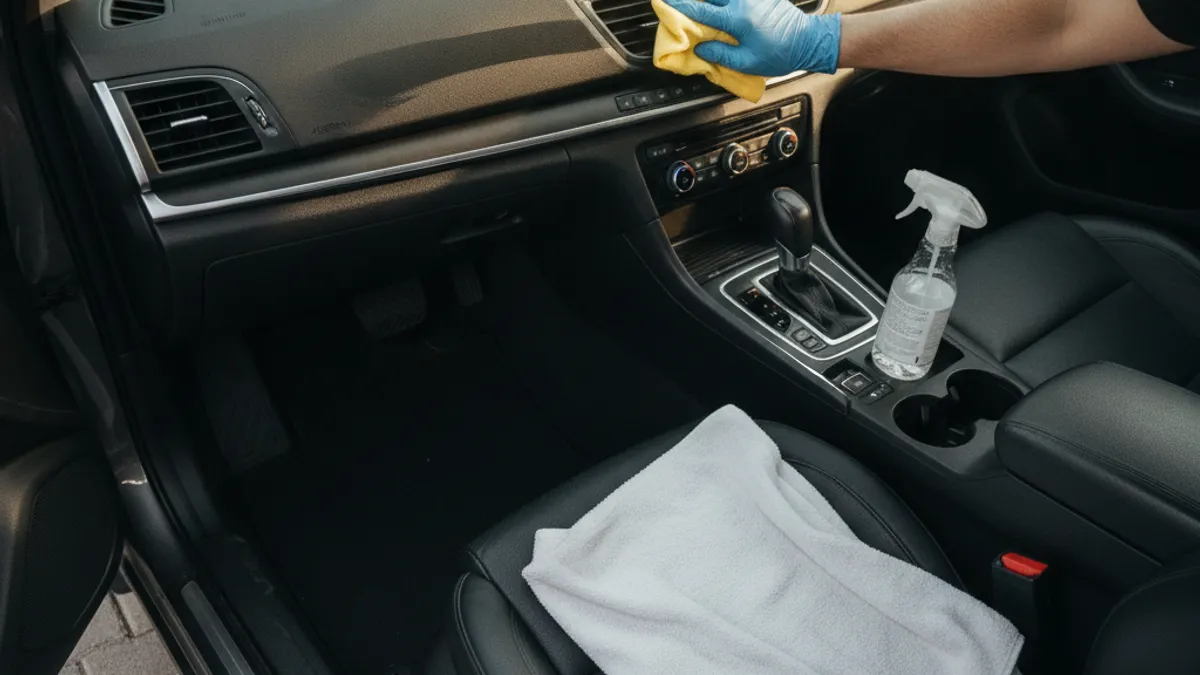
With proper care, leather seats can last 10 years or more. The routine is straightforward: conditioning with a dedicated leather product every two to three months, and deep cleaning every three to four months. The conditioner maintains leather elasticity and prevents cracking, while cleaning removes hand oils, sweat marks, and dust that works into the pores. Important: never use universal cleaning products on leather. They contain solvents that strip the protective coating and accelerate deterioration.
Fabric seats require a different approach. Vacuuming once a week is the minimum. For stains, use an upholstery cleaner with a medium-stiffness brush, working in small circles. Never spray the product directly onto the fabric in large quantities, because moisture seeps into the foam underneath and creates conditions for mould. Apply in small doses, work with the brush, and wipe immediately with a microfibre cloth. That is the correct procedure.
Baking Soda for Car Odours
Odours inside the car are a common problem, especially in smoker vehicles. Ozone treatment is popular, but without prior deep cleaning of the interior it merely masks the smell, which returns after a couple of days. The correct sequence is: deep-clean all surfaces first (seats, headliner, carpets, trim panels), then ozone or steam cleaning.
For milder odours, baking soda is surprisingly effective and costs virtually nothing. Sprinkle a thin layer over the seats and carpets, leave overnight, and vacuum the next day. Baking soda absorbs odour molecules rather than masking them. Repeat two to three times for more stubborn smells. For odours coming from the ventilation, antibacterial sprays are available that you inject through the cabin filter opening to disinfect the evaporator from the inside.
A steam cleaner running at 95 to 120 degrees Celsius instantly kills mould spores in fabric and the ventilation system. Professional units deliver steam pressure and flow rates that domestic cleaners cannot match, so for severe cases (a long-term smoker car, a vehicle after flooding) professional detailing is worth paying for.
The complete interior cleaning procedure with steps for every surface can be found in the car interior cleaning guide.
Seasonal Car Care Calendar for the BiH Climate
BiH has distinct seasons, each posing specific threats to your vehicle. This calendar is tailored to the continental climate found in Banja Luka, Doboj, Bijeljina, and the rest of Bosanska Posavina. Herzegovina has a milder winter but harsher summer climate, so the timings shift by roughly a month in each direction.
Spring (March, April, May)
Spring is the season for inspecting winter damage. Road salt has spent months on the underbody, wheel arches, and sills. The first wash after winter should include the underbody, not just the bodywork. A high-pressure jet aimed at the underside strips accumulated salt and prevents corrosion that would otherwise develop during the damp spring months.
Check the wipers. Winter accelerates rubber-edge degradation, so spring is the right time to replace them if they leave streaks. Clear out the roof gutters and the channels around the windscreen, because leaves and fine debris accumulate there, clogging water drains and causing leaks into the cabin. On many models, the drain runs down the A-pillar and exits behind the wheel arch, so when it clogs, water seeps straight onto the cabin floor.
The interior deserves a thorough vacuum and clean after winter. Winter boots track in salt, grit, and moisture onto the floor mats. Remove the mats, wash them, dry them, and only then put them back. Check beneath the mats for moisture on the sheet metal, because even a small amount of standing moisture triggers under-carpet corrosion that remains invisible until it becomes a serious problem.
Summer (June, July, August)
Summer is the season of protection. A windscreen sunshade is essential. Park in the shade whenever possible. Wash the car in the morning or evening, never in direct sunlight, because shampoo that dries on hot paint leaves spots that are difficult to remove.
Check the A/C system. If the air conditioning cools poorly or an unpleasant smell comes from the vents, the evaporator needs cleaning or the refrigerant level is low. Replace the pollen filter at the start of summer, because it worked at full capacity during spring catching tree and grass pollen.
Tyres on hot tarmac suffer more than in winter. Check pressures once a month, always on cold tyres, in the morning before driving. Over-inflation in heat accelerates wear on the centre of the tread; under-inflation increases fuel consumption and sidewall heating. On longer trips (coast, mountains), check pressures before departure because at motorway speeds of 130 km/h the tyre heats further and pressure rises.
Autumn (September, October, November)
Autumn is the season of winter preparation. Check the antifreeze. If you have not changed it in the last three years, the concentration has likely dropped below the safe level for severe frost. Check the battery, especially if the car struggles to start in the morning, because cold starting requires roughly twice the current of a summer start. Replace the wipers if the spring replacement was not done. Clean and treat door locks and rubber door seals with silicone spray or glycerine, because frost locks them shut.
Thoroughly wash the underbody before the first frosts. Salt left over from the previous winter plus fresh salt causes accelerated corrosion on parts that already have a scratch through to bare metal. Apply wax or a quick detailer to the paint to create a barrier that makes winter washing easier and reduces salt adhesion.
Check the condition of winter tyres: if the tread depth is below 4 millimetres, the tyres no longer offer sufficient safety on wet roads and snow. The law requires a minimum of 4 millimetres for winter conditions. Replace them in good time, while garages are not yet swamped with November queues.
Winter (December, January, February)
Winter is the season of survival. Wash the car more often than you think you need to, ideally every week or every two weeks. Road salt actively corrodes paint and metal, and corrosion is fastest where moisture accumulates: sills, inner wheel arches, and joints around doors. Use a self-service bay with an underbody programme whenever the temperature is above zero.
Between washes, pay attention to the rubber door seals. Frost bonds them to the bodywork, and forcing the door open tears them. Silicone spray or glycerine applied to the seals prevents sticking. Interior glass mists up more often in winter because the temperature difference between the cabin and the outside is large. Clean glass mists less, so wiping the inside of the windscreen with glass cleaner once a week is a useful addition.
How Often to Wash the Underbody in Winter
The underbody is the most vulnerable part of the car in winter. The recommended rhythm is washing the underbody at least once a month during the salting period, plus one thorough wash as soon as salt is no longer used in spring. Self-service bays with a floor-level underbody nozzle are ideal because they allow targeted rinsing of critical zones without needing a lift.
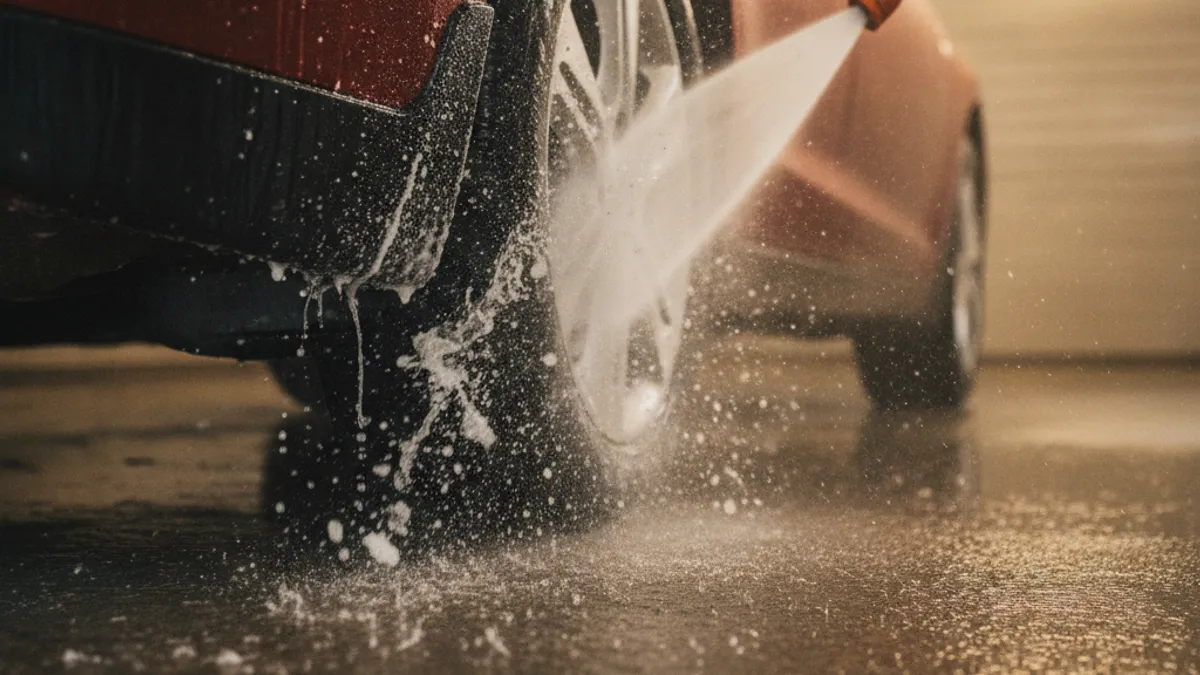
Do not wash the car in sub-zero temperatures unless you have access to an enclosed wash facility. Water that freezes in the locks, on the seals, and around electrical connectors can cause more damage than salt. Wait for a day when the temperature is at least a few degrees above zero and wash then.
Care vs Service: Where Is the Line
The boundary between care and service is clear once you know what to look for. Anything you can do with a cloth, vacuum cleaner, shampoo, wax, and your own hands is care. The moment you need a lift, a diagnostic tool, specialist equipment, or knowledge beyond this guide, that is a job for a workshop.
Care includes: exterior washing, drying, wax or quick-detailer application, interior vacuuming, glass cleaning, dashboard and trim cleaning, leather conditioning, wiper replacement, tyre pressure checks, topping up washer fluid, and fitting sun protection. All of this the owner can do at home or at a self-service bay without any specialist knowledge.
Service includes: oil and filter changes, brake system inspection, A/C diagnostics and refrigerant top-up, underbody inspection on a lift, suspension geometry checks, belt replacement, electrical system inspection, and anything else that requires raising the car, getting underneath it, or connecting diagnostic equipment. Service is performed by a trained mechanic with tools and experience specific to your model.
Between the two lies a grey area where more experienced owners can manage on their own, but most should not. Examples: cabin filter replacement (straightforward on most models but on some requires removing a housing under the bonnet), antifreeze top-up (possible but risky if you do not know the type and concentration, as mixing different types can clog the cooling system), and bulb replacement (easy on older cars, but on newer vehicles with LED or xenon systems this is a job for an auto electrician because it requires calibration).
Rule of thumb: if you are not certain you can do something yourself without the risk of making things worse, do not attempt it. It is better to book an inspection and pay for twenty minutes of a mechanic time than to replace the wrong part or cause damage that costs far more.
Car Care Equipment Worth Having
Complete car care at home does not require much equipment, but it does require the right equipment. The difference between a good and a bad microfibre cloth is the difference between clean and scratched paint.
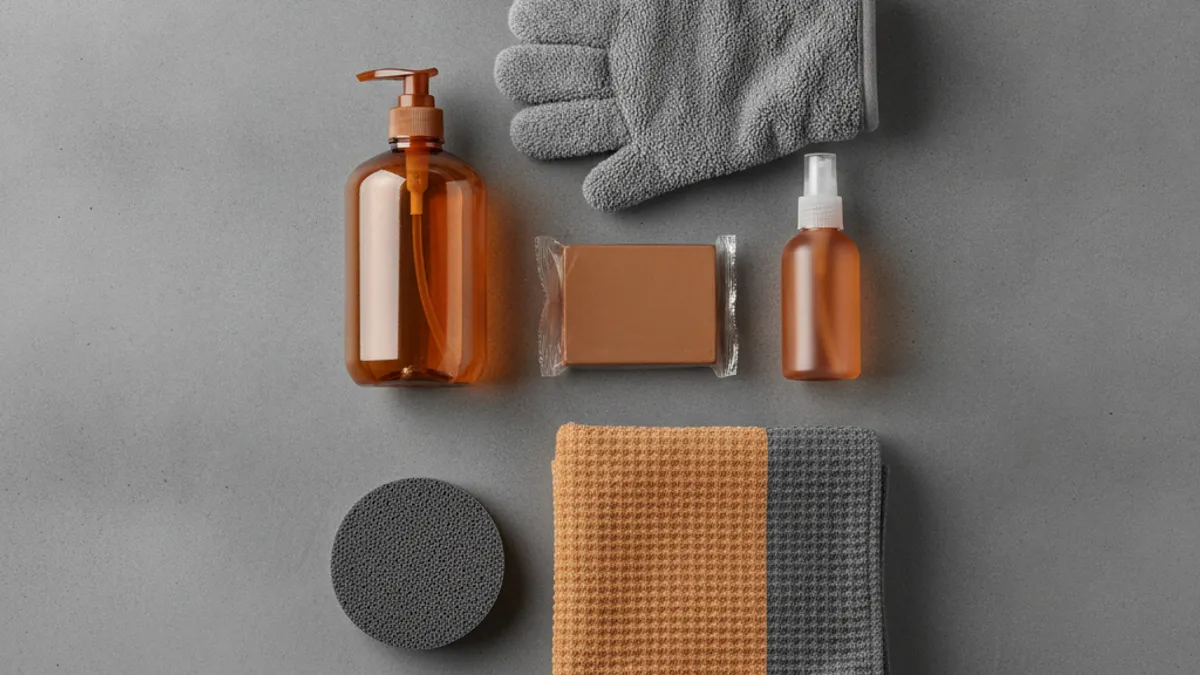
Basic equipment every owner should have: two buckets (one for shampoo, one for rinsing, ideally with a grit guard at the bottom that traps sand), a microfibre wash mitt, two to three microfibre drying towels of various sizes, pH-neutral car shampoo (not dish soap, which strips wax and dries out rubber components), ammonia-free glass cleaner (ammonia damages tinted film), dashboard and trim cleaner, and a vacuum cleaner with a crevice attachment.
Advanced equipment for those who want even better results: a clay bar for paint decontamination (removes industrial fallout and contaminants that washing cannot), a quick-detailer spray for refreshing protection between washes, a leather conditioner with UV protection, and a steam cleaner (if you already own one for the house, use it on the car too, but domestic models lack the pressure for deep ventilation cleaning).
One thing not worth buying: a rotary polisher, unless you have experience. In unskilled hands, a rotary polisher burns through the clear coat in seconds and causes damage that can only be fixed by repainting. A dual-action polisher is a safer alternative for beginners, but even with one you should practise on a less visible panel before tackling the bonnet.
Wax vs Ceramic Coating: The Difference
Wax is the classic paint protection, lasting two to three months per application. Easy to apply, affordable, and it produces a beautiful deep gloss. Ceramic coating (nano coating) lasts longer, typically one to three years depending on the product and the quality of application. It offers better protection against chemical agents and makes washing easier because water sheets off the surface instead of pooling.
For most BiH drivers, regular waxing every two to three months is the optimal balance of effort and result. Ceramic coating makes sense on newer cars or cars you plan to keep long-term, but it requires professional paint preparation before application (polishing, decontamination) for the result to justify the investment. Without that preparation, the ceramic simply locks existing defects underneath.
In-Depth Guides by Topic
This guide provides an overview of car care in BiH for every part of the year, but each of the three key areas deserves and receives a more detailed treatment. Below are links to the comprehensive guides that go deeper into each topic.
Sun and heat protection is a concern for every driver from June to September. The guide covers ADAC product tests, comparisons of sunshades and tinted film, the impact of parking in shade versus in the open, and practical steps for protecting the interior from UV degradation. Read more in the guide Protecting Your Car from Sun and Heat: What Actually Works.
Proper washing covers the two-bucket technique, choosing a car wash (hand, automatic, self-service), the most common mistakes that damage paint, and the protocol for removing specific contaminants such as sap and bird droppings. The guide for that is Proper Car Washing Without Scratches.
Interior cleaning ranges from seats through the dashboard to the ventilation system. It covers the differences between leather and fabric, cleaning the headliner, odour removal, and A/C system maintenance. All of that in the guide Car Interior Cleaning in BiH 2026.
What Every Owner Can Do Today
You do not need to wait for spring or buy expensive equipment to get started. Here are five steps you can take today with what you already have at home.
First, wash the car by hand with two buckets and a clean cloth. Use a mild shampoo, but never dry-wipe and never put dish soap on paint. Dish soap is designed to cut grease, and wax on paintwork is grease from that product perspective.
Second, wipe the dashboard with a damp microfibre cloth. You do not need a special product for everyday upkeep. A clean damp cloth removes 80% of dust and oils from the dashboard, steering wheel, and centre console.
Third, vacuum the floor mats and the space under the seats. Remove the mats, shake them out, vacuum underneath. Pay attention to the seat rails because sand collects in them, blocks sliding adjustment, and wears the mechanism.
Fourth, check your tyre pressures. Correct pressure saves fuel, preserves the tyres, and improves safety. The sticker showing the correct pressures for your model is on the B-pillar (driver door frame) or inside the fuel filler cap.
Fifth, switch off the A/C a couple of minutes before the end of your drive and let the fan run. This dries the evaporator and prevents bacterial growth. It costs nothing but makes an enormous difference to cabin air quality.
Found something that goes beyond care and needs a professional inspection? Book an appointment at the workshop or message us on WhatsApp with your question.
Frequently Asked Questions
How often should you wash your car in summer in BiH?
Ideally every 10 to 14 days, with an emergency wash within 48 hours if bird droppings or sap land on the paint. BiH summers bring high temperatures that accelerate the chemical reaction between contaminants and the clear coat, making regular washing more important in summer than in winter.
Does an automatic car wash damage the paint?
It depends on the type. An ADAC/DEKRA test showed that bristle strips in automatic car washes leave visible dulling after about ten washes. Foam and sponge strips are gentler, but they too accumulate micro-scratches over time. For the best results, hand washing with the two-bucket method is the gold standard.
How do you remove cigarette smell from a car?
An air freshener alone only masks the odour for a day or two. The proper procedure is to deep-clean all interior surfaces (seats, headliner, carpets, trim panels) and then carry out an ozone treatment or steam cleaning. Without prior deep cleaning, ozone treatment produces only a temporary effect.
How long does ceramic coating last on paint?
A quality ceramic coating (nano coating) lasts one to three years, depending on the product, the quality of application, and usage conditions. It requires professional paint preparation before application. For most drivers in BiH, regular waxing every two to three months provides a sufficient level of protection at a much lower cost.
Does hard water in BiH leave spots on paint?
Yes. BiH has hard water (10-19 dH) that leaves mineral deposits on the paint when it air-dries. In the sun, these deposits bake in and become chemical stains that ordinary washing cannot remove. The rule: always dry the car with a clean microfibre towel immediately after washing; do not leave it to air-dry.
What is the minimum care routine every owner should follow?
Washing every two weeks, drying after every wash, vacuuming the interior once a week, replacing the pollen filter once a year, and switching off the A/C a few minutes before the end of each drive. Those five habits protect both the paint and passenger health without any additional equipment or expense.