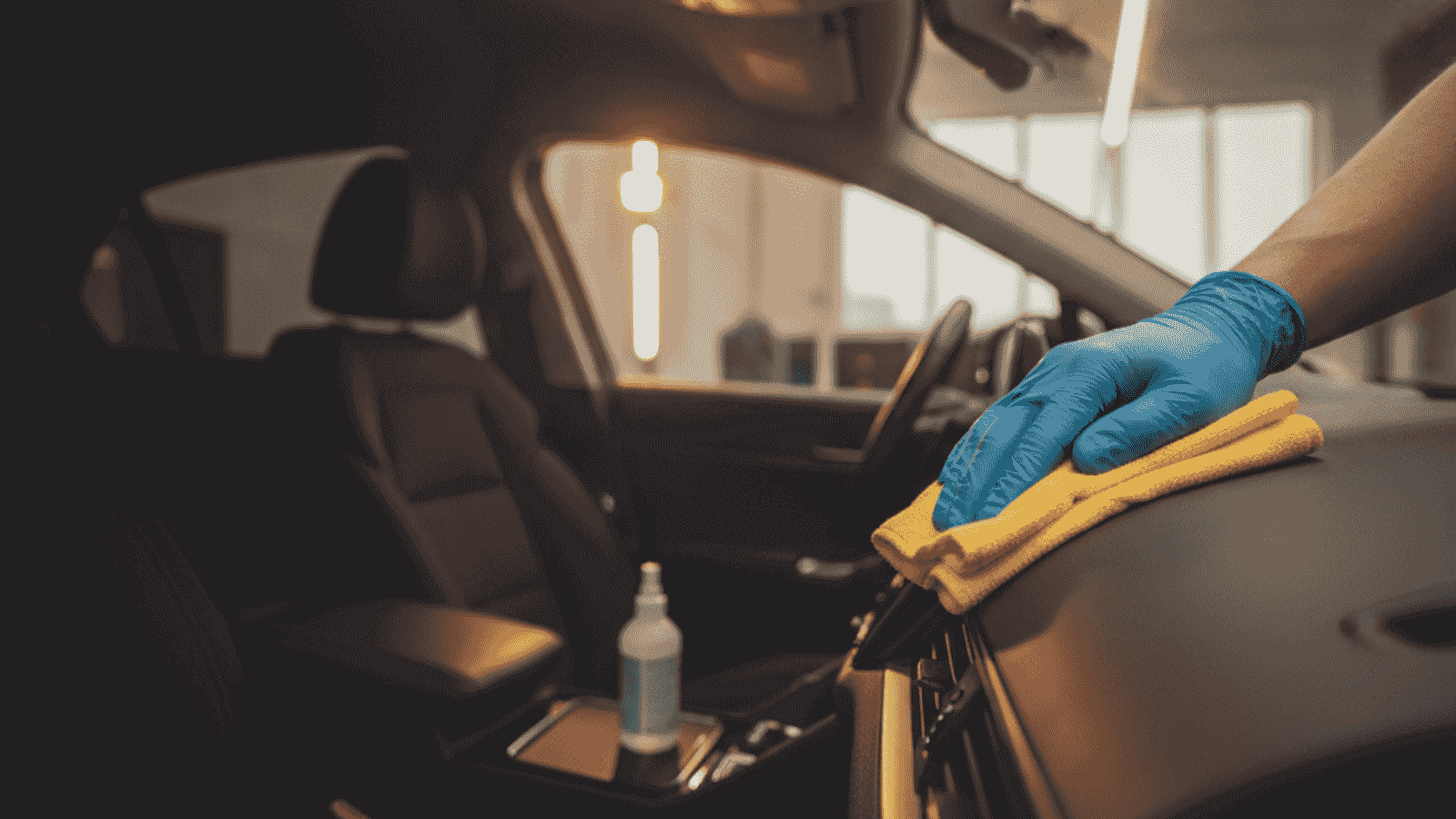
The average used car in BiH is 17 years old, and over that time the upholstery absorbs everything: sweat, spilt coffee, children's crumbs, cigarette smoke and moisture that silently breeds mould beneath the carpets. Car interior cleaning is not cosmetics but maintenance that directly affects passenger health, material longevity and resale value. This guide covers every surface inside the cabin, from fabric seats to leather and the dashboard, with practical methods you can apply yourself and clear signals for when it is time to call in professionals.
This guide was compiled by the Auto Gas Gaga workshop in Banja Luka, drawing on years of experience with pre-purchase inspections and interior cleaning of used vehicles.
Table of Contents
- Why the Interior Deteriorates and Why Cleaning Pays Off
- The Correct Cleaning Sequence
- Fabric Seats and How to Clean Them Without Damage
- Leather Seats, Cleaning and Conditioning
- Dashboard, Plastics and Hard-to-Reach Spots
- Carpets, Floor Mats and the Cabin Floor
- How to Remove Cigarette Smell From a Car
- Mould and Moisture in the Interior
- DIY Cleaning or Professional Deep Cleaning
- Frequently Asked Questions
- Related Articles
Why the Interior Deteriorates and Why Cleaning Pays Off
A car interior endures far more than most owners realise. Daily sitting and standing mechanically wears the upholstery. UV rays penetrating the windscreen break down dashboard pigment and dry out leather seats while the car sits in the sun, a topic we cover in detail in our guide to protecting your car from sun and heat. Dust from BiH roads, especially in summer when temperatures are high, settles on every surface and into the ventilation ducts.
Three reasons interior cleaning pays off even when the car does not look dirty:
- Health. Dust, mites, mould spores and bacteria accumulate in the upholstery, carpets and ventilation system. For allergy sufferers and children this means constant sneezing, irritated eyes and respiratory problems. In a cabin of barely three cubic metres, particle concentration can be many times higher than in a room at home.
- Material longevity. Uncleaned leather cracks after a few summers because it loses its natural moisture. Fabric that has never been deep-cleaned permanently changes colour and becomes stiff. A dashboard bleached by UV rays cannot be restored to its original condition.
- Resale value. A buyer who sits in a car with a clean interior automatically assumes the car has been mechanically maintained as well. The price difference between a neglected and a clean interior on the BiH market can amount to hundreds of KM. A few hours of work or a single professional deep clean can pay for itself many times over at sale.
The Correct Cleaning Sequence
Before reaching for any products, organise the job in seven steps. The sequence is not arbitrary: if you clean the seats before vacuuming, dust from the carpets will rise and settle on the damp upholstery.
- Remove all items from the cabin, including floor mats, contents of the glove box, child seats and phone holders. An empty space means nothing is hiding dirt.
- Vacuum all surfaces starting with the seats, then the seat rails, the floor, the gap between the seats and the centre console, and finally the boot. Use narrow-gap and upholstery nozzles. Pay particular attention to the space between the seats and the centre console, where sand, crumbs and small objects accumulate.
- Clean the dashboard and plastic parts with a microfibre cloth and a suitable product. Do this before the seats because product droplets can fall onto the seats, which you will clean in the next step.
- Seats by material type because fabric and leather are cleaned in completely different ways. Details for each type are explained in the following sections.
- Interior glass with an ammonia-free cleaner. Ammonia damages window tint and plastic trim around the glass. Wipe top-to-bottom then left-to-right, never in circular motions that leave streaks.
- Neutralise odours only after physical cleaning. Odours are usually a consequence of dirt, not its cause, so tackle them only once the surfaces are clean.
- Final inspection and protection including checking for anything you missed, applying a protective product to the dashboard and, if needed, conditioner to leather.
The entire surface-cleaning process in a single pass takes two to three hours if you are thorough. If you have a garage or carport, work in the shade because direct sunlight dries products on surfaces faster than you can wipe them off.
Fabric Seats and How to Clean Them Without Damage
Most cars in BiH have fabric seats, and most owners never clean them beyond vacuuming. The problem is that fabric absorbs everything: sweat, spilt liquid, dust that works its way into the fibres. Normal vacuuming removes the surface layer but not what is trapped deeper down.
How to Remove Stains From Fabric Seats
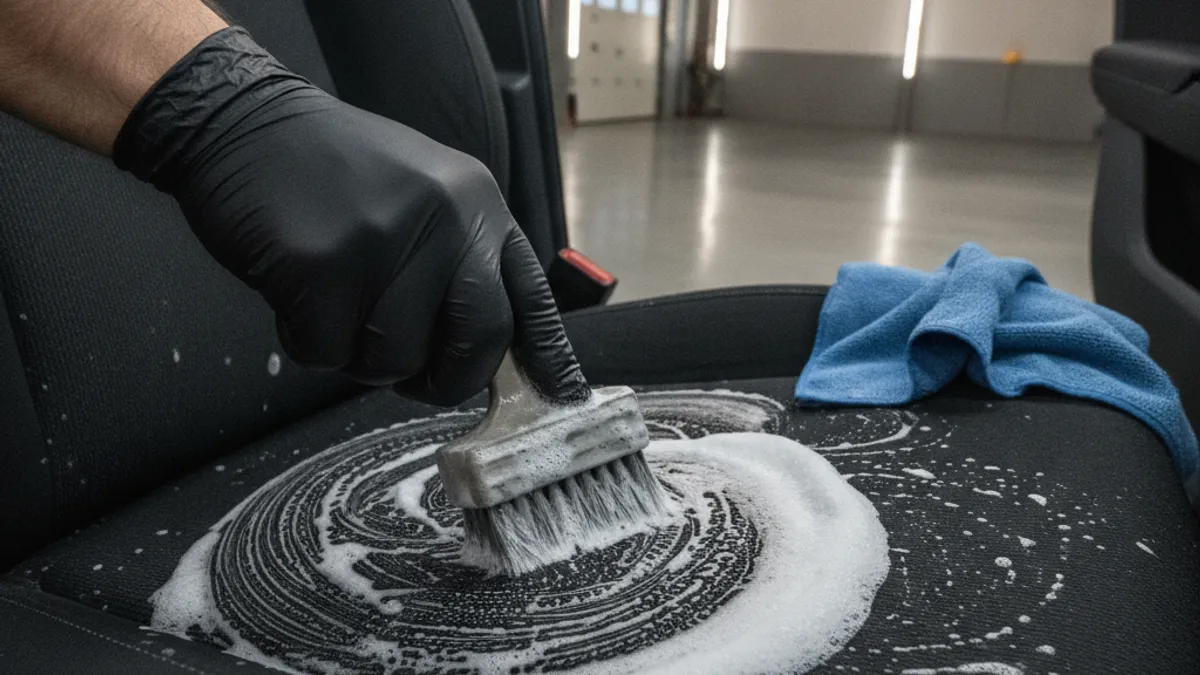
For proper cleaning of fabric seats you need a foam upholstery cleaner (not a universal household product), a soft brush with natural bristles and clean microfibre cloths. These products are available at any well-stocked car-care shop or online store in BiH.
The procedure is as follows: apply foam to one section of the seat (not the entire seat at once, because it will dry before you can wipe it off). Work the material with a soft brush in circular motions, but without excessive pressure. Too much force pushes dirt deeper into the fibres instead of lifting it out. Then pick up the foam together with the dissolved dirt using a clean microfibre cloth. Repeat for each section.
For stubborn stains (coffee, juice, blood) let the foam work for 3-5 minutes before brushing. Never rub a wet stain because you will spread it. Instead, blot excess liquid with a microfibre cloth by pressing, then apply the product. For old stains that have already dried, dampening with lukewarm water before applying the foam helps the product penetrate to the trapped dirt.
After cleaning, leave the doors open for at least an hour so the seats can dry. Damp fabric seats sealed inside a car in the heat become an ideal breeding ground for mould, merely shifting the problem from one form to another. If you clean in cooler weather, the drying process can take up to four hours, so plan cleaning on days when the car will not be needed straight away.
Leather Seats, Cleaning and Conditioning
Leather is a more durable material than fabric but requires specific care. The biggest mistake we see in practice: owners use universal plastic cleaners or, worse, wet wipes, and then wonder why their leather cracks after two summers.
Leather in cars is protected by a thin coating layer that preserves the pigment and prevents liquid absorption. Aggressive products break down this coating. Once it is gone, the leather is directly exposed to UV rays, sweat and dirt; it begins to discolour, dries out and eventually cracks. Replacing leather seats or professional recolouring are expensive jobs measured in hundreds of KM, and proper care eliminates them entirely.
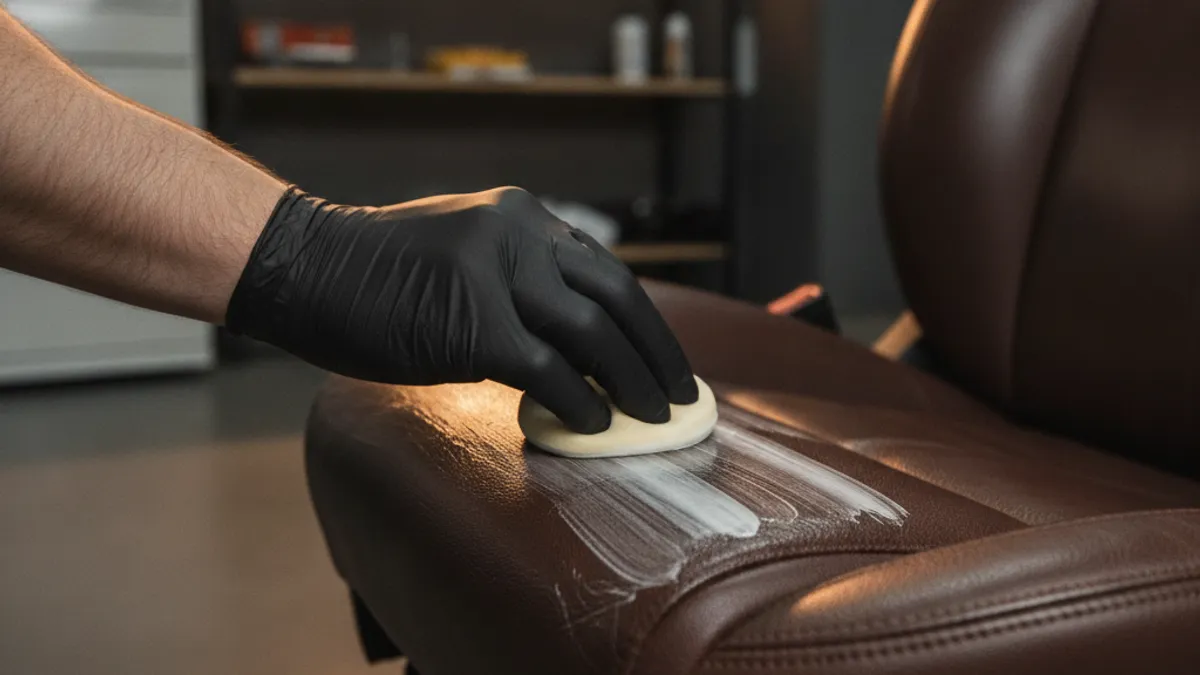
For cleaning, use only a product designed for automotive leather. Apply it to a microfibre cloth (not directly to the seat) and wipe in straight lines, not circular motions. Circular motions create fine scratches on the coating that accumulate over time. Pay particular attention to the seams, where dirt builds up and gradually degrades the stitching from within.
How Often to Condition Leather Seats
After cleaning, leather needs conditioner. Conditioner restores elasticity and prevents drying. The recommendation is to condition every two to three months, more frequently in summer because heat and UV accelerate moisture loss. Deep cleaning of leather is worth doing every three to four months. With proper care, leather seats can last ten years or more without visible wear.
Applying conditioner is straightforward: a small amount on a foam applicator, spread evenly across the surface, leave to absorb for 10-15 minutes, then buff with a clean dry microfibre cloth. Excess conditioner left on the surface attracts dust, so always remove it. One common oversight: owners condition the sitting surface but forget the side bolsters and headrest. Those are the parts most exposed to friction and drying.
Dashboard, Plastics and Hard-to-Reach Spots
The dashboard is the visual centre of the interior and the first thing a buyer notices. Dashboard plastic is under constant UV bombardment through the windscreen and over time loses colour and becomes sticky to the touch. Stickiness is caused by the breakdown of plasticisers in the plastic, a chemical process that accelerates in cars that sit in the sun without protection.
For dashboard cleaning use a microfibre cloth dampened with an interior-plastic product. Avoid silicone-based products that give a shiny, "wet" look. That gloss is not just aesthetically questionable but also dangerous because it creates glare on the windscreen, particularly when driving towards the sun. Wax-based products deliver a satin finish that looks natural and provides UV protection without glare.
Hard-to-reach spots are what separates surface cleaning from a thorough job. Ventilation vents, steering-wheel seams, the area around the gear lever, console buttons and the gap between the seats and the centre console all accumulate dirt that normal wiping cannot reach. For ventilation vents use a soft paintbrush or a dedicated detailing brush. For tight spaces around buttons, cotton buds dampened with product work well.
The steering wheel deserves special attention because you touch it more than any other part of the interior. Leather steering wheels are cleaned with the same product as leather seats. Plastic steering wheels need a silicone-free plastic cleaner. In both cases, dry the steering wheel thoroughly afterwards because a slippery wheel is a safety risk. If you notice the leather on the steering wheel has become shiny and smooth where you grip it most, the protective coating is worn and conditioning should be more frequent.
Carpets, Floor Mats and the Cabin Floor
The cabin floor collects all the dirt that falls from shoes, floor mats and seats. Textile carpets in a car function like large filters that trap dust, sand, road salt and moisture.
Remove the floor mats and vacuum them separately from the car. Clean textile mats with a foam upholstery product using the same method as for seats. Rinse rubber mats with water and let them dry before putting them back in the car. Never return wet mats to the cabin because moisture will remain trapped underneath and create conditions for mould and floor-pan corrosion.
Vacuum the floor beneath the mats thoroughly, especially under the seats and around the seat-slide rails. This is where you often find a lost coin but also sand that mechanically wears the carpet every time you move the seat. On cars running on LPG, a clean floor around the seats makes visual inspection of gas lines running under the car easier.
Do not forget the boot. Lift the boot carpet and vacuum beneath it. On older cars moisture often collects around the spare wheel and corrosion starts on the sheet metal, so cleaning the boot also serves a preventive function. Check the condition of the door-sill trim as well: dust mixed with water accumulates there, and the trim hides the metal beneath it. Clean and dry it at least once a season.
How to Remove Cigarette Smell From a Car
Cigarette smell in a car is one of the most common problems with used vehicles in BiH. Nicotine and tar from tobacco smoke penetrate every porous surface: seat upholstery, carpet, headlining, dashboard plastic and even the ventilation system. That is why surface cleaning and hanging an air freshener on the rear-view mirror produce no lasting result in a car where smoking was regular.
Cigarette Smell in a Car, the Baking Soda Method
For milder cases (occasional smoking, shorter period) the following procedure can help: sprinkle baking soda over all textile surfaces including seats, carpets, the floor and the headlining (apply to the headlining with a brush). Leave the soda to sit overnight, a minimum of 8 hours. Baking soda neutralises the acidic components of smoke odour. In the morning, vacuum all surfaces thoroughly. Repeat the process two to three times if necessary.
Activated charcoal is another natural method. Place open containers of activated charcoal in the car for 48 hours with the windows closed. The charcoal absorbs odour molecules from the air but not from the materials, so it is more effective as a complement to physical cleaning than as a standalone measure.
If the smell you detect is not tobacco but resembles burning, coolant or petrol, that is a mechanical problem, not a cleanliness issue. In that case take a look at our guide to diagnostic smells in the cabin.
For long-term smoker cars (5+ years of daily smoking) DIY methods rarely deliver a complete result. Professional ozone treatment is needed. An ozone generator runs inside the closed car for 30-60 minutes and breaks down organic odour molecules at a chemical level. But ozone, too, is effective only after thorough physical cleaning of all surfaces, because it cannot penetrate through the layer of nicotine physically sitting on the material.
An important distinction: basic ozone disinfection of the A/C system (performed as an add-on to a climate-system service) and a full cabin ozone treatment for cigarette odour removal are two entirely different services. The first takes 15 minutes and targets bacteria in the ventilation system. The second takes an hour or more, requires prior deep cleaning of all surfaces and targets years-old odour embedded in the materials.
Mould and Moisture in the Interior
Mould in a car interior is a health issue, not merely an aesthetic one. Mould spores trigger allergic reactions, and prolonged exposure can lead to respiratory problems. In the BiH climate, with its damp spring and autumn, mould in cars is far from rare.
The most common causes of cabin moisture:
- Blocked evaporator drain. The A/C evaporator is an ideal breeding ground for bacteria and mould because condensation constantly forms on it. If the drain is clogged, water collects in the housing and leaks onto the floor. We cover proper A/C servicing, including evaporator cleaning, in detail in our A/C service guide.
- Clogged cabin filter. An old cabin filter that has lost its permeability retains moisture and becomes a mould breeding ground. Replace it every year or at 15,000 kilometres.
- Damaged rubber seals on doors and windows. On older cars the seals crack and let rainwater into the cabin. Water settles under the carpet and remains invisible for weeks until it starts to smell.
- Wet floor mats returned to the car without drying after washing or a rainy day.
Steam Cleaner for Car Seats, Yes or No
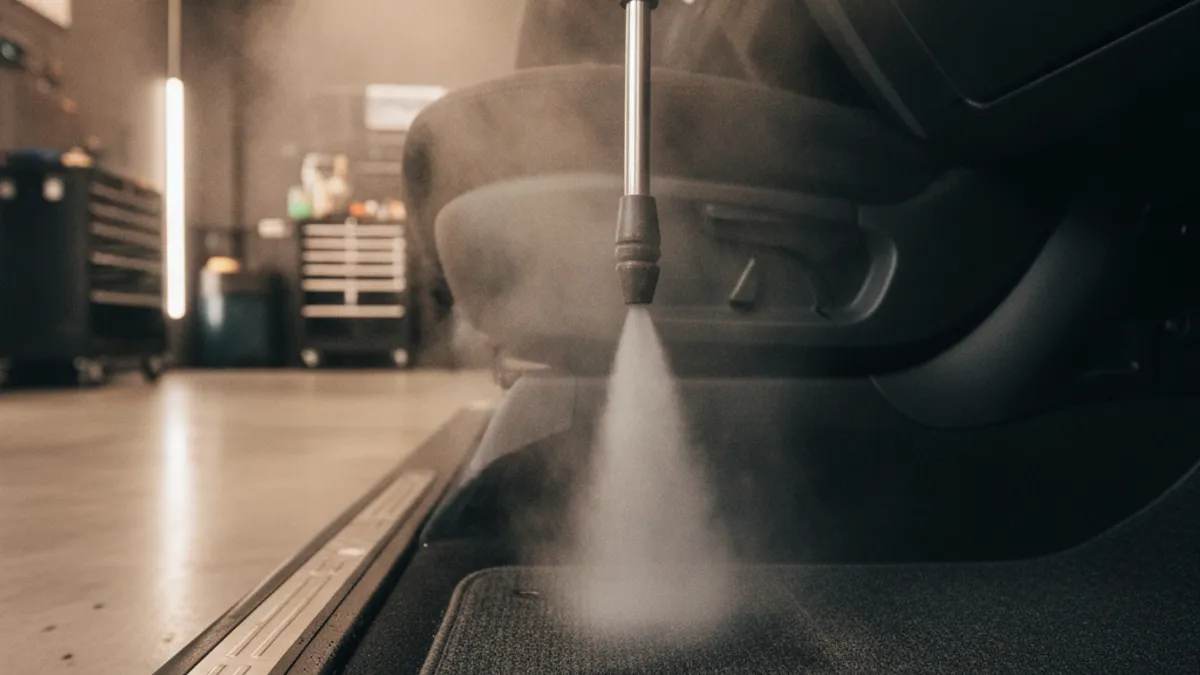
Professional steam cleaners reach temperatures of 95 to 120 degrees, which instantly kill mould spores and other micro-organisms. Steam penetrates deep into upholstery fibres and carpets where mould hides, and the moisture from steam evaporates quickly without risk of regrowth. For a car suspected of mould, steam cleaning is the most effective method.
Domestic steam cleaners sold for floors usually lack the pressure and temperature needed for automotive upholstery. Professional equipment operates at higher pressure and with specialised nozzles designed for deep seams, carpets beneath seats and ventilation ducts. The difference in results is obvious, especially with heavier contamination.
One practical tip that prevents mould from forming: switch off the A/C two to three minutes before turning off the engine and leave the fan running. The airflow dries moisture from the evaporator and prevents conditions that allow bacteria and mould to grow.
DIY Cleaning or Professional Deep Cleaning
Surface cleaning of the interior can be done yourself every month or two. Vacuuming, wiping the dashboard, washing floor mats and airing the cabin are jobs that require no specialist equipment. For those you need a vacuum cleaner with attachments, three to four microfibre cloths (separate ones for glass, dashboard and seats), an upholstery or leather cleaner appropriate to the material type, a silicone-free plastic cleaner and an ammonia-free glass cleaner.
Professional deep cleaning of the interior makes sense once or twice a year, or when you buy a used car whose previous owner clearly did not look after the interior. Professionals use extraction machines that inject product into the upholstery and immediately draw it back out together with the dirt. This is a level of cleaning a household vacuum cleaner simply cannot achieve.
During extraction the machine injects a mixture of water and cleaning product under pressure into the upholstery fibres, then uses powerful suction to draw out all the liquid together with the dirt. The result is a seat that is clean right down to the fibre base and dries in 2-4 hours depending on ventilation.
When professional deep cleaning makes sense:
- Buying a used car. Regardless of how the car looks, deep cleaning after purchase is a hygiene minimum. You do not know who sat in that car for years or how.
- An odour you cannot remove yourself. If baking soda, airing and surface cleaning produced a poor result, a professional with extraction and, if needed, ozone will resolve the problem.
- Visible mould. Mould on seats, the headlining or under the carpet requires a professional approach because surface wiping alone does not destroy spores deep within the material.
- Before selling the car. A clean interior raises the perceived value of a car more than any other cosmetic measure. A buyer who sits in a clean car subconsciously assumes it has been regularly serviced.
As for the cost of deep cleaning in BiH, it depends on the vehicle size, the degree of soiling and the city you live in. Get in touch for an estimate or ask for a recommendation from someone who was happy with the result.
If you are considering buying a used car and want assurance that the interior is not the only issue, book a pre-purchase inspection and you will get a full picture of the vehicle's condition. And before making the purchase, the easiest way to verify a car's documented history is through carVertical. Based on the chassis number it pulls mileage readings by date, recorded accidents, previous owners and total-loss indicators from international registers. We consider it essential before buying any used car. When paying for a report use the code GAGA for a 20% discount.
Interior cleaning is part of a broader car-care concept. If you want to know how to wash the exterior properly without scratching the paint, see our guide to proper car washing.
Frequently Asked Questions
How often should a car interior be deep-cleaned?
For most drivers once or twice a year is sufficient, along with regular surface cleaning every month. If you have children, pets or frequently eat in the car, consider deep cleaning every three to four months. Fabric seats require more frequent deep cleaning than leather because fabric absorbs more.
Can household cleaning products replace dedicated car-interior products?
Avoid them. Household cleaners often contain aggressive chemicals that can damage upholstery, discolour the material or leave a sticky residue. Automotive products are formulated to clean effectively without harming fabric, leather or plastics inside the cabin.
How can you tell whether the interior has mould if you cannot see it?
The most obvious sign is a stale, earthy smell that intensifies after the car has been sitting closed in warm weather. Check beneath the floor mats and carpets, especially on the passenger side where the A/C evaporator drain is located. A dirty cabin filter and reduced airflow from the vents are additional indicators.
Can cigarette smell be completely removed from a used car?
Yes, but it requires a combined approach. An air freshener alone merely masks the odour for a few days. Permanent removal requires deep extraction cleaning of all textile surfaces, cleaning of plastics and the dashboard, replacement of the cabin filter and a professional ozone treatment. In cars where smoking went on for years, cleaning the ventilation system may also be necessary.
Is it safe to use a steam cleaner on fabric seats?
Yes, provided you do not hold the nozzle on one spot for too long. Steam at 95 to 120 degrees effectively destroys bacteria and mould spores, and the moisture from steam evaporates quickly. Professional steam cleaners have pressure and temperature regulation. Domestic steam cleaners with lower capacity may be too weak for automotive upholstery.
Why does the dashboard become sticky and how can you prevent it?
Dashboard stickiness is caused by the breakdown of plasticisers in the plastic under the influence of UV rays and heat. This is a chemical process that cannot be completely stopped but can be significantly slowed: park in the shade whenever possible, use a windscreen sun shade and regularly wipe the dashboard with a plastic cleaner that contains UV protection.