The average net salary in Republika Srpska in April 2026 is 1,643 KM, barely covering 56% of the trade-union consumer basket. A single serious repair on a used car can swallow one, two, or even three of those salaries. The most expensive used car repairs in BiH are not exotic defects on rare models. They are faults that strike the best-selling diesels and automatic gearboxes — the very cars every second buyer considers.
This overview was prepared by Auto Gas Gaga workshop in Banja Luka, based on years of experience with used vehicle repairs and current prices on the Bosnian-Herzegovinian market.
Table of Contents
- Why an Expensive Repair Is Every Used Car Owner's Biggest Fear
- Ranking the Seven Most Expensive Repairs in BiH
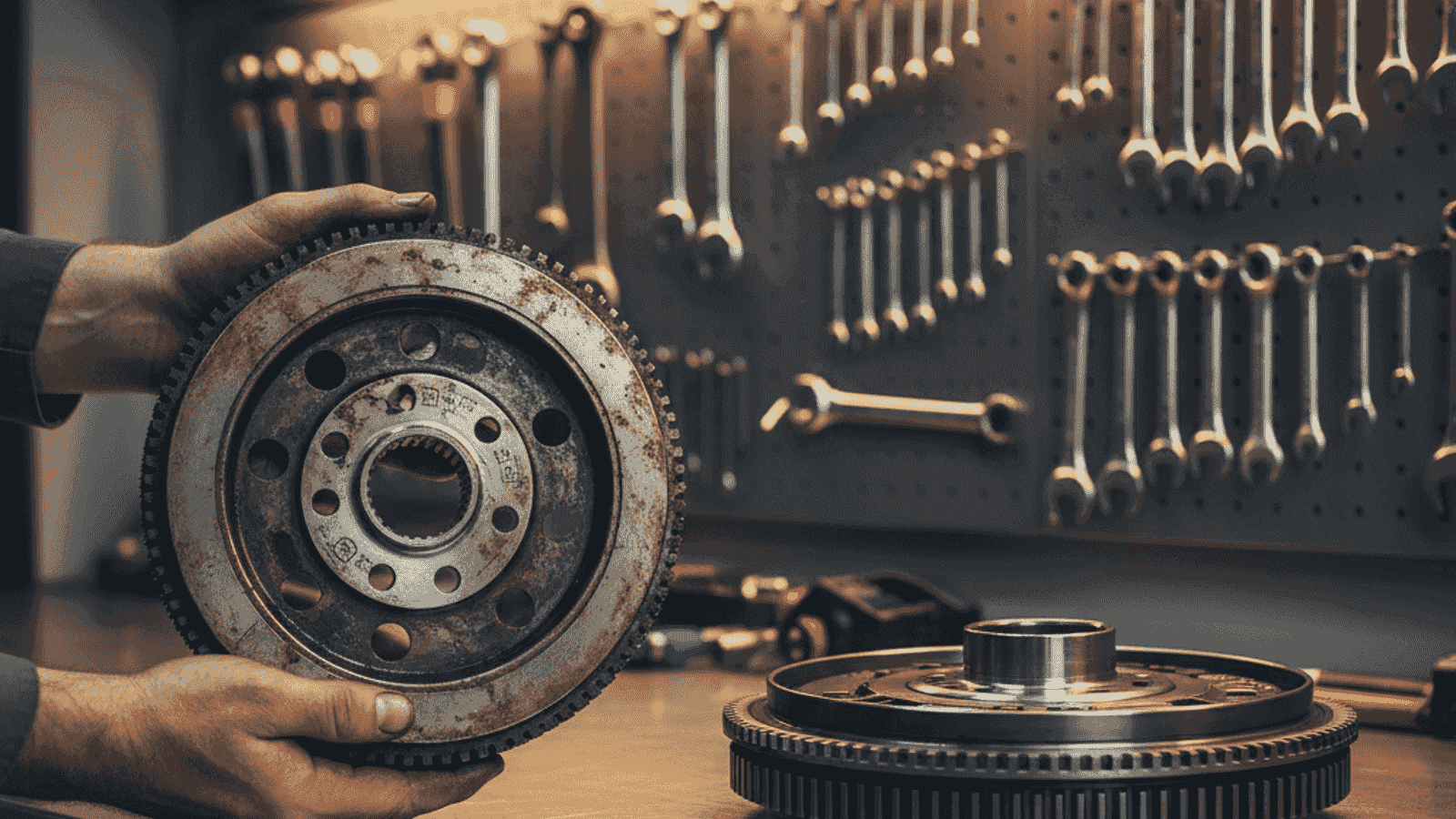
- Dual-Mass Flywheel and Clutch
- DPF Filter on a Diesel
- Turbocharger
- DSG Mechatronic Unit and Dry Clutch
- Common Rail Injectors
- Head Gasket
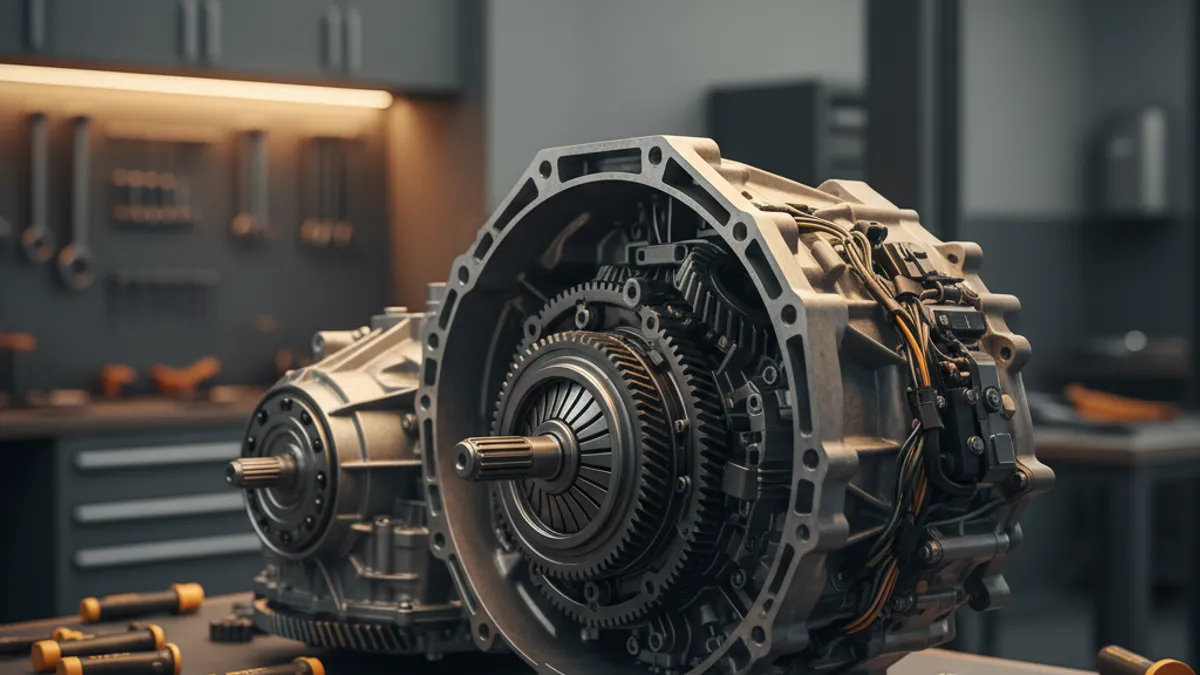
- Conventional Automatic Gearbox
- How to Reduce the Risk of an Expensive Repair on a Used Car
- When the Repair Cost Exceeds the Car's Value
- Frequently Asked Questions
- Related Articles
Why an Expensive Repair Is Every Used Car Owner's Biggest Fear
In 2025, ADAC recorded 3.7 million roadside-assistance call-outs in Germany. Engine and engine-electronics faults accounted for 21.8% of all calls, while the battery was responsible for 45.4% of all breakdowns. According to the TUV report for 2026, every fifth vehicle (21.5%) with over 100,000 km fails the technical inspection with significant deficiencies, the most common being brake discs, corroded brake lines and cracked suspension springs.
Those statistics describe the German market with regular servicing and documented history. In BiH, where a used car typically arrives with 180,000-280,000 km, without a complete service book and often with a rolled-back odometer, the situation is considerably worse. The buyer has no idea whether the DPF was last regenerated 5,000 or 50,000 km ago. No idea whether the DSG oil was ever changed. No idea whether the turbocharger is already leaking oil into the intercooler.
The result: a repair that costs one salary in Germany can cost two or three in BiH. Because here the buyer often pays for the car and then pays for the repair the previous owner had been putting off for years. A pre-purchase inspection and a vehicle-history check become the only way to reduce the risk.
Ranking the Seven Most Expensive Repairs in BiH
Below is an overview of the repairs that most commonly catch used car owners in BiH off guard. Price ranges are approximate and depend on the specific model, part condition, region and workshop. An accurate estimate for your vehicle requires diagnostics.
| Repair | Approximate range (parts + labour) | Number of salaries in RS (April 2026) |
|---|---|---|
| Dual-mass flywheel + clutch | 1,500-4,000+ KM | 1-2.5 salaries |
| DPF filter (replacement) | 800-2,000 KM | 0.5-1.2 salaries |
| Turbocharger (new) | 2,000-4,000+ KM | 1.2-2.5 salaries |
| DSG mechatronic unit + clutch | 2,000-3,500 KM | 1.2-2.1 salaries |
| Common Rail injectors (set) | 1,200-3,000+ KM | 0.7-1.8 salaries |
| Head gasket + machining | 800-2,500 KM | 0.5-1.5 salaries |
| Automatic gearbox (rebuild) | 2,000-5,000+ KM | 1.2-3 salaries |
Note: ranges are based on current prices in BiH (Sources: klix.ba, May 2026; automobili.ba, March 2026). Each specific case requires diagnostics and a quote for your vehicle.
Dual-Mass Flywheel and Clutch
The dual-mass flywheel (DMF) and clutch are replaced together on most diesels. The reason is practical: reaching the flywheel means removing the gearbox, which takes 3-6 hours of labour. Fitting a new flywheel on an old clutch means risking having to strip everything down again a few months later.
On popular models such as the Golf 5/6 with 1.9 or 2.0 TDI, the Octavia Mk2 and the Passat B6, the dual-mass flywheel practically always needs replacing somewhere between 150,000 and 250,000 km, depending on driving style. City driving with frequent pull-aways accelerates wear, while open-road driving significantly extends the lifespan. The cost depends on the vehicle model and type of construction, and the difference between a small petrol engine and a premium diesel with a dual-mass flywheel can be several times greater.
Symptoms: vibrations at idle felt through the steering wheel and pedals, knocking when starting or switching off the engine, juddering when pulling away in first gear. If you hear a metallic rattling when lifting off the throttle in second or third gear, the flywheel is probably at the end of its life.
A detailed guide to recognising this problem can be found in the article about a worn dual-mass flywheel on a used diesel.
DPF Filter on a Diesel
The DPF (Diesel Particulate Filter) captures soot particles from the exhaust gases. When working correctly, it periodically cleans itself through regeneration, during which the soot is burned off at high temperature. Problems arise when the car mainly does short trips, as the engine never reaches the temperature needed for this process.
A clogged DPF manifests as loss of power, an illuminated engine warning light, increased fuel consumption and the engine entering limp mode. A forced regeneration at a workshop, provided the filter is not permanently damaged, costs considerably less than a replacement. Professional cleaning can cost up to 90% less than a new assembly.
If the filter is physically damaged or so blocked that cleaning does not help, replacement is unavoidable. Some models (particularly French diesels with FAP filters) use more expensive variants, so the replacement cost can be higher than on German models with a standard DPF.
DPF cleaning or replacement — which is worth it
Cleaning is worthwhile when the filter is mechanically intact and the problem is purely accumulated soot. Diagnostics with a differential-pressure sensor reveal the true condition. If the pressure readings indicate adequate flow after cleaning, there is no reason for replacement. Before buying a used diesel, always check the DPF condition, because a clogged filter found during an inspection means a bill that can eat half a salary. More details can be found in the guide on a clogged DPF filter on a used diesel.
Turbocharger
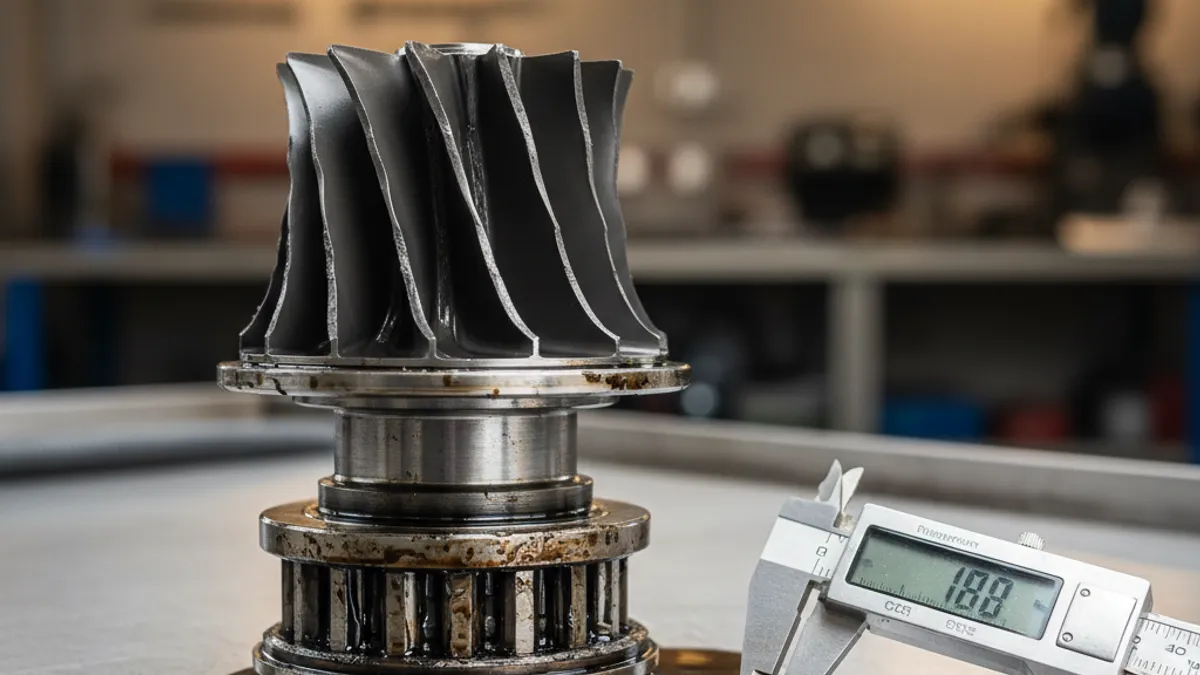
The turbocharger gives a diesel engine its power and fuel efficiency. The rotor spins at between 100,000 and 250,000 rpm, lubricated by oil from the engine. Every late oil change, every cold start followed immediately by full throttle, every engine shutdown after hard driving without a minute at idle, shortens the turbocharger's life.
On used cars with 200,000+ km, the turbocharger is a frequent candidate for trouble. Symptoms: loss of power (especially uphill or when overtaking), blue or grey smoke, a whistling sound from the engine bay, and oil in the intercooler or intake hoses. Often the first sign is noticed when accelerating towards motorway speed — the turbo needs to deliver full boost but the response is weak or hesitant.
Turbocharger repair or replacement
A turbocharger repair (new shaft, new bearings, balancing) costs considerably less than a new unit. The difference can be as much as threefold. The turbine geometry (if variable, as on most modern TDI engines) can be repaired separately if the rest is in good condition.
If your mechanic says "you need a new turbo," seek a second opinion from a turbocharger specialist. A significant proportion of turbochargers that "need replacing" can actually be repaired with a guaranteed result. Read more about turbocharger maintenance in the guide to extending turbocharger lifespan.
DSG Mechatronic Unit and Dry Clutch
The DSG gearbox, particularly the DQ200 with a dry clutch (fitted to the Golf 6/7, Polo, Fabia and Octavia with smaller engines), is one of the most common sources of major costs on used cars in BiH. Most examples on the market have never had a gearbox oil change, because sellers claim the oil is "lifetime fill."
The mechatronic unit is an electro-hydraulic module that controls gear changes. When it fails, the gearbox skips gears, enters limp mode or refuses to engage. Repairing the mechatronic unit requires specialised software and tools that general workshops do not have.
The dry clutch with dual-mass flywheel is the other expensive component. Symptoms are similar to a conventional clutch (juddering, slipping), but the repair requires specialised tools and software.
DSG DQ200 mechatronic unit and repair cost
The DSG DQ200 has two separate oil systems (gearbox and mechatronic unit), and both require regular changes. If you are buying a used car with this gearbox, question number one is: "When was the DSG oil last changed?" If the answer is not a specific date with proof, factor that service into your budget immediately after purchase. Changing the oil in both systems, if it has never been done, can be a significant cost in itself. A comprehensive analysis can be found in the DSG vs manual gearbox comparison.
Common Rail Injectors
A modern diesel uses a Common Rail system with pressures of 1,600 to 2,500 bar. The injectors deliver fuel in microseconds. When one starts leaking or dosing imprecisely, the engine knocks, smokes, uses more fuel, and fuel can enter the oil, thinning the lubrication and threatening the entire engine.
On a four-cylinder engine, all four injectors are usually replaced at once, because if one has failed, the others have the same mileage and the same quality of fuel has been running through them. Replacing just one makes sense only if it is physically damaged while the others show good values on a flow test.
Injector reconditioning is an option for certain types (Bosch, Denso and Delphi offer authorised reconditioning), but it requires specialised testing and calibration equipment. Not every workshop does this work, so the labour cost at a specialist is typically higher than at a general mechanic. That is why it is important to ask about reconditioning options before ordering a complete set of new injectors.
Fuel quality in BiH is directly linked to injector lifespan. Water in the fuel, contaminants and low cetane numbers accelerate wear. Regular fuel-filter replacement is the cheapest preventive measure. A guide to the symptoms of faulty injectors can be found in the diesel injector advice article.
Head Gasket
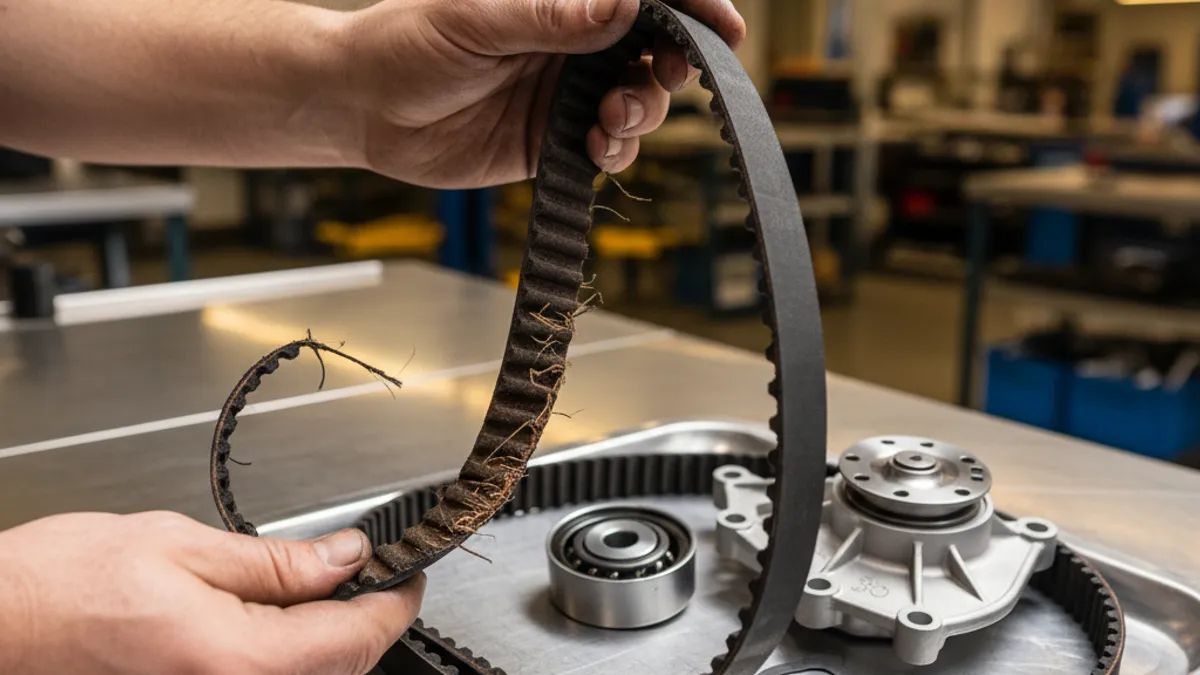
The head gasket sits between the block and the cylinder head, maintaining compression in the cylinders and preventing oil, coolant and exhaust gases from mixing. When it fails, consequences range from mild (white smoke, slight coolant loss) to catastrophic (overheating, warped head, cracks in the block).
On aluminium cylinder heads, overheating caused by a blown head gasket can warp the head. In that case, the gasket replacement also requires machining (skimming), which further increases the cost. If the overheating was severe, the head may be permanently damaged and need replacing — and that already enters a price range that on some models exceeds one salary.
Prevention: regular coolant-level checks, thermostat replacement per the manufacturer's schedule, and an immediate response at the first sign of overheating. This fault most commonly occurs on used cars with a neglected cooling system, an old thermostat or a faulty cooling fan.
Conventional Automatic Gearbox
A conventional automatic gearbox with a torque converter is a more durable design than the DSG, but when it does go, the repair involves removal, disassembly and replacement of friction packs, seals and often the torque converter itself.
On models such as Mercedes with 7G-Tronic, BMW with ZF 6HP or Audi with Multitronic CVT, a gearbox rebuild takes days and requires a specialist. A general mechanic usually lacks both the tools and the experience for this job, so the vehicle is sent to a specialist workshop, which further increases transport and waiting costs.
Symptoms: a delay when engaging D or R, jerking during gear changes, slipping (revs rise but the car does not accelerate), and dark or burnt oil on the dipstick. On some gearboxes, the only symptom is a warning light on the dashboard.
Prevention: oil and filter changes every 60,000-80,000 km, regardless of what the manual says. "Lifetime oil" is a marketing term, not a technical reality.
How to Reduce the Risk of an Expensive Repair on a Used Car
None of these faults arrive without warning. Each one has symptoms that appear weeks or months before total failure. The problem is that the used car buyer does not know the history of those symptoms.
Four concrete steps to reduce the risk:
First, a pre-purchase inspection by an independent mechanic. Not the seller's "friend who knows about cars," but a workshop with no interest in whether you buy that particular vehicle. Book a pre-purchase inspection before you hand over the deposit.
Second, check the documented vehicle history. Rolled-back odometer, a total-loss write-off repainted and sold as "garaged," accidents from other countries. Before paying a deposit, check the chassis number through carVertical, which pulls mileage by date, recorded damage, number of owners and indicators of theft or total loss from international registries. We consider this a mandatory step before buying any used car. When paying for the report, you can use the code GAGA for a 20% discount.
Third, a repair budget. When you buy a car for 7,000 KM, keep at least 1,500-2,000 KM in reserve for repairs in the first six months. That fund is your safety net.
Fourth, choose an engine and gearbox with a proven lifespan. Some engines and gearboxes statistically last longer than others. An overview of the most reliable options can be found in the guide to the most reliable diesel engines for a used car in BiH.
When the Repair Cost Exceeds the Car's Value
This question comes up more often in BiH than in countries with a higher standard of living. A car bought for 5,000-6,000 KM that needs a 3,000 KM repair puts the owner in a difficult position. The rule of thumb we use at the workshop: if the repair cost exceeds 50-60% of the car's market value and the mileage is over 250,000 km, the repair rarely makes economic sense.
The exception: if the car is otherwise healthy in every respect (body, engine, mechanicals) and the fault is isolated and one-off (flywheel, turbocharger), the repair can be justified because you know what you have. Buying another used car for the same money means stepping into the unknown all over again.
The final decision depends on the specific case. Diagnostics at a workshop that knows your model, with a clear quote, is the only way to make an informed decision. Get in touch with a question about your vehicle.
Frequently Asked Questions
Which used car repair in BiH most often costs over 2,000 KM?
The dual-mass flywheel with clutch and the automatic gearbox are the two repairs that most frequently exceed 2,000 KM. On premium models with more complex designs, that figure can be considerably higher. The turbocharger is the third most common candidate in that range.
Is it worth buying a used car with a DSG gearbox?
The DSG gearbox is not inherently bad, but it requires regular oil changes and a conscientious previous owner. If you cannot confirm the gearbox service history, factor in an oil change and mechatronic unit check as an immediate post-purchase expense.
How much does a turbocharger repair cost compared to a new one?
A turbocharger repair (new bearings, shaft, balancing) costs considerably less than a new unit. The difference can be as much as threefold. Consult a turbocharger specialist, as general workshops more often recommend replacement than repair.
DPF cleaning or replacement — which is more cost-effective?
Cleaning is worthwhile if the filter is not physically damaged. Professional cleaning can cost up to 90% less than a new assembly. If the filter has cracked or disintegrated internally, the only option is a new one. Diagnostics with a pressure sensor reveal the true condition.
How do you tell that an automatic gearbox is on its last legs?
A delay when engaging D or R, jerking during gear changes, slipping, and dark or burnt oil are the main signs. On newer gearboxes, sometimes the only symptom is a warning light on the dashboard. A test drive with a diagnostic tool reveals what a short trip around the block cannot.
When does repairing a used car no longer make economic sense?
When the repair cost exceeds 50-60% of the car's market value and the mileage is high (over 250,000 km), in most cases it is better to put the money towards a better example. The exception is if the fault is isolated and the car is otherwise healthy in every respect.