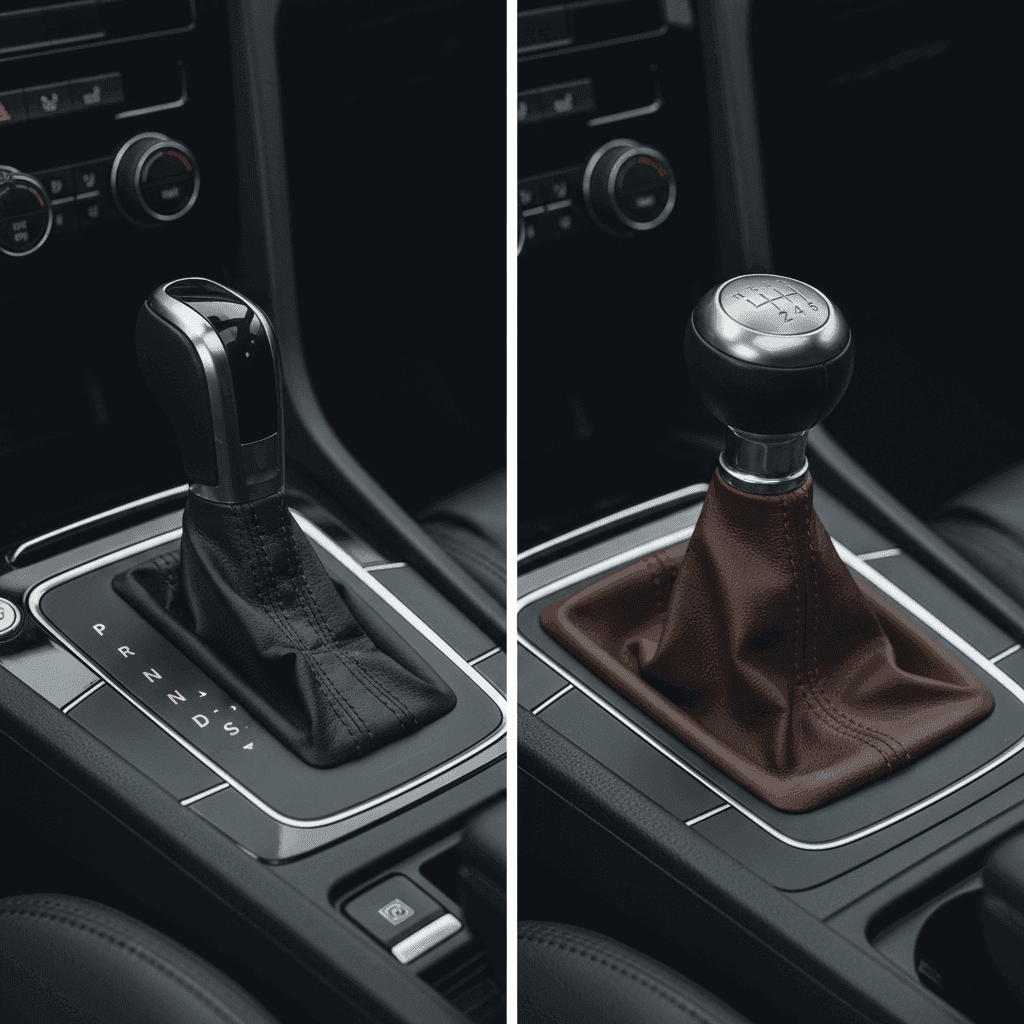
A buyer hunting for a used VW, Audi, Skoda or Seat in 2026 almost always lands on the same question: DSG vs manual gearbox. The answer is not the same for everyone, but it does become clear once you look at the engine the car has, how much you drive in town and how much you are ready to part with when a repair lands. This guide ties together all three DSG variants (DQ200, DQ250 and DQ381), service costs in BiH and the wear signs you can catch on a test drive.
This guide was put together by the Auto Gas Gaga workshop in Banja Luka, based on years of service experience with DSG and manual gearboxes on the VW Group, plus pre-purchase inspections of dozens of used cars a year for our clients.
Table of Contents
- Why This Question Even Comes Up in BiH in 2026
- What DSG Is and Which Variants You Meet on Used Cars
- Reliability by Variant DQ200 DQ250 and DQ381
- Repair Costs in BiH from Oil to a New Mechatronic
- How to Check a DSG on a Test Drive Before the Deposit
- Manual Gearbox Simpler but Not Immortal
- When DSG Makes Sense and When to Run to a Manual
- Frequently Asked Questions
- Related Articles
Why This Question Even Comes Up in BiH in 2026
Ten or so years ago an automatic was a rarity in BiH. Not anymore. In our used-car market overview for 2026, the share of automatics on olx.ba climbs steadily with the price bracket. In the up-to-6,000 KM range there are only about 5 percent, in the 15,000-20,000 KM range already 18 percent, and above 20,000 KM almost half of the listings. Above 30,000 KM most serious ads come with a DSG. In other words, the moment you target a newer Passat, Octavia 3, Audi A4 B8 or a newer Golf, the DSG question pops up on its own.
The dilemma boils down to this. A DSG drives nicely, is faster in traffic and works better with strong engines. At the same time it is more expensive to maintain, less reliable at high mileage and the penalties for neglected service are brutal. A manual is duller in stop-and-go, but cheaper across the board.
What DSG Is and Which Variants You Meet on Used Cars
DSG (Direct Shift Gearbox) is a dual-clutch gearbox. It has no classical torque converter, instead two clutches alternate gears. One clutch handles the even gears, the other the odd ones. While you are driving in third, the second clutch is already preparing fourth. That is why a DSG shifts quickly, with almost no break in drive.
When you look at a used car, the most important thing is to tell apart the three generations the VW Group has sold the most in our region:
- DQ200, 7-speed "dry" DSG. Fitted to weaker engines (1.0 TSI, 1.2 TSI, 1.4 TSI, 1.6 TDI). Dry means the clutches are not bathed in oil, which makes it lighter but also more sensitive. This is the most problematic variant. Volkswagen even ran a service campaign to swap the original synthetic oil for mineral oil, because the synthetic was causing operating problems.
- DQ250, 6-speed "wet" DSG. The standard on 2.0 TDI and stronger TSI engines on the Passat B6/B7, Golf V/VI, Octavia 2. Wet means the clutches run in oil that cools and lubricates them. More reliable than the DQ200, but it demands regular oil changes.
- DQ381, 7-speed "wet" DSG. The replacement for the DQ250 in the VW Group, you find it on the Passat B8, Octavia 3 facelift, Golf 7 with stronger engines and Audi A4/A6 B9/C7 models. Better in operation, but more expensive to maintain.
Quick rule. The older and cheaper the car, the higher the chance of a DQ200. The newer and stronger, the bigger the odds of a DQ250 or DQ381. Check the VIN and engine code before you sign any deposit.
Reliability by Variant DQ200 DQ250 and DQ381
The expert recommendation for all three variants is the same on one point. An oil change is mandatory. Even though VW lists "lifetime" oil for some versions, field experience tells a different story.
| Variant | Type | Typical service life | Oil-change recommendation |
|---|---|---|---|
| DQ200 | dry, 7-speed | 150,000-200,000 km to first issues | every 50,000-60,000 km |
| DQ250 | wet, 6-speed | 200,000-300,000 km with maintenance | every 50,000-60,000 km |
| DQ381 | wet, 7-speed | 150,000-200,000 km to clutch packs | every 60,000-80,000 km |
The DQ200 is the most problematic. On top of the oil service campaign, it most often suffers mechatronic failures and worn clutch packs. It only makes sense if the seller has paperwork for regular oil changes and if the car was driven mostly out of town. Constant urban traffic kills it faster.
The DQ250 is the cheapest DSG on parts and in practice the most reliable in our conditions. With regular oil changes it can clear over 300,000 km without serious work. That is why the Passat B6/B7 with a 2.0 TDI and DQ250 is still a favourite in BiH.
The DQ381 is the smartest of the three, but when repairs come they do not drop below a serious sum. It demands either low mileage at purchase or a documented service history.
Market guides are consistent. AutoGuide ranks the manual as the most reliable gearbox type because of its simplest construction, while dual-clutch units of the DSG type get a lower score for rough shifts in some modes and expensive repairs. The same goes for Porsche PDK, Audi S-tronic, Renault EDC. Same technology.
Repair Costs in BiH from Oil to a New Mechatronic
The numbers are a 2026 reference and vary depending on the workshop, parts and the fault. They are only meant to put you in the right cost bracket.
- DSG oil and filter change, the cheapest intervention. Without it, everything else is just a matter of time.
- Clutch pack replacement (DQ250/DQ381), the most common job after 150-200 thousand kilometres. Jerking, vibrations and bad shifts on these two gearboxes most often come from worn clutches, not the mechatronic. The cost of labour and parts sits noticeably below the cost of a mechatronic.
- Mechatronic repair or replacement, the most expensive line item. The cost bracket is well above a clutch pack swap, and a complete clutch-pack replacement on the DQ381 reaches even higher.
- Dry DQ200 specifics. On this one, mechatronic failures are more frequent than on the wet variants, and the repair sits in a higher cost bracket.
A rule we keep coming back to. On the DQ250 and DQ381, symptoms that look like "the mechatronic is gone" are actually worn clutch packs in 80 percent of cases. A cheaper fix, but only if the diagnosis is done by someone who knows the difference. Before any big repair, ask for a second opinion and a concrete diagnosis, not a hand-waved one.
Fuel-cost context. Goriva.ba on 28.04.2026 shows an average diesel price of 3.20 KM per litre and 95-octane petrol at around 2.79 KM per litre across BiH. The fuel-consumption gap between a DSG and a manual is minimal in practice (often in the DSG's favour in town, in the manual's favour on the open road), so consumption does not decide the gearbox choice.
How to Check a DSG on a Test Drive Before the Deposit
The vast majority of serious DSG faults give signs before the gearbox actually fails. When you go for a test drive of a used car with a DSG, work through this list in the order it is written.
Cold start and the first five minutes. Start the engine and leave the car in P. Any clattering, knocking or vibration coming from the gearbox area when cold is a warning sign. Then shift D-N-R-N-D a few times, with a couple of seconds in each position. The shift should be smooth. A dull thud or jerk before the car "engages" means the clutches are nearing the end or the mechatronic is suspect.
Standing start. Release the brake gently and roll off without throttle. The DSG should pull away smoothly. If the car "jumps", jerks or hesitates and then takes off, that is a classic worn-clutch symptom. Repeat the test at least three times on a flat surface.
Driving in 30-50 km/h traffic. Most DSG faults do not show on the open road, they show in dense traffic where it constantly changes gears. Vibrations through the floor, a "trembling" throttle pedal and a feeling that the clutch is slipping are red flags.
Kickdown onto a fast road. On open road, bring the car to 50 km/h in D mode and floor the throttle. The gearbox should drop quickly (a second or two) without dull thuds. A drawn-out shift, jerks and dirty transitions are wear signs.
Warning light and fault codes. Ask for diagnostics before the deposit. An OBD scanner reads codes inside the DSG module too, not just the engine. A P17BF fault or similar in the mechatronic, even cleared, stays in the vehicle's history. If the seller does not allow scanning, turn around and leave.
If any of these signs comes up, do not judge it on your own. An hour of a thorough pre-purchase inspection in a workshop that knows the VW Group is the cheapest insurance policy you can buy before a deposit.
Manual Gearbox Simpler but Not Immortal
A manual is mechanically simpler than a DSG, cheaper to maintain and traditionally more reliable in our conditions. But that does not make it eternal. Typical fault symptoms of a manual gearbox and clutch do not arrive with a dashboard light, they arrive as a feeling.
The main wear part is the clutch. A car with a clutch close to the end is recognised by a high-set bite point, the smell of a burning clutch in traffic and slipping under load in 5th or 6th gear. A complete clutch swap in BiH on popular VW models is significantly cheaper than any DSG job above an oil change.
The other typical cost is the dual-mass flywheel. On a 2.0 TDI manual, somewhere between 200,000 and 300,000 km it asks to be replaced together with the clutch. A cost you have to plan for on a used diesel.
What a manual will not do is fail suddenly and drag the mechatronic or clutch pack down with it. It does not need expensive hydraulics. It gives you a predictable maintenance bill.
When DSG Makes Sense and When to Run to a Manual
A direct rule for 2026 we use when someone asks "which one should I get".
A DSG makes sense if:
- You drive mostly in town, in stop-and-go, every day, and traffic is unbearable for you with a manual.
- You are buying a relatively younger car (up to 150,000 km) with documented DSG services.
- You have a strong engine (2.0 TDI 150-190 hp, 2.0 TSI) where the DSG works in its sweet spot.
- You drive moderately, without constant kickdowns and aggressive starts.
- You are ready for an oil change every 50-60 thousand km and a possible larger job around 200,000 km.
Run to a manual if:
- You are buying the car to keep long-term (over 5 years) and want to keep costs down.
- The used car has already passed 200,000 km without DSG service paperwork.
- You are looking at a weaker engine with a DQ200 and you do not trust the seller.
- You drive mostly out of town, where the DSG's stop-and-go advantage does not exist.
- You are a first-time driver, or buying a first car for your kids. A manual is a school that pays off.
The VW Passat B6 and Skoda Octavia 2 are the two most popular used cars where this question will come up. Examples with a DQ250 and documented service justify the automatic. With DQ200 examples, a manual is usually the smarter pick.
If you decide on a DSG, one dimension that matters more than usual on these cars is the documented service history. Records of oil changes, gearbox repairs, and previous-owner paperwork determine how healthy the mechatronics has stayed. Before you put down a deposit, the easiest way to check that history is through carVertical. Using the VIN, it pulls the documented past of the car: mileage by date from international registries, recorded crashes and total losses, the number of past owners, and theft indicators. Service records created in Germany or Austria often never reach the Bosnian seller, and that is exactly where missed DSG oil-change intervals hide and later hit the mechatronics. We treat it as a must for a DSG purchase, especially on imported examples. When paying for the report, you can use code GAGA for 20% off.
Considering a specific car with a DSG? Book a pre-purchase inspection or send us the ad link. An hour of diagnostics before the deposit is a policy you will not regret.
Frequently Asked Questions
Is a DSG more reliable than a classic automatic?
It depends on the variant and maintenance. The DQ250 (wet 6-speed) is reliable and often clears 250,000 km with regular oil changes. The DQ200 (dry 7-speed) has more recorded issues and is more sensitive to skipped service. Classic torque-converter automatics are mechanically more robust, but when a repair lands they cost more than a DQ250 with a clutch-pack swap.
How much does a DSG repair really cost in BiH in 2026?
The scale runs from the smallest cost for an oil and filter change, through a mid-range cost for a clutch-pack swap (the most common job after 150-200 thousand km), up to the highest range for repairing or replacing the mechatronic and clutch pack on the DQ381. The sums depend on the workshop and parts, so get a concrete quote before you decide.
Do I need to change the DSG oil if VW says "lifetime"?
Yes. The expert recommendation is unanimous. An oil change every 50,000-60,000 km for the DQ200 and DQ250, and every 60,000-80,000 km for the DQ381, drastically extends the life of the gearbox. "Lifetime" in practice means "until the warranty expires". If you keep the car past 200,000 km, regular oil changes are the cheapest insurance policy.
How do I spot a faulty DSG on a test drive?
Vibrations on take-off, a jerk during D-N-R-N-D shifts, a delay on kickdown, "trembling" in 30-50 km/h traffic and a dull thud between gears are the classic signs. Ask for OBD diagnostics on the DSG module, not just the engine. Faults in the mechatronic history stay logged even if cleared.
Is a manual always the cheaper option to maintain?
Yes, almost without exception. A manual has fewer moving parts, no hydraulics or mechatronic. The main cost is a clutch swap and (on a 2.0 TDI) a dual-mass flywheel, one-off jobs every 200-300 thousand km.
Can I shorten the gearbox life by driving the DSG in "S" mode?
Yes, if it is done often and combined with kickdown. "S" mode keeps the revs higher and the clutch packs in the loaded zone for longer. For city driving "D" is enough. Save "S" for overtakes where you actually need it.