The average driver in BiH covering 15,000 kilometres per year on diesel now spends over 3,200 KM on fuel alone. On petrol, that figure exceeds 3,400 KM. Broken down by month, that is nearly 280 KM going exclusively into the tank, before registration, insurance, servicing and everything else. And fuel prices are not falling. As of 16 June 2026, diesel in BiH costs 3.02 KM per litre, petrol 95 sits at 2.91 KM, and LPG stands at 1.41 KM (source: cijenegoriva.ba, cross-section of 747 stations in 81 towns). The question is not whether you want to reduce fuel consumption, but how much you can realistically save and which steps deliver the biggest result for the least effort.
This guide was compiled by the Auto Gas Gaga workshop in Banja Luka, drawing on years of experience with fuel consumption servicing and diagnostics across all engine types.
TL;DR
| Topic | Summary |
|---|---|
| How much BiH drivers spend annually | Diesel 7 L/100 km over 15,000 km = over 3,200 KM; petrol 8 L/100 km = roughly 3,490 KM per year (prices as of 16.06.2026). |
| Biggest single factor | Driving style. Aggressive city driving increases consumption by 10-40%, and on the motorway by 15-30%. Changing it costs nothing. |
| How much maintenance saves | A properly running engine, correct tyres and clean filters can cut consumption by 10-15%, worth 320-480 KM per year on diesel. |
| AC in summer | AC raises consumption by 10-15% in city driving. On the motorway it is more efficient than open windows. |
| Myths that do not work | Replacing the air filter on a modern engine does not reduce consumption (it only improves acceleration). Premium fuel in an engine that does not require high octane delivers no savings. |
| Realistic annual savings | By combining all three strategies, saving 640-960 KM per year on diesel and 700-1,050 KM on petrol is achievable. |
Table of Contents
- How Much BiH Drivers Actually Spend on Fuel Per Year
- Three Savings Strategies and What Each Delivers
- Eco Driving That Actually Reduces Fuel Consumption
- AC, Windows and Equipment in Summer Months
- Maintenance That Directly Reduces Fuel Consumption
- What Does Not Work and Fuel Saving Myths
- Realistic Annual Savings by Vehicle Class
- LPG as an Alternative for Reducing Fuel Costs
- Complete Guide by Topic
- Frequently Asked Questions
- Related Articles
How Much BiH Drivers Actually Spend on Fuel Per Year
For savings to make sense, you first need to know how much you actually spend. Most drivers in BiH do not track their annual fuel expenditure, so they often underestimate how much money goes solely into filling the tank. Here are the real figures for 2026, based on current fuel prices and an average annual mileage of 15,000 km.
| Fuel type | Average consumption | Price per litre (16.06.2026) | Annual fuel cost |
|---|---|---|---|
| Diesel | 7 L/100 km | 3.02 KM | 3,171-3,213 KM |
| Petrol 95 | 8 L/100 km | 2.91 KM | 3,420-3,492 KM |
| LPG (autogas) | 10 L/100 km | 1.41 KM | 2,070-2,115 KM |
The "average consumption" column assumes a typical mix of urban and extra-urban driving. The actual figure depends on your specific car, the city you live in, the road profile and the way you drive. A compact diesel driver who covers most kilometres on the open road may sit at 5.5-6 L/100 km. A driver of an older petrol car who mainly moves through city traffic easily exceeds 9-10 L/100 km.
The key takeaway from this table is that even a relatively small percentage saving translates into serious money over a year. Cutting consumption by just 10% on diesel means roughly 320 KM less per year. On petrol, that figure approaches 350 KM. And 10% is the lower bound of what is achievable with zero investment, simply by changing habits behind the wheel.
A detailed breakdown of annual fuel costs by vehicle class, including insurance and registration, is available in our guide to annual fuel costs in BiH 2026.
Three Savings Strategies and What Each Delivers
Every fuel-saving tip falls into one of three categories: how you drive, how you use in-car equipment, and how well your car is maintained. The order is not arbitrary. Behaviour behind the wheel delivers by far the greatest saving, equipment (primarily AC in summer) makes a seasonal difference, and maintenance prevents hidden fuel waste through faulty components.
According to data from the US Department of Energy (DOE), aggressive driving with harsh acceleration and braking increases consumption by 15-30% on the motorway and 10-40% in city driving. European eco-driving training programmes document consumption reductions of 10-20% among drivers who consistently apply smooth driving techniques (ODYSSEE-MURE, EU). TUV recommends keeping engine speed in the 1,500-2,500 RPM range for optimal consumption.
Here is how the three strategies combine into an overall saving, using a diesel with average consumption of 7 L/100 km as an example:
| Savings strategy | Consumption reduction | Annual saving (diesel) |
|---|---|---|
| Driving technique (eco driving) | 15-20% | 480-700 KM |
| Regular maintenance | 10-15% | 320-480 KM |
| Optimising AC and equipment (summer) | 2-5% | 64-160 KM |
| Combined, realistic | 20-30% | 640-960 KM |
The combined saving is not a simple sum of all three strategies, because the effects partially overlap. However, a realistic expectation of 20-30% total consumption reduction is confirmed in both practice and research. Over a year, that is between 640 and 960 KM of real money that stays in your pocket instead of going to the pump.
Eco Driving That Actually Reduces Fuel Consumption
Of the three savings strategies, driving technique is by far the cheapest because it costs absolutely nothing beyond a conscious decision to drive differently. At the same time, this is where the greatest potential lies, because most drivers consume significantly more than necessary simply because they have never thought about how they accelerate, brake and maintain speed.
Smooth acceleration instead of harsh starts
Every harsh launch from traffic lights or a junction burns several times more fuel than a gradual, smooth acceleration to the desired speed. The principle is simple: the harder you press the accelerator, the more the engine enters a regime where it consumes maximum fuel per kilometre covered. DOE data shows that this single factor, aggressive acceleration, can increase city consumption by 10-40%.
The optimal approach is to accelerate progressively, without abrupt movements of the accelerator pedal, and shift into a higher gear as soon as the engine passes 2,000-2,500 RPM (for diesel) or 2,500-3,000 RPM (for petrol). TUV recommends keeping the engine in the 1,500-2,500 RPM range for the lowest possible consumption. This does not mean you need to drive slowly, just that you need to accelerate smoothly.
In practice it looks like this: when the light turns green, release the clutch gently and apply throttle gradually. Once the engine picks up revs, shift into second, then third. Do not wait for the rev counter to reach 3,500-4,000 RPM before shifting. Most modern diesel engines deliver full torque as low as 1,750-2,000 RPM, so waiting for higher revs does not produce faster acceleration, only higher consumption.
Anticipating traffic and engine braking
When you see a red light 300 metres ahead, there is no point in staying on the throttle until the last moment and then braking. Instead, let the car coast in gear, use engine braking (the engine consumes no fuel when coasting in gear without throttle, because on modern cars the injectors shut off completely) and approach the lights gradually. Ideally, the light changes before you stop and you avoid wasting energy on a full stop and restart.
This traffic anticipation technique alone can reduce city consumption by 5-10%, because it eliminates the stop-and-restart cycles that are the most expensive in terms of fuel. Every time you bring a car to a complete halt from 50 km/h and accelerate back to 50 km/h, you burn fuel equivalent to what would carry you considerably further on the open road.
Likewise, when approaching a roundabout or side road, reduce speed earlier instead of braking at the last moment. Repeated multiple times a day, this principle makes a significant difference.
Constant speed on the open road
On motorways and open roads, any speed variation burns more fuel than maintaining a constant speed. Cruise control, if your car has it, helps precisely with this. Every time you accelerate from 110 to 130 and drop back to 110, you have spent fuel on two unnecessary manoeuvres.
Similarly, every speed above 80-90 km/h exponentially increases aerodynamic drag. According to DOE data, every 8 km/h above 80 km/h costs an additional 7-14% in fuel. The difference between 100 and 130 km/h on the motorway can amount to a full extra litre per 100 km, especially for taller vehicles such as SUVs and vans.
For longer journeys, the time difference between driving at 120 and 130 km/h on a typical BiH motorway section of 100 km is around 4-5 minutes. The fuel saving for those 4-5 minutes can be 1-2 litres, which is 3-6 KM per trip. On the Banja Luka-Sarajevo route, a typical mix of motorway and main road, the difference between aggressive and economical driving is 2-3 litres of fuel in one direction.
Unnecessary weight and aerodynamics
Every kilogram you carry in the car burns fuel for its transport. TUV estimates that 50 kg of extra weight increases consumption by up to 0.3 L/100 km. That may not sound like much, but if you drive all year with a boot full of tools or equipment you do not need on that particular trip, the annual cost adds up.
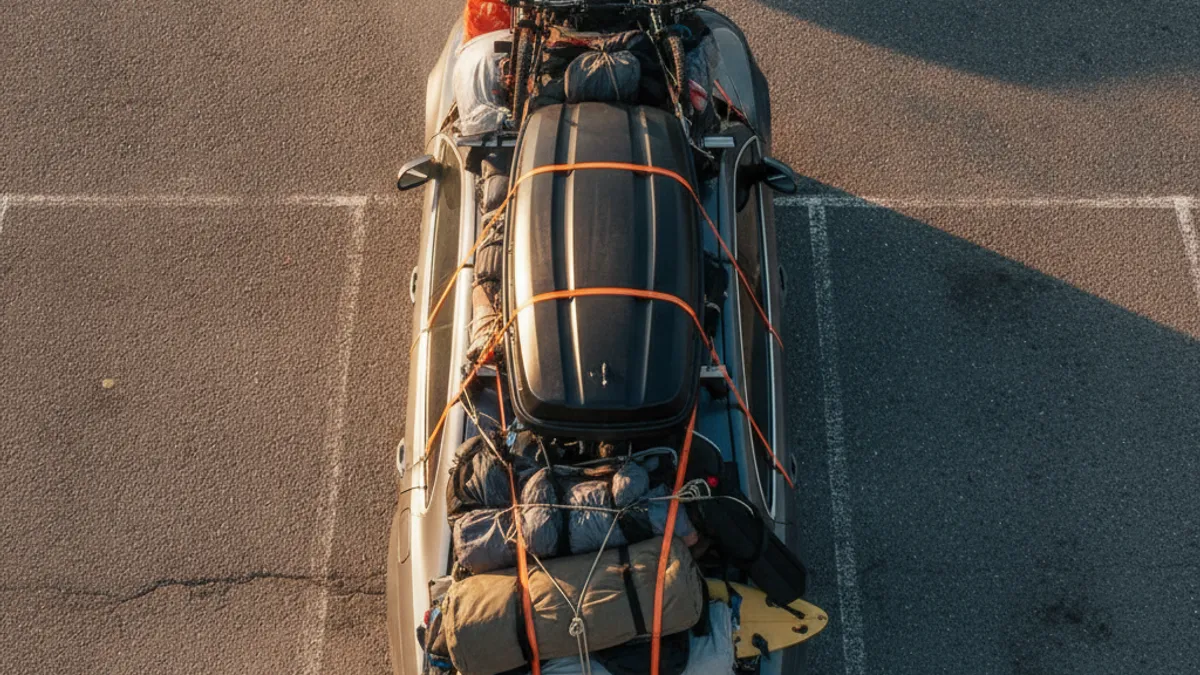
A roof rack with nothing on it increases aerodynamic drag and consumption by 2-5% on the motorway. A roof box can add 10-25% extra consumption at speeds above 100 km/h. The rule is simple: if you are not using the roof rack, remove it. The same applies to bicycle carriers, ski racks and any other equipment that disrupts the vehicle's aerodynamics.
A detailed guide covering all eco-driving techniques, including specific results from the HAK track test and the impact on journey time, is available in our article Eco Driving in BiH 2026 That Actually Saves Fuel.
AC, Windows and Equipment in Summer Months
In summer in BiH, air conditioning in the car is not a luxury but a necessity. Temperatures regularly exceed 35 degrees, and inside a closed car parked in the sun the cabin can reach 60 degrees. The question is not whether to use the AC, but how to use it so that it does not raise fuel consumption more than necessary.
How much AC actually consumes
The car's AC unit drives a compressor that draws power directly from the engine. That additional load on the engine increases fuel consumption. According to ADAC tests, AC increases consumption by 10-15% in city driving, and in heavy urban conditions with frequent stops, the figure can reach the equivalent of 2.4 L/100 km of additional consumption.
Over a year, running the AC through the summer months (roughly 4-5 months in BiH) costs a diesel driver between 120 and 180 KM annually, and a petrol driver between 117 and 175 KM. On LPG the cost is lower, 70-85 KM, because the price per litre is significantly cheaper.
Automatic AC is more efficient than manual
If your car has automatic climate control, use it in automatic mode instead of manually adjusting the temperature and fan speed. Automatic climate control regulates compressor operation according to demand, including shutting the compressor off entirely once the cabin is cooled. Manual AC (or automatic AC in manual mode) often keeps the compressor at full capacity unnecessarily long. The efficiency difference can be as much as 40%.
Another step that helps is pre-cooling the cabin before departure. When you have parked the car in the sun, open all windows for a minute or two before switching on the AC and setting off. This expels the hottest air from the cabin and shortens the time the AC needs to bring the interior down to a comfortable temperature. This reduces compressor load during the first few minutes of driving, when AC consumption is at its highest.
Windows or AC on the motorway
At speeds below 60-70 km/h, open windows are more efficient than AC because aerodynamic drag at those speeds is negligible. At speeds above 80 km/h, open windows create so much aerodynamic drag that they actually consume more fuel than running the AC. On the motorway, close the windows and switch on the AC.
A full analysis of how AC affects consumption, including tips on air recirculation and optimal settings, is available in our guide to AC fuel consumption in summer.
Maintenance That Directly Reduces Fuel Consumption
The third savings strategy is maintenance, and unlike driving technique which costs nothing, this one requires investment. But that investment pays back through lower fuel consumption, while simultaneously extending engine life and reducing the risk of expensive repairs. The key is that there are specific components whose malfunction directly increases consumption, and regular servicing of those components has a measurable effect.
Tyre pressure
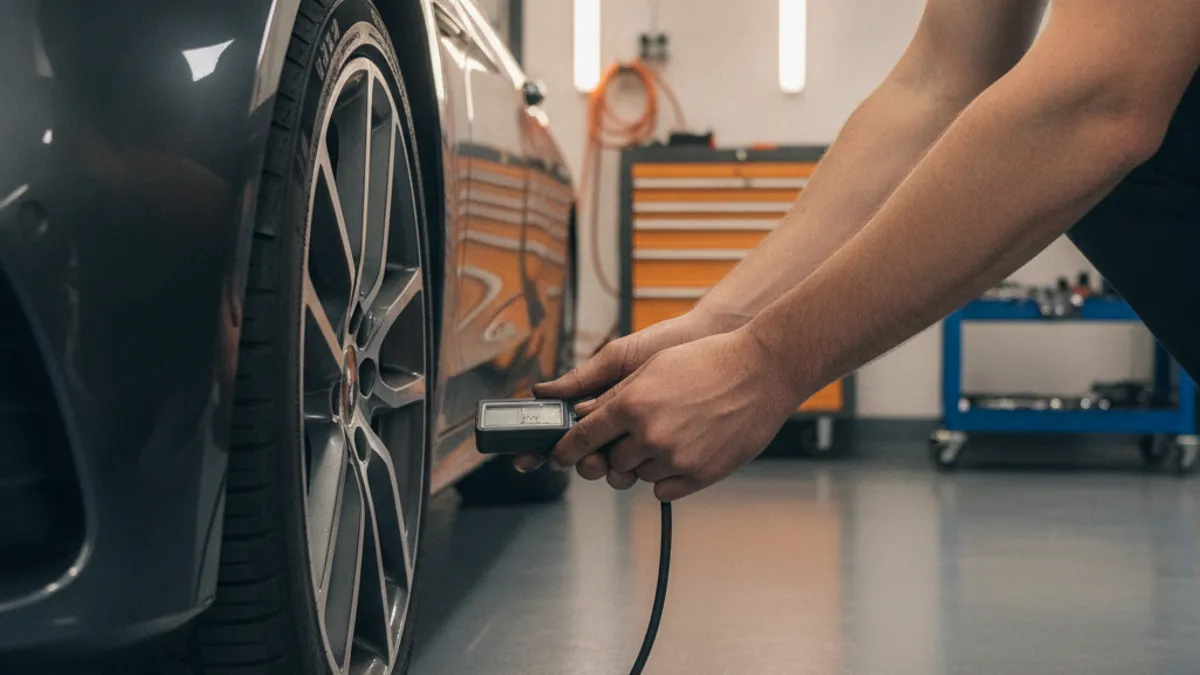
This is the cheapest and quickest way to cut consumption, yet most drivers neglect it. According to DOE data, correctly inflated tyres improve consumption by an average of 0.6%, and in some cases up to 3%. Being just 0.5 bar below the recommended value can increase consumption by 3-5%.
Check pressure at least once a month, on cold tyres (before driving or after a short trip to the pump). The recommended pressure is listed on the sticker on the driver's door jamb or inside the fuel filler cap. Do not rely on the TPMS warning light, as most TPMS systems only alert when pressure drops significantly below the optimal value. More on proper tyre maintenance is available in our tyre and pressure guide.
Oxygen sensor and engine sensors
A faulty oxygen sensor (lambda probe) can increase fuel consumption by up to 40%, according to US Department of Energy data. The lambda probe is the key sensor that tells the ECU how much fuel to inject. When the lambda probe sends an incorrect signal or stops working entirely, the ECU switches to a rich-mixture mode, meaning the engine burns more fuel than necessary for the given workload.
The lambda probe is not the only sensor that affects consumption. The MAF sensor (mass airflow sensor), MAP sensor (manifold absolute pressure sensor), coolant temperature sensor and intake air temperature sensor all contribute to the fuel quantity calculation. A malfunction of any of them can raise consumption by 5-25%, often without the check engine light coming on in the early stages of degradation.
If you notice that your car is consuming significantly more than before and you have not changed your route or driving style, the first step is sensor diagnostics. Modern diagnostics can read each sensor's parameters in real time and compare them against reference values. More detail on symptoms and diagnostic steps for increased consumption is available in our guide to diagnosing increased fuel consumption.
Engine oil of the correct viscosity
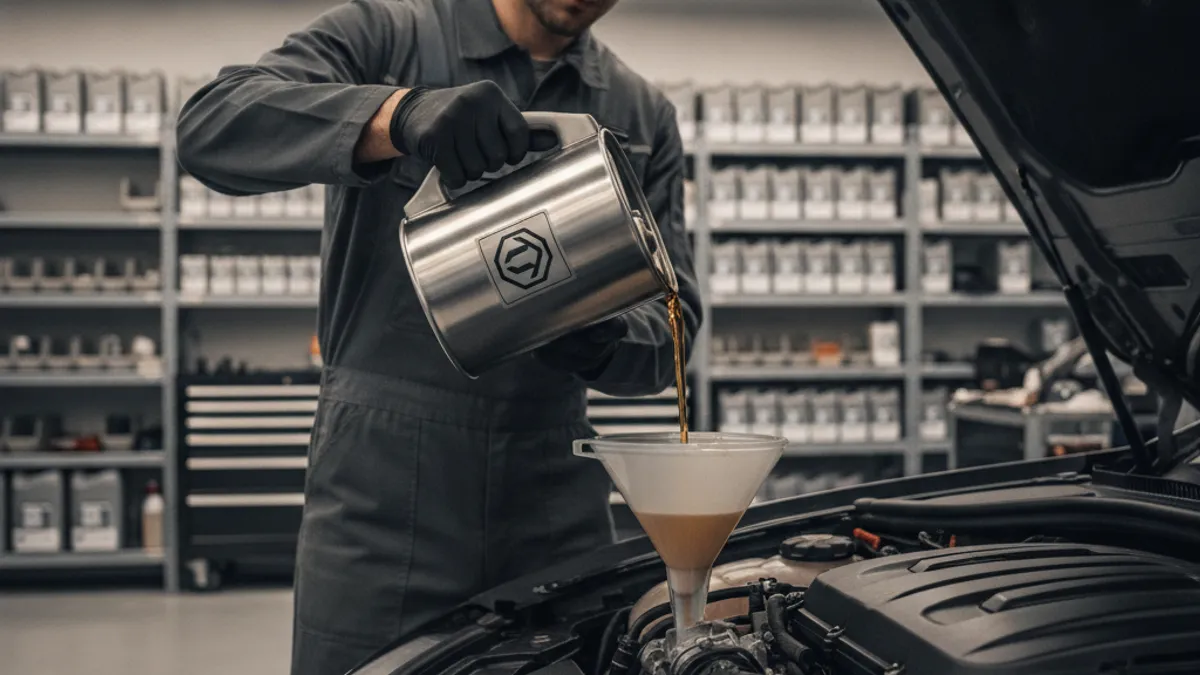
Using the wrong viscosity of engine oil reduces fuel efficiency by 1-2%, according to DOE data. The manufacturer specifies the exact viscosity (e.g. 5W-30, 0W-20) that is optimal for that particular engine's design. Using thicker oil than specified increases internal friction in the engine and consumes more energy, and therefore more fuel, for the same work.
Always use the viscosity specified by the manufacturer. If you are unsure which viscosity that is for your engine, check the service booklet or ask your mechanic. A further mistake we encounter in the workshop is mixing different viscosities when topping up, for example adding 10W-40 to an engine running on 5W-30. This raises the average viscosity of the mixture and increases internal friction.
Spark plugs, injectors and the ignition system
On petrol engines, worn spark plugs can increase consumption by 2-5% because they do not provide optimal combustion of the mixture. A spark plug that does not fire properly means a portion of fuel passes through the cylinder unburnt, which is a pure loss. On diesels, faulty injectors have a similar effect, because imprecise injection means incomplete combustion and higher consumption.
Spark plugs on petrol engines should be replaced according to the manufacturer's intervals, typically every 30,000-60,000 km for standard plugs and 60,000-100,000 km for iridium ones. On diesels, injectors are not consumable parts in the traditional sense, but their performance degrades over time, especially at higher mileages above 150,000-200,000 km.
Wheel alignment (toe and camber)
Incorrect wheel alignment, even a small deviation, causes the tyres to "scrub" against the road surface instead of rolling straight. Research shows that just 1 degree of alignment deviation can increase consumption by 3-4%. If you notice your steering wheel pulling slightly to one side or your tyres wearing unevenly (one side of the tread wearing faster), that is a clear sign the alignment needs adjusting.
Wheel alignment can go out even without an obvious impact. Driving on poorly maintained roads in BiH, a worn joint on the control arm or tie rod can gradually shift the alignment. The recommendation is to check alignment every time you change tyres (seasonal swap), and always after any pothole impact that caused the steering wheel to jolt.
A complete guide to all maintenance components that affect consumption, including DPF, EGR and thermostat, is available in our article on maintenance that reduces fuel consumption.
What Does Not Work and Fuel Saving Myths
It is equally important to know what actually saves fuel and what does not but is persistently repeated as advice. Here are the most common myths we encounter.
Myth: replacing the air filter reduces consumption
On older carburettor engines, a clogged air filter could indeed increase consumption because it directly restricted airflow into the mixture. On modern fuel-injected engines, this no longer holds. Research by Oak Ridge National Laboratory (ORNL/DOE, 2009) clearly showed that a clogged air filter on a modern engine does not increase fuel consumption, it only reduces acceleration (because the ECU compensates for restricted airflow by reducing fuel quantity, thus maintaining the correct mixture ratio). The air filter should be replaced regularly because it protects the engine from particles and dust, but do not expect fuel savings from the replacement.
Myth: premium fuel saves fuel on every engine
If your engine is not designed for high-octane fuel (as stated in the owner's manual), using 98-octane petrol instead of 95 will deliver no savings whatsoever. An engine designed for 95-octane petrol cannot utilise the extra octane rating, so you are simply throwing away the price difference. The only exception is engines with a high compression ratio that require 98-octane petrol, where using 95 can cause detonation and increase consumption.
Myth: coasting in neutral downhill saves fuel
This is not only inefficient but also dangerous. When a car coasts in gear without throttle (engine braking), modern fuel injection systems completely shut off fuel delivery. The engine turns on the inertia of the wheels and consumes zero fuel. When you shift to neutral, the engine must maintain idle speed and consumes fuel to do so. In other words, coasting in gear without throttle uses less fuel than neutral, and it simultaneously gives you vehicle control through engine braking, which is especially important on the hilly roads of BiH.
Myth: idling to warm up the engine saves fuel
Prolonged engine idling before departure is unnecessary on modern engines and simply wastes fuel with no benefit. The engine needs 30-60 seconds for oil pressure to stabilise, after which it is best to set off gently and let it warm up while driving. Every minute of idling burns fuel with zero kilometres covered. On a diesel, five minutes of idling on a cold morning consumes approximately 0.3-0.5 litres of fuel, and the engine warms up considerably slower at idle than during gentle driving.
Myth: various additives and "fuel-saving chips"
The market offers various fuel additives promising savings of 10-30%, as well as small electronic devices that plug into the OBD port or "magnetic boosters" fitted to the fuel line. None of these products has independent scientific evidence that it actually reduces consumption. The only "chip" that can change consumption is a professional ECU remap, but even there the result depends on the specific engine and map, and that is a topic for a separate analysis.
Realistic Annual Savings by Vehicle Class
Theoretical percentages are useful for understanding, but drivers want to know the actual KM figure at the end of the year. Here are realistic savings ranges by fuel type and consumption class, assuming you apply a combination of all three strategies (adapted driving style, regular maintenance, smart AC use).
| Vehicle type | Average consumption | Realistic 20-30% saving | Annual saving in KM |
|---|---|---|---|
| Compact diesel (Golf, Octavia) | 6-7 L/100 km | 1.2-2.1 L/100 km | 540-950 KM |
| Family diesel (Passat, Superb) | 7-8 L/100 km | 1.4-2.4 L/100 km | 635-1,090 KM |
| Compact petrol | 7-8 L/100 km | 1.4-2.4 L/100 km | 610-1,050 KM |
| Older petrol or SUV | 9-11 L/100 km | 1.8-3.3 L/100 km | 785-1,440 KM |
| LPG (any class) | 9-12 L/100 km | 1.8-3.6 L/100 km | 380-760 KM |
This table assumes 15,000 km per year and fuel prices current as of 16.06.2026. The smallest absolute saving is on LPG vehicles because the price per litre is the lowest, but the percentage saving is the same. The largest absolute amount is on bigger petrol cars and SUVs with high consumption.
What is important to note is that the lower end of the range (20% saving) involves only a change in driving style and basic maintenance, with no investment at all. The upper end (30%) includes all three categories, including alignment adjustment, replacement of out-of-tolerance sensors and optimal AC use. For most drivers, a realistic target is somewhere in the middle, around 25%, which on a compact diesel amounts to roughly 750 KM per year.
LPG as an Alternative for Reducing Fuel Costs
All the fuel-saving tips that cut consumption by 20-30% are valuable, but there is also a more radical step that reduces fuel costs by 40-50%: fitting an LPG system. As of 16 June 2026, a litre of LPG in BiH costs 1.41 KM, which is less than half the price of petrol (2.91 KM) and less than half the price of diesel (3.02 KM).
For a petrol driver consuming 8 L/100 km over 15,000 km per year, switching to LPG (with consumption adjusted to roughly 10 L/100 km due to the lower energy density of gas) means the annual fuel cost drops from 3,490 KM to roughly 2,115 KM. That is a saving of approximately 1,375 KM per year, before any optimisation of driving style or maintenance. When you add eco driving and regular maintenance on top, the annual fuel cost on LPG can fall below 1,700 KM.
LPG is not suitable for every car and every driver, but for petrol vehicles with annual mileage above 10,000-12,000 km, the installation typically pays for itself within 12-18 months. Auto Gas Gaga handles the complete installation, servicing and certification of LPG systems, from selecting the right system for your engine to homologation. If you are interested in a more detailed calculation for your specific case, book a consultation or read our advice on whether LPG conversion is worth it.
Complete Guide by Topic
This article brings together three separate guides that cover each savings strategy in detail. Each one is written for a specific situation and provides concrete data that we could not elaborate on in full here.
AC and summer fuel consumption
Summer in BiH lasts a long time and the AC runs from May to September. How much the AC actually consumes, whether automatic is more efficient than manual, when it is better to open the windows and when to switch on the AC, and how pre-cooling the cabin can reduce your overall fuel bill. All with ADAC test data and concrete figures for the BiH market.
Read more: How Much Fuel Does Car AC Use in Summer and How to Save
Eco driving and behind-the-wheel technique
Specific results from the HAK track test where one driver achieved 30% savings with just 1.5 minutes of extra journey time. Details on gear shifting, cruise control use, traffic anticipation and everything you can change behind the wheel at zero cost.
Read more: Eco Driving in BiH 2026 That Actually Saves Fuel
Engine maintenance and consumption
Lambda probe, MAF sensor, tyre pressure, wheel alignment, engine oil, thermostat, DPF and EGR. Each component with a specific percentage of how much it raises consumption when faulty, and how to recognise symptoms before your fuel bill starts climbing.
Read more: Maintenance That Reduces Fuel Consumption in BiH 2026
Frequently Asked Questions
How much can I really save on fuel per year by changing my driving style?
According to research by the DOE and European eco-driving programmes, changing your driving style delivers savings of 15-20% compared with aggressive driving. Using the example of a diesel consuming 7 L/100 km over 15,000 km per year, that is between 480 and 700 KM annually, purely from how you manage the throttle, brakes and gearbox.
Does car AC really consume that much fuel?
Yes, AC increases consumption by 10-15% in city driving according to ADAC tests. Over a year through the summer months in BiH, that amounts to 120-180 KM for diesel and 117-175 KM for petrol. Automatic climate control in automatic mode uses up to 40% less than manual AC because it regulates compressor operation according to demand.
Does replacing the air filter reduce fuel consumption?
On modern fuel-injected engines, no. ORNL/DOE research from 2009 showed that a clogged air filter on a modern engine does not increase consumption, it only reduces acceleration. The ECU compensates for restricted airflow by reducing fuel quantity. The filter should be replaced to protect the engine, but do not expect fuel savings.
Which fault increases fuel consumption the most?
A faulty oxygen sensor (lambda probe) can increase consumption by up to 40%, which is by far the single largest factor. In second place are the MAF sensor and faulty injectors at 10-25% increase. The third major factor is incorrect wheel alignment at 3-4% per degree of deviation, which compounds with worn tyres.
Does premium fuel (98-octane petrol) save fuel?
Only if your engine is designed for high-octane fuel. If the manufacturer specifies 95-octane petrol, using 98-octane will deliver neither savings nor better performance. The engine simply cannot utilise the higher octane rating if it was not designed for it.
How much does unnecessary weight in the car increase consumption?
TUV estimates that every 50 kg of unnecessary weight increases consumption by up to 0.3 L/100 km. Over 15,000 km per year, that is roughly 45 litres of fuel, or 130-140 KM on diesel. A roof rack with nothing on it adds 2-5% on the motorway, and a roof box up to 10-25% at higher speeds.