A litre of diesel in BiH currently costs 3.03 KM and petrol sits at 2.92 KM (cijenegoriva.ba, as of 15 June 2026). The average BiH driver covering 15,000 kilometres a year spends between 3,500 and 5,500 KM on fuel alone, and the gap between aggressive and eco driving over that distance amounts to 700 to 1,600 KM per year. These fuel-saving tips require not a single convertible mark of investment. All you need to change is how you press the accelerator and how far ahead you look.
This guide was compiled by the Auto Gas Gaga workshop in Banja Luka, drawing on experience with thousands of drivers who come in for servicing asking why their car uses more fuel than it used to.
Table of Contents
- How Much Eco Driving Really Affects Fuel Consumption
- Acceleration and Gear Shifting
- Open Road Speed and Why 120 km/h Costs You 20% More
- Anticipation and Engine Braking
- Cruise Control on Motorways and What the Research Says
- Idling and Short Trips as Silent Fuel Thieves
- Cargo in the Boot and on the Roof
- How Much a BiH Driver Can Save Annually With Eco Driving
- Frequently Asked Questions
- Related Articles
How Much Eco Driving Really Affects Fuel Consumption
Eco driving is not a marketing gimmick invented by companies selling expensive training courses. The US Department of Energy (DOE) has documented that aggressive driving, rapid acceleration, excessive speed and harsh braking reduce fuel economy by 15 to 30% on motorways and 10 to 40% in urban driving. The European ODYSSEE-MURE project confirmed that drivers who complete eco-driving training achieve consumption reductions of 10 to 20%, with some exceeding 30%.
On the Jarun test track (6.3 km) the Croatian Automobile Club (HAK) measured savings of 18 to 50% purely from changing driving style. One driver saved 30%, or 3.1 L/100 km, with only 1.5 minutes added to the journey. Over 15,000 kilometres a year, that 15 to 30% difference translates into hundreds of litres of fuel and hundreds of KM in savings.
Crucially, these eco driving tips for saving fuel require no expenditure whatsoever. You do not need to change your car, buy new equipment or install anything. All it takes is a conscious change to three things: how you press the accelerator, how fast you go and how far ahead you read traffic. If you are also interested in the impact of air conditioning on summer consumption, we covered that in detail in the article on A/C fuel consumption, the first part of this fuel-saving guide series.
Acceleration and Gear Shifting
The way you accelerate and the moment you shift gear have a greater impact on consumption than any other single habit. Many drivers hold a low gear for too long, waiting for revs to climb past 3,000 or even 4,000 before shifting. In that range the engine burns significantly more fuel than is needed for the given rate of acceleration.
What RPM to Shift at for Fuel Savings
The general rule for economical driving: on a diesel engine shift at around 1,800 to 2,000 RPM, and on a petrol engine at 2,000 to 2,500 RPM. This is the range where the engine produces enough torque for smooth acceleration without wasting fuel on unnecessary revs. HAK recommends precisely these thresholds based on practical track testing.
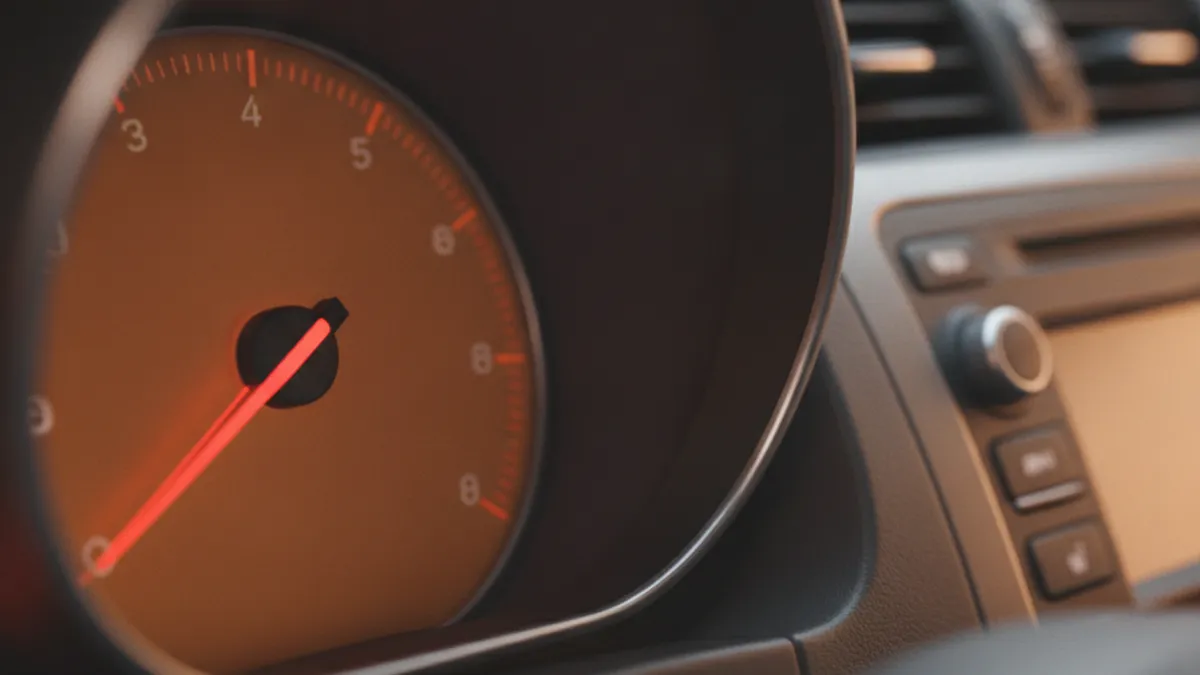
The optimal RPM range for economy lies between 1,500 and 2,500 RPM for most engines. Above that band, consumption rises disproportionately relative to the acceleration gained. Below it, the engine labours and vibrations and premature component wear can occur. The sweet spot for everyday urban driving is around 2,000 RPM at the point of shifting.
Another important detail: accelerate moderately but decisively. Paradoxically, excessively slow acceleration is not more economical. In that mode the engine runs longer in a low gear with the throttle wide open, meaning a prolonged period of elevated consumption. The goal is smooth acceleration that brings you to your desired speed within a reasonable time, shifting up as soon as the revs reach the optimal threshold.
With automatic gearboxes the situation is simpler. Modern automatics optimise shift points on their own, but they respond to your style. If you press the accelerator sharply, the gearbox will hold a lower gear longer and stretch the revs towards the redline. If you apply the throttle gently and progressively, the gearbox will shift up earlier and keep the engine in its economical range. Drivers with CVT transmissions face a similar dynamic, as the electronics aim to keep the engine in its most efficient RPM band when full power is not demanded.
Open Road Speed and Why 120 km/h Costs You 20% More
Aerodynamic drag increases with the square of speed. That is physics, not opinion. In practical terms it means driving at 120 km/h uses roughly 20% more fuel than driving at 100 km/h. Over a 25-kilometre stretch that speed difference saves you a mere 2 minutes yet costs a fifth more of your tank.
US DOE data confirms: every 8 km/h above 80 km/h costs you the equivalent of an extra 7 to 14% in fuel. TUV recommends driving at 70 to 80% of your vehicle's maximum speed, but no higher than 130 km/h, as the optimal compromise between journey time and consumption.
Think about it in practical terms. On the Banja Luka to Doboj stretch (around 100 km by motorway), driving at 100 km/h instead of 130 km/h extends the journey by about 14 minutes. But if your car uses 8 L/100 km of diesel at 130 km/h, at 100 km/h it will use roughly 6.4 L/100 km. Over 100 kilometres that is a difference of 1.6 litres, or nearly 5 KM for that single trip. For a driver who makes this journey twice a week, the annual saving on that one route alone exceeds 450 KM.
It is also worth stressing the effect of speed variation. Driving that constantly fluctuates between 75 and 85 km/h can increase consumption by 20% compared with a steady 80 km/h. The engine continually adjusts fuel injection with every acceleration, and every acceleration following an unnecessary slow-down is wasted fuel. On an open road without congestion, hold a constant speed as much as possible.
One more aspect drivers overlook: open windows at motorway speeds. Above 80 km/h, open windows create significant aerodynamic drag that can raise consumption by 5 to 10%. At those speeds the air conditioning is more economical than open windows, which is the opposite of what most drivers believe.
Anticipation and Engine Braking
Anticipation is the most valuable eco driving technique and it is completely free. The principle is simple: look well ahead, read the traffic and react earlier. If you see a red light 300 metres ahead, lift off the accelerator immediately instead of driving up to it at full speed and then braking. During those metres of coasting the engine consumes virtually nothing, and you have preserved energy that the brakes would have converted into waste heat.
Engine Braking or Coasting in Neutral
This is one of the most common questions we hear in the workshop. The answer is clear: engine braking is more economical than coasting in neutral in most situations. When you lift off the accelerator while a gear is engaged, modern engines with electronic fuel injection cut the fuel supply completely. The engine turns on the vehicle's kinetic energy and consumption drops to zero. Literally zero litres per minute.
When you shift into neutral, the engine reverts to idle and consumes around 0.5 to 1.0 litres per hour (depending on engine displacement and type). Engine braking is therefore always the better choice when you need to slow down. The only exception is situations where you need to maintain a constant speed on a gentle slope, but even then judging the situation is a matter of experience.
In practice, anticipation means this: in town you watch two to three traffic lights ahead. On the motorway you observe the brake lights of vehicles in front and slow down before you have to brake hard. In congestion you maintain a gap that allows you to coast rather than constantly stopping and starting. Every stop means you must accelerate from zero again, and accelerating from zero is the most expensive moment for your fuel tank.
Urban driving is the greatest field for applying anticipation. A driver who learns the traffic-light rhythms on their regular commute can cut the number of full stops by a third. Every avoided full stop is fuel that stays in the tank.
Cruise Control on Motorways and What the Research Says
Many drivers believe cruise control is a magic device for saving fuel. The truth is somewhat more nuanced, and recent research has shed new light on the matter.
A study published in Nature Communications (November 2024) covering 157 vehicles and 40,356 trips found that adaptive cruise control (ACC) actually increases consumption by around 2% at fleet level, or +0.26 L/100 km. The reason: rigidly maintaining a set speed uses more fuel than flexible human throttle management that adapts to the terrain. ACC showed a benefit only in acceleration and braking situations with a vehicle ahead.
How Much Cruise Control Saves on the Motorway
The crucial distinction here is between adaptive cruise control (ACC) and conventional cruise control, and between driver types. Conventional cruise control on a flat motorway helps drivers who tend to let their speed drift, because it eliminates oscillations. If you are a driver who holds a steady speed naturally, cruise control will not yield additional savings. If you are a driver who unconsciously speeds up and slows down, cruise control will discipline you and your fuel use will become more even.
On hilly terrain, which describes much of the road network in BiH, cruise control can be counter-productive. On an incline it adds throttle to maintain speed, and on a descent it does not exploit gravity the way a skilled driver would. On sections such as the mountain passes between Banja Luka and Sarajevo, an experienced driver who lets the car lose a little speed on the uphill and uses the downhill to regain it will consume less than cruise control forcing a constant 100 km/h.
Practical advice: use cruise control on flat, long motorway stretches. Switch it off on hilly terrain, in congestion and on roads with frequent speed changes. And remember that cruise control does not replace anticipation, because it cannot see three traffic lights ahead.
Idling and Short Trips as Silent Fuel Thieves
Idling is the enemy nobody talks about. An engine at idle burns 0.5 to 1.0 litres of fuel per hour without moving the car a single metre. If you wait for someone with the engine running for 10 minutes every day, that adds up to around 180 litres a year. In KM, that is over 500 KM for diesel and about 520 KM for petrol, poured away for no benefit.
Modern vehicles with a start-stop system automatically shut the engine off at traffic lights and in queues. If your car has this system, do not disable it. It was designed precisely for these situations. For older vehicles without start-stop, the rule is straightforward: if you know you will be stationary for more than 30 seconds, switch the engine off. Starting the engine uses roughly as much fuel as 10 to 15 seconds of idling.
How Much More Fuel Short Trips Consume
Short trips are the other silent thief. An engine that has not reached operating temperature burns dramatically more fuel. During the first few kilometres after a cold start the engine runs on an enriched mixture, the oil is thick, friction is higher and thermal losses are at their peak. A 3-kilometre drive from home to work can use up to twice as much fuel per kilometre as the same stretch on a warm engine.
If you make five short trips a day instead of two longer ones, the difference in annual consumption can exceed 200 litres. Wherever possible, combine errands into one longer drive instead of several short ones. An engine that warms up once and stays warm through a series of tasks consumes significantly less than one that cools down and reheats five times.
For diesel drivers, short trips pose an even bigger problem because beyond fuel consumption they damage the DPF filter and EGR valve. You can read more about this in the guide on causes of increased fuel consumption, which covers diagnostics for when eco driving does not help because the issue lies with the car itself.
Cargo in the Boot and on the Roof
Every kilogram you carry costs fuel. US DOE data shows that every extra 45 kg reduces fuel economy by roughly 1%. TUV estimates the impact at +0.3 L/100 km for every additional 50 kg. At first glance it seems trivial, but let us look at the real numbers.
How Much a Roof Box and Extra Cargo Increase Consumption
A roof box is the costliest accessory in terms of consumption. At motorway speeds it increases fuel use by 10 to 25% due to the dramatically increased aerodynamic drag. Even an empty roof rack adds 1 to 5% to consumption on the motorway. A rear-mounted carrier (for bicycles, on a tow bar) has a smaller impact, 1 to 5%, because it sits in the vehicle's aerodynamic shadow.
Practically speaking: remove the roof rack as soon as you return from holiday. Clear the boot of items you do not need every day. That bag of sand from winter, the folding chairs, the tools you might use once a year, all of it easily exceeds 50 kg. For a driver covering 15,000 km a year at 7 L/100 km, an extra 50 kg means roughly 45 litres of fuel a year, or 130 to 140 KM thrown away for nothing.
If you are preparing for a longer journey, consider where you place the cargo. Roof-mounted cargo always costs more than cargo in the boot. And pay attention to your tyre pressures, because low pressures combined with extra weight significantly increase rolling resistance and push consumption up further.
How Much a BiH Driver Can Save Annually With Eco Driving
Time for a concrete calculation. Take the average BiH driver: 15,000 km a year, a diesel car consuming 7 L/100 km, diesel price 3.03 KM/L (as of June 2026, cijenegoriva.ba).
| Parameter | Aggressive driving | Eco driving | Difference |
|---|---|---|---|
| Consumption per 100 km | 8.4 L | 6.3 L | -2.1 L |
| Annual consumption (15,000 km) | 1,260 L | 945 L | -315 L |
| Annual fuel cost (diesel, 3.03 KM/L) | 3,818 KM | 2,863 KM | -955 KM |
A 20% difference on average consumption, which is the conservative midpoint of the documented range (15 to 30%), yields savings of around 315 litres of diesel per year. That is 955 KM, an amount that makes a serious dent in any household budget.
For petrol drivers the maths is similar. At a consumption of 8 L/100 km and a petrol price of 2.92 KM/L, a 20% saving amounts to roughly 876 KM per year. For drivers running on LPG (1.41 KM/L), the absolute saving in KM is lower because the fuel is cheaper, but the percentage saving in litres is the same. An LPG driver consuming 10 L/100 km who reduces consumption by 20% saves 300 litres, or 423 KM annually.
These figures are a conservative estimate. HAK documented savings of up to 50% in testing. In real life, a driver who applies all the advice in this guide, from RPM and speed to anticipation and cargo reduction, can realistically achieve savings of 15 to 25%. In the comprehensive fuel-saving guide currently in preparation we will also cover maintenance that further reduces consumption, because a poorly maintained car negates all the benefits of eco driving.
If you are practising eco driving but consumption keeps rising, the problem is most likely not your driving style but the condition of the car. In that case it is worth checking the common causes of increased fuel consumption and potentially coming in for diagnostics.
Need help getting your car into a condition where eco driving truly delivers results? Book a service or inspection at the workshop or contact us directly.
Frequently Asked Questions
Can eco driving really save 15 to 30% on fuel?
Yes. The US Department of Energy (DOE) has documented savings of 15 to 30% on motorways and up to 40% in urban driving purely from changing driving style. HAK tests on the Jarun track confirmed savings of 18 to 50%. For the average BiH driver covering 15,000 km a year, that translates to between 700 and 1,600 KM less on the annual fuel bill.
What RPM should you shift at to save fuel?
On a diesel engine the optimal shift point is 1,800 to 2,000 RPM, and on a petrol engine 2,000 to 2,500 RPM. Above 2,500 RPM consumption rises faster than the acceleration gained. For automatic gearboxes, apply the throttle gently and the electronics will optimise the shift point on their own.
Is engine braking better than coasting in neutral?
Yes. Modern engines with electronic fuel injection cut the fuel supply entirely during engine braking, so consumption drops to zero. Coasting in neutral keeps the engine at idle, which burns 0.5 to 1.0 litres per hour. Engine braking is better for savings and for safety because you retain full control of the vehicle.
Does cruise control really save fuel?
It depends on the situation. On a flat motorway it helps drivers who tend to vary their speed. On hilly terrain, which describes much of the BiH road network, cruise control can consume more because it forces a constant speed on inclines. A 2024 study (Nature Communications) covering 40,356 trips showed that adaptive cruise control increases consumption by around 2% at fleet level.
How much does a roof box increase fuel consumption?
A roof box at motorway speeds increases consumption by 10 to 25%. Even an empty roof rack adds 1 to 5%. Remove the rack as soon as you no longer need it, because every kilometre with it on the motorway costs extra fuel.
How much more fuel do short trips consume?
Short trips of 2 to 3 km can consume up to twice as much fuel per kilometre as the same stretch on a warm engine. An engine that has not reached operating temperature runs on an enriched mixture with higher friction. For diesel drivers the additional problem is that the DPF filter and EGR valve suffer on short trips.