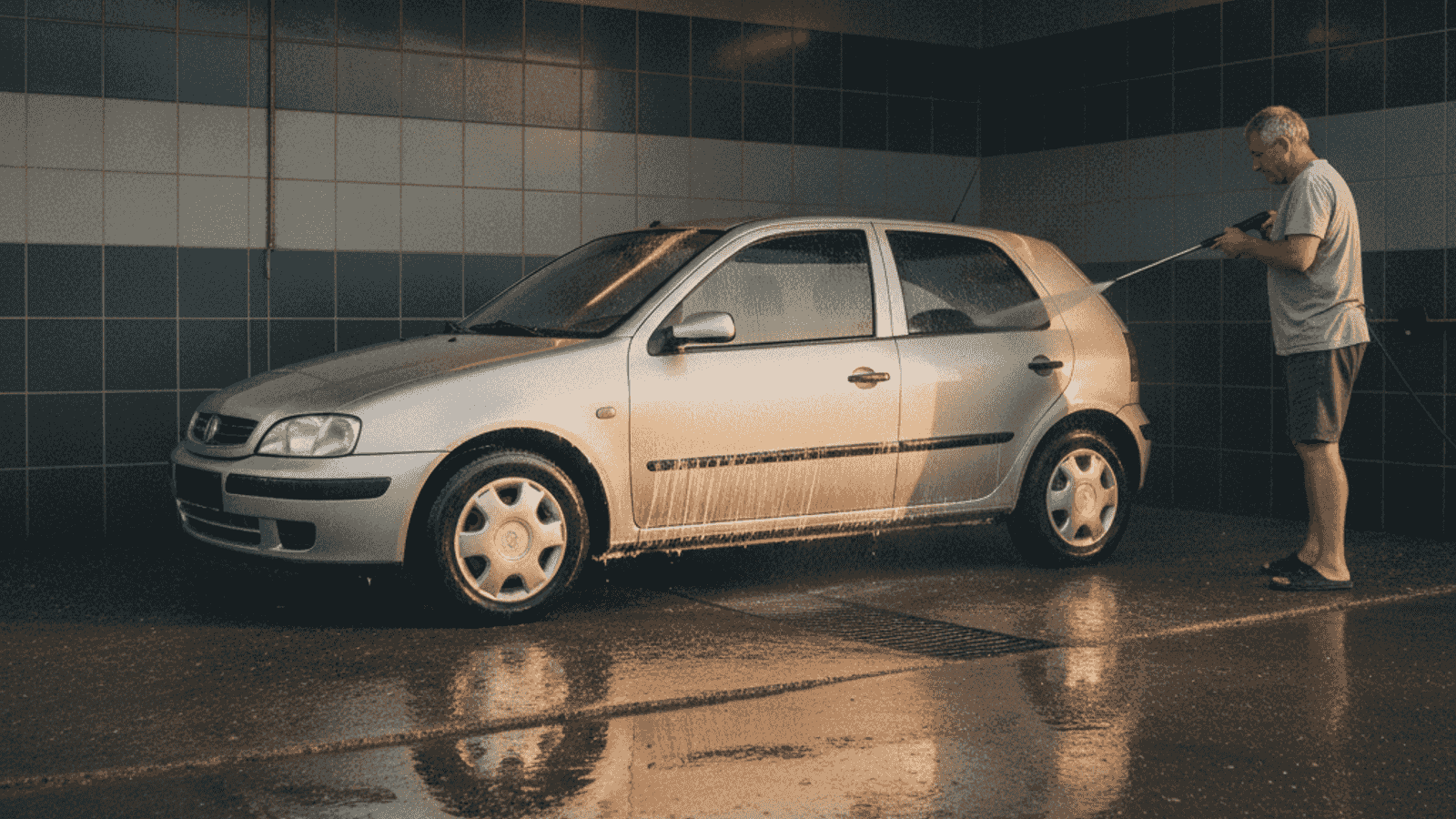
Every year the same scene plays out. Thousands of cars from BiH spend a week or two on the Adriatic coast, cover hundreds of motorway kilometres, sit parked in the sun beside the sea and come home dusty, salty and worn out. Most drivers run through the first self-service car wash they find and call it done. The problem is that sea salt, sand and UV radiation leave traces that a quick pass through a car wash cannot reach. Checking your car after the seaside calls for a systematic approach, and this checklist covers everything in order of priority. If you used our checklist for preparing your car for summer before your trip, this is the follow-up for when you get back.
This checklist was prepared by Auto Gas Gaga workshop in Banja Luka, following the order they use in practice with their clients.
Table of Contents
- Why Your Car Needs More Than a Quick Wash After the Seaside
- Step 1 - Thorough Underbody and Body Wash
- Step 2 - Tyre and Brake Check After a Long Drive
- Step 3 - AC Disinfection and Cabin Filter Replacement
- Step 4 - Coolant, Oil and Other Fluids
- Step 5 - Interior Cleaning and UV Damage Protection
- Step 6 - Windscreen, Wipers and Minor Paint Damage
- Paint and Underbody Protection for Next Season
- How Much Does It All Cost in BiH in 2026
- Frequently Asked Questions
- Related Articles
Why Your Car Needs More Than a Quick Wash After the Seaside
Salt from the coast is not the same as winter road salt. Sea salt contains magnesium chloride, which is more aggressive towards metal surfaces, and the combination of moisture, heat and salt accelerates electrochemical corrosion on the steel parts of the underbody. In February 2026, the AAA warned drivers that salt causes hidden damage to the underbody, brake lines and suspension components that standard insurance does not cover because it is classified as normal wear and tear.
The key difference between winter salt and sea salt is that sea salt stays on the car in a warm environment. In winter, salt is washed off by the first rain or snowmelt, but in summer it dries on the bodywork and underbody and crystallises in crevices where it continues to act for weeks. According to data from the HAK Review, salt in crevices can remain for weeks and trigger corrosion if it is not removed by washing.
Beach sand ends up in the wheel arches, under the sills and in every cavity the wheels throw it into while driving. The combination of sand and salt acts like sandpaper on protective coatings and opens a path for rust to reach bare metal. The average age of motor vehicles in BiH is 17 years, and more than a third of passenger cars are over 23 years old. On cars like these the factory coating has long since thinned, and that process can begin within a few weeks.
The third problem is UV radiation. Two weeks of strong sun leaves its mark on door rubber seals, wipers, plastic trim pieces and the paint itself. Tyres that have spent two weeks on hot seaside tarmac age faster than during an entire winter.
That is why checking your car after the seaside requires a step-by-step inspection rather than just a quick trip through the car wash.
Step 1 - Thorough Underbody and Body Wash
The first wash after the coast must be thorough, not quick. The goal is not to make the car look clean but to physically remove salt from every surface, including the ones you cannot see.
Start with the underbody. If you are using a self-service car wash, select the underbody programme. If you are washing at home, raise the car on jack stands and wash the underside with a pressure washer. Pay particular attention to the wheel arches, sills, door edges and body-panel joints beneath the doors where salt accumulates and stays sheltered from rain.
The order of washing matters. Start with the underbody (while it is dry, salt breaks up more easily under water pressure), then the wheel arches, and finally the bodywork from top to bottom. Finish by rinsing all the recesses around the doors, boot lid and bonnet. Dry the car with a microfibre cloth because air-drying in the sun leaves mineral spots from the water.
Do not skip the engine bay. Salt and dust enter through the grille and settle on covers, hoses and connectors. A gentle rinse without directing the jet at electronics is enough to remove the layer of salt and dust.
The AAA recommends washing your car at least every two weeks after exposure to salt, with priority given to car washes that have an underbody jet. If you got back more than two weeks ago and have not yet washed the underbody, do it now because the salt is already doing its work.
We wrote in more detail about how salt attacks the underbody and what bitumen protection involves in our guide to car rust and how to stop it.
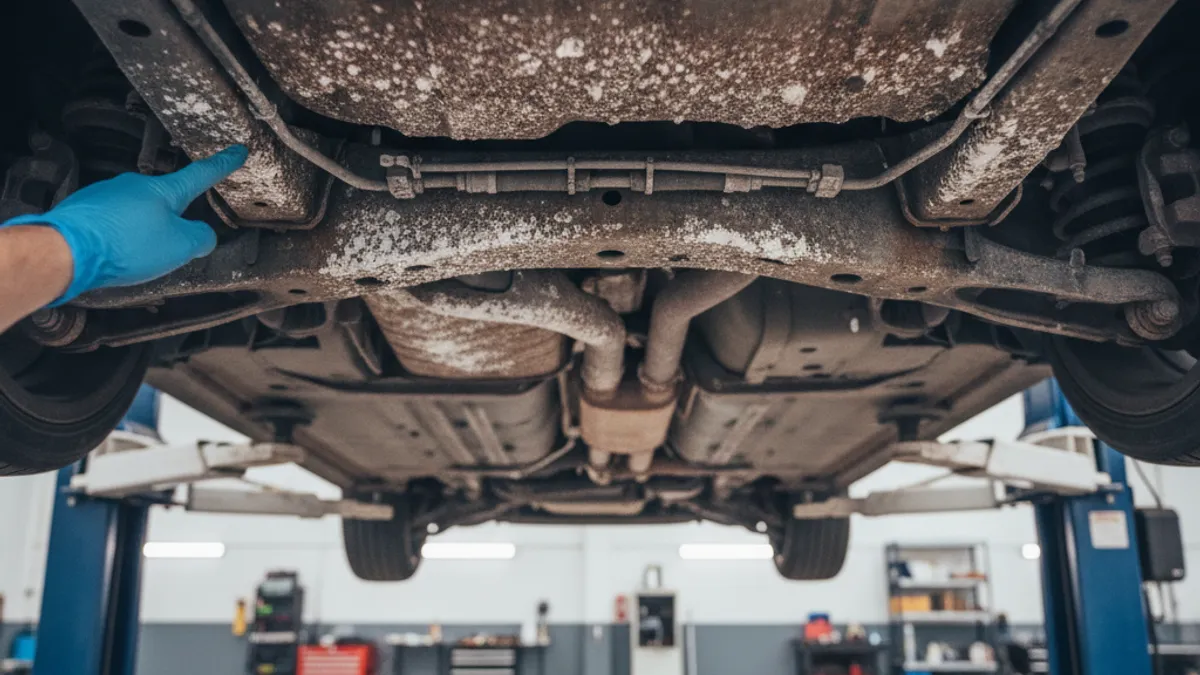
How Fast Does Salt Damage the Underbody If You Do Not Wash It
It depends on humidity and temperature, but in BiH summer conditions the process is faster than most people think. On an unprotected steel part, visible surface corrosion can appear within 7-14 days in a moist, salty environment. In hidden spots such as the inside of sills, brake lines and welded joints, the damage progresses invisibly and is often only discovered during an MOT inspection or when a part fails.
That is why underbody washing is the first step, not cosmetics. A car that looks clean on top but has a layer of crystallised salt underneath is a car that is quietly rusting.
Step 2 - Tyre and Brake Check After a Long Drive
A long drive to and from the coast is a test for the braking system. The motorway itself wears pads less than city driving, but a mountain descent through Croatia or Montenegro is the opposite story. Hundreds of metres of downhill braking overheat the discs and pads, and afterwards cold sea air and salt accelerate surface corrosion on the discs.
Surface rust on the discs is the first thing you will notice. If the car sat at the seaside for a week without being driven, the discs will have a visible layer of surface rust. That in itself is not a problem because the rust is removed by the first few brake applications. But if you feel the steering wheel pulsing or hear a squeal that does not stop after the first few kilometres, it means the disc has corroded unevenly and needs to be checked with a dial gauge.
Pad thickness is the second parameter to check. Pads that were borderline before the trip may be below the minimum after 1,500-2,000 kilometres of motorway and mountain roads. A visual check through the holes in the rim or with the wheel removed gives you the answer in a minute.
Tyres are the third priority in this step. Hot motorway tarmac and parking in the sun accelerate the ageing of the rubber compound. Check tyre pressure (hot tarmac raises it, cooler conditions at home bring it back down), tread depth and sidewalls. If you see fine cracks on the sidewall, the tyre has started ageing regardless of the remaining tread.
You will find a detailed guide to the symptoms of worn brakes that helps you assess their condition yourself in our advice on recognising when brakes need servicing.
Brake Check After Driving Mountain Roads
If you crossed mountain roads, the braking system deserves special attention. Prolonged downhill braking heats the discs to temperatures at which the structure of the metal changes. Such a disc may look normal but have an uneven working surface that causes vibrations under braking. The problem sometimes is not felt immediately and worsens over the following weeks. If you notice even the slightest vibration in the steering wheel when braking from higher speed, get in touch for a check.
Step 3 - AC Disinfection and Cabin Filter Replacement
During summer the car's AC ran 10-14 hours a day, every day, under the toughest conditions. The evaporator stays wet, cold and in the dark after the engine is switched off, creating ideal conditions for mould and bacteria. That is why many cars start to smell as soon as you turn on the ventilation after summer.
Evaporator disinfection is the first step. There are disinfectant sprays that are inserted through the cabin filter opening or the drain tube, but professional disinfection at a workshop is more thorough because it includes direct access to the evaporator itself.
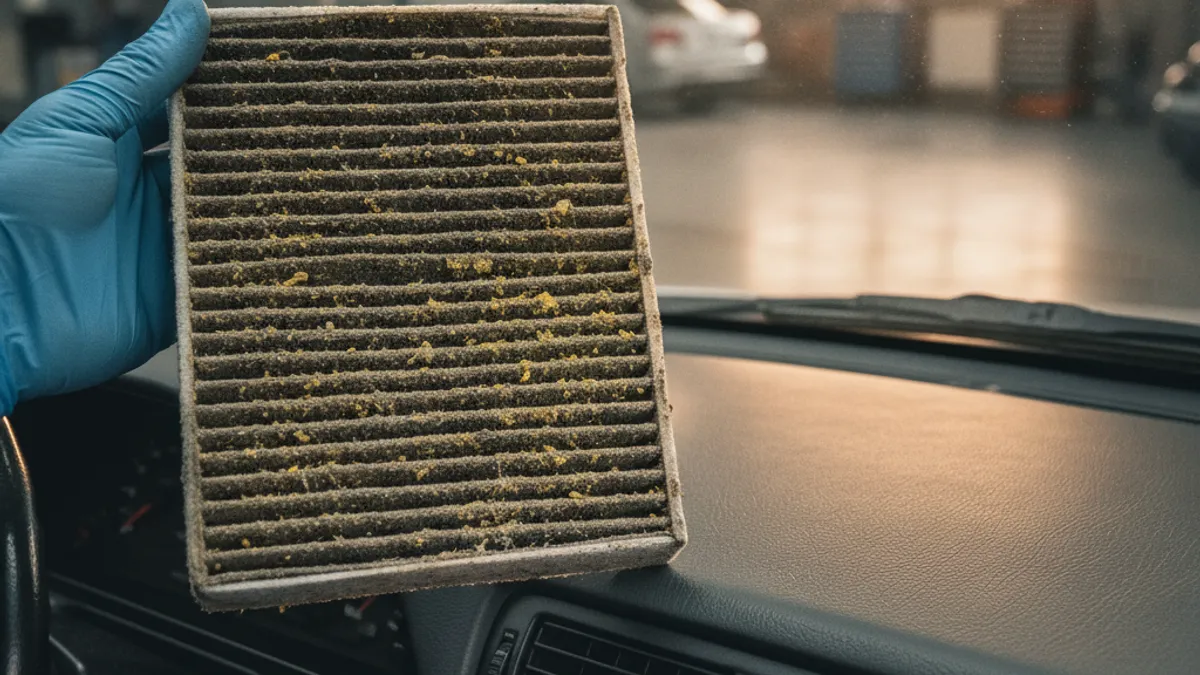
The cabin filter is the second step. If you did not replace it before summer, dust, pollen, insects and sea aerosol have done their work. A filter that was borderline before the trip is now definitely due for replacement. A clogged cabin filter reduces airflow through the ventilation, puts extra load on the blower motor and reduces the efficiency of the AC. More about how to spot a blocked cabin filter and how much it affects the AC can be found in our advice on cabin pollen filters.
A useful habit that prevents AC odours is to switch the AC off a couple of minutes before the end of your drive but leave the blower running. Dry air passes through the evaporator, dries it out and prevents mould growth. If you practise this throughout the season, end-of-summer disinfection will be far less necessary.
We covered the full AC service, refrigerant recharge and prices in detail in our guide to car AC servicing in BiH 2026. Here we focus on what needs to be done right after you get back.
Why the AC Smells After Summer and How to Prevent It
The answer lies in the biology of the evaporator. The AC evaporator is a heat exchanger that operates at the ideal temperature for mould growth, typically between 4 and 15 degrees. The combination of condensation moisture and organic material from the cabin filter creates a breeding ground. When you switch the car off, the evaporator stays damp for hours. Repeat that cycle for 14 days at the seaside and you get a colony that produces a characteristic sour smell.
The solution is threefold. First, dry the evaporator before switching off the engine (turn off the AC but leave the blower on for two minutes). Second, replace the cabin filter on time. Third, have a professional disinfection done after summer. These three measures eliminate the problem for the entire next season.
Step 4 - Coolant, Oil and Other Fluids
A long motorway journey consumes fluids differently from city driving. A constant 130 km/h for 6-8 hours is easier on the engine than city stop-and-go, but for the cooling system and oil it means continuous operation at high temperature, which accelerates additive degradation.
Coolant is the priority. Open the bonnet once the engine has cooled and check the level in the expansion tank. If the level is below the MIN mark, top it up with the same type of antifreeze already in the system. If you do not know which type is in there, take the car for a check because mixing the wrong types of antifreeze leads to problems with the water pump and radiator. A full guide to antifreeze types and why mixing is risky can be found in our advice on G11, G12 and G13 antifreeze.
Check the engine oil on the dipstick. If the oil is dark but not black and the consistency is normal, you probably still have kilometres to go before the next service. But if you covered 3,000-5,000 km over the summer and the total mileage since the last change exceeds 12,000-15,000, book a minor service without delay.
Brake fluid is an item most drivers never check, yet they should. Brake fluid is hygroscopic, meaning it absorbs moisture from the air. If more than two years have passed since the last change, the summer has accelerated that process and the moisture content is likely above the recommended level. The result is a softer brake pedal and longer stopping distances, especially after heavy braking on mountain roads.
Screenwash is the simplest item. A long journey uses up the reservoir faster than you think, particularly if you drove through a cloud of insects on the motorway. Fill the reservoir with a good-quality summer screenwash because plain water leaves spots and encourages algae growth inside the reservoir.
Step 5 - Interior Cleaning and UV Damage Protection
Sea sand, sunscreen, sweaty feet and spilt drinks during a long trip leave marks in the cabin that become a problem if they are not dealt with promptly.
Seats and carpets need thorough vacuuming, followed by cleaning with a fabric or leather care product depending on the material. Sand that gets into seat stitching acts like sandpaper every time someone sits down or stands up. If you have leather seats, salt and sun dry the leather out and accelerate cracking, so conditioning with a leather balm is a must after a seaside holiday.
Plastic trim on the dashboard and doors fades and dries out after two weeks of strong sun. A UV protection product for plastic restores the colour and prevents cracking. A quality product costs a few marks and preserves the interior's appearance for years.
Door rubber seals are a critical item. Salt, sand and UV radiation destroy the elasticity of seals, and once seals harden, water starts getting into the cabin when it rains. Inspect the seals around all four doors and the boot lid. Apply a silicone seal conditioner to soften and protect them. Hardened seals cannot be saved and need replacing, but a silicone treatment can extend the life of those that are still functional.
Do not forget the boot. Spilt drinks, sand from flip-flops and damp towels leave moisture that can trigger mould under the boot carpet. Take everything out, vacuum, wipe down and let it dry completely before putting things back.
Step 6 - Windscreen, Wipers and Minor Paint Damage
After a long motorway drive the windscreen is usually covered in fine marks from stones, insects and dust. Some of those marks are cosmetic, but some are potentially serious.
The difference between a chip (a small stone strike) and a crack is that a chip stays localised while a crack spreads. A chip smaller than five millimetres in diameter that is outside the driver's line of sight can usually be repaired with resin without replacing the windscreen. A chip in the driver's line of sight, or a crack of any length, requires assessment by a glazier.
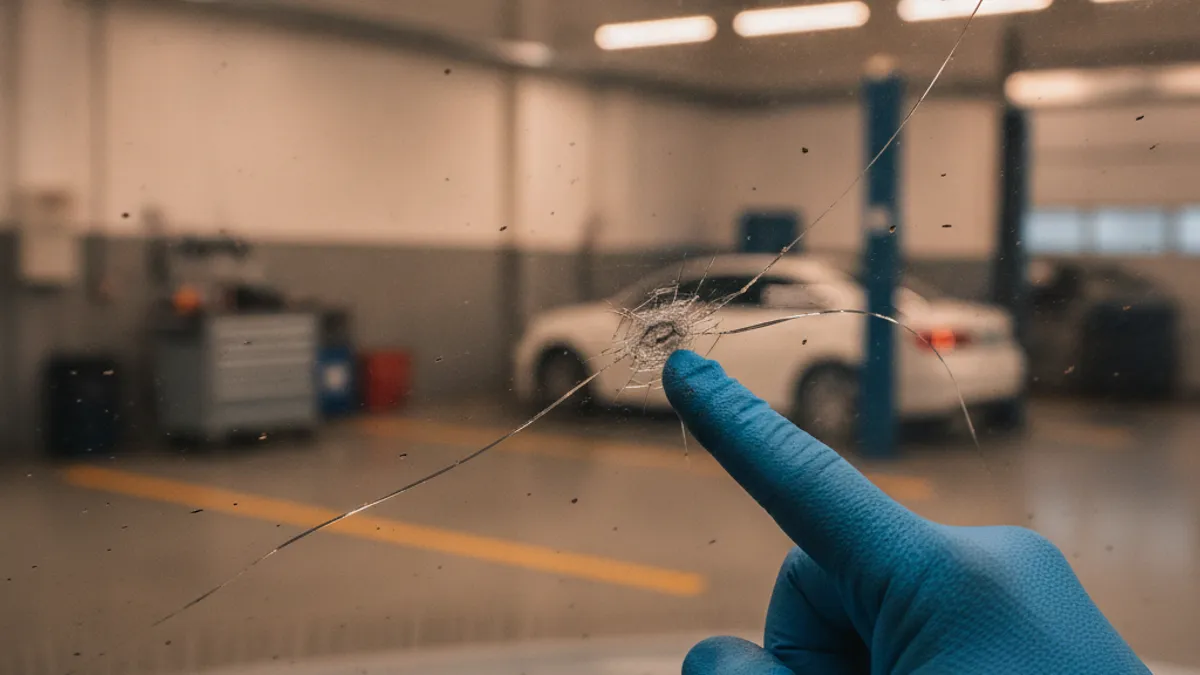
Windscreen Stone Chip: When to Repair and When to Replace
Acting quickly is important. Temperature changes, driving vibrations and impacts from potholes widen a crack. A chip that is five millimetres today can be a twenty-centimetre crack in a month, at which point windscreen replacement is the only option and considerably more expensive.
The rule is simple: if the damage is smaller than a 1 KM coin and is not in the driver's direct line of sight, a resin repair is possible and cost-effective. If it is larger, if it is in the line of sight, or if it is a crack, it is time for replacement. Do not wait for the MOT to remind you.
Wipers are probably the cheapest item on this list, but after summer they often lose their function because UV radiation hardens the rubber blade. Test them by running your finger along the working edge. If it is hard and dry instead of soft and smooth, it is time for replacement. A blade that leaves streaks on a wet windscreen is a blade for the bin.
As for the paint, small damage from stones, bird droppings and tree sap should be dealt with as soon as possible. Bird droppings are acidic and etch the paint within 24-48 hours in the sun. Tree sap hardens and becomes increasingly difficult to remove. Use a tar and insect remover product; do not scrape, because scraping creates new scratches.
Paint and Underbody Protection for Next Season
Paint protection after summer is not just cosmetics but an investment that extends the life of the bodywork. There are several options that differ in price, durability and level of protection.
Wax is the simplest and cheapest option. A quality wax costs 30-80 KM and lasts 3-4 months. It is applied by hand after a thorough wash and gives the paint a shine and a basic layer of protection against water and UV radiation. For a driver who washes the car regularly and does not need long-lasting protection, wax is perfectly adequate.
Ceramic coating is a step up. In BiH in 2026, based on market data, a basic ceramic coating that lasts up to one year costs 150-250 KM, a mid-range package with 2-3 years of durability goes for 400-600 KM, and a premium coating with a 5+ year guarantee costs 800-1,200 KM. Paint correction (polishing) before the ceramic application is usually charged at an additional 150-400 KM. These prices are indicative and reflect the broader BiH market, with variation by city and detailing studio.
Underbody protection with bitumen or cavity wax is a separate category and is recommended for every car older than ten years. Detailed advice on that process can be found in our guide to car rust in BiH.
Ceramic Coating or Wax After the Seaside
It depends on how much you are willing to invest and how long you plan to keep the car. Wax is cheaper and perfectly adequate if you reapply it every 3-4 months. Ceramic coating is more expensive but requires less maintenance and offers better protection against chemical agents, UV radiation and fine scratches. If you plan to drive the car for another 3-5 years, a mid-range ceramic package pays for itself. If you are changing cars in a year or two, wax is the smarter choice.
For those who want the most thorough option, a combination of paint correction and ceramic coating removes existing paint damage and creates a barrier for the next season.
How Much Does It All Cost in BiH in 2026
The prices below reflect the broader BiH market and vary by city, workshop and detailing studio. These are not Auto Gas Gaga prices but an indicative market overview.
| Item | Indicative range | Note |
|---|---|---|
| Self-service wash with underbody | 5-15 KM | Essential first step |
| Professional hand wash with underbody | 20-50 KM | More thorough, includes cavities |
| Cabin filter (part only) | 10-30 KM | Depends on the model |
| Paint wax | 30-80 KM | Lasts 3-4 months |
| Ceramic coating (basic) | 150-250 KM | Up to one year of protection |
| Ceramic coating (mid-range) | 400-600 KM | 2-3 years of protection |
| Ceramic coating (premium) | 800-1,200 KM | 5+ years of protection |
| Polishing before ceramic | 150-400 KM | Additional to the ceramic |
Source for paint protection prices: BiH market overview (Sektor387, June 2026). Washing and cabin filter prices are average market prices in BiH.
For mechanical items on this checklist (brake inspection, coolant replacement, oil and filter change, AC disinfection, cabin filter replacement), the price depends on the specific model and engine. Book an appointment at the workshop or contact us via the contact page with a question about your model.
Frequently Asked Questions
How soon should I wash the car after returning from the seaside?
As soon as possible. Salt starts damaging unprotected metal parts within 7-14 days in humid summer conditions. The AAA recommends washing at least every two weeks after exposure to salt. Ideally, give the car a thorough wash within the first two to three days of getting back.
Is a regular self-service car wash enough?
A regular body wash is not enough. Make sure you use the underbody programme because salt accumulates in places the standard jet cannot reach: wheel arches, sills, body-panel joints and brake lines. If the car wash does not have an underbody jet, wash the underbody manually using jack stands.
Why does the AC start smelling after summer?
The AC evaporator stays wet, cold and in the dark after the engine is switched off. A temperature of 4-15 degrees is ideal for the growth of mould and bacteria that produce a sour smell. The solution is to dry the evaporator (turn off the AC but leave the blower on for 2 minutes before switching the engine off), replace the cabin filter and have a professional disinfection done.
Should I change the oil after a summer holiday?
Only if you are close to the service interval. If you covered 3,000-5,000 km over the summer and the total since the last change is 12,000-15,000 km, book a minor service. If you covered fewer kilometres and still have several thousand to go before the next service, checking the oil level and condition on the dipstick is sufficient.
Can surface rust on brake discs be ignored?
Surface rust that comes off with the first few brake applications is normal if the car has been standing. If steering-wheel pulsation or squealing does not stop after the first 5-10 kilometres of driving, the disc has corroded unevenly and needs to be inspected. For a car that sat for a week in sea air, the first few brake applications should be made more carefully.
Is ceramic coating worth it on an older car?
It depends on how long you plan to keep the car. A basic ceramic coating (150-250 KM) that lasts one year can make sense even on an older car if you plan to drive it for at least another year. Premium packages at 800+ KM only make sense on cars you plan to keep for 5+ years. For an older car you are changing in a year or two, a quality wax at 30-80 KM every 3-4 months is the smarter choice.