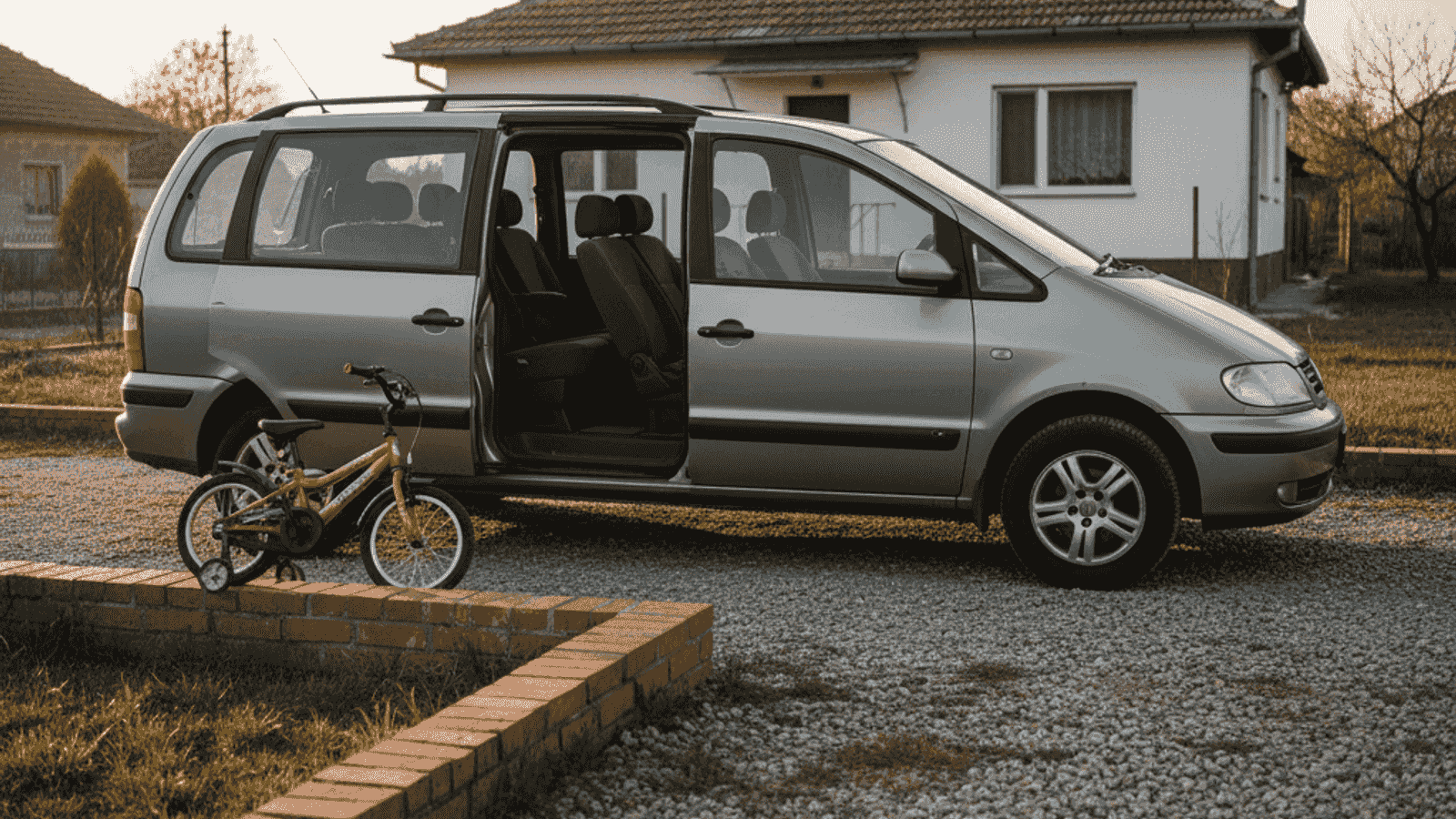
When there are three or more children at home, the mid-segment used car suddenly feels too tight. A five-seater is no solution for a summer holiday, a visit to relatives in the village, or the morning school run across three different schools. A used 7-seater in BiH in 2026 still stands as the cheapest way to solve that family arithmetic. But not every 7-seater and not every engine.
This analysis was prepared by the Auto Gas Gaga workshop from Banja Luka, based on a cross-section of hundreds of current listings on olx.ba and many years of experience with pre-purchase inspections of MPVs in our region.
| Model | Year | Typical km | Best engine | What to watch |
|---|---|---|---|---|
| VW Sharan / SEAT Alhambra (2010+) | 2010-2018 | 180-280k | 2.0 TDI CFFB / CFGB | DSG DQ200, dual-mass flywheel, electronics |
| VW Touran 1T (facelift) | 2007-2015 | 200-300k | 1.9 TDI BLS, 2.0 TDI CBA | DPF on short trips, clutch after 200,000 km |
| Ford Galaxy Mk3 | 2010-2015 | 180-260k | 2.0 TDCi 140 hp | Powershift on cars with a tow bar, pedal bearings |
| Opel Zafira B 1.9 CDTI | 2005-2014 | 200-300k | 1.9 CDTI 150 hp | Water pump, lambda sensor, starter, DPF |
| Renault Grand Scenic III | 2009-2016 | 170-260k | 1.5 dCi 110 hp | Electronics, brake vacuum pump, AC |
| Citroën Grand C4 Picasso | 2014-2018 | 150-230k | 1.6 BlueHDi with manual gearbox | EAT6 / ETG6 automatic, thermostat, turbo |
Table of Contents
- Why a 7-Seater and Not a Large SUV or Estate
- State of the 7-Seater Market in BiH 2026
- VW Sharan and SEAT Alhambra: Technical Twins, Two Prices
- VW Touran: Compact 7-Seater for City and Motorway
- Ford Galaxy Mk3: The Forgotten Choice With Belgian Production
- Opel Zafira B and C: From Cheap Entry Ticket to a Trap
- Renault Grand Scenic: Practical, but Full of Electronics
- Citroën Grand C4 Picasso: Design vs Service Reality
- Engines to Seek and to Avoid in a 7-Seater
- DSG, Manual or Classic Automatic in an MPV
- Typical Maintenance Budget for a 7-Seater in BiH
- What to Check Specifically on a 7-Seater Inspection
- Frequently Asked Questions
- Related Articles
Why a 7-Seater and Not a Large SUV or Estate
A large SUV with a third row sounds tempting, but it has expensive small print. The third row in most SUVs is sized for children up to around ten years old and short rides, because the boot behind that row shrinks to the level of a shoe and half a bag. A classic family MPV has a flat floor, serious roof height and a boot behind the third row that fits at least school backpacks and grocery bags.
An estate solves the boot, but it doesn't solve three Maxi-Cosi seats in the second row, nor a fifth and sixth passenger. Parents who have moved from an Octavia Combi or Passat Variant to a Sharan or Galaxy describe the same feeling: for the first time no one is sitting on the spare wheel, and the sliding doors open in a tight parking spot without hitting the car next to you. A used 7-seater often has better equipment than a sedan of the same year: dual-zone climate control, parking sensors, sliding doors.
State of the 7-Seater Market in BiH 2026
A search for "7 sjedišta" in the passenger car category on olx.ba in May 2026 returns a cross-section of hundreds of active listings, with the Touran as the absolute volume champion (snapshot dated 24/05/2026). In BiH, the cars that are best serviced are the ones with the most listings, because parts and know-how follow supply.
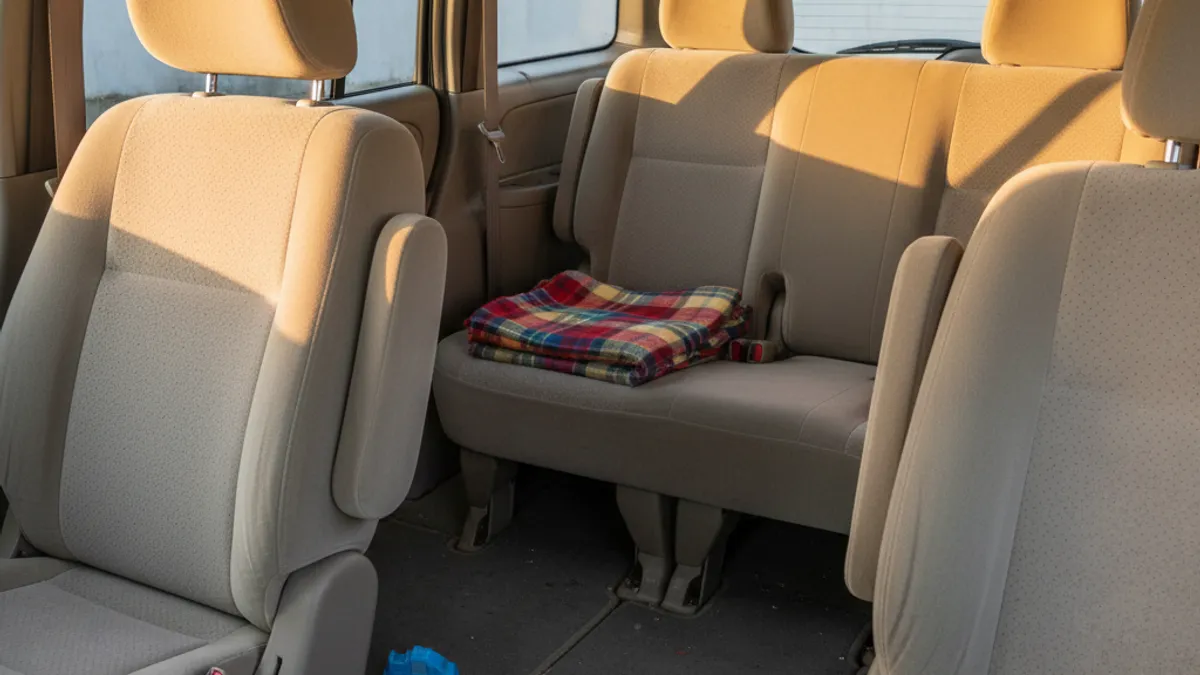
The VAG group (VW, SEAT, Škoda, Audi) dominates here with the Touran, Sharan and Alhambra. The Ford Galaxy and S-Max are rarer but stable, almost always units imported from Germany and Belgium. The Opel Zafira covers the cheaper entry segment. The Renault Grand Scenic and Citroën Grand C4 Picasso are the French camp, which has both fans and opponents.
An experienced seller can hide a lot. A mileage rolled back by tens of thousands of kilometres, a total loss after a crash repainted and sold as a "German import", welds hidden under paint, even theft with an altered VIN. Some of that you catch on a pre-purchase inspection, but the actual history of the car is easiest to check via carVertical. Using the VIN, it pulls the documented car history from international registers: actual odometer readings by date, recorded accidents, the number of previous owners and theft or total-loss indicators. We consider it mandatory before buying a used family car, because MPVs have often passed through five or more owners before they arrive in BiH. When paying for the report, you can use the code GAGA and get a 20% discount.
VW Sharan and SEAT Alhambra: Technical Twins, Two Prices
The second-generation Sharan (from 2010) and the SEAT Alhambra are built in the same factory in Palmela (Portugal) on the same platform, with the same engines and gearboxes. The difference is in the badge and in the price; the Alhambra usually sits slightly below the Sharan for the same year and engine.
What's good:
- The 2.0 TDI with engine codes CFFB (140 hp) and CFGB (170 hp) is a proven combination with documented service history.
- Sliding doors on both sides, a third row that disappears into the floor (Easy Fold), space between the second and third row that actually accommodates an adult's legs.
- A stable body, anti-corrosion protection better than the first generation.
What to watch:
- The DSG DQ200 (seven-speed dry) with a tow bar or a frequently fully loaded car wears out the mechatronics before its time. Check the gearbox oil service history; the workshop-recommended interval is 60,000 to 80,000 km, shorter in the city. A Sharan with a DSG and not a single oil change beyond 150,000 km is one to walk away from.
- The dual-mass flywheel (DMF) is a wear item; characteristic symptoms are juddering when pulling away from a standstill and a metallic rattle when switching the engine off. More in our guide to the dual-mass flywheel on a used diesel.
- Electronics (windows, sliding doors with electric mechanism, infotainment) tend to fail one at a time. The electronic lock on a sliding door can cost more than a decent mechanical body repair.
- Oil consumption above half a litre per 1,000 km on a high-mileage 2.0 TDI is a signal for a more detailed inspection of the piston rings.
If you're choosing between a Sharan and an Alhambra and aren't chasing the star on the bonnet, the Alhambra is the more level-headed buy.
VW Sharan or Touran: Which to Take for a Five-Member Family
The Sharan is larger, taller, has sliding doors, and the third row takes an adult on a longer trip. The Touran is about thirty centimetres shorter, lighter and uses less fuel. The practical line: two children and an occasional fifth passenger means a Touran. Three children, three baby seats or regular summer holidays with a full crew mean a Sharan.
VW Touran: Compact 7-Seater for City and Motorway
The first-generation Touran (1T, 2003-2015) is the most popular 7-seater in BiH for reasons that don't change: Golf dimensions, Golf engine and gearbox, Golf parts. Almost every mechanic in BiH knows this car by heart.
What's good:
- The 1.9 TDI BLS (105 hp) is legendary as a diesel for high mileage; with proper maintenance it passes 350,000 km without major interventions.
- The 2.0 TDI CBA (140 hp) is a compromise between power and consumption, good for motorway journeys but it demands a DPF in better condition.
- Service parts are cheap and everywhere; mechanic knowledge is widespread.
What to watch:
- Typical faults past 200,000 km are clutch replacement, DPF filter problems on cars that mostly drive in the city, and injector problems. More detail in our fault catalogue for the Touran 1T 1.9 TDI.
- Second-row seats have many mechanical parts (rails, fold locks) that crack over time. Check every seat physically, that it slides and locks.
- A Touran with a tow bar wears the clutch and dual-mass flywheel accelerated.
The Touran is the best choice for a family where the 7-seater isn't an everyday need. For a seventh child and 200 km a day, you're already moving to a Sharan or Galaxy.
Ford Galaxy Mk3: The Forgotten Choice With Belgian Production
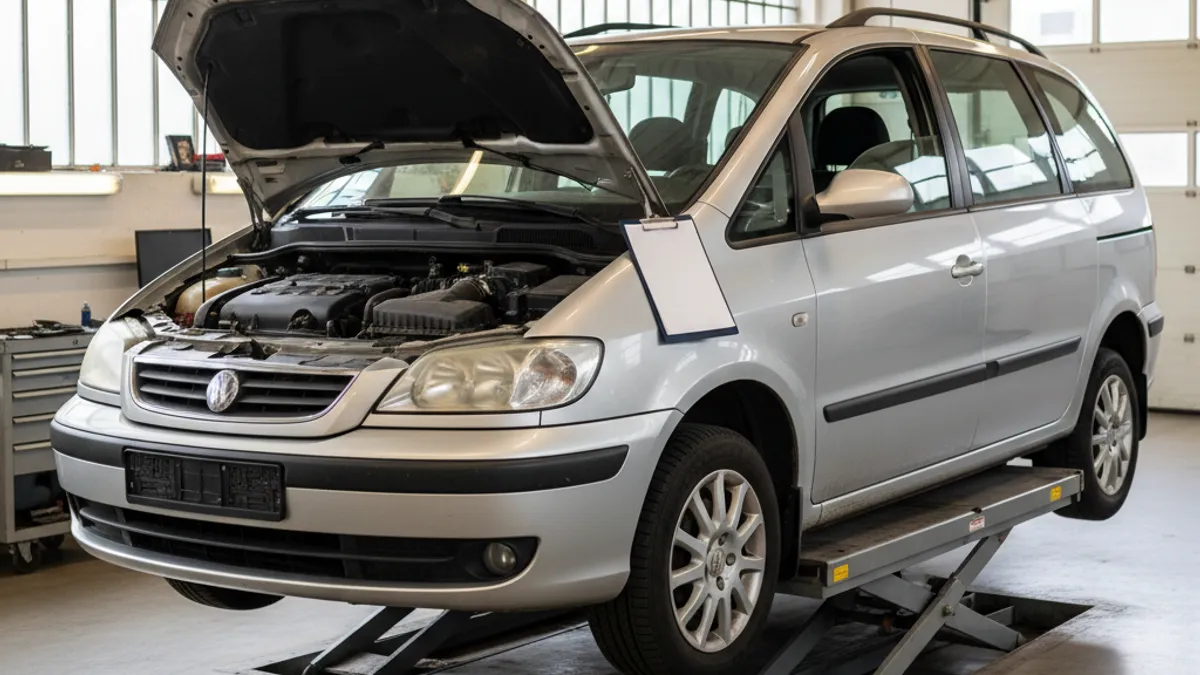
The third-generation Galaxy (2010-2015), together with the S-Max, was built in Genk, Belgium, on the Mondeo Mk4 platform. That's the reason the Mk3 is significantly more reliable than the older Mk1/Mk2 generations.
What's good:
- The 2.0 TDCi diesel in 118, 140 or 163 hp variants covers all realistic family scenarios; the most popular is the 140 hp version.
- The Galaxy has the largest boot behind the third row in the whole segment (around 350 litres).
- The driving characteristics of the Mondeo; if you've driven a Mondeo Mk4, you'll sit in a Galaxy without an adjustment period.
- The body's corrosion protection from Belgian production is visibly above the level of VAG models of the same year.
What to watch:
- The Powershift (Ford-PSA six-speed automatic with dual clutch) is problematic if the car has been on a tow bar or had an aggressive driving style. The principle is similar to DSG, but the build, software and oil differ from manufacturer to manufacturer. Look for a Galaxy with documented clutch and mechatronics service history, or go for a manual gearbox.
- Front pedal bearings typically last around 120,000 km and rattle on bad roads; parts are available.
- The Galaxy is a heavy car, with larger tyres (215/55 R17 or 235/45 R18), brakes that need more frequent replacement than a family sedan.
The Galaxy is for a family that often takes longer trips and chooses a car by comfort. The lack of supply in BiH means you'll more often source a part from import.
Opel Zafira B and C: From Cheap Entry Ticket to a Trap
The Zafira B (2005-2014) is the cheapest entry into the 7-seater segment in BiH. A young family looking at a Zafira B with a 1.9 CDTI and mileage around 250 thousand is looking for an entry with minimal budget sacrifice. That's where excellent examples split from bad ones.
What's good:
- The 1.9 CDTI 150 hp (Fiat's Multijet, Z19DTH) is one of the best diesels in the segment and can pass 300,000 to 400,000 km with regular maintenance.
- The Flex7 seating system; the second and third rows fold into the floor without removing the seats.
- The service network for GM/Opel parts in BiH is developed; parts aren't expensive.
What to watch:
- Typical faults are numerous: a water pump that can damage the timing belt, intake manifold failures, DPF problems and expensive xenon headlight repairs. The starter motor typically fails at 80,000 to 120,000 km, the lambda sensor at 60,000 to 80,000 km. A complete review of typical faults is on our page about Opel Zafira B 1.9 CDTI faults.
- The petrol version of the Zafira B (1.6 and 1.8) isn't competitive on consumption, and the direct-injection petrols in the Zafira C brought new problems (carbon deposits on the valves).
- The British recall from 2015 covered more than 220,000 vehicles due to fire risk in the passenger compartment heater. For BiH examples imported from the UK, ask about the service history of this intervention.
The Zafira is a realistic entry ticket to the segment, but only with a pre-purchase inspection. Without one, it's a car that can hand you bills in the level of the purchase price in the first two years of ownership.
Renault Grand Scenic: Practical, but Full of Electronics
The third-generation Grand Scenic (2009-2016) is a technically good package: the 1.5 dCi is one of the most frugal diesels in the segment, the third row reasonable for children. The problem is the electronic architecture typical of Renault from that period, with many small modules that fail one by one over the years.
What's good:
- The 1.5 dCi 110 hp consumes between 5.5 and 6.5 litres per 100 km in real family driving, the least in the segment.
- A sliding design with a removable second row is practical for a family that combines 5 and 7 passengers.
- Prices are below the Sharan and Galaxy for the same year.
What to watch:
- Electronic architecture. Weak central locking, the display switches off, the climatronic forgets temperatures; these are all recurring items in UK reliability surveys and in our workshops. Renault came 20th for reliability in one What Car? survey.
- The brake vacuum pump on the 1.6 dCi variant was the subject of an official recall in August 2016 due to the risk of a hard brake pedal. Check the VIN to see whether the car has had that intervention.
- The AC can fail (compressor plus expansion valve). On inspection, test cooling on the maximum setting for a longer period.
- Typical faults on the second-generation Scenic are documented in detail in our catalogue for the Scenic 2 1.9 dCi; many of those patterns carry over to the third generation as well.
The Grand Scenic is a car for a family that likes the French style and has patience with servicing. For a family that wants the fewest worries, this isn't a first choice.
Citroën Grand C4 Picasso: Design vs Service Reality
The second-generation Grand C4 Picasso (2013-2018) is aesthetically the most convincing 7-seater on the market: a panoramic windscreen, a floating instrument panel, cabin materials above the competition. What Car? gives it a reliability rating of 95.2 percent. And that's all the good side.
What's good:
- The 1.6 BlueHDi diesel with a manual 6-speed gearbox is a realistic long-term package. Consumption around 5 litres per 100 km on the motorway.
- The third row is small but accessible; the second row can be slid forward as needed.
- Body and interior trim parts are available through the PSA/Stellantis network, which isn't large in BiH but exists.
What to watch:
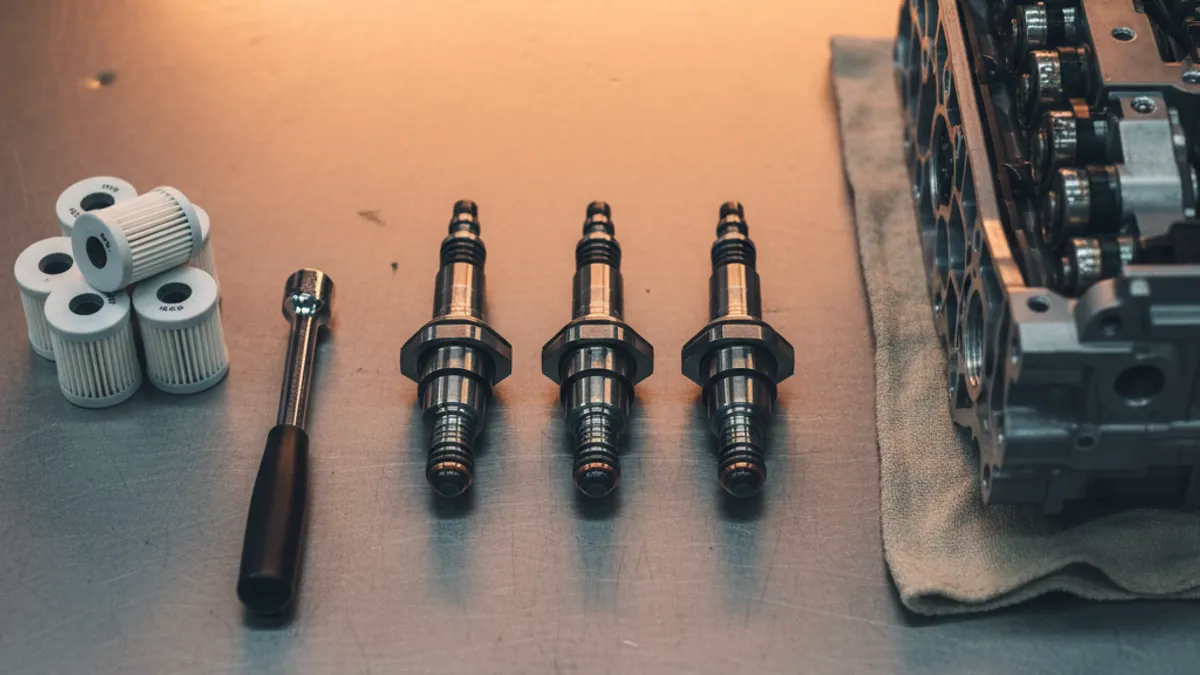
- The ETG6 robotised gearbox and the EAT6 classic 6-speed automatic on the 1.6 HDi engine are flagged across Europe as unreliable. The ETG6 judders when pulling away from a standstill, the EAT6 has solenoid problems and goes into limp mode. If you take a Picasso, look for a manual gearbox.
- The turbo on the 1.6 diesel (DV6) is prone to failure on cars driven a lot in the city and on short trips.
- Coolant leakage from the thermostat housing is a documented recurring fault. A typical fault on the 1.6 HDi is also covered in our catalogue for the C4 Picasso 1.6 HDi.
- Electronic faults (engine management, ABS sensors, ESP module) appear as the car ages.
The Picasso is for a family that wants a car different from five identical Tourans in the neighbourhood, but only with the 1.6 HDi and a manual gearbox.
Engines to Seek and to Avoid in a 7-Seater
A family MPV has two characteristics the engine must endure: a regularly full car (five to seven passengers plus luggage) and lots of short trips (nursery, school, shop). This eliminates several engines that are excellent in smaller cars but quickly flag under MPV load.
Engines that are worth it in a 7-seater:
- VW 1.9 TDI BLS / BXE (105 hp): simple, lasts over 350,000 km with regular servicing.
- VW 2.0 TDI CFFB / CFGB (140 to 170 hp): enough power for a full Sharan, but needs DSG oil changed on time.
- Ford 2.0 TDCi (140 hp): the Belgian engine in the Galaxy Mk3 and S-Max, tough and well serviced.
- Opel/Fiat 1.9 CDTI Multijet (150 hp): the safest choice in the Zafira B; avoid the weaker 120 hp variant.
- Renault/Nissan 1.5 dCi (110 hp): the lowest fuel costs, but it needs an injector service history.
Engines to avoid:
- VW 1.4 TSI with the chain-driven timing (CAVD, CAVE, BMY) in the Touran. The chain breaks, the engine is written off.
- Small 1.4 and 1.6 petrols in the Zafira, Scenic and C4 Picasso. Out of breath with a full car, use more than a diesel for the same work.
- Citroën/Peugeot 1.6 HDi (DV6) in combination with the older ETG6 or EAT6 automatic.
- The old Ford 1.8 TDCi in the Galaxy Mk2; but we recommend avoiding the Mk2 Galaxy anyway in favour of the Mk3.
The principle with a 7-seater is similar to an estate: look for an engine with at least 110 hp diesel and 140 hp petrol so the car isn't constantly working under full load.
DSG, Manual or Classic Automatic in an MPV
An automatic gearbox in a 7-seater has practical sense, but the choice in this segment isn't free.
The manual gearbox in a 7-seater is always technically the safest choice. Fewer things to break, cheaper clutch replacement when the time comes (around 200,000 km with a careful owner), no mechatronics.
The DSG DQ200 (dry 7-speed) in the Sharan, Alhambra and Touran is the best-selling option but demands caution. Look for an oil change service history (interval 60,000 to 80,000 km, shorter in the city). A car with a tow bar plus a DSG DQ200 isn't a happy marriage; trailers push the gearbox into constant half-released clutch states and accelerate mechatronics faults.
The Powershift (Ford) in the Galaxy Mk3 and S-Max works on a similar principle to DSG, but with its own software and its own wear items. The same approach as with DSG: service history or don't.
The EAT6 (Aisin) classic 6-speed automatic in the Grand C4 Picasso and Grand Scenic with the 1.6 HDi is more reliable than the ETG6 robotised unit from the same family, but at high mileage and with a lack of oil changes it becomes more prone to going into limp mode.
Workshop recommendation: for a 7-seater with a tow bar, trailer or annual mileage over 30,000 km, go for a manual gearbox. For a 7-seater that drives in the city without a tow bar, an automatic with a documented oil history is a realistic choice. More context in the guide to the most reliable automatic gearbox.
Typical Maintenance Budget for a 7-Seater in BiH
A 7-seater isn't more expensive to maintain than a comparable sedan, except that it's almost always a diesel with higher mileage, so things you wouldn't change on a five-year-old car you buy as already-worn items.
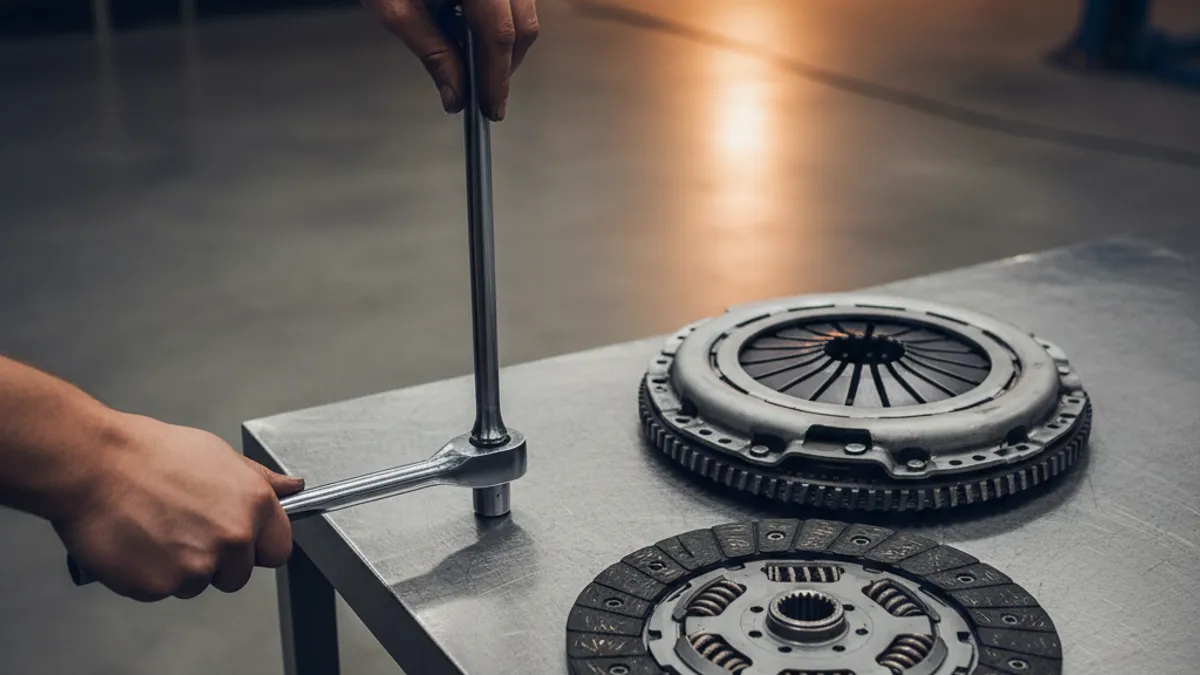
What to expect in the first 12 months of ownership of a used 7-seater over 200,000 km:
- A minor service with an oil change, oil filter, air filter and fuel filter (on diesel). Mandatory immediately on purchase.
- Cabin pollen filter, a cheap item most sellers don't do before sale.
- Brake check. Front discs and pads wear faster on an MPV than on a sedan due to the greater weight.
- Shock absorber check; a 7-seater with a full car wears them faster.
- DSG check if the car has that gearbox.
The price of these items depends on the specific model and condition. Get in touch for an estimate with the VIN and year and we'll quote a realistic budget for your example.
Long-term (24 to 48 months), typical things that appear on 7-seaters over 200,000 km are: the dual-mass flywheel and clutch (a classic wear set; details in the DMF guide), DPF (regeneration or, in case of clogging, replacement or cleaning), injectors (refurbishment or replacement of individual units), EGR valve and intake manifold with carbon deposits, and the timing (belt) or chain drive.
What to Check Specifically on a 7-Seater Inspection
In addition to the general items (paint, welds, paint thickness, OBD diagnostics), a 7-seater requires an additional checklist because of the body and seats.
Sliding doors (Sharan, Alhambra) open and close several times on each side, manually and electrically. The mechanism of sliding doors with electric assist is one of the most expensive cabin repairs in this segment.
Fold the third row up and down several times. The fold locks crack, and on a car where the third row has been held up the whole time, the mechanism can be jammed.
The second row, rails, locks and backrest. Especially on the Touran and Sharan, check that every seat slides and locks.
The roof, on cars with factory roof rails or a roof rack, check the rail mounting points for corrosion. MPVs that have carried a roof box or bicycles often show the start of corrosion under the rail trim.
The suspension, with five to seven passengers and luggage, takes more than in a sedan. Listen for rattles on bad roads and oil leaks from the shock absorbers.
The sunroof or panoramic roof (Grand C4 Picasso mandatory, Sharan as an option) check drainage and opening. An expensive repair.
Have you found a 7-seater that looks promising? Book a pre-purchase inspection or write to us on WhatsApp with the listing link before you put down a deposit. Half an hour of inspection saves you months of unforeseen costs.
Frequently Asked Questions
Is a used 7-seater safer than a small SUV with a third row?
In most Euro NCAP tests, five-star MPVs (Sharan, Galaxy Mk3, Grand C4 Picasso) have equal or better results than SUVs of the same class. The real advantage of an SUV is driving in mud and deep snow; crash safety in modern MPVs is on par with or above SUVs.
Which is better for a family with three children, Sharan or Galaxy?
The Galaxy Mk3 has a slightly larger boot behind the third row and a smoother ride on the motorway. The Sharan has sliding doors that practically solve parking with small children. In the BiH market, the Sharan has 3 to 4 times more listings, so easier to buy and easier to sell later. Technically they're on a par.
Does a 7-seater with LPG make sense for a family in BiH?
The Sharan, Touran and Galaxy are often found with LPG already fitted. LPG is a realistic way to bring the annual fuel cost down to the level of a smaller diesel. It's important that the installation was done on the original petrol variant of the engine (not diesel), that the certification is current and that the re-inspection has been passed. Our workshop performs all kinds of LPG servicing, installation and re-inspection; more on choosing a system in the LPG guide.
What is realistic annual mileage for a used 7-seater?
A family car in BiH typically covers 15,000 to 25,000 km a year. When buying, we divide the stated mileage by the year and compare with this reference. A Sharan with 60,000 km on a fifteen-year-old car is either tampered with or has been sitting in a garage.
Diesel or petrol in a 7-seater?
For annual mileage over 15,000 km, diesel still pays off despite the shrinking fuel price gap. Smaller diesel engines in an MPV (1.5 dCi, 1.6 BlueHDi, 1.9 CDTI, 2.0 TDI) have a real consumption of 5.5 to 7 litres per 100 km under load. Petrols in the same class need 9 to 12 litres per 100 km. More in the petrol or diesel choice guide.
Buy in BiH or import from the EU?
Importing pays off for more expensive units where the price difference covers customs, VAT and transport costs. For cheaper units, a domestic purchase is more realistic because you avoid the additional risk of buying based on photographs. Details in our guide to importing a used car from the EU.