The most reliable automatic gearbox for a used car in BiH in 2026 is not chosen by the make of the car, but by the type of gearbox. ZF 8HP, Aisin EAT, Mercedes 9G, DSG DQ200, Ford PowerShift and Jatco CVT are six different schools of reliability, and the difference in maintenance costs between the best and the worst ranges from 1,500 to over 5,000 KM per repair. This guide cuts through the entire range by gearbox manufacturer, tells you what to look for on a test drive and what to walk away from without a second thought.
This guide was put together by the Auto Gas Gaga workshop in Banja Luka, based on years of experience servicing automatic gearboxes on European vehicles and performing pre-purchase inspections of used cars.
Table of Contents
- Why a Used Automatic Requires a Different Approach
- Three Big Families of Automatics
- ZF 8HP the Reliability Benchmark in Premium Used Cars
- Aisin EAT the Quiet Champion of the Middle Class
- Mercedes 7G-Tronic and 9G-Tronic Strong but Demand Care
- DSG DQ200 vs DQ250 When It Makes Sense and When It Does Not
- Ford PowerShift Why the Risk Is Bigger Than It Looks
- CVT in a Used Car Who Should Buy One and Who Should Not
- What to Check on a Test Drive Without OBD
- Oil Interval the One Thing That Extends Service Life
- Approximate Repair Prices in BiH
- Frequently Asked Questions
- Related Articles
Why a Used Automatic Requires a Different Approach
On a used car with a manual gearbox you check the clutch, synchros and a bearing. With an automatic the story is different, because behind the P-R-N-D selector hide at least six different designs, each with its own wear parts and typical failures. ZF 8HP and Aisin EAT are one world. DSG DQ200 and Ford PowerShift are another entirely. The Mercedes 722.9 has its own story, and the Jatco CVT yet another.
A buyer who clicks the "automatic" filter on olx usually cannot tell a torque converter from a dual-clutch, does not know that DQ200 and DQ250 look identical in an ad but behave like two different cars. The price of a used car with a "bad" automatic is often lower than an equivalent manual, which looks like an opportunity but in reality means the future repair already lies somewhere between 1,500 KM (oil service with mechatronic filter) and 5,000 KM (overhaul or replacement of the whole unit).
Faults on automatics develop gradually, over months, and do not trigger the check engine light until the problem becomes expensive. A jolt when shifting from N to D, a second of delay when pulling away, a slight rise in revs before the shift, all of these are signs that get ignored as long as the car still drives. The ATF fluid in an automatic is at once a hydraulic fluid, a coolant and a lubricant, and when it wears out, the mechatronic unit loses pressure, plates slip, and an expensive overhaul is on its way.
Three Big Families of Automatics
All automatics on the BiH used market can be sorted into three families. The operating principle differs, and in each family it is a different wear part that is most likely to ruin your day first.
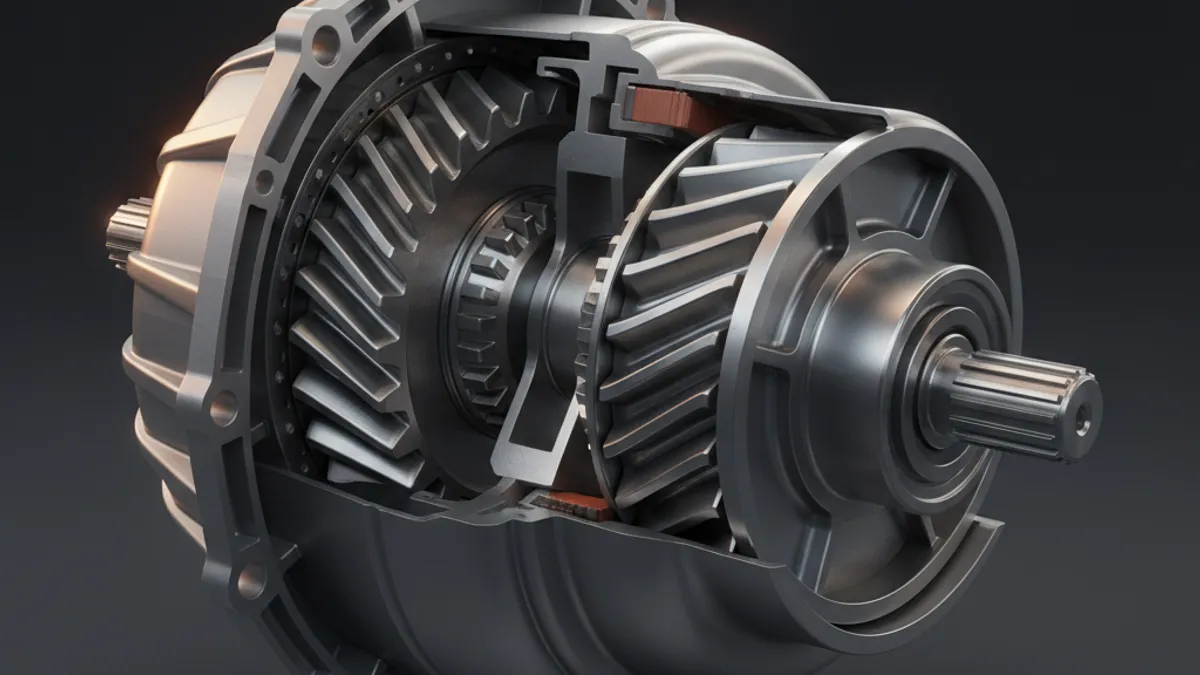
Torque-converter automatics are the classics: ZF 8HP, Aisin EAT, Mercedes 722.9 and 9G-Tronic, GM 6L80, Jatco RE5R05A. A hydraulic torque converter instead of a clutch, planetary gear sets and plates activated by oil pressure. The family is the most reliable in practice because the torque converter handles bad drivers, city traffic and high temperatures considerably better than a dual-clutch. The weak spot is the oil cooler and the mechatronic seals.
Dual-clutch gearboxes are VW's DSG (DQ200, DQ250, DQ381, DQ500), Porsche PDK, Audi S-tronic, Ford PowerShift (6DCT250), Volvo PowerShift, BMW DCT in M-series, and the Mercedes 7G-DCT in some A and B class cars. Instead of a hydraulic converter there are two physical clutches that switch between odd and even gears. The advantage is shift speed and fuel economy. The downside is that the clutches and mechatronics operate at the limit of endurance, especially the dry type (DQ200, PowerShift 6DCT250), which wears the clutch plates much faster in city driving than the wet type (DQ250, DQ381).
CVT gearboxes are Jatco (Nissan, Renault), Aisin (some Toyota, Subaru) and Multitronic (Audi). Instead of fixed gears they use two conical pulleys and a steel chain. The advantage is smoothness, the downside is that the chain and cones operate under high oil pressure, and when the oil ages or the cones wear, the gearbox starts to slip. A CVT made before 2018, especially a Jatco, should only be bought with proof of regular oil services.
A more detailed guide on CVT technology and who specifically should consider one is in our article CVT gearbox in a used car, who should buy one and who should not.
ZF 8HP the Reliability Benchmark in Premium Used Cars
If there is one automatic gearbox that holds the status of "buy without thinking", it is the ZF 8HP. It debuted in 2008 and has a 17-year history. It is used on the BMW 1, 3, 5, 6, 7 series, X3, X4, X5, X6 and Z4, on the Audi A4 through A8, Range Rover Sport, Jaguar XE and F-Type, Rolls-Royce, and even on Dodge models. It is the de facto standard for premium used cars in BiH. When you see an ad for a BMW 530d F10 or an Audi A6 3.0 TDI from the 2012-2018 period, it is almost certain the car has an 8HP variant.
The planetary gear sets and clutch packs are dimensioned for torque up to around one thousand newton metres, which means that on an ordinary 2.0 diesel of 190 hp they run at a fraction of capacity. The mechatronic unit is a modular part that can be replaced without opening the housing. ZF recommends an oil change every 80,000-120,000 km or every eight years, with original LifeGuard 8 oil or an equivalent (LIQUI MOLY) and mandatory replacement of the filter. This is not "lifetime" oil despite what the owner's manual says.
ZF 8HP Oil Change Interval and Price
The interval of 80,000-120,000 km is the manufacturer's recommendation, but in BiH practice (city driving, hot summers) independent workshops recommend 60,000-90,000 km as a realistic cycle. The price of the change depends on the condition and the type of oil, get in touch for an estimate with the exact model and year of the car.
What typically fails: leaking oil cooler (the O-rings lose elasticity due to thermal cycles) and the so-called mechatronic "sleeve", where oil leaks through the seals to the electrical connectors and triggers control faults. Both problems can be solved without replacing the entire gearbox, if caught in time.
An experienced seller can hide a lot: wound-back odometer, write-off respray sold as "imported from Germany", welds hidden under paint, theft with an altered chassis number. Some of this you will catch on a pre-purchase inspection, but the actual history of the car is most easily checked through carVertical. Using the chassis number, it pulls a documented vehicle history from international registers: actual odometer readings by date, recorded accidents, the number of previous owners, and theft or write-off indicators. We consider it mandatory before buying absolutely any used car. When paying for the report you can use the code GAGA for a 20% discount.
Aisin EAT the Quiet Champion of the Middle Class
If ZF 8HP holds the crown in the premium class, Aisin EAT6 and EAT8 hold it in the middle class. Aisin is a Japanese manufacturer that supplies gearboxes to almost all the big groups: Toyota, Lexus, Mazda, Ford (except PowerShift), Peugeot, Citroen, DS, Opel from the PSA era, Volvo. EAT6 sits in the Peugeot 308, Citroen C4, Opel Astra K and Insignia B, Ford Focus and Mondeo, and in Mazdas. EAT8 went into the new-generation Peugeot 3008, 5008 and 508.
What makes it the quiet champion: the simple torque-converter principle, a solid and compact package, a focus on reliability. Owners of the Peugeot 308 with EAT6 routinely cross 250,000 km without serious intervention, provided the oil is changed every 60-80 thousand km instead of trusting the "lifetime" story.
Aisin EAT6 vs Aisin EAT8 Difference
EAT6 has six gears, a lower mass and a simpler mechatronic assembly. EAT8 has eight gears, slightly better fuel economy and different software, but also a somewhat more complex seal assembly. EAT6 has more years of evidence on the BiH market and the status of "boringly reliable". The principle is similar: it is a classic torque-converter automatic. Even so, the design, software, oil, filter and typical faults differ between series. The typical problem is not the gearbox itself, but the accompanying oil cooler and, on examples that have run without servicing, the torque-converter plates. Aisin is the most reliable compared with DSG and PowerShift gearboxes in the same mileage bracket.
Who Aisin is ideal for: the family driver doing 20-40 thousand km a year, mixed city and open-road driving, not after sporty shifting but wanting 250-300 thousand km without major surprises.
Mercedes 7G-Tronic and 9G-Tronic Strong but Demand Care
The Mercedes automatic is a school of its own. The classic 722.9 (7G-Tronic) appeared in 2003, while the 9G-Tronic (722.9X) replaced it around 2014. Both are technically sophisticated, with a large number of gears, fast shifting and a high torque limit, which makes them suitable for everything from the C-class to the GLE, S-class and AMG versions.
The construction is solid, but the mechatronic unit and valve body assembly were not designed to be neglected. Mercedes officially claims the oil is "lifetime", which in practice means "as long as the gearbox lasts". Independent workshops and Mercedes specialists themselves have long recommended an oil change at 60-80 thousand km, at the latest at 100,000 km.
Mercedes 722.9 Conductor Plate Symptoms
The most well-known failure on the 722.9 gearbox is the so-called conductor plate, located inside the valve body assembly. It is an electronic board with solenoids and connectors that controls the hydraulics of the shifting. Typical symptoms: jolts during shifting, holding a gear too long (the car refuses to shift up), a hard shift from N to D or from D to R, and an occasional "Limp Home" fault that locks the gearbox in a single gear. The good news is that in most cases it is enough to replace the conductor plate and renew the seals, not the entire gearbox.
Another typical failure is an oil leak at the so-called "13-pin" connector, the pass-through from the valve body to the outside. Oil leaks through the seal, enters the electrical side of the TCM module and creates unexplained faults that can only be solved by replacing the connector and cleaning.
The 9G-Tronic is somewhat more advanced, conductor plate problems are rarer, but the question stays the same: if the owner ignores the oil, the gearbox starts giving trouble earlier. A well-maintained 9G-Tronic in an E-class, GLE or S-class will cover over 300 thousand km with two to three oil changes during the life of the car.
DSG DQ200 vs DQ250 When It Makes Sense and When It Does Not
DSG is VW's family of dual-clutch gearboxes with several different designs. The most important distinction: DQ200 (dry) is used on engines up to around 250 newton metres (smaller petrol 1.0-1.4 TSI, smaller 1.6 TDI). DQ250 (wet) is used above 250 Nm (2.0 TDI, 2.0 TSI, 1.8 TSI, Quattro/4Motion). DQ200 has dry clutches without an oil bath, DQ250 has wet clutches running in oil, which means much better cooling and a longer life of the clutch plates.
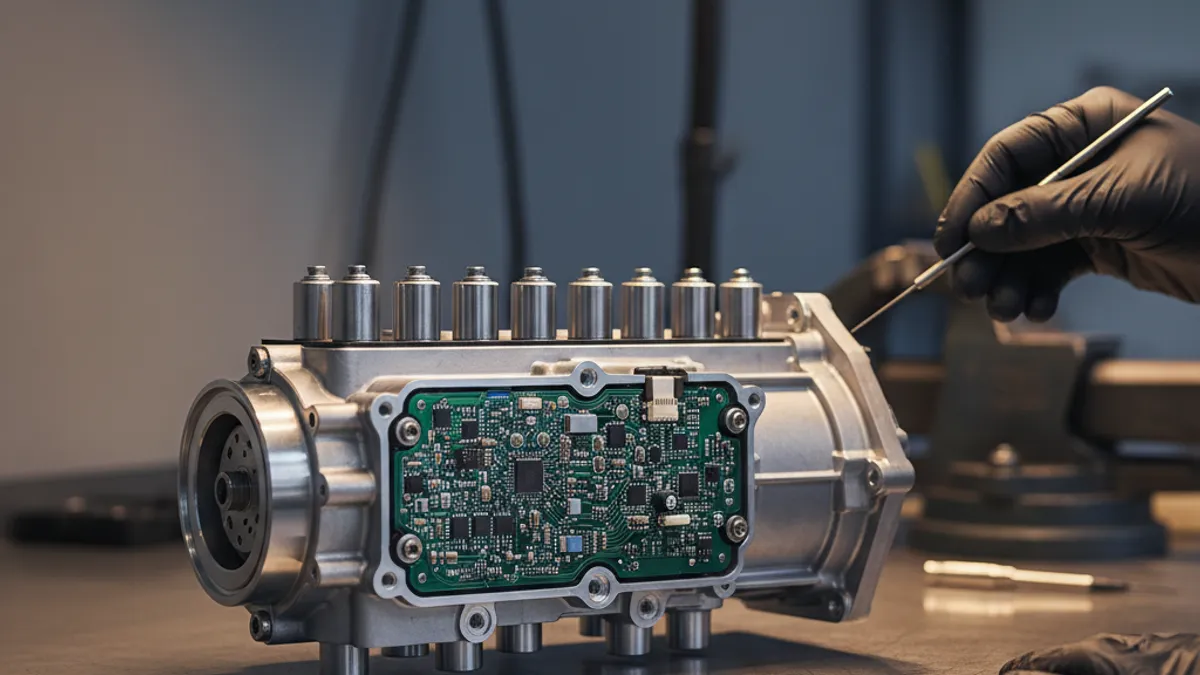
Reliability in our experience and in the findings of independent workshops: DQ200 scores 4 out of 10. The main reason is the mechatronic unit, which in the first generations (2008-2012) had problems with software, seals and the valve assembly. The second reason is the dry clutches, which wear the plates 30-50% faster in city driving than in mixed driving. The third are the jolts when pulling away, which in the later stages indicate worn plates.
DSG DQ200 Mechatronic Unit Price BiH
The repair cost is the painful part. Regional sources (end of 2025) quote a range of 500-900 EUR for a new DQ200 clutch pack, or for the full mechatronic unit, but the realistic price in BiH depends on the specific condition because labour, oil, seals and, in a better workshop, diagnostics and coding must be added. Get in touch for an estimate if your gearbox is showing symptoms.
DQ250 scores significantly better, around 7 to 8 out of 10. The wet design, more substantial plates and better thermal behaviour mean that with regular oil servicing the DQ250 covers over 250 thousand km without serious intervention. The biggest enemy is ignoring the oil: once the oil passes 100 thousand km without a change, metal particles from the plates circulate through the mechatronic unit and damage the electromagnetic valves. The full guide on intervals is in the tip DSG automatic gearbox, oil service, when to change.
Short advice: buy a DQ200 only with a documented service history, and predominantly used on the open road. A DQ250 you can buy with significantly more confidence, but even there an oil change every 50-60 thousand km applies.
Ford PowerShift Why the Risk Is Bigger Than It Looks
Ford PowerShift on the BiH used market most often means one specific variant: the Getrag 6DCT250, fitted in the Ford Fiesta, Focus and B-Max. It is a dry dual-clutch type, a direct competitor to VW's DQ200, and unfortunately the inheritor of the same problems, only more pronounced.
The Fiesta and Focus with PowerShift come at an affordable price, which looks like an opportunity. In reality, failures can start as early as 50 thousand km, and most serious breakdowns appear between 150 and 200 thousand km. The most common wear parts are the dry clutches, the TCM module and the mechatronic unit. Regional sources (end of 2025) quote a range of 550-900 EUR for a dry clutch replacement and 300-800 EUR for the TCM module. The realistic price in BiH depends on the specific condition. Get in touch for an estimate if you are considering buying a Fiesta or Focus with PowerShift.
Ford PowerShift Dry Clutch Replacement
Symptoms of a worn dry clutch: vibrations and jolts when pulling away on the flat (especially in first gear), revs rising slightly before the car actually moves, a smell of overheated clutch after a longer stop in traffic, an occasional "neutral" state when the gearbox does not react to throttle for a few tenths of a second. In the worst case the clutches seize and trigger a fault that locks the gearbox.
In BiH, owners have rarely been aware of the need for specific maintenance, so most examples on offer after 130-150 thousand km already have partly worn clutches. Our recommendation: buy a Fiesta or Focus with PowerShift only with evidence of gearbox work in the last 30 thousand km, or consciously price the future repair cost into the car.
CVT in a Used Car Who Should Buy One and Who Should Not
A CVT gearbox in a used car in 2026 is a tougher decision than it looks from the ad. The Nissan Qashqai and X-Trail, the Renault Megane with CVT, Subaru, some Hondas, are all variants of the CVT principle, but the difference between the Jatco design (Nissan, Renault) and the Aisin or Toyota design is large. The pre-2018 Jatco CVT has a reputation for being unreliable. On the BiH used market we often see it with symptoms of a worn chain or cones already at 120-150 thousand km.
The Toyota eCVT in the Prius, Auris, Yaris and C-HR hybrids is different, it does not have a steel chain but a planetary electromechanical assembly that uses an electric motor as the variable element. Because of that construction the Toyota eCVT outlasts other automatics, with average service lives over 350 thousand km.
Jatco CVT Why to Avoid Before 2018
Jatco CVT gearboxes from before 2018 had a series of problems with oil temperature control, pressing of the steel chain on the cones and software that did not adequately protect the gearbox under extreme loads. A typical symptom of a worn Jatco CVT: under moderate throttle on the open road the revs climb out of proportion to the car's speed (the engine "screams" while the car does not accelerate to match), which is a sign that the chain is slipping on the cones. Once that starts, the repair in 80% of cases is replacement of the whole gearbox, not an overhaul.
Who CVT suits: a city driver doing 8-15 thousand km a year, never towing a trailer, never driving sportily, after smoothness and quiet running. A more detailed guide by model and year is available in our article CVT gearbox in a used car, who should buy one and who should not.
What to Check on a Test Drive Without OBD
Most used-car purchases happen without OBD diagnostics. The test drive is your main tool, and if you know what to look for, the automatic itself tells you more than the ad.
Shifting from P to R and from N to D with the engine running and the car stationary. On a healthy automatic the shift is smooth, with one soft "click" felt through the brake pedal. If the car jerks forward, if a hard thud is felt in the driveline, or if more than a second and a half passes before the engine "engages", the gearbox is probably worn or the oil is dirty.
Pulling away from a stop, gradually. Press the throttle very gently, as in stop-and-go traffic. The car must move off completely smoothly, without jolting, without vibration in the half-shafts, without revs rising before it actually moves. A jolt when pulling away is a typical sign of worn plates on a DSG/PowerShift or a worn torque converter on a classic automatic.
Shifting between second and third on the open road under gentle acceleration. With the car at 50-60 km/h, press the throttle lightly and wait for the gearbox to "grab" the next gear. A healthy automatic shifts smoothly, without a noticeable jump in revs, without delay, without a hard thud. If the gearbox "holds" the gear too long, or if the revs briefly rise before it engages, those are symptoms of a worn valve body or mechatronic unit.
Engine braking. Lift off the throttle at 80 km/h and let the car slow down by itself without manual downshifts. On a healthy automatic the gears step down smoothly, without a thud in the driveline. A hard step-down indicates dry clutches on DSG/PowerShift or worn plates on a classic automatic.
Smell after 20 minutes of driving. Open the bonnet when you park the car after the test drive, put your nose above the gearbox. The characteristic smell of burnt oil, reminiscent of a baked brake, is a sign that the clutches or plates are operating at the limit. An additional signal: if at speeds above 60 km/h you notice slight "slip" (the engine shows more revs than the speed would suggest), the automatic is already running with worn plates. The red flag is the so-called "limp mode", when the gearbox enters protection mode and holds only one gear, at which point the car should not be bought without diagnostics.
Oil Interval the One Thing That Extends Service Life
Independent workshops across the region agree on one thing: the oil change interval of an automatic gearbox is by far the cheapest way to extend its service life, and by far the most neglected.
Manufacturers routinely label the oil as "lifetime", but in practice that means "for life, as long as the gearbox lasts". The realistic interval, recommended by independent workshops for all the major gearbox families (ZF, Aisin, Mercedes, DSG, PowerShift), is in the range of 50,000-90,000 km, depending on driving conditions (shorter in city driving and hot climate, longer in mixed driving).
ATF fluid does four jobs at once: it lubricates the gears and plates, it cools the gearbox, it carries the pressure for shifting, and it carries the microscopic metal particles from worn plates. When the oil wears out, the particles start circulating through the solenoids of the mechatronic unit and become an active cause of failure instead of a passive indicator. The other strong point of a regular change: the mechanic can see the colour and smell of the old oil, dark brown oil or visible particles in the filter are all signs that can be addressed before they turn into an expensive overhaul.
Specific intervals by family (subject to driving conditions):
- ZF 8HP: oil change with filter every 60,000-90,000 km. The manufacturer says up to 120,000 km, but the shorter interval gives a significantly longer service life.
- Aisin EAT6/EAT8: 60,000-80,000 km, oil to Aisin specification (different for 6 and 8 gears).
- Mercedes 722.9 and 9G-Tronic: 60,000-80,000 km, original Shell ATF 134 or equivalent.
- DSG DQ200 (dry): mechatronic oil change every 60,000-90,000 km. More details in the tip on DSG oil service.
- DSG DQ250 (wet): 50,000-60,000 km, with mechatronic filter.
- Ford PowerShift 6DCT250: 40,000-60,000 km, the shortest interval because the assembly is the most sensitive.
- CVT (Jatco, Aisin CVT): 40,000-60,000 km, with the originally specified CVT fluid (not the same as ATF).
Get in touch for an estimate with the exact model and year of the car, and we will give you a specific cost and what needs to be done.
Approximate Repair Prices in BiH
Automatic gearbox repair prices in BiH vary substantially, depending on the workshop, the availability of imported used parts, and on whether the job is an overhaul or a replacement. Regional guides from 2026 quote rough ranges of 1,500-5,000 KM. The cheapest repairs are preventive oil services with a mechatronic filter, the most expensive are full gearbox replacements.
What strongly affects the cost: whether the assembly is closed (DSG, PowerShift, some CVTs) or open with an easily accessible mechatronic unit (ZF 8HP, Aisin, Mercedes 722.9 conductor plate). Open assemblies are significantly cheaper because the mechatronic unit can be replaced without removing the gearbox from the car.
The specific prices depend on the condition of your car. Get in touch for an estimate, or book a pre-purchase inspection before you put a deposit on a used car with one of the riskier gearbox families from this guide.
Frequently Asked Questions
Which is the most reliable automatic gearbox for a used car in BiH 2026?
In the premium class (BMW, Audi A6+, Range Rover, Jaguar), it is the ZF 8HP, with a 17-year history and a rating of 9 out of 10 in regional guides. In the middle class (Peugeot, Citroen, Opel, Mazda, part of Ford), it is the Aisin EAT6 or EAT8, rated 8 out of 10 and the most reliable compared with DSG and PowerShift gearboxes. In a Mercedes, a well-maintained 9G-Tronic is also rated 8 out of 10 and will cover more than 300 thousand km with regular oil servicing.
Which automatic gearboxes is it advisable to avoid on a used car?
The DSG DQ200 (dry) from before 2014 is rated 4 out of 10 because of mechatronic and dry-clutch issues. The Ford PowerShift 6DCT250 in the Fiesta and Focus carries a similar risk, with failures that can start as early as 50 thousand km. The Jatco CVT in Nissan and Renault models from before 2018 is rated 3 out of 10 and in BiH practice often does not even reach 200 thousand km without major intervention. All three can be bought with caution, but only with a documented service history.
Does the automatic gearbox oil really need to be changed if the manufacturer says "lifetime"?
Yes, it does. Independent workshops and specialists for the individual gearbox families agree that the realistic interval is 50,000-90,000 km, depending on the gearbox type and driving conditions. The "lifetime" label in the manual means "for life, as long as the gearbox lasts", which on an unserviced automatic means a significantly shorter life than the car is physically capable of reaching.
How can I recognise a replaced or overhauled automatic in a used car?
Look for service history with specific invoices for gearbox oil servicing and, if there was any intervention, for mechatronic replacement or torque converter overhaul. Without paperwork, on a test drive you can sometimes feel if the gearbox has been opened recently, the shifts are exceptionally smooth, but there is often a mild "bedding-in" feel for the first few thousand km. The safest check is a documented vehicle history plus a pre-purchase inspection at a workshop before you place a deposit.
Which automatic is best for city driving in Banja Luka, Sarajevo or Mostar?
In city driving the biggest load is carried by dry dual-clutches (DQ200, PowerShift), so they should be avoided for a predominantly city driver. The best for the city are classic torque-converter automatics (ZF 8HP, Aisin EAT, Mercedes 9G) because the torque converter handles stop-and-go traffic far better than a physical clutch. The Toyota eCVT on hybrids is also excellent for the city because of a design that uses an electric motor at low speeds.
How much does the price of a used car differ between a good and a risky automatic?
On the BiH market the difference is usually 1,000-3,000 KM in favour of a car with a risky automatic (DSG DQ200, PowerShift, old Jatco CVT) within the same model and year bracket. The market already knows about the risk and prices it in. The problem is that the discounted difference is often lower than the realistic future repair cost, so a used car with a "cheap" risky automatic in reality shifts a future repair bill of 1,500 to 5,000 KM onto the new owner.