
Every summer the same scene plays out on BiH roads: convoys heading for the coast packed with cars carrying roof boxes, many of them improperly loaded or not even fully closed. A roof box increases fuel consumption by between 11% and 19% depending on speed, and that is a surcharge you feel directly in your wallet on the drive from Banja Luka to Neum. This article gives concrete test figures, explains how many kilograms you are allowed to put in the box, and walks through mistakes that can compromise safety.
Tips prepared by the Auto Gas Gaga workshop in Banja Luka, based on experience preparing vehicles for long trips and pre-summer seasonal inspections.
Table of Contents
- How Much Extra Fuel Does a Roof Box Use
- How Many Extra Litres Does a Car With a Roof Box Burn
- Does an Empty Roof Box Still Use Fuel
- How Much Weight Can You Put in a Roof Box
- Driving Speed With a Roof Box
- How to Fit a Roof Rack Properly
- Common Mistakes Drivers Make With Roof Boxes
- Tyre Pressure With a Loaded Roof Box
- When to Remove the Roof Box From Your Car
- Frequently Asked Questions
- Related Articles
How Much Extra Fuel Does a Roof Box Use
The main question every driver considering a roof box asks is how much it will cost them in fuel. The answer depends on the speed you drive, the shape of the box and how full it is.
At 130 km/h, a roof box increases fuel consumption by an average of 18%. In practice that means roughly 2 litres per 100 kilometres more than without the box. At lower speeds the effect is smaller, but far from negligible: at 80 km/h the increase is around 11%.
A test carried out by Consumer Reports on a Nissan Altima produced similar results: the bare rack without a box reduced fuel economy by 11%, and with the box fitted the penalty rose to 19% at 105 km/h. The US Department of Energy estimates an average loss of around 5% with a loaded roof rack without a box, which means the box itself accounts for the bulk of the aerodynamic drag.
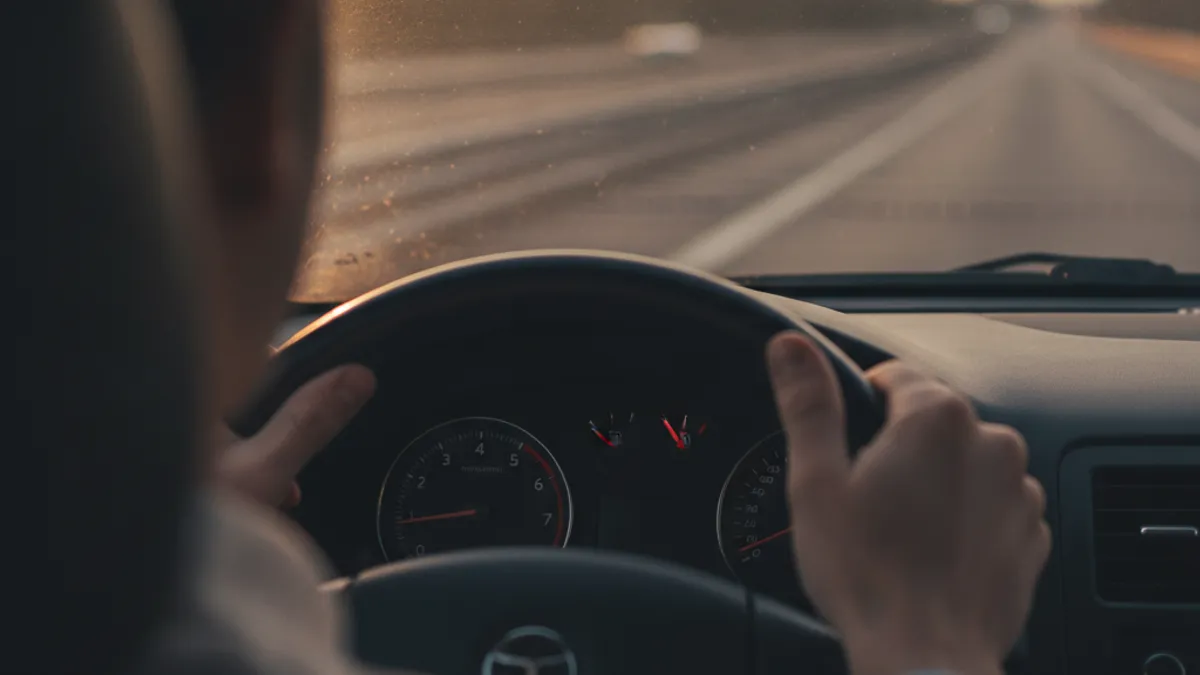
Box shape makes a difference. Aerodynamic teardrop-shaped boxes incur 10-20% less additional fuel use compared with boxy, flat-topped models. If you are buying a box for the first time, invest a little more in an aerodynamic design because the difference in consumption pays for itself after the second trip to the coast.
| Speed | Extra consumption (average) | Extra litres per 100 km |
|---|---|---|
| 80 km/h | ~11% | ~0.8-1.0 L |
| 100 km/h | ~14-16% | ~1.2-1.5 L |
| 130 km/h | ~18-19% | ~1.8-2.2 L |
These figures are for a standard loaded box on a typical family car. On SUVs with an already higher roofline the effect may be slightly smaller, while on lower saloons the aerodynamic drag builds more quickly.
How Many Extra Litres Does a Car With a Roof Box Burn
Let us put this in the context of one specific journey. The drive from Banja Luka to Neum is around 310 kilometres, mostly on a motorway and main road. If you average 110 km/h on the motorway section and 80 km/h on the main road, the roof box costs you roughly an extra 4-5 litres of fuel in one direction.
For the return trip that is 8-10 litres. Multiply by the price of diesel or petrol and you have a concrete figure to factor into your holiday budget. On longer routes, say Banja Luka to Dubrovnik or Split, the extra consumption exceeds 12-15 litres for the round trip.
It is important to understand that consumption rises exponentially with speed, not linearly. At 130 km/h the aerodynamic drag on the box is four times greater than at 65 km/h. Every additional kilometre per hour above 100 km/h costs disproportionately more fuel. That is physics you cannot negotiate with.
Does an Empty Roof Box Still Use Fuel
This is a question many drivers overlook. An empty roof box, with not a single kilogram of contents, still increases fuel consumption by up to 15% at motorway speeds. The reason is pure aerodynamic drag that the box creates simply by existing on the roof of the car.
Air that would otherwise flow smoothly over the roofline now hits the front face of the box, generates turbulence around it and creates a vacuum behind the rear of the box. That vacuum literally pulls the car backwards. The mass of contents inside the box adds some extra consumption through greater overall rolling resistance, but the main culprit is shape, not weight.
That is why the rule is simple: if the box is not needed, take it off. Removing it from modern racks takes ten to fifteen minutes and requires no tools. Over a year, a driver who leaves an empty box on the roof for nine months wastes hundreds of litres of fuel for nothing.
How Much Weight Can You Put in a Roof Box
Every roof box has a load rating that the manufacturer clearly states, usually on a sticker inside the box or in the manual. A typical roof box load capacity ranges from 50 to 75 kilograms. That sounds like a lot, but it fills up fast: two travel bags, winter jackets, beach gear and a couple of boxes already exceed 50 kilograms.
However, the box's load rating is not the only limit. There is also the roof load capacity of your vehicle, which includes the weight of the rack itself, the box and everything inside it. For most passenger cars that roof load capacity is 75-100 kilograms in total. You will find the figure on a sticker on the driver's door jamb or in the owner's manual.
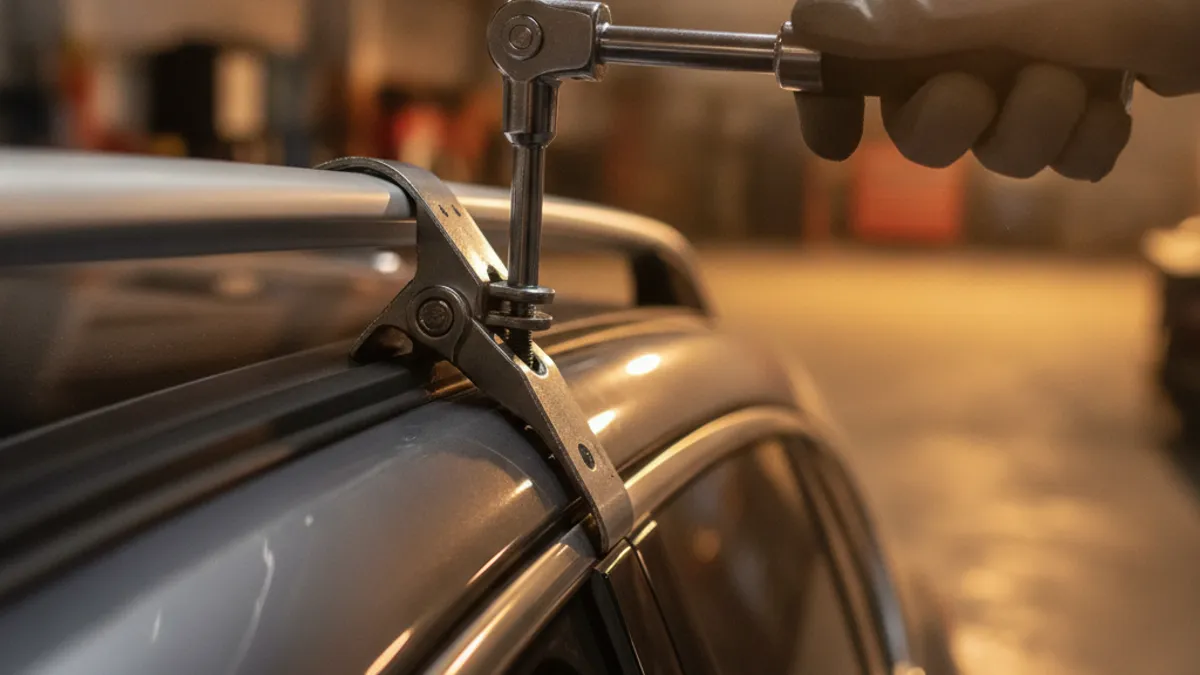
The arithmetic works like this: a rack weighs 3-5 kg (a pair of bars), an empty box weighs 12-18 kg depending on size. If your roof load capacity is 75 kg, you have 52-60 kg left for contents. If the roof load capacity is 100 kg, you have room for 77-85 kg of contents. Never exceed either limit — the box's or the roof's — whichever is lower.
Beyond total mass, it is essential to secure the contents inside the box. Use straps or ratchet ties to fix bags and boxes so they do not shift during braking and cornering. Shifting cargo inside the box alters the vehicle's centre of gravity while in motion and places additional forces on the rack clamps, which can loosen the mounting over time. During hard braking from higher speeds in particular, unsecured cargo weighing 50 kg flies towards the front wall of the box and transfers force directly to the front clamp, which is not designed for impact loads.
Exceeding the load rating does not just mean you might damage the roof or rack. Weight high up on the car drastically raises the centre of gravity and worsens handling in bends, especially during sudden changes of direction or swerving to avoid an obstacle on the road.
Driving Speed With a Roof Box
There is no specific legal regulation in BiH that limits speed solely because of a roof box. However, the Law on Road Traffic Safety (ZOBS) requires the driver to adapt speed to the condition of the vehicle and its load. This means police can penalise a driver who is clearly travelling at an unsafe speed with a loaded roof, even if they are technically below the posted limit.
Roof box manufacturers universally recommend a maximum speed of 130 km/h. This recommendation is not arbitrary: above that speed, aerodynamic forces on the box become strong enough to cause the box to open, snap the mounting clamps or destabilise the vehicle in crosswinds.
In practice, on BiH motorways the limit is 130 km/h (or 120 km/h on certain sections), so the legal and manufacturer limits coincide. Problems arise on straight sections in Croatia or Serbia where the speed limit goes up to 130 km/h and drivers sometimes push beyond it. With a loaded box on the roof, driving above 130 km/h is not just expensive on fuel — it is genuinely dangerous.
How to Fit a Roof Rack Properly
Installation starts with the rack, not the box. The rack (crossbars) must match your specific car model. There are three systems: factory-fitted raised side rails with an open channel, integrated flush rails level with the roof, and fixed mounting points on cars without rails.
With every system the key is that the clamps are tightened correctly. An under-tightened clamp slides under load and the box shifts while driving. An over-tightened clamp can damage the paintwork or deform the rail. Most quality racks have a torque indicator or stop that tells you when it is tight enough.
The box attaches to the rack with separate clamps or bolts, usually four. Position the box centrally relative to the car's axle line or slightly towards the rear — never so that the front of the box extends beyond the front axle. An asymmetric position worsens stability.
Pay attention to the orientation of the box during fitting. The hinged side — the side the box opens from — should face the right side of the vehicle, towards the pavement. That way you open the box from the safe side, away from traffic, which is especially important at roadside car parks and motorway rest stops where cars pass close by. If your box has dual-side opening, that is more practical for packing because you can access the contents from either side regardless of how you have parked. Even with dual-side opening, however, make a habit of accessing from the pavement side whenever possible.
After fitting, check all clamps after the first 50 kilometres of driving. Vibration and thermal expansion can slightly loosen the initial tightening. This check takes two minutes at a petrol station and can prevent a serious accident.
Common Mistakes Drivers Make With Roof Boxes
The most common mistake is overloading one side of the box. Drivers put all the heavy items on one side because that is how they packed them from the house. The result is lateral loading that worsens handling in bends and accelerates wear on one rack bar.
The second common mistake is uneven distribution along the length. Heavy items should sit in the middle of the box, as close to the crossbar axis as possible. Light items go at the ends. Never place a heavy bag at the very front or rear of the box because that creates a bending moment that loads the clamps unevenly.
The third mistake is forgetting to check the box is properly closed. The box must be locked and the latch must click into position. Every season on the motorways we see debris from box contents that scattered when the lid flew open at speed. A lid that is not fully secured lifts at speeds above 100 km/h.
The fourth mistake is driving into a multi-storey or underground car park with the box on. The total height of your car with the box exceeds its normal height by 30-45 cm. Check the height of your car with the box fitted and remember that figure. The same logic applies to a shark-fin antenna or standard rod antenna that protrudes above the box line, as it adds centimetres you forget to account for.
The fifth mistake people regularly forget is entering an automatic car wash with the box on the roof. The rotating brushes and dryers hit the box directly, can damage the plastic surface, rip out the lid seal, and in a worse scenario shift the entire box off the rack if the clamps are not perfectly tight. The result is a scratched box and damaged roof paint at best, and at worst the dryer catches the edge of the box and physically dislodges it. Before entering any automatic car wash, remove the box. If you do not have time to dismantle it, use a manual pressure washer from a safe distance.
Tyre Pressure With a Loaded Roof Box
A full roof box adds 50-75 kg to the roof, plus the weight of the rack and box themselves. Together with passengers, suitcases in the boot and children in the back seats, a summer trip easily adds 200-300 kg of total load above the car's normal weight.
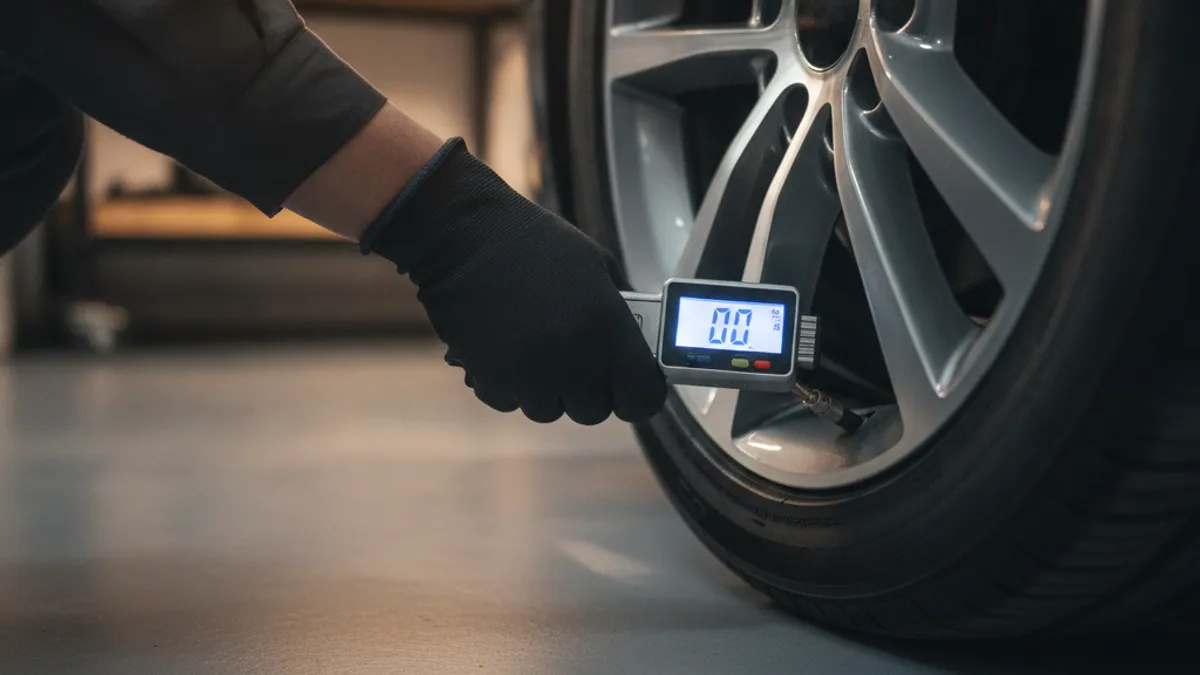
ADAC recommends increasing tyre pressure by 0.2 bar above the factory recommendation in summer, and by 0.3-0.4 bar for heavily loaded vehicles. A tyre with insufficient pressure under a heavy load generates dangerous internal heat which, in summer on hot tarmac, can lead to a blowout.
Most cars have a sticker on the door jamb with two sets of pressures: one for normal load, another for full load. Use the full-load value when travelling with a loaded box and a full car. If the sticker is missing or illegible, add 0.3 bar to the normal pressure for all four tyres.
Check pressure on cold tyres, in the morning before you set off, not at a petrol station after an hour of driving. Tyres warmed by driving show a falsely higher pressure and you cannot get an accurate reading. If you have had problems with your TPMS sensor after a tyre change, check that the system is reading the new pressures correctly.
When to Remove the Roof Box From Your Car
The rule is simple: as soon as you get back from the trip, take the box off. Not next weekend, not when you get round to it, but the first free day. Every day with an empty box on the roof is wasted fuel.
Here is a concrete calculation: if you drive 50 km a day with an empty box at an average speed of 60-70 km/h, you lose around 0.5-0.7 litres of fuel per day. Over a month that is 15-20 litres. After two months you have paid for a full tank of fuel for nothing. If you are careful with your consumption and driving style, there is no sense in cancelling out those savings with an empty box on the roof.
The second dimension is safety. An empty box catches crosswinds just as much as a full one. On BiH motorways, especially on the section through the Vrbas canyon or at tunnel exits, crosswind gusts can push a car with a box out of its lane. Without the box, the same gust is considerably less hazardous.
The third reason is equipment preservation. UV rays and rain degrade the box's plastic over time. A box left in the sun for four months after the seaside trip starts to fade, the seal dries out and the hinges stiffen. Store the box in a garage or basement and it will last twice as long.
For any questions about preparing your car for a longer loaded journey, including brake, shock absorber and tyre condition checks under load, book a seasonal inspection at the workshop before you set off.
Frequently Asked Questions
How much extra fuel does a roof box use on the motorway?
At a motorway speed of 130 km/h, a roof box increases consumption by an average of 18%, which works out to roughly 2 litres per 100 km extra. At 80 km/h the increase is around 11%. Aerodynamic teardrop-shaped boxes use 10-20% less than boxy models.
Does an empty roof box use fuel?
Yes. An empty box with no contents still increases consumption by up to 15% at motorway speeds. The reason is pure aerodynamic drag that the box creates simply by being on the roof. Remove the box as soon as you return from your trip.
How many kilograms can go in a roof box?
A typical box load capacity is 50-75 kg, but you must also factor in the roof load capacity of your vehicle (usually 75-100 kg in total including the rack and box). The roof load capacity figure is on the door-jamb sticker or in the owner's manual.
What is the maximum speed with a roof box?
Manufacturers universally recommend a maximum of 130 km/h. There is no specific legal regulation in BiH, but ZOBS requires speed to be adapted to the load condition. Above 130 km/h, aerodynamic forces can open the box or destabilise the vehicle.
Are roof boxes dangerous in crosswinds on the motorway?
Crosswind is a serious factor with a box on the roof. The box raises the vehicle's centre of gravity and increases the side area exposed to wind. At tunnel exits and on open sections, reduce speed and hold the steering wheel firmly with both hands. An empty box catches wind just as much as a full one.
Do I need to increase tyre pressure with a roof box?
Yes. ADAC recommends 0.2 bar above the factory recommendation in summer, and 0.3-0.4 bar for fully loaded vehicles. Use the full-load value from the door-jamb sticker. Measure pressure on cold tyres before departure.