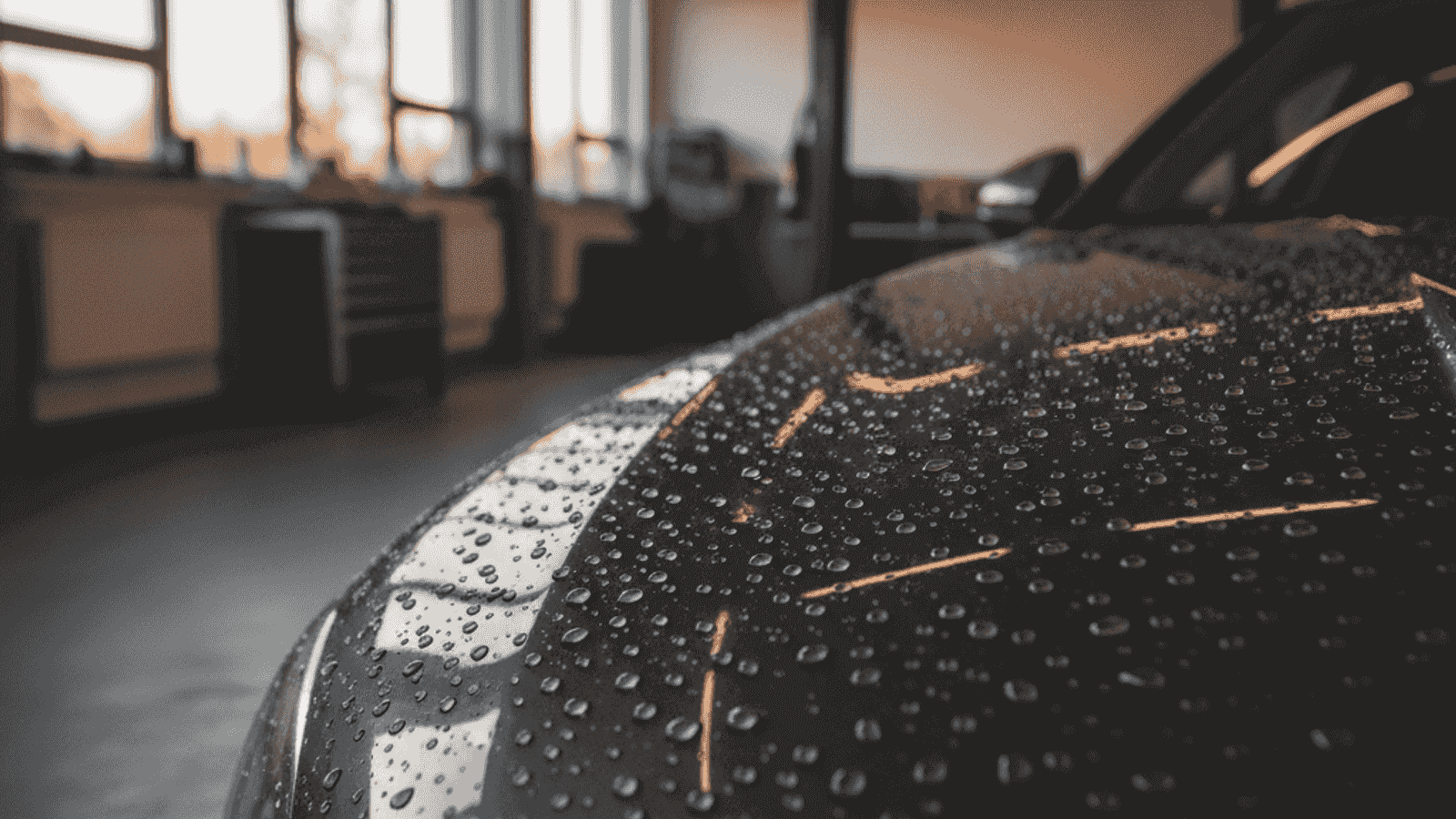
Car paint protection is no longer a luxury reserved for new vehicles. The owner of a used Passat worth 12,000 KM faces the same problem as the owner of a brand-new BMW: sun, road salt, stone chips and acid rain attack every paint finish equally, regardless of the car's price. The difference lies in how much it makes sense to invest in protection and which option delivers the best return for money in Bosnian and Herzegovinian conditions.
This guide was prepared by the Auto Gas Gaga workshop in Banja Luka, drawing on experience from pre-purchase inspections where paint condition directly affects the estimated vehicle value.
Table of Contents
- Why Paint Deteriorates and What Threatens It in BiH
- Ceramic Coating: What You Get for 150 to 1,200 KM
- Wax and Synthetic Sealant: Cheap Protection That Demands Discipline
- PPF Protective Film: Maximum Protection at a High Price
- Price, Durability and Protection Level Comparison
- Is Paint Protection Worth It on a Car Worth 8,000 KM
- DIY or Professional
- How to Maintain Your Paint After Protection
- Frequently Asked Questions
- Related Articles
Why Paint Deteriorates and What Threatens It in BiH
Factory paint on a modern car consists of four layers: a phosphate primer, electrophoretic (cathodic) coating, base colour coat and a final clear coat. That clear coat is thin, typically 40-60 microns, and it absorbs every impact so the colour underneath doesn't have to. Once the clear coat wears through, there is no protection left and corrosion sets in rapidly.
BiH's climate accelerates this process considerably. In summer, asphalt temperatures exceed 60 degrees and UV radiation breaks down the clear coat at a molecular level. In winter, road salt is spread on main roads and lingers in crevices and panel joints for months. Stones from unpaved driveways leave tiny chips in the paint that become entry points for corrosion. Acid rain, common in valley cities such as Banja Luka and Zenica, further eats into the surface.
A practical example: a car that sits outdoors for five years with no paint protection under BiH conditions will typically have visible micro-scratches across the entire surface, faded colour on horizontal panels (bonnet, roof) and early-stage corrosion around the sills and wing joints. All of this directly reduces the resale value.
Ceramic Coating: What You Get for 150 to 1,200 KM
Ceramic coating (more precisely: SiO2 coating, a silicon-dioxide-based liquid polymer) chemically bonds to the factory paint and creates a hard, hydrophobic layer. This layer repels water, mud, bird droppings and UV radiation, but it does not protect against physical impacts such as stone chips.
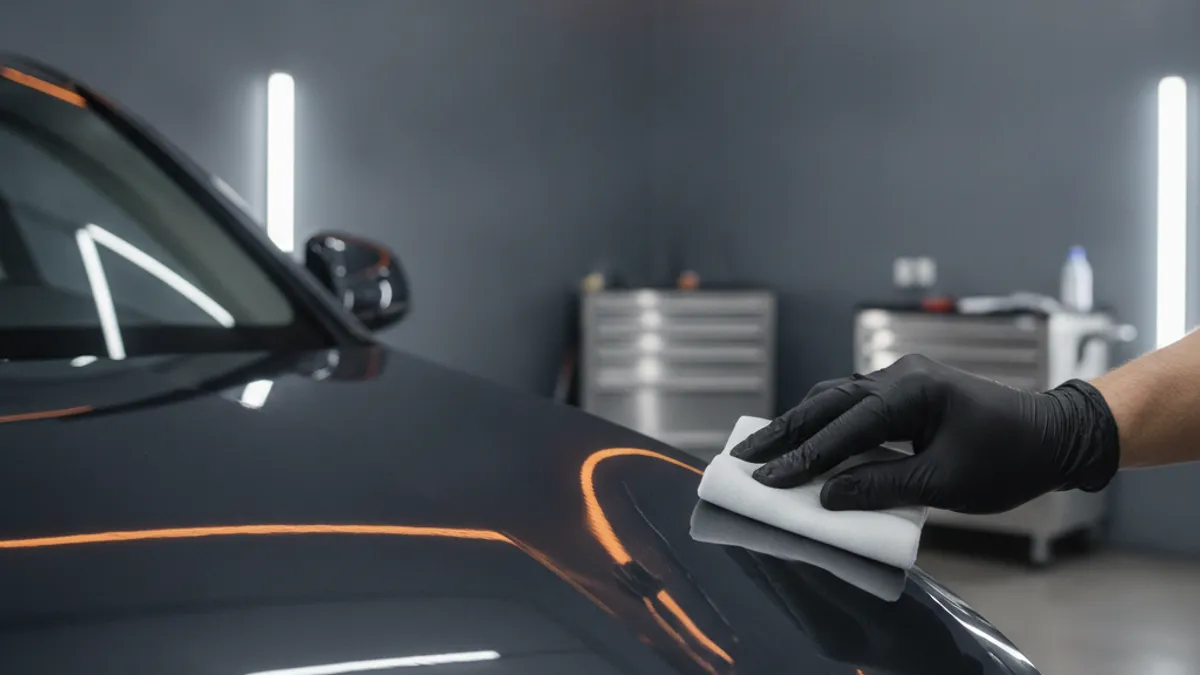
According to pricing published on Sektor387 in June 2026, ceramic coating in BiH ranges from 150 KM for a basic one-year package to 1,200 KM for a premium five-year package. Paint correction (polishing), which is a prerequisite for quality ceramic application, is charged separately and costs an additional 150-400 KM.
This means that a complete service (polishing plus ceramic coating) for a five-year package can run up to 1,600 KM. For a one-year package, the realistic cost including polishing is 300-550 KM.
How Much Does Ceramic Coating Cost in BiH
The price range is wide because it depends on the number of coating layers, product quality (single-layer vs multi-layer SiO2), vehicle size and how much paint preparation is needed before application. A small city car with relatively good paint will cost less than an SUV that requires two-stage corrective polishing.
Professional ceramic coating lasts 2 to 5 years, which is many times longer than wax. According to Jalopnik (February 2026), ceramic has a melting point of up to 1,000 degrees Fahrenheit, compared to just 180 degrees for wax. This explains why ceramic remains stable in BiH summer temperatures while wax melts and disappears within a few weeks.
Ceramic coating does not fix existing paint damage. If you have deeper scratches or oxidation, these must be removed by polishing first, and only then should the protective layer be applied. Applying ceramic over poor paint simply preserves the existing defects.
Is Ceramic Coating Worth It on an Older Car
The answer depends on the condition of the paint, not the age of the car. A 2008 Golf 5 that has been garaged and has well-preserved paint is an excellent candidate for ceramic coating. Conversely, a three-year-old car whose paint is already covered in deep scratches and oxidation will require significant polishing before ceramic can be applied, driving up the total cost.
General rule: if corrective polishing costs more than 400 KM and the car is worth less than 5,000 KM, ceramic is probably not cost-effective. The money is better spent on mechanical maintenance.
Wax and Synthetic Sealant: Cheap Protection That Demands Discipline
Wax is the oldest and cheapest form of paint protection. Natural carnauba wax gives a warm, deep shine that many consider more attractive than a ceramic finish, but it doesn't last long: 30-60 days under ideal conditions, and in a BiH summer sometimes not even that.
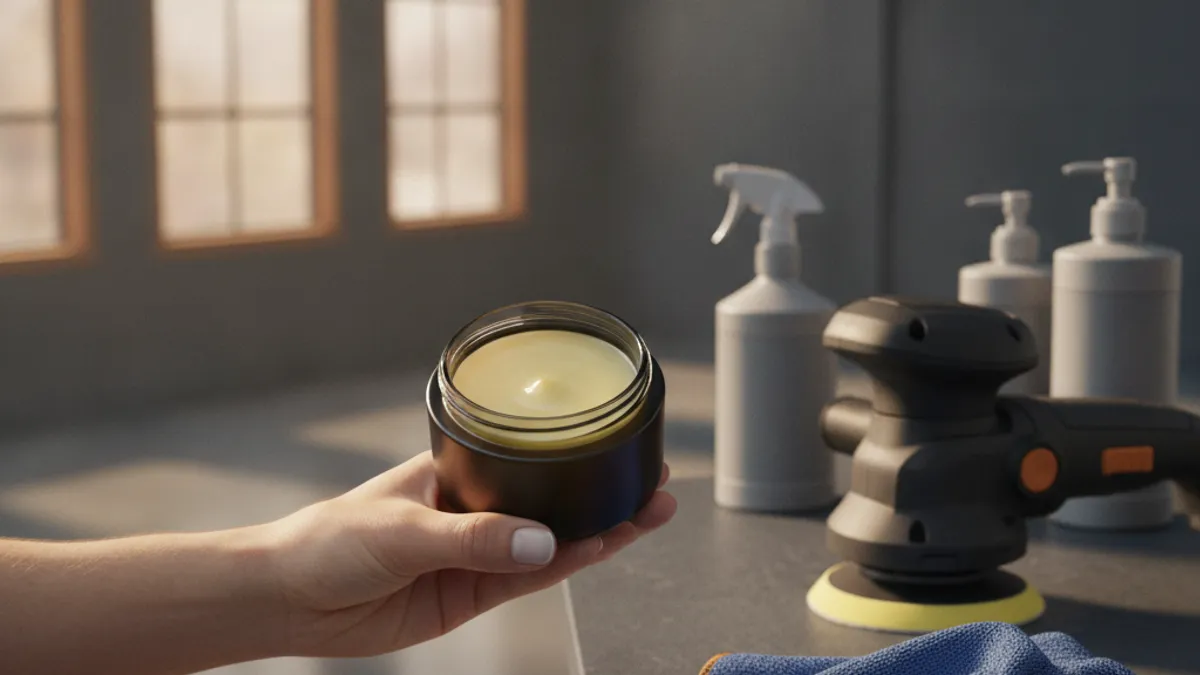
Synthetic sealant is a step above wax. According to Sektor387 (June 2026), a quality synthetic sealant costs 30-80 KM and lasts 4-6 months. This makes it considerably more practical than wax, as it only needs to be applied two to three times a year.
How Long Does Wax Last on a Car
In a test by Germany's Auto Bild and KÜS, out of 10 waxes tested only one (Dr. Wack A1 Speed Wax Plus 3, priced at roughly 20 EUR for 500 ml) received a "highly recommended" rating. Two products were rated "not recommended" because they failed to provide moisture protection immediately after application. The test was published in 2020, but the findings remain relevant as wax chemistry has not fundamentally changed.
The key difference between wax and ceramic: wax does NOT bond chemically to the paint. It sits on the surface as a greasy layer that washes off, melts and wears away. Ceramic bonds at a molecular level and becomes part of the surface. That is why ceramic lasts years while wax lasts weeks.
For an owner who enjoys the process of maintaining their car and is willing to spend an hour or two once a month washing and waxing, wax delivers excellent results for minimal cost. For everyone else, synthetic sealant is the more practical compromise.
PPF Protective Film: Maximum Protection at a High Price
PPF (Paint Protection Film) is a transparent polyurethane film that is physically bonded to the paint and protects it from stone chips, scratches, insects and chemical agents. What neither ceramic nor wax can provide, PPF can: protection from physical impacts.
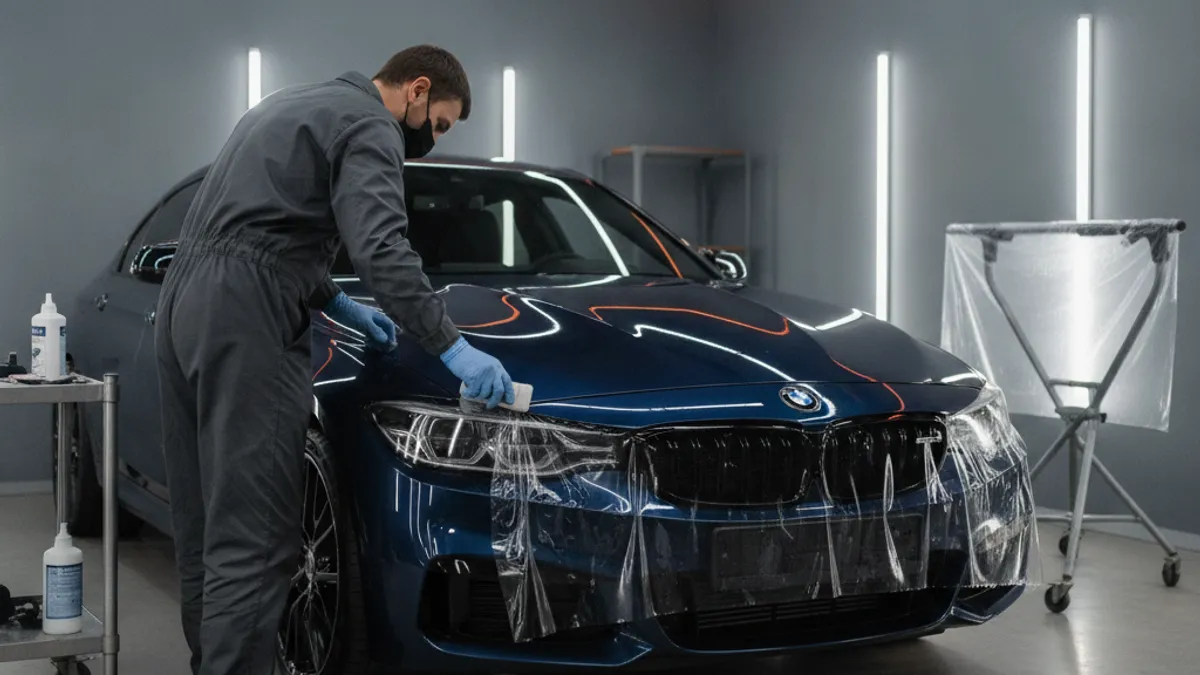
According to Sektor387 (June 2026), PPF film costs from 1,500 KM upwards and lasts 7-10 years. The price depends on how much of the body you cover: just the front end (bonnet, bumper, wings, mirrors) or the entire car. A full wrap on an average car can cost 3,000-5,000 KM.
PPF or Ceramic: Which Is Better
This isn't a question of "which is better" but rather "what are you protecting the car from". PPF protects against stone chips, scratches and impacts. Ceramic protects against chemical agents, UV radiation and makes washing easier. Many owners of higher-value cars combine both: PPF on the front end that takes the stone hits, ceramic over everything for the hydrophobic effect and easier cleaning.
For most car owners in BiH whose vehicles are worth 5,000-20,000 KM, PPF on the entire car is not economically justified. Covering the front end (bonnet and bumper) makes sense if you drive on the motorway daily and your car is relatively new.
Price, Durability and Protection Level Comparison
| Option | Price (BiH 2026) | Durability | Chemical protection | Stone chip protection | Paint preparation |
|---|---|---|---|---|---|
| Carnauba wax | 20-50 KM (product) | 1-3 months | Basic | No | Wash |
| Synthetic sealant | 30-80 KM (product) | 4-6 months | Good | No | Wash + clay bar |
| Ceramic (professional) | 150-1,200 KM + polishing | 2-5 years | Excellent | No | Polishing required |
| Ceramic (DIY) | 89-105 KM (product) | 6-18 months | Medium | No | Wash + clay bar |
| PPF film | From 1,500 KM upwards | 7-10 years | Good | Yes | Polishing recommended |
All pricing data sourced from Sektor387, published June 2026. Prices refer to the BiH market.
The table clearly shows that ceramic coating is the middle ground: far more durable than wax, far cheaper than PPF. For most drivers in BiH, professional ceramic or a quality synthetic sealant are the strongest contenders.
Is Paint Protection Worth It on a Car Worth 8,000 KM
This is the question drivers ask most often, and the answer requires a concrete calculation. According to Clean Expert (May 2026), a well-maintained car achieves a 5-15% higher sale price. On a car worth 8,000 KM, that is a difference of 400-1,200 KM.
Consider three scenarios for the owner of that 8,000 KM car who plans to drive it for 3 years:
Scenario A: No protection. Zero cost for protection, but the paint degrades. After 3 years the car shows visible oxidation on horizontal surfaces and micro-scratches everywhere. The sale price drops to the lower end of the range because the buyer sees a neglected exterior.
Scenario B: Synthetic sealant, three times a year. Cost: 9 applications at 40 KM per product = 360 KM over 3 years. The paint stays protected, glossy and easy to wash. The car looks significantly better at resale.
Scenario C: Professional ceramic. Cost: 300-550 KM one-off (polishing plus one-year package, repeated once). Total over 3 years: 600-1,100 KM. The paint looks nearly new, washing is faster and easier.
For a car worth 8,000 KM, synthetic sealant (Scenario B) delivers the best return. You invest 360 KM in products and your own effort, and the difference in sale price can be 400-800 KM. Ceramic becomes worthwhile only on cars valued above 12,000-15,000 KM, where a 5-15% resale difference justifies the higher initial investment.
For a car worth less than 5,000 KM, investing in paint protection rarely makes economic sense. The money is better directed towards mechanical maintenance, brakes and tyres, as these directly affect safety and the ability to pass the annual roadworthiness inspection.
DIY or Professional
Wax and synthetic sealant can be applied by anyone with patience and a clean space. For ceramic and PPF, the situation is different.
DIY ceramic products exist and according to Sektor387 (June 2026) cost 89-105 KM. Their durability is shorter than professional-grade products (6-18 months instead of 2-5 years), but for owners who don't want to pay for a full professional service, this is a solid compromise.
However, the quality of ceramic application depends directly on paint preparation. If the paint is not decontaminated and polished before application, the ceramic locks dirt and defects underneath itself. A professional uses a machine polisher with speed control, a clay bar for decontamination and appropriate abrasive compounds, achieving a surface ready for coating adhesion.
According to Show & Shine Detailing (April 2025), the five most common mistakes when polishing at home are: using equipment without speed control, excessive pressure that causes overheating and hologram defects, incorrect choice of compound abrasiveness, skipping decontamination, and removing residue with a rough cloth. Each of these mistakes can damage the paint rather than improve it.
Practical rule: wax and sealant are DIY jobs. Leave corrective polishing and professional ceramic to someone who does it every day, unless you have the experience and equipment. Never attempt PPF yourself, as it requires specialised tools for stretching and shaping the film.
How to Maintain Your Paint After Protection
Regardless of which protection you choose, maintenance determines how long it will last.
How to Wash a Car with Ceramic Coating
Ceramic coating does not mean you never need to wash the car. It means washing takes less time and that dirt doesn't cling the way it does to unprotected paint. The rules are simple:
Wash the car by hand or at a touchless car wash. Brush-type (mechanical) car washes use harsh brushes that leave micro-scratches even on coated paint. Use a pH-neutral car shampoo, never washing-up liquid as it breaks down the protective layer. Dry the car with a microfibre cloth or an air blower; do not leave it to dry in the sun, as minerals in the water leave spots that are harder to remove from a ceramic surface.
The same applies to wax and sealant, with the caveat that an aggressive shampoo or degreaser can strip the entire protection in a single wash. Use products designed for cars with protective coatings.
A routine paint inspection at least once every six months helps spot damage early. Pay attention to areas around the sills, lower door edges and around the wheels, as this is where salt and stones do the most damage. If you notice the protective layer has weakened (water no longer beads into droplets but sheets off), it is time to renew the coating or apply a fresh layer of wax.
Well-maintained paint is not just an aesthetic matter. A car whose exterior is in good condition passes a pre-purchase inspection more easily because it signals an owner who cares for the vehicle as a whole. This is something buyers register, even subconsciously, and it directly influences the final price.
Found a car you are considering buying but unsure about the condition beneath the paint? Book a pre-purchase inspection or get in touch with a specific question.
Frequently Asked Questions
How long does ceramic coating last on a car?
Professional ceramic coating lasts 2-5 years, depending on product quality, the number of layers applied and how the car is maintained. DIY ceramic products last less, typically 6-18 months. Durability depends significantly on whether you wash the car by hand or in a mechanical car wash, as harsh brushes shorten the lifespan of the protective layer.
Does ceramic coating protect against stone chips and scratches?
No. Ceramic coating protects against chemical agents (bird droppings, tree sap, acid rain), UV radiation and makes washing easier, but it does not provide physical protection against stone chips and scratches. For physical protection, PPF (Paint Protection Film) is required.
Can ceramic coating be applied to a new car?
Yes, and it is the ideal time to do so. New paint has no defects that need correcting by polishing, so preparation is minimal and the cost is lower. Many new car owners apply ceramic coating within the first month of ownership.
How much does paint polishing cost in BiH?
According to pricing from June 2026, corrective paint polishing in BiH costs 150-400 KM, depending on vehicle size and paint condition. Polishing is a prerequisite for quality ceramic coating application and is charged separately from the ceramic itself.
Is wax better than ceramic?
Wax is cheaper and gives a warm, deep shine that many prefer, but it only lasts 1-3 months. Ceramic is more durable (2-5 years), provides stronger chemical protection and makes washing easier, but costs more. The choice depends on your budget, how often you are willing to maintain the car and how long you plan to keep the vehicle.
Is PPF film visible on a car?
Quality PPF film is virtually invisible on a car. The film edges may be noticeable on close inspection, particularly at panel joints and edges, but at a normal viewing distance the car looks identical to one without film. Over time, cheaper film can yellow under UV exposure.