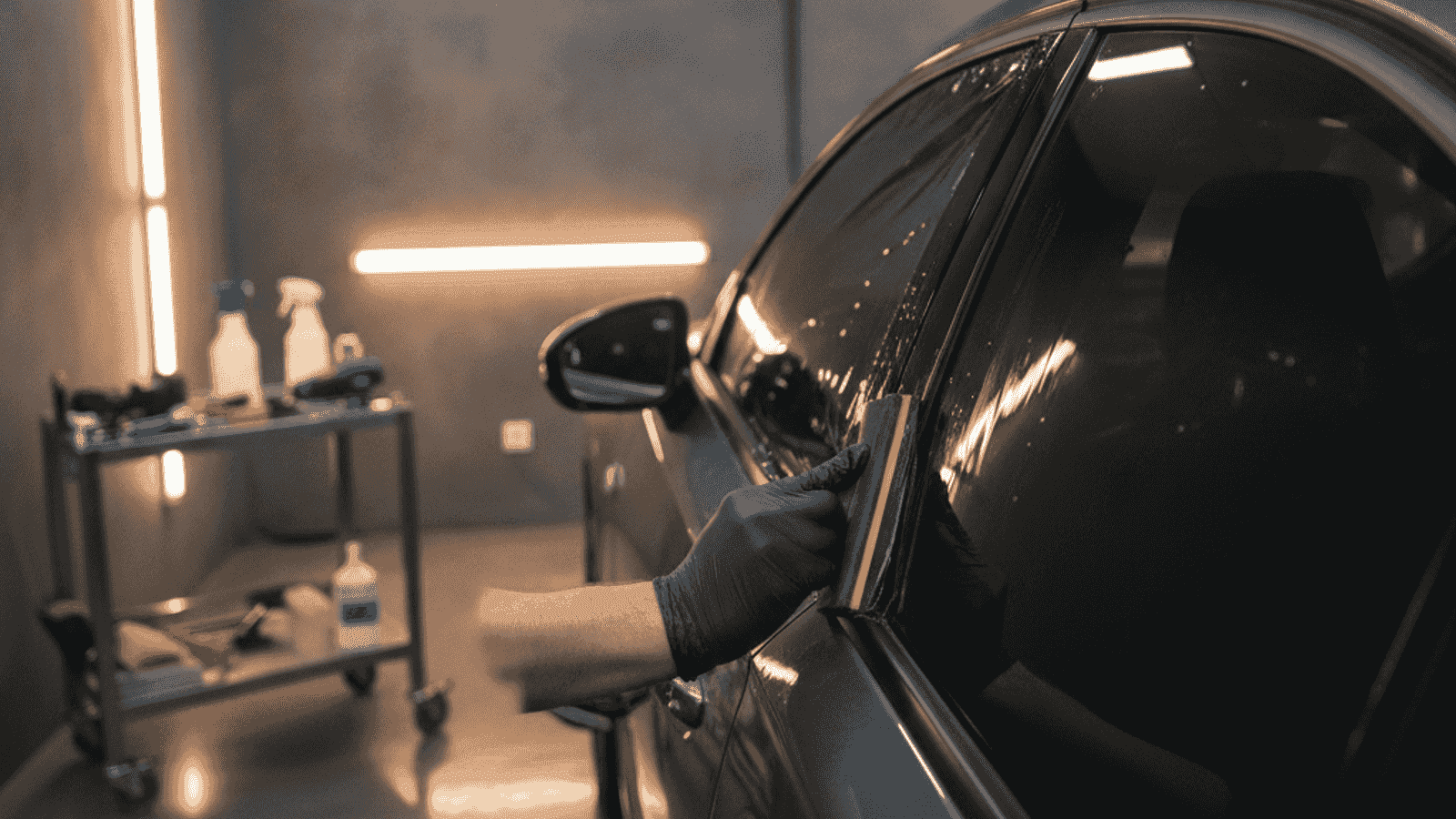
In the BiH summer, the temperature inside a parked car exceeds 70 degrees in roughly fifteen minutes. Window tinting is one of the most effective ways to shield the cabin from heat and reduce the load on the air conditioning system during high temperatures. This guide covers everything a BiH driver needs to know in 2026: what the law permits, which films are available on the market, how much it realistically costs and how much tint film actually helps against cabin heat.
This guide was prepared by the Auto Gas Gaga workshop in Banja Luka, drawing on years of experience with vehicle inspections and feedback from customers who have had their windows tinted.
Table of Contents
- What BiH Law Says About Window Tinting
- Which Windows You Can Tint and How Much
- Certification, Label and Vehicle Inspection
- Types of Car Window Tint Films
- How Much Does Window Tinting Cost in BiH in 2026
- How Much Does Tint Film Actually Reduce Cabin Heat
- Window Tinting and Fuel Consumption: The Air Conditioning Link
- How to Choose a Tinting Service
- Frequently Asked Questions
- Related Articles
What BiH Law Says About Window Tinting
The Rulebook on window tinting in BiH came into force on 1 June 2021 and introduced clear rules applicable across the entire territory. Before that, the situation was unclear and enforcement varied by entity. Today the rules are uniform and violations are checked both at the vehicle inspection and on the road.
The essence is straightforward. The windscreen must not be tinted at all. The front side windows, level with the driver and front passenger, may be tinted by up to 30 per cent, meaning they must retain a minimum visible light transmittance (VLT) of 70 per cent. All windows behind the rear edge of the front seats, including the rear side windows and the rear window, may be tinted without restriction, even down to fully opaque film.
In practice this means the front side windows get the lightest film, one that is almost invisible to the eye yet still provides UV protection and partial heat rejection. At the rear you are free to fit the darkest option available without any legal issue.
Fines for non-compliant tinting start at several hundred KM, and at the vehicle inspection the examiner has the right to reject a car that does not meet the standard. The problem is not just the fine itself but having to remove the film, go through the inspection again and pay for everything from scratch. Some drivers who fitted film that was too dark on the front side windows ended up paying double because they had to cover both the removal and a fresh installation within the permitted limits.
Which Windows You Can Tint and How Much
The front side windows, level with the driver and front passenger, must transmit at least 70 per cent of visible light. This is measured with an instrument called a tint meter, and the examiner can use it at the vehicle inspection or during a roadside check. If the film transmits 68 per cent instead of 70, the car fails the inspection without discussion.
How Dark Can the Front Side Windows Be in BiH
Specifically, you may fit film that blocks a maximum of 30 per cent of light. Visually this is an almost invisible film, slightly greyish or golden depending on the type. Most manufacturers offer models with exactly 70 per cent VLT designed specifically for front side windows in markets like ours.
For the rear side windows and rear window there is no transmittance restriction. You can fit film that lets through as little as 5 per cent of light and it is completely legal. Most drivers opt for 15 to 35 per cent VLT on the rear windows, which provides a good balance of privacy and visibility when reversing at night. Anything darker than 15 per cent VLT means you can see virtually nothing through the rear-view mirror at night, so it only makes sense if the vehicle has a reversing camera.
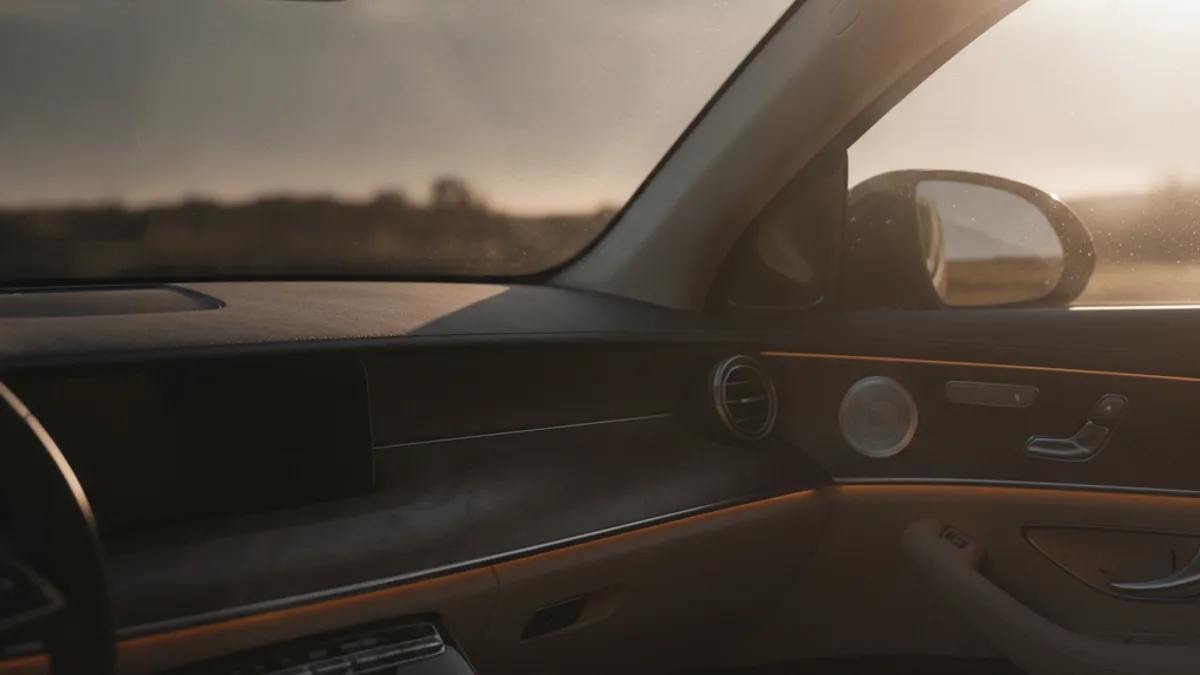
The windscreen is completely off limits. Even a clear UV film on the windscreen is not permitted under the current interpretation of the Rulebook. The only allowed strip is the factory-fitted darker band at the top of the windscreen, provided it does not exceed 10 centimetres in width and is part of the original equipment.
A practical tip for BiH drivers: if you already have tinted windows and are unsure whether they comply with the regulations, have the transmittance measured before your vehicle inspection. Most tinting shops have a tint meter and will check it for free or for a token fee. That is far better than finding out at the inspection that your film does not pass.
Certification, Label and Vehicle Inspection
Since 1 June 2023, every film fitted to a vehicle registered in BiH must meet the conditions set out in the Rulebook. In concrete terms this means two mandatory items without which the car will not pass its vehicle inspection.
First, the window must carry a label measuring 10 by 40 millimetres bearing the serial number of the film. This label proves that a film from a specific manufacturer has been fitted to the glass and that its type and transmittance can be verified.
Second, the owner must hold a written certificate in A4 format containing the manufacturer's details, the film type, its transmittance and confirmation of compliance with the UN/ECE R43 standard. Keep this certificate in the car alongside your vehicle registration.
Do Tinted Windows Pass the Vehicle Inspection in BiH
The answer depends solely on these two things: the film meets the transmittance standard for the window position in question, and you have the complete documentation. If you lack the label or the certificate, the car will fail the inspection even if the film itself is within the permitted limits. This is a common mistake: a driver buys film that is legal in terms of transmittance but lacks documentation and fails the vehicle inspection.
UN/ECE R43 is an international standard that defines requirements for safety glazing and glazing materials on motor vehicles. Every film sold and installed in BiH must hold a certificate of compliance with this standard. The shop that installs the film is obliged to issue the certificate and affix the label. If it does not, you are the one held responsible at the vehicle inspection. For more on what can cause a car to fail its inspection, read our detailed guide to the most common reasons for failing the vehicle inspection.
Types of Car Window Tint Films
Five generations of car window film exist on the market, and the differences are not just in darkness but in material, durability and functional properties. Here is an overview by type, from the simplest to the most advanced.
| Film type | Material | Warranty | UV protection | Heat rejection | Blocks signal |
|---|---|---|---|---|---|
| Basic | Dyed polyester | ~10 yr | 99% | Low | No |
| Standard | Metallic base | ~10 yr | 99% | Medium | Yes |
| Nano-ceramic | Ceramic nanoparticles | ~12 yr | 99% | High | No |
| Nano-ceramic plus | Multi-layer ceramic | ~15 yr | 99% | Very high | No |
| Nano-ceramic lux | IR blockers | ~15 yr | 99% | Maximum | No |
The basic film is the simplest option. It is dyed polyester that provides darkness and 99 per cent UV protection. The warranty is typically around 10 years. The drawback is that it lets a significant amount of solar heat through, so the cabin still gets quite hot in the summer sun. For drivers whose priorities are privacy and aesthetics without a large outlay, this is a solid choice.
The standard film uses a metallic base that reflects heat better than plain polyester. It also comes with a 10-year warranty and 99 per cent UV protection. The issue with metallic film is that it can interfere with radio reception, GPS navigation and mobile signal inside the cabin. If you use phone navigation or have an electronic toll device, this can be a problem.
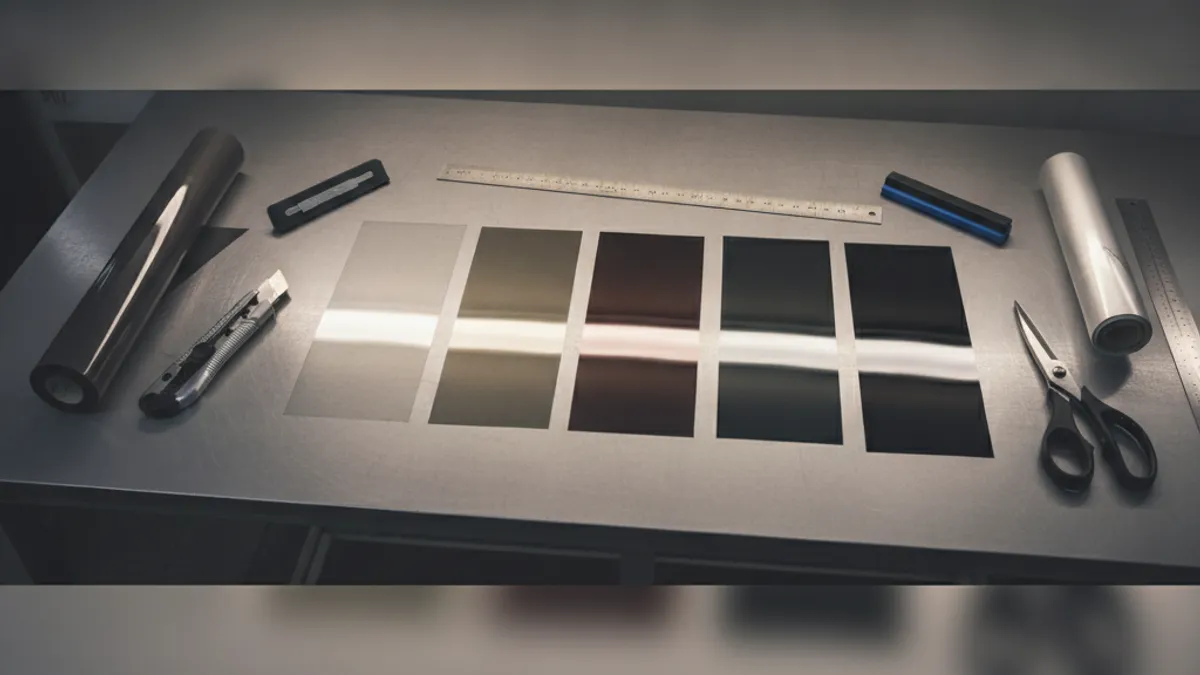
Nano-ceramic film represents a serious leap in technology. Instead of metal it uses ceramic nanoparticles that block infrared radiation without interfering with electronic signals. The warranty rises to 12 years and the heat rejection is noticeably better than the standard film. For most drivers this is the optimum choice in terms of price versus performance.
Nano-ceramic plus is a multi-layer variant with additional layers for improved thermal insulation. The warranty goes up to 15 years and this film is aimed at drivers who want maximum heat rejection without compromise. Nano-ceramic lux is the top of the range with IR blockers that minimise heat transmission through the glass. Also 15 years of warranty. This is the choice for drivers who prioritise cabin comfort and are prepared to pay the premium.
Difference Between Ceramic and Metallic Window Film
The difference comes down to three key points. Ceramic film blocks heat more effectively without interfering with in-car electronics. Metallic film is cheaper but can cause issues with GPS navigation, mobile phones and toll devices. Both block UV radiation equally well, at 99 per cent. For most drivers in BiH, ceramic film is the better long-term choice because there is no compromise with the electronic devices you use in the car every day.
How Much Does Window Tinting Cost in BiH in 2026
Window tinting prices in BiH in 2026 vary widely depending on the film type and vehicle size. Prices are given in EUR because most shops quote in euros, but we add the KM equivalent at the fixed rate of 1.95583 KM per 1 EUR.
Window Tinting Prices in BiH for 2026
For standard film on an average car, expect to pay 70 to 150 EUR, roughly 137 to 293 KM. This is the entry-level category that provides darkness and UV protection but modest thermal insulation.
Premium ceramic film with high IR protection for the same car costs 250 to 350 EUR, i.e. 489 to 685 KM. For larger vehicles such as vans or SUVs the price can reach 460 EUR, which is around 899 KM.
| Film type | Coupe/small car | Saloon | SUV/van |
|---|---|---|---|
| Basic | from 140 EUR (~274 KM) | from 150 EUR (~293 KM) | from 170 EUR (~332 KM) |
| Standard | from 180 EUR (~352 KM) | from 210 EUR (~411 KM) | from 230 EUR (~450 KM) |
| Nano-ceramic | from 210 EUR (~411 KM) | from 240 EUR (~469 KM) | from 270 EUR (~528 KM) |
| Nano-ceramic plus | from 240 EUR (~469 KM) | from 280 EUR (~548 KM) | from 310 EUR (~606 KM) |
| Nano-ceramic lux | from 310 EUR (~606 KM) | from 350 EUR (~685 KM) | from 460 EUR (~899 KM) |
If you plan to tint only the rear windows, the price drops by roughly 30 to 40 per cent compared with the full vehicle. The front side windows are charged separately because they require precision film with an exact transmittance value, and that costs an extra 45 to 105 EUR, i.e. 88 to 205 KM, depending on the film type.
It is important to understand that the price does not depend on the level of darkness but on the film type and vehicle size. The darkest basic film costs less than a medium-dark ceramic film because the difference is in the material, not the shade. When choosing a shop, look at what you get for the price: film type, warranty and documentation. The cheapest quote without documentation will cost you more when the vehicle inspection comes around.
How Much Does Tint Film Actually Reduce Cabin Heat
Quality car window films block 60 to 80 per cent of solar heat and 99 per cent of UV radiation. In practice this means a cabin with film heats up noticeably less than one without it. Research shows that cabin temperature with quality film can be 20 to 40 degrees lower than in a car with no window protection at all.
That is not a negligible difference. In a car park in Banja Luka in July, an untinted car reaches 70 to 80 degrees inside within about fifteen minutes. With ceramic film on the rear windows and the legally permitted light film on the front sides, that temperature drops to 45 to 55 degrees. It is still hot, but a difference of roughly twenty degrees means you do not need five minutes with the air conditioning on full blast before the cabin becomes bearable.
UV protection of 99 per cent also has a health benefit. UV radiation passes through ordinary glass and during long drives can damage skin and eyes. Film with high UV protection drastically reduces this exposure, which is especially important for professional drivers who spend hours behind the wheel.
For full protection, combine film with a windscreen sunshade when parking. Since the windscreen must not be tinted, it remains the biggest source of heat entering the cabin. A sunshade on it, plus film on all other windows, delivers the best result practically achievable within the law.
Window Tinting and Fuel Consumption: The Air Conditioning Link
A link between window tinting and fuel consumption does exist, but it is indirect and should be properly qualified. Film by itself does not affect the engine or fuel consumption directly. What it does is lower the cabin temperature, which means the air conditioning system needs less energy to cool the interior to the desired level.
According to a study published in the Journal of Automobile Engineering, quality film reduces air conditioning energy consumption by 10 to 15 per cent. At the same time, data from ADAC and the US EPA show that air conditioning increases fuel consumption by 10 to 15 per cent under normal conditions, and by up to 20 per cent in extreme heat and city driving.
Does Window Tint Film Reduce Fuel Consumption
The answer is not a simple yes or no. Film reduces the load on the air conditioning and the air conditioning consumes fuel. If film cuts the air conditioning load by roughly ten per cent and air conditioning normally adds 10 to 15 per cent to consumption, the net effect on fuel use is modest but measurable. We are talking about savings of one to two per cent of total consumption during the summer months.
That will not halve your fuel bill, but combined with smart use of the air conditioning every saving adds up over the long term. For a detailed look at how much air conditioning really affects fuel consumption, with specific figures by engine type and driving conditions, read our article on summer fuel consumption from air conditioning. And if you are looking for a broader overview of all the ways to reduce fuel consumption, our complete guide is here too.
How to Choose a Tinting Service
Choosing a tinting service matters more than most drivers think. Poor installation means bubbles, peeling film and voided warranty. Here is what to look out for.
Look for a shop that issues complete documentation. The A4 certificate and the label on the window are not optional but a legal requirement since June 2023. A shop that does not issue documentation or claims it is not necessary is operating outside the regulations, and you will have a problem at the vehicle inspection.
Ask about the installation warranty separately from the manufacturer's film warranty. The manufacturer guarantees that the film will not discolour or peel, but installation quality is the shop's responsibility. A good shop offers a warranty on its workmanship of at least one year.
Check that the shop uses film with a UN/ECE R43 certificate. Cheap film without certification may look fine but will cause your car to fail the vehicle inspection. The price difference between certified and uncertified film is relatively small, and the saving is not worth the trouble at the inspection.
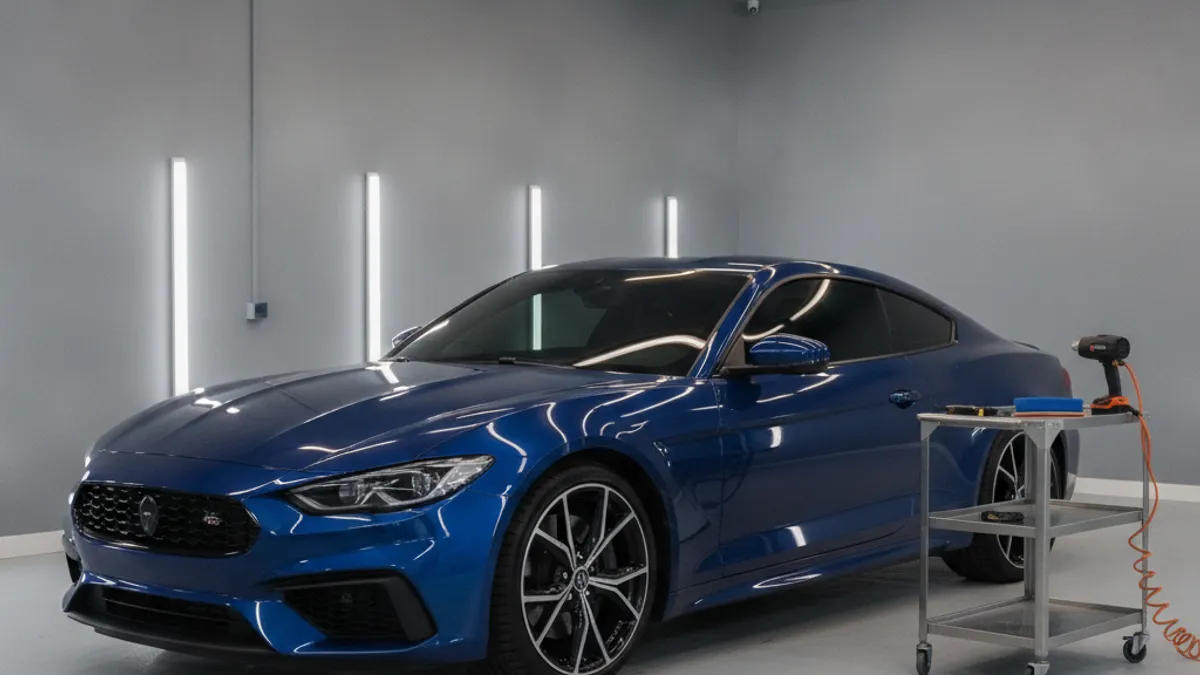
Good glass preparation is half the job. A professional shop cleans the glass with specialist solutions and removes all contaminants before installation. The film is cut to size using software and a plotter, not freehand with a blade on the glass. Installation in controlled conditions, free of dust and wind, is essential for a quality result.
Installation time for a complete car is two to four hours in an experienced shop. If you are offered a one-hour turnaround, that usually means preparation steps are being skipped or pre-cut film is used instead of custom-cut pieces.
After installation, the film needs three to seven days to dry fully and bond to the glass. During this period do not open the windows and do not clean them on the inside. Small water bubbles that appear are normal and will disappear during the drying period. If they have not gone after a week, that is a sign of poor installation and you should return to the shop to make a claim.
Frequently Asked Questions
How much does window tinting cost for an average car in BiH?
For standard film, a complete vehicle costs 70 to 150 EUR (137 to 293 KM). Ceramic film with better heat rejection costs 250 to 350 EUR (489 to 685 KM). The price depends on the film type and vehicle size, not on the level of darkness.
Do tinted windows pass the vehicle inspection in BiH?
Yes, provided two conditions are met. The front side windows must have a transmittance of at least 70 per cent VLT, and the owner must hold the label on the glass plus a written A4 certificate with the film details and UN/ECE R43 compliance. Without documentation the car fails the inspection even if the film itself is within limits.
Is it legal to tint the windscreen in BiH?
No. Under the current Rulebook, the windscreen must not be tinted with any film. The only permitted strip is the factory-fitted darker band at the top of the windscreen up to 10 centimetres wide that is part of the original equipment.
How long does a full-car film installation take?
In an experienced shop, installation takes two to four hours. The film then needs three to seven days to dry completely. During this period do not open the windows or clean them on the inside.
Does ceramic film interfere with GPS and mobile signal?
No. Unlike metallic film, which can interfere with radio reception, GPS navigation and mobile signal, ceramic film does not affect electronic devices inside the cabin. This is one of the key advantages of ceramic over metallic film.
How much does tint film lower cabin temperature?
Quality film blocks 60 to 80 per cent of solar heat. In practice, cabin temperature with film can be 20 to 40 degrees lower than in an unprotected car. In a BiH car park in summer that means the difference between 75 degrees and 50 degrees inside.