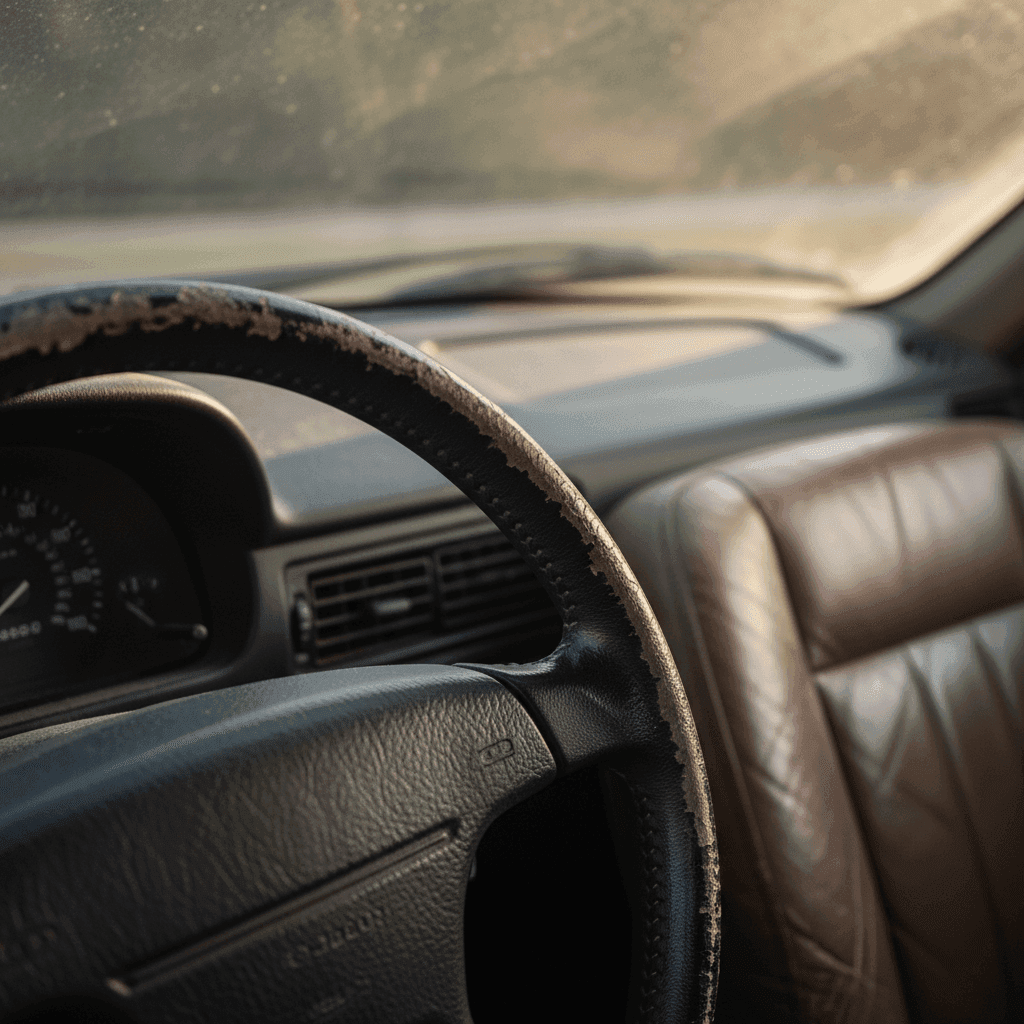
The car is sitting in front of you, the seller says "only 130,000 kilometres, all serviced at the authorised dealer", and yet the steering wheel is polished down to brass and the brake pedal carries the imprint of a rubber shoe sole. A rolled-back odometer on a used car in BiH in 2026 is still one of the most common scams at the point of purchase, and the worst part is that the buyer usually pays an inflated price and only later, through the workshop, realises the car has covered far more than what the gauge shows. This guide gives you a concrete checklist (six physical clues, two types of digital check and a clear order of red flags by vehicle type) so you can spot a tampered odometer before you pay a deposit.
This guide was prepared by the Auto Gas Gaga workshop in Banja Luka, based on years of experience with pre-purchase inspections of used vehicles.
Table of Contents
- How Common Is Odometer Rollback on the BiH Market
- Why the Problem Is Bigger With Cars Imported From Germany
- Six Physical Clues That Reveal a Rolled-Back Odometer
- How to Check Vehicle History via the VIN
- What the Service Book and MOT Records Reveal
- OBD Diagnostics and the Pre-Purchase Inspection
- Red Flags by Vehicle Type
- What to Do If You Suspect Fraud or Already Bought a Suspicious Car
- Frequently Asked Questions
- Related Articles
How Common Is Odometer Rollback on the BiH Market
There is no exact figure for BiH in any official statistic. Nobody measures it because there is no central database of MOT inspections that would make it possible. What we do have are European numbers, and they are alarming enough. According to estimates from specialised vehicle history services in 2025, odometer fraud costs European buyers around 5.3 billion euros a year, and the average buyer overpays by about 26.3 percent for a used car with a tampered figure.
The gap between the domestic and the cross-border market is dramatic. When a car is sold inside the country where it is registered, the share of fraud is estimated at 5 to 12 percent. Once a car crosses the border, that share rises to between every third and every second car. The reason is simple. As soon as a car is exported, the state MOT database in the country of origin stops being updated, and the importing country has no access to the vehicle history.
For BiH that means one thing. The probability that the used car you are looking at has covered more than what the gauge shows is not a rare occurrence but an expected situation that you have to actively check.
Why the Problem Is Bigger With Cars Imported From Germany
Most used cars in BiH come from Germany, Italy, France and Belgium. EU countries do not exchange odometer data through a single shared register. Each one has its own internal MOT database, and that data does not cross the border. Our institution, when a vehicle is presented for an MOT in BiH for the first time, only records the reading shown at that moment.
The typical pattern repeats month after month: a cheap, high-mileage vehicle is bought in Germany (say a Passat with 320,000 km), driven east, the odometer is wound back to 180,000 km in twenty minutes through the OBD port, the vehicle is listed online and sold to a buyer from BiH who sees a "German service book" and thinks they have found a great deal. By that point real servicing has long since stopped, and within a few thousand kilometres the buyer will be paying for work the seller should have done.
This does not mean every imported car is a lie. It means that with imported cars two kinds of checks must run in parallel: digital (VIN history) and physical (wear traces, OBD). We covered the process of importing a used car from Germany to BiH in a separate guide.
Six Physical Clues That Reveal a Rolled-Back Odometer
No software can erase the traces time leaves on a vehicle's interior. Pedals, steering wheel, seat, gear lever: all of them follow a predictable pattern of wear that does not come with 130 thousand kilometres but with 250 and more. Six things you check every time:
- Steering wheel and grip covers. If the leather at the 9 and 3 positions is polished to a smooth shine or cracked, what passed there were years, not 130 thousand city kilometres.
- Pedals and the rubber on the pedals. The brake and accelerator pedals have a rubber cover with a ribbed pattern. On a car with genuinely low mileage the pattern is still intact. Above 250 thousand km the rubber is smooth, and the brake pedal often has the imprint of a rubber shoe sole.
- Driver's seat and side bolster. The side of the driver's seat (the one you brush against getting in and out) is the first thing to fail. Cracks in the leather or a deep dip on a car with "only 100 thousand" are clear grounds for suspicion.
- Gear lever and handbrake. Shine on the leather of the gear lever knob and wear on the handbrake handle are very strong indicators. The driver touches those points with the same hand every single day.
- Carpet under the pedals and the door sill. Above 200 thousand km the carpet by the pedals shows clearly worn paths. The driver's-side door sill will be scratched by shoes. Sellers rarely replace this.
- Suspiciously low mileage on an older diesel. A diesel engine more than ten years old with under 100 thousand km on the clock is itself a red flag. Diesels are built for high mileage, and diesel owners tend to drive a lot and far.
No single clue is a verdict on its own. Two or more together are a clear red flag.
How to Check Vehicle History via the VIN
The VIN is a unique 17-character code that every car carries, stamped into the chassis, on the driver's A-pillar and in the registration document. Through the VIN you can pull a vehicle history from international databases that aggregate data from insurers, registries, auctions and MOT records of countries that have opened up their databases.
Specialised vehicle history services cover more than a thousand data sources across 45 plus countries and are available in BiH. The principle is simple: you enter the VIN, pay for the report, and get a list of recorded mileages by date, accident records, owner data and information on whether the car has been reported stolen.
A pre-purchase inspection catches physical wear, the technical state of the engine and traces of past repairs, but it cannot recover a vehicle's documented history from abroad. That is where carVertical comes in. Using the chassis number, it pulls the full documented vehicle history from international registries: actual odometer readings by date, recorded accidents, the number of previous owners and theft or total-loss indicators. We consider this essential before buying absolutely any used car, especially imports from Germany that leave no local trace in BiH. When paying for the report, you can use code GAGA for 20% off.
How to Check a VIN for Free
Volkswagen Group, BMW and other manufacturers have public VIN decoders that only confirm whether the VIN matches the factory specification (engine, model year, trim, colour). This is useful for one thing: confirming that the seller has not glued on a VIN from another vehicle. Detailed mileage history you will have to pay for.
The most reliable approach turns out to be cross-referencing sources: the service book, MOT records from the country of origin and a paid VIN report. When all three tell the same story, confidence grows. When one of the three fails, walk away.
What the Service Book and MOT Records Reveal
The service book is the first thing the seller shows, and for a buyer trained to read it, it is the first place a fraud falls apart. We wrote about the importance of vehicle service history from the owner's angle earlier. Here we look at it from the buyer's side. You check the following:
- Stamps and dates. An authorised workshop's stamp must include name, address and date. If the stamps are all from the same place but on dates separated by months at a time, that is suspicious. If they are from different cities with no logical pattern of where the vehicle moved, more suspicious still.
- Mileage in the book versus what is on the gauge. The last entry should match what the odometer shows, with a reasonable difference up to today. If the difference is negative (fewer kilometres than the last entry), the vehicle has been manipulated, 100 percent.
- Jumps between entries. A driver who covers 30 thousand km a year has a minor service every eight to ten months. If whole years are missing from the book, that is either neglected maintenance or an attempt to hide high mileage.
- MOT records and foreign databases. The most reliable sources are the state MOT databases in the country of origin: the Czech STK, the Finnish Traficom, the Dutch RDW. Those databases permanently record the mileage at every test, and neither the seller nor a diagnostic tool can change the data after the fact.
The service book and the MOT records have to agree with each other. If they do not, walk away from the vehicle. It is not a negotiating position, it is a signal to move on.
OBD Diagnostics and the Pre-Purchase Inspection
Today the odometer reading is written to several electronic units in the vehicle at the same time: the cluster on the dashboard, the BCM, and on modern vehicles also the engine ECU, the ABS module and the door controller. The cheapest tool used by fraudsters changes only the number on the dashboard. More professional kit goes through every module, but it is rarely all in sync.
A proper pre-purchase OBD inspection checks for this. A professional workshop's diagnostic tool reads the mileage from every available module and compares them. If the cluster shows 130 thousand and the ABS module shows 270 thousand, the job is over and the vehicle is not for you.
The OBD check is part of a full pre-purchase inspection, which includes a visual inspection of the engine and undercarriage, OBD fault-code reading and mileage cross-check from all modules, an inspection of seals and oil leak traces, plus a basic road test. The price depends on the specific condition. Get in touch for a quote and send us the listing link, and we will tell you what to expect in advance. If you are looking for a workshop for the first time, our guide on how to choose a car workshop in Banja Luka gives concrete criteria.
Red Flags by Vehicle Type
Different vehicles follow different patterns. What is suspicious on one car is expected on another.
- Former taxis and transit delivery vans. Vehicles that ran as taxis or commercial delivery typically clock 400 thousand km and more in five to seven years. They are often sold with a "tidied-up" odometer. Check the registration document. If the car was registered as L1 (taxi) or as a commercial vehicle, treat the figure with reserve.
- Lease returns and fleet cars. Cars that ran as a company fleet vehicle or came back from a lease often go through resale chains, and that is where the mileage often gets "shaved". They usually arrive in good cosmetic condition, but an hour of commuting each way every day adds up to far more in a year than the owner admits.
- Models the fraudsters target. Industry market analysis shows the largest recorded mileage reductions on the Mercedes-Benz V-Class (-281,000 km), the Ford Transit (-249,000 km) and the Volvo XC40 (-238,000 km). These are not the only affected models, but they show where the fraudsters most like to work: on big family and commercial vehicles that in real use cover huge mileages.
What to Do If You Suspect Fraud or Already Bought a Suspicious Car
If you have suspicions before buying, the play is clear. Ask for a VIN report at the seller's expense (an honest seller will pay for it, the car is clean), insist on a pre-purchase inspection at a workshop you choose, and if the seller refuses any of that, you walk. The market is large, there are fewer buyers than listings, time is on your side.
If you have already bought and only afterwards established the manipulation, the situation is harder but not hopeless. First, document the state of things: a VIN report with the real number, an OBD readout from every module, photos of the physical wear traces. If the car was bought from a legal entity, the consumer protection law gives you the right to lodge a complaint and rescind the contract on grounds of a hidden defect. Criminal offences of document forgery and fraud are reported to the police (MUP). If the purchase was from a private individual without a contract and without witnesses, the odds are weaker and the burden of proof falls on you.
The lesson that keeps coming back: better to lose two hours on a pre-purchase inspection than two years and a few thousand KM on a car that has covered far more than you thought. If you are looking at a specific listing and are not sure, send us the link and we will tell you whether the condition makes sense at all before you put down a deposit.
Frequently Asked Questions
Is rolling back the odometer a criminal offence in BiH?
Yes. It qualifies as fraud, or as document forgery if the entry is in the service book. The problem is evidence. Without a VIN report and a readout from multiple modules, it is hard to prove that the number on the dashboard was different. That is why a pre-purchase proof is so much more worthwhile than a post-purchase dispute.
Can every manipulation be detected via OBD?
No. Professional rollback tools rewrite the number through every module at the same time, and when the job is done carefully all four or five modules show the same (false) figure. In that case it is uncovered only by combining an OBD inspection, physical wear traces and a VIN report from a foreign MOT database.
What do I do if the seller refuses a pre-purchase inspection?
You walk away. An honest seller with nothing to hide has no reason to refuse a neutral inspection, especially if you are paying for it. The refusal is itself a red flag.
Does a car imported from Germany always have a manipulated odometer?
No, but the statistics say the probability is much higher than for a car that has been in the country the whole time. Estimates put cross-border resale tampering at between a third and a half of vehicles. Hence the need for additional checks without exception.
Can the BiH MOT inspection detect a rolled-back odometer?
The BiH MOT only records the current mileage and does not check history, because there is no central database that would allow it. Do not count on the MOT as protection against this fraud. The MOT is for another purpose (vehicle safety); the VIN check and the pre-purchase inspection are for the history.