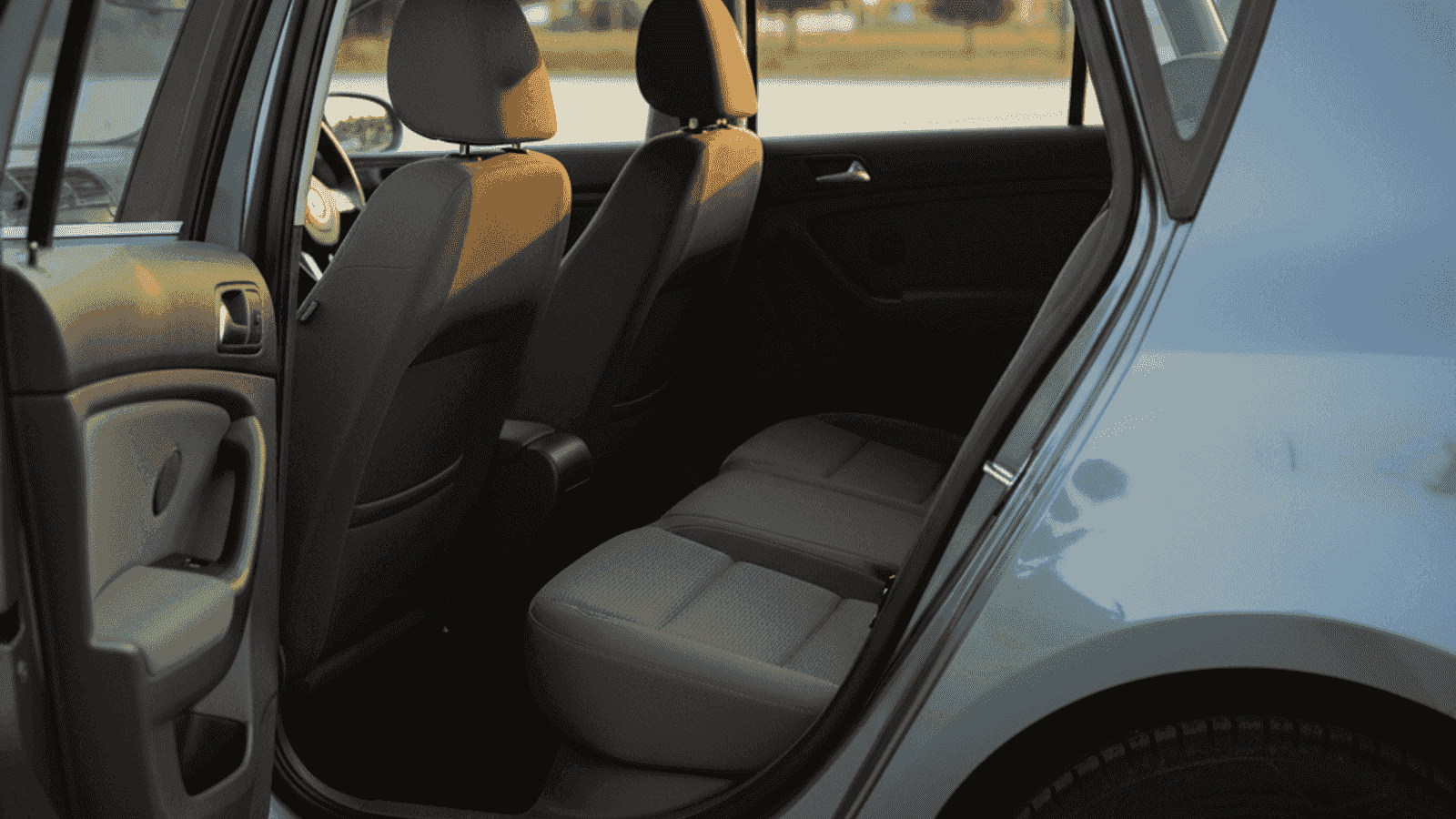
The most frequent question we hear from used-car buyers is not how much it consumes or how much it tows, but "does this car have ESP and how many airbags does it have". Safety equipment in a used car is the topic where mistakes are easiest to make, because what was mandatory in every new car in the EU one year was, the year before, still an option on the price list. This guide lays out a timeline by year and by system so you know what to expect before you go to look at an Astra from 2010 or a Golf from 2013.
This guide was put together by the Auto Gas Gaga workshop in Banja Luka, based on years of experience with used cars imported from the EU and on equipment checks performed during pre-purchase inspections.
Table of Contents
- What to Look For in a Used Car When It Comes to Safety
- Timeline of Mandatory Safety Equipment in the EU 2003-2024
- ABS from 2004 Practically in Every New Car
- Front Airbag Mandatory from 2003, but Airbag Count Varies
- ESP and 2011/2014 Pivotal Years
- ISOFIX Mandatory in All New Cars from February 2013
- AEB and ISA and the 2022/2024 Turning Points
- Euro NCAP Ratings and Why 5 Stars from 2009 Are Not the Same as 5 from 2024
- Practical Guide by Year and Class of Used Car
- What to Check When Buying
- Frequently Asked Questions
- Related Articles
What to Look For in a Used Car When It Comes to Safety
A used-car buyer in BiH typically looks at cars between five and fifteen years old, imported from Germany, Italy, Austria or Slovenia. Those cars were homologated by the manufacturer for the EU market, which means they had to meet the EU regulations in force on the day of production. That single sentence carries the entire logic of this guide: equipment that was mandatory at the moment of homologation is definitely present even in the base trim; equipment that was optional is present only if the buyer paid extra when the car was new.
That distinction matters because the BiH used market is full of hundreds of base-trim examples. A car bought from a dealership in Germany in 2010 could be ordered stripped, with only what the law required. That same car as a used import from 2018 in our country has front airbags and ABS, but side airbags, factory ESP or AEB are not guaranteed. The seller may tell you "it has everything" because the car drives without warning lights on; warning lights that do not light up do not mean the car has the equipment, they only mean that what is fitted is not broken.
Timeline of Mandatory Safety Equipment in the EU 2003-2024
Here is a practical overview by year and system. All years refer to the date when the system became mandatory for all new passenger cars sold on the EU market, not only for new vehicle types, for which the deadlines are usually two or three years earlier.
| System | Mandatory for new types | Mandatory for all new cars on sale | Legal basis |
|---|---|---|---|
| Front airbag (driver + passenger) | 1 October 1998 | 1 October 2003 | EU directives for passive safety |
| ABS | 1 July 2003 | 21 May 2004 | Reg EC 661/2009 (later consolidation) |
| ESP / ESC | 1 November 2011 | 1 November 2014 | Reg EC 661/2009 |
| ISOFIX (lower anchors + top tether) | February 2011 | February 2013 | UN/ECE R14 (and ISO 13216) |
| eCall emergency call system | 31 March 2018 | 1 April 2018 | Reg EU 2015/758 |
| AEB and ISA, drowsiness detection, lane keeping | 6 July 2022 | 6 July 2024 | Reg EU 2019/2144 (GSR2) |
The table applies to standard EU homologation. American, Japanese and Southeast Asian imports follow different deadlines, but for the BiH used market this is a minor factor since 95% of the supply is to EU specification. Now we go system by system, with what you actually need to know before viewing a specific car.
ABS from 2004 Practically in Every New Car
ABS, the anti-lock braking system, became mandatory for all new passenger cars homologated for the EU market from 21 May 2004. This means that practically every used car from 2005 onwards built to EU specification has ABS as factory equipment. Cars produced in 2003 and 2004 deserve a closer look, because the base trims of some models still offered ABS as an option until the very end.
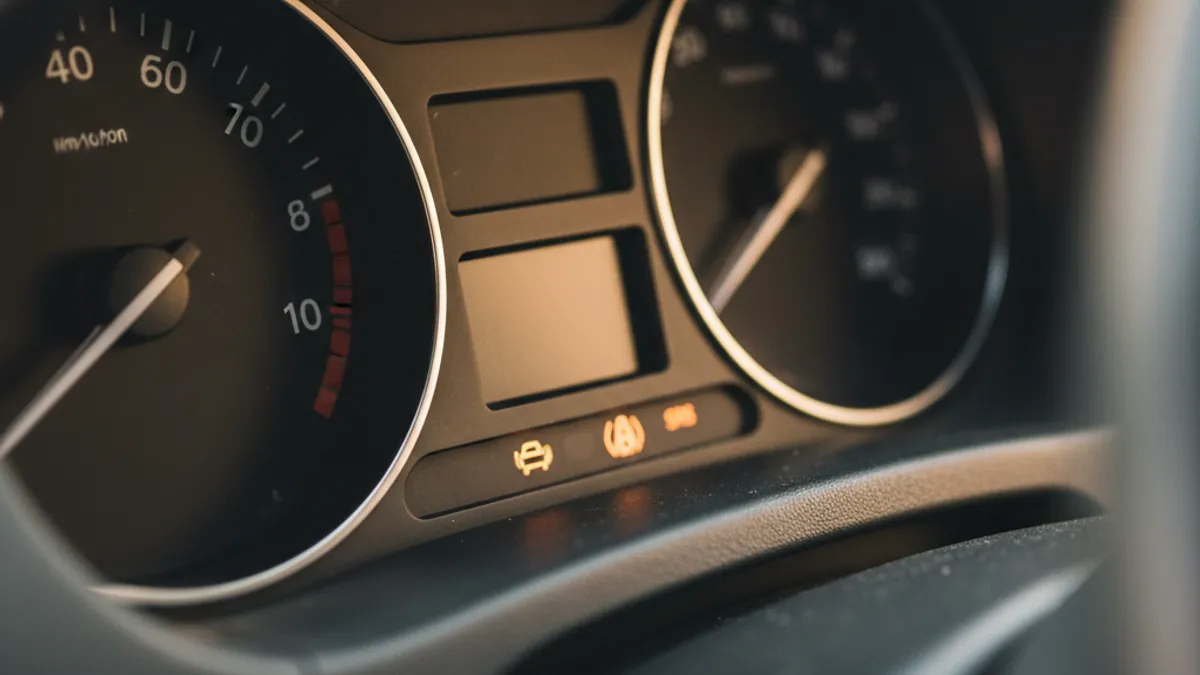
What this means in practice for your Astra H, Golf 5, Octavia 2, Polo 4 and similar models from that period: ABS is there, by default. On site, it is worth checking two things. When you switch on the ignition, the ABS warning light briefly comes on (self-check) and goes out after a couple of seconds; if it does not light up at all, someone has either pulled the bulb or used a diagnostic tool to disable the light, which is grounds for suspicion. Second: when braking on a sandy or wet stretch, if you can safely test it, you will hear and feel the typical pulsing of the pedal, which is a sign that ABS is working.
There is one nuance worth knowing. ABS is electronics that wear out over time. Wheel-speed sensors on used cars over 200,000 kilometres are a common fault, and the warning light can intermittently come on and then go out. That is not a sign that the car lacks ABS, only that the sensor is near the end of its life. More details on what causes the ABS warning light to come on and how to check the sensor are available in a separate guide on our site.
Front Airbag Mandatory from 2003, but Airbag Count Varies
This is the part where used-car buyers are most easily misled. The EU rule is this: front airbags for the driver and passenger have been mandatory for all new cars homologated for the EU market since 1 October 2003. That is all the law requires. Everything beyond that, side airbags in the seats, curtain airbags that protect the head, knee airbags under the steering wheel, is not legally mandatory. The manufacturer fits them for the Euro NCAP rating and market competitiveness, not for legal reasons.
The consequence for the used market is serious. An Astra H from 2008, a Golf 5 from 2007, an Octavia 2 from 2009 in base trim (Essentia, Trendline, Easy and similar) often have only two airbags, driver and passenger. A more expensive trim from the same year has six to eight airbags. From the outside, both cars look identical. The difference is only visible in the AIRBAG marking on the side of the dashboard, on the A-pillar and in the roof section, where the side and curtain airbags hide. Without that marking in the specific spot, the airbag is not fitted, no matter what the seller tells you.
How Many Airbags Does a Used Car from 2010 Have
A classic "family compact 2010" question. Base trim, two airbags. Mid trim, four or six. Higher trim, six to eight. All of this can be checked through diagnostics at a workshop in about ten minutes, which is one of the best reasons why it pays to come in for a pre-purchase inspection before you put down a deposit.
An airbag warning light that stays on permanently is reason enough not to buy the car without prior diagnostics. It means either a fault in the crash sensors, a damaged clock spring in the steering wheel, or the airbag has already deployed and was not replaced afterwards. The last scenario is dangerous because you are buying a car without functional passive safety.
ESP and 2011/2014 Pivotal Years
ESP, Electronic Stability Programme (also called ESC), is the system that brakes an individual wheel to prevent the car from skidding in a corner or during a sudden swerve. For a used car this is the single most important piece of equipment. Statistics published by Mercedes and other manufacturers show that serial fitment of ESP reduced serious traffic accidents by more than 42 percent, and it is estimated that ESP has prevented around 190,000 accidents across Europe and saved over 6,000 lives.
Legally: ESP became mandatory for new types of passenger cars in the EU from 1 November 2011, and for all newly registered cars from 1 November 2014. The second date is the one that matters to you as a used-car buyer, since it covers every new car on sale and not only newly introduced types. A car homologated and sold in the EU from the end of 2014 onwards definitely has ESP, regardless of trim. A car from 2011 to 2014 depends on the vehicle type and trim. An older car, from 2010 and earlier, is where ESP was an option.
Does the Astra H Have ESP from the Factory
It is easiest to check on site. When you switch on the ignition, the instrument cluster should briefly light up the icon of a small car with curved lines behind it (a picture that resembles a car skidding). If that icon is missing from the short self-check, ESP is not there. If the icon does appear, there is also an ESP off switch, usually to the left of the steering wheel or in the centre console (labelled ESP OFF, ASR OFF or similar). The Astra H (2004-2010) had ESP as an option, while the Astra J (2009-2015) received ESP as standard from 2011.
From Which Year Does the Golf 5 and Golf 6 Have ESP
The Golf 5 (2003-2008) had ESP as an option in the lower trims and as standard in the higher ones. The Golf 6 (2008-2012) had ESP as standard in most trims, but the base Trendline in the first years of production (2008-2010) could come without it. If you want a guarantee, a Golf 6 from the second half of 2011 and later almost certainly has ESP, and the Golf 7 (from 2012) has it without exception. The Octavia 2 (2004-2013) offered ESP as an option in the base trims until the end of production, while the Octavia 3 (from 2013) has ESP as standard.
A workshop rule: if a car from 2010-2013 has an ESP button and the icon lights up in the self-check, it is good. If it does not light up, base trim, no ESP. The third possibility is that the icon comes on and stays on, which means ESP is there but has a fault (most often a wheel-speed sensor or steering-angle sensor), and that needs fixing before you count it as functional.
ISOFIX Mandatory in All New Cars from February 2013
ISOFIX, which covers the lower anchor points in the rear seat and the upper tether strap, is the system that allows a child car seat to be attached directly and mechanically to the body shell rather than secured with the seat belt. It became mandatory under UN/ECE R14 regulation for all new cars produced in the EU from February 2013. A used car from 2014 onwards has ISOFIX brackets on at least the two outer rear seats, guaranteed. A used car from 2008 to 2013 often had ISOFIX in practice, since European manufacturers introduced the system on their own before the law, but it was not guaranteed across all models. A used car older than 2008 depends on the brand: Renault, Volvo and some Volkswagens often had it, while base Southeast Asian imports from those years often did not.
How to Check Whether a Car Has ISOFIX
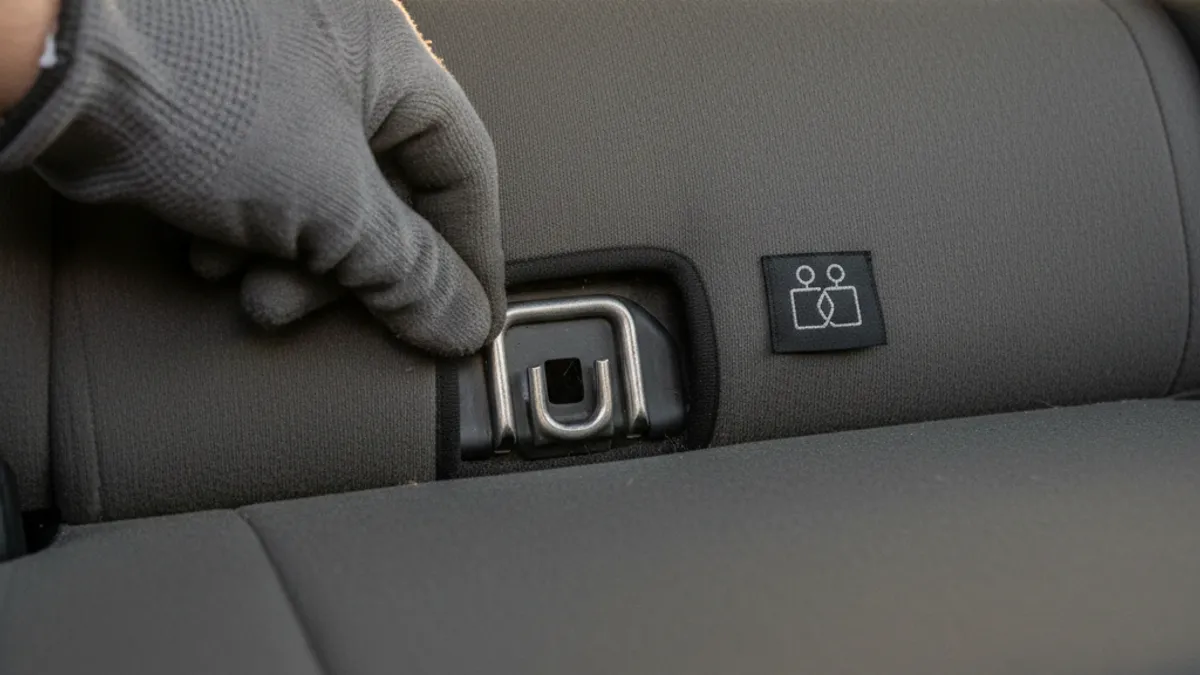
Open the rear door, sit on the rear seat and run your finger along the seam between the cushion and the backrest, on the left and right sides. ISOFIX brackets are two small metal U-loops (one on the left, one on the right outer seat) located about 10-15 cm from the backrest. They are often hidden behind a small fabric flap labelled ISOFIX. If they are not there, the car does not have ISOFIX, full stop.
The top tether is the strap that prevents the child seat from tipping forward in a collision. It is usually located in the boot, on the back of the rear seat backrest there are small plastic covers with a hook underneath. In estates and SUVs the top tether can be in the boot floor or on the roof. Without the top tether, an ISOFIX seat can be fitted but not at the best level of safety for small children. For a family with small children this is a decisive item, because installation with an ordinary seat belt is difficult and a large percentage of parents do not do it correctly; ISOFIX practically eliminates that error.
AEB and ISA and the 2022/2024 Turning Points
The newest regulations apply to new cars, but more and more used cars from 2022 onwards already come with these systems. AEB (automatic emergency braking) is the system that uses a camera and radar to detect a vehicle, cyclist or pedestrian and brakes autonomously if the driver does not react. ISA (intelligent speed assistant) recognises road signs and warns the driver when the speed limit is exceeded. There are also drowsiness detection systems and emergency lane-keeping systems.
Under the GSR2 regulation (Reg EU 2019/2144), these systems became mandatory for new vehicle types from July 2022 and for all new cars on the EU market from July 2024. A used car homologated in 2024 or later has AEB and ISA even in the base trim. A car from 2022 or 2023 depends: higher trims introduced this equipment before the law, but the base trim may not have it. A car from 2020 or earlier usually does not have AEB, except in the more luxurious segments.
AEB relies on a clean camera near the rear-view mirror and a radar behind the front grille. If the car had a light front-bumper impact or the radar was replaced, the calibration may have shifted. During a pre-purchase inspection you should ask about the accident history and check whether the radar or camera was calibrated after any intervention. Our workshop does this as part of a used-car inspection, especially if the car comes from the EU market and there is suspicion of front-end repair.
Euro NCAP Ratings and Why 5 Stars from 2009 Are Not the Same as 5 from 2024
This is one of the biggest mistakes used-car buyers make. They see the ad: "Octavia 2, Euro NCAP 5 stars" and assume that this means the same as 5 stars on a new Tiguan from 2024. It does not. Euro NCAP is the independent European vehicle safety testing programme. A rating from one to five stars is given on the basis of frontal and side impact tests, pedestrian protection and assistance systems. Three things to keep in mind:
- The rating has a shelf life. A Euro NCAP rating is valid for up to six years, after which it expires. A car that received five stars in 2009, that rating no longer counts as "5 stars" on today's scale.
- The test protocol changes, and is significantly stricter with each new generation. Major protocol updates took place in 2009, 2015, 2018, 2020 and 2023. Each time new tests are added (pedestrians, cyclists, offset impacts with new geometry, AEB with a bicycle, impact with a curtain airbag) and the thresholds for the same star count are raised. This means that a car that received 5 stars in 2009 would, with the same crash performance, probably get three or four stars in a 2024 test.
- Mandatory equipment items are added that older cars do not have. Today's top rating assumes AEB, ISA, lane-keeping and drowsiness detection. A car from 2009 as a rule does not have this equipment, which would further reduce its rating.
Euro NCAP 5 Stars from 2009 Value Today
If you compare an Octavia 2 (5 stars in 2009) with an Octavia 4 (5 stars in 2020), do not assume they are equal in a crash. The latter is newer, stiffer and has many more airbags. 5 stars from 2009 is still not a disqualification - the car was among the safer ones in its class at the time, but do not compare it to today's scale. If safety is a priority for you and the budget allows it, a used car from 2018 or newer offers a significant jump in head protection and active systems compared with a car from 2010.
Practical Guide by Year and Class of Used Car
Here is a practical overview by the year ranges typical of the BiH market.
| Year | Definitely has (even in base trim) | Often has, but check | Not present except in luxury trims |
|---|---|---|---|
| 2005-2008 | Front airbags (driver + passenger), ABS | Side airbags, ESP, ISOFIX | Curtain airbags, AEB, ISA |
| 2009-2013 | Front airbags, ABS, EBD | ESP (more often from 2011), side airbags, ISOFIX | AEB, ISA, lane-keeping |
| 2014-2018 | Front airbags, ABS, ESP, ISOFIX | Side and curtain airbags, camera and parking sensors | AEB, ISA, adaptive cruise |
| 2019-2023 | All of the above plus eCall | AEB (often, not always in base), lane-keeping, drowsiness detection | Full ADAS suites (autopilot, evasive steering) |
| 2024+ | All of the above plus AEB, ISA, drowsiness detection, emergency lane-keeping | Adaptive cruise, head-up display | Latest parking assistance systems |
Octavia 2 vs Octavia 3 Safety Equipment
The Octavia 2 (2004-2013) in the base trim (Classic) had two airbags and ABS, while ESP was part of the Ambiente and Elegance equipment. The Octavia 3 (from 2013) launches in its very first model with ESP as standard, ISOFIX as standard and six airbags in the mid trims. The difference is not marginal, which is why we rate the Octavia 3 as a safer family car for the money. A similar principle applies to other popular used cars: Ford Focus 2 vs Focus 3, Renault Megane 2 vs Megane 3, Peugeot 308 first generation vs second generation.
What to Check When Buying
We summarise the practice in a short list that helps you not to miss anything important on site.
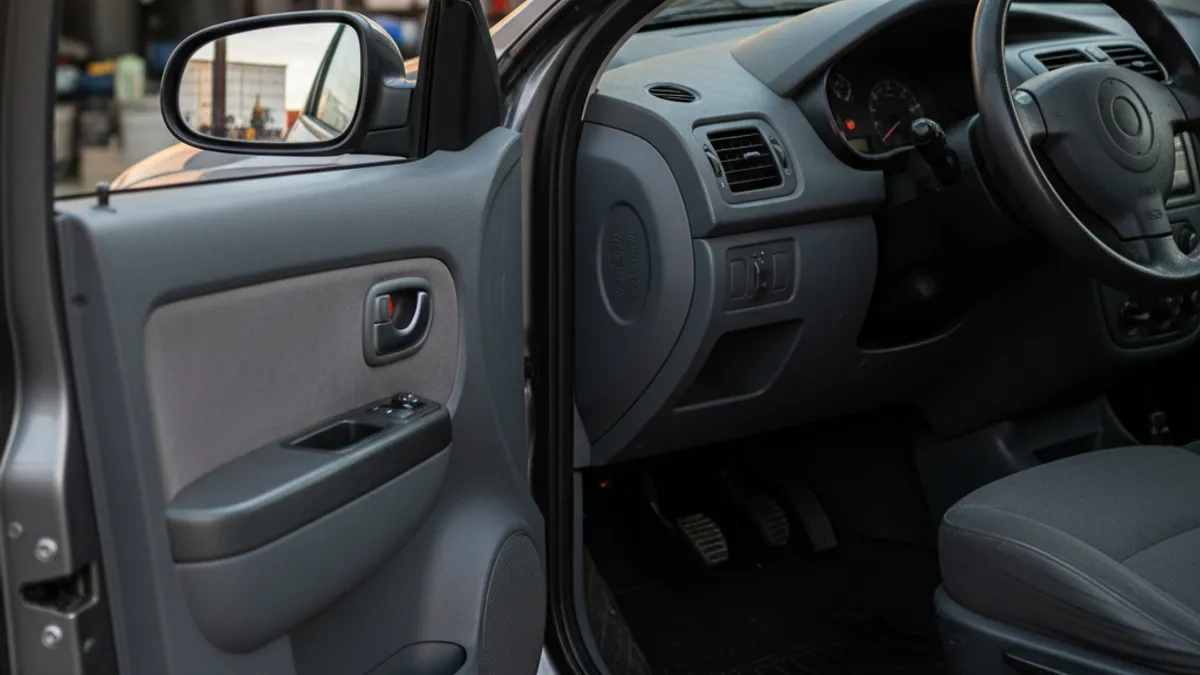
Warning lights at ignition on. The ABS light should come on and go out within 2-3 seconds. The airbag light the same, on and then off. The ESP light (a small car with curved lines) should appear during the self-check. A light that stays on permanently is reason for suspicion and reason not to buy the car before diagnostics.
Visual inspection of the cabin. Side airbags appear as a small stitched section with an AIRBAG or SRS marking on the outer seam of the seat. Curtain airbags have a small plastic marking along the roof edge above the side windows and on the A and C pillars. ISOFIX brackets are metal U-loops in the seam of the rear seat, with the top tether in the boot. Steering wheel: if you see a seam in the centre area that does not match the original or uneven surfaces, the airbag may have deployed - be sure to check the history.
Test drive. Gentle braking on an empty stretch of wet or sandy surface (if it is safe). The ABS should pulse the pedal. Briefly switch off the ESP with the button and see whether the appropriate light comes on, then switch it back on immediately.
The thing most buyers skip, but should not. Ask about the repair history of the front bumper, wings and bonnet area. A car that has had even a minor accident, but with the AEB camera or radar not recalibrated, can give false warnings or fail to react when it should. For cars from 2022 onwards this matters as much as a compression check on the engine. For cars returned from total loss, a problem increasingly seen with imported used cars, a history check by VIN is the only sure way. An experienced seller can hide a lot, but international databases keep records of accidents and "total loss" status that are not visible on site. Odometer figures by year, previous owners and indicators of theft or total loss are most easily pulled via carVertical, a service that uses the VIN to pull documented vehicle history from international registers. In our view, this is an unavoidable step before buying any used car, especially one imported from the EU. When paying for the report you can use the code GAGA for a 20% discount.
If you have already found the car and want to be sure before putting down a deposit, book a pre-purchase inspection at our workshop or message us on WhatsApp with the listing link, and we will go together.
Frequently Asked Questions
From which year does ESP become mandatory in the EU?
ESP (ESC) became mandatory for new types of passenger cars in the EU from 1 November 2011, and for all new cars sold on the EU market from 1 November 2014. The second date is the one that applies to used cars. If a car was homologated and first registered as new in the EU from the end of 2014 onwards, it has ESP even in the base trim.
Does every used car from 2010 have ESP from the factory?
No. 2010 is before ESP became mandatory, so in the base trims it was more often an option than standard. Specifically: Astra H, Golf 5 and 6 Trendline, Octavia 2 Classic can come without ESP. Higher trims of the same models from the same year usually have it. The easiest way to check is to switch on the ignition and see whether the small icon of a car with curved lines behind it appears in the self-check, plus whether an ESP OFF button is present.
How many airbags does a Golf 6 or Astra J from 2012 have?
The base trim (Trendline, Enjoy or Selection) usually has four airbags (two front plus two side in the seats). The mid trim (Comfortline, Cosmo) has six to eight (plus curtain). The top trim goes up to eight (plus driver's knee airbag). All of this can only be confirmed with workshop diagnostics; visually it can be roughly assessed by the seat seams and roof area.
Does every used car from 2015 have ISOFIX?
A used car homologated for the EU market from February 2013 onwards has ISOFIX brackets on at least the two outer rear seats. This is mandatory under UN/ECE R14. A car from 2015 therefore definitely has ISOFIX. The top tether is also part of the same regulation and is located in the boot or on the back of the seat backrest.
What does it mean that a car has a Euro NCAP 5-star rating from 2009?
It means that the car was at the top of safety in its class at the time, by the methodology then in force. It does not mean it is the same as "5 stars" from 2024. Euro NCAP protocols are significantly stricter with each generation, new tests and new mandatory equipment items are added. A car from 2009 with five stars would today rate three or four. It is still solid, but not the equivalent of today's five-star car.
Does it make sense to buy a used car without ESP in 2026?
If the budget is limited to a car older than 2011 and there are no other options, yes, but knowingly. ESP is statistically the single most important item of active safety, and buying a car without it means driving less safely on slippery roads, in corners and during sudden manoeuvres. When choosing between two cars similar in year and price, the one with ESP is almost always the better purchase, even if it has somewhat more kilometres.
How can I check that the car really has all the airbags the seller claims?
The safest route is diagnostics at a workshop. Each airbag module reports its status to the system, and the airbag count is visible through service menus. Visually it can be roughly assessed by the seat seams and the roof area, but this is not reliable on an older car where the seats may have been replaced. As part of a pre-purchase inspection at our workshop, we check the airbag count as standard.