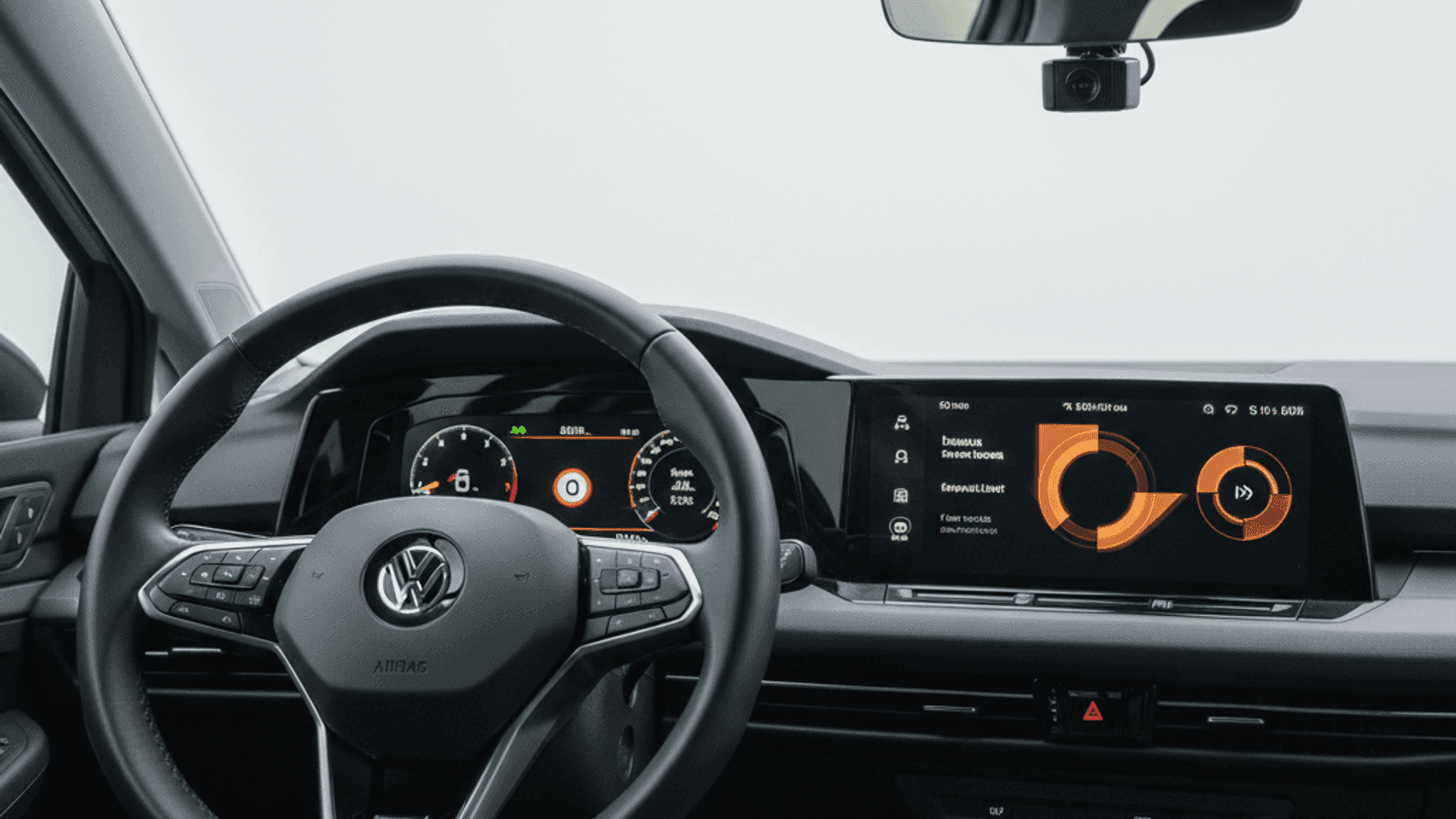
From 7 July 2026, the new EU safety standards for cars, known as the GSR2 package, introduce yet another layer of mandatory assistance systems: every brand-new car sold in the European Union must have a camera that monitors driver attention and an advanced automatic braking system that recognises pedestrians and cyclists. All of this concerns BiH drivers in a very concrete way: as soon as you buy a new car at the dealership or import a used one from Germany, Austria, Slovenia or Italy from model year 2024 or newer, you get the entire package of these systems in your vehicle. This article explains what is being introduced exactly, what is worthwhile, what may annoy you, and how to relate to all of it in everyday driving.
This guide was put together by the Auto Gas Gaga workshop in Banja Luka, based on technical experience with modern European cars that already carry these systems and on regulatory documents from the European Commission.
Table of Contents
- What GSR2 Is and Why a BiH Driver Encounters It
- What Is Mandatory From July 2024 - Phase 2 of the Package
- What Is Being Introduced From 7 July 2026 - Phase 3 of the Package
- ISA - Intelligent Speed Assistance
- AEB - Autonomous Emergency Braking
- DDAW and ADDW - Camera Watches Where You Look
- EDR Black Box - What Is Recorded and Who Has Access
- How This Changes the Used Car Market From the EU
- What Really Helps and What Just Gets in the Way
- What to Expect in a Golf, Octavia, Tiguan and Megane
- Frequently Asked Questions
- Related Articles
What GSR2 Is and Why a BiH Driver Encounters It
GSR2 is the abbreviation for the second generation of the General Safety Regulation, formally EU Regulation number 2019/2144. It is a document that prescribes which safety technologies all new cars sold in the European Union must have. The rule is being introduced in three phases, and we are currently interested in phases two and three.
Phase 2 came into force on 7 July 2024. From that date, every new car sold in the EU must have five main systems fitted from the factory: Intelligent Speed Assistance (ISA), Autonomous Emergency Braking (AEB), Driver Drowsiness and Attention Warning (DDAW), Emergency Lane Keeping System (ELKS) and an Event Data Recorder (EDR) black box for crashes. Phase 3 arrives on 7 July 2026 and introduces a more advanced version of the camera that tracks where the driver is looking (ADDW), plus an extended AEB that recognises pedestrians and cyclists, not only other vehicles.
BiH is formally not in the EU, so this regulation does not apply directly to our homologation. An existing Golf 5, Passat B6 or Octavia from 2010 does not have to retroactively gain any of these systems, and there is no obligation to install them on already-registered vehicles in BiH. The rule applies exclusively to cars manufactured and first sold on the EU market. But this is where the BiH side of the story begins: almost every new car that arrives here through dealership sales or as a used import from the EU from model year 2024 or 2025 already has the full package. A driver in Banja Luka encounters these systems just like a driver in Vienna, only somewhat later and through a used purchase.
European Commission estimates, on which this entire regulatory package is based, state that by 2038 GSR2 technologies should save over 25,000 lives and prevent at least 140,000 serious injuries on European roads. That is the figure often cited in the media and in justifications of the regulation. Whether that number will actually be reached, we will see across decades of statistics. Our purpose here is not to defend or criticise the regulation, but to explain to you what mechanically happens in the car you drive.
What Is Mandatory From July 2024 - Phase 2 of the Package
To avoid confusion, here is first a summary of everything your new car from the dealership or a used import from the EU model year 2024 must already have according to the phased schedule.
| System | What It Does | Mandatory From | Can You Turn It Off |
|---|---|---|---|
| ISA (Intelligent Speed Assistance) | Reads signs and warns or eases off the throttle when exceeding the limit | 7 July 2024 | Yes, but it reverts to on at every engine start |
| AEB (Autonomous Emergency Braking) | Brakes by itself if it detects a collision | 7 July 2024 | Very limited, usually via a button on the infotainment |
| DDAW (Drowsiness Warning) | Tracks signs of fatigue through the steering wheel and behaviour | 7 July 2024 | Indirectly, no switch is offered |
| ELKS (Lane Keeping Assist) | Actively returns the car to the lane if you cross a line | 7 July 2024 | Via a button on the steering wheel, reverts at start |
| EDR (Black Box) | Records a few seconds around a crash | 7 July 2024 | No, an integral part of the electronics |
| ADDW (Driver Attention Camera) | A cabin camera tracks where the driver is looking | 7 July 2026 | Indirectly, the system always switches on |
| Advanced AEB for Pedestrians | AEB that recognises pedestrians and cyclists, not only cars | 7 July 2026 | Very limited |
All of this is combined with requirements that already existed before GSR2: ESP, ABS, tyre pressure monitoring system (TPMS) and the mandatory preparation for an alcohol interlock (the interface, not the interlock itself). In other words, a new car in 2026 has a layer of assistance systems it did not have in 2010 or even 2018.
What Is Being Introduced From 7 July 2026 - Phase 3 of the Package
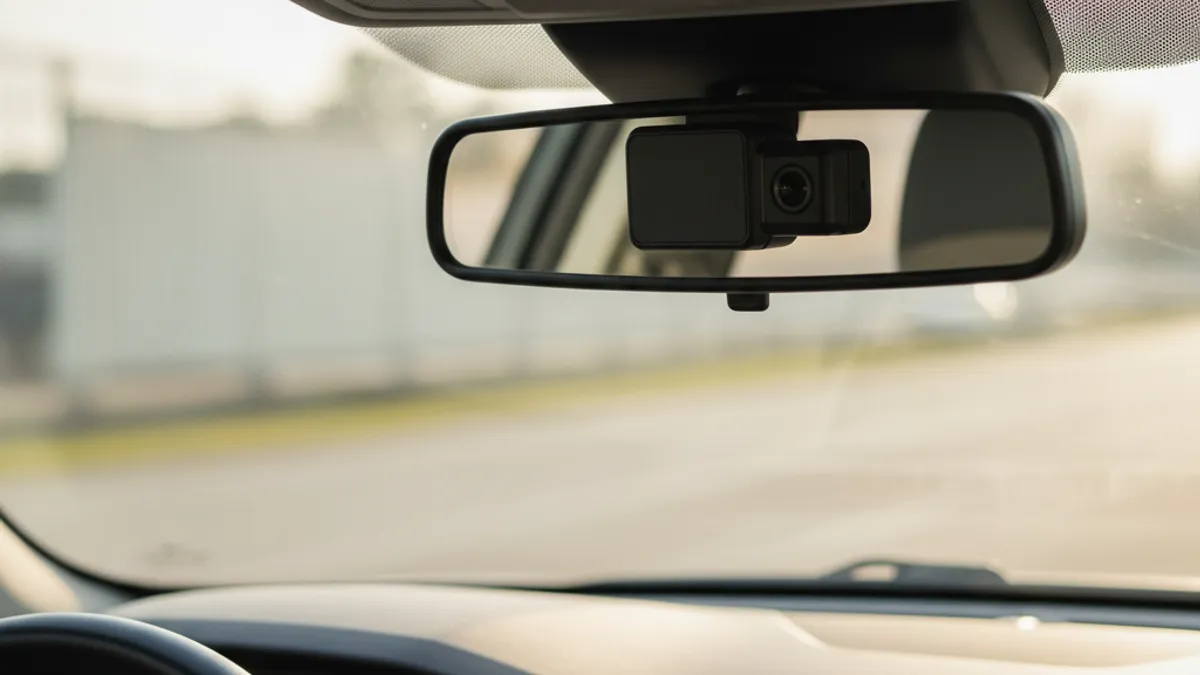
Phase 3 is an upgrade of what is already prescribed in Phase 2. The main novelty is the Advanced Driver Distraction Warning, shortened to ADDW. It is a cabin camera, usually placed in the pillar below the rear-view mirror or in the mirror itself, that looks at the driver's face. The system tracks where your eyes are pointed, how long you are not looking at the road, whether you are looking at your phone or to the side. The difference compared to DDAW from Phase 2: DDAW is indirect and infers from steering wheel movements, ADDW is direct and infers from what the camera sees.
The second novelty from Phase 3 is the extension of the AEB system. AEB from 2024 must react to other vehicles ahead. The 2026 version must also recognise pedestrians and cyclists, which technically means a more demanding combination of radar and camera modules. Many manufacturers fulfilled this function already in 2024 or 2025, ahead of the obligation.
It should be emphasised once more: Phase 3 applies to vehicles first registered in the EU from 7 July 2026. A used car from the EU model year 2026 that you import to BiH in 2027 or 2028 will also have the full package.
ISA - Intelligent Speed Assistance
ISA is the system that has caused the most noise and the most misunderstanding in the media. The operating principle is as follows. The car combines data from the navigation map (where the permitted speed for a given road is known) with a camera that reads traffic signs along the road. When the system concludes what the speed limit is for the current section, it tracks your current speed and warns you if you exceed it. The warning can be audible, visual on the screen, pedal vibration or a slight pull back on the accelerator pedal, depending on the manufacturer.
How to Permanently Disable ISA in a New Car
The short answer is that ISA cannot be permanently disabled. Regulation 2019/2144 explicitly requires the system to be switched on at every engine start. You can manually disable it on the infotainment or via a button combination on the steering wheel, but at the next engine start it will activate again. Practically, this means that if ISA does not suit you, you have to manually turn it off every time you get into the car.
It is important to understand the difference between a warning and an intervention. ISA in its standard form does NOT take over control of the car. It informs you that you are exceeding the limit. Some versions have a so-called "haptic accelerator", where the pedal gently resists when you press the throttle while exceeding the limit, but the resistance is overcome with normal pressure. The car does not start braking by itself, it does not slow down and it does not take over steering. That is a very important detail that is often distorted in conversations.
In practice, the first months with ISA often reveal how outdated the maps are and how often cameras can make mistakes (for example, a 50 limit on the motorway because an exit sign was misinterpreted). This improves over time through map updates.
AEB - Autonomous Emergency Braking
AEB, or Automatic Emergency Braking, is a system that essentially does what its name says: if it recognises that you are heading into a collision with the preceding vehicle, it brakes automatically. The operating principle relies on a radar module, most often in the central grille or lower bumper, and a camera behind the windscreen. The system constantly measures the distance and closing speed towards the object ahead. When it judges that the collision is unavoidable if you do not react yourself, it first issues a warning and then activates the brakes by itself.
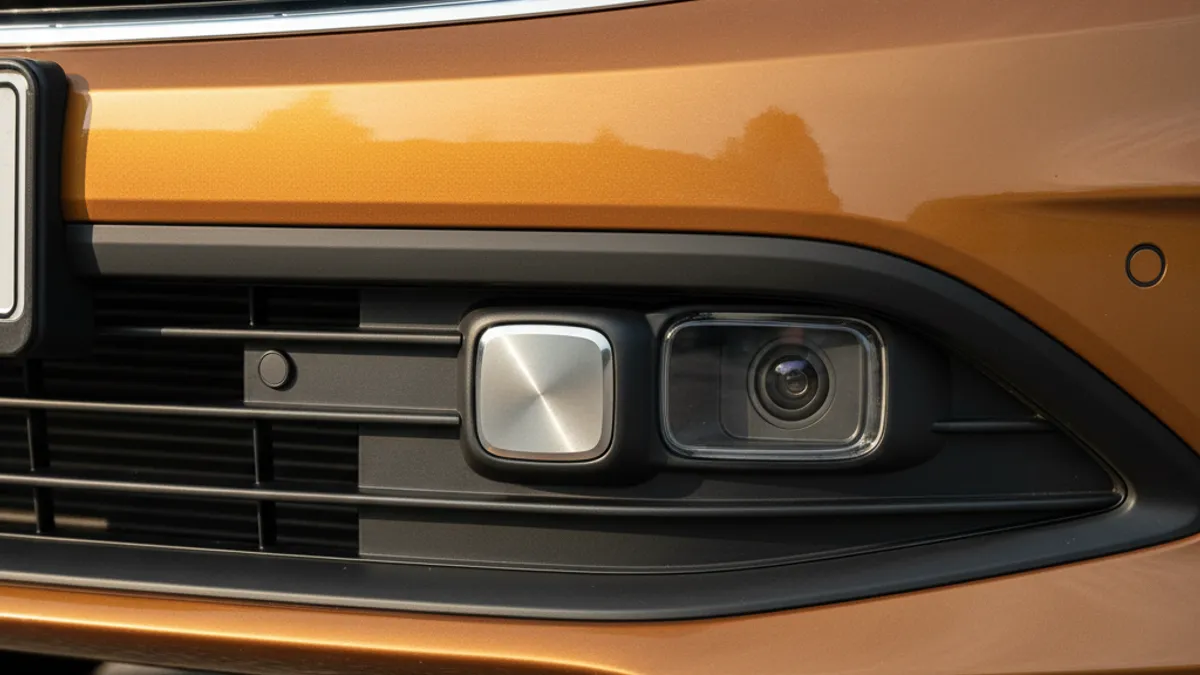
There is reliable research showing that AEB reduces collisions with the preceding vehicle by around 50 percent, and car-pedestrian collisions by around 30 percent. The figures are not marketing, they come from analyses by insurance companies and regulatory bodies on the European and American markets. The principle is similar across all manufacturers: it is a combination of radar and camera sensors with software for trajectory estimation. Even so, the implementation, software, sensor calibration and typical behaviour in edge cases differ from manufacturer to manufacturer. Volkswagen's, Renault's, Stellantis' and Toyota's systems are not identical even though they all work on the same basis.
AEB Mandatory Braking When It Does Not Work
AEB is not all-powerful and has clear limits a driver should know. The system can weaken in the following situations: when the radar is dirty with mud, snow or road salt; when the camera behind the windscreen is fogged or dirty; when visibility is poor due to heavy fog or downpour; when you drive in strong sunlight directly into the camera lens; when an obstacle appears very suddenly at close range, below the minimum reaction distance. At speeds above around 80 kilometres per hour, the system may slow the car but cannot always fully stop it, because the physical braking distance depends on friction, weight and brake condition.
In practice, treat AEB as an additional safety net, not as a substitute for attention. The driver still has the same legal and moral duty as without the system. If the camera or radar are improperly calibrated after a windscreen replacement or a knock to the bumper, AEB may react incorrectly - either braking where it should not, or not reacting where it should. That is why ADAS sensor calibration has become a regular part of servicing after certain bodywork repairs.
DDAW and ADDW - Camera Watches Where You Look
Here are two separate systems that are often mixed up.
DDAW (Driver Drowsiness and Attention Warning) is mandatory from 2024 and does not use a camera pointed at the face. It indirectly estimates fatigue: it tracks steering wheel movements, the number of lane corrections, pedal behaviour, driving duration and other inputs. If it concludes that you show signs of fatigue, it gives you a warning with a coffee cup icon on the screen or an audible signal with a recommendation to take a break.
ADDW (Advanced Driver Distraction Warning) is mandatory from 7 July 2026 and uses a cabin camera. The camera is usually small, placed in the area of the rear-view mirror or in the windscreen pillar, looking at the driver's face. The system tracks eye openness, gaze direction and head position. It issues a warning if it judges that you are not looking at the road for long enough (for example, looking at the phone in your lap), if fatigue is closing your eyes, or if you look long to the side.
ADDW Camera Privacy What It Records
Privacy is a topic that often comes up first, and logically so. By regulation, the ADDW camera works locally, in real-time processing, and does NOT record video in the usual sense. The system on board analyses the images, draws a conclusion (driver attentive, driver absent), then discards the image. There is no obligation, nor any technical purpose, for the car to keep video from the interior camera or to send it to the manufacturer. Different manufacturers have different policies for telematics data in practice, but for ADDW as a regulatory function, the image does not leave the car and is not stored.
There are, of course, a number of "buts". If you enter a manufacturer's programme for advanced services (for example, connection with a phone app, remote locking, OTA updates), you accept a data agreement that covers much more than just ADDW. This is not about GSR2 regulation, but about the commercial product of a specific brand. It is worth reading exactly what you are signing when you activate the car's online functions.
EDR Black Box - What Is Recorded and Who Has Access
The EDR (Event Data Recorder) is a system that has been mandatory in the US for years and is now becoming mandatory in the EU as well. The EDR records vehicle parameters for several seconds before, during and after significant events, primarily crashes. Typically it records speed, accelerator pedal position, brake pedal position, airbag activation, steering wheel position, seatbelt status, and the operating phases of the ABS and ESP systems.
Important for the driver: EDR recording is local and anonymous. The system constantly erases older data and keeps only the latest window; if no crash occurs, the data is dropped from memory. Only in the event of a crash, which the EDR detects via airbag activation or a sudden deceleration, does the system lock a data window of several seconds before and after.
Who has access to this data in BiH depends on the specific situation. The vehicle owner has the right of access through the manufacturer or a certified service. The police or a court can request access as part of an official accident investigation, just as they can request a tachograph readout or surveillance camera footage. An insurance company does not gain access automatically; the owner's consent or a court decision is required. The EDR does not contain personal data about the driver (name, ID number), but only the technical parameters of the car at the moment of the accident.
How This Changes the Used Car Market From the EU
For the used car market from the EU of model year 2024 and younger, GSR2 means several practical consequences.
The first is that almost all cars entering BiH as imports from Germany, Austria, Slovenia or Italy from 2024 onwards have the full system package, without exception. It no longer happens that a basic version of a model is without AEB while a more expensive one has AEB - everything must have everything. This somewhat narrows the range of differences between equipment trims. Comfort options (leather interior, panoramic roof, premium audio) remain clearly separated from safety features, which are now standard.
The second is that ADAS sensor calibration becomes a regular service item. Every windscreen replacement, repair of a front bumper impact, even a mirror replacement on some models, requires camera or radar calibration after fitting. This costs time and equipment. Many BiH workshops have already invested in calibration panels, but it is not uncommon for certain models to still be sent to authorised dealers or specialised workshops (more on how to choose an auto service in Banja Luka for newer models). When buying a used car from the EU of model year 2024, it is useful to ask the seller whether the car has had bodywork repairs and whether the sensors were calibrated afterwards.
The third consequence concerns checking the car's history. A car with modern safety systems carries a lot of electronics that may bear traces of earlier repairs or accidents. An experienced seller can hide a lot, from rolled-back mileage to repainted panels after a total loss. Some of that you catch at a pre-purchase inspection in a workshop, but the real history of the car is easiest to check via carVertical. Using the VIN, it pulls the documented history of the car from international registers: mileage by date, recorded crashes, the number of past owners, and indicators of theft or total loss. We consider this mandatory before buying any used car from the EU, especially younger model years where the electronics are complex. When paying for the report, you can use the code GAGA and get a 20% discount.
Used Car From the EU 2024 What to Expect
Concretely, if you are buying a car from the EU of model year 2024 or later, expect the following:
- More icons will flash on the dashboard at every start than before. Most are not a fault, but informational notices from ISA, ELKS and DDAW systems.
- The car will beep or vibrate in situations to which older models do not react (slight lane crossing, brief speed exceedance).
- Service intervals for sensors and calibration may be specific to make and model; ask an authorised or specialised servicer for your model.
- The resistance of cameras to dirt and frost becomes a practical issue. The windscreen in front of the camera must be clean, and in winter the camera can freeze and the system temporarily switch off until it thaws.
What Really Helps and What Just Gets in the Way
Not all systems react equally positively to everyday driving. Our workshop works with many used cars from Germany of model years 2023-2025 and here is a short summary from practice.
AEB and EDR are the least controversial items. AEB rarely activates falsely, and in a real situation (sudden braking of the vehicle ahead, a pedestrian behind a parked car) it offers visible safety benefits. EDR is not felt at all while driving, and in the event of a serious accident it can clarify what happened.
DDAW and ADDW share the same fate with most drivers: they feel good on long trips, they are maddening in city driving. The system may falsely detect fatigue because of the way you look in the rear-view mirrors, or warn because you wear glasses with reflections that the camera reads with difficulty.
ISA and ELKS divide drivers the most. ISA works well when the maps are new and the signs are clear; on regional roads with outdated data, it becomes a source of stress. ELKS works well on the motorway, but on narrow roads with worn lines it can create the feeling that the car is being pulled to the side, especially when avoiding a pothole. Most drivers switch off both systems on every drive, via a button on the steering wheel.
ELKS Active Lane Keeping Turning Off
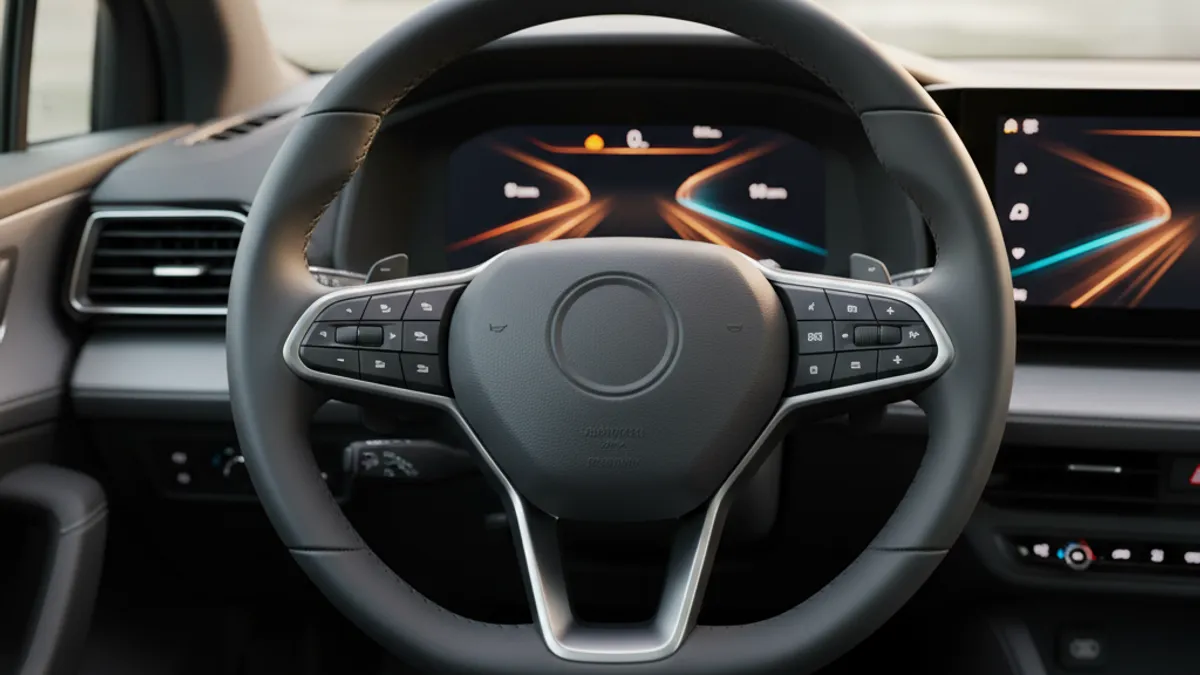
Specifically about ELKS, there are two levels: passive LKA (only warns when you cross a line) and active ELKS (intervention in the steering). GSR2 requires the active version. In most cars the disable button is on the steering wheel or on a small rotary switch next to it, with an icon of a car between two lines. Pressing the button switches the system off until the engine is restarted. Volkswagen Group cars (Golf 8, Octavia 4, Tiguan 3) have this switch most accessible; Renault Megane 5 and Peugeot 308 have it via an on-screen menu, which is slower.
What to Expect in a Golf, Octavia, Tiguan and Megane
In practical terms, here is what we see in the workshop on popular models entering BiH from the EU of model years 2024-2026.
Volkswagen Golf 8 and Tiguan 3 (from 2024). The full system package comes as standard. ISA is switched off via the "View" button on the infotainment or through the Travel Assist menu. ELKS is turned off with the button on the steering wheel just below the cruise control. AEB warnings have been calmed down in this generation compared to earlier Golfs. The ADDW camera is starting to be fitted to models from late 2025.
Skoda Octavia 4 facelift (from 2024). An identical technical package to the Golf 8, the same menus, the same logic. Skoda adds some versions with an advanced Travel Assist package that integrates AEB, ELKS and adaptive cruise control into a single assisted motorway driving mode. The Octavia is currently one of the safest and at the same time most acceptable cars for a BiH driver given the service network.
Renault Megane 5 (from 2024). Renault was early to the ADDW camera and it is standard in the cabin. The ISA in Renaults can be exceptionally loud at transitional speeds (50 to 60 kilometres per hour). Many drivers turn it off as soon as they sit in the car.
Peugeot 308 / 408 (from 2024). The Stellantis system package is similar to the Volkswagen group by function, but Peugeot has fewer physical switches and more menus. The AEB is among the most reactive in the class, and with that come somewhat more false warnings in dense traffic.
Regardless of model, what really changes the driving experience is how much time you invest in the first few days to learn where the buttons are and which settings suit you. Our recommendation is that every driver goes once through the entire infotainment menu for safety assistance and sets the sensitivity of ELKS and ISA to what personally suits them. Most systems have 2-3 sensitivity levels, and the factory setting is not necessarily the most comfortable for local roads.
If you are in the process of buying a newer used car from the EU and want a check before putting down a deposit, book a pre-purchase inspection at the workshop, or message us on WhatsApp with a link to the listing and we will go through the points worth opening together.
Frequently Asked Questions
Does GSR2 mean I have to retrofit ISA and AEB to my existing car?
No. The regulation applies exclusively to new vehicles first registered in the EU from the prescribed dates. Existing cars in BiH, regardless of model year, have no retroactive obligation. Your Golf 6 or Passat B7 keeps driving by the rules in force at the time of its production.
Can I permanently disable ISA in a new car?
Not permanently, by regulation. ISA must activate at every engine start. You can manually turn it off via the infotainment or a combination of buttons on the steering wheel, but at the next start it will turn back on. Permanent disabling through software modifications is not legal and may void the vehicle's homologation.
Does the ADDW camera record video like a DVR?
By regulation, no. The ADDW system processes the image locally in real time to assess driver attention, then discards the image. There is no mandatory recording or sending of video material to the manufacturer. Policies for commercial telematics services (activated separately by contract) may be different, so read what you are signing when you switch on the car's online functions.
What does the EDR black box record and who has the right to see it?
The EDR records technical parameters of the vehicle for a few seconds before, during and after a crash: speed, accelerator and brake pedal positions, airbag activation, steering wheel position, seatbelt status. It does not record audio or video. The vehicle owner has the right of access through the manufacturer or service. Police and courts can request access as part of an official investigation. An insurance company does not gain access automatically; the owner's consent or a court decision is required.
If I import a used car from Germany of model year 2024 into BiH, can I deactivate some of these systems?
Practically, all systems that can be switched off with a button (ELKS, ISA warnings, some AEB behaviours) you can turn off at every drive. Permanent disabling through software modifications or coding is not advisable: it voids homologation, can create problems at the technical inspection, and in the event of an accident may have legal consequences for insurance issues. Our recommendation is to get used to the systems and manually turn off what does not suit you.
Does a car with the GSR2 package pass the BiH technical inspection without issues?
Yes. The BiH technical inspection checks what is prescribed by BiH law, which are the basic items (brakes, lights, geometry, exhaust, status of basic electronic systems). Additional safety assistance systems from the GSR2 package do not enter the BiH technical inspection as a controlled item and cannot be a reason for refusal. What matters is only that the factory system is not physically damaged or faulty, which would be shown by an error on the dashboard.