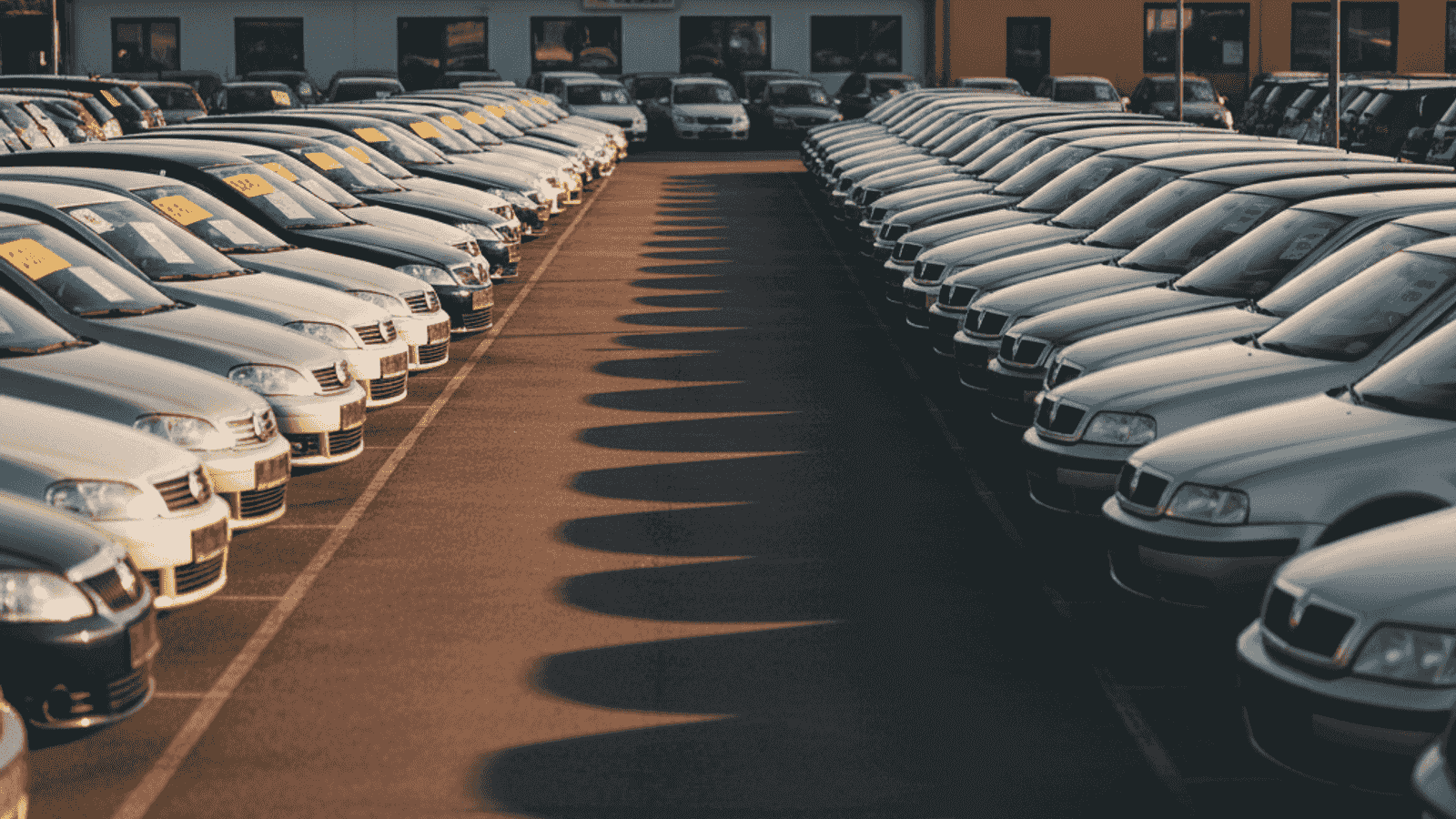
Wholesale used car prices in Europe fell 1.2 percent in January 2026, and nearly half of European dealers expect the decline to continue throughout the year. At the same time, BiH imported 5,572 used diesel cars in a single month in February 2026, while Western Europe is trying to offload those very same engines. The 2026 drop in used car prices therefore sounds both like an opportunity and a trap, depending on what you buy and when. This guide connects EU wholesale figures with what BiH buyers actually see on olx.ba and at dealer lots in Banja Luka, Sarajevo and Mostar.
This guide was prepared by the Auto Gas Gaga workshop in Banja Luka, based on the Auto1 Group index report for January 2026, the Autovista forecast for 2026, BHAS import statistics for February 2026, and years of experience with pre-purchase inspections.
Table of Contents
- What Happened to Used Car Prices in Europe in 2026
- The Auto1 Index and What It Tells Us
- Why the Drop - Weak Demand, Chinese Players and Fuel Uncertainty
- What the BiH Buyer Sees - German Used Car vs. Domestic
- February 2026 - BiH Imports 5,572 Diesels While Europe Flees
- VW Group Holds 30 Percent of BiH Imports
- When to Buy in 2026 - Timing Strategy
- Wholesale Drop Does Not Mean Retail Drop
- What to Check in a Falling Market
- Frequently Asked Questions
- Related Articles
What Happened to Used Car Prices in Europe in 2026
Used car markets in Western Europe have been unusually expensive over the past two years. After the pandemic, chip shortages and the slow return of new production, the supply of used cars thinned out and prices rose through 2024, when, particularly in Germany, they hit historic highs. The trend then slowed at the end of 2024, and during 2025 it slowly began moving in the opposite direction.
In January 2026 that turnaround became measurable. Auto1 Group, one of the largest wholesale used car operators in Europe, based in Berlin, publishes its price index monthly. The index stood at 138.2 points in December 2025, and in January 2026 it fell to 136.6 points. A monthly drop of 1.2 percent looks small, but in the used car wholesale business, where margins of a few percent are calculated across thousands of cars, that is a signal every dealer watches.
A second source, the forecast by analysis house Autovista for 2026, points in the same direction. Residual values in Germany continue to fall, though less steeply than in 2025, by about 1.5 percentage points by the end of the year. In other words, a used car that holds a certain value in January could lose another 1.5 percentage points by the end of 2026, depending on segment and model year. It is not a drop that crashes the market, but it is a drop that changes the calculus on when to go out and buy.
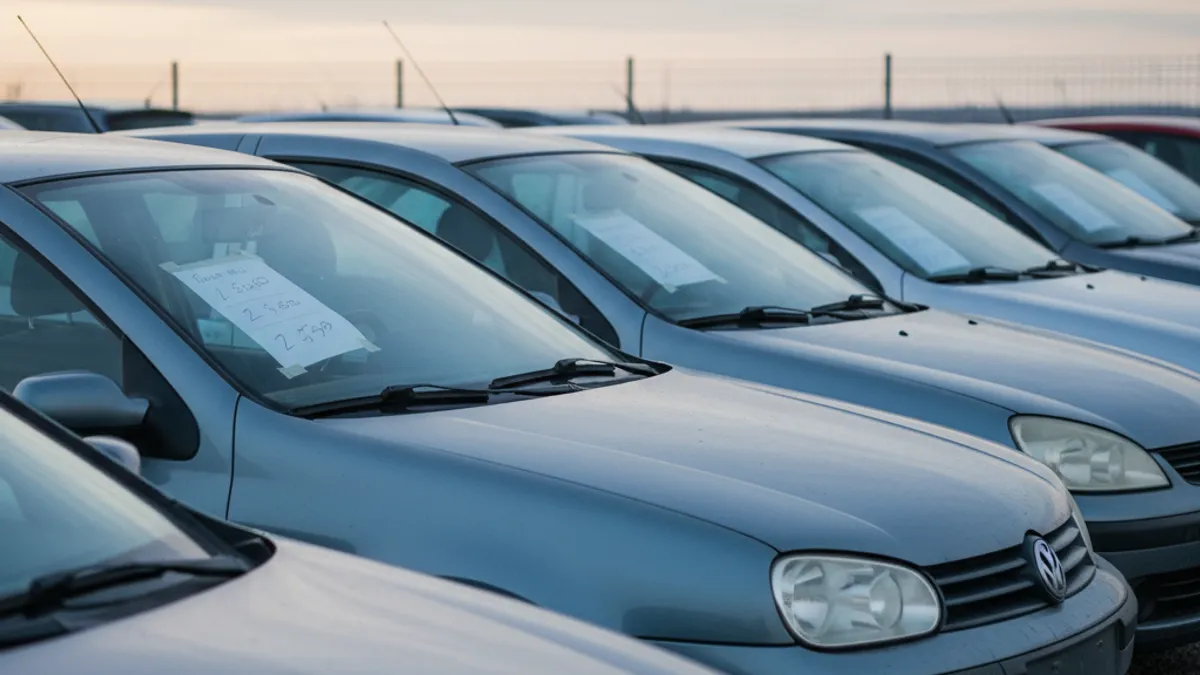
The most important thing to grasp from the start - this is a drop in wholesale prices in Europe. These are the numbers at which dealers buy from one another and from auctions. The retail price, the one you see as a buyer on Germany's mobile.de or at a dealer lot in BiH, typically lags wholesale by two to four months and does not fall at the same speed. More on why in the section on dealer margins below.
The Auto1 Index and What It Tells Us
The Auto1 index is valuable because it does not ask buyers what they think a car is worth, but measures real transactions on thousands of vehicles that move through the Auto1 system every week. That means it shows the prices at which used cars are actually changing hands, not wishful listings.
In January 2026 the index is broken down by fuel type, and that is where the difference important for BiH shows. Used battery electric vehicles (BEVs) fell hardest, the index for January 2026 stood at 98 points, a monthly drop of 4 percent and a year-on-year drop of 4.4 percent. That means an electric Renault Zoe or similar compact EV from 2022 costs noticeably less than a year ago, and European dealers are in no rush to fill their lots with more of them. Hybrids, by contrast, are the most stable, with year-on-year growth of about 2.2 percent. Petrol cars are almost flat (+0.2 percent year-on-year), and diesels are slightly down (-0.3 percent year-on-year), practically flat.
That means that when you read in the media that "used car prices are falling," for the BiH buyer who primarily buys an 8 to 12 year old diesel, the drop is very mild. Most of the movement in the index comes from BEVs and younger hybrids, and those models make up only a symbolic share of BiH imports.
Another important part of the Auto1 report is a survey of 7,182 European used car dealers. The survey shows what the dealers themselves expect for the coming months. In January 2026 the answers were as follows: 48.6 percent expect prices to fall further in 2026, 31 percent expect stagnation, and only 20.4 percent expect growth. The difference by country is significant: in Poland 67.9 percent of dealers expect a drop, in Italy 53.5 percent, in Sweden 53.3 percent. Germany and Austria are more moderate, but even there most do not expect growth.
When half of the entire European used car trade believes prices will keep falling, dealers naturally become more cautious in buying. They stock less aggressively, hold smaller inventory, and demand lower input prices. The expectation thus partly fulfils itself.
Why the Drop - Weak Demand, Chinese Players and Fuel Uncertainty
The Auto1 survey breaks down the reasons for the drop by importance, and three causes dominate. The first is weak demand, cited by 29 percent of dealers as the main factor. Inflation, higher cost of living and uncertainty around EU energy policy are keeping buyers away from big expenses, and a mid-priced used car is a big expense for the average European household.
The second cause is pressure from Chinese brands, identified by 25 percent of dealers. Chinese manufacturers entered the European market in 2024 and 2025 with new electric and hybrid models at prices that compete with used German, French and Italian cars. When for similar money you can buy a brand new Chinese hybrid with 0 kilometres, a used car with 80,000 kilometres has to drop its price to sell. That pressure is especially strong in Italy and Poland, where Chinese brands are most aggressive.
The third is a shift in fuel preferences, 14.2 percent of dealers. The European buyer today does not know with confidence what will happen with diesel in five years, what will happen with petrol, whether the EU will really push through a ban on internal combustion engines by 2035. That uncertainty reduces the willingness to commit to a used diesel, especially one with EGR, DPF and AdBlue systems that can clog or fail after 200,000 kilometres. These are expensive repairs, and a buyer unsure about diesel's future does not want the risk.
This third factor is particularly interesting from the BiH perspective. Our buyer does not have the same uncertainty. In BiH a diesel has a clear practical path, it goes for regular registration, you drive it as long as the engine runs, and if the DPF clogs, it costs roughly what it costs. No one seriously thinks BiH will ban diesels in 2035. As a result the same used diesel has a different perceived value in Bremen and in Banja Luka, which creates exactly the import gap we see in the BHAS figures.
What the BiH Buyer Sees - German Used Car vs. Domestic
If the European wholesale drop translated perfectly into BiH, we would be writing an article titled "Now is the moment, buy". Reality is more nuanced. BiH has two used car markets that overlap but are not the same.
The first market is imports, mostly from Germany, Austria, Italy and the Netherlands. Here prices react to the European index with a delay. A specific Golf 7 that wholesaled in northern Germany for a certain sum at the end of 2025 cost a few percent less in January 2026. By the time it reaches BiH, customs duty, VAT, excise, transport and margin are added, and the end buyer in Banja Luka sees a price somewhat lower than a few months ago, but not dramatically so. It is a real, but modest drop.
The second market is the domestic used segment, cars already in BiH that pass from owner to owner via olx.ba or dealer lots, many with two, three or four previous owners. This market reacts more slowly and weakly to European trends. The reason is simple, the supply of quality diesels under 250,000 kilometres in BiH is limited. Fewer units, higher price per unit. When someone sells a well-maintained Passat B7 with 230,000 kilometres, they do not think "Auto1 has fallen 1.2 percent, so should I". They set a price based on the local context, what other sellers are asking for the same Passat in listings and how many genuinely ready buyers there are at that moment.
The practical takeaway for the buyer is this. If you are buying from imports, the European wholesale drop will be felt, most strongly on younger units (up to 5 years old) and on BEV and hybrid models, which in any case form a smaller share of our imports. If you are buying a domestic used car via olx.ba, do not expect dramatic falls. Maybe slightly more patient sellers, maybe a readiness to negotiate a bit more than before, but no dramatic price reset.
February 2026 - BiH Imports 5,572 Diesels While Europe Flees
To put in context how different the BiH market is, look at February 2026. In that month 6,960 used passenger vehicles were registered for the first time. Of these 5,572 were diesels, which is exactly 80 percent of all imported used vehicles in a single month. Petrol cars accounted for 1,028, petrol-electric hybrids 159, those with LPG systems 33, and electrics only 18.
Those numbers matter for understanding what the European price drop means for you. While Western Europe nervously asks what will happen with diesel in 2030 or 2035, the BiH buyer is buying a diesel because they need a car that covers 800 to 1,000 kilometres on a tank, drives to Germany to visit relatives, tows a trailer and holds its value. That practical demand is the reason diesels in BiH do not fall in price anywhere near as much as Europe is writing them off.
But this brings a trap. The European dealer who cannot sell a Passat B7 or A4 with 240,000 kilometres to their domestic buyer because it is "too old for EU norms" knows there is a queue of buyers in BiH, Serbia, Albania and North Macedonia. So these units are deliberately aimed at this region. The consequence is that on olx.ba and mobile.de you see an inflow of diesels that were rejected in Germany for various reasons, a downgrade in emissions class, an upcoming mandatory environmental zone inspection, a DPF problem that is not worth fixing for a German buyer. These units need particularly careful inspection.
It is important to separate things: a diesel from Europe is not a problem in itself. The problem is a diesel sold at a price that looks too good to be true, because that unit could not be sold in the country where it was registered and now someone wants to place it where the inspection is not the same.
VW Group Holds 30 Percent of BiH Imports
In February 2026 the most imported brand in BiH was Volkswagen with 2,173 registrations, which is 30.2 percent of all imported used vehicles. Second was Audi with 936 registrations, third Škoda with 808. All three brands belong to the VW Group and together make up over 40 percent of monthly imports.
In practice, if you are buying a used car in BiH in 2026, the odds that you are buying a TDI engine from the VW Group are huge. Golf 6 and 7, Passat B6, B7 and B8, Octavia Mk2, Mk3 and Mk4, Audi A4 B7 and B8, Škoda Superb 2 and 3 make up a vast share of the daily supply. The European price drop for these models specifically is more moderate than for EVs or Japanese hybrids, but it exists.
What does this mean in numbers? The typical entry price of a Golf 7 diesel with 180,000 to 220,000 kilometres, model year 2014-2016, in Germany moves in a range that slowly softened during 2025. By the time it reaches BiH with customs duty and VAT, passes through a dealer or private importer, the final retail price is relatively stable, depending more on the quality of the unit and service history than on the movement of the European index.
For the buyer specifically looking at a Golf, Passat or Octavia in 2026, the advice is this. Do not wait for a spectacular drop, it is not coming. Instead, use the wholesale drop as a negotiating card with the dealer: "I see European wholesale has softened, what can you offer". A dealer trying to sell a unit that has sat for 90 days is more open to a serious discount than they would have been a year ago.
When to Buy in 2026 - Timing Strategy
This is the question most buyers ask, wait or buy now. Honestly, there is no universally correct answer, but there are guidelines that reflect what is happening on the European and BiH markets.
Is Now a Good Time to Buy a Used Car
If you need a car (the current one breaks down every few weeks, is becoming dangerous or uneconomical), do not wait. A 1 to 3 percent drop over the next six months will not cover a single major repair of your current car. Buy a quality unit now, with good documentation, and do a pre-purchase inspection without compromise.
If you do not need a car urgently and are thinking about upgrading in a year or two, wait until mid-2026. The best chances for a better price are in the July-September 2026 window, when European dealers traditionally clear summer stock ahead of the autumn cycle and when the effects of the wholesale drop so far finally arrive at retail.
If you are specifically looking for an electric or hybrid used car, this is a moment rarely seen. The BEV index is falling hardest in all the Auto1 statistics, and BiH supply is beginning to fill with units that a year ago would not even have reached our market. Still, you need to know what you are looking for, the battery is the main component, its charging history is decisive, and in BiH we do not have the dense fast charging network that is standard in Germany. A hybrid is in that sense a safer choice than a pure electric, especially outside larger cities.
Will Golf and Passat Prices Fall in BiH
The most frequent question. The honest answer is that they will fall, but not dramatically. The reason is exactly what we described above, the VW Group dominates BiH imports, diesel units have clear practical value for the BiH buyer, and the domestic supply of quality units is limited. Over the next 6 to 12 months expect moderate discounts of around 3 to 7 percent on units that have been sitting at dealers longer (60 days or more), and a stronger negotiating position with private sellers who have somewhat less patience. Do not count on a 20 to 30 percent drop, that scenario would only be visible if European wholesale collapsed, which neither Autovista nor Auto1 currently predict.
Wholesale Drop Does Not Mean Retail Drop
How Dealer Margins Slow Price Falls in BiH
This is the part that few people explain, and it is key to understanding why you do not see on olx.ba the same drop you read about in the German press.
When a BiH dealer buys a used car from Germany, the costs are roughly as follows: purchase price in Germany, transport, customs duty (5 percent on value), VAT (17 percent), any preparation for registration, fixed dealer costs (rent, wages, advertising). The total margin that must remain for the business to be sustainable is typically 8 to 15 percent. When European wholesale falls 1.2 percent, the dealer's input cost falls by a similar percentage, but all other costs (customs, VAT, transport, fixed) stay the same or rise with inflation.
The consequence is that retail prices fall less than input prices. If a dealer perfectly passed every wholesale drop through to the buyer, that dealer would not survive. So the sector works with amortisation, part of the drop the dealer "eats" as a margin loss, part is passed to the buyer, and part is offset by replenishing stock more slowly (importing fewer new units until existing ones are sold).
In practice for you: a 5 percent European wholesale drop on a specific model during the year translates into a BiH retail drop of perhaps 2 to 3 percent, with a 3 to 6 month delay. That is enough to negotiate, but not enough to wait a year thinking the price will halve.
What to Check in a Falling Market
What to Check When Buying a Used Car in a Falling Market
A falling market is not safer than a rising one, quite the opposite. When prices fall, units that owners could not sell in better times also come onto the market, or that European dealers have quickly "packed off" for export before writing them down further. Our workshop has in recent months seen an increased number of units that seemed to arrive from the EU in good order, only to reveal during inspection that the service history is reset or the engine has hidden problems.
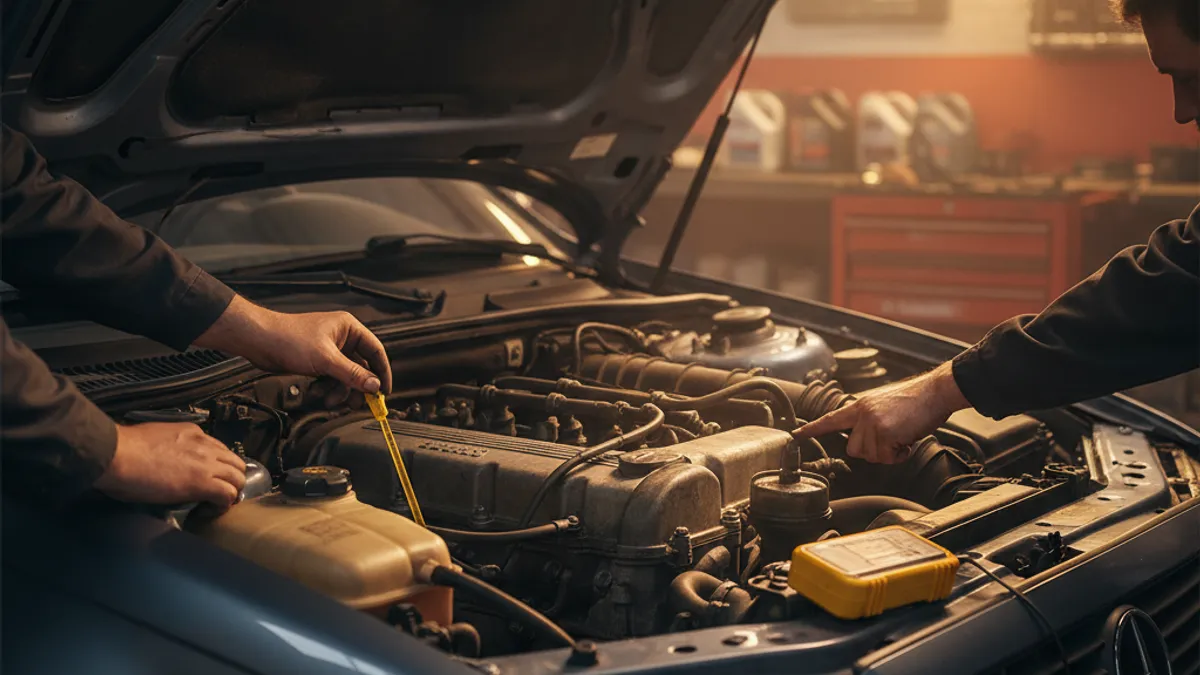
The basic checklist we recommend to anyone buying in 2026:
- Documented oil and mechanical service history. If the seller cannot show a service booklet, invoices or printouts from the brand's database, the car's value drops noticeably in our assessment, regardless of how the car looks on the outside.
- Real mileage. Odometer manipulation is easy and common. Especially on imported diesels older than 8 years. Do not trust the numbers on the dashboard until you verify them via the chassis number.
- Condition of the DPF filter, EGR valve and AdBlue system on diesels. These are the three components that most often "hide" problems on imported used cars. The light stays off during a 10 minute test drive, but on a cold start and in the stop-start traffic of Banja Luka it shows what the car can really do.
- Oil and coolant leaks. From the BMW 5 Series to the Passat B7 or Octavia Mk3, these are the types that regularly come into our workshop with leaks that "do not show" while the car is parked but are visible on the lift.
An experienced seller can hide a lot. Tens of thousands of kilometres rolled back on the odometer, total loss after an accident repainted and sold as "import from Germany", welds hidden under paint - some of this you catch in a pre-purchase inspection, but the documented history itself is easiest to check via carVertical. Using the chassis number it pulls documented vehicle history from international registers, real odometer readings by date, recorded accidents and total losses, the number of past owners, and theft indicators. We consider it a basic layer of defence before buying any imported used car. When paying for the report you can use the code GAGA for a 20% discount.
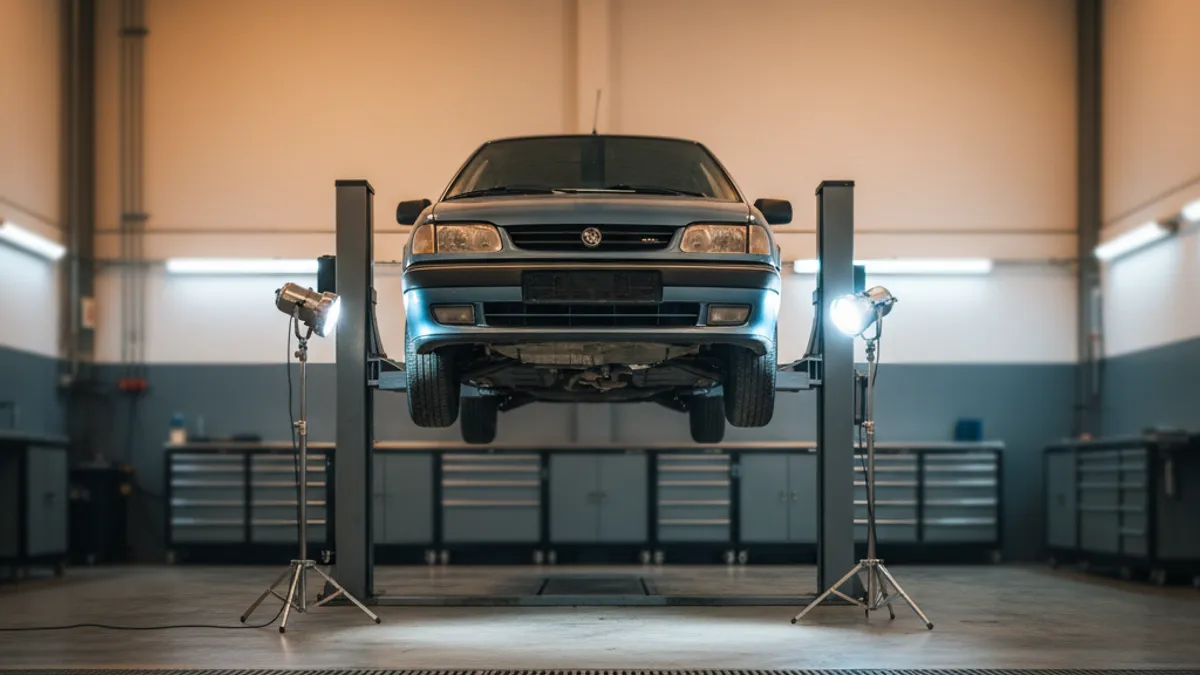
The second layer of defence is a pre-purchase inspection on the lift, so if you are considering a car and want a second check, book a pre-purchase inspection at the workshop before paying a deposit. An hour and a half on the lift often saves many times more than the inspection itself costs, because it uncovers invisible repairs that would catch up with you in the first six months of ownership.
Frequently Asked Questions
Is Now (Mid-2026) the Moment to Buy a Used Car?
If you need a car, yes. A 1 to 3 percent drop in European wholesale will not cover the repairs on your current car, nor the typical amount you lose tracking prices over the months until you find the right unit. If you do not have to buy immediately, wait until July-September 2026 when BiH retail most strongly absorbs the wholesale drop so far in the EU.
Will Golf, Passat and Octavia Prices Fall in BiH?
Over the next 6 to 12 months expect a moderate drop of 3 to 7 percent on certain units, especially those that have been in dealer stock for longer than 60 days. A dramatic 20 to 30 percent fall is not realistic as long as the VW Group holds over 40 percent of BiH used imports and the BiH buyer has clear practical demand for the TDI engine.
Why Are Electric Used Cars Specifically Losing Value Fastest in 2026?
European dealers are afraid to hold BEV stock because buyers are becoming more cautious about battery condition, the value of older models, and the charger network outside major cities. At the same time, Chinese manufacturers are offering new electric cars at prices close to those of used German ones. The result is that the Auto1 BEV index is falling 4.4 percent year-on-year, while petrol and hybrid prices are practically flat. For the BiH buyer this is a niche opportunity, but only if you know exactly what you are looking for.
Does an Imported Diesel from Germany in 2026 Offer Better or Worse Value Than a Year Ago?
Better, but less than what you will read in the media. The European wholesale drop for diesels is around 0.3 percent year-on-year (practically flat), and through dealer margins and customs costs it reaches BiH as a moderate discount of 2 to 4 percent over the next 6 to 12 months. A real negotiating opportunity exists, but the unit needs to be inspected more carefully, because a falling market also brings out weaker units.
What Does the "Auto1 Index" Mean for the Average BiH Buyer?
The Auto1 index is a monthly measure of wholesale used car prices in Europe paid by dealers when buying from auctions and other dealers. For the BiH buyer who buys directly from a dealer or on olx.ba, the index is an early indicator of direction. If the index falls, it means BiH retail will gradually soften, but not at the same speed and not immediately. The typical delay is 2 to 4 months, and it is reduced by customs and dealer costs that remain fixed.
A Dealer Told Me Prices Will Not Fall, Why?
The dealer has a clear interest in the buyer purchasing now at the current price, not in six months at a lower one. That does not mean the dealer is lying, it means the retail price in BiH really does move less than European wholesale. If the dealer has a unit that has been sitting for over 60 days, there is room for negotiation; if it has just arrived from Germany a week ago, they are not waiting for a drop. Always ask how long the car has been on the lot, that is a good indicator of how willing the dealer is to discount.