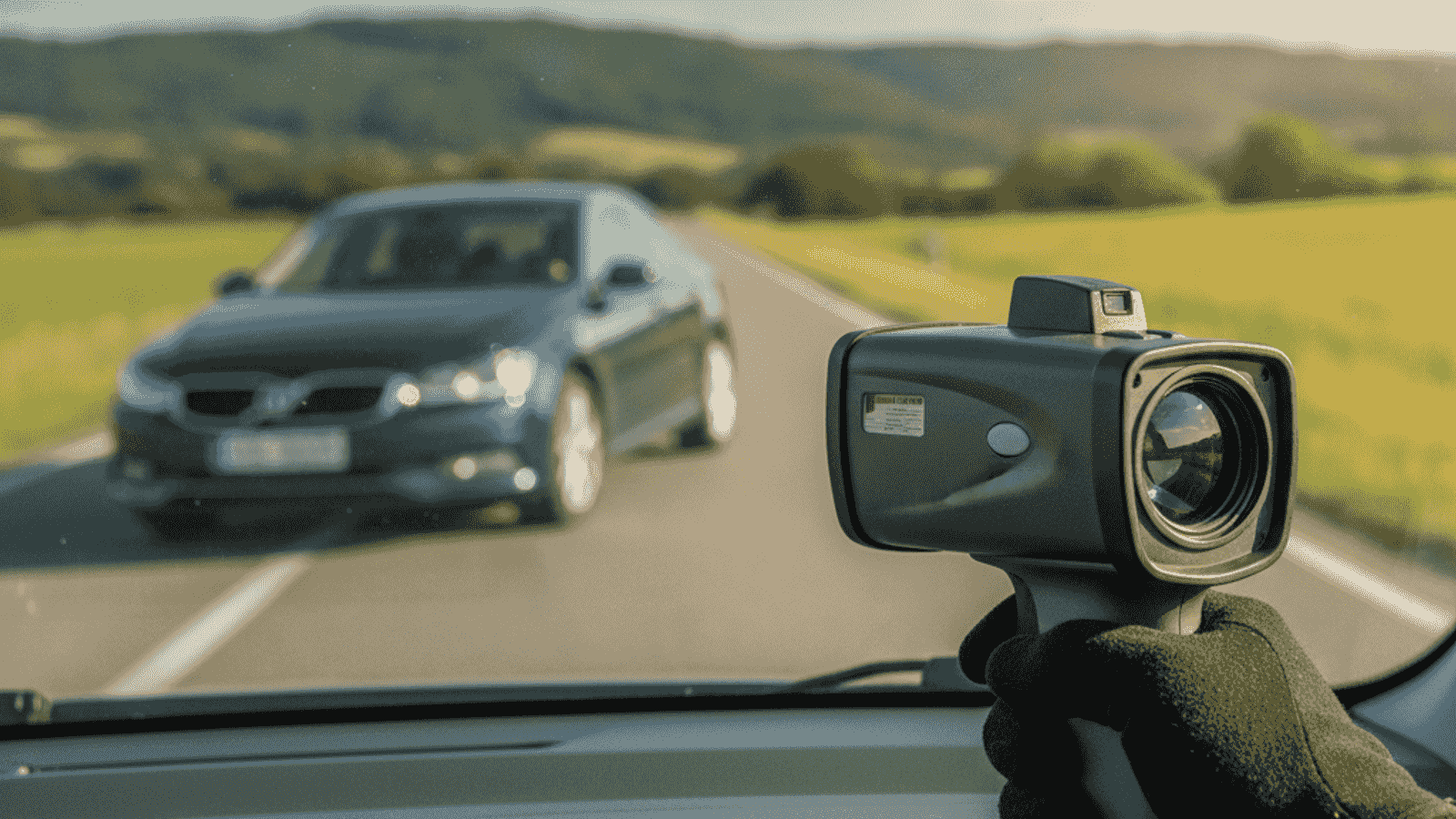
Since 27 May 2026, BiH drivers pay substantially higher fines for the most common traffic offences. Amendments to the Law on the Fundamentals of Road Traffic Safety in BiH, known as ZOBS, published in the Official Gazette of BiH No. 35/26, introduced new amounts for using a phone while driving, unfastened seatbelts, driving under the influence of alcohol and drugs, and an entirely new offence category called reckless driving (obijesna vožnja). This is the only up-to-date guide with the full table of new traffic fines in BiH 2026 in one place, since even popular information portals have not yet updated their data.
This guide was prepared by Auto Gas Gaga workshop in Banja Luka, because traffic fines in BiH 2026 directly affect the daily driving of our customers and every conversation about vehicle roadworthiness and road safety.
Table of Contents
- What Changed on 27 May 2026 and Why
- Full Table of Fines by Offence
- Reckless Driving as a New Offence Category
- Phone, Seatbelt and Radar After the Amendments
- Alcohol and Drugs Behind the Wheel
- Penalty Points and Licence Suspension
- How to Pay a Fine and Whether Discounts Apply
- BiH Fines Compared to Croatia and Serbia
- Frequently Asked Questions
- Related Articles
What Changed on 27 May 2026 and Why
The ZOBS amendments were adopted on 14 May 2026 and published in the Official Gazette of BiH No. 35/26. They entered into force on 27 May 2026. The law applies across the entire territory of BiH, in both entities and Brčko District. The amendments introduce new articles 234b and 235a with tougher penalties for the most common offences, as well as an entirely new article 42a that, for the first time in the history of BiH legislation, defines the concept of reckless driving (obijesna vožnja).
The reason for tightening is concrete. The old fine amounts were not sufficiently deterrent. A 100 KM fine for using a phone while driving was cheaper than an average brake pad replacement. BiH road accident statistics have shown the same causes at the top of the list for years: excessive speed, alcohol, distraction caused by phones. The legislature responded with the only measure that stands a chance of changing behaviour: a significant financial hit that also impacts repeat offenders.
Three key changes deserve particular attention. First, phone use and seatbelt violations moved from token fines to a range that genuinely hurts. Second, alcohol and drugs are punished with amounts previously unimaginable in the BiH system. Third, reckless driving is recognised for the first time as a separate legal category with the possibility of permanent vehicle confiscation, something BiH had never known before.
An important note on sources: even popular portals such as kazne.ba still display the old amounts. Their last update is from 29 January 2026, nearly four months before the amendments took effect. When searching for traffic fines in BiH 2026 online, pay attention to the source's update date. The tables below reflect the law in force since 27 May 2026, with amounts confirmed from the Official Gazette of BiH No. 35/26 and media reports published immediately after the law took effect.
Full Table of Fines by Offence
This table covers the most common offences BiH drivers encounter in everyday traffic, with a clear comparison of the old and new amounts.
| Offence | Old fine | New fine (from 27.05.2026) | Penalty points | Additional sanctions |
|---|---|---|---|---|
| Phone while driving | 100-300 KM | 200-400 KM | 1 | - |
| Phone while driving (causing an accident) | 300-1,000 KM | 400-2,000 KM | 2 | Driving ban 1-6 months |
| Unfastened seatbelt | 100-300 KM | 200-400 KM | - | - |
| Radar jammer | Not previously defined | 200-400 KM | - | - |
| Alcohol > 1.50 g/kg | 400-1,000 KM | 2,000-3,000 KM | 2 | Driving ban 6 months |
| Drugs behind the wheel | 100-300 KM | 2,000-3,000 KM | - | - |
| Reckless driving | Did not exist | 2,000-3,000 KM | 2 | Driving ban 6 months |
| Reckless driving (causing an accident) | Did not exist | 3,000-5,000 KM | 4 | Driving ban 9 months |
| Refusing a breathalyser | - | 1,000 KM (fixed) | - | Driving ban 2-6 months, detention up to 12 h |
Note: the table shows fines at the state level under the ZOBS amendments. Cantonal laws in the Federation of BiH may impose additional penalties at their level, so amounts in some cantons may be higher than those listed.
Reckless Driving as a New Offence Category
Article 42a of ZOBS introduces the concept of reckless driving (obijesna vožnja) into BiH legislation for the first time. The media also use the term bahata vožnja, but the legal designation is obijesna vožnja. This category covers the most dangerous traffic behaviours, those that systematically endanger the lives of all road users.
What Reckless Driving Is and When It Applies
The law defines five specific acts, any single one of which qualifies driving as reckless. Running a red light two or more times within a 20-minute period. Exceeding the speed limit by 40 or more km/h in an urban area, or by 60 or more km/h outside an urban area. Overtaking across a solid line. Driving with a blood alcohol concentration of 1.50 or more grams per kilogram. Driving under the influence of narcotics.
It is important to understand the law's logic. You do not need all five acts simultaneously. A single one of these acts is sufficient for qualification. Two red light violations within 20 minutes constitute reckless driving, even if the driver is completely sober and respects the speed limit in every other regard. Likewise, a single instance of overtaking across a solid line is enough for qualification, regardless of whether the driver is under the influence of alcohol or not.
The base fine for reckless driving is 2,000 to 3,000 KM, with a six-month driving ban and two penalty points. If reckless driving causes a traffic accident, the fine rises to 3,000-5,000 KM, the ban extends to nine months, and the points increase to four.
For repeat offenders, the law provides particularly severe sanctions. Police may confiscate the vehicle on the spot from a driver who has already been fined for reckless driving within the previous two years. A court may permanently confiscate a repeat offender's vehicle. This is the first time in the history of BiH legislation that a traffic offence can result in permanent loss of a car. It is no longer just a monetary fine and a temporary ban. The driver can lose the car forever.
It is worth noting that the reckless driving category can also apply to a driver who does not consider themselves aggressive. Two red light violations in dense city traffic, where lights often cycle every twenty seconds or so, can happen to a driver who is simply rushing to work. The law does not assess intent; it assesses the factual situation.
A more detailed overview of the reckless driving definition, including real-world examples and an analysis of all five elements of article 42a, is available in a separate article on the reckless driving law in BiH.
Phone, Seatbelt and Radar After the Amendments
These three offences were among the most common in BiH traffic precisely because the fines were token. They are now significantly more expensive and deserve a closer look, as police have been actively enforcing them since late May.
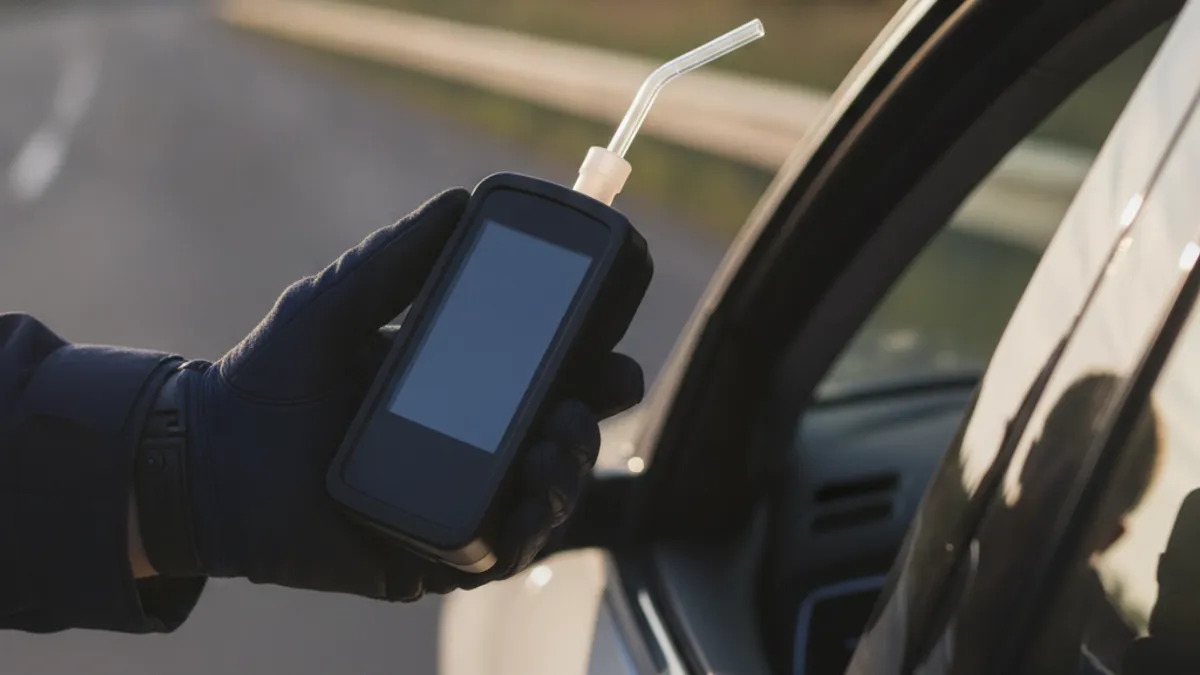
How Much Is the Fine for Using a Phone While Driving in BiH 2026
Using a phone while driving is by far the most common cause of loss of concentration behind the wheel. One message, one glance at the screen, three seconds without watching the road. At 60 km/h, in three seconds the car covers 50 metres. Fifty metres of completely blind driving. On a motorway at 130 km/h, the same glance at a phone means 108 metres without visual control.
The minimum fine for holding a phone while driving was doubled from 100 to 200 KM, and the upper limit rose from 300 to 400 KM. But the real jump comes when phone use results in an accident. In that case, the new fine is 400 to 2,000 KM, with a driving ban of 1 to 6 months and two penalty points. Previously, the fine was 300-1,000 KM, with no ban and no points.
This means a driver who glances at a message and causes a collision can pay up to four times the previous fine, lose their licence for up to half a year, and receive two penalty points that bring them closer to permanent licence suspension. The difference between the old and new system is drastic. For context, 2,000 KM is more than one month's salary for many BiH drivers.
Seatbelt Fine in BiH 2026
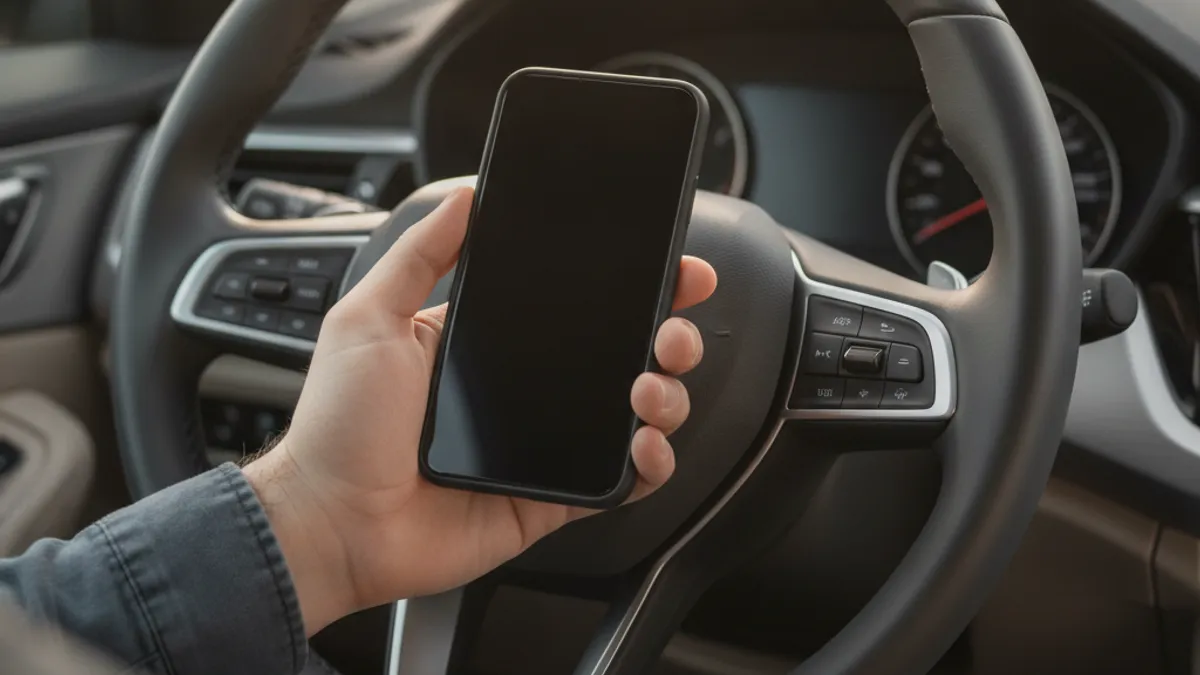
The seatbelt fine followed the same pattern of increase. From the range of 100-300 KM, the fine rose to 200-400 KM. The law makes no distinction between seats. The same range applies to the driver, front passenger and rear-seat passengers. A parent who drives a child without an appropriate child seat or restraint system also falls under the same offence category.
Increased seatbelt enforcement is particularly targeted at the rear seat. For years, there was a widespread belief that the rear seatbelt was not mandatory, but this was never true under BiH law. Now that the financial consequence is considerably more serious, it is worth reminding all passengers in the vehicle to buckle up before setting off.
Radar jamming devices, commonly known as anti-radars or jammers, now have a clearly defined fine of 200 to 400 KM for the first time. Previously, this was regulated through general provisions on obstructing official duties, which made prosecution difficult and led to inconsistent court practice. It has now been separated into a distinct offence that police can penalise without additional qualification. Simply possessing the device in the vehicle is sufficient for a fine, regardless of whether it was switched on at the time of the check.
Alcohol and Drugs Behind the Wheel
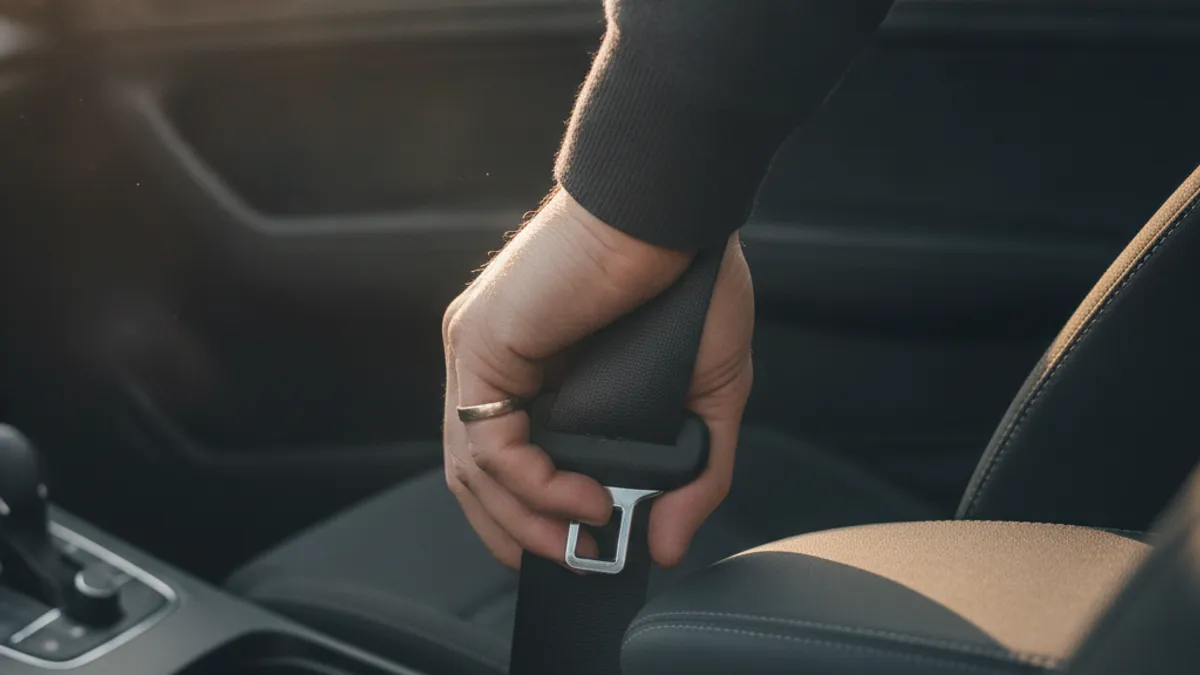
Fines for driving under the influence of alcohol saw the largest absolute jump in the entire ZOBS amendment package. For a blood alcohol concentration above 1.50 grams per kilogram, the old fine was 400-1,000 KM with a driving ban of 2 to 6 months. The new fine is 2,000-3,000 KM with a mandatory six-month ban and two penalty points.
To put this in perspective: the upper limit has tripled. A driver caught with 1.6 grams per kilogram can now pay 3,000 KM and lose their licence for half a year, instead of the previous 1,000 KM and a two-month ban. The difference in financial impact is so great that the old system looks like a token warning rather than a penalty.
It is important to understand what 1.50 grams per kilogram means in practice. It is roughly equivalent to 5-6 large beers or half a litre of wine consumed in a short period for an average person weighing 80 kilograms. However, individual differences are enormous and depend on body mass, metabolism, stomach contents and time elapsed since consumption. The only safe approach is zero alcohol before driving.
Drink-Driving Fine in BiH
Driving under the influence of narcotics saw the most dramatic relative jump in the entire ZOBS. The old fine was 100-300 KM. The new fine is 2,000-3,000 KM. An increase of ten to twenty times, depending on the specific amount set by the court. The legislature sent an unambiguous message: drugs behind the wheel are treated as seriously as the most severe form of alcohol impairment, with an identical fine range.
A driver who refuses a breathalyser does not fare any better. The fixed fine is 1,000 KM, with a driving ban of 2 to 6 months. Police have the legal authority to detain the driver for up to 12 hours on the spot. Refusing a breathalyser is treated in misdemeanour proceedings as an admission that the driver was under the influence of alcohol. The tactic of refusing the test in the hope of avoiding a fine produces the opposite result. The fixed 1,000 KM fine is higher than the minimum fine for every alcohol level below 1.50 grams per kilogram.
Penalty Points and Licence Suspension
The penalty points system in BiH works on a cumulative basis. Each offence carries a set number of points, and points accumulate over a two-year period. When a driver reaches the prescribed threshold, they lose their licence for a set period. Points are not cleared by paying the fine; they are cleared only by the passage of two years from the date the misdemeanour order becomes final.
How Many Penalty Points to Lose a Licence in BiH
The points breakdown under the new amendments is as follows. Using a phone while driving carries 1 penalty point. Phone use causing an accident carries 2 penalty points. Reckless driving carries 2 penalty points. Reckless driving causing an accident carries 4 penalty points. Alcohol above 1.50 grams per kilogram carries 2 penalty points.
| Offence | Penalty points |
|---|---|
| Phone while driving | 1 |
| Phone while driving (causing an accident) | 2 |
| Reckless driving | 2 |
| Reckless driving (causing an accident) | 4 |
| Alcohol > 1.50 g/kg | 2 |
Thresholds for licence suspension depend on the licence category and entity. Young drivers with a provisional licence lose their licence sooner, with fewer accumulated points, while experienced drivers have a higher tolerance threshold. The specific thresholds are set by entity laws, which differ between the Federation of BiH and Republika Srpska. The general rule is that a provisional licence has a lower threshold, while drivers with many years of experience have some room for one or two minor offences before reaching the limit.
In practice, a single serious offence such as reckless driving causing an accident, which carries 4 points, can bring a young driver to the very edge of licence suspension. Two such offences within two years almost certainly mean licence revocation, regardless of category and entity. For experienced drivers, a combination of two medium offences within two years, for example phone use causing an accident (2 points) plus alcohol above 1.50 grams per kilogram (2 points), means 4 points in a two-year period, which already puts them in the danger zone.
The Ministry of the Interior of Republika Srpska announced increased enforcement immediately after the law took effect. Particular focus was placed on the three most commonly repeated offences: phone use, unfastened seatbelts and speeding. Increased traffic police presence has been noted on motorways and main roads since late May 2026. In Sarajevo, the first misdemeanour orders at the new amounts have already been recorded, and the situation is similar in other major cities.
How to Pay a Fine and Whether Discounts Apply
BiH law provides a period of 8 days to pay a fine from the date the misdemeanour order is issued. Unlike Croatia, which offers a 50% discount for payment within 15 days, and Serbia, which halves the fine for payment within 8 days, the BiH system currently does not provide an automatic discount for prompt payment. Paying on time nevertheless avoids the initiation of misdemeanour proceedings before a court, thereby avoiding court costs and default interest that can significantly increase the total amount.
The fine can be paid at a post office counter, at a bank or electronically. If the driver does not pay the fine within the prescribed period, misdemeanour proceedings are initiated before the competent court. Court proceedings bring additional costs and can result in a higher fine than the mandatory one, as the court has discretionary power to impose a fine within the statutory range.
For fines issued on the spot, the police officer issues a misdemeanour order with a specific amount. The order contains details of the offence, the legal basis, the fine amount and instructions on how to pay and the right to appeal. For more complex offences, particularly reckless driving or offences resulting in an accident, the case goes directly to court. A court-imposed fine can be higher than the minimum because the court takes into account the circumstances of the offence, the driver's prior record and any mitigating or aggravating factors.
The driver has the right to appeal a fine within 8 days of receiving the order. The appeal is submitted to the authority that issued the order. For mandatory fines issued on the spot, the appeal goes to the competent court of first instance. Filing an appeal does not defer the payment obligation unless the court decides otherwise. An appeal makes sense when the driver believes the offence was not committed or that there are mitigating circumstances that justify a lower amount.
BiH Fines Compared to Croatia and Serbia
Comparing traffic fines across the region helps put BiH's position after the May amendments in context. For BiH drivers who regularly travel to neighbouring countries, understanding the differences is a practical matter, since an offence abroad is paid under that country's law.
| Offence | BiH (new fine) | Croatia (from July 2026) | Serbia |
|---|---|---|---|
| Phone while driving | 200-400 KM | 260-520 KM (130-260 EUR) | 170-340 KM (10-20,000 RSD) |
| Unfastened seatbelt | 200-400 KM | ~260 KM (130 EUR) | ~170 KM (10,000 RSD) |
| Alcohol > 1.50 g/kg | 2,000-3,000 KM | 2,600-5,200 KM (1,320-2,650 EUR) | 1,700-3,400 KM (100-200,000 RSD) |
Croatia operates a points system with 12 points for licence suspension and, from July 2026, applies further toughened fines. For BiH drivers travelling to Croatia, it is important to remember that they pay fines under Croatian law, not BiH rules. An unpaid fine from Croatia can result in problems when next entering the country. A detailed overview of the new Croatian fines for BiH drivers is available in a separate article on new fines in Croatia from July 2026.
Serbia has a different schedule. Using a phone while driving costs 10,000-20,000 dinars, roughly 170-340 KM. A seatbelt violation is 10,000 dinars, around 170 KM. Alcohol above 1.20 per mille ranges from 100,000 to 200,000 dinars, around 1,700-3,400 KM. Serbia has the advantage of a 50% discount for paying the fine within 8 days, which the BiH system currently does not offer.
With the new ZOBS amendments, BiH has positioned itself in the middle of the regional range. Phone and seatbelt fines are comparable to Serbian amounts, while alcohol fines are closer to Croatian levels. Reckless driving as a separate legal category with the possibility of permanent vehicle confiscation is a feature specific to the BiH system that has no direct equivalent in the region.
Detailed fines for speeding in BiH and abroad are available in the guide to speeding fines, noting that the BiH amounts in that article are pre-amendment as it was published before the ZOBS amendments of 27 May 2026.
Traffic fines in BiH 2026 are significantly higher than before. The ZOBS amendments of 27 May 2026 targeted precisely the offences that most frequently cause accidents: phone use behind the wheel, alcohol, failure to observe the most basic rules. Reckless driving as a new category brings the possibility of fines up to 5,000 KM and permanent vehicle confiscation. The law is clear, fines have been published in the Official Gazette, and police are enforcing them intensively. The only sensible approach is to adapt to the new rules, because the financial risk of non-compliance now far exceeds any previous calculation.
Road safety starts with a roadworthy vehicle. If you are not sure your brakes, lights and other systems are ready for the next inspection or trip, book a check-up at the workshop and set off with peace of mind.
Frequently Asked Questions
When did the new traffic fines in BiH enter into force?
The ZOBS amendments entered into force on 27 May 2026, published in the Official Gazette of BiH No. 35/26. From that date, the new, higher fine amounts apply to all offences covered by the amendments. The law applies across the entire territory of BiH, in both entities and Brčko District.
How much is the fine for using a phone while driving now?
The base fine for holding a phone while driving is 200-400 KM plus 1 penalty point. If phone use causes a traffic accident, the fine rises to 400-2,000 KM with a driving ban of 1 to 6 months and 2 penalty points. Previously, the base fine was 100-300 KM.
What is reckless driving and what is the fine?
Reckless driving (obijesna vožnja) is a new offence category defined by article 42a of ZOBS. It covers five acts: running a red light twice within 20 minutes, exceeding the speed limit by 40+ km/h in an urban area or 60+ km/h outside one, overtaking across a solid line, alcohol above 1.50 g/kg and drugs. The fine is 2,000-3,000 KM with a 6-month ban. If it causes an accident, the fine rises to 3,000-5,000 KM.
Can police confiscate a vehicle on the spot?
Yes, for repeat reckless driving offenders. If a driver has already been fined for reckless driving within the previous two years, police may confiscate the vehicle on the spot. A court may permanently confiscate a repeat offender's vehicle, which is a first in BiH legislation.
Is there a discount for paying the fine promptly?
The BiH system currently does not provide an automatic discount for prompt payment, unlike Serbia (50% for payment within 8 days) and Croatia (50% for payment within 15 days). Paying within 8 days of the order being issued avoids the initiation of court proceedings and additional costs, but the fine amount itself remains unchanged.
How much is the fine for drink-driving with alcohol above 1.50 g/kg?
The new fine for driving with a blood alcohol concentration above 1.50 grams per kilogram is 2,000-3,000 KM, with a 6-month driving ban and 2 penalty points. Previously, the fine was 400-1,000 KM with a ban of 2 to 6 months. The upper limit has tripled.