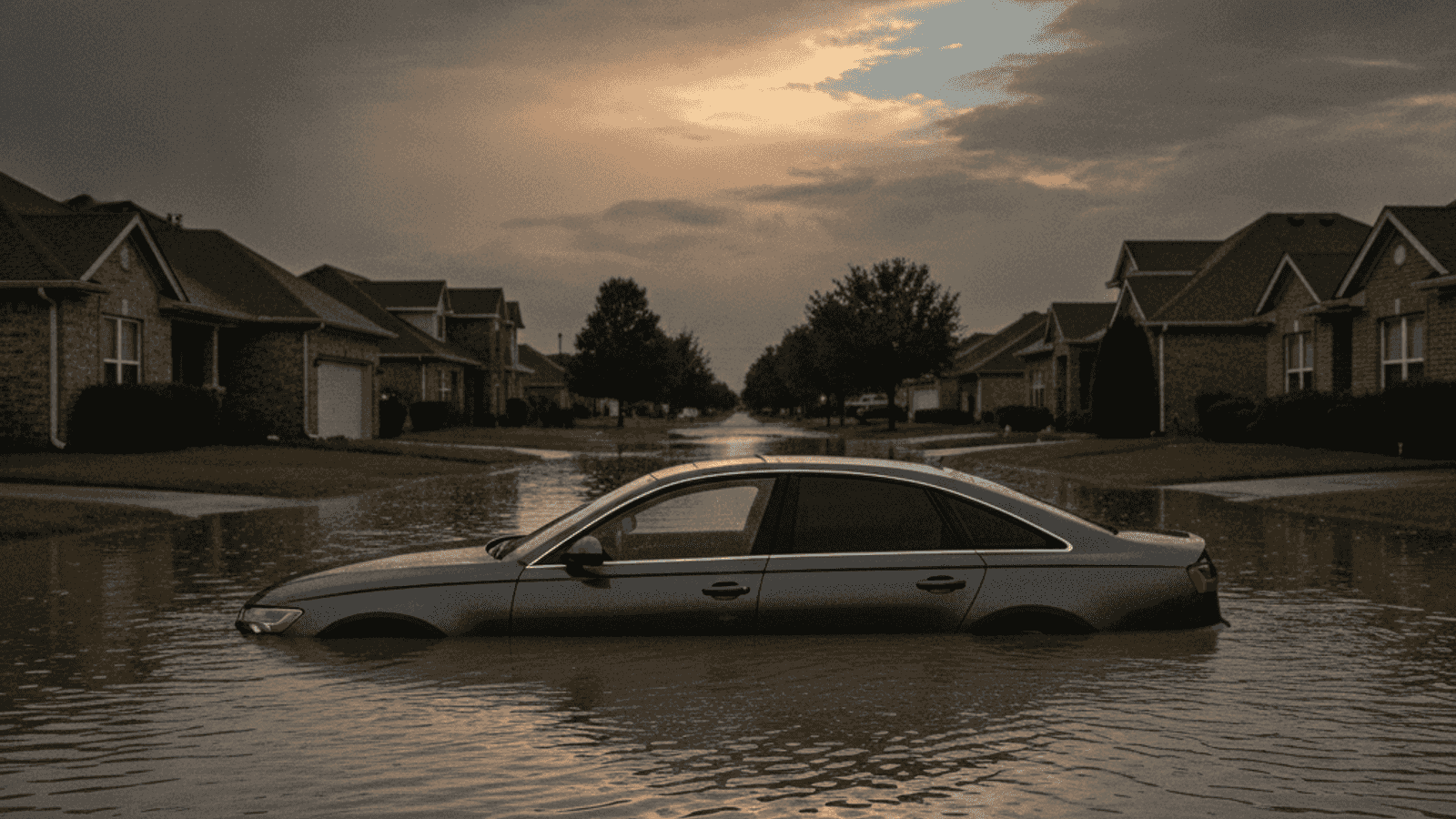
Last night you parked your car in front of the house, and this morning you're watching it sit in muddy water up to the door sills. Or a flash flood caught you on the road and the engine died in the middle of a stream that was a dry street yesterday. The scenario is the same: a flooded car in BiH during summer storms, and every wrong move from this point can cost you the engine. This guide explains what to do with a flooded car, what you must never touch, and how to make the right decision about repairs.
This guide was prepared by the Auto Gas Gaga workshop in Banja Luka, based on years of experience with vehicles that have been through floods and flash water.
Table of Contents
- Severe Weather in BiH 2026: Why This Matters Right Now
- Three Damage Levels by Water Depth
- What to Do Immediately: The First Five Steps
- What You Must Never Do with a Flooded Car
- Hydrolock: Why Starting the Engine Is the Biggest Danger
- How Much Does It Cost to Repair a Flooded Car
- Comprehensive Insurance and Floods in BiH
- How to Protect Your Car Before a Forecasted Storm
- Frequently Asked Questions
- Related Articles
Severe Weather in BiH 2026: Why This Matters Right Now
Late June and early July 2026 brought BiH what meteorologists call a classic summer pattern, but what drivers remember for a long time. The Federal Hydrometeorological Institute issued an orange warning for the night between 1 and 2 July, announcing downpours, thunderstorms, strong wind, and hail following a multi-day heatwave. Just two days earlier, on 29 June, a severe storm with hail completely blanketed Bosanski Petrovac in white, while Bratunac suffered serious material damage and localised flooding.
The pattern is familiar: multi-day temperatures above 35 degrees heat the air to instability, then a sudden change brings a storm that dumps an hour's worth of rain the terrain cannot absorb. Urban drainage systems are not designed for flash-flood volumes. Underpasses, low-level garages, streets along streams, and car parks near rivers become traps for vehicles.
A flooded car in BiH is not a rare event. It happens every summer — sometimes localised to a single neighbourhood, sometimes across an entire entity. The difference between a car that can be saved and one that ends up scrapped often comes down to what the owner does in the first thirty minutes after the water recedes.
Three Damage Levels by Water Depth
Not every flood is the same. Water depth determines how serious the consequences are and how much the repair will cost. This classification is rough but useful for an initial on-site assessment while you wait for a tow truck or while the water is still receding.
Level 1: water below the door sills (up to 15 cm). Only the lower parts of the car are wet — the underbody, brake discs, and partially the exhaust. If the water was not aggressively muddy and the car did not sit for long, the damage is usually minimal. A brake inspection, exhaust check, and visual underbody inspection are needed. Most cars in this scenario get through without expensive repairs.
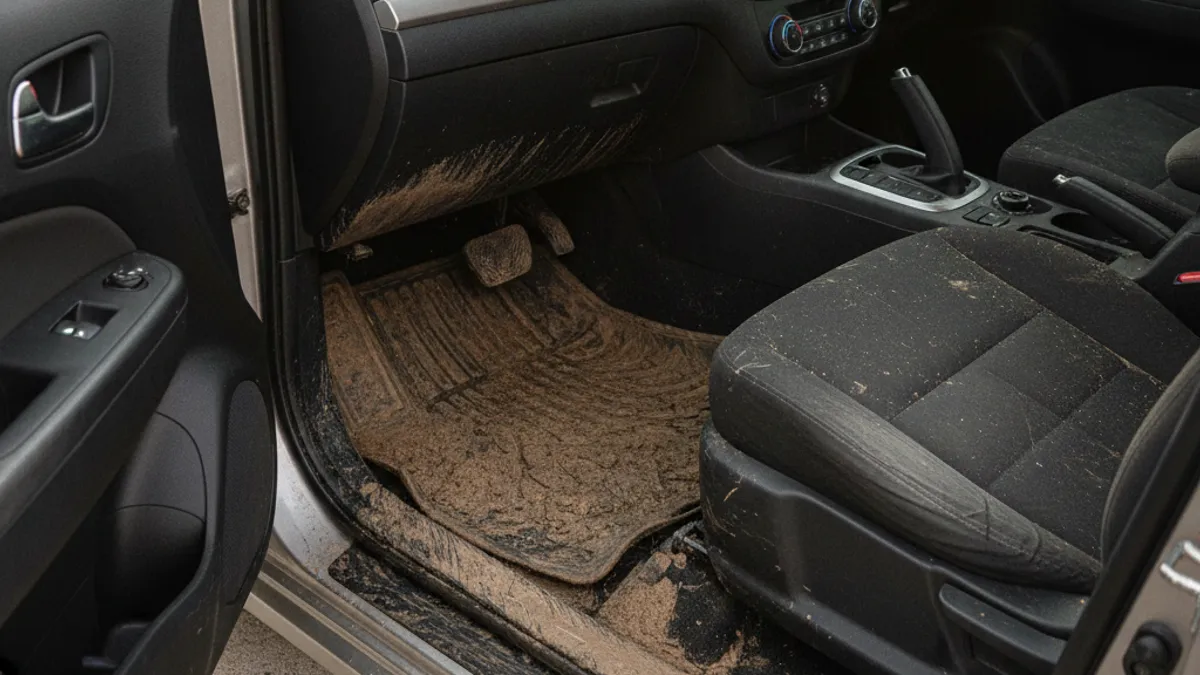
Level 2: water up to half the wheels or to the door sills (15–40 cm). This is where serious problems begin. Water may have penetrated the footwell, soaked the carpets, and trapped moisture beneath the floor linings — causing corrosion and mould. If the car sat in such water for more than an hour, the lower interior is likely contaminated. Electronic modules beneath the seats, particularly control units on some models, may be affected. Complete drying, electronic diagnostics, and replacement of contaminated fluids are required.
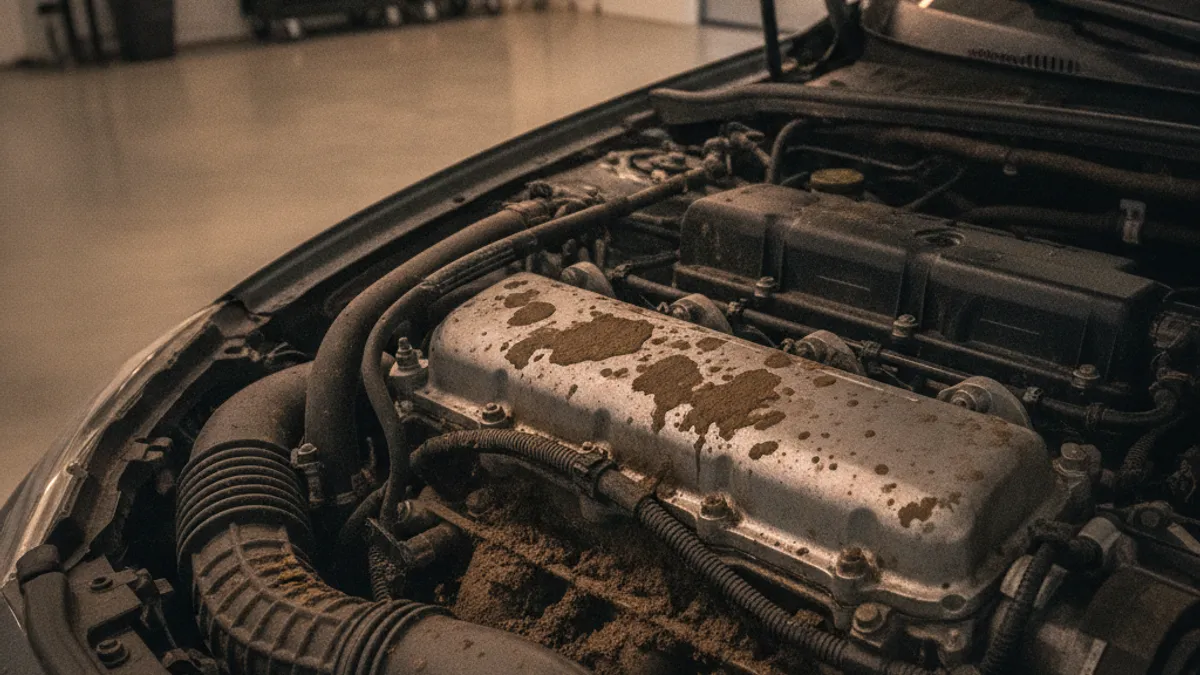
Level 3: water above the door sills, up to the dashboard or higher. This is the worst-case scenario. Water has entered the interior, likely the engine bay, and at higher levels even the intake manifold. A modern car's electrical system contains up to 10,000 metres of wiring, and connectors have silicone seals that protect against splashing but not submersion. Full electronic diagnostics after this level of flooding are unavoidable, and costs can exceed the vehicle's value. If after drying and diagnostics the check engine light keeps staying on, that is a sure sign that electronic modules are damaged and a more detailed intervention is needed.
How Much Water Can a Car Withstand Without Damage
There is no universal answer because it depends on the model, intake pipe position, and door sill height. As a rough guide: if the water was below the door sills and the car was not in it for more than half an hour, the chances of saving it without major expense are good. Once water crosses the sill, the risk rises exponentially. SUV models with higher ground clearance have a slightly higher threshold, but that does not mean they are safe. A deeper wade can push water directly into the intake manifold even on vehicles with raised ground clearance, especially if you create a bow wave by driving fast.
What to Do Immediately: The First Five Steps
If your car is flooded, the first question is what to do — and the answer is clear, with the order being critical. Every step has a reason, and skipping any one of them can lead to far more expensive consequences.
1. Do not start the engine and do not attempt to crank it. This is the most important step, and we will repeat it multiple times in this guide. Turning the key while water is in the cylinder means hydrolock and a potentially destroyed engine. Even if the water has receded, moisture in the intake manifold can be enough to cause damage.
2. Disconnect the battery. Remove the negative terminal to break the electrical circuit. This prevents short circuits that can ignite the wiring harness or damage electronic modules. If you cannot reach the battery without stepping into deep water, wait for the water to recede. On vehicles with the battery in the boot (some BMW, Volvo, and Chrysler models), access is easier since the boot is usually above the waterline.
3. Document the condition. Photograph the car from all sides while it is still in water or immediately after the water recedes. Capture the visible waterlines on the bodywork, interior, and engine bay. These photographs are essential for the insurance company, regardless of whether you have comprehensive cover. Mark the date and time on the photos.
4. Call a tow truck. A flooded car is not driven to the workshop, even if the engine starts. The car is loaded onto a flatbed and delivered to the mechanic. Any driving before a professional inspection is a risk that can turn a repairable fault into an irreparable one.
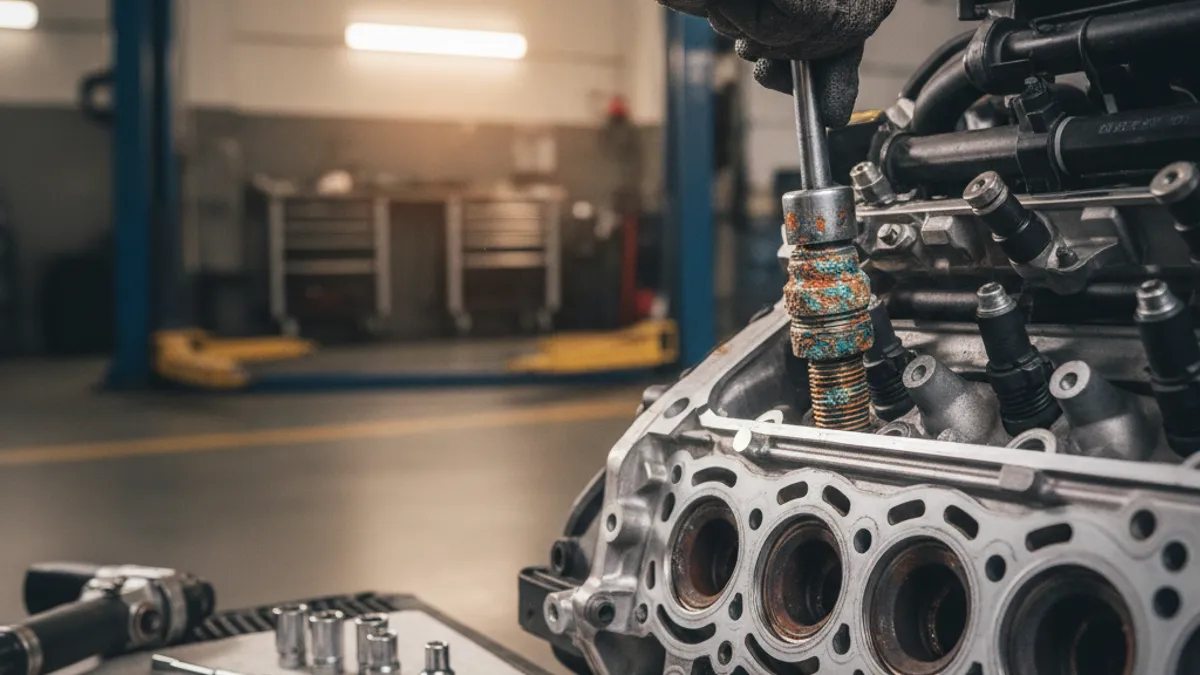
5. Arrange a preliminary inspection. Before anyone runs diagnostics, the mechanic needs to visually assess the level the water reached and decide on the next steps. For a petrol engine, this means removing the spark plugs; for a diesel, the injectors — then manually turning the engine over to check for seizure. All engine and gearbox oil is drained because it is contaminated with water, and the air and oil filters are replaced immediately.
What You Must Never Do with a Flooded Car
The mistakes people make with a flooded car are almost always the same — and almost always expensive. Here is what you must never do.
Do not attempt to start the engine. Repeated deliberately. Not after the water recedes. Not after you have waited two hours. Not after you have opened the bonnet and it looks dry. Without a professional check of the intake system, starting the engine is roulette with a bent connecting rod as the stake.
Do not dry the interior with a hairdryer or a space heater. Drying too quickly with hot air can damage the dashboard plastics, seat leather, and cause rubber seals to crack. Proper drying of a car interior after a flood requires patience: open windows, natural airflow, possibly an industrial dehumidifier, and a minimum of two to three days.
Do not switch on the air conditioning or any electrical equipment. Until the battery is disconnected and the mechanic confirms the connectors are dry and undamaged, switching on any electrical consumer can cause a short circuit. This includes the radio, electric windows, seat heating, and central locking.
Do not ignore muddy water. Muddy and sewage water is more aggressive than clean rainwater. Silt carries sand, bacteria, and chemicals that accelerate corrosion and destroy electronic contacts. If the car was in muddy water, the entire interior needs chemical treatment, not just drying.
Do not sell the car without disclosing the flood. Concealing the fact that a car has been flooded is fraud. A buyer who finds out has the right to take legal action, and you have a moral and legal obligation to disclose that information.
How to Dry a Car Interior After a Flood
Proper drying is a process that takes days, not hours. First, all carpets, floor linings, and removable seats are taken out of the vehicle. The floor is thoroughly washed with clean water to flush out silt and residue, then the car is left in a dry place with all doors and windows open. An industrial dehumidifier significantly speeds up the process. Never close the car while even the slightest trace of moisture remains, because trapped moisture beneath the carpets causes mould and floor pan corrosion that you will not see until it is too late. Allow a minimum of three to five days of drying for moderate damage, and up to two weeks for a car that was submerged to the dashboard.
Hydrolock: Why Starting the Engine Is the Biggest Danger
Hydrolock occurs when water enters the cylinder through the intake manifold. An engine works on the principle of compressing air (or an air-fuel mixture), and air is compressible. Water is not. When the piston moves upward on the compression stroke and encounters water filling the space above it, it cannot compress it. The force has to go somewhere, and that "somewhere" is usually the connecting rods, crankshaft bearings, and cylinder head.
The consequences of hydrolock are bent connecting rods, damaged crankshaft bearings, a cracked or warped cylinder head, and in severe cases a cracked cylinder liner. Repairing such an engine requires complete disassembly, measurement, and replacement of damaged parts. On older used cars, the repair cost often exceeds the vehicle's market value.
Diesel engines are particularly vulnerable to hydrolock because they have a higher compression ratio than petrol engines. The force generated when the piston tries to compress water in a diesel engine is significantly greater, meaning the consequences are usually more severe. With a petrol engine, it sometimes gets away with a bent connecting rod and a single-cylinder repair, whereas with a diesel, it often results in a cracked head or block.
Hydrolock Symptoms
How do you recognise that hydrolock has occurred? The most obvious symptom is a sudden engine shutdown while driving through water, accompanied by a mechanical thud or knocking from the engine bay. If you try to restart, the starter either does not turn at all (the engine is mechanically seized) or turns abnormally hard with an unusual sound. In some cases, the engine starts but runs erratically with pronounced knocking and loss of power. Any of these symptoms requires immediate shutdown and a tow to a workshop. Continuing to drive with partial hydrolock can turn a bent connecting rod into a breached cylinder liner — and that is the difference between a repair and buying a new engine.
How Much Does It Cost to Repair a Flooded Car
The cost of repairing a flooded car depends on the water depth, the time spent in water, and the type of vehicle. Rough ranges, based on workshop experience in the region, are as follows.
Level 1 (water below door sills): inspection, oil and filter change, and brake check. The price depends on the specific condition and car model. This is the cheapest scenario and usually concludes without surprises.
Level 2 (water up to door sills): interior drying, fluid replacement, electronic diagnostics, and possible replacement of modules beneath the seats. The price depends on the specific condition and the number of affected components. On luxury models with more electronic modules, costs rise significantly because each module has its own price and requires programming.
Level 3 (water above door sills, hydrolock): engine repair after hydrolock ranges from several hundred to over 16,000 KM, depending on the extent of the damage. On older used cars, it often exceeds the vehicle's value, meaning the car is an economic write-off.
Flooded Car: Is It Worth Repairing?
The key rule is the ratio of repair cost to market value. If the estimated cost exceeds 60–70% of the car's value, a repair makes no economic sense unless you have sentimental reasons. On newer cars with a higher market value, a repair can be worthwhile even after serious damage. On older used cars with a market value below 5,000 KM, even moderate flood damage can be reason enough for a write-off. A definitive assessment can only be made by a mechanic who disassembles and inspects all affected systems. Book an inspection and we will make the decision together based on the actual condition of your vehicle.
If you decide to get a replacement car, pay special attention to ensuring the used vehicle has not been previously flooded. A flood-damaged car from Germany or Austria can end up on our market without a single visible trace. The easiest way to verify a vehicle's documented history is through carVertical using the chassis number: the report shows mileage by year, registered collisions and total losses, the number of previous owners, and theft indicators. We consider this essential before purchasing any used car. When paying for the report, you can use the code GAGA to get a 20% discount.
Comprehensive Insurance and Floods in BiH
This is information that surprises most drivers. A standard comprehensive insurance package in BiH typically does not cover floods, flash floods, and high water. With Triglav Insurance, for example, flood risk is an optional add-on that carries an additional premium on top of the basic comprehensive policy. Most drivers only find this out when they actually need it.
Does Comprehensive Insurance Cover Floods in BiH?
The answer depends entirely on your policy and insurer. Each insurer may have different terms, different packages, and different definitions of what constitutes a "flood" versus "flash water." What is certain: do not assume you are covered simply because you pay for comprehensive insurance.
Take out your policy, read the terms, or call your agent and ask directly whether your cover includes flood and flash-flood risk. If it does not, enquire about the cost of adding it. Given the frequency of summer storms in BiH, this is an add-on that seriously deserves consideration, particularly if you live in an area known for flooding.
If you have comprehensive insurance that includes flood risk, the claims process is similar to any other damage claim: document the condition (photographs, video), report the damage within the period your policy stipulates (usually 24–72 hours), and do not repair anything before the insurer's assessor arrives. Carrying out repairs before the assessment can be grounds for rejection of the claim. Keep all receipts for towing, temporary parking, and any emergency interventions, as you can attach them to your claim.
How to Protect Your Car Before a Forecasted Storm
Prevention is always cheaper than repair. When the Federal Hydrometeorological Institute issues an orange or red warning for your region, you typically have 12–24 hours to prepare.
Move your car to higher ground. If you live on a street near a stream, close to a river, or in a part of town known for flooding, drive the car to higher terrain. Shopping centre car parks on a hill, yards on elevated ground, even a street that is 50 metres higher than your usual spot are a better choice than a parking space next to a drainage canal.
Avoid underpasses and low-lying passages. During active storms, underpasses fill with water within minutes. Every year in BiH, at least one car gets trapped in a flooded underpass. If you see water on the road whose depth you cannot estimate, do not enter. Turn around and find an alternative route. Read more about safe driving in difficult conditions in our dedicated guide.
Do not park in underground garages during a storm. Underground garages are the lowest point of a building and water flows towards them by gravity. If the drainage cannot carry the water away fast enough, cars in an underground garage can be submerged to the roof in less than an hour.
Check the drains around your parking space. If you have your own parking space, check that the drainage channels around it are clear. A few leaves, twigs, or a plastic bag over a drain is enough to make water pool instead of flowing away. Five minutes of clearing can prevent an hour of standing in water.
Save a tow truck contact in advance. Save a tow service number in your phone before you need it. During storms, tow services are overwhelmed and the wait can last hours. The earlier you call, the sooner you are in the queue. Also check whether your roadside assistance covers towing in the event of a flood, as some policies do not.
Monitor the cooling system after every storm. Even if the car was not directly in water, mud and debris caught on the radiator during a flash flood can reduce airflow and lead to overheating. A visual check of the front grille and radiator after a storm takes a minute and can prevent overheating on your first drive.
Need help assessing damage or running diagnostics after a flood? Contact the workshop with photographs and a description of the situation, and we will assess the condition together and arrange an inspection.
Frequently Asked Questions
Can I start my car after the water recedes?
No. Never attempt to start the engine until a mechanic has checked the intake system, air filter, and cylinder space. Even if water is not visually apparent, moisture in the intake manifold can cause hydrolock, which destroys connecting rods and crankshaft bearings.
How quickly do I need to act after a flood?
As quickly as possible — ideally within the first few hours after the water recedes. The longer the car sits wet, the greater the damage to the electronics, interior, and metal parts. Corrosion begins to act within 24 to 48 hours on unprotected surfaces.
Does muddy water cause more damage than clean rainwater?
Yes, significantly more. Muddy water carries sand, organic matter, bacteria, and chemicals from the sewage system. Silt deposits in connectors, between the contacts of electronic modules, and in every cavity of the bodywork. Cleaning is far more demanding and expensive than with clean water.
What if I drove through water and the engine stalled?
Leave the car where it stopped. Do not attempt to restart. Switch on the hazard lights if the electrical system is working, exit the car if it is safe to do so, and call a tow truck. The engine most likely stalled because water entered the intake manifold.
Does a flooded car lose its value?
Yes. Even after a complete repair and drying, a flooded car carries a stigma on the market. Potential buyers know that corrosion can remain hidden for years after a flood. Transparency with the buyer is mandatory, and concealing a flood history is legally and morally unacceptable.
Can hydrolock be avoided by driving slowly through water?
Driving slowly reduces the risk because you do not create a bow wave that pushes water into the intake manifold, but it does not eliminate it. If the water is above the lower edge of the bumper, the risk exists regardless of speed. The only safe option is not to enter water whose depth you cannot reliably estimate.