In 2025 alone, 532 car recalls were recorded according to ADAC data, while 2.84 million vehicles had to undergo emergency servicing. For drivers in BiH, where most used cars come from Germany, these figures are not abstract statistics but a concrete reason to check your car's status. Car recalls in 2026 are a topic that concerns everyone behind the wheel, regardless of make, age or drivetrain type.
This article was prepared by the Auto Gas Gaga workshop in Banja Luka, based on ADAC data for 2025/2026, EU Safety Gate reports and years of experience with pre-purchase inspections of imported vehicles.
Table of Contents
- Recalls at Record Levels, Numbers That Surprise
- Five Reasons Why Modern Cars Break Down More Often
- Software Instead of Mechanics, a New Type of Fault
- Which Models on BiH Roads Are on the Blacklist
- How to Check If Your Car Is Under Recall
- What to Do If Your Car Is on the List
- Why Recalls Are Rising While Cars Are Actually More Reliable
- Frequently Asked Questions
- Related Articles
Recalls at Record Levels, Numbers That Surprise
The numbers are unequivocal. In 2010, ADAC recorded 185 car recalls. By 2025, that figure reached 532, representing a 187% increase in just 15 years. At the same time, 2.84 million vehicles had to undergo emergency servicing in 2024 due to recall campaigns, a 48% rise compared to the previous year.
Ford led the way with 153 recall campaigns in 2025 alone, meaning it launched one recall every 2.4 days on average. Those 153 campaigns affected 12.9 million Ford vehicles, more than the next nine manufacturers combined. But Ford is not alone. The EU Safety Gate system recorded 399 vehicle recalls in 2025, with Peugeot (25 reports), Kia (24) and Mercedes-Benz (23) topping the list. Of those 399 cases, 113 were related to fire risk.
For the BiH market, these figures carry particular weight. Most used cars on our roads were imported from Germany, Austria and other EU countries. When ADAC publishes a recall for a specific model and model year, the probability that the same model and year is driving on BiH roads is extremely high. The problem is that BiH has no central recall register, so an owner who bought a car three years ago may never have learned that their particular vehicle was covered by a recall campaign.
Five Reasons Why Modern Cars Break Down More Often
The rise in recalls is not the result of a single factor. Behind the record numbers lies a combination of five key changes in how cars are designed, manufactured and monitored today.
Globalisation of the Supply Chain
Manufacturers today produce only about 25% of vehicle components in-house, while 75% come from the global supply chain. In the early 2000s, the ratio was 35-50% internally produced parts. When a single supplier in China, Mexico or Turkey makes a manufacturing error on a sensor or module, that error affects dozens of models across multiple manufacturers simultaneously. Quality control becomes exponentially harder when a manufacturer depends on hundreds of suppliers scattered across the globe.
Complexity of Electronic Systems
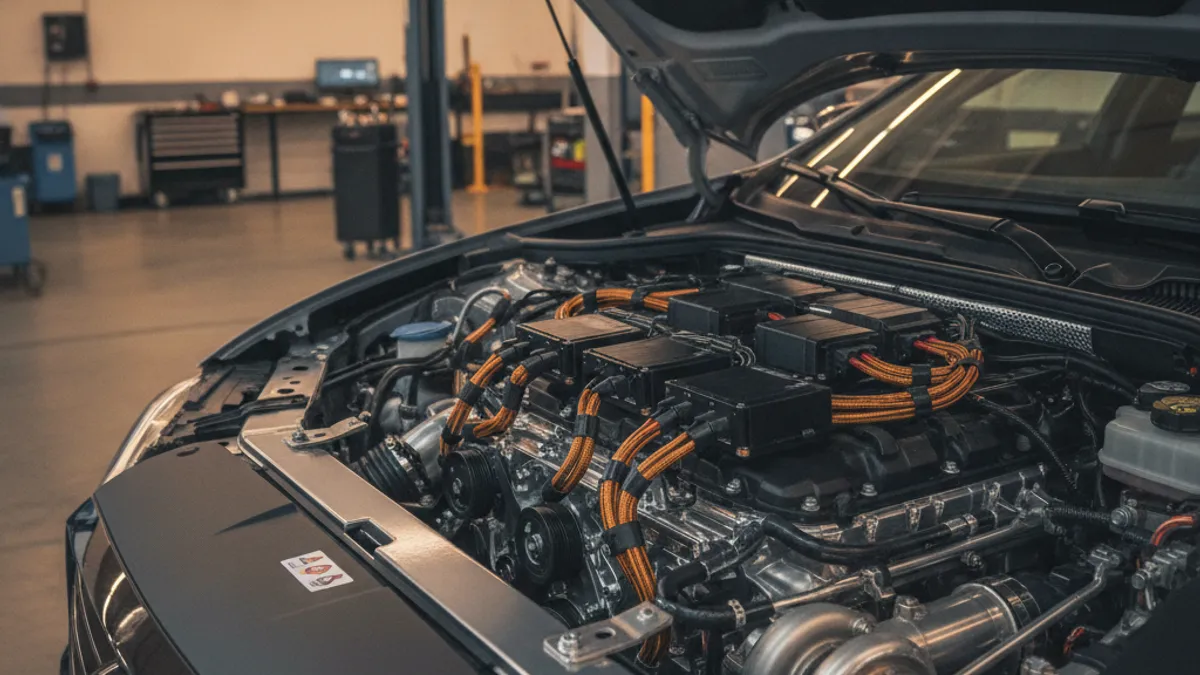
The average car today has between 80 and 150 electronic control units (ECUs) managing everything from fuel injection to driver assistance systems. Each of those units runs on software that may contain bugs, and the interaction between dozens of systems creates unpredictable combinations of problems. A mechanical engine with a carburettor had perhaps 200 moving parts. A modern turbodiesel with a DPF, EGR, AdBlue system and eight sensors has a vastly larger surface area where something can go wrong.
Time and Cost Pressure
The development cycle for a new model has shrunk from 5-7 years to 3-4 years. Manufacturers rush to launch new models before the competition, and pressure to cut costs further compromises testing. The result is that some problems are only discovered after a vehicle reaches the market and covers its first 30,000-50,000 kilometres under real-world conditions. A test environment, however sophisticated, cannot simulate every combination of climate, fuel quality, driving style and maintenance habits.
Stricter Regulatory Standards
The European Union and national safety agencies apply increasingly stringent criteria for what constitutes a safety defect. A problem that in 2010 would have been resolved through a quiet technical bulletin to authorised dealers now requires a formal recall with owner notification. This is a good thing for drivers, but it statistically inflates the recall count even when actual vehicle quality remains the same or improves.
More Vehicles, More Variants
Never in the history of the automotive industry have there been so many different models, drivetrain variants, gearbox types and equipment combinations. A single model today may have five engine options, three gearbox types, two or three trim levels and dozens of optional packages. Each of those combinations is a potential source of a unique problem that does not appear in other variants.
Software Instead of Mechanics, a New Type of Fault
One of the most significant changes in the nature of recalls is the shift from mechanical to software-related problems. Over 40% of all recalls today involve software errors, whereas in the past virtually all recalls were linked to physical defects such as faulty brake hoses, corroded bolts or incorrectly dimensioned gaskets.
Software recalls manifest in ways the average driver struggles to recognise. An engine that reacts unpredictably under specific conditions (sudden temperature changes, high humidity, high altitude). A traction control system that activates for no reason or, worse still, fails to activate when it should. An airbag module whose software misinterprets sensor data and does not deploy the airbag during a collision at a certain angle.
The good news is that software recalls are often simpler to fix than mechanical ones. Instead of physically replacing parts, the authorised dealer loads updated software onto the control unit, a job that takes 30-90 minutes. The bad news is that a driver who does not know their car is under recall continues driving with the same software defect for months or years.
ADAC's Pannenstatistik for 2026 confirms how dominant electronic systems have become as a source of problems. Of 3.7 million roadside assistance interventions, the 12V battery was the cause in 45.4% of cases, with the engine and electronics accounting for 21.8%. Tyres came third at 8.9%. When you add up the battery, engine, electronics and other electrical systems, it is clear that over two-thirds of all roadside breakdowns are related to electrical and electronic components, not to traditional mechanics.
Which Models on BiH Roads Are on the Blacklist
ADAC's blacklist for 2026 includes several models that are extremely common on the BiH market. This data comes from the German market, but given that most of our used cars originate from there, the same models and model years are also on our roads.
| Model | Model years | Most common problem |
|---|---|---|
| Opel Insignia | 2016-2019 | Electronics, sensors |
| Nissan Qashqai | 2019 | Drivetrain |
| Toyota RAV4 | 2017-2022 | Hybrid system |
| Renault Scenic | 2018-2019 | Electronics |
| Ford Kuga | 2021 | Electrical system |
| Toyota Corolla | 2023 | Software |
| Fiat Ducato | 2016-2023 | Multiple systems |
The Opel Insignia from 2016-2019 is particularly common on the BiH market because it was a popular family car in Germany, and the price of a used example in BiH makes it affordable. Stellantis (which owns Opel) launched multiple recall campaigns in 2026 affecting Peugeot, Opel and Citroen models due to faulty door handles, 1.5 BlueHDi engines due to timing chain fire risk, and even hybrid vehicles due to self-ignition risk.
The Fiat Ducato (2016-2023) deserves special attention because it is the most popular light commercial van in the Balkans. Tradespeople, couriers and small transport operators who depend on the Ducato should check their vehicle's status without delay.
The Takata airbag recall, although an older issue, still affects millions of vehicles globally. Several manufacturers are actively processing this campaign in 2026, including Opel with nearly 7 million affected vehicles, BMW with multiple recall waves and Citroen and DS models. The Takata airbag is a zero-compromise issue because a defective airbag inflator can propel metal fragments towards the driver and front passenger upon deployment.
How to Check If Your Car Is Under Recall
BiH has no central recall register like Germany's KBA or the American NHTSA system. This means the responsibility falls on you as the owner to check your vehicle's status. There are several practical ways to do so.
Checking via VIN with the Manufacturer
Most major manufacturers offer a free online recall check using the vehicle identification number (VIN). You can find the VIN on the vehicle registration document, on the identification plate beneath the windscreen (left side, visible from outside) or in the engine bay. Manufacturer portals:
- Volkswagen Group (VW, Audi, Skoda, SEAT, Porsche): my.volkswagen.de, myaudi.de or the corresponding national page
- BMW: bmw.de/recall or via the My BMW app
- Mercedes-Benz: mercedes-benz.com/recall-check
- Stellantis (Peugeot, Citroen, Opel, Fiat): recall.stellantis.com
- Toyota: toyota-recall.eu
- Ford: etis.ford.com or ford.ba
- Renault/Dacia: my.renault.com
- Hyundai/Kia: recall.hyundai.com or kia.com/recall
Enter the 17-digit VIN, and the system shows you whether there is an active recall for your specific vehicle and what needs to be done.
Authorised Dealer as Intermediary
If you cannot find the information online yourself, call the authorised dealer for your make. The service advisor can see the complete recall history for your VIN in the system and can inform you whether anything is outstanding. Recall repairs are free for the owner, regardless of age or mileage, because the manufacturer bears the cost.
Checking via a VIN Report
An experienced seller can hide a lot. Rolled-back odometer readings, total-loss vehicles repainted and sold as "warranty imports", and even open recalls that the previous owner never addressed. Some of this can be spotted during a pre-purchase inspection at a workshop, but the easiest way to check the documented history of a car is through carVertical. Using the VIN, it pulls data from international registers on actual odometer readings by date, recorded accidents, number of owners and indicators of theft or total loss. We consider it a mandatory step before buying any used car. When paying for the report you can use the code GAGA and get a 20% discount.
What to Do If Your Car Is on the List
You have found out that your car is under an active recall. No need to panic, but no room for delay either. Here is a concrete sequence of steps.
First, read the recall description and assess the severity. Recalls involving airbags, the braking system, the steering mechanism or fire risk are critical and must not wait. Recalls relating to infotainment software updates or cosmetic defects can wait until a scheduled service appointment.
Second, contact the authorised dealer for your make and book an appointment for the recall repair. Clearly state that you are coming in for a recall campaign and provide the campaign number if you have it. The repair is free of charge. The manufacturer pays for both parts and labour.
Third, if there is no authorised dealer for that make in your city, contact the nearest one in another city. For BiH drivers, the options are usually Banja Luka, Sarajevo, Tuzla or Mostar, depending on the make. If it is an urgent recall (fire, brakes, airbag), do not drive the car to the dealer if the recall explicitly prohibits it. In that case, request a tow truck.
Fourth, keep the documentation. When the dealer completes the recall repair, request a written confirmation with the campaign number, date of repair and description of work performed. This documentation is important for a future sale of the vehicle, as it proves the recall has been closed.
The fifth step that many people skip: check whether there are additional open recalls. It is not uncommon for a single vehicle to have two or three active recalls at the same time, especially if the model is over five years old and has passed through multiple owners.
Why Recalls Are Rising While Cars Are Actually More Reliable
A paradox that confuses many drivers: recalls are at record levels, yet cars are actually more reliable than ever. ADAC's data confirms this concretely. The breakdown rate for a five-year-old car is FALLING, from 3.6% in 2015 to 2.1% in 2025. In other words, a smaller percentage of cars actually break down on the road.
Recalls are rising for a different reason. Fault detection systems are better, regulatory agencies are stricter, and manufacturers have learned that it is cheaper and safer to launch a preventive recall than to wait for a problem to manifest as an accident and a lawsuit. What in 2010 would have been resolved through a quiet service bulletin is now a formal recall with owner notification and repair-rate tracking.
For you as a driver, this is essentially good news. More recalls do not mean cars are worse. It means the system protecting drivers is more effective. Your only obligation is to check your vehicle's status and act on open recalls. In a country without a central register like BiH, that responsibility rests entirely with you, but the tools for checking exist and they are free.
Regular servicing at a workshop that knows your model remains the best protection against problems that have not yet made it onto a recall list. At Auto Gas Gaga, we see models from all six recall lists we have written about this year, and we always check the recall status when a car comes in for an inspection. Book an inspection if you are not sure about the condition of your vehicle.
Frequently Asked Questions
Does the manufacturer notify me about a recall on my car?
In Germany and the EU, the manufacturer is required to notify the registered owner. The problem arises with used cars in BiH, because the manufacturer has no data on the new owner after import. That is why the only reliable method is a manual check using the VIN on the manufacturer's website.
Is a recall repair really free of charge?
Yes, without exception. The manufacturer bears all costs, including parts, labour and diagnostics. This applies regardless of the vehicle's age, mileage or whether the car was bought new or used. If an authorised dealer asks you to pay for a recall repair, that is not in compliance with regulations.
How long does a recall campaign remain active?
Most recall campaigns remain active for at least 10 years from the launch date. Some campaigns, particularly those involving safety-critical components such as Takata airbags, have no expiry date and remain open until all affected vehicles have been repaired.
Can I drive a car that is under recall?
It depends on the nature of the recall. Software updates and minor defects usually do not require you to stop driving. Recalls involving fire risk, brake failure or faulty airbags are critical, and in some cases the manufacturer explicitly recommends not using the vehicle until the repair is completed.
Does a recall affect my car's resale value?
An open recall by itself does not reduce the value, but a closed recall with documentation can actually increase it, as it shows the owner took a responsible approach to maintenance. The problem arises when a buyer discovers an unresolved recall after purchase, as this creates distrust and may be grounds for a complaint.
How can I find out if a car I am buying was under recall?
The safest method is a VIN check directly with the manufacturer. Enter the 17-digit VIN on the relevant manufacturer portal and the system displays all recalls for that specific vehicle, including whether the repair has been carried out or the recall is still open.