Nearly seven million Opel vehicles worldwide have been recalled because of a defective gas generator in the driver's airbag. The Takata recall, the largest in the history of the automotive industry, now directly affects owners in Bosnia and Herzegovina who drive an Astra, Vectra, Zafira, Mokka, Meriva, Cascada or Signum from the 2003-2018 production period. Stellantis, the company that inherited Opel, is recalling a total of 6,868,258 vehicles in two phases: an initial recall of 5,966,894 units and a February 2026 expansion covering an additional 901,364 vehicles.
Table of Contents
What Is the Takata Recall and Why Is It Serious
This is a safety issue with potentially fatal consequences. Defective Takata inflators can rupture when the airbag deploys, hurling metal fragments into the cabin directly towards the driver. To date, at least 35 deaths and over 400 injuries worldwide have been linked to this defect. The airbag replacement is completely free at any authorised Opel service centre, takes under two hours, and the only thing the owner needs to do is check their vehicle's VIN and book an appointment.
The chemical propellant used in Takata inflators is based on ammonium nitrate. This material is cheaper than alternatives used by other airbag manufacturers, but it has one critical weakness: it degrades under the influence of heat and moisture. Over the years, particularly in warmer climates, the propellant develops microscopic pores in its structure. Those pores fundamentally alter the combustion dynamics when the airbag is triggered.
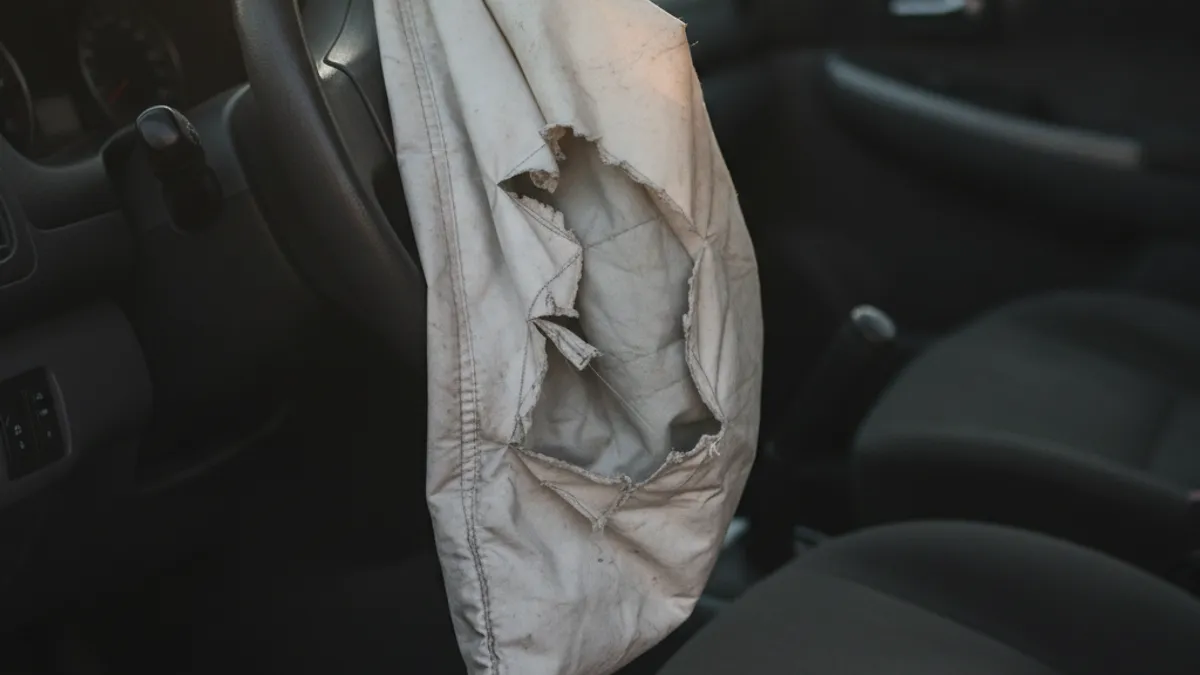
Instead of the airbag inflating in a controlled manner, the degraded propellant burns too fast and too intensely. The result of this uncontrolled combustion is a rupture of the inflator's metal housing. Metal fragments from the housing then fly at high speed towards the driver, turning a safety system into a lethal projectile. In the hottest and most humid climates, degradation becomes critical after just six to nine years from the date of manufacture.
Bosnia and Herzegovina, with its hot and humid summers and significant temperature swings between seasons, is an environment that accelerates this process. Vehicles manufactured between 2005 and 2010, which by the summer of 2026 are 16-21 years old, fall into the highest-risk category because their inflators have been exposed to atmospheric conditions the longest. But even newer units from the 2013-2017 period have inflators that have already exceeded the nine-year threshold, meaning no affected model should be treated as low-risk.
This is not a theoretical problem that exists only on paper. Takata declared bankruptcy in 2017 precisely because of the costs of the mass recall. Over 100 million vehicles from various manufacturers have been recalled worldwide, from Honda and Toyota to BMW and Ford. The Opel recall covered in this article is one of the largest individual recalls across all of Europe in terms of affected units.
Which Opel Models Are Affected
Opel has flagged seven complete model lines under the recall. Each of these models was produced during a period when Takata inflators were standard equipment for the driver's airbag. All units within the listed production years are affected, regardless of trim level, engine type, gearbox variant or the market for which they were originally built. This is particularly important for the BiH market because vehicles are imported from various European countries, and the Takata inflator was identical whether the car was originally sold in Germany, Italy, the Netherlands or anywhere else in Europe.
| Model | Production years | Note |
|---|---|---|
| Astra H | 2005-2013 | Most numerous affected model in BiH |
| Astra J | 2010-2018 | Popular 1.6 CDTI and 1.4 Turbo |
| Cascada | 2014-2018 | Rarest model on the list in BiH |
| Meriva B | 2013+ | Compact city MPV |
| Mokka | 2013-2017 | Best-selling Opel crossover of that period |
| Signum | 2003-2008 | Fewer units in circulation |
| Vectra C | 2006-2008 | Last generation before the Insignia |
| Zafira C | 2013-2017 | Family MPV with seven seats |
Astra H, produced from 2005 to 2013, is the most numerous affected model on this list. A huge number of these vehicles circulate on BiH roads because the Astra H has for decades been one of the most popular import cars from Germany, Italy and Austria. Recognisable by its rounded front grille and reliable 1.4, 1.6 and 1.7 CDTI engines, the Astra H is the workhorse of thousands of families in BiH. Whether the vehicle was purchased new or as a used import, the recall applies to every unit fitted with a Takata inflator in the steering wheel.
Astra J, the next generation, is affected across the 2010-2018 production years. This generation was even more popular on the BiH market, especially in the 1.6 CDTI and 1.4 Turbo variants. Because of its shorter lifespan compared to the Astra H, the inflators have statistically been exposed to degradation for a shorter period, but the recall treats them identically because the component itself is defective by design, not by age.
Vectra C, covering the 2006-2008 production years, affects a smaller but not insignificant number of units. The Vectra C was the last generation of this model before it was succeeded by the Insignia. Recognisable by its more spacious cabin and more powerful engines, many Vectra C units are still in daily use as work vehicles and larger family cars.
Zafira C, the compact MPV, is affected across the 2013-2017 range. The Zafira was extremely popular as a family vehicle with seven seats, and owners who drive their children every day have the strongest reason to act urgently on this recall. A defective inflator in a car that regularly transports a family represents a particularly serious risk that should not be underestimated.
Mokka, Opel's compact SUV, is affected in the 2013-2017 range. The Mokka was Opel's best-selling crossover during that period, and a large number of units arrived in BiH as relatively fresh imports with low mileage. Many owners consider the Mokka a newer car and do not expect it to be under recall, but the year of manufacture has nothing to do with the likelihood of inflator failure.
Meriva B, the small MPV, is affected from 2013 onwards. The Meriva is a compact city MPV popular with drivers who value manoeuvrability in urban settings and practicality for smaller families. It is not as widely represented as the Astra or Zafira, but every affected unit carries an identical risk from the defective inflator.
Cascada, Opel's convertible, is affected from 2014 to 2018. The Cascada is the rarest model on this list in BiH, but if you drive one, check your VIN without delay because an airbag does not distinguish between a popular and a rare model.
How to Tell If Your Opel Is Under Recall
It is crucial to understand that the production year alone is not a sufficient criterion for ruling your vehicle out of the recall. The German KBA (Kraftfahrt-Bundesamt), the Federal Motor Transport Authority, expanded the recall order in February 2026 under reference KBA 15712R, covering an additional 901,364 vehicles produced between 19 January 2005 and 6 November 2017, as a continuation of the initial recall of 5,966,894 vehicles under reference KBA 6625. This means that even owners who previously checked their status may have been subsequently included in the expanded recall. The only reliable way to verify is the VIN of your specific vehicle.
If you bought your Opel as a used import, there is no guarantee that the previous owner responded to the recall. In Germany, where the majority of these vehicles were first registered, recalls are tracked systematically through TUV inspections and the KBA database. But once a vehicle crosses the border and is registered in BiH, that link to the German tracking system is completely severed. Your car may be under an active recall and you simply do not know because nobody in BiH will send you a notification about it.
How to Check Your VIN and Book a Free Replacement
There are two free online tools for checking your vehicle's status. The first is the Stellantis global tool available at recall.stellantis.com. Visit the page, enter the 17-character VIN of your Opel, and the system will show you within seconds whether your vehicle is on the list for inflator replacement.
The second tool is the dedicated Opel BiH Takata page at opel.ba/takata.html, which contains information specific to the BiH market and directs you to the nearest authorised service partners.

Your vehicle's VIN can be found in several places. The easiest is on the metal plate in the lower left corner of the windscreen, visible from outside on the driver's side. It is also recorded in the vehicle registration document, the insurance policy and every document you received when purchasing the vehicle. A VIN always has exactly 17 characters, a combination of Latin letters and Arabic numerals, without the letters I, O and Q because they are easily confused with numbers.
If the check shows that your vehicle is affected, the next step is to book an appointment with an authorised Opel service centre. The repair is completely free for the owner, regardless of the vehicle's age, total mileage or whether the car was purchased new or used. Stellantis covers the full cost of sourcing and fitting the replacement inflator. The procedure itself takes under two hours. The technician removes the old inflator from the steering wheel module, fits a new one that uses a more stable chemical propellant, tests the entire SRS system and resets all related fault codes in the control unit.
Owner experiences from across Europe show that the booking process is not always seamless. One owner of a 2012 Opel Astra J publicly described being offered the earliest appointment in mid-March 2026 by the first authorised service centre, while a second one requested an official letter from Stellantis before agreeing to schedule the replacement. This suggests that service networks are still coordinating parts supply logistics with the volume of affected vehicles. Persistence pays off, and if one service centre cannot take your vehicle within a reasonable timeframe, contact another authorised centre in your region. Do not give up after the first attempt because this is about your safety and the safety of your family.
What Happens If You Do Not Act
Do not delay the check. Takata inflators degrade over time and the process is irreversible. Heat and moisture accelerate degradation, and the climate in Bosnia and Herzegovina with its hot and humid summers does not favour the longevity of these components. Every journey with a defective inflator is an unacceptable risk to health and life. The check takes two minutes on a computer or phone, the replacement takes under two hours at the service centre, and both are completely free. The only cost is a little of your time.
If the airbag warning light has come on in your Opel's instrument cluster, it may not be directly related to the Takata recall. The light can also signal other problems in the SRS system, from a worn clock spring in the steering column to a loose connector under the seat. However, an illuminated airbag indicator in any case means that the SRS system has detected a fault and deactivated itself, which means the airbag will most likely not deploy in the event of a collision. For a detailed explanation of all causes and recommended steps, see our guide to the airbag warning light.
Why BiH Drivers Find Out About Recalls Late
Bosnia and Herzegovina has no central regulator or national database for tracking vehicle recalls. In European Union countries, national road safety agencies notify registered owners directly, by post or electronically. The system works because owner data is linked to the manufacturer's recall database. In BiH, such a system simply does not exist at the state level.
In practical terms, this means that a driver in Banja Luka, Tuzla or Mostar who bought an Astra H from 2008 has most likely never received a recall notification. The car may have passed registration and roadworthiness inspections multiple times without a single inspector checking or being able to check the recall status. The roadworthiness test in BiH does not include a recall database check because no such database exists at entity or state level, and the inspector has neither the mandate nor the tools to verify it.
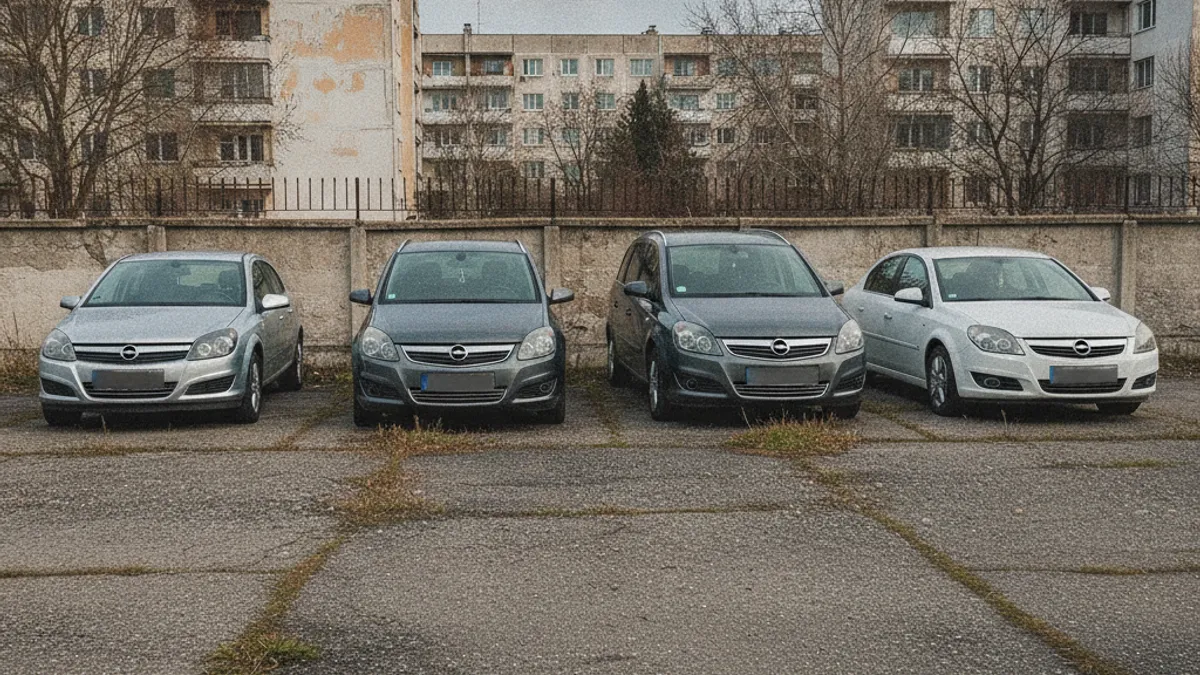
The problem is further compounded with vehicles that have passed through multiple owners and multiple countries. An Opel Astra H purchased new in Germany in 2007 may have been sold to Austria in 2012, then imported into BiH in 2016, and changed hands once more on the domestic market since. At each of those steps, the link to the original recall notification is further diluted. The final owner in BiH has no idea the car was ever the subject of a recall, and the system will not notify them.
The result of this systemic gap is that the responsibility for tracking recalls falls entirely on the owner. You are the only person who can protect yourself and your family by checking the VIN on the pages listed above. We recommend doing this even if you believe your model or production year is not on the list, because the February 2026 expansion of the recall demonstrated that lists are actively updated with new serial numbers.
The previous owner abroad may have ignored the notification, may have sold the car precisely because they did not want to spend time booking an appointment, or the notification was simply lost in the chain of resales. All of these are reasons for you, as the current owner in BiH, to take the initiative and check the status yourself.
Owners of other brands within the Stellantis group should also check the status of their vehicles. The Takata recall does not only affect Opel. Citroen and DS models have a separate recall order covering the C3, C4, DS3 and DS4 from a similar production period, with the same type of defective Takata inflator. Details of the Citroen and DS Takata recall order can be found in a separate article we published earlier. In addition, Stellantis has also issued recalls for hybrid vehicles with a fire risk, as well as for 1.5 BlueHDi diesel engines with a timing chain problem, both of which we have covered previously.
The airbag is a component that is used once in the life of a vehicle, and at a moment that decides between life and death. An inflator that functions correctly can save you in a crash. An inflator that has degraded can injure or kill you in the same crash. For owners of affected Opel models in BiH, the difference between those two scenarios comes down to one simple step: open recall.stellantis.com or opel.ba/takata.html, enter your VIN, check the status and book a free replacement if needed.
Frequently Asked Questions
How much does Takata airbag replacement cost on an Opel?
The replacement is completely free. Stellantis covers all costs of sourcing and fitting the new inflator. The owner pays nothing, regardless of the vehicle's age, mileage or number of previous owners.
Can I keep driving while waiting for a replacement appointment?
Technically you can, but every journey with a defective inflator carries risk. A degraded inflator can hurl metal fragments towards the driver when it deploys. We recommend booking an appointment as soon as possible and avoiding unnecessary trips with passengers in the meantime.
How do I know if the airbag on my Opel has already been replaced?
The only reliable way is to check the VIN at recall.stellantis.com or opel.ba/takata.html. The system shows whether your specific vehicle is on the list and whether the replacement has already been carried out. Do not rely on verbal assurances from previous owners.
Does the recall also apply to Opels bought as used imports?
Yes. The recall applies to every affected vehicle regardless of how it was purchased, in which country it was first registered or how many owners it has had. If the VIN is on the list, the replacement is free.
Why has nobody in BiH notified me about the recall?
Bosnia and Herzegovina has no central system for tracking vehicle recalls. In EU countries, owners receive notifications by post or electronically. No such mechanism exists in BiH, so the responsibility for checking falls entirely on the owner.
Does the Takata recall affect other brands besides Opel?
Yes. The Takata recall is global and affects over 100 million vehicles from various manufacturers. Within the Stellantis group, Citroen and DS models have a separate recall order. BMW, Honda, Toyota, Ford and many other manufacturers are also affected. Check the VIN with your manufacturer.