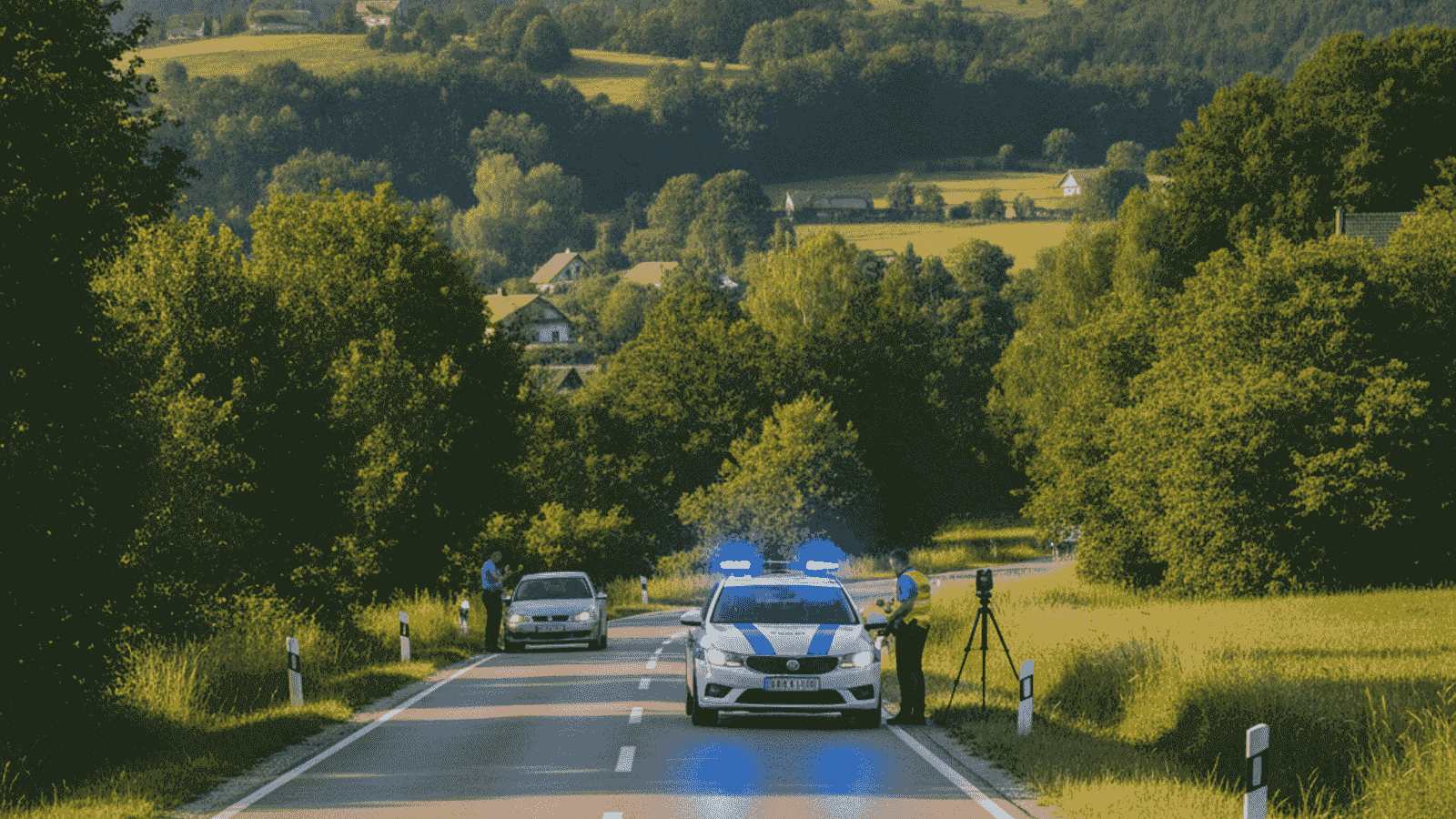
On 27 May 2026, BiH adopted amended Road Traffic Safety Act (ZOBS) with significantly tougher penalties for the most dangerous offences. Six weeks have passed since then — enough time for a first serious look at the numbers coming from police departments, but not enough for any definitive conclusion about whether the new ZOBS BiH results 2026 are genuinely changing driver behaviour in the long term. Here is what the concrete data from the first month of enforcement shows, what the police are actually checking most often, and why the paradox surrounding speed cameras and interceptors deserves every driver's attention before getting behind the wheel this summer.
Table of Contents
- What Changed on 27 May 2026
- The Numbers After the First Month of Enforcement
- Phone and Seatbelt: The Two Most Common Offences
- Reckless Driving: How Many Were Actually Penalised
- Speed Cameras and Interceptors: Do Fines Reduce Accidents
- What This Means for Drivers This Summer
- Frequently Asked Questions
- Related Articles
What Changed on 27 May 2026
The ZOBS amendments that came into force on 27 May 2026 introduced three key changes that directly affect everyday drivers in BiH. Understanding them matters because without that context, the raw numbers from police reports carry less weight.
First and most visibly, penalties for using a mobile phone while driving were significantly toughened. The new fine range is 200-400 KM, double the previous amount. If phone use causes a traffic accident, the range jumps to 400-2,000 KM with the possibility of a driving ban of up to six months. This penalty category did not previously exist for this offence and sends a clear message that legislators consider phone use at the wheel one of the most dangerous behaviours in traffic. Research cited by experts shows that a driver looking at a phone reacts more slowly than a driver with 0.8 per mille blood alcohol.
Second, an entirely new concept was introduced into BiH traffic law: reckless driving (obijesna voznja). This term covers aggressive and grossly negligent driving, with penalties that include driving bans and hefty fines. A full definition of what constitutes reckless driving and the exact penalties is covered in our dedicated article on the reckless driving law in BiH 2026.
Third, penalties were toughened for an entire range of offences that have for years been among the leading causes of serious accidents: driving without a seatbelt, drink-driving and speeding, especially in built-up areas. A complete overview of all new penalty ranges following the ZOBS amendments can be found in our detailed guide to traffic fines in BiH 2026.
Together, these three changes represent the most significant reform of traffic regulations in BiH in the last decade. The question everyone is asking is whether laws on paper are becoming laws on the road.
The Numbers After the First Month of Enforcement
In June 2026, police departments across BiH began applying the new provisions. Data from the first full month of enforcement offers a concrete and measurable insight into what the police are actually checking, how actively, and where the geographical differences in approach lie.
The Republika Srpska Ministry of Interior recorded a total of 2,698 offences under the new ZOBS provisions in June. That figure covers all offence categories, from phone and seatbelt to speed and alcohol. The highest numbers were recorded in the two largest police administrations: PU Banja Luka with 605 offences and PU Doboj with 595. The remaining police administrations in RS contributed roughly 1,500 offences combined, which indicates the law is being applied evenly across the territory, not just in major centres.
In the Federation of BiH, data is available by canton and the differences are noticeable. In Sarajevo Canton, 754 offences were recorded in just one month. Of those, 417 were for using a phone while driving and 119 for reckless driving. Sarajevo police clearly placed special emphasis on phone checks, as evidenced by the fact that more than half of all offences in the canton involve phones.
In Zenica-Doboj Canton, a remarkable 1,370 offences were recorded, including 597 for improper seatbelt use, 362 for phone use while driving, 371 for drink-driving and 40 for reckless driving. Zenica-Doboj Canton thus demonstrated one of the highest enforcement intensities in the entire country, with a noticeably higher number of alcohol-related offences than other cantons.
When the available data from RS and key FBiH cantons is combined, it amounts to several thousand penalised offences in just one month of enforcement. But it is important to put this in context: one month is too short a period to draw conclusions about the long-term effect of the new penalties. These are initial data, not a final verdict on the law. The real test comes in autumn and winter, when we see whether the trends continue or whether drivers revert to old patterns once they sense that police enforcement has eased.
Phone and Seatbelt: The Two Most Common Offences
When you look at the offence categories from the first month, two are far ahead of all others: using a phone while driving and driving without a seatbelt. Together, these two offences account for more than half of all fines issued in most police administrations, and understanding why they dominate says a lot about how traffic enforcement works in BiH.
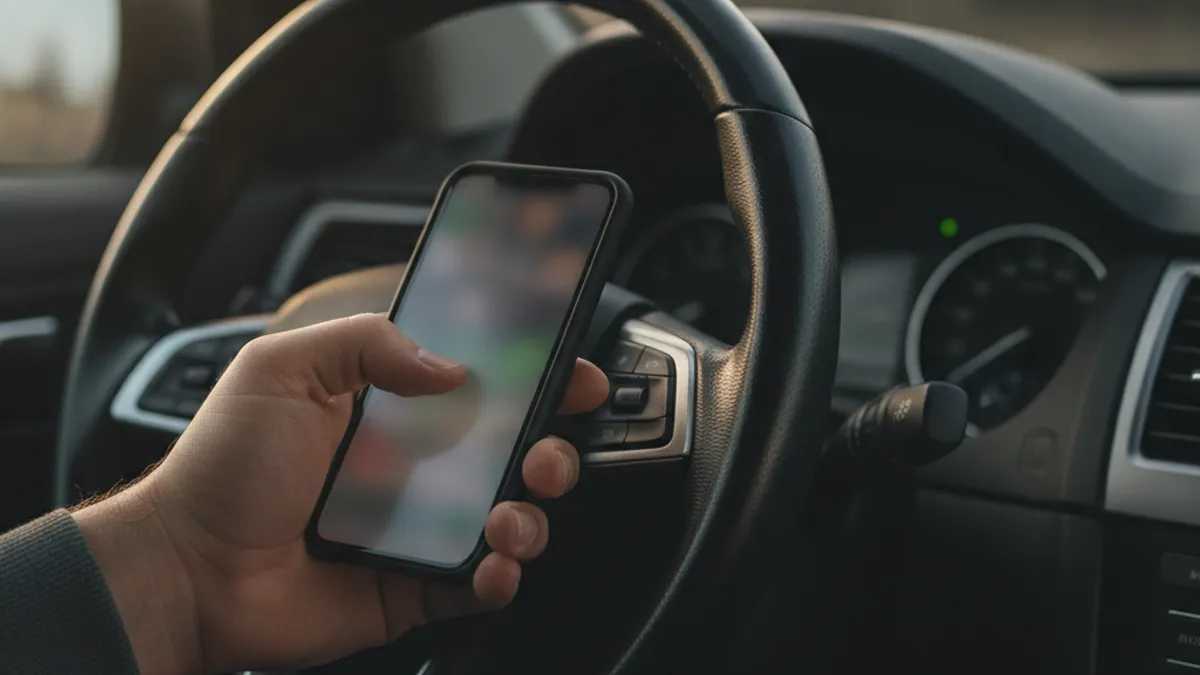
In Sarajevo Canton, out of 754 total recorded offences, 417 were for using a phone while driving. That is 55% of all offences in the canton. Practically every other fined driver in Sarajevo in June 2026 was holding a phone while driving. That figure is both alarming — because it shows how deeply ingrained this habit is — and encouraging, because it shows that the police are actively responding.
In Zenica-Doboj Canton, the breakdown is slightly different, but the trend is the same. Of 1,370 offences, 597 were for improper seatbelt use and 362 for phone use. When phone and seatbelt are combined, that is 959 out of 1,370 offences — meaning 70% of all fines in the canton come down to just these two offences.
Why do phone and seatbelt dominate the statistics? The answer lies partly in the nature of the offences themselves and partly in how police enforcement works. These offences do not require speed measurement, breath-testing or any technical equipment. It is enough for a patrol officer to see a driver holding a phone or not wearing a seatbelt. This makes them the easiest to spot and document, meaning police can process more of these offences in the same working hours than they can process speeding or drink-driving cases.
There is also the factor of perceived risk. Many drivers do not regard phone use at the wheel as a dangerous offence because nothing has happened to them so far. This false perception leads to repeat behaviour — until an accident occurs or a financially painful fine arrives. The new range of 200-400 KM should change that calculus.
For drivers on BiH roads this summer, the practical lesson from these numbers is straightforward: put your phone in a holder or in your bag before you start the engine, and fasten your seatbelt as soon as you sit in the vehicle. These two habits cover more than half of all reasons why the police stop and fine drivers this summer.
Reckless Driving: How Many Were Actually Penalised
Of all the innovations in the amended ZOBS, the concept of reckless driving attracted the most public attention. Many people were unclear on what exactly falls under this offence, how high the penalties are and whether the police can actually exclude someone from traffic on the spot. The first month's results provide a concrete answer.
In Sarajevo Canton, 119 reckless driving offences were recorded in one month. That is a significant number showing that police are actively using the new legal tool. In Zenica-Doboj Canton, the figure was 40. Interior Minister Admir Katica stated that 27 drivers were excluded from traffic for reckless driving in the first weeks of enforcement. Exclusion means the driver immediately loses the right to operate the vehicle on the spot and must leave it until proceedings are initiated.
These figures are considerably lower than the number of phone or seatbelt offences, and that is logical. Reckless driving is a more serious offence that requires more specific circumstances: aggressive overtaking in poor-visibility situations, racing through built-up areas with gross violation of regulations, or behaviour that directly endangers the lives of other road users. Officers must document the behaviour in more detail than for phone or seatbelt offences, making each case more time-consuming and legally complex to process.
Still, 27 excluded drivers in just a few weeks demonstrates that the police take this offence seriously and that the new legal framework functions in practice. Each of those drivers represented a direct danger on the road and their exclusion from traffic is a tangible measure protecting other road users. For the full definition of reckless driving and penalty ranges, see our previously published article on the reckless driving law in BiH 2026.
Speed Cameras and Interceptors: Do Fines Reduce Accidents
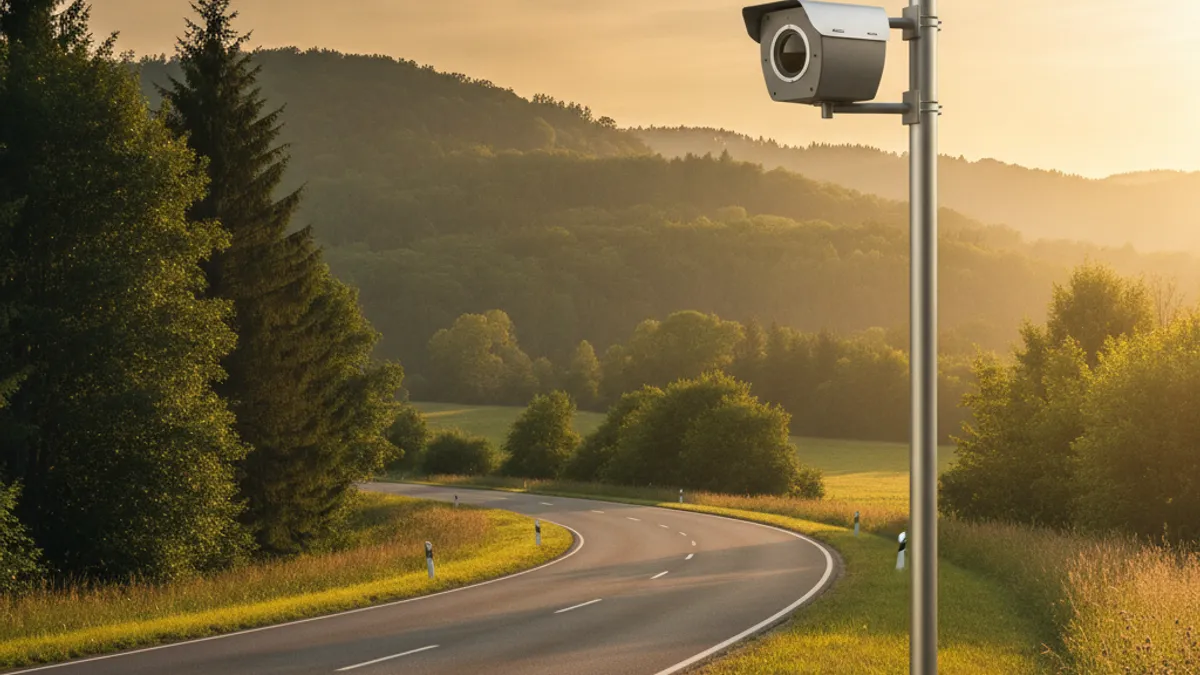
While the new law has only just begun to be enforced, there is a broader context that deserves the attention of every driver and every decision-maker in BiH. Republika Srpska introduced interceptors as a speed-control tool in 2019. In 2021, a network of approximately 100 fixed speed cameras was installed across RS. The total investment was substantial and expectations were high — that technology and the deterrent effect of fines would lead to fewer accidents and fewer fatalities. Seven years after the introduction of interceptors, the statistics reveal a paradox that is hard to ignore.
The number of road-traffic fatalities in RS in 2025 was 129. That figure is virtually identical to the 2018 number — before interceptors were introduced — when 130 people died. A difference of one person across seven years of investment in technology and enforcement. At the same time, the total number of traffic accidents rose by 30%, from 10,369 in 2018 to 13,484 in 2025. More accidents but the same number of fatalities may mean that the consequences of individual accidents are less severe, but overall road risk has increased.
At the BiH-wide level, the picture is even more concerning. In 2025, 42,762 traffic accidents were recorded with 288 fatalities, representing a 30% increase in deaths compared to 2024. In the first quarter of 2026, 81 people died — a pace that, if sustained, does not promise improvement over the previous year.
Traffic expert Dragoslav Basic stated that education and prevention matter more than enforcement alone and that officers are now mainly writing fines instead of educating drivers. That statement strikes at the core of a complex problem: enforcement without a change in awareness and behaviour does not deliver lasting results. A fine paid today does not guarantee that the same offence will not be repeated tomorrow — if the driver does not understand why the offence is dangerous.
The police, on the other hand, point out that fines do act as a deterrent and that without cameras and tougher sanctions the figures would be even worse. That is an argument that cannot be entirely dismissed, because we will never know how the statistics would look without those measures. It is possible that without cameras, the number of fatalities would have been significantly higher.
The truth probably lies somewhere in between: enforcement without education does not change behaviour in the long run, but education without sanctions does not work fast enough either. What is beyond dispute, based on seven years of data, is that writing fines and installing cameras alone is not enough to reduce road fatalities. Technology and tougher penalties are one part of the equation, but driving culture, road infrastructure, fleet quality and systematic driver education are parts that are clearly missing.
What This Means for Drivers This Summer
Based on the data from the first month of enforcement of the new penalties, here is what every driver on BiH roads this summer concretely needs to know. These are not theoretical tips — they are lessons from police reports translated into practical habits.
Phone use at the wheel is the number-one offence by number of fines issued in most police administrations. The penalty range is 200-400 KM, and if you cause an accident, it jumps to 400-2,000 KM with a possible driving ban of up to six months. Making a habit of leaving your phone in a holder or bag while driving is not just a safety matter but a financial one. 200 KM is an amount most drivers do not want to pay for thirty seconds of looking at a screen.
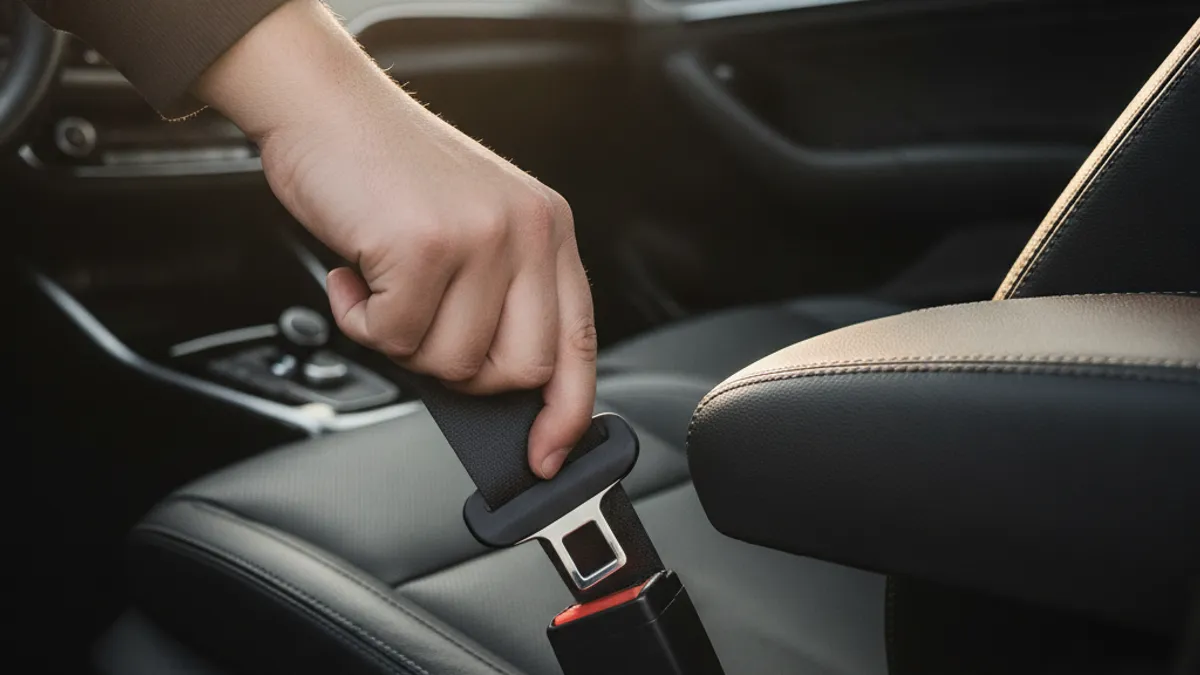
Seatbelt is the second most common offence and the police check it visually from the patrol car or from a layby. The fine comes quickly and without prior warning, because an unfastened seatbelt is something visible in passing. There is no situation in which it is justified not to wear a seatbelt, regardless of the length of the journey or the speed of travel.
Reckless driving is a new concept in the law and the police have already shown in the first month that they are actively enforcing it. 27 excluded drivers in just a few weeks means this is not a dead letter on paper but a real risk for anyone who drives aggressively, overdoes it when overtaking or behaves as though they are alone on the road. For details on the definition, see our article on reckless driving.
Speeding remains a classic risk that is not diminishing under the new law. The camera network in RS covers main highways, while in the FBiH mobile patrols carry out checks on key sections. Traffic increases in summer on routes towards the coast, and enforcement intensifies accordingly. Drivers using the Banja Luka route towards the coast or the highways through Herzegovina can expect stepped-up speed checks during July and August.
Drink-driving is the third most common offence in some cantons. In Zenica-Doboj Canton, 371 drink-driving cases in just one month makes clear that this problem is far from solved. Tougher penalties may deter one group of drivers, but clearly not another.
One month of data does not tell us whether the new law will reduce the number of accidents and fatalities on BiH roads in the long run. For such a conclusion, years of monitoring and a comparative analysis with the period before the amendments are needed. What this first month does tell us is what the police are currently checking most actively. And that information is valuable, because knowing what is actually being checked on the ground means fewer surprises on the road and less money needlessly spent on fines that could have been avoided by a simple change of habit.
Frequently Asked Questions
What is the most common traffic offence in BiH under the new penalties?
Using a phone while driving is the most common offence by number of fines issued. In Sarajevo Canton it accounts for 55% of all recorded offences in June 2026. The fine is 200-400 KM, and if the phone causes an accident, the range rises to 400-2,000 KM with a possible driving ban of up to six months.
How many drivers were penalised for reckless driving in the first month?
In Sarajevo Canton, 119 reckless driving offences were recorded, in Zenica-Doboj Canton 40, and Minister Katica confirmed that 27 drivers were excluded from traffic on the spot. Exclusion means the immediate loss of the right to operate the vehicle.
Have speed cameras and interceptors reduced fatalities in RS?
Statistics show that the number of fatalities in RS has not decreased after seven years of speed cameras and interceptors. In 2018 (before interceptors), 130 people died, while in 2025 the figure was 129. At the same time, the total number of accidents rose by 30%.
How many offences were recorded in total in the first month?
The RS Ministry of Interior recorded 2,698 offences, Sarajevo Canton 754 and Zenica-Doboj Canton 1,370. In total, several thousand offences were recorded across BiH in just one month of enforcement.
Can any conclusions about the law's effectiveness be drawn after one month?
No. One month is too short a period to assess the long-term effect. The first month's data shows what the police are most actively checking (phone and seatbelt), but the real test of the law's effectiveness comes after a year or more, when accident and fatality statistics can be compared with the period before the amendments.
What should drivers pay special attention to this summer on BiH roads?
Keep your phone in a holder, fasten your seatbelt before setting off, do not drive aggressively (reckless driving), observe speed limits especially on highways towards the coast, and never get behind the wheel after drinking alcohol. These five habits cover the vast majority of offences for which the police are issuing fines this summer.