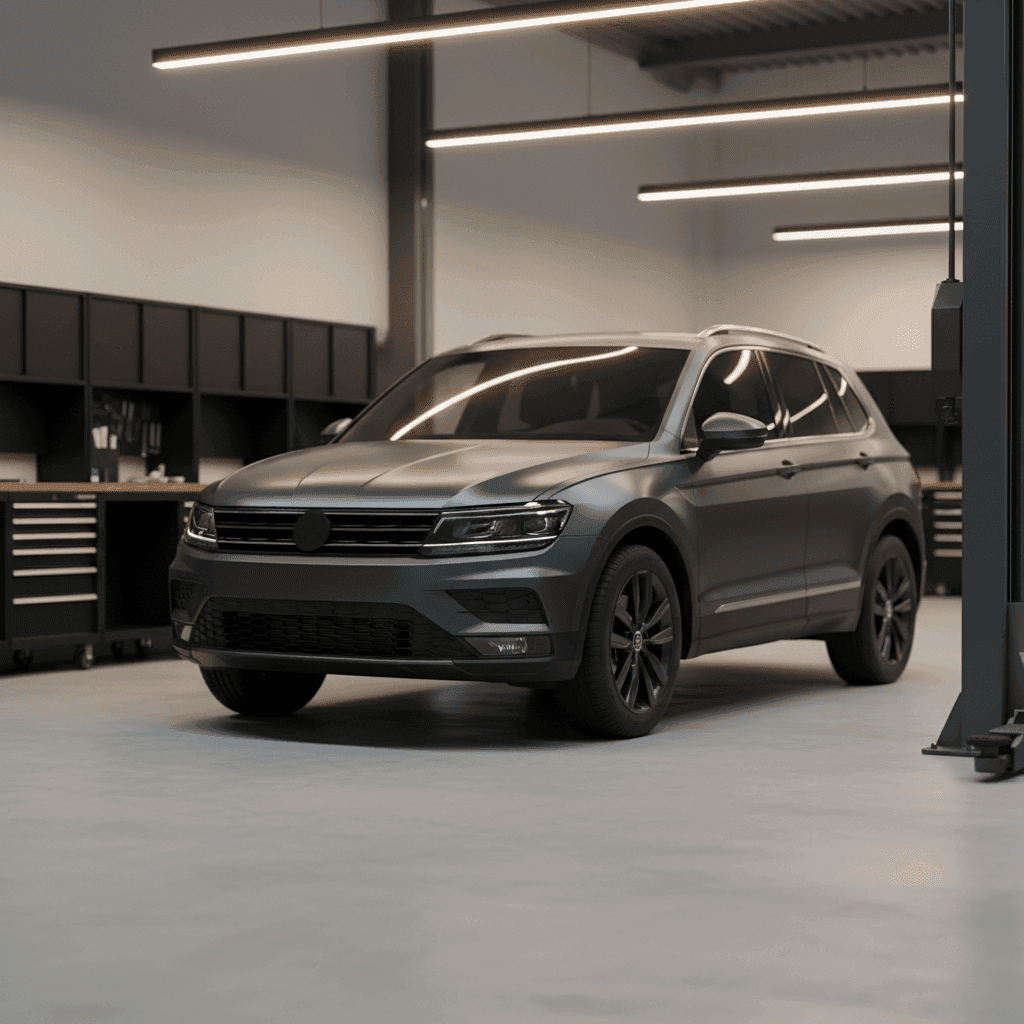
A used car in the 30,000-50,000 KM range in BiH is the segment where, for the first time, you simultaneously get a younger model year and more serious equipment, but also the highest risk of expensive repairs later on. If you are looking at a compact SUV, family estate or older premium model, this range is the cross-section of the market where the Tiguan, Karoq and Q5 8R compete with the Passat B8 and Mercedes W212 - and where DSG, AdBlue and timing chains become serious factors in the cost of ownership.
This analysis was prepared by the Auto Gas Gaga workshop in Banja Luka, based on a cross-section of hundreds of current listings on olx.ba and many years of experience with pre-purchase inspections.
| Model | Year | Typical price | Typical km | Engine | What to watch |
|---|---|---|---|---|---|
| VW Tiguan II | 2016-2022 | 34,500-49,500 KM | 150-250k | 2.0 TDI | DPF, DSG mechatronics |
| VW Passat B8/FL | 2015-2022 | 30,900-49,500 KM | 170-220k | 2.0 TDI DSG7 | Mechatronics, dual-mass flywheel |
| Audi Q5 8R | 2013-2018 | 30,500-47,900 KM | 200-270k | 2.0 TDI / 3.0 TDI | Timing chain, oil consumption |
| VW Golf 8 | 2018-2024 | 31,400-49,990 KM | 100-200k | 1.5 eTSI / 2.0 TDI | Electronics, suspicious km |
| Peugeot 3008 II | 2019-2023 | 30,850-48,900 KM | 100-190k | 1.5 BlueHDI | AdBlue system, P20E8 |
| Škoda Karoq | 2018-2023 | 31,850-46,800 KM | 130-200k | 2.0 TDI EA288 | AdBlue, DSG oil |
| Audi A4 B9 | 2016-2022 | 30,000-49,900 KM | 180-240k | 2.0 TDI | DSG/S tronic, AdBlue |
Table of Contents
- What you get for a used car worth 30,000-50,000 KM in BiH
- How we did the assessment
- Top models dominating the supply
- Small city car and first car
- Family and workhorse
- Older but still strong
- Car with character
- DSG AdBlue and timing chains as three risks that grow with budget
- What to check before buying a used car
- Frequently Asked Questions
- Related Articles
What you get for a used car worth 30,000-50,000 KM in BiH
A used car in the 30,000-50,000 KM range in BiH puts you in the upper decile of the used vehicle market. For context: the average price of an imported used vehicle in BiH remains around 20,000 KM, and in February 2026, out of 6,858 registered passenger vehicles only 842 were new, meaning the ratio of new to used is about 1:9. You are sitting above the median, which gives you two realistic options.
The first option is a more recent compact SUV (Tiguan II, Karoq, 3008 II) or estate (Octavia IV, Superb III) with mileage between 100,000 and 200,000 km. The second is an older premium - Q5 8R, X5 F15, E-Class W212/W213, A6 C7 - usually with mileage from 200,000 km upwards. Both options come with their downsides. One thing you must know before signing a sales contract: this segment does not guarantee a "carefree drive". On the contrary, this is exactly where the costs of DSG mechatronics, AdBlue repairs and chain-driven timing systems start to rise, because the vehicles enter age brackets in which preventive work is unavoidable.
If you are buying your first "serious" vehicle after the lower segments from our series (see the guide for used car 20,000-30,000 KM in BiH), the change in equipment quality and comfort is significant. The change in maintenance risks is even bigger.
How we did the assessment
This guide draws on hundreds of current listings on olx.ba, a cross-section of the market on 26 April 2026. The filter was set to a price range of 30,000 to 50,000 KM in the passenger vehicle category. From that sample, we extracted the share of the best-selling models and the typical year and mileage ranges.
Among fuel types in this segment, diesel still dominates with around 90 percent of the supply. Petrol takes around 8 percent, while hybrids (mild, classic and plug-in combined) do not exceed 2 percent. If you are looking for a hybrid or electric car in this range, the supply is very thin and these are usually partially damaged premium vehicles or specific compact hybrids.
Gearbox is not available as a systematic filter on olx.ba, so our estimate is that the share of automatics in this segment is between 55 and 65 percent. The reason is that the DSG/automatic dominates on the Tiguan, Passat, Karoq, Q5 and E-Class - and these very models account for more than half of the supply.
An important note: listing prices are not transaction prices. Based on our experience, the actual sale price is a few percent lower, especially if you are ready to pay and approach the purchase with a diagnostic report in hand.
Top models dominating the supply
The seven models listed in the summary table above cover around 37 percent of all listings in the range. The rest is a long tail of models - from the Mercedes W205, BMW 3 F30, Volvo XC60, Range Rover Evoque, Renault Talisman, to the Ford Mondeo and specific Mazda 6 and Hyundai Tucson examples. The logic is clear: compact SUVs and family estates prevail because their model years from 2016 to 2022 align well with the mileage that in BiH often exceeds 200,000 km.
The VW Tiguan II is technically the leading model on offer. Vehicles from 2016-2022, with mileage between 150,000 and 250,000 km, most often with the 2.0 TDI engine and DSG gearbox, cover the bulk of listings. The Audi Q5 8R (2013-2018) competes on price and on cabin material quality, but is on average 2-3 years older than the Tiguan offered at the same price.
Our advice if you are torn between three representative choices (a newer compact SUV, an older premium SUV, or a Passat B8 estate): start from your driving style. If you drive more than 25,000 km per year, go for the newer TDI and accept the DSG risk. If you drive less, but are looking for comfort and equipment, an older premium for the same money can be a better buy because the mileage will not climb aggressively.
Small city car and first car
In this segment, buying a small city car only makes sense in two cases: you are looking for a nearly new vehicle as a first car in the household, or you are buying for a family member who insists on a specific model (Polo, A1).
VW Golf 8 (2018-2024) is technically the most recent entry in this range. What is good: model year 2020+ often has the remainder of the factory warranty or a dealer warranty, EU service history is standard, and the 1.5 eTSI or 2.0 TDI engines are mature and well known. What to watch: a Golf 8 with excessively low mileage on a high model year is a warning sign - mileage rollback is still widespread in BiH. Early 2019-2020 builds have documented issues with the MMI infotainment and electronics.
VW Polo VI and Audi A1 GB appear less often in this segment, most often as young versions with low mileage. Economically speaking, a 2022 Polo at the lower end of the range is not a bad choice if you are after a nearly new vehicle, but the comparison with the same money for an older Tiguan favours the Tiguan in size and equipment.
If you are thinking along the lines of "I need a small city car and cannot drop below this segment", seriously consider the segment below - the used car 15,000-20,000 KM in BiH guide often fits the real needs of a city driver better than this range does.
Family and workhorse
This is the heart of the supply in the 30,000 to 50,000 KM range. Compact SUVs and estates are the models BiH buyers have grown accustomed to, because they combine mileage, fuel costs and space.
VW Tiguan II (2016-2022) is the dominant model and our most frequent client for pre-purchase inspections in this range. What is good: superb ergonomics, modern interior, choice of 2.0 TDI engines from 150 to 190 hp, DSG7 gearbox that works perfectly when serviced. What to watch: DSG7 mechatronics is one of the most expensive repairs in the VAG group - without proof of oil changes every 60,000 km, the risk is real. The DPF filter can become clogged in city driving, so look for a listing where the seller confirms motorway use. Read more on what the DPF is and how it behaves in our DPF filter guide. An EGR valve coated in soot and an illuminated engine light are additional risks - why the EGR clogs up is essential reading before buying any diesel in this segment.
Škoda Karoq (2018-2023) is the technical brother of the Tiguan with the 2.0 TDI EA288 engine that uses a timing belt. What is good: VAG group EU service history, timing belt replacement is recommended at 150,000 km instead of the factory 200,000 km, and DSG oil changed every 60,000 km - if the seller has the paperwork, the purchase is safer. What to watch: the AdBlue system can act up on early Mk1 versions, and a DSG without proof of oil changes is a problem.
VW Passat B8/FL (2015-2022) is the family estate that sells most readily with mileage between 170,000 and 220,000 km. What is good: motorway comfort, fuel economy, huge boot. What to watch: DSG7 with an oil change in the last 60,000 km is mandatory proof; no jerks from first to third gear; metallic knocking from the flywheel at idle is a sign that the dual-mass flywheel is due for replacement; an AdBlue light and codes P20EE/P20E8 are typical on post-2018 versions. For more on monitoring tensioners and timing chains, see the article when to replace a timing chain or belt.
Škoda Kodiaq, Škoda Octavia IV and Škoda Superb III share the platform with the Tiguan and Passat. If you are looking at a larger family car and are not loyal to the brand, a 7-seat Kodiaq is in practice a better economic choice than a Tiguan of the same year.
Peugeot 3008 II (2019-2023) is the most aesthetically interesting in the compact SUV class. What is good: post-2019 model years are significantly better than the early Mk2 versions (2016-2018) which had more serious AdBlue faults; the cabin with the i-Cockpit feels premium. What to watch: an AdBlue pump or injector near end of life means an expensive repair, and vehicles that have mostly done city driving without motorway use carry the highest risk because the DPF has not regenerated properly.
Audi Q3 is a smaller but technically similar alternative to the Tiguan with a premium cabin feel, most often in the middle of the range for model years 2017-2022.
Older but still strong
This segment is for buyers who want a premium feel, equipment and body style, but are willing to accept higher mileage and higher preventive costs. With the same money you would spend on a newer Tiguan, you can get an older Q5 or E-Class - which one you choose depends on how much you drive and what you expect from the vehicle.
Audi Q5 8R (2013-2018) is a regular guest in VAG group workshops. What is good: a quality cabin, quattro drive that makes sense in BiH, engine range from the 2.0 TDI 177 hp to the 3.0 TDI. What to watch: the 2.0 TDI generations up to 2014 have a documented timing chain tensioner issue and excessive oil consumption - a 1 to 3 second rattle on a cold start is a sign that the chain has stretched. If you are buying a Q5 8R, proof of preventive timing chain and tensioner replacement up to 200,000 km is more important than any other paperwork. Bluish smoke under hard acceleration and oil leaks around the timing cover are warning signs. A service history with a 15,000 km oil interval, rather than the factory 30,000, significantly extends engine life.
BMW X5 F15 (2014-2018) with the N57 3.0d engine was once a top choice and today is a job for a careful purchase. What is good: dynamics, the ZF8 automatic, a cabin that even ten years on still leaves an impression. What to watch: the timing chain on the N57 engine can cause trouble - a service history with regular oil changes every 10,000 km is the deciding factor.
Mercedes E-Class W212 and W213 (2014-2019) are among the most comfortable motorway cars in this segment. What is good: top-tier comfort, the well-known OM651 diesel engine. What to watch: balance shafts and high-pressure pump issues on the OM651 - a service history is mandatory; the W213 with the 9G-Tronic gearbox has sporadic faults on early production runs.
Audi A6 C7 (2014-2018) and Audi A4 B9 (2016-2022) are the saloon picks in this segment. The A4 B9 with the EA288 engine (belt-driven timing) is in practice more reliable than older TDI engines with chain-driven timing.
Car with character
A small but constant part of the supply in the 30,000 to 50,000 KM range are vehicles bought for pleasure - coupes, smaller premium SUVs, automatics with character. They are not bought for fuel costs, they are bought for the feel.
Audi A5 Sportback (2017-2021) with the 2.0 TDI 190 hp and quattro drive is a top combination of design and practicality. The service history must be impeccable; the 7-speed S tronic carries the same risks as the Passat B8.
BMW 3 F30 and G20 (2014-2021) with the B47 diesel engine are excellent if you find a 2018+ example with regular history and the ZF8 automatic.
Range Rover Evoque (2015-2020) is a polarising choice. What is good: the design, a recognisable character. What to watch: electronics and especially the air conditioning past 150,000 km require a serious maintenance budget.
Volvo XC60 (2014-2019) is the quiet favourite of buyers who want premium without the brand pressure. The reliable D4 diesel engine and a decent automatic are advantages, while a smaller pool of Volvo specialist workshops in BiH is a drawback.
DSG AdBlue and timing chains as three risks that grow with budget
This is the topic that buyers in the 30,000 to 50,000 KM range underestimate. The reason is psychological: a more expensive car feels more reliable. In practice, precisely because the car is from a more recent year and better equipped, it has more systems that can fail.
DSG mechatronics. The VAG group uses DSG6 (wet clutch, more robust) and DSG7 (dry clutch up to 250 Nm, wet above 300 Nm). The typical issue on the DSG7 is loss of second gear, lag when pulling away, and metallic knocking. A DSG gearbox oil service every 60,000 km is mandatory, not the factory 100,000. Without written proof of an oil change in the last 60,000 km, treat the DSG mechatronics as a factor to subtract when negotiating the price.
AdBlue system. Euro 6 vehicles from 2015 onwards use AdBlue fluid to reduce NOx emissions. Codes P20EE and P20E8 (pump or injector failure) most often lead to an engine start lockout after a few cycles. We have most often seen AdBlue faults on the Peugeot 3008 II Mk1 (2016-2018), Škoda Karoq, early Tiguan II and Passat B8 at higher mileage. The repair cost depends on the part that has gone - the pump, NOx sensor or injector each carry different costs, and that is a conversation to have with workshops in BiH before purchase, not to assume.
Timing chains. Engines with timing belts (EA288, B47, OM651 after 2016) are safer because preventive service is done on a planned schedule. Engines with timing chains (Audi Q5 8R 2.0 TDI first generation, BMW N57 3.0d) carry the risk of the chain stretching, especially if oil change intervals were extended to the factory 30,000 km. Read more on the rules for replacing the chain and belt in our timing chain and belt guide.
Our conclusion: in this segment always ask for three documents - DSG oil change (if the vehicle is automatic), AdBlue service history in the last 100,000 km, and if the engine has a timing chain, proof of tensioner or full kit replacement. Without any one of the three documents, treat the repair as part of the purchase calculation.
What to check before buying a used car
A pre-purchase inspection in the 30,000 to 50,000 KM range is not a luxury, but a standard procedure. At the Auto Gas Gaga workshop we carry out pre-purchase inspections daily and these are the points we follow:
- Computer diagnostic scan. We pull codes from all modules (engine, gearbox, ABS, airbag, climate, infotainment). Code clearing immediately before the inspection is visible.
- Visual engine inspection. Traces of oil leaks, especially around the timing cover and between the engine and gearbox.
- Test drive of at least 30 minutes. Cold start, city driving with stops, motorway section. We listen for metallic knocking, vibrations, smoothness of DSG shifting.
- Chain tensioner and compression check (on engines with timing chains and mileage above 180,000 km).
- DPF and AdBlue status. Counting regenerations, NOx sensor status, AdBlue fluid level and quality.
- Service history and originality check. VIN verification, replaced parts database, checking that the mileage matches the history.
In this range, a physical workshop inspection and a conversation with the previous owner usually cover around 90 percent of the things that can go wrong. The remaining 10 percent are rare but expensive cases: a rebuilt total loss repaired in another EU country and resold as a "clean import", a prior write-off status that domestic paperwork does not surface, or odometer rollback before the car entered BiH. That cross-border layer is most easily picked up by an international check of the documented vehicle history through carVertical. Using the chassis number it usually pulls registered crashes and total losses, mileage by year, the countries the car was registered in, and theft or write-off indicators. For an investment of 30,000 to 50,000 KM we consider this an unavoidable step before paying a deposit. When paying for the report you can use the code GAGA to get a 20% discount.
Found a car you are considering? Book a pre-purchase inspection or message us on WhatsApp with the listing link before you put down a deposit.
Frequently Asked Questions
Does it make sense to buy a diesel in 2026 in this range?
Yes, especially if you drive more than 20,000 km per year and have a regular motorway route. Diesel in the 30,000 to 50,000 KM range offers the best compromise between fuel cost and available supply, since it makes up around 90 percent of listings. If you drive less than 15,000 km per year mainly in the city, AdBlue and DPF problems can cost more than the fuel savings.
Which is the safer choice: a newer compact SUV or an older premium?
It depends on your driving style. If you drive a lot and want fewer headaches, a newer Tiguan, Karoq or 3008 with documented DSG service history is safer. If you drive less and are looking for a car for yourself, an older Q5, X5 or E-Class can give you a premium feel for the same money, but the maintenance budget is noticeably higher.
What exactly does an AdBlue fault mean and what to do if it appears?
AdBlue is a system that injects urea into the exhaust system to reduce nitrogen oxide emissions. Codes P20EE and P20E8 most often mean a failure of the pump, NOx sensor or injector. Without repair, the system blocks engine start after a few cycles. If the warning light has come on, contact the workshop for an assessment.
How real is the DSG7 mechatronics risk?
Real, but controlled if you ask for evidence. A DSG7 gearbox with an oil change in the last 60,000 km, no jerks on the test drive and no fault codes in diagnostics can comfortably do another 100,000 km. Without that evidence, statistics say a substantial share of DSG7 units require intervention at higher mileage.
In this range, does it make sense to import from the EU or to look for a domestic vehicle?
EU imports in this range give you access to vehicles with better-kept service records and a more documented history, but import and customs costs increase the total price. For vehicles in the upper part of the range, importing often pays off; for the lower end, the differences are smaller. Check the calculation for the specific model and year.
Can I find a hybrid or electric car in this range?
The supply is very thin. Hybrids and mild hybrids exist, but make up less than 2 percent of the offer. Electric cars in this range are mostly partially damaged examples or older models with batteries in unknown condition. If a hybrid is a priority for you, the 30,000 to 50,000 KM range is not the most favourable market for that choice.