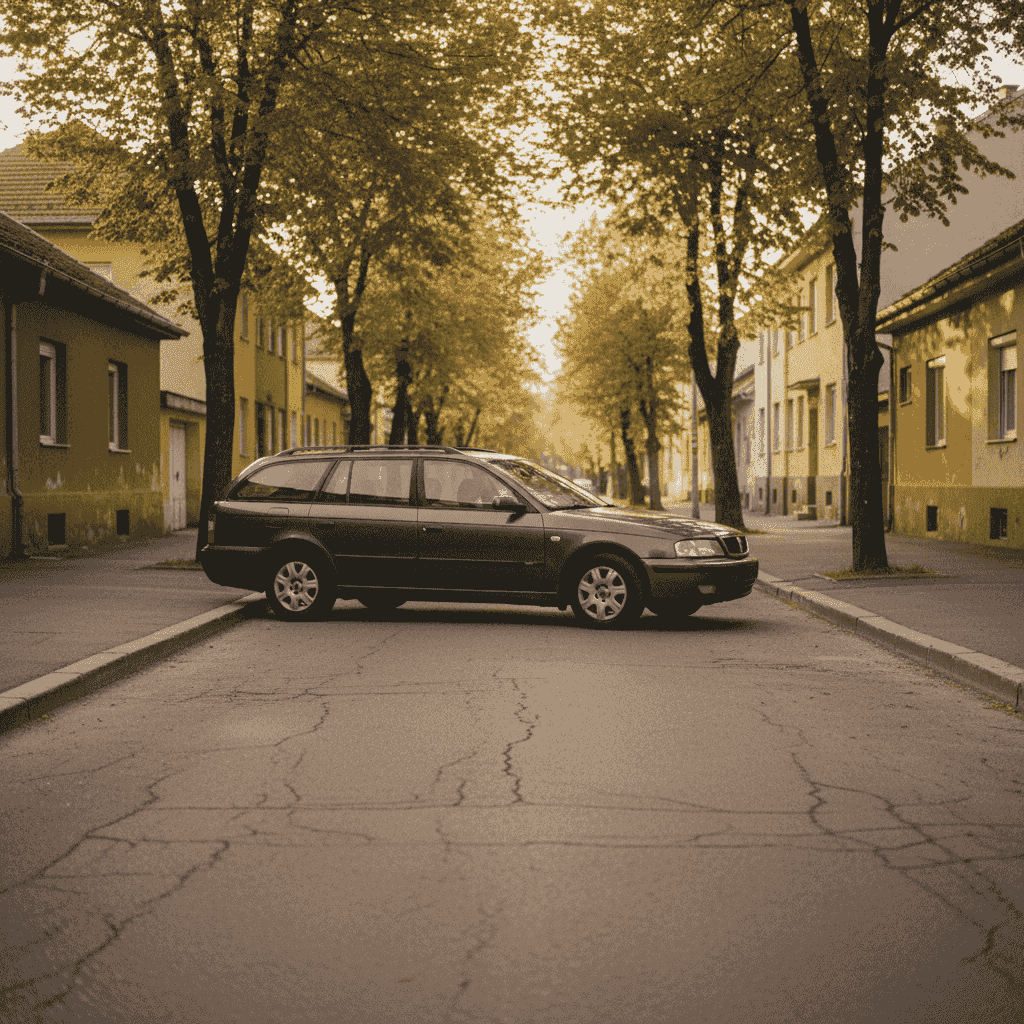
If you are considering buying a used car in the 15,000 to 20,000 KM range, you have landed in the most interesting part of the local market. This is where the compromises of lower tiers disappear: you get a younger car, lower mileage and engines that, with good servicing, are ready to cover another hundred thousand kilometres or more. In the 15,000-20,000 KM used car segment in BiH, buyers typically choose between a tidy Golf 7, a family Passat, an Octavia 3 Combi, an Audi A4 B8, or something slightly older but more powerful - an A6 C7 or W212 E-Class. This guide tells you what is actually on offer, at what prices, what to check before paying a deposit, and where the traps are.
This analysis was prepared by the Auto Gas Gaga workshop in Banja Luka, based on a cross-section of hundreds of current listings on olx.ba and years of experience with pre-purchase inspections.
| Model | Year | Typical price | Typical km | Recommended engine | What to watch for |
|---|---|---|---|---|---|
| VW Golf 7 | 2011-2018 (median 2015) | 16,500-18,500 KM | 200-280k | 1.6 TDI CR, 2.0 TDI | DSG DQ200 without service, 1.4 TSI coil packs |
| VW Passat B7/B8 | 2010-2017 (median 2012) | 15,500-18,500 KM | 230-310k | 2.0 TDI CR | TDI CBAB injection pump, EPS servo |
| Audi A4 B8 | 2008-2013 (median 2011) | 15,000-18,900 KM | 230-310k | 2.0 TDI CGLC (post-2011) | Oil pump, timing chain on CAGA/CAHA |
| Škoda Octavia 3 | 2014-2019 (median 2016) | 16,500-19,000 KM | 220-290k | 1.6 TDI CRKB, 2.0 TDI | Pre-2017 DSG, water pump, camshaft recall |
| VW Tiguan 1 | 2009-2013 (median 2012) | 16,000-18,500 KM | 220-300k | 2.0 TDI CR (post-2011) | DPF blockage in the city, haldex service |
| BMW 3 F30 | 2010-2016 (median 2012) | 17,500-18,400 KM | 240-290k | 320d B47 (2015+) | N47 timing chain (2012-2014), air suspension |
| Citroen C3/C4 | 2016-2022 | 16,300-18,990 KM | 150-200k | 1.5 BlueHDi | 1.2 PureTech timing belt in oil, electronics |
Table of Contents
- What's Currently on Offer in This Range
- How We Ran the Assessment
- Top Models - What Dominates the Offer
- Small City and Compact
- Family and Workhorse
- Older, But Still Strong
- Car with Character
- What to Check Before Buying
- Fuel, Gearbox and Annual Running Cost
- Frequently Asked Questions
- Related Articles
What's Currently on Offer in This Range
The 15,000 to 20,000 KM tier is the heart of the used car market in BiH. The average price of an imported used car in BiH in 2026 sits right around 20,000 KM, so you are practically in the middle of the domestic offer. That means you have choice, but you are also in a range where every seller knows what they are holding - no one lets a car go in this price bracket because they can't be bothered, but because they know the price or because the car has something they want to keep quiet about.
Here is what you actually get for this money in April 2026:
- Compacts and hatchbacks like the Golf 7 or Octavia 3 hatchback, from 2013-2017, with mileage between 200 and 280 thousand.
- Family saloons and estates like the Passat B7 or B8, Octavia 3 Combi, from 2012-2016, with a boot that genuinely handles family weekends.
- SUVs of the Tiguan 1 type of older vintage, with a larger boot and the option of 4Motion, alongside realistically higher mileage.
- Older premium line-up - Audi A4 B8, A6 C7 of older years, BMW 3 F30, Mercedes E-Class W212 - where for this money you get an interior and a drive you cannot replicate in a new car at the same price.
- Slightly younger French or Italian compacts - Citroen C3, C4 from 2018-2022 - where you trade years on the engine, not on design and technology.
This is the tier where year, mileage and service documentation become a trinity. If someone offers you a car that is too cheap for this segment, it is usually not cheap out of love for you, but because something does not add up. Below we break down model by model where the trick lies.
If you skipped the lower tiers or are constantly moving upward, also see the previous guides in this series: used car 4,000-6,000 KM in BiH, used car 6,000-10,000 KM in BiH and used car 10,000-15,000 KM in BiH.
How We Ran the Assessment
This guide relies on hundreds of current olx.ba listings, a market snapshot taken on 24 April 2026. We considered only active listings, with photographs, a stated year and clear mileage - we discarded listings where the contact did not pick up or the car was no longer at the location listed. Behind the numbers sits years of experience with pre-purchase inspections: how often a particular model comes into our workshop with the same fault and what usually hides behind a pretty photograph.
You will see no link here to a specific listing, nor a figure that a single seller asked for. We give you a price range, a typical mileage and a year to aim for - what you realistically see when you leaf through several hundred listings in this tier, not what is on offer for one season at one dealer.
The structure of supply is fairly uniform: diesel dominates brutally, roughly nine out of every ten cars in this tier are diesel, petrol holds a single-digit percentage, and petrol-plus-LPG on newly registered cars in this tier is rare - but that does not mean LPG makes no sense. A retrofit LPG installation on a petrol car in this tier has a solid economic case in BiH. The price gap between LPG and petrol at domestic pumps is large enough that the investment in the installation pays back in under a year at typical annual mileage. Younger examples like the Citroen C3 (2020+), Golf 7 or Octavia 3 have realistic years of service ahead of them, so the payback period is not a barrier. See the calculator for the numbers - AGG handles the full installation, servicing and certification. Manual gearboxes are still in the majority - around eight in ten cars are manual, automatics around two in ten, with a strong trend toward DSG in the VW group.
Top Models - What Dominates the Offer
When you scroll through what is currently in this tier, the offer clusters around a handful of names:
- VW Golf 7 - the strongest single position, around 13% of current listings in the tier. Most are diesel, 1.6 TDI CR or 2.0 TDI, with a wave of DSG versions.
- VW Passat B7 / B8 - around 8% of supply. More B7 than B8 in the lower half of the range, while the B8 enters the 19,000-20,000 KM zone.
- Audi A4 B8 - around 5-6% of supply. Mostly 2.0 TDI, saloon and Avant, older examples with a decent interior.
- Škoda Octavia 3 - around 4-5% of supply, primarily Combi. Practical, economical, but not without its own faults.
- VW Tiguan 1 - around 4% of supply. Older SUV platform, more sought-after examples with 4Motion.
- BMW 3 F30 - around 5-6% of supply. Mostly 320d, some 316d, the occasional 328i.
- Citroen C3 / C4 - around 5% of supply, mostly younger examples (2018+).
The Volkswagen group dominates - together VW, Škoda and Audi make up more than 35% of total used vehicle imports into BiH, and in this tier that dominance is even more pronounced. Below we break the offer down into four buyer profiles.
Small City and Compact
If your car serves primarily the city - work, school, market, a weekend trip to Jahorina or Bjelašnica - you want a compact that keeps consumption low, parks easily and does not cost you in oil and tyres like a saloon. Candidates in this tier are the Golf 7, Octavia 3 hatchback, Citroen C3 and an entry-year BMW X1.
VW Golf 7
The best-selling used compact in the region, and for good reason. Articulated arms, comfort that rivals the Passat, electronics that have matured. Typical price 16,500-18,500 KM, years 2013-2017, mileage 200-280 thousand. A post-facelift Golf 7 (2017) in this tier is rare but worthwhile.
What's good: If you come across a 1.6 TDI CR in an example with a documented DSG oil change every 60,000 km (if it has DSG) and regular EGR servicing, you have got a car for the next hundred thousand kilometres. MY2015+ examples already have a revised clutch pack on the DSG DQ200 gearbox, which is considerably more durable than early versions. A good sign is also a car that was driven mostly outside the city - diesel does not like sitting in traffic and short trips, which we know from our own practice (why short trips kill a diesel).
What to watch for: The biggest enemy of the Golf 7 is the DSG DQ200 seven-speed dry gearbox before 2015, which has documented problems with the mechatronics and the clutch. If the seller has no receipts for DSG service or mechatronics replacement, drive another car. On the 1.4 TSI engine the coil packs often go, and on all variants without a guarantee that the timing belt was done at the correct interval, you are playing roulette. Also check that there has been no water in the boot, especially under the carpet next to the spare - the Golf 7 can leak through the rear lights.
Škoda Octavia 3 hatchback
Although this is more often a family car in the estate version, there is a decent supply of Octavia 3 hatchbacks in this tier. Price 16,500-19,000 KM, years 2014-2018. Same platform as the Golf 7, but with more space, usually slightly cheaper and with a more practical boot for the compact class.
What's good: Post-facelift examples (2017+) with a revised DSG are the best pick in this tier. 1.6 TDI CRKB with a stable thermostat and water pump history, 2.0 TDI with regular EGR cleaning, good chassis, roomy interior. Mk3 petrol versions have a high reliability rating in independent tests, while the 2013-2016 diesels are a little more sensitive.
What to watch for: Pre-2017 DSG with jerking at low speeds, water pump leaks from the thermostat housing, 1.2 TSI with high oil consumption. There was also a recall for the camshaft adjuster housing - ask the seller for confirmation that the repair was carried out, ideally through an authorised service centre. The 1.6 TDI from 2014-2016 can have EGR and DPF issues, especially if the vehicle has been used mostly in the city.
Citroen C3 and C4
In this tier the Citroen C3 from 2020-2022 is an interesting option - a very young car by year, with 150-200 thousand kilometres and a price of 16,300-18,990 KM. This is attractive if your priority is owning a car from the last decade rather than the one before.
What's good: The 1.5 BlueHDi diesel is a reliable engine, considerably better than the 1.2 PureTech petrol, cheaper parts compared to the VW group, young electronics. The Citroen C3 is a comfort car - soft suspension, comfortable on longer trips.
What to watch for: If you come across a 1.2 PureTech petrol, be sure to check the condition of the timing belt in oil - that is a documented factory defect that leads to an expensive repair. Electronic faults can appear without a clear pattern, and resale value is lower than the VW group - the Citroen is a car to keep and drive, not for quick resale.
BMW X1 F48 entry year
When you move into the upper half of the tier, you can find an X1 from 2015-2016 in the 19,000 KM region. This is the smallest BMW SUV and in the city it behaves like a raised compact. Not the most common sight in this tier, but a realistic option.
What's good: Higher seating position, BMW interior quality, 1.5 and 2.0 diesel engines from the B-series are considerably more reliable than the old N47.
What to watch for: Servicing is more expensive than a Golf, tyres are more expensive, adaptive dampers, if the model has them, require service at a specialised workshop. Buy an example with the service book in hand, otherwise you are entering unknown territory.
Family and Workhorse
For a family with two children, a dog, winter bicycles and regular driving from Banja Luka to Sarajevo or to Belgrade, you want space, comfort and an engine that swallows kilometres. Candidates in this tier are the Passat B7/B8, Octavia 3 Combi, Tiguan 1 and the Ford Focus estate.
VW Passat B7 and B8
A classic of BiH roads. Price 15,500-18,500 KM, years 2010-2017, mileage 230-310 thousand. The B7 sits in the lower half of the range, the B8 (2015+) enters the upper part if you are lucky enough to find one.
What's good: The 2.0 TDI CR engine with replaced water pumps and thermostat is the durability test the Passat has passed in every generation. The B8 platform is better than the B7 on every parameter - interior, electronics, gearbox mating. Regular DSG servicing on the DQ250 (wet, durable) gearbox comes as a bonus. The Passat is a car that will not impress the neighbours, but will not leave you stranded either, provided it is serviced regularly.
What to watch for: TDI CBAB and CBBB engines (mostly B7, early B8) have documented problems with the injection pump, ending in metal shavings in the injectors and an expensive repair. The servo and EPS system can fail without warning - be sure to test parking manoeuvres and listen for noise when turning the wheel at a standstill. An Alltrack without 4Motion service history is a pig in a poke, because the rear differential and haldex require regular oil changes.
Škoda Octavia 3 Combi
Škoda's answer to the Passat, with a slightly shorter line and a smaller boot, but also a lower price. Price 16,500-19,000 KM, years 2014-2019.
What's good: The most practical family estate in this tier relative to price. Roomy interior, economical engine (1.6 TDI CRKB or 2.0 TDI), servicing in every village. A post-facelift example with confirmation that the camshaft recall has been done is the best combination.
What to watch for: Same faults as on the hatchback version - pre-2017 DSG, water pump, camshaft housing. In addition, a Combi used commercially (company car, courier, taxi) often has lubrications and replacements that are undocumented because they were done on the side. Ask about the first owner and the use of the vehicle.
VW Tiguan 1
The first Tiguan is the oldest family SUV in this tier. Price 16,000-18,500 KM, years 2009-2013, mileage 220-300 thousand.
What's good: Larger boot than a saloon, higher seating position, 2.0 TDI CR (post-2011) with documented DPF cleaning is an engine that holds up for a long time yet. 4Motion with a serviced haldex coupling is useful when heading to the mountains in winter. A manual gearbox is recommended on this model if you have the choice.
What to watch for: The 2.0 TDI CBAB engine (early Tiguan) without DPF cleaning is a classic trap - DPF blockages are documented especially on vehicles used in the city, and replacement or cleaning costs money. DSG DQ250 without an oil change, timing belt after 150,000 km without confirmation it was done - all of these are warning signs. The haldex requires an oil change at around 60,000 km, which is often kept quiet.
Ford Focus estate
Ford's compact estate is the youngest in this tier - 2017-2019 examples with 200 thousand kilometres for around 17,000 KM are not uncommon. Practical, economical, but less sought-after at resale than the VW group.
What's good: Ford's EcoBoost petrols and 1.5 / 2.0 TDCi diesels are decent, the driving dynamics sit above the Golf. Roomy boot, low consumption, the role of a workhorse without compromise.
What to watch for: The EcoBoost 1.0 and 1.5 petrols have a known cooling system issue on earlier years - be sure to check the service history of the water pump and thermostat. The DCT automatic (PowerShift) in this price range is risky - avoid it or demand detailed service documentation.
Older, But Still Strong
Here you trade years to get a car of a class above. The Audi A4 B8, Audi A6 C7, Mercedes W212 E-Class - all of them in this tier come with significant mileage, but also with engines, interiors and driving dynamics that a younger compact will never have.
Audi A4 B8
The most balanced candidate in this profile. Price 15,000-18,900 KM, years 2008-2013, mileage 230-310 thousand.
What's good: The CGLC engine (post-2011 2.0 TDI) with a stable timing chain tensioner is what you are looking for - you avoid the main fault of older A4 B8 engines. A documented oil pump replacement, a manual gearbox (avoiding multitronic CVT problems), a car with the motorway as its primary route - if all of that comes together, you have got a premium saloon for the price of a compact. The Avant version is more practical than the saloon and costs about the same.
What to watch for: The CAGA and CAHA engines (2008-2010) without a replaced timing chain are a story you do not want to live through - chain stretching, failure, opening up the head. The oil pump and timing chain tensioner on the 2.0 TDI B8 are a documented risk, predominantly on the 2009-2013 generation. Excess oil consumption over 0.5 litres per 1,000 km is a clear danger sign, a quattro with noise from the haldex coupling means the service was skipped, and a multitronic CVT jerking at low speeds is reason enough to walk away from that specific example altogether.
Audi A6 C7
In this tier the C7 sits right on the edge - mostly 2011-2013 years, mileage 280-350 thousand, price 18,000-20,000 KM for those in decent condition. If you come across an example with service history, this is a premium car for the price of a compact.
What's good: The 3.0 TDI quattro with regular servicing is an engine worthy of its reputation - exceptional dynamics, low consumption for the size of the car, motorway comfort that no Passat can match. The 2.0 TDI variant is more economical, with the caveat that it is pulling a larger car.
What to watch for: Air suspension is the biggest risk - a component that fails at around 200 thousand kilometres and a repair that runs into the high thousands of KM. If an A6 C7 has air suspension, check the date of the last compressor and air bellow replacement. The electronics are demanding - a vehicle that has stood idle for a year without being driven is often followed by expensive module repairs.
Mercedes W212 E-Class
A classic family saloon. Diesel versions (200 CDI, 220 CDI, 250 CDI) dominate the supply from 2010-2013, mileage 250-320 thousand.
What's good: The OM651 diesel engine (post-2011) is reliable if regularly serviced by a specialist mechanic. Driving comfort, a conservative interior that ages with dignity, excellent motorway composure. The facelift W212 (2013+) with full LED lights and improved electronics is the best variant in the tier.
What to watch for: Early 651 engines had issues with injectors and the timing chain tensioner. Mercedes-specific servicing is more expensive than the VW group, and so are the parts. Inspect for oil leaks around the turbo and diagnose the DPF before placing a deposit.
Car with Character
For people for whom a car is not just transport, here we talk about the Audi A5, BMW 3 F30, Mini Cooper and Audi A3 Sportback.
Audi A5
A coupe or Sportback A5 in this tier is from 2009-2013, mileage 220-290 thousand. This is a car for someone who wants the cabin and lines of a premium brand, and in the package gets the same mechanicals as the A4 B8.
What's good: The same CGLC engine (post-2011 2.0 TDI) as the A4 B8, the same recommendation that a manual gearbox holds up better than the multitronic CVT. A line that does not age, an interior very similar to the A4. The Sportback is more practical than the coupe.
What to watch for: The same warning list as for the A4 B8 - CAGA and CAHA engines (2008-2010), oil pump, multitronic CVT. In addition, the coupe has more expensive tyres if it has larger alloys (18 and 19 inch are standard), and the cabin acoustics are different - noises you would not hear in a saloon are audible here.
BMW 3 F30
The main rival to the A4 B8 in spirit. Price 17,500-18,400 KM, years 2010-2016, mileage 240-290 thousand.
What's good: The 320d B47 engine (2015+) is the story you want - it did not have the N47 chain issues, it pulls the car well, it is not expensive on consumption. A documented service at a specialist is mandatory for any BMW in this tier, because the brand has a higher tolerance for a skipped service only on the surface. Winter tyres included in the set are a sign of a careful owner.
What to watch for: The F30 320d with the N47 engine (2012-2014) is a documented problem - timing chain stretch typically appears between 130,000 and 190,000 kilometres. If an example has 250 thousand kilometres and the chain has not been done, you are negotiating over a repair that costs several thousand KM. Air suspension problems, noise from the differential without service history, adaptive dampers - all of these are the price of BMW character. Test the car from a cold start - initial clicks from the engine that settle after 30 seconds are a sign that the chain is already on the edge.
Mini Cooper
A Mini of the second and third generation (R56, F56) in this tier comes with low mileage because it is the second car in the family.
What's good: Good reliability on post-2014 examples, playful behaviour, low consumption. A car that handles the city without compromise.
What to watch for: Older R56 with the N14 engine has documented problems with the timing chain and the high-pressure petrol pump - buy an F56 or a later R56 year, not the early ones. Servicing costs more than the car looks like it should.
Audi A3 Sportback
The A3 Sportback in this tier is from 2013-2016, mileage 200-260 thousand. The Golf 7's younger brother with better materials inside and a more significant price at resale.
What's good: The same mechanicals as the Golf 7 and Octavia 3, but a better feel in the interior. Owners are usually more careful, a smaller share of examples used commercially.
What to watch for: The same DSG DQ200 problems as the Golf 7, the same recommendations for the 1.6 TDI CR and regular EGR service. The price is higher because of the brand - weigh up whether the A3 really brings more value to you than the Octavia 3.
What to Check Before Buying
This is the tier where a pre-purchase inspection is not a luxury - it is a mandatory line item in the budget. Every saving on the inspection costs you, in nine out of ten cases, many times more in the first quarter of ownership. Here is what the workshop looks at before saying buy or run:
- Service history in hand - not a photograph of the booklet, but the sheet with stamps, receipts for oil changes, timing belt or chain replacement, water pump, thermostat. If it is missing, assume it was not done.
- Mileage against year - a car from 2014 with 120 thousand kilometres is either a miracle or the odometer has been wound back. In BiH the average is 20-25 thousand kilometres per year.
- Engine from cold - starting from cold reveals problems you will not hear once the engine is warm. Clicks, jerking at idle, smoke from the exhaust - all are signals. Smoke has its own diagnostics, and you don't joke about exhaust smoke.
- OBD diagnostics - mandatory, not optional. Diagnostics reveals faults the seller does not mention and erased codes that return after 50 kilometres.
- Braking system - pad thickness, disc condition, pedal feel. If the pedal is soft or the ABS light flickers, do not buy.
- Running gear - dampers, control arms, anti-roll bars, tyres with even wear. Uneven tyre wear means geometry or damage.
- Leaks - oil from the engine, gearbox, differential. Oil under the car after 15 minutes of standing is a clear signal.
- Electrics - all lights, wipers, air-con, heated seats if fitted, infotainment, camera. Every non-functional component is a cost you pass on to yourself.
- Test drive of at least 30 minutes - city and motorway. DSG jerking, CVT slipping, steering wheel vibrations, smells from the ventilation - all show up on a longer drive.
- Papers - registration document, ownership chain, proof of import, homologation. A used car from import must meet at least Euro 5.
Most of the supply in this band is imports from Germany and Austria, and that history is invisible to BiH-side databases. A clocked odometer from German registries, a total loss recorded in their system that was then repaired and brought across the border, a re-stamped chassis number after theft - these are scenarios a pre-purchase inspection only catches in part. The cleanest way to pull the documented history of the car is via carVertical. From the chassis number (VIN), the report consolidates international registries: mileage by year, recorded crashes and total losses, number of previous owners and theft indicators. We see this as a non-negotiable step before buying any imported car in this range. At checkout, use code GAGA to get 20% off.
Found a car you are considering? Book a pre-purchase inspection or message us on WhatsApp with the listing link before you place a deposit.
Fuel, Gearbox and Annual Running Cost
In this tier diesel completely dominates - of every ten cars, nearly nine are diesel. The reason is simple: for a longer motorway trip and for 20,000 or more kilometres a year, diesel still holds the economic advantage in BiH, especially if you do not live exclusively in the city. Petrol is the minority, and petrol-plus-LPG in this tier practically does not exist, because most buyers in this range do not start out with the idea of retrofitting LPG on a car above 15,000 KM.
Gearbox: eight in ten cars in this tier are manual, but the trend is towards automatics, especially in the VW group (DSG). Our advice: do not shy away from the automatic, but do not buy one without service history. The DSG DQ200 (dry) before 2015 is a risk; the DQ250 (wet, on the Passat and Tiguan) is considerably more durable. Mercedes 7G-Tronic and BMW ZF 8HP are very reliable if serviced to plan.
Assess annual running cost realistically through:
- Oil and minor servicing: split across several items, all depending on the model and mileage.
- Timing belt or chain: once during your ownership, depending on the engine.
- Tyres: depending on wheel size.
- Registration and insurance: depending on engine power and age.
- Faults that will happen: EGR, DPF on diesel, coil packs and injectors - budget for unplanned repairs on cars in this tier.
With a good pre-purchase inspection and honest servicing, a 15,000-20,000 KM car can serve you 5-7 years without drama. Without an inspection, the first expensive surprise usually arrives in the first six months.
Frequently Asked Questions
What years and mileage can I realistically expect for 18,000 KM?
The middle of the tier typically brings a car from 2013-2016 with mileage of 220-270 thousand. A newer year at this price usually means higher mileage, and vice versa - lower mileage means older years. If you come across a car with the ideal year and low mileage, demand the service history - statistics say it is either a miracle or the odometer has been wound back.
Is 250 thousand kilometres too much for a used car?
In BiH, 250 thousand kilometres on a 2014 diesel is not automatically too much - it is close to average. More important than the number itself is how those kilometres were covered and how the car was serviced. A car with 250 thousand covered mostly on the motorway, with regular oil and timing belt service, keeps going. A car with 180 thousand covered exclusively in the city can be in worse condition than one with 300 thousand motorway kilometres.
Diesel, petrol or LPG in this tier?
For annual driving over 15,000 kilometres and a longer mixed route, diesel still holds the advantage in this tier. Petrol makes sense if you drive only in the city, under 10,000 kilometres a year, because you avoid DPF and EGR problems. As for LPG: for a petrol car in this tier with a port-injection engine, installing LPG in BiH has a good business case. The price gap between LPG and petrol at domestic pumps is large enough that the investment pays back in under a year at an annual mileage of 15,000 km and above. Younger examples like the Citroen C3 (2020+), Golf 7 or Octavia 3 have realistic years of service ahead of them - the payback period is not a barrier. See the calculator for the numbers at Auto Gas Gaga.
Do I need an automatic in this tier or should I stay with a manual?
If you drive regularly in city traffic, an automatic is comfort that is worth it - but only with documented gearbox service history. The DQ200 before 2015 without service is a risk, the DQ250 is considerably more stable, Mercedes 7G-Tronic and BMW ZF 8HP are very reliable. If you drive little, or drive mostly on the motorway, a manual saves you money and risk.
How much should I set aside for a pre-purchase inspection?
A pre-purchase inspection at a specialist workshop depends on the scope - standard diagnostics, visual inspection and a test drive. For a car in this tier, it is the most cost-effective investment you can make. In nine out of ten cases the inspection uncovers at least one expensive item to negotiate off the asking price - usually several times more than the cost of the inspection itself. If the seller is against an inspection, that is an answer in itself.
Which is the bigger trap: the DSG gearbox or the timing chain?
Both are real risks, but they behave differently. The DSG DQ200 (dry, VW group before 2015) can give clear signs - jerking, slipping, errors on the dashboard - before it fails. The timing chain (BMW N47, early Audi 2.0 TDI) often breaks without clear warning and can wreck the engine. If you have to choose between a car with a suspect DSG and a car with a suspect timing chain without documentation of replacement, choose the DSG - the probability of total engine destruction is lower. Ideally, choose a car with both clean.