
Volkswagen pulled the diesel Golf from sale in the United Kingdom in July 2026. Fifty years after launching the first diesel Golf, the company concluded there was no point keeping an engine that accounted for just 5.5% of the model's sales. For BiH, where roughly one in nine newly registered cars is bought new and the rest are used imports, this news sounds abstract. But the consequences are very real, because BiH does not manufacture cars — it imports them, predominantly diesels.
This article explains what is happening with the end of diesel in Europe, who still builds it, who is phasing it out, and what it all means for drivers in Bosnia and Herzegovina who drive and buy used diesel vehicles.
This article was prepared by the Auto Gas Gaga workshop in Banja Luka, based on current data from European automotive associations and years of hands-on experience servicing diesel engines of every generation.
Table of Contents
- Golf TDI Departs After 50 Years
- Who Still Makes Diesel in Europe in 2026
- The End of Diesel in Europe in Numbers
- BiH Imports 85% Diesels, So Where Will They Come From in Five Years
- Low Emission Zones BiH Drivers Need to Know About
- What This Means for Used Diesel Prices
- Practical Advice for BiH Diesel Drivers
- Frequently Asked Questions
- Related Articles
Golf TDI Departs After 50 Years
When Volkswagen put the first diesel Golf in a showroom in 1976, nobody predicted that engine would become a symbol of the European car industry. The Golf TDI was the car that promised everything at once: low fuel consumption, strong torque, longevity, and an affordable price. Millions of drivers across Europe, including hundreds of thousands in BiH, bought precisely this car for decades.
Then Dieselgate arrived in 2015. Volkswagen admitted to cheating on emissions tests, and trust in diesel never recovered. In the United Kingdom, where diesel accounted for 47.7% of new registrations in 2016, that share had fallen to 4.6% by 2026. Despite this, around 11 million diesel vehicles are still on British roads, illustrating the vast gap between what is sold new and what is actually driven.
Volkswagen officially discontinued the diesel Golf in the United Kingdom in July 2026. Diesel made up only 5.5% of Golf sales between January and May 2026, and the company judged that certification and production costs no longer justified such a small share. This was not a sudden decision but the logical conclusion of a trend that has been running since Dieselgate.
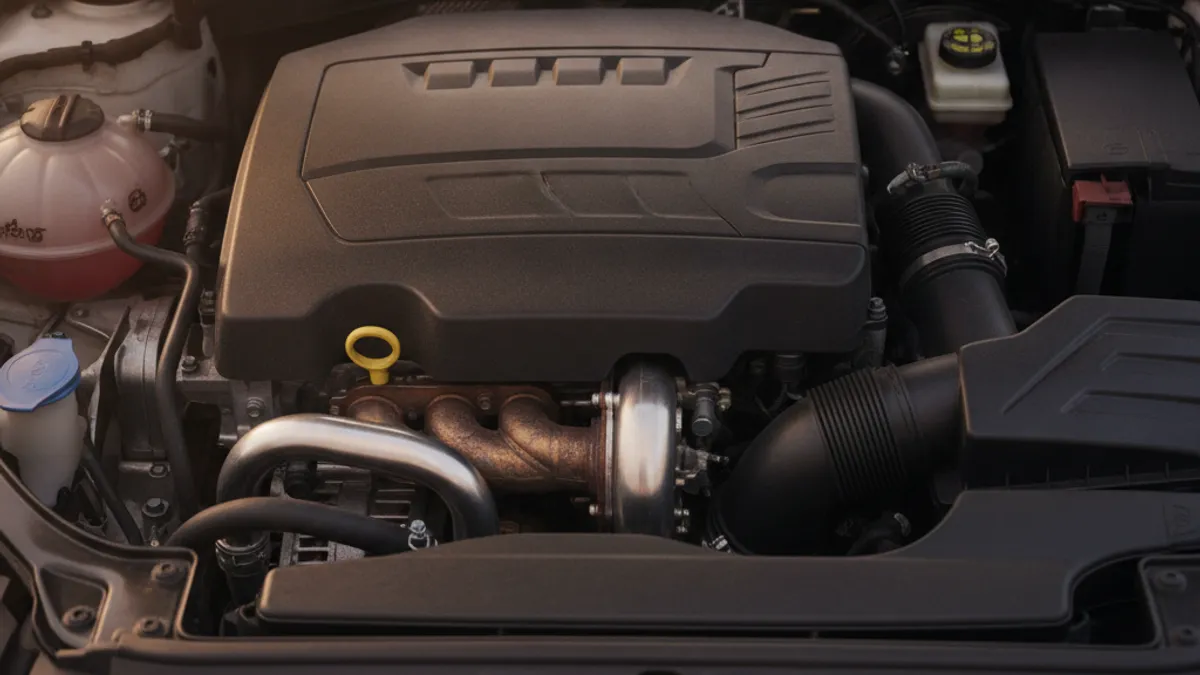
The Golf TDI was the last widely available diesel in the compact segment from VW's lineup. Its departure symbolically closes a chapter — not just for Volkswagen but for the entire industry. When Europe's best-selling car abandons diesel, the message is clear.
Audi's Last New Engine in 2026, Production Ends in 2033
Audi has gone a step further. In 2026 it launches the last entirely new car with an internal combustion engine. From 2033, Audi will not sell any fossil-fuel vehicle in Europe. This means Audi diesel engines — including the popular 2.0 TDI and 3.0 TDI that fill Bosnian roads — are entering their final generation. Every new Audi diesel sold today is one of the last that will ever roll off the production line.
Who Still Makes Diesel in Europe in 2026
The answer to this question grows shorter every quarter. Vauxhall, Toyota, Hyundai, Nissan, Honda, Dacia, MINI, and Volvo no longer offer any diesel model in Europe. BMW removed diesel from the 3 Series back in 2024. The SEAT Leon, once one of Spain's best-selling diesel hatchbacks, no longer has a diesel option.
Volvo, Dacia, Toyota, and Others Have Dropped Diesel Entirely
The remaining players are mainly from the VAG group (Volkswagen, Škoda, SEAT/Cupra in limited form), followed by Mercedes-Benz, Peugeot, Citroën, and Land Rover. But even among them, the share of diesel models in the range is declining. Mercedes has announced that by the end of the decade its entire lineup will be electrified or hybridised, meaning their OM651 and OM654 engines — favourites in BiH — will also reach the end of production.
The situation boils down to simple economics. Producing a single diesel variant of a model requires separate certification to Euro 6e and future Euro 7 standards, specific calibration of the AdBlue system, SCR catalytic converter, DPF filter, and EGR system. When diesel accounts for less than 10% of a model's sales, certification costs per unit sold become unsustainable. Manufacturers are not killing diesel because it is a bad engine. They are killing it because it is economically unviable in small volumes.
The End of Diesel in Europe in Numbers
Data from the European Automobile Manufacturers' Association (ACEA) paint a clear picture. Between January and May 2026, diesel accounted for just 7.6% of new registrations in the EU, according to ACEA figures published in June 2026. A year earlier, over the same period, the share was 9.5% — a year-on-year decline of 16.6%. For comparison, diesel held 55% of new registrations in the EU in 2012. In 14 years, it went from dominating over half the market to a sub-8% margin.
| Year | Diesel share of new EU registrations |
|---|---|
| 2012 | 55% |
| 2020 | ~28% |
| Jan–May 2025 | 9.5% |
| Jan–May 2026 | 7.6% |
The decline is particularly dramatic in countries that were once diesel strongholds. France, which for decades subsidised diesel fuel and gave tax advantages to diesel cars, now has a share below 10%. Germany, the homeland of TDI engines, is recording a similar trend. The United Kingdom fell from 47.7% to 4.6% in a single decade. Italy and Spain follow the same pattern, each at their own pace, but the direction is identical.
Over the same period, electric cars reached a 20% share of new EU registrations, meaning for the first time they are nearly three times larger than diesel. These are not projections or forecasts — these are sales data for the first five months of 2026.
For a BiH driver, these EU figures are not academic statistics. They directly determine what will be available on the used-car market in 7 to 10 years, when today's new vehicles become second-hand.
BiH Imports 85% Diesels, So Where Will They Come From in Five Years
Bosnia and Herzegovina does not manufacture cars. It buys them, mostly used. In February 2026, of 6,858 passenger vehicles registered for the first time in BiH, only 752 were new. The ratio is one to nine. More than 85% of imported used cars are diesels, predominantly Euro 5, manufactured between 2009 and 2015.
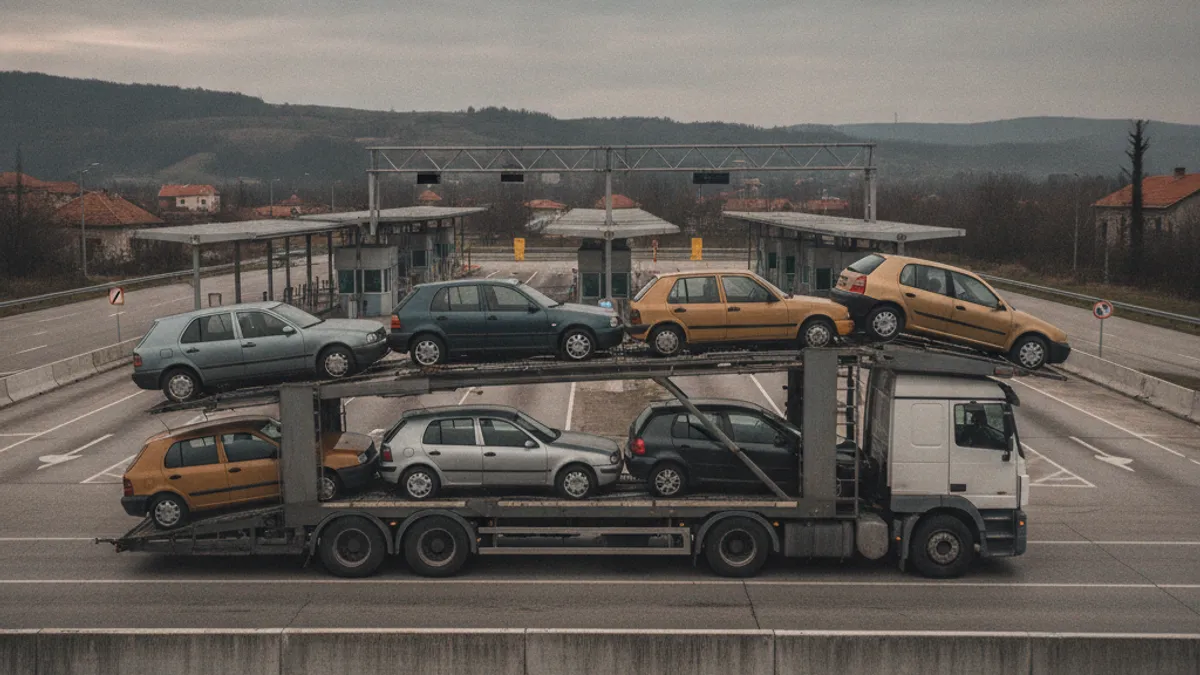
These vehicles are now between 11 and 17 years old, typically with 200,000 to 350,000 kilometres on the clock. They come mainly from Germany, Austria, Switzerland, and the Netherlands — countries that are actively reducing the number of diesels on their roads through low emission zones, tax incentives for electrification, and stricter MOT requirements for older diesels.
The import pipeline has worked smoothly so far because supply was enormous. Western Europe had tens of millions of diesel cars that had become too old for their own market yet were perfectly usable under BiH conditions. The problem arises when that reservoir starts to drain.
How Long Will Used Diesels Be Available for Import
The question is not whether there will be used diesels to import, but how long at the current volume. Cars being sold as new in the EU today are predominantly petrol, hybrid, or electric. This means that in 7 to 10 years, when those vehicles become second-hand, the supply of diesels on the used market will be significantly smaller than it is today.
For now, supply is still plentiful. Millions of Euro 5 and Euro 6 diesels drive around Europe and are gradually leaving Western European markets as they age. BiH, along with Serbia, Montenegro, North Macedonia, and Albania, absorbs that wave. But the wave is not infinite. It has a beginning, a peak, and a downward slope.
If the current trend continues without major disruption, around 2032–2035 the supply of used Euro 5 diesels for import will begin to noticeably shrink. Euro 6 diesels will replace them for a while, but their total numbers will also be lower because they were produced during a period when diesel was already in serious decline. The end result: in ten years, BiH drivers will have a smaller selection when it comes to diesel, and prices for remaining examples with lower mileage and a clean history may rise.
Low Emission Zones BiH Drivers Need to Know About
Even while supply is still there, BiH drivers who travel to Europe must account for low emission zones that expand every year. Since January 2026, Brussels bans Euro 5 diesels and Euro 2 petrol cars from entering. The fine is EUR 350. Since November 2025, Rome bans Euro 5 diesel in its low emission zone on weekdays from 08:30 to 18:30. Paris bans Euro 4 diesel, with fines from EUR 68 to EUR 135. Berlin bans Euro 4 diesel, with a fine of EUR 100.
Brussels Euro 5 Diesel Ban from 2026, EUR 350 Fine
For BiH drivers who travel to the coast via Italy, visit family in Germany, or make business trips to Belgium, this is actionable information. Euro 5 diesel — the most common standard among used imports in BiH — is already banned in central Brussels and restricted in Rome. Paris and Berlin are one step closer, currently limiting Euro 4, but tighter thresholds are coming.
The trend is clear: zones are expanding, thresholds are tightening, and every year brings new cities to the list. Anyone planning to drive across Europe should check the restrictions for their exact Euro standard and the specific city before departure, because the fines are not symbolic. Low emission zone information for most European cities is available on the respective city or local authority website.
| City | Ban effective | Euro standard | Fine |
|---|---|---|---|
| Brussels | January 2026 | Euro 5 diesel | EUR 350 |
| Rome | November 2025 | Euro 5 diesel (weekdays 08:30–18:30) | variable |
| Paris | active | Euro 4 diesel | EUR 68–135 |
| Berlin | active | Euro 4 diesel | EUR 100 |
What This Means for Used Diesel Prices
The end of diesel in Europe also has a practical dimension that is already felt on the ground. As the supply of diesels declines in Western Europe while demand in BiH and the region remains stable, the market dynamics are slowly shifting. Well-maintained examples with a complete service history and lower mileage are becoming more sought after — and therefore more expensive.
This is not a dramatic price spike, at least not yet. But the gap between a well-maintained example and a neglected one is growing. A buyer looking for a Golf 6 TDI with 150,000 kilometres and a full service book pays noticeably more than for the same model with 280,000 and no documentation. That gap will only deepen as supply narrows.
For BiH drivers considering a purchase, the message is that the quality of documentation and vehicle history pays off more than ever. A car with a proven service record, regular entries, and known provenance retains value better than one without paperwork. A chassis number that can be checked through independent databases, such as a carVertical report, gives the buyer a clearer picture of real mileage, any accidents, and the number of previous owners. We consider it an essential step before buying any used car. The code GAGA gives a 20% discount when ordering a report.
Practical Advice for BiH Diesel Drivers
The end of new diesel production in Europe does not mean diesel is vanishing from the roads. Internal combustion engines, including diesel, will be driving on European and BiH roads for decades to come. But the fleet composition is changing, and faster than most drivers realise.
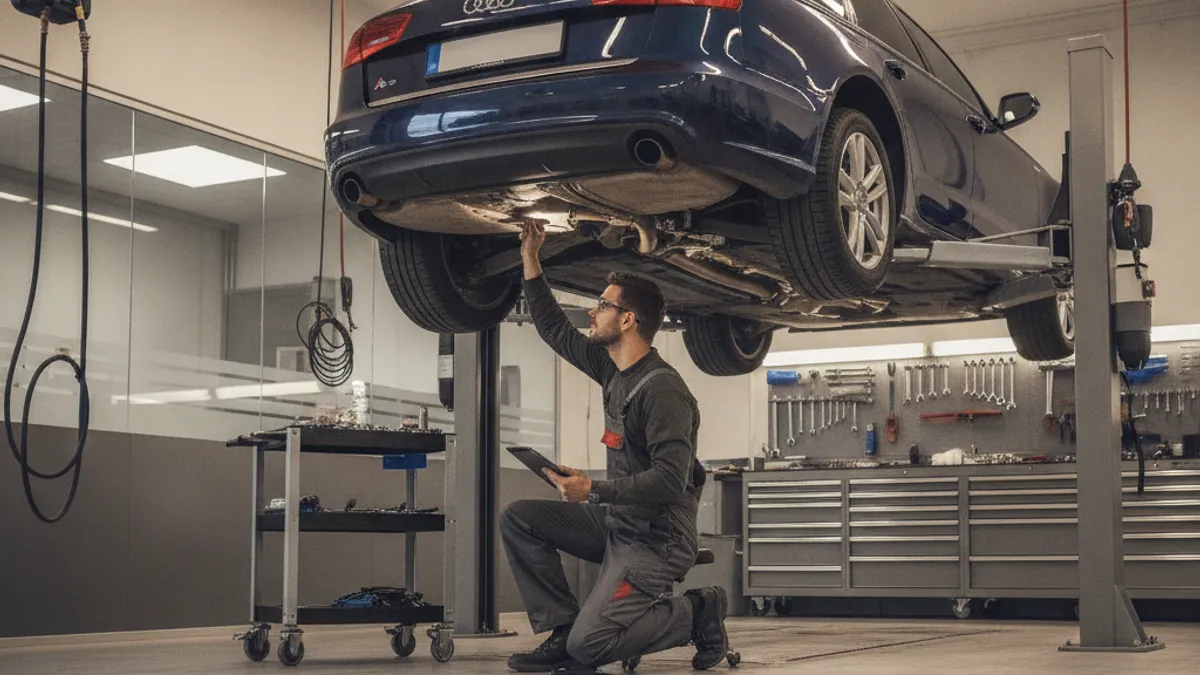
Here is what a BiH diesel driver should keep in mind. First, the diesel you buy as a used car today, or the one you already drive, will serve you for years. A well-maintained 2.0 TDI with 200,000 kilometres can cover another 100,000 to 200,000 without a major overhaul, given regular servicing. The question is not whether your current diesel will stop working.
Second, the service infrastructure for diesel in BiH is not going away. Workshops, parts, expertise — all of it exists and will continue to exist for a long time. At the Auto Gas Gaga workshop we service diesel engines of every generation and age on a daily basis, from older pump-injector systems to modern common rail units with DPF and AdBlue.
Third, when buying a used diesel, pay attention to the Euro standard. Euro 5 already restricts you in Brussels and Rome. Euro 6 gives you more time before low emission zones become a problem, but those vehicles will also gradually land on restricted lists. Check the Euro standard in the vehicle registration document or technical paperwork before you buy.
Fourth, the DPF filter, EGR system, and AdBlue (on Euro 6 models) require proper maintenance. A car that has covered 200,000 kilometres without replacing or cleaning the DPF, or with a removed EGR, may look cheap in an advert, but the cost of restoring it to proper working order can be significant. Before buying, ask the seller specifically about the history of these systems — or better yet, take the car for a pre-purchase inspection at a workshop that knows these engines. A properly maintained emissions system is the difference between a reliable car and an expensive problem.
Fifth, keep an eye on supply and prices in the market. When the supply of used diesels begins to decline in 5 to 10 years, expect well-maintained examples with lower mileage to hold or even increase in price. This does not mean you should buy diesel as an investment, but it does mean the current market still offers a solid selection and relatively competitive prices.
Sixth, if you plan to drive to Europe — especially to Belgium, Italy, France, or Germany — check the low emission zone rules before you set off. Fines of EUR 100 to 350 can blow the budget of any trip. Most zones offer free online checks by registration plate or Euro standard.
The end of diesel in Europe is an industrial, regulatory, and market process that has already advanced further than most BiH drivers realise. The VW Golf TDI, symbol of an era, is no longer on sale. Brands are shutting down diesel lines one by one. The share of new EU registrations has fallen below 8%.
For BiH, which depends on importing used cars, this is not cause for panic — but it is a signal to pay attention. The diesel you drive today will serve you for years to come. But the market is changing, low emission zones are expanding, and the supply of used diesels will gradually narrow over the next decade. Keeping this in mind helps you make better decisions, whether you are buying your next car, planning a trip to Europe, or deciding how much to invest in maintaining your current one.
Frequently Asked Questions
Is diesel disappearing from sale in Europe entirely?
Not entirely, but it is in rapid decline. In the first half of 2026, diesel accounts for only 7.6% of new registrations in the EU, and the number of brands still offering it shrinks every quarter. Toyota, Volvo, Dacia, Hyundai, Nissan, Honda, and MINI no longer offer it at all. A complete disappearance from sale is expected gradually by the end of this decade for most manufacturers.
Why did VW discontinue the diesel Golf?
Diesel accounted for just 5.5% of Golf sales between January and May 2026 in the United Kingdom. The cost of separate certification for the diesel variant under increasingly stringent emissions standards did not pay off for such a small sales share. Volkswagen judged it economically unsustainable to keep the diesel variant in production.
Will BiH run out of used diesels to import?
Not within the next 5 to 7 years. Supply is still plentiful because millions of Euro 5 and Euro 6 diesels are still on the road in Western Europe. But as new cars in the EU are increasingly sold without diesel engines, the supply of used diesels will gradually diminish from around 2032–2035.
Does my current diesel car become worthless?
No. A well-maintained diesel engine can cover hundreds of thousands of kilometres. The service infrastructure, parts, and repair expertise for diesel engines in BiH will exist for decades. Your car does not stop working just because the manufacturer no longer sells it as new.
Can I still travel across Europe with a Euro 5 diesel?
You can, but with increasing restrictions. Brussels has banned Euro 5 diesels since January 2026, with a fine of EUR 350. Rome restricts Euro 5 diesel on weekdays. Paris and Berlin currently restrict Euro 4, but thresholds are tightening. Before any trip, be sure to check the rules for the specific city you are visiting.
Will used diesel prices rise?
Well-maintained examples with lower mileage and complete documentation already fetch better prices than neglected ones. As supply declines over the next decade, this trend is likely to intensify. This does not mean you should buy diesel as an investment, but it does mean that proper maintenance and documentation pay off.