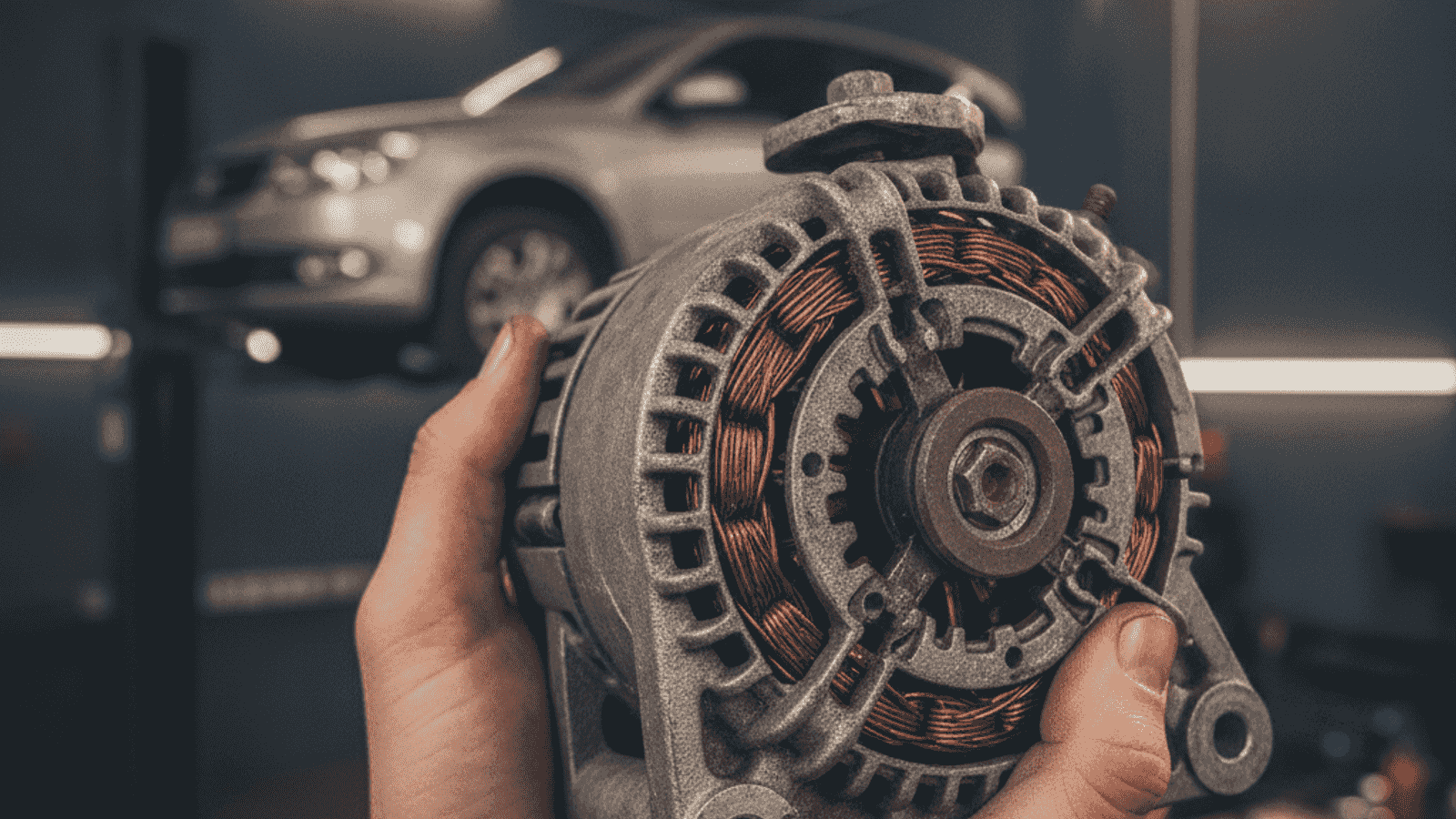
The 2026 European auto industry crisis is no longer a distant headline from Stuttgart or Wolfsburg. Bosch is announcing 22,000 layoffs, Continental is cutting 11,000 positions, ZF is eliminating 12,000 jobs by 2030. These are the companies whose parts sit inside your Golf, Passat, Octavia or Peugeot 308. When the production capacity of firms that manufacture alternators, brake callipers, sensors and electronics for your car shrinks, the consequences reach the workshop in Banja Luka too.
This article was prepared by Auto Gas Gaga workshop in Banja Luka, based on publicly available data about layoffs in the European auto industry and years of experience servicing European makes.
Table of Contents
- What Is Happening to the European Auto Industry in 2026
- Who Are Bosch, Continental, ZF and Mahle and Why Your Car Depends on Them
- How the Supplier Crisis Affects Parts Prices in BiH
- Why Servicing a Modern Car Costs More Than Before
- What European Car Owners in BiH Can Do
- Will Parts for Older Models Become Unavailable
- Aftermarket or OEM Parts in BiH 2026
- Frequently Asked Questions
- Related Articles
What Is Happening to the European Auto Industry in 2026
The European auto industry is going through a structural crisis unlike anything since the 2008 financial collapse. Factories are running at just 59% capacity, while the profitability threshold is 80%. That means roughly a third of Europe's 90 car factories are surplus, equivalent to 5.4 million vehicles per year or more than 35 plants.
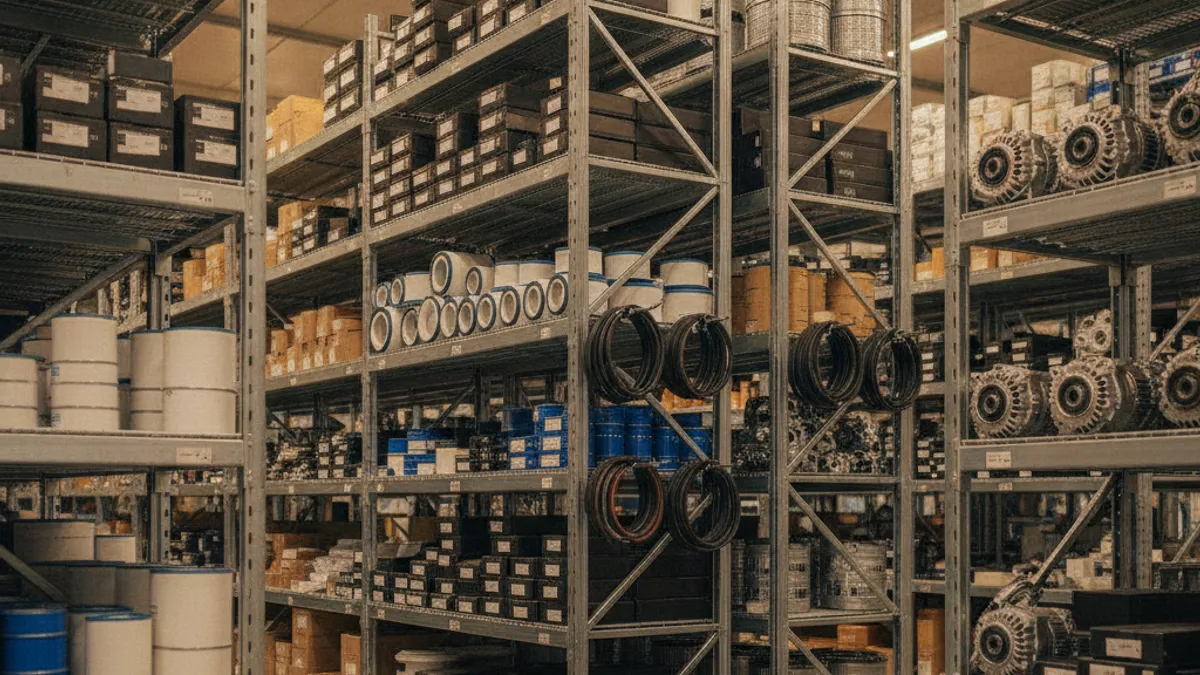
What matters most for BiH drivers is not the car manufacturers themselves but the suppliers. Bosch, Continental, ZF Friedrichshafen, Mahle and Schaeffler collectively employ hundreds of thousands of people and produce everything from starters and alternators to braking systems and electronic control units. When these firms cut capacity, the availability of parts that end up in your car shrinks too.
Renault is cutting 2,300 engineering positions (a 20% reduction), Stellantis is eliminating 650 engineering roles at Opel's headquarters in Russelsheim, Volvo is laying off 3,000 people. This is not a cyclical downturn that will blow over in six months. Analysts predict a wave of bankruptcies in 2026, particularly among smaller Tier 3 and Tier 4 suppliers. First Brands already went bankrupt in 2025 as a precursor to wider problems.
Who Are Bosch, Continental, ZF and Mahle and Why Your Car Depends on Them
Many drivers recognise the names Bosch or Continental from wiper blades or tyres. But these companies produce far more than that. Here is who does what for your car.
Bosch manufactures high-pressure pumps for diesel engines (every TDI, HDi and CDi has one), injectors, alternators, starters, lambda sensors, ABS modules, ESP sensors and complete engine control units. When Bosch announces 22,000 layoffs in its core operations, that directly means fewer production lines for these components.
Continental makes braking systems (callipers, discs, hoses), engine and gearbox sensors, traction control electronics, TPMS tyre pressure sensors and control modules. The reduction of 10,000-11,000 workers by the end of 2026 hits production of these components.
ZF Friedrichshafen is a giant of transmissions and chassis. Automatic gearboxes (including the 6HP, 8HP and ZF variants in BMW, Audi and Volvo cars), shock absorbers, tie rods, ball joints and complete steering systems. Laying off 12,000 workers by 2030 means less capacity for producing these parts.
Mahle makes pistons, piston rings, thermostats, water pumps, oil and air filters, turbochargers and EGR valves. Closing the Neustadt factory and cutting 1,600 jobs means one fewer supply line for these critical components.
Schaeffler produces bearings, timing chains, tensioners, clutch plates and dual-mass flywheels. The reduction of 4,700 positions across Europe hits production of parts that sit at the heart of every engine.
When you open the bonnet of any European car older than three years, you are probably looking at a dozen components made by one of these five companies.
How the Supplier Crisis Affects Parts Prices in BiH
The supply chain for car parts in BiH works like this: the manufacturer (Bosch, Continental...) sells to a regional distributor, the distributor sells to a wholesaler in BiH, the wholesaler supplies the workshop or retailer. Each link has its own margin, but the starting price depends on the manufacturer.
When a manufacturer closes one of three production lines for a given part, the remaining two cannot cover demand. The result: longer waiting times and higher prices. This is not theory. The DAT Report for 2026 shows that the average repair cost in Germany reached 764 EUR (up from 718 EUR the year before), while routine maintenance jumped 27% year on year. BiH figures are lower in absolute terms, but the upward trend is identical.
Particularly sensitive parts categories in 2026:
- High-pressure diesel pumps (Bosch CP1, CP3, CP4) because only a limited number of plants produce them
- Turbo actuators and electronics because they require precision calibration
- ABS/ESP modules because only a narrow circle of suppliers makes them (Continental, Bosch)
- Dual-mass flywheels (Schaeffler/LuK, Sachs) because production capacity was already stretched
- Mechatronics for automatic gearboxes (ZF) because these are complex assemblies
It is important to understand: your mechanic is not overcharging you when they say a part costs more than last year. Parts genuinely cost more because there are fewer of them on the market.
Why Servicing a Modern Car Costs More Than Before
The 2026 European auto industry crisis only amplifies a trend that has been building for years. Nearly 60% of car owners in Europe say they visit workshops less frequently because of high prices. Of those, 38% of drivers postpone recommended maintenance, and 21% skip scheduled services altogether to save money.
This is a dangerous cycle. A postponed service means a bigger fault later, a bigger fault means a costlier repair, a costlier repair means the driver postpones the next service again. In the end, a car that could have lasted 300,000 km develops a serious problem at 180,000 km.
Factors driving up servicing costs in BiH:
- Rising parts prices at source. Reduced production at Bosch, Continental and ZF means a higher price per unit.
- Complexity of modern systems. A 2015 car has three times more sensors than a 2005 car. Each sensor is a potential expense.
- Specialised tools and diagnostics. More modern systems require costlier workshop equipment, which is passed on in the hourly rate.
- The EUR/KM exchange rate is fixed, but input prices are rising. BiH imports virtually all car parts. When the price at source rises 15%, that difference passes through the chain.
How Much Has a Major Service Gone Up in BiH in 2026
According to market data, a major service for a VW 1.9 TDI in BiH ranges from 180-250 EUR, for a 2.0 TDI 250-340 EUR, for a PSA 1.6 HDi 200-280 EUR, and for a Renault 1.5 dCi 180-240 EUR. These figures have stabilised at higher levels than in previous years but remain more affordable than in Croatia or Slovenia.
The gap between a minor and major service is growing because a major service includes more parts affected by the supply chain crisis, such as the water pump, timing belt or clutch kit.
What European Car Owners in BiH Can Do
The crisis will not resolve itself overnight. Here are concrete steps you can take to soften the blow to your budget.
Stick to regular maintenance. This sounds counterintuitive when servicing is more expensive, but a preventive service costing 150-200 EUR prevents a repair costing 800+ EUR. A timing belt that snaps because you delayed replacement by six months means a new engine or at least a cylinder head.
Look for quality aftermarket brands, not just OEM. For many parts there are proven aftermarket manufacturers offering the same specification at a lower price. Febi Bilstein for chassis parts, Gates for belts, Beru for spark plugs and glow plugs, Valeo for clutches. More on this in our guide to OEM vs aftermarket parts.
Follow intervals, not gut feeling. Do not wait for a warning light or for the car to start sounding different. Every manufacturer defines exact intervals for oil, filters, belts and fluids. Stick to service intervals and you will not be caught out by an expensive repair.
Choose a workshop that uses quality parts and can prove it. Ask which brand is being fitted. A serious workshop will show you the part packaging and offer a warranty on the installation. A cheaper part of unknown origin can cost double when it fails after 20,000 km.
Consider preventive replacement of critical parts. If your car has 180,000+ km and the water pump, timing belt or dual-mass flywheel has never been replaced, it is better to do it on a planned basis than to wait for it to happen on the road. A planned replacement is always cheaper than an emergency one.
Will Parts for Older Models Become Unavailable
This is the question that worries owners of cars older than 15 years. The short answer: for the best-selling models (Golf 5/6, Passat B6/B7, Octavia Mk2, Peugeot 307/308, Megane 2/3), parts will not disappear in the next 5-10 years. Demand is simply too high.
However, for niche models and rare variants (specific engine versions, unusual gearbox and drivetrain combinations), lead times are already lengthening. Where a part used to arrive in 2-3 days, it can now take 7-14 days, and for some electronic modules 3-4 weeks.
The most at-risk categories for older models:
- Electronic modules (engine control units, ABS modules, instrument clusters) because they are not remanufactured once the original production run is exhausted
- Model-specific plastic and rubber parts (covers, unusually shaped gaskets) because moulds have a limited lifespan
- Sensors for obsolete systems (earlier-generation parking sensors, rain sensors) because the aftermarket does not cover every variant
For mechanical parts (brake pads, discs, bearings, filters, belts) the risk of disappearance is minimal because they are produced by a wide range of aftermarket firms, not just the original supplier.
Aftermarket or OEM Parts in BiH 2026
The supply chain crisis makes this question more relevant than ever. OEM parts come from the same factories that are cutting capacity, so their prices are rising faster. Aftermarket parts are produced by a wider pool of manufacturers, including Asian producers, and are therefore less affected by the crisis in Europe.
How to Choose a Workshop That Uses Quality Parts
There is no universal list of "good" and "bad" brands because quality varies by part category. What you can ask from a workshop:
- To tell you which brand they are fitting and show the packaging
- To offer a warranty on the installation (minimum 6 months or 10,000 km)
- To use parts that meet OE specification (dimensions, material, tolerances)
- To have experience with your car's model and know which aftermarket brands to recommend for each assembly
In our workshop we most often see problems caused not by "aftermarket" as a category but by fitting the cheapest possible part without checking the specification. The price difference between a quality aftermarket part and the cheapest clone can be 30-50%, but the difference in lifespan is three to five times.
Read more on this topic in our dedicated article on OEM vs aftermarket parts.
Found the part you need and want to make sure it is fitted properly? Book an appointment or get in touch on WhatsApp with a question about your model.
Frequently Asked Questions
Will the European auto industry crisis affect used car prices in BiH?
Indirectly, yes. More expensive parts and servicing make older cars less attractive to buyers who calculate total cost of ownership. At the same time, a shortage of new cars on the market keeps used car prices elevated because demand remains strong.
Which parts have seen the biggest price increases in 2026?
The steepest rises are in electronic modules (ABS, ESP, control units), high-pressure diesel pumps and automatic gearbox components. Mechanical parts (filters, brake pads, belts) have seen more moderate increases because they are produced by a wider pool of suppliers.
Is it better to buy an OEM or aftermarket part in the current situation?
It depends on the part category. For filters, brake pads, belts and gaskets, quality aftermarket brands (Febi, Gates, Valeo) offer the same specification at a lower price. For electronics, injectors and turbochargers, an OEM or remanufactured OEM part is the safer choice because tolerances must be precise.
How long will the supply chain crisis last?
Analysts predict restructuring will continue until 2028-2030. Bosch, ZF and Continental are planning layoffs in phases over the next 3-4 years. Stabilisation of parts prices depends on how quickly Asian manufacturers fill the gap left by European suppliers.
Should I buy parts in advance for a planned service?
If you know that a timing belt, water pump or clutch kit replacement is due within 5,000-10,000 km, it makes sense to order the parts early. Prices are on an upward trend and delivery times are lengthening. For standard service items (oil, filters) this is not necessary as they are widely available.
Will the Volkswagen crisis make things worse?
Volkswagen as a group (VW, Audi, Skoda, Seat, Porsche) is the largest buyer of parts from Bosch, Continental and ZF. Their production cuts mean fewer orders for suppliers, which puts additional pressure on suppliers to reduce capacity. More on this in our article on the Volkswagen crisis.