The average car in BiH is 17 years old. As many as 38% of passenger vehicles are older than 23. When something expensive breaks on a car like that, the owner faces a question that has no universal answer but does have a concrete framework: when is it not worth repairing a car, and when is it better to sell? This guide provides a threshold rule, a list of faults that most commonly exceed the viability limit, and a calculation tailored to the BiH market in 2026.
This guide was compiled by the Auto Gas Gaga workshop in Banja Luka, drawing on years of experience with pre-purchase inspections and daily work on high-mileage vehicles.
Table of Contents
- Why This Question Is Critical for BiH Drivers
- The 40-50 Percent Rule: When a Repair Crosses the Line
- Six Faults That Most Often Exceed That Threshold
- How to Calculate Your Car's Real Market Value
- Three Scenarios: Repair, Sell with a Fault, or Scrap
- When a Repair Still Makes Sense
- Step by Step: How to Make the Decision in 15 Minutes
- Frequently Asked Questions
- Related Articles
Why This Question Is Critical for BiH Drivers
In May 2026, for every new car in BiH there are 5.5 used ones. That means the vast majority of drivers are behind the wheel of a car that has already lived half its story before it even arrived in BiH. When a car like that presents a bill amounting to a third or half of its market value, you have a real problem on your hands.
The problem is not the fault itself. The problem is that faults on older cars come in waves. Today the dual-mass flywheel, in three months the turbo, in six months the gearbox. Each repair looks justified on its own, but the total of all bills over twelve months can exceed the car's value two or three times over. Drivers in BiH feel this particularly hard because the used-car market keeps prices low while the cost of labour and parts rises year on year.
The key difference between a smart decision and a bad habit: a smart decision looks at the full picture, while a bad habit looks only at the bill in front of you. If you focus solely on the current invoice, every repair looks like the logical move. But when you add up everything you have spent on unexpected faults over the past 12 to 18 months, the picture changes dramatically.
There is another factor BiH drivers tend to overlook: opportunity cost. Every thousand KM you pour into an old car is a thousand KM less towards buying a better one. A 5,000 KM car into which you sink 3,000 KM of repairs does not become an 8,000 KM car. It remains a 5,000-5,500 KM car that is still old, still has high mileage, continues to lose value, and carries a statistical probability of another fault within the next six to twelve months.
The 40-50 Percent Rule: When a Repair Crosses the Line
There is a straightforward rule used by insurance companies and experienced mechanics across the region: if the cost of a single repair exceeds 50% of the vehicle's current market value, the repair is not economically viable. For older cars with more than 150,000 kilometres and more than 10 years on the clock, that threshold drops to 30-40%.
The logic is clear and irrefutable. A car worth 5,000 KM that needs a 3,000 KM repair will not be worth 8,000 KM after the fix. It will be worth perhaps 5,500 KM, because a buyer on the market does not pay for your investment — they assess age, mileage, and overall condition. You have spent 3,000 KM to end up with a car that is still old, still has high mileage, and will very likely break down again within the next six months.
Insurance companies in the region apply similar maths but with a higher threshold: they declare a total loss when the repair exceeds 70% of the vehicle's value on the day of the incident. The difference is that insurers are calculating a single event caused by an external factor, whereas you need to calculate the cumulative cost of maintenance — not just one fault, but all unexpected expenses over a given period.
The cumulative version of the rule reads as follows: if over the past 12 months you have spent more than 40% of the car's market value on repairs and maintenance outside the regular service schedule, and the car still has a serious fault ahead of it, the maths is settled. It is time to replace it.
Why 40% rather than 50% for the cumulative figure? Because with a single fault there is a chance it is the only problem. With a cumulative total, the trend itself tells you the car is entering a phase where it costs more than it gives. Every additional fault confirms that it was not an isolated incident.
Six Faults That Most Often Exceed That Threshold
Not every fault crosses the viability line. Replacing brake pads, suspension springs, or CV joints almost never calls the car's economic life into question. But there are six categories of faults that regularly do (we covered the detailed costs in our guide to the most expensive faults on a used car), especially on cars whose market value sits between 3,000 and 8,000 KM — which is the vast majority of the vehicle fleet in BiH.
Engine failure. A complete engine failure costs 10,000 KM and upward for a block rebuild with all internal components. A replacement engine from a scrapped car starts at 4,000-6,000 KM fitted, but it also carries the risk of an unknown history. When a timing belt snaps and damages the valves and pistons, the bill easily runs to several thousand KM. An engine with 250,000 km on the clock that has suffered valve damage will never be the same, even after a quality repair.
Automatic gearbox. Repairing an automatic gearbox (conventional, CVT, or DSG) starts at 3,000-4,000 KM for a partial rebuild involving the mechatronics unit or valve body, while a complete replacement or rebuild on more complex units runs considerably higher. On a car worth 7,000-8,000 KM, that directly triggers the 40-50% rule. On a car worth 5,000 KM, it exceeds it.
Automatic Gearbox: Repair or Replace the Car
With an automatic gearbox the decision is especially difficult because the symptoms are progressive. The gearbox does not fail all at once — it starts slipping, shifting harshly, or hesitating when engaging a gear. Many drivers continue for months with these symptoms, hoping they will go away. They will not. Every day of driving with a faulty gearbox causes further damage to the clutch packs, pumps, and valves. By the time you finally reach the workshop, the bill is larger than it would have been had you reacted at the first symptom.
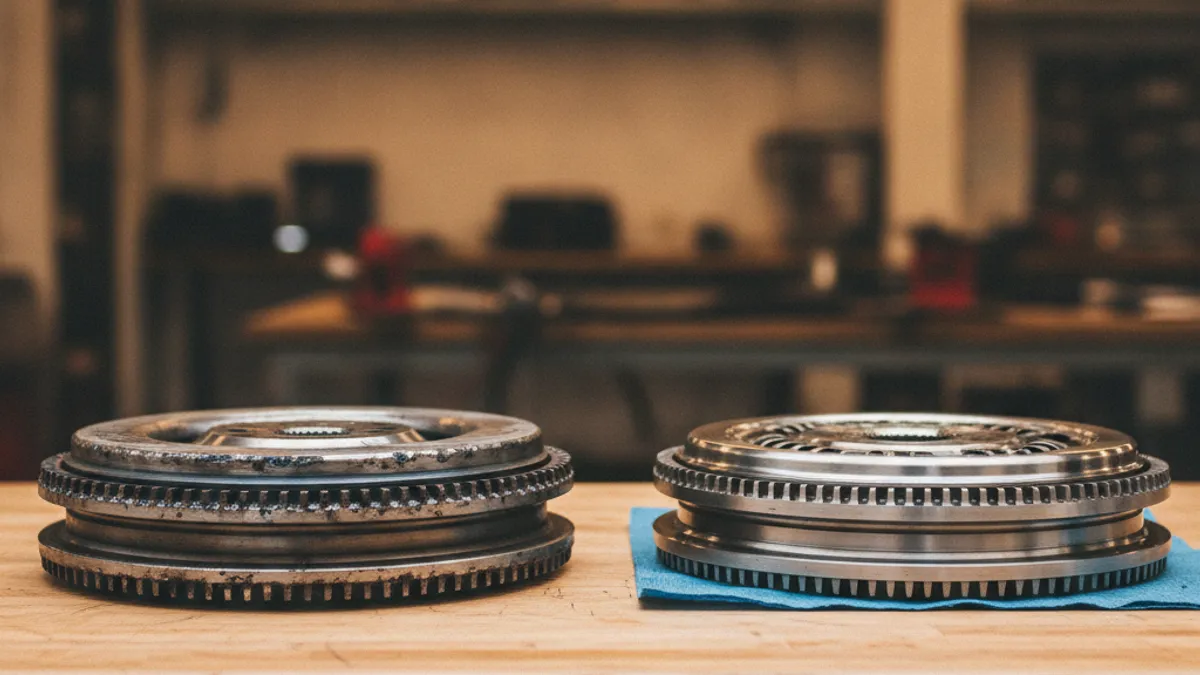
Dual-mass flywheel and clutch. A complete flywheel kit — flywheel, clutch disc, release bearing, and labour — on a VW Group car starts at 2,500-3,000 KM. On a Peugeot, Ford, or Renault the parts may be slightly cheaper, but the labour is the same because the gearbox has to come out regardless. If the car is worth 4,000-5,000 KM, this is a borderline case that requires analysis using the rule from the previous section.
Turbocharger and associated systems. Replacing a turbo with all associated work (oil feed lines, gaskets, DPF cleaning if it is clogged at the same time) runs between 1,500 and 4,000 KM depending on the model and turbo type. The turbo itself is rarely the only issue because it typically fails due to upstream problems (blocked oil feed line, faulty EGR, clogged DPF), so the real cost of repair is always more than just the turbo swap. When you need the turbo plus the DPF plus the EGR, the total easily clears 5,000 KM.
High-pressure pump and injectors. A full set of injectors on a common-rail diesel costs 1,500-3,000 KM for parts alone, plus labour. A high-pressure pump adds another 1,000-2,000 KM. These two faults often come together because metal shavings from a failing pump destroy the injectors, and vice versa. The total bill on an older diesel with four injectors and a pump can easily exceed 4,000-5,000 KM, which for a car worth 6,000-7,000 KM is a direct hit on the viability threshold.
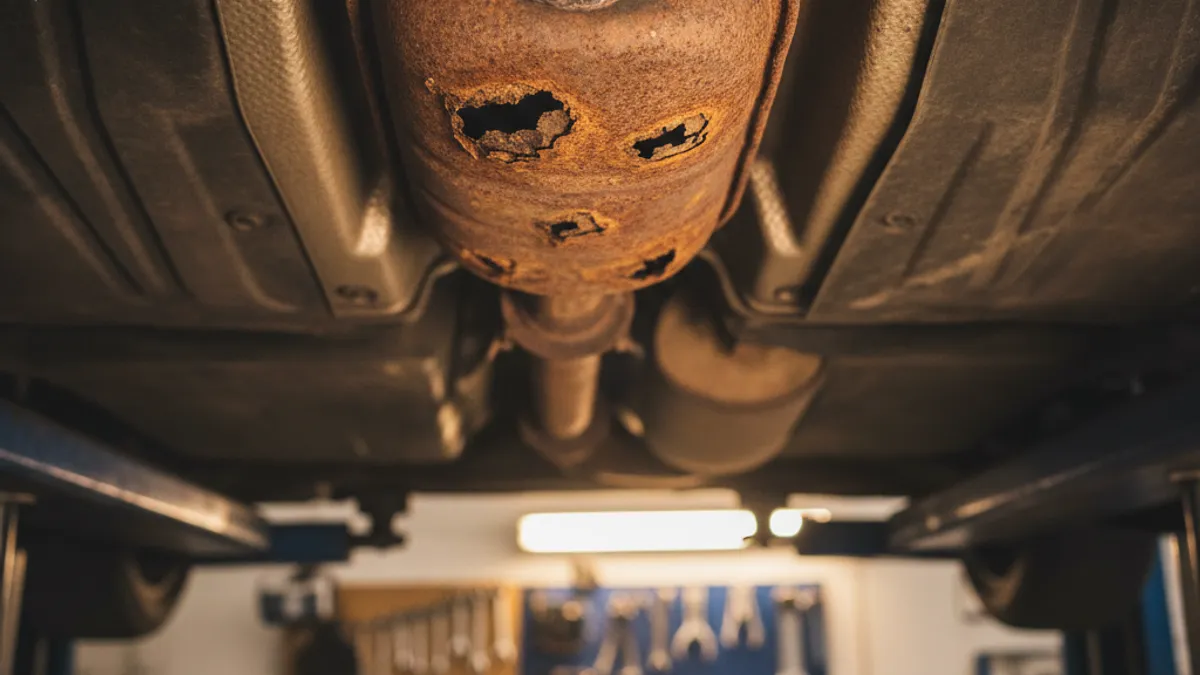
Chassis corrosion and structural damage. On cars older than 15-20 years (which is the average and below average in BiH), corrosion of the floor pan, sills, and subframes cannot be repaired economically. Welding the chassis of a car worth 3,000 KM is money thrown away, because corrosion is systemic, not localised. You weld one sill today, and in six months the other one crumbles. With cars imported from Northern Europe (Norway, Sweden, Denmark), the corrosion is particularly aggressive because those cars spent years on salted roads.
Is It Worth Replacing the Engine in an Old Car
This is a question we get at the workshop at least once a week. The answer depends on two factors: the condition of the rest of the car, and the reason the engine failed.
If the bodywork is clean, the gearbox is sound, the electronics are functional, and the suspension is in good shape, replacing the engine with a second-hand unit can make sense. But only if the rest of the car is genuinely in good condition — not "more or less". Fitting a replacement engine with 180,000 km into a car whose suspension itself needs overhauling and whose gearbox is starting to slip is throwing money into a bottomless pit.
The second factor is why the engine failed. If it failed because you missed a timing belt change but the engine was otherwise well maintained, a replacement stands a better chance of a good outcome. If it failed because it had been burning oil for years and nobody addressed it, the question is what else in the car suffered the same neglect.
How to Calculate Your Car's Real Market Value
To apply the 40-50% rule, you need to know what your car is actually worth on the market today. Not what you paid for it, not what you think it is worth, but what someone would genuinely pay for it right now.
Step one: open olx.ba and search for the same model, same year, similar mileage and spec. Take five or six listings that have been up the longest (those are the ones not selling because they are overpriced) and five or six fresh ones. The midpoint of that range is your realistic market price in roadworthy condition.
Step two: subtract the cost of the current fault from that figure. If you have a Golf 5 from 2007 that sells for 6,000-7,000 KM in working order and yours has a blown turbo, your car in its current state is worth roughly 4,000-5,000 KM, because any buyer who takes it with the fault still has to fix that same turbo.
Step three: add up everything you have spent on repairs over the past 12 months. Do not count routine maintenance (oil changes, filters, brake pads, tyres), but do count every unexpected fault or worn-part replacement outside the regular service schedule.
Step four: compare the total spent with the car's current value. If the sum of what you have spent plus the cost of the impending fault exceeds 40-50% of the market value in roadworthy condition, the rule says: sell.
How Much Is My Car Worth with a Fault
The market value of a car with a fault is always lower than that of a roadworthy one, but how much lower depends on the type of fault. A clearly defined mechanical fault (blown turbo, worn flywheel) reduces the value by roughly the repair cost minus 20-30%, because the buyer reckons they will fix it more cheaply themselves. A vague or potentially systemic fault (engine knocking, gearbox slipping, electronics cutting out randomly) reduces the value far more drastically because the buyer does not know what awaits them.
Selling a car with a fault in BiH typically goes through three channels: a private sale on olx.ba (slow but the best price), selling to a used-car dealer (fast but 20-30% less), or selling to a scrapyard buyer (fastest, worst price, but sometimes the only option for cars in very poor condition).
Three Scenarios: Repair, Sell with a Fault, or Scrap
Scenario A: repair. Your car is worth 8,000 KM in roadworthy condition. Over the past year you have spent 500 KM on unexpected repairs. Now the flywheel has gone and needs 2,800 KM. The combined total of 3,300 KM is 41% of the value — formally on the boundary. But the car has no corrosion, the engine is healthy, the gearbox works flawlessly, and the suspension was overhauled two years ago. The repair makes sense because afterwards you get a car that can realistically run another three to four years without major outlay. This is the classic exception where the rule says "borderline" but common sense says "fix it".
Scenario B: sell with the fault. The car is worth 5,000 KM in roadworthy condition but has a failed automatic gearbox. The repair would cost 3,500 KM. The ratio: 70%, far above the threshold. You sell it with the fault for 2,000-2,500 KM. The loss exists, but it is smaller than investing 3,500 KM in a car that is still only worth 5,000 KM after the fix, has 280,000 km on it, and very likely has something else waiting around the corner within the next year. Those 3,500 KM are better directed as a deposit towards a better used car.
Scenario C: scrap. The car is so old and damaged that nobody will buy it even with a fault at a reasonable price. Chassis corrosion, a wrecked engine, a faulty gearbox, broken electronics. The market value of a roadworthy example of the same model is below 2,500 KM, and yours is far from roadworthy. In that case you sell it to a parts buyer, take whatever they offer, and move on. Keeping such a car in your yard "until things improve" costs you registration, insurance, and lost time while it depreciates further.
When a Car Becomes an Economic Write-Off
There is a point beyond which a car stops being a means of transport and becomes a liability. That point is not defined by a single fault but by a combination of factors. A car is an economic write-off when at least three of the following five conditions are met:
- The market value of a roadworthy example of the same model and year is below 2,500 KM
- Cumulative repair costs over the past 18 months exceed that value
- The car has structural damage (corroded sills, floor pan, or subframes) that cannot be permanently repaired
- More than one "major" repair is needed simultaneously (e.g. gearbox and turbo, or engine and suspension)
- The car cannot pass the technical inspection without spending more than 1,000 KM
When three out of five conditions align, any further investment is uneconomical regardless of emotional attachment. In BiH, where the average car age is 17 years, this situation is not uncommon. The owner often thinks "just this one more repair" and then things will settle down, but workshop experience shows the opposite: a car that has begun to systematically deteriorate will continue at the same pace.
When a Repair Still Makes Sense
The 40-50% rule is a decision framework, not a final verdict. There are situations where it makes sense to repair a car even when the maths says otherwise:
The car has been exceptionally well maintained and you have the paperwork to prove it. A used car with a full service history, one or two owners, and a clear maintenance record is worth more than the market average. If your car falls into that category, repairing it returns it to a class that sells better and faster, and you also have greater confidence that this repair will not be followed by another in three months.
The repair resolves the only remaining problem. If the engine is healthy, the body is clean, the electronics work faultlessly, and the issue is just the clutch, flywheel, or turbo, the repair is an investment with a clear return. The difference between a car with one isolated fault and a car in systemic decline is enormous, and you need to assess that difference honestly.
You have no realistic financial alternative. If you need the car for work every day and do not have 10,000-15,000 KM for a replacement nor access to credit on reasonable terms, a 3,000 KM repair that gives you another two years of driving may be your only option. In that case you are not looking at the 50% rule — you are calculating how much each month of using that car costs and whether it is less than a monthly payment on a better one.
The car has sentimental value and you are willing to pay the difference knowingly. This cannot be calculated or put into a formula. If it is a car you have been driving for 15 years and you want to keep it for personal reasons, that is a legitimate decision. Just be aware that it is an emotional decision, not an economic one, and you will probably pay more than you would have paid by selling and buying a newer example of the same model.
Step by Step: How to Make the Decision in 15 Minutes
Here is a concrete procedure you can follow right now, without visiting a workshop and without any mechanical knowledge:
Open olx.ba on your phone. Search for your model, year, and approximate mileage. Write down three prices from the middle of the range for roadworthy examples. The average of those three figures is your market value (T).
Ask a mechanic for a repair estimate. Request an itemised quote with parts and labour, not a vague "roughly". Write down the total cost of the impending fault (P).
Add up all repairs from the past 12 months. Workshop receipts, card statements, whatever you have. That is your cumulative cost (K).
Calculate the ratio. The formula is simple: (K + P) / T. If the result is above 0.5 (50%), the maths unambiguously says: sell. If it is between 0.3 and 0.5, consider the exceptions from the previous section. If it is below 0.3, the repair is worthwhile provided the car is in generally good condition.
Ask yourself one final question: is this fault the last serious one, or the start of a series? If the car has been regularly maintained and this is the first major breakdown in three years, fix it. If you have already been to the workshop three times for serious issues in the past year, the trend is clear and no exception overrides it.
Once you have finally decided to buy a replacement, a skilled seller can hide a great deal. Rolled-back mileage, a write-off respray sold as a "German import", welds hidden under paint. You can catch some of this at a pre-purchase inspection in the workshop, but the documented history is easiest to verify via the chassis number. Using carVertical, you can pull actual mileage readings by date, recorded accidents, the number of previous owners, and theft or write-off indicators from international registries. We consider this a mandatory step before buying any used car. When paying for a report you can use the code GAGA to get a 20% discount.
Found a replacement that suits you? Book a pre-purchase inspection or message us on WhatsApp with the listing link before you put down a deposit.
Frequently Asked Questions
How much does a pre-purchase inspection cost before buying a replacement car?
The price depends on the specific condition and scope of the check. Get in touch for a quote with the link to the listing of the car you are considering, and we will tell you what the inspection covers for that particular model and engine.
Does the 50% rule apply to cars bought on finance?
The rule applies to market value, not to the remaining debt. If the car is worth 5,000 KM and you still owe 3,000 KM on the loan, that does not change the repair calculation. The debt is a financial obligation that exists independently of the car. Selling the car with a fault may still be the better option because it reduces the loss compared to further investment.
What if I have two faults at the same time, neither of which individually exceeds the threshold?
Add them together. Two faults at 2,000 KM each on a car worth 6,000 KM come to 67% of its value combined. The 40-50% rule applies to the total sum of all required repairs, not to each fault individually.
Can I sell a car with a fault if I disclose it in the listing?
You can and you should. Honesty in the listing attracts buyers who know what they are doing (mechanics buying for themselves, specialists who repair for resale). Misrepresenting the condition exposes you to legal issues under consumer protection law and damages your reputation.
Is it worth investing in a car with more than 300,000 km?
Mileage alone is not decisive. A diesel that has covered 300,000 km predominantly on the open road can be in better shape than a petrol car with 180,000 km of city driving. What matters is overall condition: whether the engine, gearbox, suspension, and body are in functional order without systemic issues. The 40-50% rule remains the same regardless of mileage.
When is the smartest time to sell a car that is starting to break down?
The sooner the better. Every month of delay reduces the market value (because the car ages) and increases the risk of a new fault that further drives the price down. Ideally, sell after the first serious fault that triggers the rule and before a second one turns the car into an unsellable proposition.