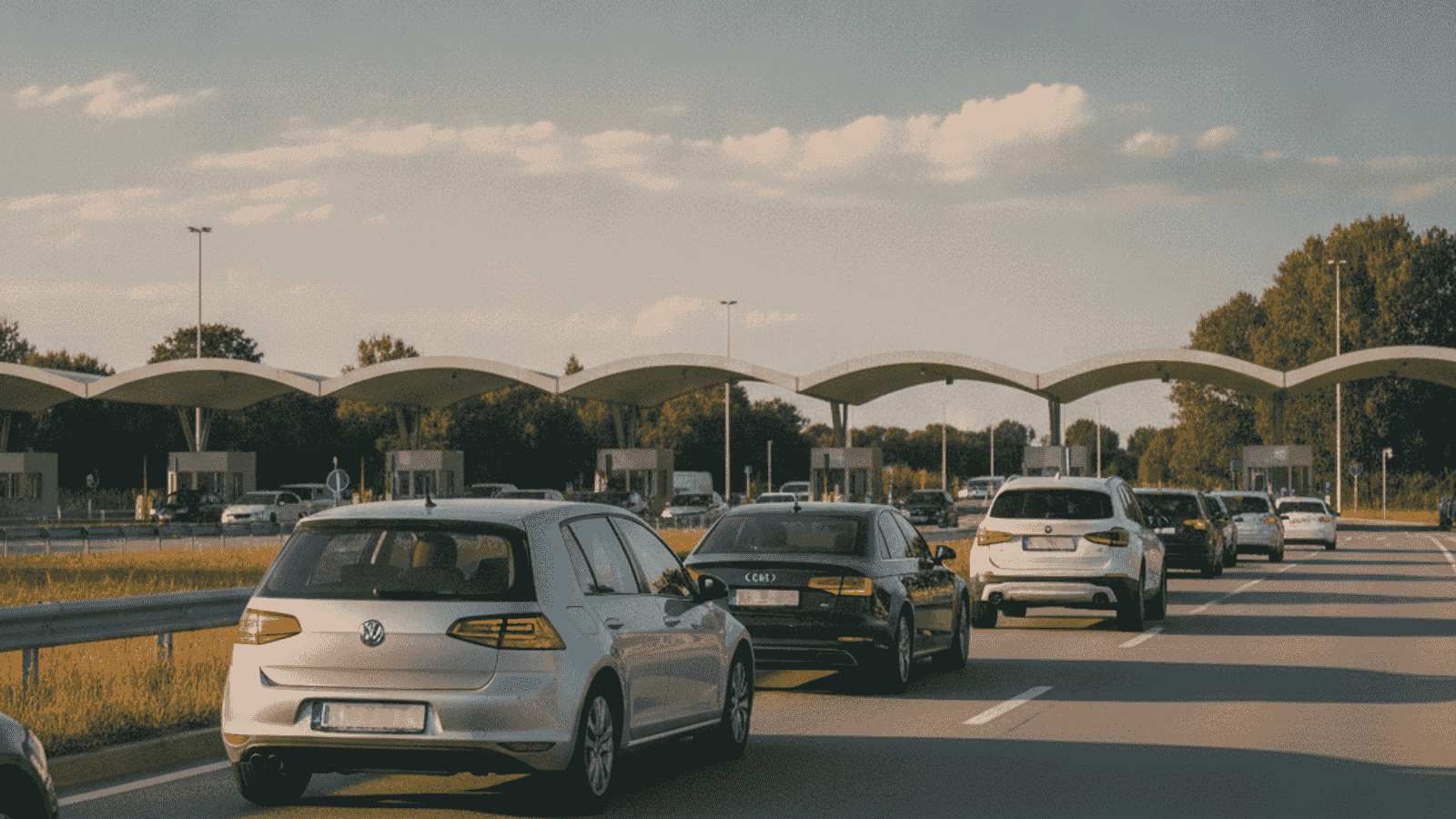
From 10 April 2026, every driver from Bosnia and Herzegovina who crosses the border into Croatia, and thereby into the Schengen area, goes through a new procedure. Instead of a stamp in your passport, the border officer scans your biometric passport, takes a facial photograph and fingerprints of four fingers. The data enters a central EU database called the Entry/Exit System, or EES for short. The system is fully operational at all external Schengen borders, and for BiH drivers that means one thing: crossing into Croatia is no longer just queuing up and showing a document.
This analysis was prepared by the Auto Gas Gaga portal from Banja Luka, based on official EU sources, regional media reports and the experiences of drivers who have crossed the BiH-Croatia border since April 2026.
Table of Contents
- What Is EES and Why BiH Drivers Need to Know
- What Crossing the Border With EES Looks Like
- Biometrics at the Border: Fingerprints and Facial Photo
- The 90-Day Rule Within 180 Days and What EES Checks Automatically
- How Long Are Waits at the BiH-Croatia Border in Summer 2026
- Six Tips to Cut Your Border Waiting Time
- Which Border Crossings Are Least Congested
- Children, Old Passports and Travel Documents
- ETIAS From Late 2026 and the Next Step
- Frequently Asked Questions
- Related Articles
What Is EES and Why BiH Drivers Need to Know
EES is a digital entry/exit recording system for nationals of third countries, including BiH, at the external borders of the Schengen area. It has replaced the physical passport stamping that was in place for decades. Instead of a date stamp, the system now records the exact date and time of entry, the traveller's biometric data, and the remaining days of stay under the 90-out-of-180-day rule.
The European Commission states that the system began a phased rollout on 12 October 2025 and became fully operational at all Schengen borders on 10 April 2026. For BiH drivers this specifically means that every time you cross into Croatia, your passport is scanned electronically and your biometric data are entered into the EU database. There is no longer any doubt about how many days you have spent in the Schengen area, because the system counts automatically.
The reason for its introduction is clear. The EU wants more precise control over who enters and exits the Schengen zone, how long they stay, and whether they comply with the 90-day limit. For BiH drivers who regularly travel to the coast, go shopping in Croatia or take business trips, this means that every day spent in any Schengen state feeds into a single counter. It does not matter whether you entered via Croatia, Hungary or Slovenia - all days are added to a single Schengen counter.
What Crossing the Border With EES Looks Like
Crossing the border with EES looks different from before April 2026. Instead of a quick passport check and a stamp, the procedure now involves several steps that take place at the border booth itself.
The border officer takes your biometric passport and scans it. The system automatically verifies the data from the chip in the passport. Next, a facial photograph is taken, usually by a camera mounted on the counter or in the booth. Finally, fingerprints of four fingers of the left hand are captured on a dedicated scanner.
How Long Does First-Time Biometric Processing Take
On your first encounter with EES, the complete procedure takes 60 to 90 seconds per traveller. This includes passport scanning, the facial photograph and fingerprint capture. On every subsequent crossing the system already holds your biometric data, so the procedure takes 15 to 30 seconds because only the entry or exit record needs updating.
That sounds fast on paper, but multiply 60 to 90 seconds by every passenger in a car and every car in the queue, and it becomes clear why multi-hour waits build up at certain crossings. A family of four on their first crossing means four to six minutes on biometrics alone, without counting document and vehicle checks.
Biometrics at the Border: Fingerprints and Facial Photo
Biometrics are the core of the EES system and what sets it apart from the old way of crossing the border. Instead of a stamp that is easy to forge or that becomes illegible over time, biometric data are unambiguous.
The system captures a facial photograph and fingerprints of four fingers of the left hand. The data are stored for three years in the central EU database. This means that fingerprints taken once are valid for all subsequent crossings within that period, since only the entry or exit date needs updating. If your passport expires in the meantime and you obtain a new one, biometric data are recaptured because they are tied to a specific document.
Do Children Have to Provide Fingerprints
Children under 12 do not provide fingerprints but are photographed. Children aged 12 and over go through the full procedure just like adults. It is important to note that every child must have their own biometric passport, regardless of age.
The passport must be biometric - the one with a chip, recognisable by the symbol on the cover. Additionally, the passport must be valid for at least three months beyond the planned return date. If your passport expires in two months and you are planning a ten-day holiday, you will not be allowed to cross the border. This is not a new rule, but EES now checks it automatically and without exceptions.
The 90-Day Rule Within 180 Days and What EES Checks Automatically
The 90-day rule within a 180-day period is not new, but until EES it was hard to enforce precisely. Border officers manually counted stamps in the passport, which left room for errors and sometimes for more lenient checks. Now the EES system automatically calculates how many days you have spent in the Schengen area over the last 180 days and displays the exact remaining count on the officer's screen.
What Happens if I Exceed 90 Days of Stay in the EU
If a traveller exceeds 90 days of stay, EES registers it automatically. The next time you attempt to cross the border, the system flags it to the officer and entry may be refused. In April 2026, Croatia refused entry to more than 3,000 travellers in a single day precisely because they had exceeded the permitted stay. Many of them were unaware they had already used up all 90 days, because they only counted longer stays and forgot that single-day crossings count as well.
This is particularly important for BiH drivers who frequently travel to Croatia. Weekend shopping in Zagreb, a week at the seaside, daily crossings for work, visits to relatives in Slavonia - it all adds up to the same counter. A driver who makes several short trips between January and June can easily use up 90 days without realising it. The day you only crossed the border for fuel or coffee counts the same as a day on a seven-day holiday.
The practical advice is simple: keep a record. Write down or photograph your entry and exit dates. Do not rely on memory. There are also free apps for tracking the 90/180-day rule (search for "Schengen calculator" on your phone) that automatically calculate how many days you have left. If you see you are approaching the limit, postpone your next trip or shorten your stay.
How Long Are Waits at the BiH-Croatia Border in Summer 2026
Since the introduction of EES in April 2026, waiting times at BiH-Croatia border crossings have increased significantly. The system is new, the procedure takes longer than before, and crossing infrastructure was not designed for individual biometric processing of every traveller.
In May 2026, waits of up to 10 hours were recorded at the Izacic and Maljevac crossings (Una-Sana Canton). Residents of Bihac, Cazin and Velika Kladusa reported situations where they spent 20 to 30 hours at the border during extended weekends. These are extreme cases, but they illustrate how much the situation has worsened compared with the pre-EES period.
In spring and early summer 2026, waits of one to three hours were reported at Gradiska, Kostajnica and Brod, while at western Bosnian crossings the waits were considerably longer. Summer brings additional pressure as the number of crossings multiplies.
It is important to understand that these waits are not a problem at just one crossing. The EES procedure takes time at every Schengen crossing, so queues form at all BiH-Croatia border points. The difference is that smaller crossings have fewer booths, so the queue builds faster, but it also moves faster when the total number of cars is lower.
BIHAMK and HAK regularly publish the status of border crossings. Before setting off, check the current situation on their websites or apps, because it changes from hour to hour.
Six Tips to Cut Your Border Waiting Time
You cannot avoid the border wait entirely, but you can reduce it significantly with smart planning.
Travel outside peak hours. Friday afternoon and Sunday afternoon are the worst times. If possible, set off on a Tuesday or Wednesday. If you must travel at the weekend, leave early in the morning, before six o'clock. Queues typically form after nine.
Choose a crossing with less traffic. Everyone knows about Gradiska and Izacic, but there are crossings that are far less congested. Instead of Gradiska, consider Donja Gradina or Jasenovac. Instead of Izacic, try Licko Petrovo Selo. You will not always have that option, but when heading to the coast with a flexible schedule, an alternative crossing can save several hours.
Prepare your documents in advance. Before you reach the booth, all passports should be in one place, open to the photo page. That sounds trivial, but when a family of four rummages through bags for passports in front of the booth, precious time is wasted for everyone behind them in the queue.
Fill up before the border. Do not head to the border with an empty tank thinking you will refuel in Croatia. Waiting for hours in a queue in the heat burns fuel (the air conditioning runs, the engine idles). By the same logic, bring water and snacks, especially if travelling with children. If you want to know how to prepare your car for summer to avoid a breakdown in exactly these situations, check out our guide.
Use BIHAMK and HAK apps to monitor wait times in real time. These services publish the current status at all crossings, so you can check which one has the shortest queue before setting off and adjust your route.
Avoid public holidays and long weekends. Christmas, New Year, Bayram, May holidays, Easter, the first weekends of July and August - these are all dates when queues are longest. If you can shift your trip by one day in either direction, the difference can be dramatic.
Which Border Crossings Are Least Congested
Which BiH-Croatia Border Crossing Has the Shortest Wait
The answer to which crossing is quickest changes from day to day, but some patterns are consistent.
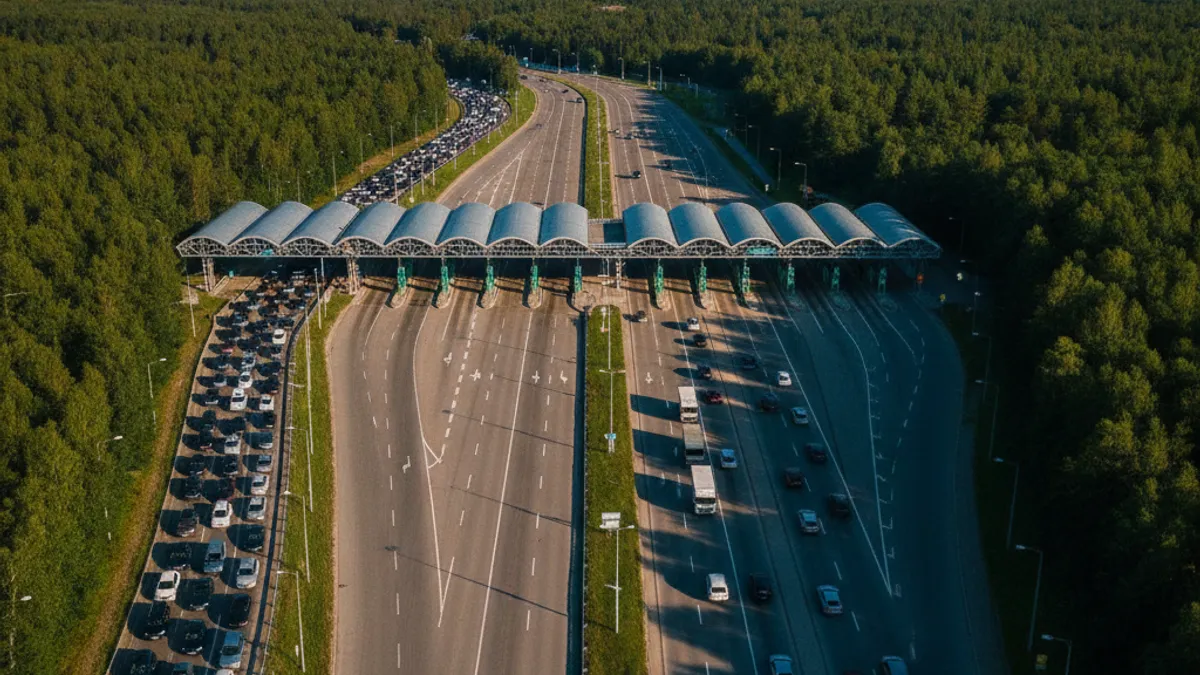
The crossings with the highest traffic and longest waits are typically Gradiska (Bosanska Gradiska/Nova Gradiska), Izacic/Licko Petrovo Selo and Maljevac/Velika Kladusa. These are the main crossings on routes towards Zagreb, Dalmatia and Slavonia, so they naturally attract the most traffic.
Crossings with moderate traffic are usually Kostajnica, Brod/Slavonski Brod and Orasje. Waits there are shorter, but can still reach one to two hours during peak times.
Less-used crossings that may be faster include Donja Gradina/Jasenovac, Svilaj (when operational) and some smaller crossings in the far south towards Dubrovnik. Bear in mind that smaller crossings have fewer booths, so if a queue does form it moves more slowly.
For drivers from Banja Luka heading to the coast, the classic route via Gradiska leads to the most congested crossing. Alternatives include Brod or Kostajnica, depending on the final destination. For Dalmatia (Split, Makarska), even a route via Montenegro can be faster when queues at the northern crossings run to several hours. For a detailed overview of routes and required equipment, see our guide to driving from BiH to the coast.
Children, Old Passports and Travel Documents
Children travel on their own biometric passport, without exception. Registering a child in a parent's passport is no longer valid for crossing a Schengen border. Every child, regardless of age, must have their own document.
Older passports without a chip (non-biometric) are not accepted for entry into the Schengen area. If you have a passport without the biometric symbol on the cover, you must replace it before travelling. For BiH citizens this means visiting the police administration (MUP) for a new biometric passport. Plan ahead, because during the summer months queues for passport issuance can stretch over several days.
A driving licence, ID card and other documents do not replace a passport for crossing a Schengen border. BiH citizens enter the Schengen area exclusively with a biometric passport.
For drivers travelling by car, besides a passport you also need the standard documents: a vehicle registration certificate, a green card insurance policy covering Croatia, and a driving licence. We have covered a detailed list of documentation and mandatory equipment for travelling to Croatia in a dedicated guide.
ETIAS From Late 2026 and the Next Step
ETIAS Cost and Application for BiH Citizens
Late 2026 is expected to see the introduction of ETIAS (European Travel Information and Authorisation System), an electronic travel authorisation for the Schengen area. This is a separate system from EES, but it directly complements it.
An ETIAS authorisation costs EUR 20 per person. Those under 18 and over 70 are exempt from the fee. The authorisation is valid for three years or until the passport expires, whichever comes first. The application is submitted online, and processing takes 24 to 96 hours in standard cases.
Once ETIAS comes into effect, BiH drivers will need an approved ETIAS authorisation before travelling, in addition to a biometric passport. This means trip planning will require an extra step: applying for ETIAS at least a few days before departure. Without an approved authorisation you will not be able to cross the border, even if you have a valid biometric passport and have not used up your 90 days.
There is no precise launch date for ETIAS yet. The system has been postponed multiple times, so follow official EU channels for exact information. When it goes live, the application process will be available on the official EU website.
The introduction of EES is the biggest change at EU borders in the last 20 years. For BiH drivers it specifically means longer waits, mandatory biometrics, automatic tracking of the 90/180-day rule and the need for more careful trip planning.
The system will not get easier on its own. Border infrastructure will improve over time, but biometrics are here to stay. What you can control is preparation: timely passport renewal, tracking your days of stay, choosing the right crossing and travel time, and keeping up with current information on wait times.
Before a longer trip, apart from passports and documents, inspect the car itself. Summer is demanding for both the vehicle and the occupants. If you are planning a drive from BiH to the coast or further into the EU, also check our guide to preparing your car for summer, because a breakdown on the road combined with hours of waiting at the border can turn a holiday into a nightmare.
Frequently Asked Questions
What is the EES system and when did it come into effect?
EES (Entry/Exit System) is a digital system for recording entries to and exits from the Schengen area for nationals of third countries, including BiH. It has replaced passport stamping. The system began a phased rollout on 12 October 2025 and became fully operational at all Schengen borders on 10 April 2026.
How long does the EES procedure take at the border?
On the first crossing the procedure takes 60 to 90 seconds per traveller, as fingerprints and a facial photograph are captured. On every subsequent crossing it takes 15 to 30 seconds, since the system only updates the entry or exit date.
Do children have to provide fingerprints at the border?
Children under 12 do not provide fingerprints but are photographed. Children aged 12 and over go through the full procedure just like adults. Every child must have their own biometric passport.
What happens if I exceed 90 days of stay in the Schengen area?
EES automatically registers the overstay. The next time you attempt to cross the border, the system flags it to the officer and entry may be refused. In April 2026, Croatia refused entry to more than 3,000 travellers in a single day because of overstays.
Which BiH-Croatia border crossing has the shortest wait?
It changes from day to day, but the longest waits are typically at Gradiska, Izacic and Maljevac. Shorter waits are found at Kostajnica, Brod and Orasje. For the current situation, use the BIHAMK or HAK apps.
When does ETIAS start and how much does it cost?
ETIAS is expected in late 2026, but there is no precise date yet. The authorisation costs EUR 20 per person; those under 18 and over 70 are exempt. It is valid for three years or until the passport expires.