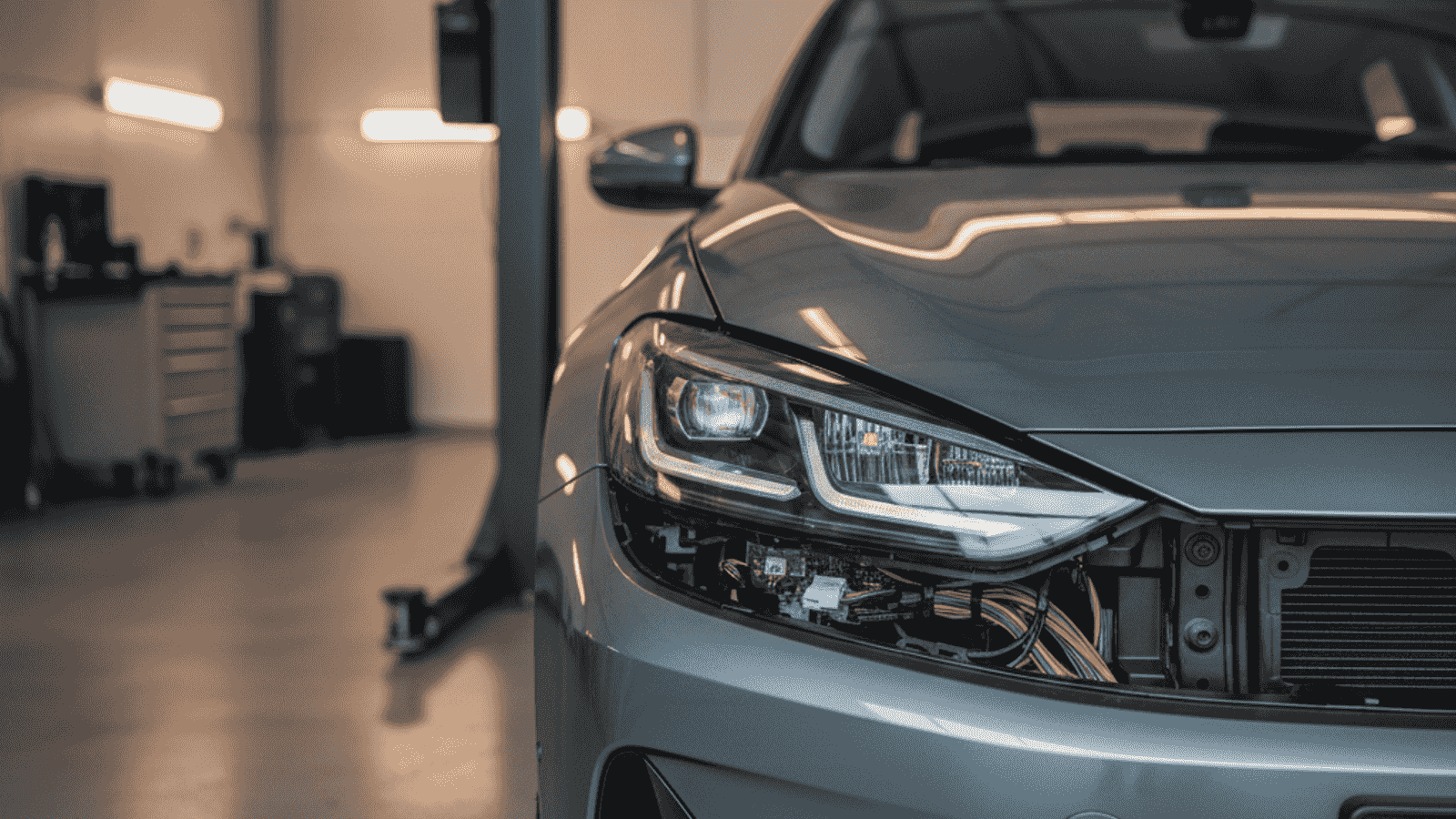
A light bump in a car park, a stone from the road hitting the windscreen, a bumper scraping a bollard. Ten years ago, the cost of repairing a modern car in situations like these was predictable and rarely exceeded a few hundred euros. Today, that same "minor" collision easily reaches 3,000 to 8,000 EUR, depending on the model. The reason is not workshop greed but the technology packed into every square centimetre of the front end.
This analysis was prepared by Auto Gas Gaga workshop in Banja Luka, based on ADAC data and years of hands-on experience servicing European marques.
Table of Contents
- What Has Changed: 12,757 Parts in a Single Car
- LED and Matrix Headlights: From Bulb Swaps to 3,000 EUR Bills
- Windscreen With a Camera: A Replacement That Requires Calibration
- Bumper Full of Sensors: Why Repair Has Given Way to Replacement
- ADAS Calibration After Every Repair
- ADAC Figures: Collision Costs Across Three Models
- What This Means for BiH Drivers With an Average-Age Car
- How to Manage Repair Costs Wisely
- Frequently Asked Questions
- Related Articles
What Has Changed: 12,757 Parts in a Single Car
The number of components in the average car has risen by 52.5% in just one decade. In 2012 a typical car contained around 8,360 parts. By 2022 that figure had grown to 12,757. Behind every new part is a concrete function: blind-spot sensor, radar for adaptive cruise control, traffic-sign recognition camera, heated parking sensors, autonomous city braking.
Each of those components needs space, wiring, control modules, and software support. The result is a car that is objectively safer and more comfortable than ever, yet whose front fascia has become one of the most expensive zones to repair. Replacing a front bumper once took six hours of labour. Today, on a modern car with a full suite of sensors, the same job requires up to 32 hours because the technician must remove, replace, and recalibrate every sensor and camera mounted in that zone.
This is not a design flaw. It is the consequence of the front end no longer being just sheet metal and plastic but one of the densest electronic zones in the entire vehicle. And modern car repair costs track that density directly: the more technology packed into one area, the more expensive and time-consuming the repair.
LED and Matrix Headlights: From Bulb Swaps to 3,000 EUR Bills
Fifteen years ago, replacing a headlight on a Golf 4 or Astra G was a half-hour job costing a few dozen euros for an aftermarket bulb. The headlight was a plastic housing with a reflector and a halogen bulb inside. Disassembling it, swapping the bulb, or even the entire unit was routine for any workshop.
Today a headlight on a modern car is a computer-controlled assembly containing dozens of LED elements, lenses, cooling fans, and a control module that communicates with the rest of the vehicle electronics. Matrix headlights go a step further: each LED can be individually switched on and off so the system selectively illuminates the road without dazzling oncoming drivers. The technology is outstanding for night driving but dramatically raises the cost of replacement.
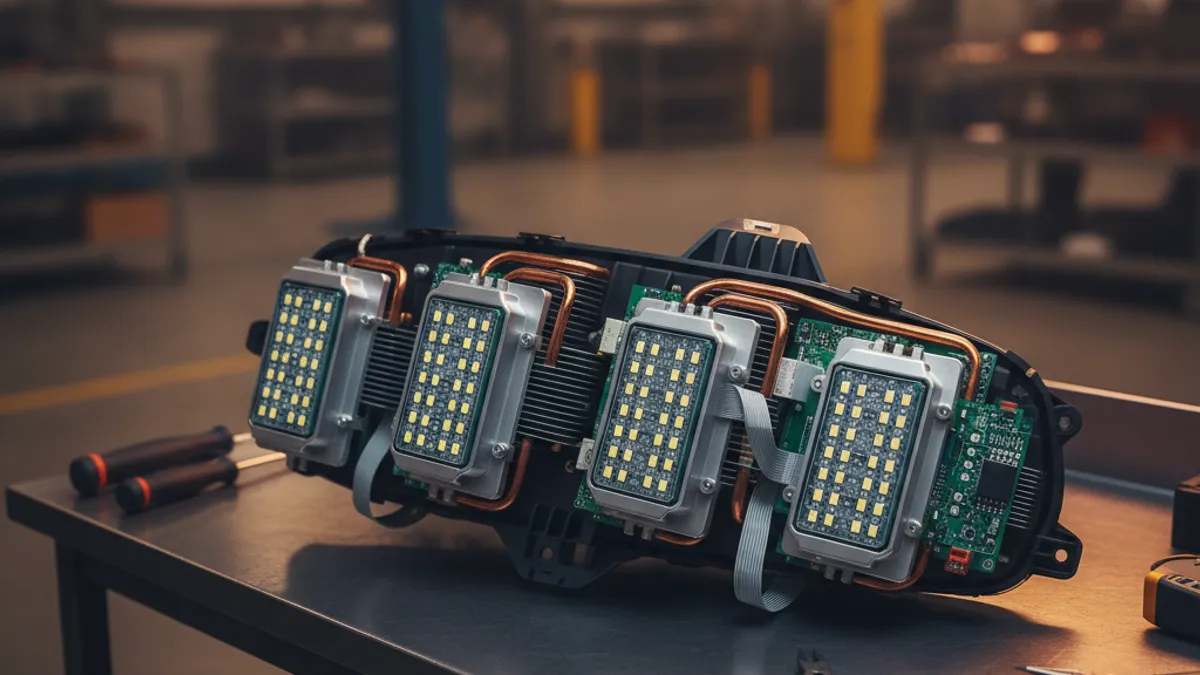
According to the ADAC study from February 2026, a single laser headlight for a BMW 330e costs around 3,300 EUR net per unit, roughly 6,470 KM. That is the price of the part alone, excluding fitting and calibration. On a newer-generation Opel Corsa, a complete LED headlight is still not cheap but considerably more affordable. The situation on a Renault Clio is similar.
The price of the headlight is only part of the problem. Matrix and laser headlights are often bonded rather than bolted together. This means a damaged element inside the headlight cannot be replaced individually; the entire assembly must go. ADAC praised Mercedes for introducing screw-fastened LED lenses instead of bonding, allowing replacement of just the damaged component. But that is currently the exception, not the rule.
For BiH drivers buying used cars, the choice between original and aftermarket parts becomes critical when it comes to headlights. A functional LED headlight from a breaker's yard can significantly cut the bill. But an aftermarket LED headlight for a newer model often does not exist, and when it does, there is no guarantee of compatibility with automatic levelling and the matrix system. If an LED headlight is damaged in a collision, the bill climbs fast and there is little room for negotiation.
Windscreen With a Camera: A Replacement That Requires Calibration
The windscreen used to be a piece of glass that could be replaced for a few hundred euros. Today, on most cars built from 2018 onwards, a small camera sits behind the rear-view mirror and feeds the entire ADAS system: adaptive cruise control, lane-keeping assist, autonomous city braking, and traffic-sign recognition.
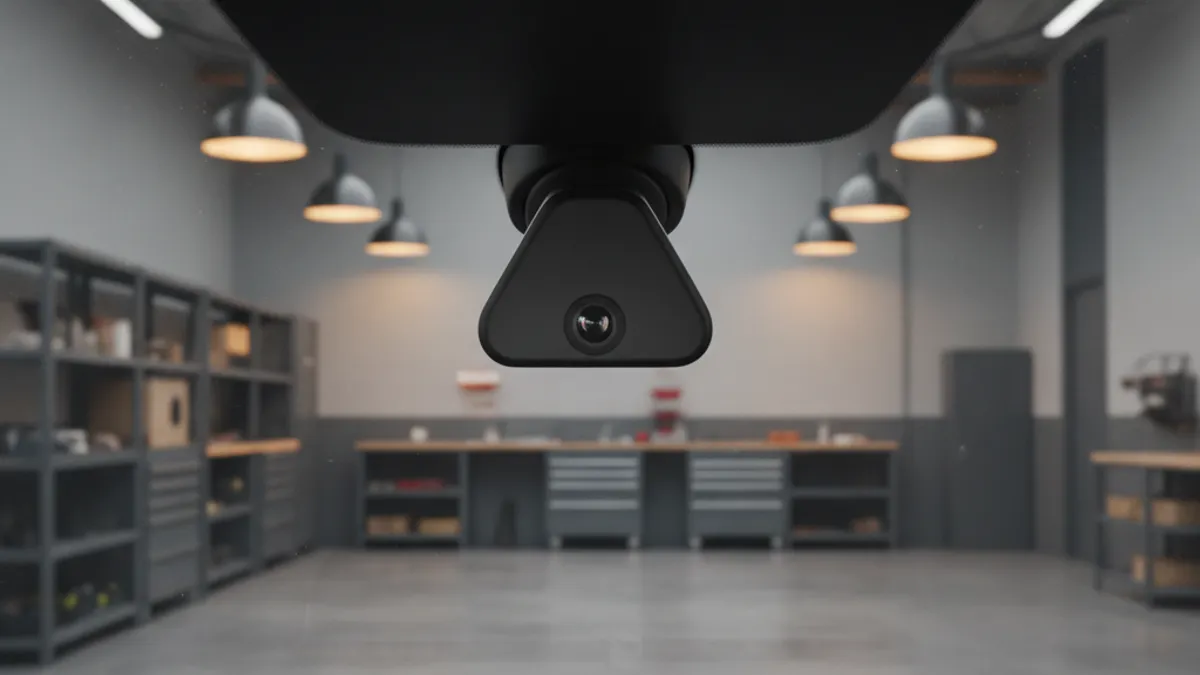
According to ADAC data, windscreen replacement on modern cars costs between 955 and 2,474 EUR (roughly 1,870 to 4,850 KM), depending on the model. On an Opel Corsa, the windscreen with calibration comes to 1,385 EUR (around 2,715 KM). On a Renault Clio, 1,708 EUR (around 3,350 KM). On a BMW 330e, 1,619 EUR (around 3,175 KM).
Replacing the glass itself is only half the job. After fitting the new windscreen, calibration of the camera behind it is mandatory. Static calibration, performed using a calibration target panel under controlled conditions, takes 30 to 60 minutes and costs 80 to 250 EUR (160 to 490 KM). Dynamic calibration, which requires a test drive on an open road following a precisely defined protocol, takes 1 to 2 hours.
Without calibration, the autonomous braking system, lane-keeping assist, and adaptive cruise control will not function reliably. In some cases the car will display an error after the glass is replaced and disable those systems until calibration is completed. This is not an optional step; it is a mandatory procedure that directly affects driving safety.
Bumper Full of Sensors: Why Repair Has Given Way to Replacement
On older cars a damaged front bumper could be straightened, filled, and repainted. The repair was cheap and quick. On modern cars the bumper serves as a mounting platform for an array of electronic components: parking sensors, front radar for automatic braking, blind-spot sensors on the sides, and sometimes small lidar modules.
When such a bumper is damaged in a collision, repairing the plastic itself is not the issue. The issue is that every sensor fitted to the bumper must sit in a precise position, because even a millimetre of deviation can compromise the radar's detection angle or the accuracy of the parking sensors. In practice this means a damaged bumper is often not repaired but replaced outright, and every sensor is refitted and recalibrated.
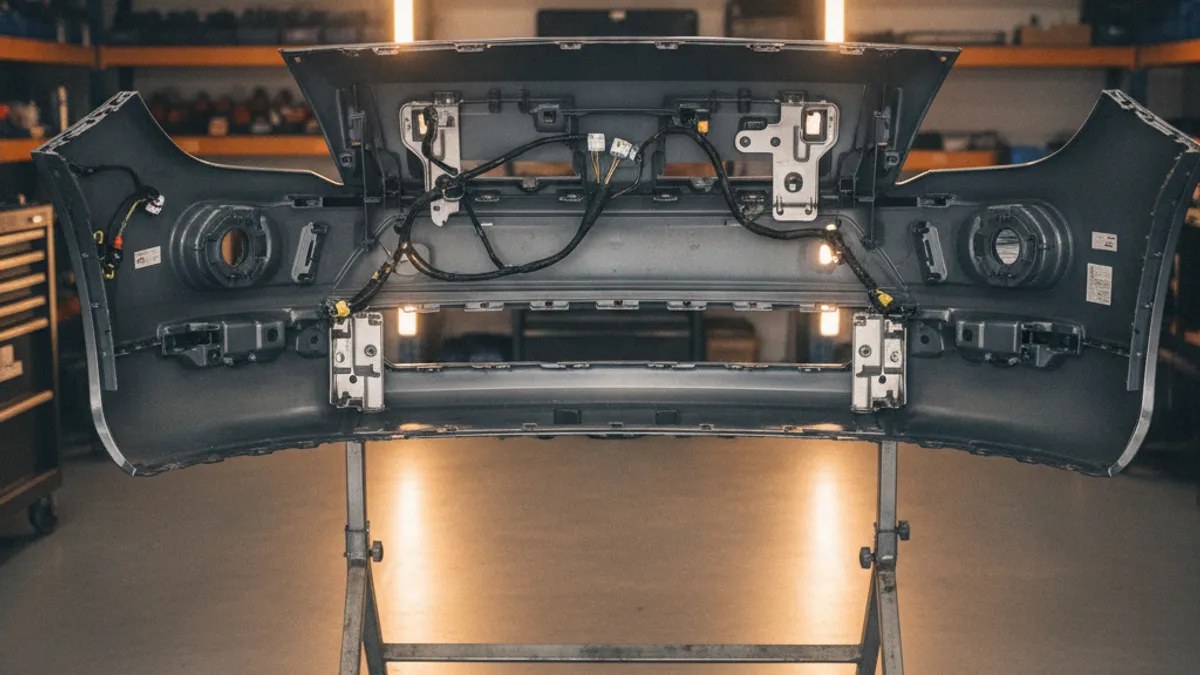
The cost of the bumper itself depends on the model, but the real burden comes from labour hours. A job that once took six hours now takes up to 32 because each sensor requires individual removal, installation in the new bumper, and calibration. For a driver involved in a minor collision, the repair bill looks disproportionately large relative to the visible damage. A scratch on plastic does not look like damage worth several thousand marks, but behind that plastic sits electronics that costs exactly that much.
ADAS Calibration After Every Repair
ADAS stands for Advanced Driver Assistance Systems. These include adaptive cruise control, lane-departure warning, autonomous city braking, traffic-sign recognition, and blind-spot assist. All of these systems rely on cameras, radars, and ultrasonic sensors distributed across the vehicle.
Calibration of these systems has become a mandatory step after virtually every repair involving the front end, the windscreen, or the side panels. There are two types of calibration. Static calibration is performed in the workshop using a precision calibration target placed at an exactly defined distance from the vehicle. Dynamic calibration requires a test drive on an open road under precisely defined conditions, from speed to the quality of road markings.
The need for calibration effectively means that even a straightforward windscreen or bumper replacement automatically triggers one or two additional steps in the workshop. Each of those steps costs time and money, but no responsible workshop can skip them. A car with uncalibrated ADAS is a car whose safety systems do not work properly, and the driver may not notice until those systems are genuinely needed.
Why Calibration Is Mandatory on Newer Models
From 2018 onwards, virtually every new car sold in Europe comes with at least one ADAS camera behind the windscreen. Euro NCAP safety tests from that year require autonomous city braking for the highest rating, so manufacturers fitted the system to nearly every model, from city hatchbacks to saloons. The result: there is no longer a "simple" car on which a windscreen replacement does not trigger calibration. Even the Dacia Sandero, a byword for affordability, comes with an ADAS camera in its latest generation.
ADAC Figures: Collision Costs Across Three Models
In February 2026 ADAC published a study that precisely breaks down front-end repair costs for three popular models. The scenario is identical for all three: a minor frontal collision damaging the headlight, bumper, and windscreen. Here are the results.
| Model | Front-end repair | Windscreen replacement | Total in KM (rate 1.96) |
|---|---|---|---|
| Opel Corsa | 5,070 EUR | 1,385 EUR | approx. 12,650 KM |
| Renault Clio | 4,578 EUR | 1,708 EUR | approx. 12,320 KM |
| BMW 330e | 7,829 EUR | 1,619 EUR | approx. 18,520 KM |
The differences are significant, but the pattern is clear. The Opel Corsa and Renault Clio belong to the small city-car segment, yet front-end repairs on both exceed 4,500 EUR. The BMW 330e with laser headlights reaches nearly 8,000 EUR for the front-end collision alone. Add the windscreen replacement with calibration and the total BMW bill exceeds 9,400 EUR, or over 18,400 KM.
These figures come from Germany and reflect local labour rates and original-part prices. In BiH labour rates are lower, but original parts are equally expensive because they are imported at the same prices. With aftermarket parts there is room for savings on plastic and glass, but not on sensors and electronics, where the original part often has no adequate substitute.
In the same study ADAC called on manufacturers to stop using unnecessary prestige technologies where a simpler solution does the same job. A laser headlight on a city car, bonded so that it cannot be disassembled, is an example of a design decision that directly raises repair costs with no clear benefit to the driver.
What This Means for BiH Drivers With an Average-Age Car
The average vehicle age in BiH is 17 years, and over 38% of the fleet is older than 23 years. Euro 5 and Euro 6 vehicles, which generally come with full ADAS equipment, account for just 38% of the 1,295,224 registered vehicles. This means most BiH drivers currently drive cars on which repairs are still relatively straightforward and affordable.
But the situation is changing faster than it may seem. Every used car entering BiH from Germany, Austria, or Switzerland today is likely under ten years old and comes with LED headlights, a camera behind the windscreen, and sensors in the bumper. A driver upgrading from a Golf 4 to a Golf 7 or from an Astra G to an Astra K encounters an entirely different repair-cost structure for the first time.
That transition demands a change in mindset. On an older car a minor collision was an inconvenience costing a few hundred marks. On newer models the same collision can cost half the purchase price of the car. Understanding why helps ensure that price is not perceived as a workshop rip-off but as a realistic cost of the technology that same car uses to keep you safe on the road.
For drivers planning to buy a newer used car, this cost structure should form part of the overall budget assessment. A cheaper purchase price does not automatically mean cheap ownership. A car with matrix headlights and full ADAS equipment carries a corresponding price tag for every future repair.
How to Manage Repair Costs Wisely
Modern car repair costs cannot be avoided, but they can be brought under control in several ways.
Comprehensive insurance becomes a more serious investment than it used to be. In Germany, premiums for new customers rose 16% between 2024 and 2025, with a three-year increase of around 50%, partly driven by rising repair costs. In BiH comprehensive cover is not compulsory and most drivers do not carry it, but for newer cars with expensive electronics the annual premium can be a fraction of a single unplanned collision bill.
The choice of aftermarket parts plays a role for mechanical and plastic components. An aftermarket bumper or windscreen can significantly reduce the total repair cost. But for electronic components, sensors, and cameras, aftermarket parts often do not exist or lack guaranteed calibration compatibility, making the original part the only realistic option.
Defensive driving takes on a new dimension. On an older car minor bumper damage was a cosmetic issue. On a newer one it is a potential bill running to several thousand marks. Careful parking, maintaining distance in traffic, and avoiding unnecessary risk have never made more financial sense.
The choice of workshop also matters. ADAS calibration requires specific equipment and trained technicians. Not every workshop does this work, and not every one does it equally well. Poor calibration is worse than none at all, because it gives the driver a false sense of security. When choosing a workshop for a newer car, ask specifically whether they have the equipment for static and dynamic calibration of your model. Book an inspection before you start chasing the cheapest quote.
Frequently Asked Questions
Why is windscreen replacement on a new car so expensive?
The windscreen on a modern car is not just glass. Behind the rear-view mirror sits an ADAS camera that powers automatic braking, lane-keeping assist, and adaptive cruise control. After replacing the glass, camera calibration is mandatory, costing an additional 80 to 250 EUR. The glass itself is also more expensive because it must be optically precise for the camera to function correctly.
Can LED headlights be repaired instead of replaced?
In most cases, no. LED and matrix headlights are bonded assemblies with integrated electronics, fans, and lenses. When one lens or module is damaged, the entire headlight unit typically needs replacing. Mercedes has introduced screw-fastened lenses as a positive exception, but with most manufacturers full headlight replacement remains the only option.
How much does ADAS camera calibration cost in BiH?
In European workshops calibration costs 80 to 250 EUR (160 to 490 KM), depending on the calibration type and vehicle model. Prices in BiH vary as the market is still maturing. It is essential that the workshop has the correct calibration equipment for your specific model, as universal tools do not cover all manufacturers equally.
Do older cars still have cheaper repairs?
Yes, cars manufactured before 2015 generally lack ADAS cameras, matrix headlights, and bumper-mounted radars. Repairs on them are structurally simpler and less expensive. However, as these vehicles leave service and are replaced by newer imports, that advantage is gradually disappearing.
Is comprehensive insurance worth it for a newer used car?
For cars under ten years old with LED headlights and ADAS equipment, comprehensive insurance becomes financially justified. A single frontal collision on such a car can easily exceed the value of several years' premiums. Check offers from insurance companies in BiH and compare the annual premium against the potential cost of one serious repair.
Can aftermarket parts reduce the cost of modern car repairs?
For mechanical and plastic parts such as bumpers, sills, and covers, aftermarket parts can significantly reduce costs. For electronics, sensors, and cameras, aftermarket parts rarely exist or lack guaranteed compatibility with the manufacturer's calibration protocols. In those cases the original part remains the only reliable option.