
May 2026 delivered a result the BiH new car market had not seen in three years: 1,221 new passenger and light commercial vehicles registered in a single month. It sounds like a record until you look at the second line of the same report, which shows 6,776 used vehicles registered in the same period. A ratio of one new car to 5.5 used ones says more about the state of the market than any headline.
This analysis was prepared by Auto Gas Gaga workshop in Banja Luka, based on official IDDEEA first-registration data and years of hands-on experience servicing vehicles of all powertrain types.
Table of Contents
- How Many New Cars Are Actually Registered in BiH
- Who Dominates: The Brands and Models Leading the Way
- The Shifting Powertrain Mix: Petrol, Diesel and Hybrid in Numbers
- The 1-to-5.5 Ratio and Why BiH Is Far from Europe
- Chinese Brands: Rise and Fall in the Same Year
- What This Means for Used Car Owners Today
- When Will Today's New Hybrids Become BiH Used Cars
- Frequently Asked Questions
- Related Articles
How Many New Cars Are Actually Registered in BiH
Before we go further, an important note: the figures you will see in this article are not retail sales to private buyers. IDDEEA records first registrations, which include fleet vehicles, diplomatic registrations and rent-a-car fleets. The actual number of cars an ordinary citizen buys at a dealership is lower. But the trend these figures reveal is reliable, because it is measured using the same methodology month after month.
In the first five months of 2026, a cumulative total of 4,956 new passenger vehicles were registered in BiH. For a market of 3.2 million inhabitants, that means one new car is registered for roughly every 645 residents in half a year. Over the same period, tens of thousands of used vehicles crossed the border or changed hands domestically.
The May result of 1,221 new registrations is the best single-month performance in three years, but it should not be read as a demand spike that will reshape the market. It represents a recovery to levels that were normal before 2023, not some new wave of mass new-car buying. BiH remains one of Europe's smallest new-car markets per capita.
When you line up the monthly figures side by side, new car sales in BiH fluctuate from month to month, but the general trend is modest growth tracking the broader economic recovery in the region. January and February are traditionally weaker months, March and May bring seasonal upticks, and the summer months are unpredictable because they depend on how many fleet orders happen to land in that window.
Who Dominates: The Brands and Models Leading the Way
The BiH new car market in 2026 has a clear leader, and there is no drama about it: Skoda holds 21.8% of the total market with 1,080 cumulative registrations in the first five months. That means every fifth new car in BiH is a Skoda, and the Octavia is by far the best-selling individual model in the entire country.
Behind Skoda, the ranking looks like this:
| Position | Brand | Registrations (Jan-May 2026) | Trend |
|---|---|---|---|
| 1. | Skoda | 1,080 | Stable dominance |
| 2. | Volkswagen | 606 | Second, but well behind |
| 3. | Toyota | 523 | Growing through hybrid range |
| 4. | Opel | Up +63% | Biggest growth of any brand |
| 5. | Dacia | Down -39.5% | Sharp drop in registrations |
Opel recorded the biggest growth of any brand in BiH: +63% cumulatively in the first five months and +67.5% in April 2026 alone. That is a significant shift for a brand that had spent years in the shadow of the VW Group on this market. The reasons for Opel's growth are a combination of a refreshed line-up (the new Astra and Mokka attract buyers who previously looked at Peugeot or Citroen) and a more aggressive approach from its dealer network in BiH.
At the other end of the spectrum, French brands are posting steep declines: Dacia -39.5%, Peugeot -27.7%, Renault -25.8%. The Dacia drop is particularly interesting because the brand had until recently been synonymous with an affordable new car in the region. It is possible that some buyers who previously chose Dacia have switched to Chinese brands or to Opel's range, which has been positioning itself more aggressively in the same price segment of late.
Toyota takes third place with 523 registrations and is growing thanks to its hybrid offering. The Yaris Cross, Corolla Cross and RAV4 Hybrid are models that attract buyers who want to switch to hybrid without risk, since Toyota is globally synonymous with reliable hybrid powertrains. For the BiH buyer thinking long-term, a Toyota hybrid is one of the few new cars that stands a realistic chance of being straightforward to service even a decade from now.
Why the Skoda Octavia Is the Best-Selling New Car in BiH
The answer is more practical than it first appears. The Octavia offers the combination a BiH buyer is looking for: a spacious interior that can serve as both a family car and a workhorse, proven engines that local mechanics know inside out and for which spare parts are readily available, and a price that undercuts VW Group rivals for a similar level of equipment. In a country where a car is bought to last at least ten years, that combination beats image and marketing every time.
An additional factor is habit and experience. Skoda has a strong service network in BiH, drivers share their experiences with each other, and the Octavia has been proving itself for decades as a car that holds its value on the secondary market. When you buy a new car and think about how much you will sell it for in five or seven years, that information plays a big part in the final decision. A 2018 or 2019 Octavia with decent mileage and a full service book still commands a price that justifies buying new, which is not the case with every brand in this segment.
The Shifting Powertrain Mix: Petrol, Diesel and Hybrid in Numbers
This is perhaps the most important data point for anyone driving a used car today, because it tells you what kind of vehicles will be arriving on the secondary market in three to five years. The powertrain mix of new cars registered in BiH in the first five months of 2026 looks completely different from what you see on the streets:
| Powertrain | BiH share (Jan-May 2026) | EU share (Q1 2026) | Difference |
|---|---|---|---|
| Petrol | 39.5% | 22.6% | BiH +16.9 pp |
| Diesel | 29.9% | 7.7% | BiH +22.2 pp |
| Hybrid (HEV + PHEV) | 27.4% | 48.1% | BiH -20.7 pp |
| Gas (LPG/CNG) | 2.4% | - | Only BiH records this |
| Electric (BEV) | 0.8% | 19.4% | BiH -18.6 pp |
Three things jump out immediately. First, diesel in BiH still accounts for nearly a third of new registrations, while in the EU it has fallen to single digits (7.7%). Second, hybrids have risen to 27.4% but remain far below the EU average of 48.1%. Third, electric cars in BiH are a statistical rounding error at 0.8%, whereas in the EU they make up a fifth of the market.
In the EU, petrol and diesel combined fell from 38.2% to 30.3% in just one year during Q1 2026. In BiH, those two powertrains still account for 69.4% of new registrations. A gap of nearly 40 percentage points between BiH and the EU illustrates how far apart the two markets are in terms of product mix, purchasing power and infrastructure for alternative powertrains.
It is noteworthy that BiH records 2.4% of new registrations running on gas (LPG/CNG), a category that EU statistics do not even track separately. This speaks to the specificity of a market where gas remains a relevant powertrain choice, especially for drivers covering higher annual mileages who want lower fuel costs.
How Far BiH Lags Behind the EU on Hybrid Share
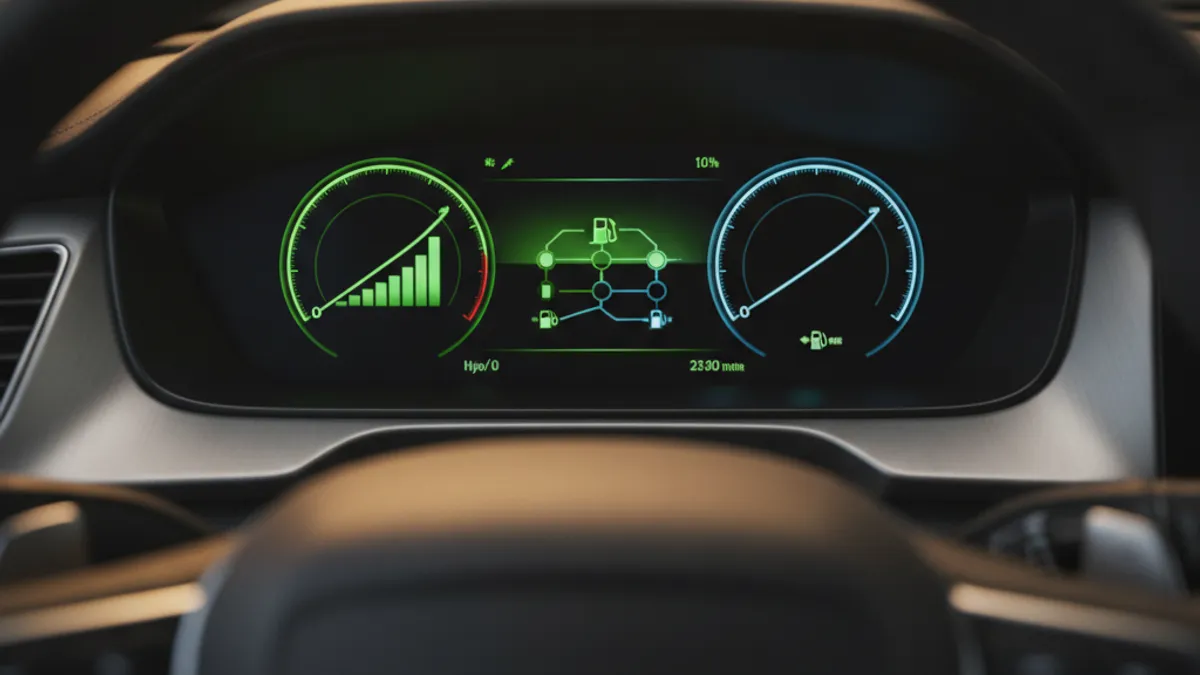
The gap is significant: the EU market has 48.1% hybrids, BiH 27.4%. But the direction of travel is the same, just shifted by a few years. What the EU is buying today, BiH buys in three to five years. And what the EU buys in three years arrives in BiH as a used car in seven to ten.
For the BiH driver currently buying a used car, this means that in five years there will be significantly more used hybrids on the market than today. The question is only how ready the service infrastructure will be for them. Hybrid powertrains require specialist diagnostics, training for working on high-voltage systems and access to parts that cannot yet be sourced on every corner.
The decline of diesel from a third to below 30% of new registrations is a trend that has been continuing from previous years. In about a decade, the supply of newer-production used diesels will be considerably thinner than it is now. If you currently drive a diesel, it pays to know how to maintain it so it lasts longer, because a like-for-like replacement will be more expensive and harder to find.
The 1-to-5.5 Ratio and Why BiH Is Far from Europe
In May 2026, for every new car registered in BiH there were 5.5 used ones. That ratio speaks to a fundamental market structure that will not change any time soon, regardless of wage growth or shifts in the new-vehicle offering.
Between 2019 and 2025, the number of registered vehicles in BiH grew by 23%, while average net wages rose by 43%. Logic would suggest that rising wages lead to higher new-car purchases. But the correlation between wage growth and new-car buying is weak, just 0.23 according to Bloomberg Adria's analysis. This means drivers are not channelling higher earnings into new cars but into other needs or into better-quality used ones.
Why Wages Rise but New Car Sales Do Not
The reason is structural and multi-layered. The average wage in BiH covers roughly one third of the price of the most affordable new car in standard trim. In western European countries, the average annual salary covers half or more of a new car from the same segment. That difference in purchasing power means a new car remains an investment requiring a five-to-seven-year loan for most BiH citizens, or simply does not happen.
On top of that, a cultural factor plays a role. In BiH there is a deeply rooted view that a new car is a luxury, not a necessity. Most drivers would rather buy a used car for the same monthly loan instalment and be debt-free in three years than take a new car on a seven-year finance plan. That pragmatism is not unreasonable in an economy where job security is not guaranteed over the long term.
The average age of vehicles in BiH stands at 17 years, with 1,295,224 registered vehicles (an increase of 61,441 in 2024). The EU average is 12.7 years. That gap of nearly five years is not just a statistic. It means BiH drivers keep cars longer, buy older used vehicles, and invest in maintaining what they already own rather than replacing it with something new.
This data point has a flip side. An older vehicle fleet means greater demand for quality servicing, a higher throughput of parts through the market, and a more important role for local workshops across the whole chain. In our workshop we see it every day: the majority of cars passing through the service bay are between 10 and 20 years old, have covered between 150,000 and 300,000 kilometres, and their owners are looking for dependable maintenance that will keep them on the road safely for several more years. That is the BiH automotive reality, and it will not change because of one record month of new-car sales.
Chinese Brands: Rise and Fall in the Same Year
The story of Chinese brands on the BiH market in 2026 has come full circle in just two months. In April, Chery, Geely and DFSK together reached 6% market share, double the figure from the previous year. It looked like the start of a new trend that would reshape the product mix.
Then May arrived. A total of 22 registrations: Chery 11, Geely 6, DFSK 5. A drop from 6% market share to the margins in a single month raises questions about how firmly those brands have actually gained a foothold and how much the April spike was driven by one-off fleet orders or promotional campaigns.
Chinese Cars in BiH: Yes or No
For the BiH buyer, Chinese brands present the same dilemma as any new market entrant: an attractive price set against unknown long-term reliability and questions about after-sales support. On a market where a car is bought with the intention of lasting ten years or more, the service network and parts availability play a decisive role in the purchase decision.
Current data shows these brands are far from being a relevant force on the BiH market. One good month and one bad month do not make a trend. At least three to four quarters of stable results are needed before one can speak of a genuine market breakthrough. Moreover, the secondary market for Chinese cars in BiH is practically non-existent, meaning the buyer has no idea what resale value the car will hold in five or seven years. On a market where a new car is bought with one eye on future resale, that is a significant risk factor that should not be overlooked.
An additional barrier is service infrastructure. For Skoda, Volkswagen or Toyota, every town in BiH has at least one mechanic who knows those cars inside out. For Chery or Geely, the situation is entirely different. Specialist parts have to be ordered in, diagnostic tools are rare, and hands-on experience with those engines and gearboxes is minimal. That does not mean those cars are bad, but it does mean the owner takes on a risk that does not exist with established brands.
What This Means for Used Car Owners Today
All the figures outlined above have practical consequences for drivers currently running used cars or planning to buy one in the next few years.
Skoda's dominance in the new market means that in three to five years a new generation of Octavias with modern engines and equipment will arrive on the secondary market. For used car buyers, that is good news because Skoda parts are affordable and mechanics know them well. The Octavia already holds its value on the secondary market, and that tendency will continue because demand for this model is constant.
The rise of hybrids to 27.4% of new registrations means used hybrids will gradually become a normal offering rather than an exotic one. But that requires preparation on the service-infrastructure side. Hybrid systems have specifics that demand training and equipment most local workshops currently lack. At Auto Gas Gaga we are tracking this trend and preparing to service hybrid powertrains, because it is clear this will be a growing need among our clients in the years ahead.
The decline of diesel below 30% of new registrations means a gradual shrinking of the newer used-diesel pool in a few years' time. If you currently drive a diesel and plan to replace it with the same powertrain type in future, you should expect a narrower selection and that prices of well-maintained used diesels will probably remain stable or even rise, since supply will fall faster than demand.
LPG conversion remains a relevant choice for BiH drivers, especially on petrol engines. With gas accounting for 2.4% of new registrations and petrol dominating at 39.5%, a significant proportion of new cars entering the market are candidates for aftermarket LPG system installation in three to five years. For drivers who already own a petrol car, LPG remains the quickest way to halve fuel costs without changing vehicles.
When Will Today's New Hybrids Become BiH Used Cars
The life cycle of a new car in BiH follows a predictable pattern. The car is bought new, used for three to five years by the first owner (often a fleet or company), then moves to the secondary market or is exported. In BiH, most used cars arrive from imports with two to three previous owners and 100,000 to 200,000 kilometres on the clock.
This means the hybrids being sold in the EU today with a 48.1% share will start arriving on the BiH used market around 2029-2031. But those sold in BiH with a 27.4% share are mostly in the hands of first owners and will reach the domestic secondary market between 2029 and 2033, depending on whether the buyer is private or fleet.
For a workshop, that means we have a window of three to four years to prepare for servicing hybrid systems at a volume that is small today but will grow. For the buyer, it means there is no need to rush into a hybrid if the service infrastructure in your area is not yet keeping pace. It is better to buy a well-maintained petrol or diesel car whose faults local mechanics know by heart than a hybrid for which nobody within a 50-kilometre radius has the diagnostic equipment.
When you are considering buying a used car, regardless of powertrain, check the vehicle's documented history before putting down a deposit. Using the chassis number, carVertical pulls data on actual odometer readings by date, recorded accidents, the number of previous owners and indicators of theft or total loss. We consider it an essential step when buying any used car. When paying for the report you can use the code GAGA and get a 20% discount.
Frequently Asked Questions
How many new cars are sold per year in BiH?
Based on data for the first five months of 2026, BiH is on track to register around 12,000-13,000 new passenger vehicles for the full year. These are first registrations that include fleet, diplomatic and rent-a-car vehicles, so the actual number of private purchases is lower.
What is the best-selling new car in BiH in 2026?
The Skoda Octavia is the clear best-seller. Skoda as a brand holds 21.8% of the market with 1,080 registrations in the first five months, and the Octavia accounts for the dominant share of that figure.
What share do hybrids hold among new cars in BiH?
Hybrid vehicles (HEV and PHEV combined) account for 27.4% of new registrations in BiH for the first five months of 2026. That is a significant increase on previous years but still well below the EU average of 48.1%.
Is it worth waiting for a used hybrid instead of buying a diesel?
It depends on your location and service infrastructure. Used hybrids from EU imports will start arriving in larger numbers from 2029-2031. Until then, a well-maintained diesel with a familiar service network remains the more practical choice for most BiH drivers.
Why did Chinese cars see a sudden drop in sales in BiH?
Chinese brands reached 6% market share in April 2026 but fell to just 22 registrations in total in May. The reasons are not entirely clear, but such swings usually point to one-off fleet orders or the end of promotional campaigns rather than a stable growth trend.
What is the average age of cars in BiH?
The average vehicle age in BiH stands at 17 years, with a total of 1,295,224 registered vehicles. The EU average is 12.7 years. That gap of nearly five years reflects a market structure where most drivers buy and keep older used cars.