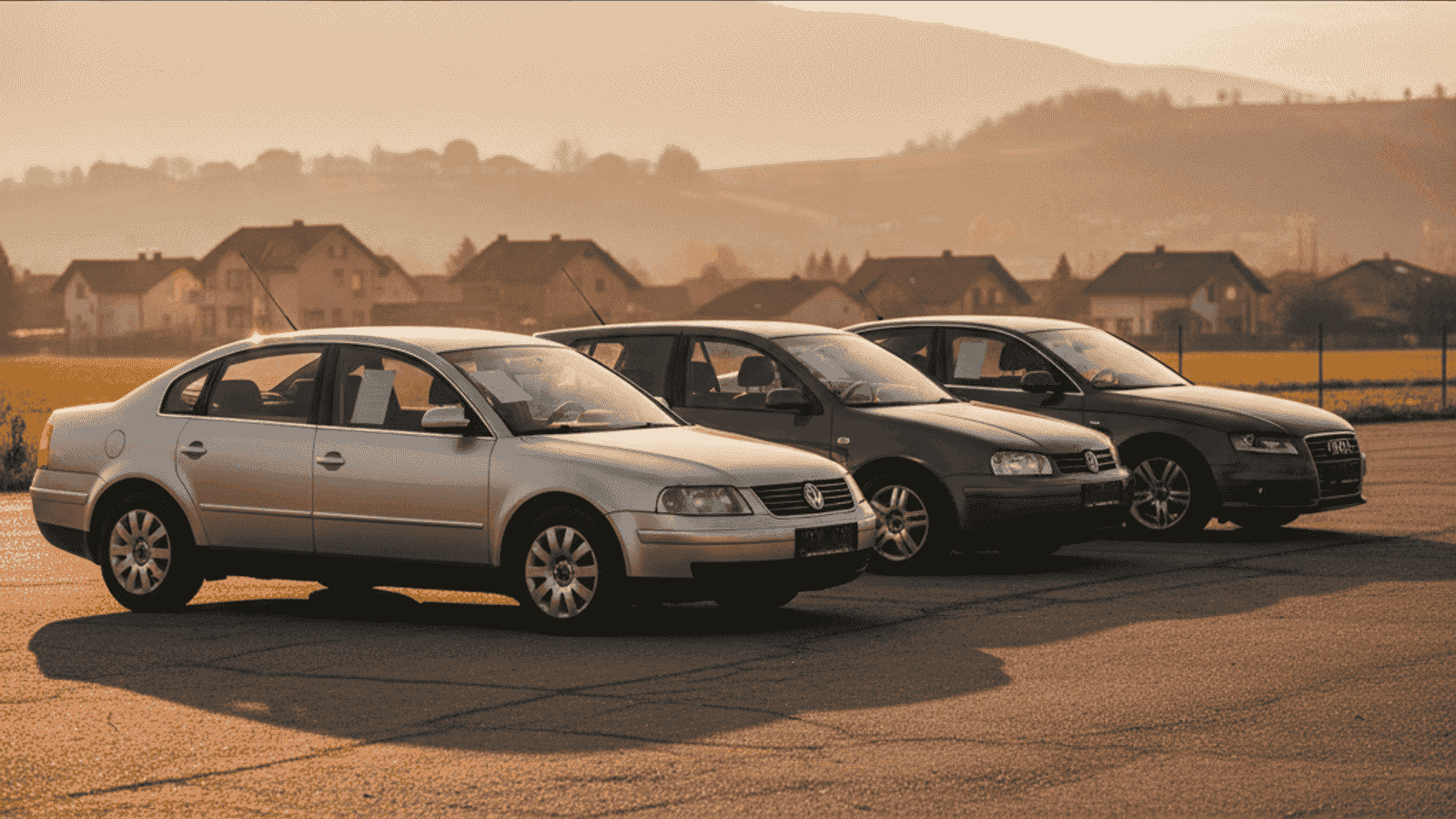
In May 2026, a figure made its way through domestic and regional media that stuck in every used-car buyer's mind: according to carVertical's 2025 research, a full 84% of vehicles imported from Germany have some form of recorded damage in their history. This is not a claim that all those cars are defective, but it is a claim that eight out of ten German-sourced used cars carry a record of a collision, repair, odometer rollback, or total-loss write-off. The used car from Germany and the topic of damage have become inseparable, and that information is something a buyer in Banja Luka must know before signing a contract.
This guide was prepared by Auto Gas Gaga workshop in Banja Luka, based on public data from carVertical research, BiH market statistics, and years of experience with pre-purchase inspections of imported vehicles.
Table of Contents
- 84% from Germany: What the carVertical Figure Actually Says
- Why Germany Dominates the Import Market
- Risk by Country of Origin
- Odometer Rollback and Other Less Visible Fraud
- BiH Market Conditions and Why Germany Remains the Main Source
- What to Look for on the Vehicle Before Paying
- Documentation Check and VIN History
- When the Price Screams a Warning
- Frequently Asked Questions
- Related Articles
84% from Germany: What the carVertical Figure Actually Says
carVertical is a Lithuanian company that produces vehicle history reports by pulling data from over a thousand databases across 37 European countries, plus the USA, Mexico, and Australia. Only reports with at least three odometer readings per vehicle qualify for their annual transparency index, which eliminates noise and makes figures comparable year on year. The specific data point for 2025 states: of the total sample of vehicles imported from Germany into Croatia, 84% have some form of recorded damage in their history.
It is important to understand what "recorded damage" means in practice. It is not necessarily a write-off. It is any record that has, at some stage, passed through an insurance company, a service centre that logged it, an accident registry, or a leasing company that requested a damage assessment. A minor bumper repair from a car-park incident that was properly fixed at a German workshop counts towards that 84% just as much as a car that was written off and then reassembled. The figure, therefore, does not say that 84% of German used cars are defective — it says that 84% have a history that the buyer must read before putting down a deposit.
For a BiH buyer the message is simple: the assumption that a used car from Germany is "inherently clean" because it comes from a Western market is no longer accurate. Germany is indeed the largest source of used cars for BiH, but it is simultaneously the market through which cars with the highest number of recorded damage events flow. Those two facts coexist, and the buyer must keep both in mind. The trend is additionally concerning: the previous carVertical analysis for 2024 showed 77.3% for Germany, indicating that the percentage is climbing year on year — even allowing for possible minor methodology refinements.
Why Germany Dominates the Import Market
The reason is straightforward: the German used-car market is the largest in Europe, the most liquid, and has the densest network of dealerships, lease returns, and insurers that sell vehicles after a damage assessment. That is good news for supply — at any given moment, German platforms list hundreds of thousands of used cars across every segment and budget. The bad news is that this network also channels cars that have been recorded as damaged or written off in Germany, and they end up as "German imports" at Balkan car lots, where the history often does not arrive before the car does.
The total-loss system in Germany works as follows: an insurance company declares a vehicle a write-off if the repair cost exceeds a certain percentage of the market value. The owner receives a payout, and the wreck goes to auction, where traders buy it. Some of that stock gets repaired in Germany and re-enters normal circulation with a record in the carVertical database. Some is exported, most often towards Eastern and South-Eastern Europe, where it is repaired in quiet workshops and resold as a regular used car. In both cases, the loss event record remains in international databases and is retrievable via the chassis number.
This is also why the procedure for importing a used car from Germany must always include a history check, not just the paperwork that accompanies the car at the border. The German registration certificate and roadworthiness test tell you what the car currently is, but they do not tell you what the car has been through. Those two data points give the buyer completely different layers of assurance.
Risk by Country of Origin
The 84% figure for Germany only gains its full meaning in comparison with other source countries. carVertical data for 2025 paint the following picture:
| Country of Origin | Recorded Damage | Odometer Rollback |
|---|---|---|
| Germany | 84.0% | 1.7% |
| Belgium | 79.2% | 2.1% |
| France | 30.4% | 2.2% |
| Slovenia | 20.5% | 3.8% |
| Italy | 17.2% | 3.0% |
| Lithuania | not published | 8.2% |
| Poland | not published | 5.4% |
| USA | not published | 4.9% |
The table reveals two stories simultaneously. First, Germany and Belgium sit at the top for recorded damage history, which is partly a consequence of those two countries having the strongest reporting and logging system for every intervention. A car that passes through German insurance leaves a trail; a car that passes through Italian or French insurance often leaves a far less detailed trail — which does not mean it is any safer, only that less has been recorded.
The second story is odometer rollback: here Germany stands best in Europe at just 1.7%, while Lithuania (8.2%), Poland (5.4%), and the USA (4.9%) top the negative list. This matters for buyers considering used cars from transit countries — a car that is formally "from Germany" may have spent two or three years in Poland before being resold, and that is often where the odometer gets a second life.
The practical takeaway for a BiH buyer: the source "Germany" does not mean low risk. It means visible risk. That is good news, because visible risk can be checked and priced into the deal. Hidden risk — which you would face if you turned to less transparent markets — is far more dangerous. The worst combination is not a used car from Germany. The worst combination is a used car for which no history exists whatsoever.
Odometer Rollback and Other Less Visible Fraud
A collision is visually detectable. Odometer rollback is not. Combining two sets of statistics — European reports and our own experience from pre-purchase inspections — suggests that the reality in BiH looks like this: for every example with a damaged front end visible to the naked eye, there is another with an odometer showing 180,000 km when the car has actually covered closer to 280,000.
Technology helps fraudsters. Modern dashboards display mileage from several ECU modules that cross-check values, but cheaper OBD reset tools only strip the figure from the instrument cluster while other modules still retain the real value. This is also how carVertical and similar services detect fraud: if the dashboard shows 180,000 km but the ABS module recorded 235,000 km at a previous service, the system flags the discrepancy.

An experienced seller can hide a lot, but the vehicle's history is most easily verified via carVertical. Using the chassis number, it pulls documented history from international registries: actual odometer readings by date, recorded accidents, number of previous owners, and indicators of theft or total loss. We consider this mandatory before purchasing any used car imported from Western Europe, because the portion of fraud that is invisible to the naked eye is precisely what those records reveal. When paying for a report you can use the code GAGA for a 20% discount.
A report is not a substitute for a pre-purchase inspection in a workshop. These are two different lines of defence. The report tells you what the car has been through on paper. A workshop inspection tells you what the car is today, mechanically and structurally. Both checks complement each other; one does not replace the other.
BiH Market Conditions and Why Germany Remains the Main Source
To place the 84% figure in a BiH context, it helps to look at what our market currently looks like. In February 2026, 752 new passenger vehicles were registered in BiH against a total of 6,858 — a ratio of roughly one new car for every nine used ones. A buyer searching for a car in BiH in 2026 is effectively choosing among used vehicles. New cars represent a segment below 11% of the total market. The powertrain mix is trending towards hybrids (22.3%), petrol holds 41.6%, diesel 33.1%, and pure electric sits at just 0.8%.
Another important data point from the carVertical analysis: in Croatia in 2025, 66.1% of all checked vehicles were imports, with an average price of around 20,000 KM. The BiH market is smaller, but the structure is similar. The vast majority of used cars listed on olx.ba and at dealerships have crossed a border somewhere between Salzburg, Munich, Ljubljana, or Trieste. Among source countries, Germany is far ahead of all others, simply because a German used car offers the most choice in the 5,000–25,000 KM price range.
This means the recommendation "don't buy from Germany" effectively does not exist. The recommendation is: buy from Germany consciously. The statistics are not on your side — that is known. Additional money and hours must be invested in checking history and mechanical condition — that is known. And your negotiating position must factor in the risk the statistics reveal — that is also known. Anyone who buys a German used car with complete history in hand and a workshop inspection gets a good car. Anyone who buys one "on trust" is gambling against statistics that say eight out of ten chances are not in their favour.
What to Look for on the Vehicle Before Paying
Before a car reaches the border, most of the assessment is done visually and on the road. There are several spots and signs that a less diligent seller forgets about, but an experienced buyer always checks.
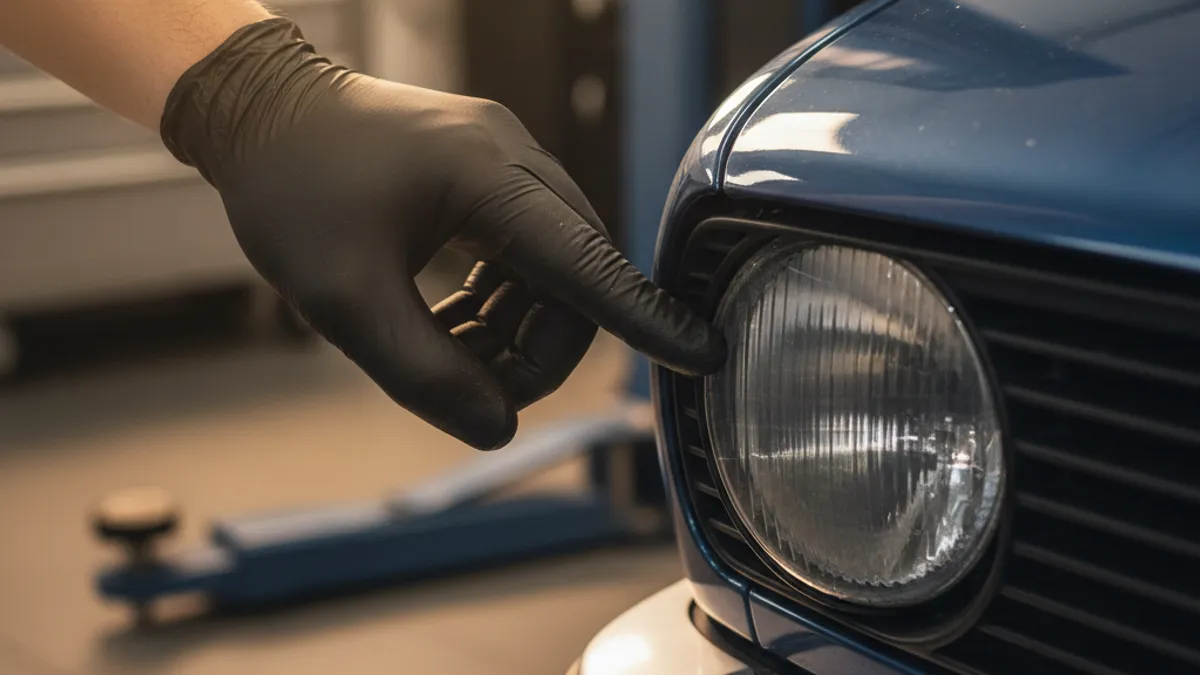
Panel gaps. If a car has had a frontal collision, the easiest tell is asymmetric gaps between the bonnet, wings, bumper, and headlights. Factory panel gaps are uniform and equal on both sides. A difference greater than two or three millimetres on one side versus the other means something was removed, straightened, or replaced. The same applies to the boot lid and rear bumper.
Paint colour and thickness. Professional paint-thickness gauges are inexpensive and portable. Factory paint thickness ranges from 80–180 micrometres, depending on the manufacturer and panel. If one body section reads 300+ micrometres, that panel has been resprayed. If readings vary between adjacent areas of the same panel, a localised repair and colour blend has likely been done. Check this on all doors, wings, bonnet, roof, and roof pillars.
Bonnet, wing, and door bolts. Factory bolts arrive with original paint in the bolt head. If a bolt has been turned, the paint in the head is cracked or the surface slightly marked. An untouched original bolt tells you the bonnet has never been removed; a scratched bolt says it has, and the buyer must ask why.
Welds and boot interior. Open the boot, lift the carpet, inspect the joints between the boot floor and the rear body pulls. Factory welds are regular, smooth, and evenly spaced. Subsequent welds, even when well finished, look "introduced": dense spots, uneven finishing, fresh black coating over the weld area. This is the clearest sign of a serious rear-end collision.
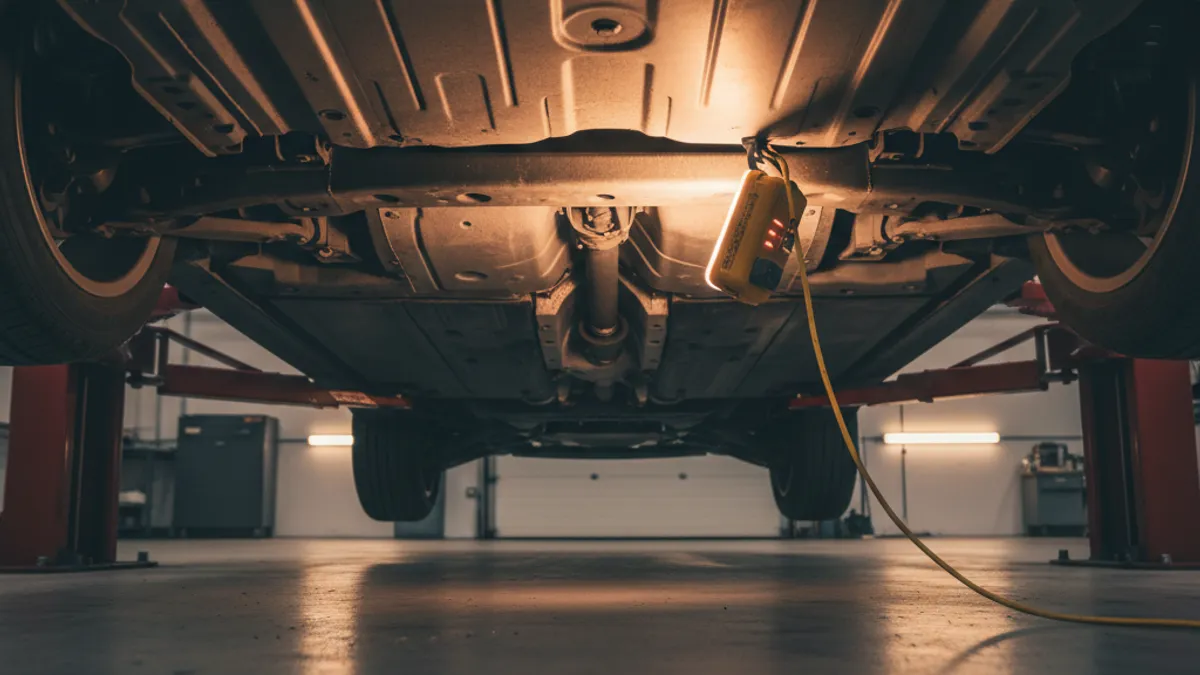
Underbody. A car on a two-post lift reveals what you cannot see from the car park. Impact marks on sills, boot-floor repairs, subsequent welds on the crossmember, fresh underseal coating hiding something: the lift shows all of this in five minutes. A pre-purchase inspection in a workshop is precisely that: fifteen minutes from underneath that can save you thousands of KM in later repairs.
Test drive. Drive at least 20 kilometres, a mix of urban and open-road driving. Listen to the clutch (slip under hard acceleration in a high gear indicates worn friction plates), check straight-line tracking (if the car pulls to one side on a straight road with hands loosely on the wheel, the geometry is out of spec or something is deformed), watch for vibrations at 100–120 km/h (often a sign of balance or CV-joint issues). The air conditioning must cool immediately, all lights must work, and all electronic controls must respond without delay.
Documentation Check and VIN History
A visual inspection gives you a picture of condition; a documentation check gives you a picture of history. This is where a BiH buyer makes the biggest mistake: satisfied with the German KFZ-Schein and ServiceHeft, assuming everything is in order, and heading straight to notarise the purchase agreement.
Chassis number in four locations. The original VIN is found on the engine-bay firewall, on the right A-pillar (often beneath a plastic trim), stamped into the floor under the driver's seat, and recorded in the documents. All four numbers must be identical. A difference of a single character, a plate with different engraving, or a plate held by screws instead of factory rivets: that is a reason to walk away on the spot.
COC document. The Certificate of Conformity is a document issued by the manufacturer for every vehicle and is not the same as the German registration. The COC confirms factory specification (engine, gearbox, weight, emission standard) and is required in BiH for homologation during import. If the seller does not have the COC and cannot obtain it, the car goes through additional homologation costs via a single-vehicle approval procedure, which means extra complications and delayed registration for the buyer.
ServiceHeft and digital service history. German cars from approximately 2015 onwards have a digital service history that an authorised dealer in BiH can retrieve from the manufacturer's database. A paper ServiceHeft helps but is not conclusive proof. The digital record is. Ask the seller for the name of the workshop that performed the last two services, then call that workshop and verify. If the seller refuses, there is a reason.
History report as the final check. Everything above you do yourself or with a mechanic. A carVertical or similar report takes five minutes and completes the picture: mileage readings by year, recorded accidents in international registries, number of previous owners and countries in which the car was registered, and indicators of theft or total loss. We consider this a fundamental layer of defence before any deposit changes hands.
When the Price Screams a Warning
There is one simple pattern we see regularly in the workshop: if a car in an advert is noticeably cheaper than similar listings for the same year and mileage, there is no such thing as "that's just how it's priced." The reason is there — it just is not in the advert.
Typical patterns to watch for:
- BMW and Audi with suspiciously close mileage for the year. carVertical data show that BMW as a brand carries 59.4% recorded damage, Audi 52.8%. Premium imports are not immune — quite the opposite. The more expensive a car was new, the greater the motivation to repair and resell it rather than write it off. A 2020 BMW 5 Series or Audi A6 with 60,000 km and a price 15% below the market range is suspicious, not a bargain.
- "Just imported, not registered in BiH" as a justification for a lower price. Sometimes this means the seller is saving on customs duty and VAT they would pay if importing in their own name. More often it means the car has not undergone a thorough inspection in BiH and the seller wants that not to happen before collecting payment. Insist on a pre-purchase inspection before paying — no exceptions.
- Service history "lost in the move." Any wording that justifies the absence of a ServiceHeft and digital history is a warning. A car without history should only be bought if the price difference is large enough to cover the risk you are taking — and it usually is not.
- Photos sent via WhatsApp instead of a physical viewing. A genuine deal withstands an in-person inspection and test drive. Pressure to "reserve with a deposit" before an inspection almost always means the seller knows something the buyer does not yet know.
When all of this is combined — statistics that say 84%, premium brands with over 50% recorded damage, a total-loss system that produces stock for Balkan car lots, and a market in which German imports dominate — it is clear that a buyer can no longer rely on gut feeling. You must rely on procedure: vehicle history check, pre-purchase inspection, documentation check, and test drive, in that order, before any deposit changes hands.
If you have found a car you are considering, the cheapest move before heading to the notary is an hour in a workshop with the car on a lift. Auto Gas Gaga performs pre-purchase inspections of imported vehicles regularly. Book an appointment or message us on WhatsApp with the listing link, and we will know what to pay special attention to before the inspection.
Frequently Asked Questions
Does 84% from Germany mean that many used cars are defective?
No. The 84% figure means that many vehicles have some record of damage in international databases. This includes everything from minor repairs after car-park dents duly reported to insurance through to serious collisions. The statistic does not speak to the current condition of the car but rather to the fact that the buyer must read the history before paying. A large proportion of those repairs were carried out professionally and the car is fine, but the buyer needs to know that and factor it into negotiations.
Is it safer to buy a used car from Italy, where only 17.2% have recorded damage?
The statistics look that way, but there is a catch. Italy has a weaker system for reporting insured damage compared to Germany and Belgium. A lower figure does not mean Italian used cars have fewer collisions. It means a smaller percentage of those collisions has been recorded in international databases. In practical terms, an Italian used car carries a similar or greater risk — that risk is simply less visible up front. A buyer is better off with visible history than invisible history.
How much does a vehicle history report cost and is it worth it?
carVertical offers individual reports and multi-vehicle packs. With the code GAGA you receive a 20% discount on the report. Compared to a car price of 15,000–25,000 KM and a potential hidden-damage repair that can run into thousands of KM, the cost of a report is negligible. We consider it an essential step before any used-car purchase, especially one imported from Western Europe.
What about cloned cars?
Cloned cars are a specific type of fraud where the chassis number and plates of a stolen or written-off vehicle are placed on another car of the same make and model. Detection requires a detailed physical check of the chassis number in all four locations in the car and cross-referencing with original documents. It is rarer but serious, and deserves a separate article. For now: if the chassis number on the plate looks different from the number stamped into the bodywork, end negotiations immediately.
Why do BMW and Audi have such a high damage percentage?
Premium brands are more expensive when new, which means insurance prefers to pay for a repair rather than a write-off. A greater number of logged repairs enters the statistics. The second reason is the profile of the typical owner — engine performance and rear-wheel or all-wheel drive translate to sportier driving and more collisions. The third reason is desirability on the secondary market. A damaged premium car gets repaired and resold faster than a damaged budget model because the margin covers the repair cost.
Can I do all the checks myself or do I need a mechanic?
You can do the visual inspection, paint-thickness measurement, and basic test drive yourself. A lift inspection, engine compression test, ECU diagnostics, and assessment of true mechanical condition you cannot do without a workshop. Best practice is two steps: first, you personally eliminate obviously poor offers based on external inspection and documentation, then take your top candidate to a mechanic for a full pre-purchase inspection. The cost of an inspection is less than a single repair you avoided.