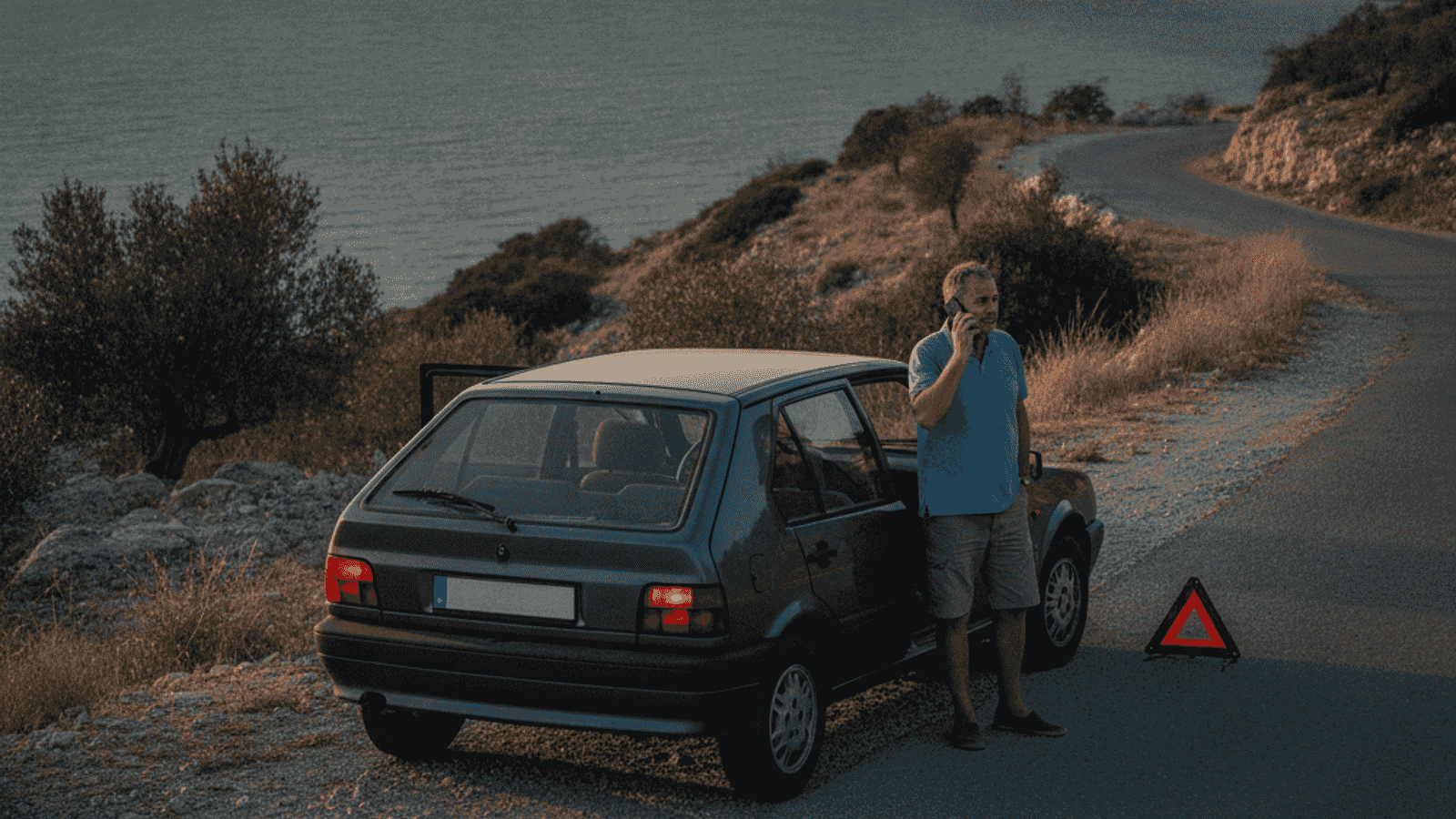
Your car just broke down abroad. You are standing by the road in Croatia, Montenegro or Greece, the engine is dead, your family is sitting in the car, and you have no idea who to call or what to expect. A car breakdown abroad happens to thousands of BiH drivers every year, especially in summer on the way to the coast. The difference between a stressful, expensive ordeal and a relatively smooth resolution comes down to one thing: whether you know the procedure or not.
This guide was compiled by the Auto Gas Gaga workshop in Banja Luka, based on the experiences of clients who returned from trips and shared what they went through.
Table of Contents
- The First Five Minutes After Your Car Breaks Down Abroad
- Who to Call from Abroad If You Are an AMSRS or BIHAMK Member
- AMSRS or BIHAMK: Which Membership Offers Better Value
- How Much Does Towing Cost Abroad Without a Membership
- 112 and Local Roadside Assistance Numbers by Country
- What the Green Card Covers and What It Does Not
- Getting Repairs Abroad and What to Watch Out For
- Mandatory Equipment for Driving Through Europe
- How to Get Home If Your Car Stays in a Workshop
- Frequently Asked Questions
- Related Articles
The First Five Minutes After Your Car Breaks Down Abroad
The first five minutes after your car breaks down abroad are the most important. What you do immediately after the breakdown determines your safety and affects everything that follows, from how quickly help arrives to how much you end up paying.
Before you think about repairs or towing, secure yourself and your passengers. Switch on your hazard lights immediately. If you are on a motorway or dual carriageway, do not exit on the traffic side. Everyone should get out on the side away from the lanes, ideally behind the crash barrier if there is one. Put on your reflective vest before you step out of the car. In most European countries the vest is mandatory and must be worn before exiting, not after. This is not a detail you can forget without consequences. Police in Croatia and Montenegro can fine a driver who is standing beside a car on the road without a vest.
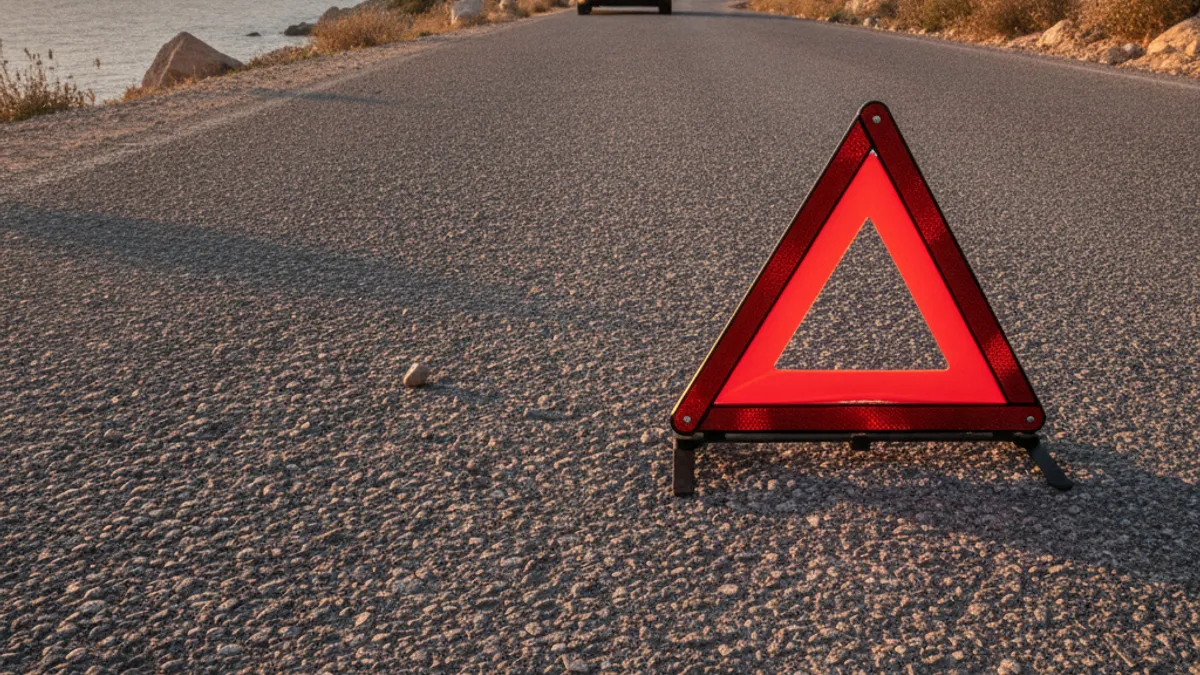
Place the warning triangle behind your vehicle. On an ordinary road, the triangle goes 30 to 50 metres behind the car. On a motorway in most countries the required distance is greater, often 100 to 150 metres, because vehicles approach at 130-plus km/h and need earlier warning. Do not place the triangle right behind your car; that does not give other drivers enough time to react.
Once you and your passengers are safe, you are in control of the situation. Now you can think about who to call. Write down or photograph your exact location: the name of the road or motorway, the exit number, the kilometre marker on the post if visible, or open Google Maps and send your location via message. The tow truck or motoring club will ask for a precise position, and every minute you spend explaining "somewhere between Split and Zadar" is a minute the car sits in the sun with your family.
Who to Call from Abroad If You Are an AMSRS or BIHAMK Member
If you are a member of one of the two major motoring associations in BiH, AMSRS or BIHAMK, you are entitled to assistance abroad. This is the cheapest and fastest way to deal with a car breakdown abroad, because instead of searching for a local tow truck and negotiating prices in a foreign language, one phone call sets the entire process in motion.
AMSRS, the Auto-Moto Association of Republika Srpska, offers two packages with international coverage. The EVROSTAR package costs 30 KM and covers BiH, Montenegro, Serbia, Croatia and continental Europe. Abroad, you receive free vehicle transport after an incident, towing to the nearest workshop worth up to 220 EUR and roadside assistance worth up to 200 EUR. The number to call from abroad is the MONDIAL Call Centre on +43 1 525 03 6948. The EVROPA package costs 75 KM and adds hotel accommodation up to 300 EUR if the car is damaged in an incident and requires repair, plus reimbursement for bus or rail travel back to your place of residence.
BIHAMK, the Automobile and Motorcycle Club of Bosnia and Herzegovina, has a CLASSIC package for 69 KM (62 KM online) covering Croatia, Serbia, Montenegro, Albania and Slovenia with up to 200 EUR for international assistance and up to 1,000 KM for medical reimbursement. The PLUS package at 139 KM (125 KM online) covers continental Europe with up to 200 EUR for assistance and up to 2,000 KM for medical reimbursement.
When you call, you will need your membership card number, your location (road name or GPS coordinates), a description of the breakdown, and the vehicle registration number. The operator on the other end arranges a local tow truck or mechanic and follows the case through to completion. Communication is in Bosnian or Serbian, which in a stressful situation on a foreign road is no small thing.
One warning that often flies under the radar: the AMSRS EVROSTAR package has a six-day waiting period for European coverage after purchase. This means you must buy the membership at least a week before your trip. Buying it at a petrol station on the day of departure will not help you if the car breaks down in Croatia the same day. The same applies to BIHAMK packages; always check the activation conditions before departure.
AMSRS or BIHAMK: Which Membership Offers Better Value
Both associations have their strengths, and the choice depends on where you travel most often and what your priorities are.
| Package | Price | Coverage | Towing | Medical reimbursement | Accommodation |
|---|---|---|---|---|---|
| AMSRS EVROSTAR | 30 KM | BiH, HR, CG, SRB, EU | up to 220 EUR | none | none |
| AMSRS EVROPA | 75 KM | BiH, CG, SRB, EU | up to 220 EUR | none | up to 300 EUR |
| BIHAMK CLASSIC | 62-69 KM | HR, SRB, CG, AL, SLO | up to 200 EUR | up to 1,000 KM | none |
| BIHAMK PLUS | 125-139 KM | Continental Europe | up to 200 EUR | up to 2,000 KM | enhanced services |
AMSRS EVROSTAR is significantly cheaper at just 30 KM and covers a wide area including continental Europe. For a driver who goes to the coast in Croatia or Montenegro once a year, this is sufficient. AMSRS EVROPA at 75 KM adds hotel accommodation and travel reimbursement, which is useful if you travel further afield, say to Italy, Austria or Germany, where repairs can take days and you need a way to get home.
BIHAMK CLASSIC at 62 to 69 KM covers a narrower region but includes medical reimbursement up to 1,000 KM, which AMSRS EVROSTAR lacks. For a family with children travelling to Croatia, the medical component can be decisive. BIHAMK PLUS at 125 to 139 KM covers all of Europe with a stronger medical component of 2,000 KM and enhanced replacement services.
If you only travel to Croatia and Montenegro once a year, AMSRS EVROSTAR at 30 KM is the most financially sensible choice. If you drive further across Europe or the medical component matters to you, BIHAMK PLUS provides the broadest coverage. Prices are current at the time of publication; check the latest at ams-rs.com and bihamk.ba respectively.
How Much Does Towing Cost Abroad Without a Membership
If you do not have a membership with either association and the car breaks down, you pay for towing out of your own pocket. Prices vary dramatically depending on the country, location and time of day.
How much does towing cost in Croatia without a membership
In Croatia, the most common destination for BiH drivers, HAK charges a flat fee of 42 EUR for diagnostics and roadside repair for up to 30 minutes of work and a 20-kilometre call-out radius. Loading and transporting the vehicle on a flatbed costs 56 EUR for the first 20 kilometres, with every additional kilometre charged at 1.50 EUR. Night work, Sundays and public holidays carry a 30 per cent surcharge. All prices quoted are before VAT, meaning the final bill is noticeably higher than the base rate.
In practice, towing over 50 kilometres in Croatia via HAK works out at 56 EUR base price plus 45 EUR for 30 additional kilometres, totalling over 100 EUR before VAT. If it is a Sunday or at night, add another 30 per cent. Including VAT, you can easily exceed 150 EUR for a relatively short distance.
Local private tow services in Croatia range from 40 to 100 EUR for local towing, but on motorways prices jump to 2 EUR per kilometre and above. Without a membership, towing off a Croatian motorway to a nearby town can easily exceed 150 to 200 EUR.
In Montenegro, prices are generally lower than in Croatia, but on the coast in summer, when demand is high, tow services raise their rates. In Greece, towing prices are comparable to Croatian ones, but the language barrier and distances between cities make everything more complicated. From Thessaloniki to Athens is over 500 kilometres, and towing over that distance costs more than many repairs.
A practical tip: before accepting any local tow service, ask for the total price upfront. Request confirmation in writing; even a text message will do. Some private operators on busy tourist routes quote one price over the phone and then add various surcharges on the spot for loading, night work, weekends or "urgency".
112 and Local Roadside Assistance Numbers by Country
If you are in any emergency situation, from a traffic accident to a serious breakdown blocking the road, call 112. This number works in all EU countries and connects you with emergency services. The operator speaks English and will redirect you to police, paramedics or the fire service depending on the situation.
For assistance specific to a car breakdown, the local motoring clubs are useful:
| Country | Motoring club | Assistance number |
|---|---|---|
| Croatia | HAK | 1987 |
| Montenegro | AMSCG | 19807 |
| Serbia | AMSS | 1987 |
| Slovenia | AMZS | 1987 |
| AMSRS (from abroad) | MONDIAL | +43 1 525 03 6948 |
It is worth saving these numbers in your phone before setting off.
What the Green Card Covers and What It Does Not
The Green Card is an international document proving that your vehicle has compulsory third-party liability insurance in other countries. Many drivers assume the Green Card also covers repairs to their own car, but that is not the case. This is one of the most common misconceptions among BiH drivers and can lead to an unpleasant surprise at the very moment they need help most.
The Green Card covers damage you cause to someone else. If you hit another car in Croatia, the Green Card ensures the other driver is compensated. It does not cover repairs to your car, towing, accommodation or anything related to a mechanical breakdown. You are responsible for your own vehicle, unless you have comprehensive (kasko) insurance covering the incident, which is rare on the older used cars that most BiH drivers travel in.
The good news for BiH drivers is that a Green Card is no longer required for entry into 38 countries, including Croatia, Montenegro, Serbia, all EU and EEA member states and Switzerland. Your compulsory insurance policy is automatically valid in those countries. A Green Card is still mandatory for Albania, North Macedonia, Turkey, Ukraine, Moldova, Morocco, Tunisia and Azerbaijan, and must be in paper form, not a scan and not a photocopy.
If you have been in an accident abroad and the other driver is at fault, you contact the Green Card Bureau of BiH, which initiates a compensation procedure through the international system. But if your car has simply broken down mechanically, the Green Card plays no role whatsoever.
Getting Repairs Abroad and What to Watch Out For
A mechanical breakdown abroad demands extra caution, because you do not know the workshop, you are unfamiliar with local prices, and the language can be a barrier. Here is what helps you avoid overpaying and poor workmanship.
The first option is an authorised dealer for your car's make. Every major city in Croatia, Montenegro and Greece has an authorised workshop for popular brands such as Volkswagen, Skoda, Renault or Ford. The advantage is a standardised price list and a warranty on the work. The downside is that authorised workshops are more expensive than independent garages and often work by appointment, so waiting for a slot can take time, especially in summer when their own mechanics are on holiday.
The second option is an independent garage. If the tow truck drops your car at a local workshop, ask for a clear written estimate before work begins. Ask whether the price is final or could increase if further problems are discovered. Ask them to show you the old part they replaced. Do not accept verbal estimates without written confirmation.
The third option, one that is often overlooked, is a phone consultation with your mechanic back home. Call the workshop where you regularly have your car serviced, describe the symptoms and ask for an opinion. An experienced mechanic can assess the issue from a description and advise whether the repair is urgent or whether the car can make it home. At Auto Gas Gaga we regularly receive calls from clients on the road and help them make the right decision remotely, because sometimes all it takes is saying "don't touch it, drive it home slowly" to save hundreds of euros on unnecessary repairs.
To find a reliable workshop in an unfamiliar city, Google Maps reviews are a reasonable filter. Look for a workshop with a large number of ratings and an average above 4.0. The motoring club of the country you are in can also recommend a workshop from its network.
Mandatory Equipment for Driving Through Europe
Every country in Europe has regulations on mandatory equipment in the vehicle, and these regulations differ from country to country. If you lack the required equipment and the police stop you or arrive at the scene of a breakdown, they can fine you even if you are the victim of the situation.
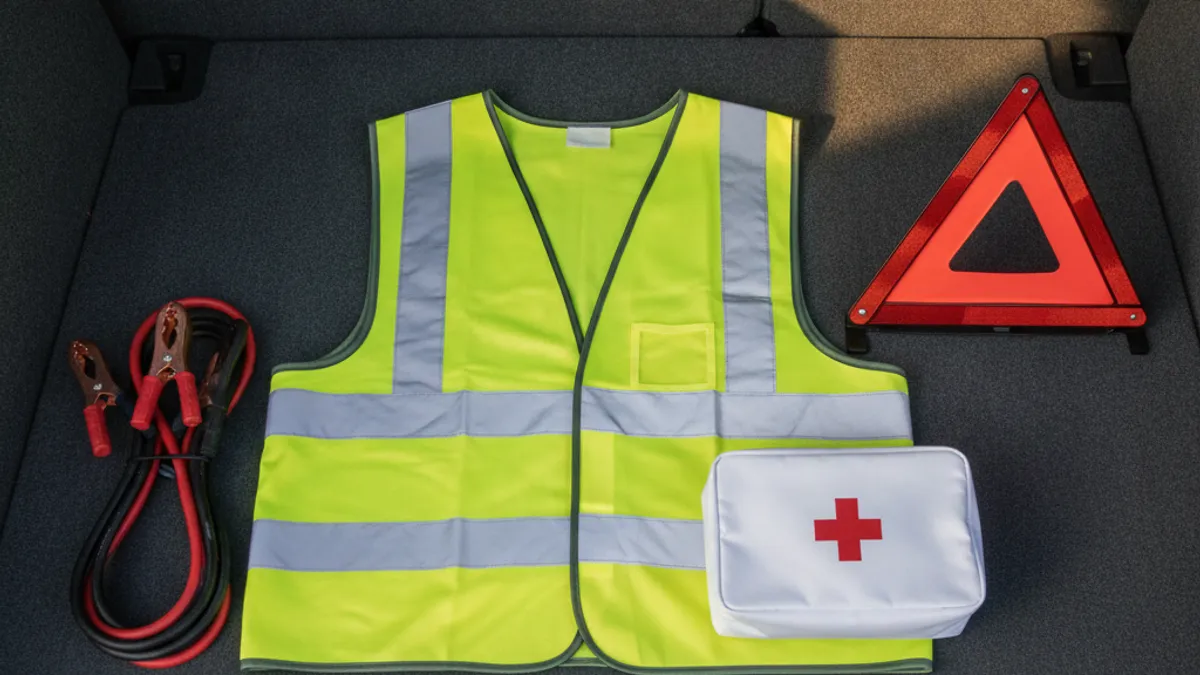
Equipment you should have in the car for a trip through Europe includes a warning triangle, at least one, although some countries such as Serbia require two. A reflective vest is mandatory in most countries and must be kept in the cabin, not in the boot, because the idea is that you put it on before stepping out of the car. A first-aid kit is mandatory in Croatia, Montenegro, Serbia, Austria and other countries. Spare bulbs are mandatory in some countries, although this requirement is rarely enforced on modern cars with LED headlights. A fire extinguisher is mandatory in Montenegro and Greece.
Before setting off, check the regulations for every country you will pass through. The differences are in the details, but a triangle, vest and first-aid kit are the universal minimum that covers virtually any situation. A detailed pre-trip car check can be found in the guide on what to inspect before a long journey.
How to Get Home If Your Car Stays in a Workshop
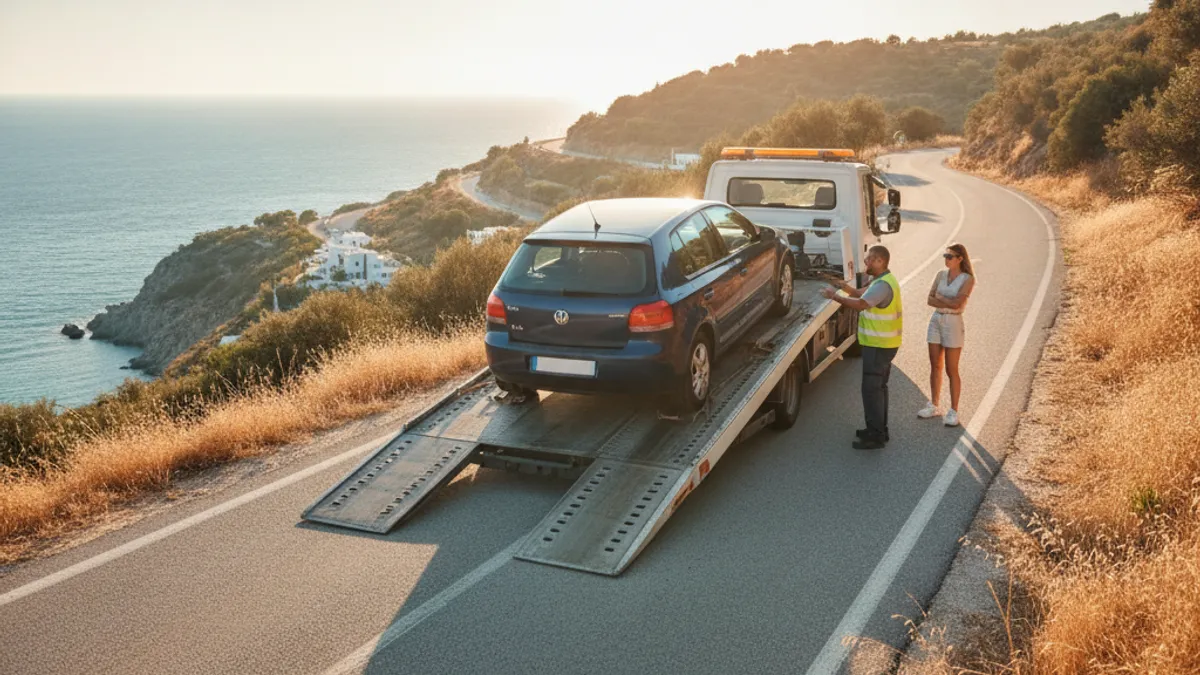
Sometimes the breakdown cannot be fixed on the spot. Parts need to be ordered, or the damage is too extensive for a quick repair. In that case you face the question of how to get yourself and your family home while the car remains in a foreign workshop.
If you have the AMSRS EVROPA package, it covers reimbursement for bus or rail travel to your place of residence, plus hotel accommodation up to 300 EUR if the reason is an incident. BIHAMK packages have similar coverage depending on the tier. This is yet another reason why a membership pays off, not just for towing but also for the logistics of getting home when everything else fails.
What if I need a replacement car abroad
Without a membership, the options are car hire or a bus. For car hire in tourist season in Croatia, expect high prices and limited availability, especially in smaller coastal towns. A bus is the cheaper option, and services from coastal cities to BiH run regularly in summer. FlixBus and local operators cover most routes from Split, Dubrovnik, Zadar and other coastal centres.
As for the car staying in the workshop, agree in writing with the mechanic on a repair deadline, total price, payment method and a contact person. Photograph the car before leaving it, including any existing damage and the odometer reading. Leave only the key, never the vehicle documents. The registration certificate, insurance policy and personal documents always stay with you.
Once the car is repaired, you have two options: collect it in person or arrange professional transport. Towing from Croatia to BiH is not cheap, but in some cases, particularly when an expensive repair at an unfamiliar workshop is the alternative, it is more cost-effective to bring the car home and have it repaired at a workshop you trust.
A car breakdown abroad does not have to be a catastrophe if you know the procedure. Put on your vest, set out the triangle, call your motoring club or 112, and deal with it step by step. A motoring association membership costing 30 to 139 KM can save hundreds of euros in towing fees and hours of stress on a sweltering coastal road. If you are planning a trip, buy the membership at least a week in advance and have your car inspected before departure. And if you need a pre-trip inspection, book an appointment at the workshop or get in touch for advice.
Frequently Asked Questions
Who should I call first when my car breaks down abroad?
If you are an AMSRS or BIHAMK member, call their international assistance number. AMSRS uses the MONDIAL Call Centre on +43 1 525 03 6948, and BIHAMK has its own dispatch centre. If you are not a member of either, call 112 for emergencies or a local tow service.
Does the Green Card cover repairs to my car?
No. The Green Card covers only damage you cause to someone else in a traffic accident. Mechanical breakdowns, towing, accommodation and repairs to your vehicle are not covered by the Green Card. Motoring association assistance packages or comprehensive (kasko) insurance are designed for that.
How much does towing cost in Croatia without a membership?
HAK charges 56 EUR for loading and transport for the first 20 km, plus 1.50 EUR for every additional kilometre. At night, on Sundays and on public holidays, a 30 per cent surcharge applies. Prices are before VAT. Private tow services range from 40 to 100 EUR locally, and from 2 EUR per kilometre upwards on motorways.
Can I buy a motoring association membership after my car has already broken down?
Technically you can, but the AMSRS EVROSTAR package has a six-day waiting period for European coverage. This means buying a membership by the roadside abroad will most likely not activate coverage on the same day. Buy the membership before your trip, ideally a week in advance.
What should I do if I do not speak the language of the country where I broke down?
112 works in all EU countries and the operators speak English. The BiH motoring associations (AMSRS, BIHAMK) communicate in Bosnian or Serbian. If you are looking for a local mechanic, Google Translate on your phone is functional enough for basic communication about a breakdown.
Do I need a Green Card for Croatia?
No. BiH vehicles do not need a Green Card for entry into 38 countries, including Croatia, Montenegro, Serbia and all EU member states. Your compulsory insurance policy is automatically valid. A Green Card is still mandatory for Albania, North Macedonia, Turkey and several other countries.