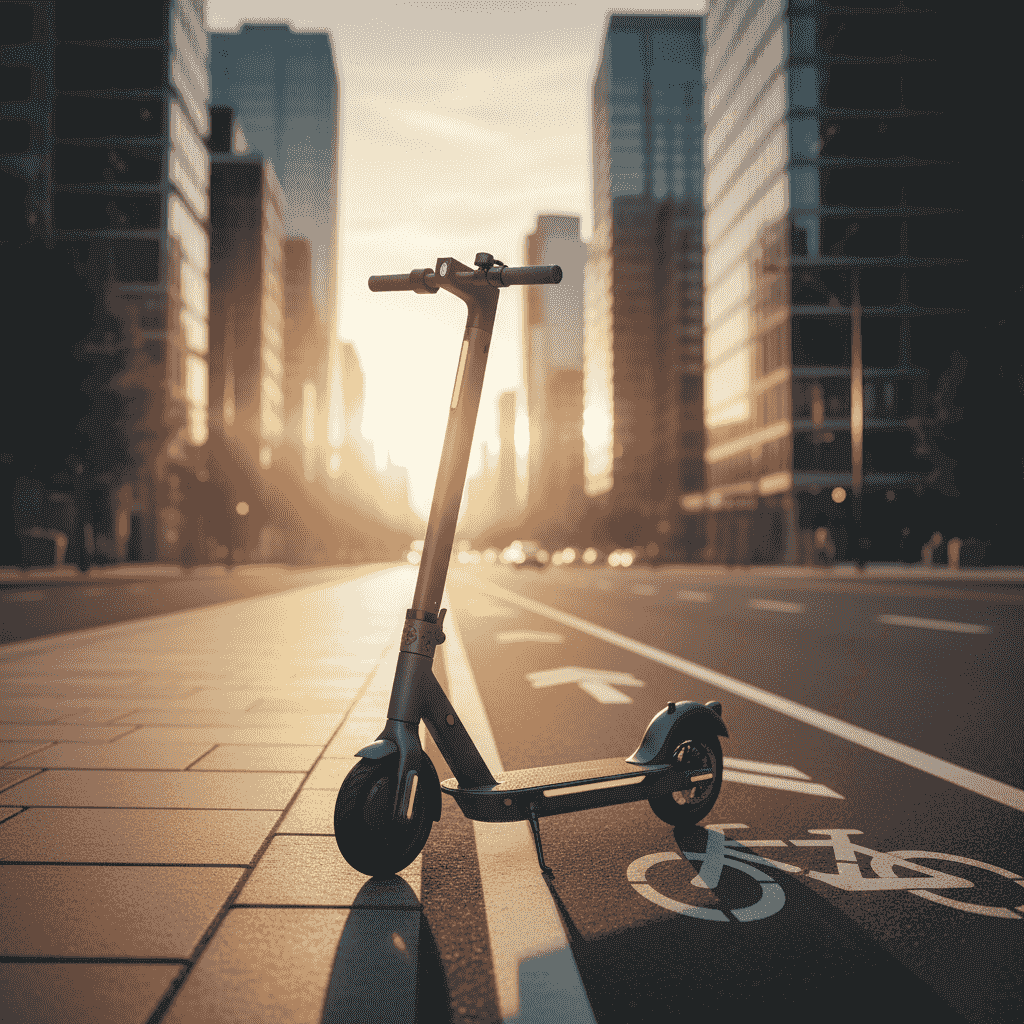
The Parliamentary Assembly of Bosnia and Herzegovina received a proposed law on 19 May 2026 that, for the first time, systematically regulates the use of electric scooters in traffic. MP Aida Baručija proposed amendments to the Law on Road Traffic Safety Fundamentals in BiH, introducing a legal definition of electric scooters, along with age restrictions, protective equipment requirements, traffic rules, and penalty provisions. The proposal was submitted under an urgent procedure and is currently awaiting the initiation of proceedings in the House of Representatives.
What the Proposed E-Scooter Law Introduces
The proposed amendments to the Law on Road Traffic Safety Fundamentals in Bosnia and Herzegovina (No. 01-02-1-1329/26, dated 19 May 2026) represent the first attempt to regulate electric scooters at the state level. According to the text of the proposal published on the BiH Parliamentary Assembly website, the law introduces an entirely new Section 17a dedicated to electric scooter traffic, with two new articles (102a and 102b) and corresponding penalty provisions.
The key innovation is the legal definition of an electric scooter. Under Article 1 of the proposal, an electric scooter is defined as "a vehicle with at least two wheels powered by an electric motor, designed for the transport of one person who stands while riding, with a maximum design speed not exceeding 25 km/h and a maximum continuous rated motor power not exceeding 0.6 kW." This definition is added to Article 9 of the current law as a new point 3a).
Until now, electric scooters in BiH have operated in a legal vacuum. The Law on Road Traffic Safety Fundamentals in BiH (Official Gazette of BiH, Nos. 6/06, 75/06, 44/07, 84/09, 48/10, 18/13, 8/17, 89/17, 9/18, 46/23 and 88/23) contains no provisions on this category of vehicle. In practice, this meant that police had no legal basis for taking action against scooter riders who rode improperly, rode under the influence of alcohol, or endangered pedestrians.
According to the explanatory memorandum, the need for regulation stems from "the growing number of electric scooters on public roads and in urban areas across Bosnia and Herzegovina" and the fact that "traffic accidents and cases of improper use have already been recorded in practice."
Who Is Affected
Article 102a of the proposal stipulates that an electric scooter may be operated by a person who is at least 14 years of age. There is no requirement for a driving licence — meeting the age requirement is sufficient.
The obligations of electric scooter riders under the proposal are as follows:
- Wear a protective helmet while riding
- At night or in conditions of reduced visibility, use a reflective vest or marking, a white light at the front, and a red light at the rear
- Have a functioning audible warning device
- Not use headphones in both ears while riding
- Travel primarily on cycle paths or lanes; where these do not exist, on pedestrian paths or in traffic-calmed zones, paying particular attention to pedestrians
- Where neither cycle nor pedestrian paths exist, travel on the carriageway on roads with a speed limit of up to 50 km/h, keeping to the right edge of the carriageway
- Cross the carriageway carefully; where no cycle crossing exists, dismount and push the scooter as a pedestrian
- When travelling in a group, ride in single file
This list of obligations is covered by Article 102a, paragraph (2) of the proposed law and represents the most detailed part of the proposed regulation.
What Is Prohibited for Scooter Riders
Article 102a, paragraph (3) of the proposed law explicitly prohibits the following:
- Travelling on motorways, expressways, and roads intended exclusively for motor vehicles
- Carrying other persons
- Operating a scooter under the influence of alcohol or narcotic drugs
- Travelling at speeds exceeding 25 km/h
- Holding onto another vehicle or towing objects
- Removing both hands from the handlebars while riding
The prohibition on motorways and expressways is logical given the scooter's speed limit of 25 km/h and the fact that these roads are intended exclusively for motor vehicles with a higher minimum speed.
Parking Rules for Electric Scooters
Article 102b of the proposal regulates the parking of electric scooters. Under paragraph (1) of this article, an electric scooter may not be parked in a manner that obstructs or endangers pedestrian movement or traffic flow, except at specially designated parking spots for electric scooters.
An electric scooter must be technically roadworthy and equipped in accordance with regulations to ensure the safety of the rider and other road users. The minimum technical requirements, including the condition of the braking system, lighting and signalling devices, audible warning device, and other safety elements, are prescribed by a separate rulebook issued by the Ministry of Communications and Transport of Bosnia and Herzegovina.
The Legal and Legislative Sector (ZPS) of the BiH Parliamentary Assembly, in its opinion dated 22 May 2026, suggested a clearer formulation of this article, proposing that paragraph (1) should read: "An electric scooter shall be parked at a specially designated parking spot for electric scooters, and may not be parked at a location or in a manner that obstructs or endangers pedestrian movement or traffic flow." The ZPS also noted that a precise deadline should be specified within which the Ministry must issue the rulebook on technical requirements.
Penalty Provisions for Rule Violations
The proposed law provides for penalty provisions in three categories, according to the severity of the offence.
The most severe penalties (amendments to Article 234a, paragraph (1)) are envisaged for:
- Operating an electric scooter under the influence of alcohol or narcotic drugs (Article 102a, paragraph (3), point 3)
- Travelling at speeds exceeding 25 km/h (Article 102a, paragraph (3), point 4)
Medium penalties (amendments to Article 235, paragraph (1)) are envisaged for nine types of offences:
- Failure to wear a protective helmet while riding
- Failure to use a reflective vest, marking, or prescribed lights at night or in conditions of reduced visibility
- A malfunctioning audible warning device
- Using headphones in both ears while riding
- Travelling contrary to the prescribed rules on the use of cycle paths and carriageways
- Improper crossing of the carriageway
- Failure to ride in single file when in a group
- Travelling on a motorway, expressway, or road intended exclusively for motor vehicles
- Carrying another person, holding onto another vehicle, towing objects, or removing both hands from the handlebars
The mildest penalties (amendments to Article 238, paragraph (1)) are envisaged for:
- Parking an electric scooter contrary to the regulations (Article 102b, paragraph (1))
- Operating a technically unroadworthy scooter or one without the prescribed equipment (Article 102b, paragraphs (2) and (3))
Specific fine amounts are not stated in the proposed law, as they fall within the existing penalty ranges defined in Articles 234a, 235, and 238 of the current law. Article 234a covers the most serious traffic offences, Article 235 the medium ones, and Article 238 the least serious.
Timeline of the Proposal's Progress
The proposal was submitted on 19 May 2026 under reference number 01-02-1-1329/26 and addressed to the Speaker of the House of Representatives, Mr Darko Babalj. The sponsor is MP Aida Baručija, who proposed that the law be considered under the urgent legislative procedure in accordance with Rule 133 of the Rules of Procedure of the House of Representatives.
The current status of the proposal in the BiH Parliamentary Assembly is "Awaiting initiation of procedure" in both chambers (the House of Representatives and the House of Peoples). The proposal is in the IX legislature of parliament (2022–2026).
The Legal and Legislative Sector of the Joint Service of the Secretariat of the BiH Parliamentary Assembly issued its opinion on 22 May 2026 (No. 03/7-01-02-1-1329/26). The opinion confirmed that the proposal was submitted by an authorised sponsor in accordance with Rule 104 of the Rules of Procedure, in written and electronic form, in the Bosnian language and Latin script.
However, the ZPS identified several shortcomings:
- The explanatory memorandum does not contain the opinion of the Directorate for European Integration on alignment with legally binding EU norms (which, under Rule 105, paragraph (4), is the obligation of the House Collegium when the sponsor is an MP)
- The text of Article 2 of the proposal requires editorial correction
- In Article 102a, paragraph (3), points 1) and 2) should be written in the singular
- The text on parking in Article 102b requires a clearer formulation
- A deadline needs to be specified for the issuance of the rulebook on technical requirements
- Article 102b, paragraph (2) should precisely reference the regulations on technical roadworthiness, or use an open/closed reference to other legal acts
The ZPS also noted that the current Law on Road Traffic Safety Fundamentals in BiH already consists of the original text and 10 amendments, and that under Article 46 of the Uniform Rules for Drafting Legal Regulations, "after the third amendment to a regulation, a new regulation should be adopted." This observation suggests that, rather than yet another amendment, the legislature should consider adopting an entirely new law.
Under Article 7 of the proposal, the law would enter into force on the eighth day following its publication in the Official Gazette of Bosnia and Herzegovina. Given that the proposal is still awaiting the initiation of procedure, the date of entry into force is not yet known.
What Scooter Owners Need to Do
For now, owners and users of electric scooters in BiH have no new obligations, as the proposed law has not yet been adopted. The proposal is still at the stage of awaiting the initiation of procedure in the BiH Parliamentary Assembly.
Should the proposal be adopted in its proposed form, scooter owners will need to:
- Ensure their scooter does not exceed a maximum speed of 25 km/h and a motor power of 0.6 kW (vehicles exceeding these parameters will not fall within the electric scooter category under the proposed definition and may be subject to moped regulations)
- Purchase a protective helmet for every ride
- Purchase a reflective vest and ensure proper lights for night riding (white at the front, red at the rear)
- Ensure the scooter's audible warning device is in working order
- Use cycle paths where available; otherwise, ride along the right edge of the carriageway only on roads with a speed limit of up to 50 km/h
It is important to note that the proposal envisages the Ministry of Communications and Transport of BiH issuing a separate rulebook on minimum technical requirements for electric scooters, but the deadline for issuing this rulebook is not specified in the proposal text.
Local communities are already taking steps to regulate this area. The Municipality of Kakanj in Zenica-Doboj Canton has appointed a commission to prepare a local decision on the conditions for using electric scooters, as reported by Klix.ba in August 2025. The Government of Zenica-Doboj Canton had previously issued instructions for local communities to develop their own regulations in the absence of state-level legislation.
Background and Context of Scooter Regulation
Bosnia and Herzegovina is among the last European countries to undertake the regulation of electric scooters. Most European Union member states already have established legal frameworks for this type of micromobility.
Italy, for example, adopted a reform of its Traffic Code in December 2025, which entered into force on 16 May 2026, introducing mandatory registration of electric scooters (a number plate in the form of a laminated sticker), mandatory third-party liability insurance, and mandatory helmets for all users regardless of age, as reported by Klix.ba in March 2026. Users riding without a registration mark in Italy risk fines of EUR 100 to 400.
The Bosnian proposal does not go that far — it does not envisage registration or mandatory insurance for scooters — but it establishes a basic framework for safe use: helmets, lights, traffic rules, and penalty provisions. According to the explanatory memorandum, one of the principles underlying the law is "aligning domestic legislation with European Union directives and the practices of countries in the region."
The proposed law also states that its implementation does not require additional budgetary funds, as activities are carried out through existing competent authorities within their regular duties.
The reason for the urgent procedure, according to the explanatory memorandum, is "the need for urgent and systematic regulation of the participation of electric scooters and other light personal vehicles in traffic" and the fact that "there is a significant increase in the number of electric scooters on public roads and in urban areas across Bosnia and Herzegovina."
Sources
- Proposed amendments to the Law on Road Traffic Safety Fundamentals in BiH - BiH Parliamentary Assembly, 19 May 2026
- Kakanj introduces rules for the use of electric scooters in the city - Klix.ba, 27 August 2025
- Italy introduces registration of electric scooters, fines of up to EUR 400 for not having a plate - Klix.ba, 20 March 2026
- Opinion of the Legal and Legislative Sector on the proposed law - ZPS of the PSBiH Secretariat, 22 May 2026