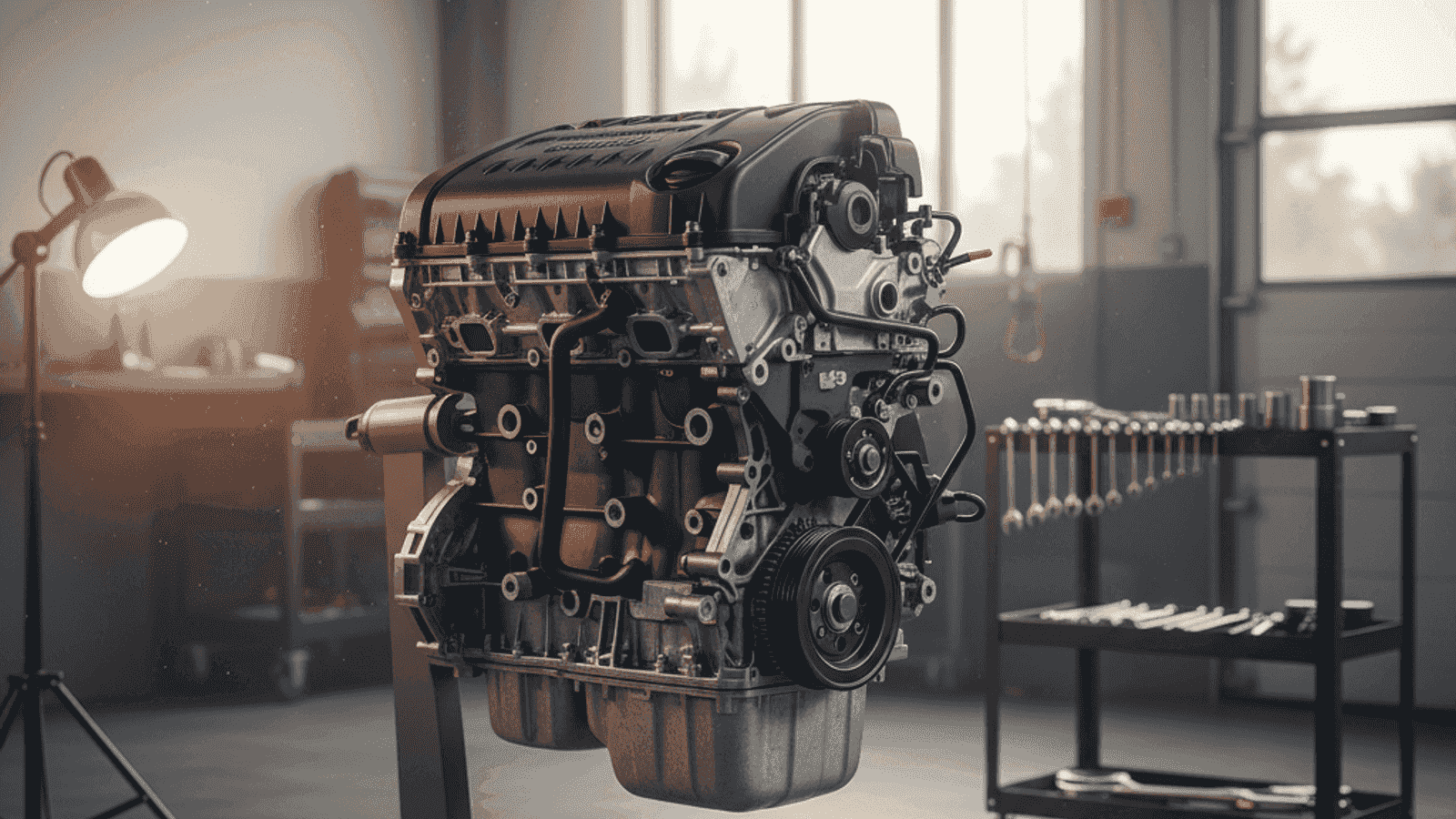
You are looking at a listing for a used Golf 5, Octavia 2, Touran, Caddy or Passat B6 with a 1.9 TDI rated at 105 HP and wondering whether it matters which exact engine code sits under the bonnet. It does matter. Although BKC and BLS are almost identical in power, torque and driving feel, one difference between them changes the entire story around servicing costs and what can go wrong in the first two years of ownership.
This guide was compiled by Auto Gas Gaga workshop in Banja Luka, based on years of experience servicing VAG diesels and performing pre-purchase inspections of 1.9 TDI PD engines for used-car buyers.
Table of Contents
- Why BKC and BLS specifically
- Quick comparison table
- Which models come with which engine code
- Technical differences visible on the engine
- DPF the main practical difference
- EGR injectors and other things buyers need to know
- Reputation on the BiH used-car market
- What to look for during a pre-purchase inspection
- How to tell BKC from BLS in a listing without the VIN
- Which one to choose BKC or BLS
- Frequently Asked Questions
- Related Articles
Why BKC and BLS specifically
In the 1.9 TDI PD family rated at 105 HP that dominates the BiH used-car market, two engine codes appear in the vast majority of listings: BKC and BLS. Both belong to the EA188 family, both share an identical 1896 cc displacement, 79.5 x 95.5 mm bore and stroke, 8 valves and a Bosch EDC16 ECU. Both produce 77 kW (105 HP) and 250 Nm of torque at 1900 rpm. The difference in power is zero. The difference in driving feel on the open road is effectively zero.
So why write an entire guide about it? Because beneath that paper equivalence sits one concrete component that forces the BLS into a much stricter driving regime and introduces a much larger potential line item in the service book. A buyer who cannot tell BKC from BLS easily ends up with a BLS that has been driven exclusively on short urban trips, inherits a clogged particulate filter and spends a significant chunk of the savings they envisioned when choosing a used diesel.
There is also a third code from the same family worth keeping in mind, although it is not the subject of this comparison. BXE is a 1.9 TDI PD rated at 105 HP with an infamous bearing weakness and a tendency for the third-cylinder connecting rod to fail. If you see BXE instead of BKC or BLS in a listing, that is not an automatic reason to walk away, but it is a reason for heightened caution and a mandatory inspection at a workshop familiar with the engine.
Quick comparison table
| Characteristic | BKC | BLS |
|---|---|---|
| Power / torque | 77 kW (105 HP) / 250 Nm | 77 kW (105 HP) / 250 Nm |
| Displacement | 1896 cc | 1896 cc |
| Production years | 2003–2008 | 2005–2010 |
| Injection system | PD (pumpe-düse / unit injectors) | PD (pumpe-düse / unit injectors) |
| Injectors | Bosch solenoid | Bosch solenoid |
| Diesel particulate filter (DPF) | Not fitted from factory | Fitted from factory |
| Emission standard | Euro 3 (later Euro 4 with catalytic converter) | Euro 4 |
| Typical EGR | EGR cooler, mechanical valve | EGR cooler, electronic valve |
| Main common weaknesses | Dual-mass flywheel, EGR, intake swirl flaps | Dual-mass flywheel, DPF, EGR, intake swirl flaps |
The table looks modest because the engines are so closely related. But that single entry in the seventh row (DPF) carries serious consequences for long-term maintenance costs, especially for drivers who accumulate most of their mileage in the city.

Which models come with which engine code
BKC and BLS were most commonly sold in BiH in the same body shells, which is the main reason buyers confuse the two codes.
BKC was fitted to the Golf 5, Jetta 5, Touran 1T, Caddy 3, Audi A3 8P, Seat Altea, Seat Leon 1P, Seat Toledo 3, Škoda Octavia 2 and Škoda Fabia 2. This covers the 2003–2008 production period, with the final years already overlapping with BLS as production transitioned to the newer block to meet Euro 4 requirements.
BLS was fitted to practically the same range of models, plus the Volkswagen Passat B6 and the Škoda Octavia 2 Greenline. The production period is 2005–2010. The majority of Passat B6s with a 1.9 TDI 105 HP that you see in listings today carry the BLS, not the BKC. The same applies to the Octavia 2 Greenline variant, which offered lower CO2 and a reduced tax band due to emissions.
Practical clue for buyers: if you are looking at a Golf 5 or Octavia 2 from 2004 or 2005, the probability of it being a BKC is high. If you are looking at the same model produced in 2007, 2008 or 2009, the probability of it being a BLS increases with the model year. A Passat B6 with a 1.9 TDI 105 HP almost always means BLS. However, the rule is not absolute — borderline years are a mixture, so always verify the code in the documentation (not from the listing).
Technical differences visible on the engine
Structurally, the engine block, cylinder head, crankshaft, pistons and connecting rods are virtually identical between BKC and BLS. The PD injection system follows the same principle: high-pressure pump and injector are integrated into a single unit per cylinder, driven by the camshaft through rocker arms, all managed by the Bosch EDC16 ECU.
Visible differences that a mechanic will point out in the workshop:
- Exhaust system. BLS has a DPF (diesel particulate filter) mounted directly after the catalytic converter. It is a large cylindrical canister, typically fitted with a differential pressure sensor connected by two small pipes. BKC either has nothing in that position (just the catalytic converter) or has a plain silencer without a pressure sensor.
- EGR valve and wiring. BLS uses a newer EGR valve solution with a cooler and electronic control, while BKC has a simpler mechanical or vacuum-operated design. The additional exhaust gas temperature sensors on BLS also reflect the DPF requirements.
- Engine label. In the engine bay, at the end of the camshaft housing or on the cylinder head, there is an aluminium or paper label with the three-letter engine code. This is the most reliable method of verification when you are already under the bonnet.
- VIN and engine code in the registration document. In older BiH registration documents the engine code may not be directly visible, but through the VIN and manufacturer records it can be determined unambiguously. This is the job of a workshop performing a pre-purchase inspection.
What is not visible but matters: BLS is engineered to run slightly higher exhaust temperatures because of the need for DPF regeneration. This means the thermal profile around the cylinder head and surrounding cold-side components is somewhat more aggressive, which over time stresses hoses, sensors and the EGR itself.
DPF the main practical difference
This is the difference that outweighs every other cell in the table.
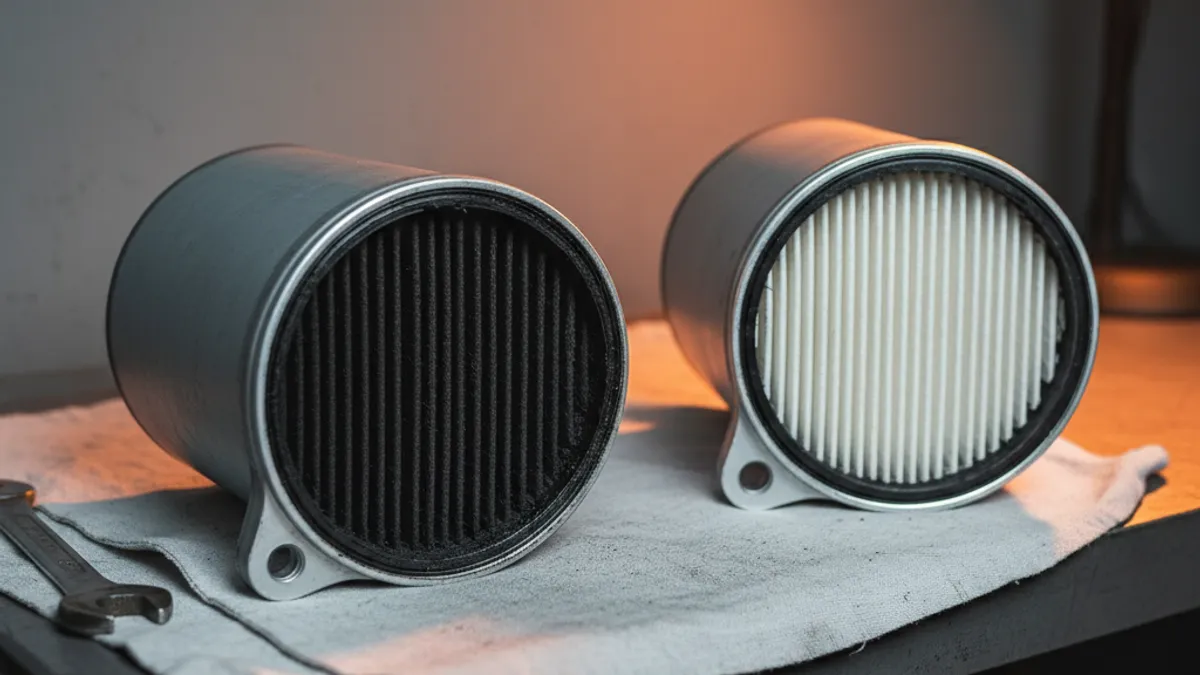
BLS was fitted with a diesel particulate filter from the factory because the Euro 4 standard required it. The DPF traps soot particles from exhaust gases and periodically burns them off (regeneration) at temperatures of 600–650 °C. For regeneration to proceed cleanly, the engine must run at sustained speed on the open road under load (motorway, dual carriageway) for long enough. When this happens regularly, the DPF will function reliably for 200,000–300,000 kilometres.
The problem arises when a BLS is used predominantly for urban driving — short trips around Banja Luka, 5–10 minute commutes, runs to the shop. The engine simply cannot reach the required temperature, regeneration is interrupted halfway through, and unburned particles remain deposited in the filter. Over time the DPF clogs, the warning light illuminates, the engine enters limp mode, and the owner faces a choice: cleaning, replacement or an aggressive intervention that in BiH often means mechanical removal of the filter and a software remap. This last option is increasingly risky because the periodic vehicle inspection (tehnički pregled) in BiH is becoming stricter, and in some municipalities exhaust emissions are measured and the presence of a DPF is verified.
BKC simply does not have this issue. Without a DPF there is no clogging, no regeneration and no dilemma about removal and type-approval. That is why, paradoxically, BKC is the better choice for a driver who spends most of their time in the city and on short trips, while BLS is the better choice for someone who drives on the motorway daily or makes longer journeys every other weekend.
BLS DPF clogged — what to do
When the DPF warning light comes on in a BLS, the first step is neither panic nor removal. The check starts with the differential pressure sensor, the filter saturation values read via OBD diagnostics, and the history of regeneration attempts. Often a forced regeneration in the workshop is sufficient — this takes 20–40 minutes while the engine runs under controlled load. If the filter is merely soot-loaded, this restores it to working order. If it has already exceeded the ash saturation threshold (ash, not soot — ash cannot be burned off), forced regeneration will not help. At that point the options are chemical cleaning of the removed filter or replacement. The cost depends on the specific condition — get in touch for a quote.
BKC without DPF — will it pass the vehicle inspection in BiH?
Yes. BKC was type-approved as Euro 3 (later Euro 4 with a catalytic converter, without a DPF), which means it was never fitted with a particulate filter from the factory and is not required to have one. During the vehicle inspection, the smoke opacity test is conducted against the standard applicable to the year of first registration, and BKC passes without issues on its original specification. The complication is different: if someone tries to sell a BLS as a "BKC without DPF" because the filter was removed from the BLS, that is an illegal modification and can be detected during a stricter inspection. The difference between legally without a DPF (BKC) and illegally without a DPF (BLS with the filter removed) is an important legal distinction that buyers need to understand before paying a deposit.
EGR injectors and other things buyers need to know
Both engines share most of the secondary failure modes typical for the 1.9 TDI PD generation in local conditions:
- The EGR valve and EGR cooler become clogged with carbon deposits (a mixture of oil and soot) over time. Consequences include hesitation under acceleration, smoke, loss of power, and sometimes a warning light. Cleaning or replacement is a periodic expense. BLS with its electronic EGR valve is slightly more expensive to replace than BKC, but the principle and the cause are identical.
- Intake swirl flaps on the inlet manifold accumulate carbon deposits and eventually stop functioning correctly. On these engines they rarely break off physically the way they do on the 2.0 TDI PD, but they still become a source of false air and poor charge regulation. Cleaning the inlet manifold is a job worth doing every 100,000–150,000 kilometres, depending on driving style.
- The dual-mass flywheel (DMF) is a typical wear item on both engines, particularly in vehicles paired with a manual gearbox and driven by owners who habitually ride the clutch. Vibration at idle, knocking at start-up and shut-down, and judder when pulling away are typical symptoms. Replacement of the DMF together with the clutch is a major job and one of the most expensive individual costs on these engines.
- PD injectors (unit injectors). Both BKC and BLS use Bosch solenoid PD injectors. Longevity is generally good (they often exceed 300,000 km without intervention), but when they fail, the signs are smoke on cold start, hard starting, loss of power and increased fuel consumption. Replacing a single injector is a significant expense because in addition to the injector itself it requires a seal kit, rocker arm and special stretch bolts tightened to a torque-to-yield specification. Bosch solenoid injectors are, however, cheaper than the piezo versions that would later appear on common-rail TDI engines.
- VNT turbo (variable nozzle turbine) is a typical candidate for reconditioning around 200,000–250,000 km. Symptoms include loss of power above 2500 rpm, overboost, or a warning light under acceleration.
All of the above applies equally to both engines. Differences in failure frequency are minor and depend more on service history and driving style than on the three-letter code.
Important note for buyers comparing 1.9 TDI with 2.0 TDI PD. Forums and listings often conflate stories about "connecting rod failure", "oil pump failure" and "balance shaft module". These are problems of the 2.0 TDI PD engines (BKD, BMM, BMP, BWA), where the oil pump has a notorious hex-drive mechanism that wears out and leaves the engine without oil. On the 1.9 TDI PD (BKC, BLS, BJB), the oil pump is chain-driven from the crankshaft, there is no balance shaft module, and that entire failure mechanism does not exist. Do not confuse these two stories when reading other owners' experiences.
Reputation on the BiH used-car market
From workshop experience and conversations with buyers on the BiH market, the following can be said about reputation:
BKC is widely regarded as the best balance of durability, economy and simplicity in the entire 1.9 TDI PD family. Least amount of electronics in the exhaust tract, easiest servicing, cheapest parts. A large number of BKC units have already covered 350,000–450,000 kilometres without major engine interventions (beyond the standard timing belt, clutch and EGR cleaning). Its biggest problem on the local market is not its construction but its age — most examples are no longer young and require careful history checks.
BLS is also a high-quality engine with the same construction as BKC, but with the DPF taking over as the primary risk factor. A buyer who understands the DPF and can provide the conditions for it to function healthily will have no problems. A buyer who purchases a BLS for exclusively urban driving enters a predictable cycle of issues. The Passat B6 with a BLS engine is very popular in BiH because it is comfortable, spacious and typically well-equipped, but precisely those examples often have the most burdened DPF history.
BXE (briefly, as it is often confused) has an infamous failure mode — third-cylinder connecting rod breakage — linked to its bearing design and crankshaft construction. Most working BXE units that have survived to date did so because of regular oil changes at 10,000 km intervals rather than extended service intervals. If you are considering a BXE, a pre-purchase inspection is mandatory.
Regarding LPG, it should be stated clearly: these are diesel engines and are practically never found with an LPG system. If you come across a listing where someone offers a 1.9 TDI with "auto gas", it is almost certainly a misunderstanding (confused with a TSI or MPI petrol engine in the same model) or an experimental installation that does not belong to this category.
What to look for during a pre-purchase inspection
Regardless of whether you are looking at a BKC or BLS, the pre-purchase inspection should cover the following points. The more of these a buyer requests, the more the serious sellers distinguish themselves from the window-dressed ones.
Under the bonnet:
- Check the engine code on the label (BKC or BLS) and cross-reference with what is stated in the documentation.
- Visual inspection for oil leaks at the head gasket joint, valve cover gasket, around the oil pump and at the rear of the engine around the flywheel.
- Check the level and colour of the engine oil (foamy or milky oil indicates a blown head gasket or failed oil-water heat exchanger).
- Condition of intercooler hoses and the intake side (should be dry and clean, free from oil leaking through cracked hoses).
- Battery condition and visible wiring around the EGR valve.
On the road:
- Cold start: how quickly the engine fires, whether there is thick blue or white smoke lasting longer than 30 seconds.
- Idle: smooth or surging and vibrating (signs of worn PD injectors or a faulty EGR).
- Acceleration in third and fourth gear from 1500 to 3500 rpm: smooth power delivery, no stumbling, no black smoke in the mirrors, no judder.
- Pulling away from a standstill with the steering on full lock: judder, mechanical knocking, clunking (signs of a worn DMF and clutch).
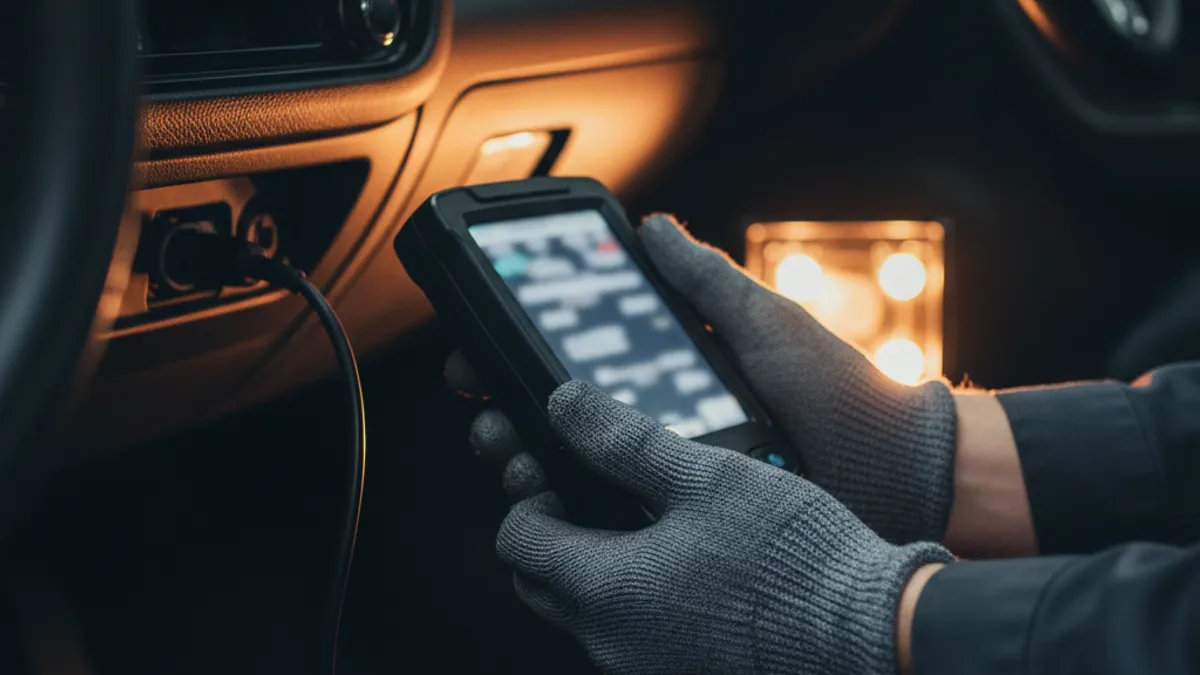
- DPF test on BLS: drive on the motorway for 15–20 minutes, return to the workshop and read the filter saturation values on OBD. If saturation is above 70–80% after that drive, the DPF is already in the zone where regeneration cannot keep up.
On diagnostics (OBD):
- Reading stored and cleared fault codes (full diagnostic scan — not just the engine; check ABS, ESP, climate control, BCM as well).
- DPF regeneration counter (on BLS) and the intervals between regenerations.
- Individual injector values (corrections, smooth running).
- MAF sensor, MAP sensor and lambda probe status (if fitted in that version).
An experienced seller can hide a lot. Rolled-back odometers by tens of thousands of kilometres, resprayed accident damage from Germany, hidden welds, and service histories that "got lost" when the car arrived in BiH. Some of this is caught during a pre-purchase inspection at the workshop, but the car's actual past is most easily verified through carVertical. Using the chassis number it pulls documented vehicle history from international registers: mileage by year, recorded accidents, number of previous owners and indicators of theft or total loss. We consider this a mandatory step before buying any used car. When paying for the report you can use the code GAGA to receive a 20% discount.
How to tell BKC from BLS in a listing without the VIN
The VIN is the most reliable method, but in 90% of listings on BiH internet portals the seller has not provided it. Here are practical signals you can read before sending a message:
- Production year. 2003–2005 most likely means BKC. 2007–2010 most likely means BLS. Borderline years (2005–2007) are a mixture — additional verification is needed.
- Model. A Passat B6 with a 1.9 TDI 105 HP is almost certainly BLS. An Octavia 2 Greenline is BLS. A Golf 5 from 2004 is very likely BKC.
- Mention of DPF in the listing or recent service work. If the seller says "DPF cleaned", "DPF replaced", "particulate filter regeneration", it is a BLS. If the DPF is not mentioned at all, the engine probably does not have one — i.e. BKC.
- Emission label and registration history. A car registered as Euro 4 with a 1.9 TDI 105 HP is most commonly a BLS. Euro 3 is BKC.
- Ask directly. The quickest method is to message the seller: "Can you send a photo of the engine label in the engine bay? I need the three-letter engine code." A serious seller will send it within five minutes. One who avoids the question is sending you a signal not to be underestimated.
How to identify BKC from BLS in a listing on olx.ba
Filters on classified portals do not separate engine codes, so you search using a combination: model + year + 1.9 TDI + 105 HP, and then narrow down to BKC or BLS from the description, optional equipment and stated year. Often the quickest method is to contact the seller and request a photo of the engine label or the chassis number. If the seller cannot tell BKC from BLS and is not willing to check, the buyer has already received important information about how smoothly the paperwork and servicing will go after the purchase.
Which one to choose BKC or BLS
Short answer by driver profile.
Choose BKC if:
- You mostly drive in the city, on short trips, with a commute under 15 minutes.
- You want the simplest possible 1.9 TDI with the least amount of electronics in the exhaust tract.
- Your budget only covers basic interventions (timing belt, clutch, EGR cleaning) and you do not want to risk a DPF replacement.
- You prefer a Golf 5, Octavia 2 (non-Greenline), Caddy or Touran from earlier model years.
Choose BLS if:
- You drive on the motorway or dual carriageway daily for at least 30–40 minutes.
- You want a Passat B6 (there is virtually no other option with this engine).
- You want the Euro 4 standard for a newer registration status and potential future environmental restrictions.
- You understand what DPF regeneration is and are prepared to monitor its condition.
Consider a different engine if:
- You drive exclusively in the city, short distances, and have the budget for a newer petrol car (1.6 MPI or 1.4 TSI) — diesel is not the best choice for your profile regardless of the engine code.
- You are considering a BXE from the same family and do not have a trusted workshop that can confirm the bearing condition and oil-change history.
- You are being offered a 1.9 TDI with an unknown engine code and the seller is unwilling to verify it before purchase.
Found a car with a BKC or BLS engine that you are considering? Book a pre-purchase inspection at our workshop or message us on WhatsApp with the listing link before you pay a deposit. It is better to spend one afternoon on an inspection than to inherit someone else's history of short trips and a clogged filter.
Frequently Asked Questions
Is BKC better than BLS?
It is neither better nor worse — it is different. BKC is simpler because it has no DPF, making it the better choice for predominantly urban driving. BLS is a more modern solution with the Euro 4 standard and a DPF, making it the better choice for a driver who frequently covers longer distances and wants a newer emission status.
Can I remove the DPF from BLS to avoid problems?
Technically yes, but in BiH this is an illegal modification of a type-approved engine. If the inspector checks for the presence of a DPF during the vehicle inspection (and an increasing number of municipalities do), the car will fail. Economically it is cheaper in the short term, but in the long term it is a risk at every registration renewal and when selling the vehicle. The better approach is regular forced regeneration or chemical cleaning of the removed filter while it can still be saved.
How long does a 1.9 TDI PD engine last on average?
With regular servicing (oil every 10,000 km, timing belt at 120,000–150,000 km, periodic EGR and intake cleaning) both BKC and BLS easily exceed 350,000–450,000 kilometres without major engine work. Longevity depends primarily on service history and driving style, not on the three-letter code.
Can a 1.9 TDI PD run on LPG or CNG?
No. PD engines are diesels, not petrol engines, and do not operate on the spark-ignition principle. LPG and CNG systems for diesels exist (as dual-fuel with a small percentage of gas in the mixture) but they are rare, expensive and do not make economic sense on an engine of this age. If you see a listing for a 1.9 TDI with "auto gas", check carefully — it is most likely a misunderstanding or an experimental installation.
Why is BXE often confused with BKC and BLS?
All three codes are 1.9 TDI PD units rated at 105 HP from the same EA188 family and were fitted to the same body shells in overlapping production years. Without checking the engine label or VIN, they often cannot be distinguished from a listing alone. BXE is problematic due to its bearing design and the known third-cylinder connecting rod failure, while BKC and BLS are more reliable. That is why the three-letter engine code is the absolute minimum information required before buying any 1.9 TDI PD example.
Is dual-mass flywheel replacement mandatory at a certain mileage?
It is not strictly a mileage-based mandatory replacement, but it is a typical wear item on both engines. It is typically replaced at 200,000–300,000 kilometres, depending on driving style, load and history of riding the clutch. Vibration at idle, knocking at start-up and judder when pulling away are signals that it is time for an inspection.