TL;DR:
- A systematic diagnostic process includes intake, inspection, baseline scanning, targeted testing, and verification.
- Interpreting DTCs requires understanding freeze-frame data and not just replacing parts based on codes alone.
- Modern vehicle diagnostics involve software, communication bus, and calibration checks beyond traditional sensor testing.
Your check engine light flickers on during your morning commute, and suddenly your day has an unwanted subplot. For many drivers in Banja Luka, that moment triggers a familiar anxiety: Will this be expensive? Is it serious? Will the mechanic just swap parts until something works? The good news is that a well-structured, transparent diagnostics workflow removes all of that guesswork. Whether your vehicle runs on petrol, LPG, or a hybrid powertrain, knowing what a professional process looks like puts you in control and helps you avoid costly detours.
Table of Contents
- Start with the essentials: Intake, inspection, and initial scanning
- Making sense of scan data: Codes, freeze-frame, and targeted testing
- LPG conversion diagnostics: Calibration and getting it right
- The modern twist: Electric, software, and hybrid system checks
- Verification, documentation, and avoiding common diagnostic traps
- The hard-won truth: Professional diagnostics mean fewer surprises and more trust
- Get diagnostics and care you can trust in Banja Luka
- Frequently asked questions
Key Takeaways
| Point | Details |
|---|---|
| Start with basics | Every diagnostic workflow should begin with visual checks and initial scanning to avoid misdiagnosis. |
| Use data, not guesswork | Codes and freeze-frame data guide efficient, targeted tests rather than random parts replacement. |
| LPG needs precision | A careful step-by-step process is vital for reliable LPG system diagnostics and calibration. |
| Modern cars, modern tools | EVs and newer vehicles require software and firmware analysis in addition to traditional checks. |
| Always verify fixes | Documenting and double-checking repairs ensures transparency and peace of mind. |
Start with the essentials: Intake, inspection, and initial scanning
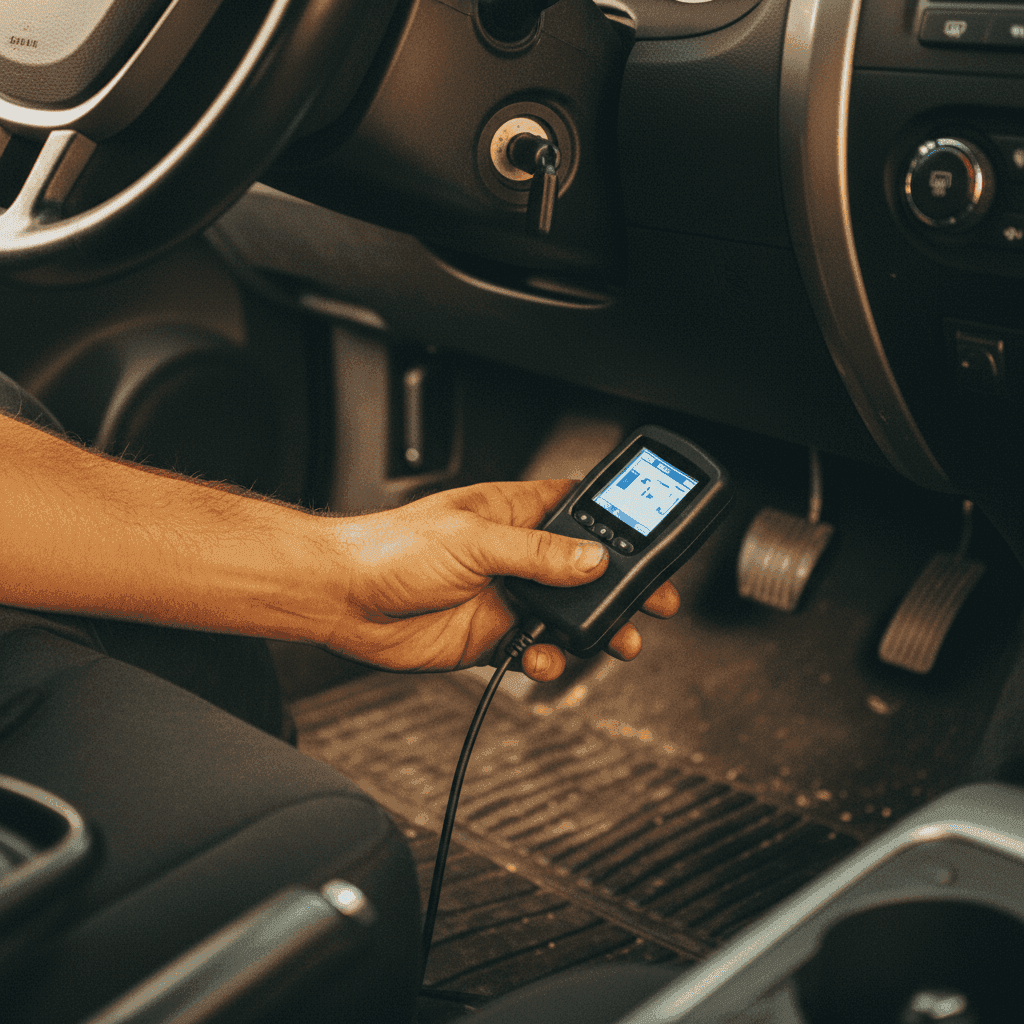
To move from that anxious moment of discovery to action, you need a process that begins with solid, standardized checks. Before any technician touches a scan tool, a reliable workshop performs a structured intake. This means gathering information directly from you: when did the symptom start, does it happen all the time or only under certain conditions, and has anything changed recently in how the car behaves or sounds?
That conversation matters more than most owners realize. A technician who listens carefully during intake can often narrow a problem from dozens of possible causes down to three or four before the first bolt is loosened.
Following intake, preliminary checks come next: visual inspection of the engine bay, checking battery condition and terminal connections, examining warning lights, and verifying basic operational systems. Skipping this phase is where a lot of independent "quick fix" operations go wrong. Without a baseline, any data from a scan tool lacks context and becomes misleading.
Why baseline scanning matters:
- It captures all stored and pending diagnostic trouble codes (DTCs) before any tampering
- It records current sensor readings so technicians can spot anomalies even without an active fault
- It establishes a comparison point for after repairs are completed
Pro Tip: Before your next workshop visit, note exactly when your warning light appears, such as cold starts only, highway speeds, or after rain. That detail alone can cut diagnostic time significantly and may even reduce your bill.
For general pre-trip inspection tips or if you're wondering about starting problems diagnosis, having this intake mindset ahead of your visit makes the entire process faster and more accurate.
| Intake step | Purpose | What it catches |
|---|---|---|
| Owner interview | Establishes symptom context | Intermittent faults, recent changes |
| Visual inspection | Identifies obvious mechanical issues | Leaks, damaged wiring, corrosion |
| Battery and connector check | Rules out power supply faults | Weak start, sensor dropouts |
| Baseline OBD II scan | Captures all stored codes | Historic and active faults |
Missing even one of these steps doesn't just slow things down. It can send the entire diagnosis in the wrong direction, costing you both time and money.
Making sense of scan data: Codes, freeze-frame, and targeted testing
Once basic checks and scanning are done, the next challenge is interpreting what the scan tool uncovers. This is where the skill gap between a professional technician and a DIY code reader becomes obvious.

A DTC is not a diagnosis. It is a symptom report. Think of it like a fever reading on a thermometer: the number tells you something is wrong, but it doesn't tell you whether you have the flu, a bacterial infection, or something else entirely. A code that reads "P0171 System Too Lean Bank 1" points toward an air-fuel mixture problem. But that single code could stem from a vacuum leak, a failing mass airflow sensor, a clogged fuel injector, low fuel pressure, or even an exhaust leak near the oxygen sensor.
This is exactly why freeze-frame data is so valuable. It captures a snapshot of your vehicle's operating parameters at the precise moment the fault was detected: engine load, vehicle speed, coolant temperature, fuel trim values, and more. A technician who reads that snapshot can often match the fault to your specific driving complaint with much greater accuracy, especially for intermittent or load-related problems.
Here is a practical example of how this works in sequence:
- Retrieve all stored DTCs and note their frequency and status (pending vs. confirmed)
- Pull freeze-frame data for each relevant code and correlate it with the owner's described symptom
- Identify which system or component most logically connects the code to the freeze-frame conditions
- Plan targeted tests on that specific system rather than checking everything at random
Code reading vs. professional diagnostics compared:
| Approach | What it provides | What it misses |
|---|---|---|
| Basic OBD code reader | DTC number and generic description | Root cause, system context, live data |
| Professional scan with freeze-frame | Snapshot of fault conditions | Nothing, when combined with targeted testing |
| Full professional workflow | Root cause, verified fix, documentation | Nothing, this is the standard to aim for |
The statistic that matters here: industry data consistently shows that parts replaced based on codes alone, without targeted testing, result in a significant percentage of unnecessary replacements where the original part was not actually defective. Professional workshops that follow a complete diagnostic strategy dramatically reduce those wasted expenses.
LPG conversion diagnostics: Calibration and getting it right
For those running or considering LPG systems, diagnostics can seem even more specialized, but the workflow brings clarity. The stakes are higher because LPG systems interact directly with your engine management electronics, and a misconfigured system can cause rough running, failed starts, or even damage over time.
A properly structured LPG diagnostic workflow looks like this:
- Verify the system configuration matches your engine type and number of cylinders
- Check operating voltages across the LPG control unit and all injectors
- Run injector signal diagnostics to confirm each injector fires at the correct timing relative to petrol injectors
- Confirm the changeover temperature is set correctly (the point at which the vehicle switches from petrol to gas)
- Verify reducer (regulator) pressure before starting auto-calibration
- Perform auto-calibration with the engine at normal operating temperature and the correct system pressure applied
"For properly set up LPG systems, a careful procedure includes verifying configuration and voltages and injector signal diagnostics, ensuring correct changeover temperature, then performing auto-calibration at the correct pressure. If calibration struggles or fails, suspect crossed pipes or wiring or incorrect pairing and re-run checks." AEB auto-calibration preparation
One of the most common LPG calibration failures comes from something deceptively simple: crossed injector wiring or mismatched pipe connections. When cylinder 1 on the gas side is actually feeding cylinder 3 on the engine side, calibration will never converge correctly no matter how many times you run it. Checking physical connections methodically before calibration saves enormous frustration.

Pro Tip: If your LPG-equipped vehicle feels hesitant or runs rough only on gas, ask your technician to check injector timing offset values during a live data session. Small timing mismatches that never trigger a code can still cost you fuel efficiency and engine smoothness.
You can check vehicle suitability for LPG before committing to a conversion, and it is worth understanding what vehicle checks before LPG install should look like. For those wondering whether the economics make sense, an LPG savings estimate can make the numbers concrete before you decide.
The modern twist: Electric, software, and hybrid system checks
Whether your vehicle uses LPG, petrol, or advanced electronics, modern cars now blend traditional and new diagnostic puzzles. The vehicles rolling into workshops today are no longer purely mechanical machines. They are software-defined platforms that happen to have wheels.
Modern diagnostics increasingly involves analyzing software-defined behaviors, communication bus faults, firmware versions, and control module configurations, not just reading sensor values or listening for knocks. A fault that presents as a transmission hesitation might actually be a calibration mismatch in the transmission control module that was introduced during a previous software update.
What modern diagnostic sessions may now include:
- CAN bus (Controller Area Network) communication checks to identify modules that are not responding or are sending corrupted data
- Firmware version verification to confirm all modules are running compatible software
- ADAS (Advanced Driver Assistance Systems) camera and radar calibration after any suspension or bodywork repair
- Battery management system analysis on EVs and hybrids, including cell balance data and charge cycle history
- Software recalibration of throttle bodies, idle control systems, and fuel trims after component replacement
| System type | Traditional check | Software check needed? |
|---|---|---|
| Petrol engine | Sensors, injectors, ignition | Sometimes (ECU tune verification) |
| LPG system | Injectors, pressure, calibration | Yes (control unit configuration) |
| Hybrid drivetrain | High-voltage battery, inverter | Yes (battery management firmware) |
| Full EV | Motor controller, charging system | Yes (firmware and communication checks) |
Pro Tip: If a technician replaces a sensor on a newer vehicle and does not perform a post-replacement calibration or relearn procedure, the new part may function correctly in isolation but still cause faults because the ECU has not been told about the change. Always ask whether a relearn or calibration is needed after any sensor replacement.
For a deeper look at how electronic diagnostics works across different vehicle types, the principles of systematic testing apply whether the system is analog or fully digital.
Verification, documentation, and avoiding common diagnostic traps
Once diagnostics and any repairs are completed, the real mark of a professional workflow is in how solutions are verified and communicated. This step is where many workshops, especially those under time pressure, cut corners in ways that cost vehicle owners money later.
Verification means confirming the fix actually solved the problem, not just clearing the codes and hoping. A proper post-repair check includes:
- Clear all stored DTCs after the repair is completed
- Perform a road test under conditions that previously triggered the fault (same speed, same load, same temperature range)
- Re-scan the vehicle after the road test to confirm no codes have returned
- Check relevant live data to verify the repaired system is performing within specification
"Scan tools are a starting point and DTCs indicate symptoms, not direct root causes." Automotive Diagnostic Strategy
Documentation is the other half of this equation. A written record of what codes were found, what tests were performed, what was replaced, and what the post-repair scan showed gives you something tangible. It protects you if the same problem returns, and it gives the next technician a clear starting point if you ever visit a different workshop.
Warning signs that a workshop is relying on parts swapping rather than diagnostics:
- They quote a repair based on the code number alone without additional testing
- They cannot explain why a specific part caused the specific fault
- There is no mention of post-repair verification or a road test
- Documentation is vague or absent
For broader practical car care tips that help you maintain your vehicle between service visits, understanding the difference between symptom-based repairs and root-cause diagnostics is genuinely one of the most valuable things a Banja Luka driver can carry into any workshop conversation.
The hard-won truth: Professional diagnostics mean fewer surprises and more trust
We have been doing this since 1996, and one pattern stands out above everything else: the vehicle owners who feel most confident and least surprised are the ones whose workshops treat diagnostics as a discipline, not a shortcut.
Quick code reads feel efficient. They rarely are. When a technician clears a code without confirming the root cause, the fault almost always returns. Sometimes it returns worse. The owner has paid once, waited once, and is now back at square one with less patience and less money. That cycle erodes trust faster than any single large repair bill ever could.
Systematic diagnostics, the kind that moves from intake to inspection to scanning to targeted testing to verification, genuinely protects your wallet over time. Not because every repair is cheap, but because every repair is the right one. Intermittent faults, LPG calibration drift, and software-related misbehaviors on modern vehicles are almost impossible to solve any other way.
We also believe that transparency in documentation is not just a courtesy. It is a form of respect. When you can see car care wisdom backed by a clear service record, including what was found, what was done, and what was verified, you are in a partnership with your workshop rather than a guessing game. That is the standard every Banja Luka driver deserves, and the one we hold ourselves to every day.
Get diagnostics and care you can trust in Banja Luka
Ready to put this workflow into practice or bring your vehicle in for a professional check?

At Auto Gas Gaga, diagnostics in Banja Luka follows the exact structured process described in this guide, from initial intake and baseline scanning through targeted testing, calibration, and verified repairs. Whether you need a routine inspection, LPG calibration, or electronic system diagnostics, our team brings nearly three decades of hands-on experience to every job. Curious whether LPG conversion makes financial sense for your driving habits? Use our LPG savings calculator to see real numbers. Learn more about who we are at our family-owned workshop and why Banja Luka drivers have trusted us since 1996.
Frequently asked questions
What is freeze-frame data in car diagnostics?
Freeze-frame data is a snapshot of your vehicle's operating conditions at the exact moment a diagnostic trouble code is set, which helps technicians match faults to actual driving situations rather than guessing from the code alone.
How does professional diagnostics differ from just reading OBD codes?
Professional diagnostics uses scan codes as a starting point, then adds visual inspection, targeted component testing, and post-repair verification to find the actual root cause before any parts are replaced.
What makes LPG diagnostics and calibration unique?
LPG diagnostics requires stepwise configuration checks, including injector signal verification and auto-calibration at specific pressure and temperature parameters, because crossed wiring or incorrect system pairing will cause calibration failures that no amount of retrying will fix.
Why do newer vehicles need software checks in diagnostics?
Software-defined vehicle systems rely on firmware versions, communication bus integrity, and control module configurations, meaning a fault can originate from a software mismatch rather than a failed physical component, and only a software-aware diagnostic check will catch it.
