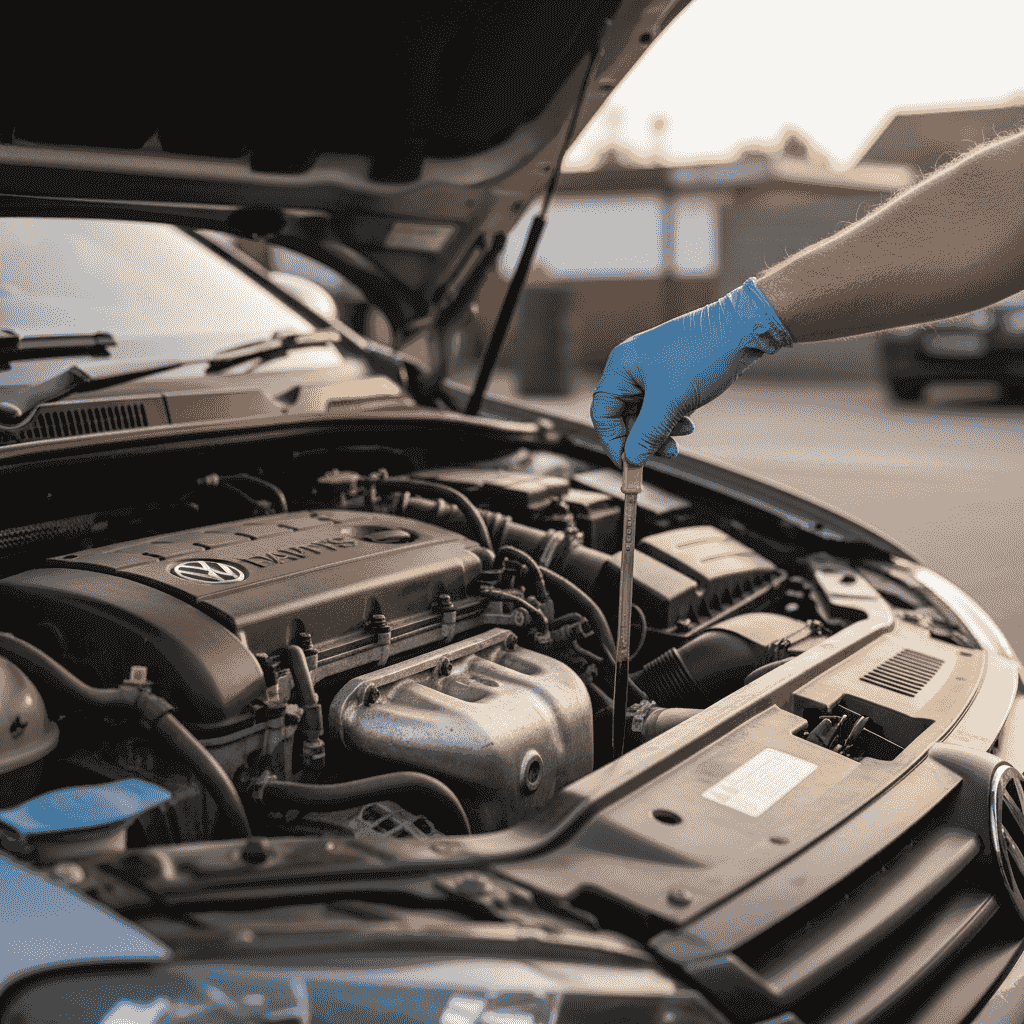
The used car market in BiH is slowly turning back to petrol engines in 2026. The reason is simple: a diesel with a DPF, AdBlue system and a stretched EGR valve in city driving often costs more than it saves, so a buyer choosing a used car up to around ten thousand KM is increasingly looking for the most reliable petrol engine that can comfortably cover 250,000 or 300,000 kilometres. The list is not theoretical. There are concrete engine codes and concrete models in which those engines live, and there are equally concrete ones to avoid.
This guide was put together by the Auto Gas Gaga workshop in Banja Luka, based on years of experience servicing petrol engines and installing LPG on those same engines.
Table of Contents
- Why BiH Buyers Are Turning Back to Petrol in 2026
- Naturally Aspirated or Turbo Petrol for a Used Car
- VW Group: 1.6 MPI, 1.4 16V and EA111 vs EA211
- Toyota: 1.33 and 1.6 Dual VVT-i, ZR Series
- Honda i-VTEC and Mazda SKYACTIV-G
- Ford, Opel and PSA Naturally Aspirated Engines
- BMW Inline-Six Naturally Aspirated: M54 and N46
- What to Check When Buying a Used Petrol Car
- Short Petrol Engine Blacklist
- Frequently Asked Questions
- Related Articles
Why BiH Buyers Are Turning Back to Petrol in 2026
The picture is different from five years ago. Diesel was for a long time the only sensible choice for someone driving 20,000 km a year, but city driving in Banja Luka, Sarajevo, Tuzla and Mostar has proven to be the worst environment for a modern diesel engine. Short trips do not raise the DPF temperature high enough for it to regenerate on its own, the AdBlue tank brings its own problems, and the EGR and intake manifold get clogged with soot in 150,000 km. All of that means workshop visits a petrol engine simply does not have.
Numbers from independent surveys confirm this. In the 2026 reliability review by What Car? magazine, only 19% of petrol cars up to five years old had a fault in the last 24 months, while for diesels that figure was as high as 50% (a sample of 29,967 responses, 199 models). On average, a modern petrol engine takes its owner to the workshop less often than a modern diesel.
That does not mean every petrol engine is a good choice. The difference between one petrol engine and another can be drastic. One generation apart, the same brand can have an engine that crosses 350,000 km without major repairs and, a year later, an engine that takes its owner into a fault as early as 90,000 km. If you are choosing between a petrol and a diesel as a platform, the natural counterpart to this article is our list of most reliable diesel engines for a used car in BiH 2026.
Naturally Aspirated or Turbo Petrol for a Used Car
The first question to ask a used car buyer is not "which engine", but "naturally aspirated or turbo". That is the decision that cuts your risk in half up front.
A naturally aspirated petrol is an engine with indirect injection (MPI), no turbo, with an advanced but simple valvetrain. Fewer parts, less pressure, less heat at critical points. Classic examples are the VW 1.6 MPI with 102 hp, Toyota 1.33 Dual VVT-i, Mazda 2.0 SKYACTIV-G, and Honda 1.8 i-VTEC. According to a May 2026 review on automobili.ba, the simplest petrol engines still come out as the longest-lived: the list includes the BMW M54, VW 1.6 8V (until 2011), PSA 1.6 TU5 JP4, Ford 2.0 Duratec, Mazda 2.0/2.5 SKYACTIV-G and Toyota's ZR series.
A turbo petrol (TSI, TFSI, THP, EcoBoost) gives more power from a smaller displacement and lower factory fuel consumption, but at the cost of higher pressure, more heat and more complex engineering. Direct injection builds carbon on the intake valves, the turbocharger is an additional part that can fail, and the high-pressure pump is a new failure point. The principle is similar across all modern turbo petrols. Even so, execution, software, oil, chain or belt and the typical faults differ from manufacturer to manufacturer and from generation to generation, so a generic "TSI is unreliable" makes no sense.
Practical rule for a used car in BiH: if you are choosing between a naturally aspirated engine with 100-130 hp and a turbo engine with 140-180 hp in the same price range, the naturally aspirated one is on average less risky. You will find more details about the maintenance demands of modern turbo petrol engines in the guide on direct injection TSI, TFSI and GDI.
VW Group: 1.6 MPI, 1.4 16V and EA111 vs EA211
The VW Group (Volkswagen, Škoda, Seat, Audi) has by far the largest number of candidates on the BiH used market. But engine quality within the VW family varies a great deal, so distinguishing between generations is a mandatory step.
1.6 MPI 8V (102 hp) and 1.4 16V (75-80 hp). These naturally aspirated engines are VW's version of the indestructible petrol unit. Indirect injection, no direct injection and no turbo. In the Golf 4 and 5, Polo 4 and 5, Octavia 1 and 2, Fabia 1 and 2, these engines regularly cover 250,000-350,000 km with regular oil changes and a timing belt done on schedule. Parts and service prices are low, workshop know-how is wide, and the engine takes nicely to LPG. If you are looking for a worry-free used car in the lower price range, the 1.6 MPI is rarely the wrong choice.
1.4 TSI EA111 (until 2011/2012). This is one of the worst VW choices for a used car buyer in 2026. The EA111 is known for a stretched timing chain and a tensioner failure that shows up as early as 60,000-100,000 km. The consequence is at best a full timing replacement, at worst bent valves and an engine rebuild. If you like the Golf 5 GT, Octavia 2 with the 1.4 TSI or Audi A3 8P with the same engine, know what you are buying.
How to Tell the EA111 from the EA211
The key difference is very practical. EA111 was fitted up to roughly 2011/2012 and uses a chain instead of a belt, with tensioner problems over the long run. EA211 comes from 2012 onwards: VW solved the problem by switching to a timing belt designed for the engine's lifetime. That is the engine you find in the Golf 7, Octavia 3, Polo 6, Seat Leon Mk3.
How to tell in practice: look at the year of manufacture and the engine code (on the engine plate or in the registration document). The EA211 carries codes CHPA, CXSA, CZCA, CMBA, while the EA111 carries CAXA, CMSA, CTHA, BLG. If you are not sure, before buying ask for a pre-purchase inspection; a mechanic will confirm which generation is in front of you in three minutes. A used Golf 7 or Octavia 3 with the 1.4 TSI EA211 and confirmed service history is a legitimately good choice.
Toyota: 1.33 and 1.6 Dual VVT-i, ZR Series
In our workshop, Toyota is synonymous with a petrol engine that does not come in often.
1.33 Dual VVT-i (1NR-FE). A small naturally aspirated unit of 1,329 cc producing about 100 hp, fitted to the Yaris 3, Auris 1 and Corolla E15. Based on experience and reviews from specialised portals, this engine reliably covers more than 300,000 km with basic maintenance (oil, filters, ignition).
1.6 Dual VVT-i and 1.6 Valvematic (ZR series, from 2007). The ZR family (1ZR-FE and 1ZR-FAE with Valvematic variable valve control) took on the role of the reliable mid-range petrol engine in the Auris 1 and 2 and Corolla E15/E18. It produces about 130-132 hp, has a chain instead of a belt (with clean enough oil practically a lifetime unit) and decent fuel consumption. If you need a car that goes 60 km to work daily without drama, a Corolla from 2010-2014 with the 1.6 Valvematic is a calm choice.
Toyota prices on olx are significantly higher than for a comparable Octavia or Astra. "Reliable" often translates to "expensive" when you look at KM per model year. If you are choosing between a younger Octavia and an older Corolla for the same money, both choices have logic, only the costs and the reliability are different.
How Many km Can a Toyota 1.33 VVT-i Cover
Honest answer: with regular oil and filter changes, and with a properly maintained timing system (chain, not changed by interval but monitored), the 1.33 VVT-i typically reaches the 250,000-350,000 km range without major repairs. Individual examples with a full service book pass even 400,000 km. What matters is that the previous owner did not skimp on oil and that the car was not sitting in reserve for years.
Honda i-VTEC and Mazda SKYACTIV-G
Honda 1.5 and 1.8 i-VTEC. Naturally aspirated 4-cylinder engines with Honda's variable valve timing are a classic that does not age. The K-series (1.8 K20 in the Civic 8 and 9) has been produced since 2001 and is being upgraded right up to today, which is in itself proof of longevity. The specialist site CarBuzz, in March 2026, ranks the K-series and the 2.0 K20A among the top ten most reliable naturally aspirated engines ever, alongside Toyota's 2GR-FE and the 1JZ/2JZ.
The Honda Civic 8 and 9 on olx are rarer than VW or Toyota, prices are firmly higher than the competition, and parts are more expensive. Honda is an excellent choice if you accept that the parts shelf is more expensive, in exchange for an engine that rarely remembers the workshop.
Mazda 2.0 and 2.5 SKYACTIV-G. Mazda's philosophy stayed committed to the naturally aspirated petrol engine and pushed the compression ratio limit, getting diesel-like efficiency from a petrol unit. The 2.0 SKYACTIV-G in the Mazda 3 generation BM (from 2014) and in the CX-5 produces 120-165 hp with real-world fuel consumption equivalent to a mid-range diesel: about 7-8 l/100 km on the open road. Chain instead of a belt, simple non-turbo construction, broad workshop coverage.
In the What Car? 2026 reliable petrol cars ranking, the Mazda CX-5 with the 2.0 SKYACTIV-G comes in with a score of 98.4%, which is in the same class as the best Toyotas. A used Mazda 3 BM or first-generation CX-5 with the 2.0 SKYACTIV-G is our frequent recommendation to a buyer who would like diesel-level fuel consumption without diesel-level worries.
Ford, Opel and PSA Naturally Aspirated Engines
Ford 1.6 Zetec and 2.0 Duratec. The 1.6 Zetec in the Focus 2 is a naturally aspirated petrol with a timing belt, producing about 100 hp, fond of regular service and accepting LPG well. The bigger brother 2.0 Duratec (HE) in the Mondeo 4, S-Max and Focus ST appears on lists of the longest-lived naturally aspirated engines alongside the BMW M54 and Toyota's ZR series. It produces about 145 hp, is simple, and parts are accessible.
Opel 1.6 and 1.8 Ecotec. Naturally aspirated engines in the Astra H and J, Vectra C, Insignia A. The 1.6 Ecotec (Z16XER) and 1.8 Ecotec (Z18XER) are a family that is popular on olx because of parts availability and a low entry price. Reliability is solid if you keep an eye on the oil level, because these engines like to drink a bit of oil on longer trips, which is not a fault but a characteristic.
PSA 1.6 TU5 JP4. The classic Peugeot/Citroen 1.6 naturally aspirated engine (Peugeot 206, 207, 307; Citroen Xsara, C4 first generation). Simple, cheap to service, accepts LPG without drama. It does not give a lot of power (about 110 hp) but in its class it is one of the safest naturally aspirated choices.
BMW Inline-Six Naturally Aspirated: M54 and N46
M54 inline-six (3.0i 231 hp, 2.5i 192 hp, 2.2i 170 hp). A six-cylinder naturally aspirated engine from 2000-2006 fitted to the E46 (3 Series), the first-generation E60/E61 (5 Series) and the E83 (X3 first generation). In the worldwide BMW owner community, the M54 is synonymous with an indestructible engine, much like Toyota's 1JZ and 2JZ. A used 530i E60 with the M54 and 280,000 km is not rare in BiH, and if the service has been kept in order, the engine is usually the smallest problem.
N46, 4-cylinder naturally aspirated, 2002-2011. The N46 was fitted to the E46 318i, early-year E90 318i/320i and the E87 116i/118i. It is more reliable than its nominal reputation, but it has one weak spot: oil consumption on engines with more than 150,000 km. The reason is worn piston rings and leaking valve guides.
BMW N46 Oil Consumption Symptoms
Five practical checks before you sign the contract:
- Look at the oil level on the dipstick on a cold engine. If it is below the minimum and the owner has not topped it up recently, that is the first sign.
- Ask directly: "How often do you top up the oil?". An owner who says "half a litre per 1,000 km" is selling you an engine on the verge of a rebuild.
- Watch the colour of the exhaust smoke under hard acceleration in reverse. Bluish smoke means oil is burning on the valve guides.
- Check for oily traces around the valve cover and on the spark plugs (this requires opening up, which goes through a pre-purchase inspection).
- Ask for a compression test. A difference between cylinders greater than 10% is a warning.
An N46 with 100,000 km, with documented servicing, is a legitimate used car. An N46 with 200,000 km without service history is not.
What to Check When Buying a Used Petrol Car
An experienced seller can hide a lot: an odometer rolled back by tens of thousands of km, a hushed-up impact that has been repaired and resprayed, or an engine that consumes oil hidden by a small fresh fill before going to the market. Some of that you catch in the workshop, but the actual history of the car is most easily checked through carVertical. Using the chassis number, it pulls a documented history of the car from international registers: real odometer readings by date, registered accidents, the number of previous owners and theft or total-loss indicators. We consider it a mandatory layer of due diligence before buying absolutely any used car. When paying for the report you can use the code GAGA and get 20% off.
In addition to the chassis number check, on the car itself we go through this list:
- Timing chain or belt. Ask when it was last done (if it is a belt) or what cannot be heard at cold start (if it is a chain). A chain on a 1.4 TSI EA111 that "ticks" cold is a red alert. More in the guide on timing chain or belt replacement.
- Oil history. Ask for receipts. An engine that was serviced for years at 30,000 km instead of at 10,000-15,000 km carries twice the carbon inside.
- Compression. A difference greater than 10% between cylinders means a problem. The best is to ask for a written report from an authorised workshop.
- ECU log. A mechanic can read stored faults and the fault history on a laptop. A car whose owner says "never anything", but the log shows ten old faults, gives away an owner who was not honest.
- Exhaust smoke. Blue smoke means oil, white means coolant, black means a rich mixture. All three colours are warnings.
- Cold start. Listen to the first five seconds. A chain that "rattles" then quiets down, hydraulic lifters that "tick" longer than two to three seconds, knocking that does not go away, all of these are signs the engine wants attention.
The full practical procedure goes through a pre-purchase inspection at the workshop. The price depends on the specific case, get in touch for a quote before you put down a deposit.
Short Petrol Engine Blacklist
Engines we rarely recommend without a solid service history:
- VW 1.4 TSI EA111 (until 2011/2012). Chain and tensioner.
- VW 1.2 TSI first generation (CBZA, CBZB, until 2012). Similar chain problems, plus weaker thermal tolerance.
- BMW N20 and N26 (2011-2017, 2.0 turbo). Chain on the wrong side of the engine, tensioner failure at 80,000-150,000 km. Watch out for used 320i F30s of earlier model years.
- PSA/Ford 1.6 THP/EP6 (Peugeot 207/208 GTi, Mini Cooper S, Citroen DS3). Carbon on the valves to an extreme degree, problems with the high-pressure pump.
- Renault TCe 1.2 (H5Ft). Excessive oil consumption is part of the profile, not an isolated fault.
If you like a specific car and the engine is on this list, that does not automatically mean "walk away". It means "go in with eyes open and know exactly which generation is in front of you".
Frequently Asked Questions
Is the 1.4 TSI a Reliable Engine
It depends on the generation. The EA111 (until 2011/2012) has known problems with the timing chain and tensioner that show up as early as 60,000-100,000 km, which is a serious risk for a used car in BiH. The EA211 (from 2012) was solved by VW switching to a timing belt designed for the engine's lifetime and a better cold start. The EA211 1.4 TSI in the Golf 7, Octavia 3 and Polo 6 with service history is a legitimate choice.
Which Is More Reliable for a Used Car: Diesel or Petrol
On average, modern petrol engines show a lower fault rate than modern diesels, especially in city driving where the DPF and AdBlue create systemic stress on a diesel. If you drive less than 25,000 km a year, a petrol (or a petrol with LPG) usually turns out to be the more economical choice. See also our counterpart Most Reliable Diesel Engines for a Used Car in BiH 2026.
Can a Naturally Aspirated Engine Run on LPG
Yes, and in practice it is the best combination for a petrol engine in BiH. Naturally aspirated engines with indirect injection (1.6 MPI, 1.6 Dual VVT-i, K-series) work excellently on LPG with minimal modifications. Direct injection (TSI, GDI) requires a special installation system and different maintenance.
How Many Kilometres Can a Toyota 1.33 VVT-i Cover
With regular service (oil at 10,000-15,000 km, filters on time, a sound timing chain), the 1.33 VVT-i typically reaches the 250,000-350,000 km range without major repairs. Individual examples with a full service book pass even 400,000 km.
How Much Oil Does the BMW N46 Consume and Is That a Fault
A typical N46 with over 150,000 km consumes half to one litre of oil per 1,000 km, which is already a reason for concern but not necessarily for rejecting the car. Consumption above one litre per 1,000 km tells you the piston rings and valve guides are worn and the engine is heading for a major repair. Before buying an N46, always ask for a compression test.
Is the Mazda SKYACTIV-G Really as Frugal as a Diesel
On the open road the difference between the 2.0 SKYACTIV-G and a comparable 2.0 diesel is surprisingly small. The difference in fuel price and the absence of DPF and AdBlue costs usually make the SKYACTIV-G overall cheaper in BiH conditions up to about 25,000 km a year.