
TL;DR:
Drivers in Banja Luka should focus on regular services tailored to their driving conditions and engine type.
Preventive maintenance reduces larger repair bills and extends the life of the vehicle.
Local workshops offer expert and transparent service for all types of cars.
Many drivers in Banja Luka ask the same question: which services do you really need to do, and which can wait? The answer is not simple because it depends on your engine type, driving style and the age of the vehicle. City driving, frequent stopping and short trips wear components faster than most drivers realise. In this article we explain how to recognise which services are a priority for your car, what exactly gets done during regular servicing, and the key differences between diesel, petrol and LPG vehicles. The goal is a clear picture that helps you make an informed decision without unnecessary costs.
Table of Contents
Key Takeaways
| Point | Details |
|---|---|
| Driving conditions | Service frequency depends on the type of driving and engine. |
| Types of regular service | Minor and major service, plus DPF regeneration for diesel and LPG system checks for gas-powered cars. |
| Specific engine needs | Different engines require tailored maintenance and service intervals. |
| Choosing a workshop | Pick a workshop with experience in your type of vehicle for safety and longevity. |
How to Identify Which Services Matter Most for Your Car
Every car has its own needs, and that is not a marketing phrase. A vehicle that spends every day crawling through Banja Luka traffic wears brakes, oil and filters far faster than one that mostly cruises the motorway. Short trips, frequent acceleration and braking, and repeated cold starts all accelerate wear.
When you decide which service to prioritise, consider three basic criteria:
-
Engine type: Diesel engines require special attention because of the DPF filter (a particulate filter that captures soot from exhaust gases) and the exhaust gas recirculation system. Petrol engines are generally simpler to maintain, while LPG vehicles have additional gas system components that need periodic checks.
-
Driving conditions: In city conditions services are more frequent, especially for diesel vehicles, because short routes do not allow the engine to reach its optimal operating temperature.
-
Age and mileage: Older vehicles have more worn parts and need more frequent inspections, regardless of fuel type.
There are also clear signals telling you it is time for a service. Watch for the following signs:
-
Warnings on the instrument cluster (oil, temperature and DPF warning lights)
-
A change in the colour or smell of the engine oil
-
Unusual noises when braking or steering
-
Increased fuel consumption without a clear reason
-
Vibrations while driving or braking
When choosing a car workshop, it is important that the mechanic knows the specifics of your model. It makes a real difference whether you drive an older Golf TDI or a newer petrol car. A workshop that has experience with your type of vehicle can spot the problem faster and propose the right solution.
Pro tip: Keep your service book and record every service with the date and mileage. That record helps you track when the next service is due and increases the vehicle's value when you sell it.
Do not wait for a fault to appear before visiting the workshop. Preventive maintenance always costs less than repairing damaged parts.
Basic Types of Regular Service: From Oil to Filters
Once you know the basic criteria, it is time to look at what actually gets done during regular service. There are two basic categories: minor and major service.
Minor service covers the most basic tasks, performed most often:
-
Engine oil and oil filter change
-
Check and top up other fluids (coolant, brake fluid, windscreen washer fluid)
-
Check tyre pressure and condition
-
Visual inspection of brake pads and discs
-
Check lights and electrics
Major service is done less frequently and includes replacement of additional components:
-
Air filter and fuel filter replacement
-
Spark plug replacement (on petrol engines)
-
Check and replace the timing belt or chain
-
Air conditioning service, including refrigerant pressure check
-
Check of suspension, shock absorbers and steering system
Workshops in Banja Luka offer minor and major services, diagnostics, air conditioning service and brake service, which means you can get everything done in one place.
When it comes to when to change oil and filters, the general recommendation is every 10,000 to 15,000 km, but city driving can shorten that interval. Brake components are particularly critical. If you hear squealing when braking or feel a longer stopping distance, check immediately how to recognise a brake fault.
Catching a fault early can cut repair costs by as much as 60%. A worn brake pad that is not replaced in time damages the disc, and that is a significantly more expensive repair.
Do not forget air conditioning service either. An AC system that has not been serviced for years not only cools less effectively but can also become a source of bacteria and unpleasant odours in the cabin.
Pro tip: If you are planning a technical inspection, have the service done a few weeks earlier. That way you have time to address any issues without rushing or added stress.
Service Specifics for Diesel, Petrol and LPG Cars
Beyond the basic services, it is important to know what your engine type really needs, especially if you drive an older diesel or a car on LPG.
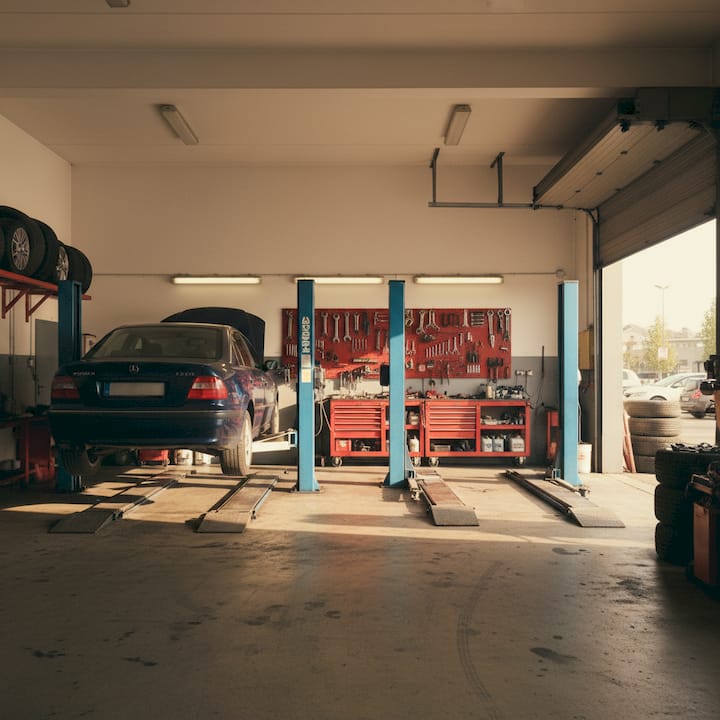
| Engine type | Specific service needs | Service frequency |
|---|---|---|
| Diesel | DPF filter, EGR valve, AdBlue (on Euro 6) | More frequent in city driving |
| Petrol | Spark plugs, lambda sensor, catalytic converter | Standard |
| LPG (auto gas) | Gas filters, valves, pressure reducer | Every 15,000 km |
Diesel engines are particularly sensitive in city conditions. The DPF filter on diesel cars fills with soot faster when the engine does not reach operating temperature, which often happens on short city trips. For a diesel DPF, 20 minutes of monthly higher-rpm regeneration is recommended, which means driving on a motorway or open road.
Petrol engines are generally less demanding, but they are not without their own needs. Spark plugs are replaced every 30,000 to 60,000 km, and a faulty lambda sensor (a sensor that measures oxygen content in exhaust gases) can affect fuel consumption.
The LPG system, known as auto gas, has its own specifics:
-
The gas filter is replaced every 15,000 km
-
The pressure reducer (a device that converts liquid gas to vapour) needs an annual check
-
Valves and seals are checked for safety
-
The gas injection system requires calibration
Installing LPG extends the life of diesel engines, while the DPF filter on diesels needs extra attention in city driving. This is especially relevant for owners of older diesel vehicles considering conversion. See which vehicles are suitable for LPG conversion and whether your car meets the requirements.
For those already driving on LPG, it is important to know that the LPG system does not replace regular maintenance of the petrol or diesel engine. The vehicle still needs all standard services, plus additional checks of the LPG components. You can read more on why the advantage of LPG systems remains relevant in 2026 on our blog.
Quick Guide: Tips for Easier Choices and Longer Car Life
Finally, let us pull everything together into a practical guide and quick-reference table.
| Service | Petrol | Diesel | LPG |
|---|---|---|---|
| Oil change | 10,000 to 15,000 km | 10,000 km (city driving) | 10,000 to 15,000 km |
| Air filter | 15,000 to 20,000 km | 15,000 km | 15,000 to 20,000 km |
| Spark plugs | 30,000 to 60,000 km | Not applicable | 30,000 km |
| DPF regeneration | Not applicable | Monthly (city driving) | Not applicable |
| Gas filter | Not applicable | Not applicable | 15,000 km |
| AC service | Once a year | Once a year | Once a year |
Workshops such as ČAMBER, Šindrak and Dizel Servis Stevo offer a range of regular services in Banja Luka, giving you several options for a specialised workshop.
Here are a few insider tips that can help you delay bigger repairs and extend vehicle life:
-
Use the recommended oil viscosity for your engine. The wrong oil can speed up wear.
-
Do not ignore warning lights on the instrument cluster. Even a small light can signal a serious problem.
-
Check tyre pressure regularly. Under-inflated tyres increase fuel consumption and accelerate wear.
-
Change coolant according to the manufacturer's recommendation, usually every 2 to 3 years.
-
The service book is not just a formality. Regular entries raise the vehicle's value and make diagnostics easier.
All the workshop services you need are available in one place, which saves both time and money. If you are not sure where to start, read more on why the importance of regular service is directly linked to safety and long-term costs.
Pro tip: If you drive a car older than 10 years, we recommend a full annual inspection regardless of mileage. Tyres, shock absorbers and the brake system wear out with time as well, not only with kilometres.
Our View: Why a Personalised Approach to Servicing Is Key
After more than 25 years of working with drivers in Banja Luka, we have learned one important thing: general advice often does not match a specific situation. A driver who covers short routes around the city every day has entirely different needs from one who does a 200 km motorway run once a week.
We see many vehicle owners follow the service intervals from the manual without adjusting them to real driving conditions. That can be costly. The manual is written for average conditions, and city driving in Banja Luka is not average.
Also, a hydraulic power-steering system is easier to repair than an electric one, but problems announce themselves gradually, which means they are easy to miss if you do not know what to look for. That is exactly where the value of a local mechanic who knows your vehicle and your driving style comes in.
Our advice is simple: talk to the mechanic, do not just drop off the car and wait. Ask questions, request explanations and agree the work up front. Transparency in the workshop is not a luxury, it is a standard every driver deserves.
Where to Find a Reliable Service in Banja Luka
When you are ready to choose a workshop, the best starting point is verified addresses and specialisations. Auto Gas Gaga, a family-run workshop operating since 1996, offers complete service for petrol, diesel and LPG vehicles in one place.
Whether you need a minor service in Banja Luka for a quick oil and filter change, or specialised LPG service for an LPG system check, you can book an appointment online and track the status of the repair through the service book. If you are looking for an experienced car mechanic in Banja Luka who will walk you through every step before starting the work, get in touch. Transparency and agreeing the work up front have been our standard from day one.
Frequently Asked Questions
How often should regular car service be done?
Regular service is done every 10,000 to 15,000 km or once a year, depending on the type of vehicle and driving. Service frequency varies with driving conditions, so city driving requires shorter intervals.
When should car filters be replaced?
The oil and air filters are most often replaced every 10,000 to 15,000 km, and the cabin filter once a year. Workshops such as ČAMBER, Šindrak and Dizel Servis Stevo in Banja Luka offer both minor and major services.
Why is DPF filter service important on diesels?
Regular DPF regeneration prevents clogging and engine wear, especially in city driving. Monthly DPF regeneration is recommended for city conditions so the filter can be cleaned effectively.
Who benefits from fitting LPG on a diesel?
LPG is worthwhile on older diesel transport vehicles because it extends their life and reduces consumption. Gas improves combustion and extends diesel engine life with lower fuel costs.
What is the difference between hydraulic and electric power steering?
Hydraulic power steering is easier to repair, while electric power steering can show faults later on. Hydraulic power steering is easier to repair than electric, but both systems require regular checks.